علی

1.6K posts

علی banner
علی

علی

@ali_changz

Arms Control, War, History. RTs ≠ Endorsement

پاکستان Katılım Haziran 2022
142 Takip Edilen91 Takipçiler
علی
علی@ali_changz·
One: You state that Pakistan relied on misinformation during the war but then subsequently admit that the report by the Swiss (which you base your assessment on) admits the Indian aircraft losses. Although the Indian jet losses have been confirmed by the broader Indian media, similar claims of Pakistani jets lost are only substantiated by "Indian claims". You seem to be cozy with the second part which undermines you. Two: India has not provided any proofs of the militants' connection with Pakistan. One year on, India still has to prove that connection. But you reach to your conclusion as if it was a fact backed by impartial investigations. Nowhere in your post have you regretted India's belligerence, in a nuclear South Asia. It opts for cross-border strikes without credibly implicating Pakistan; risking nuclear escalation. Three: Pakistan didn't initiate a ceasefire request. It accepted US mediation after India sought a ceasefire. Pakistan could have fought longer. MAD goes both ways. Pakistan wasn't worried about being annihilated because the annihilation would be suffered by India as well. Your analysis seems overly tilted towards the Indian narrative, that too without impartial facts and figures. One report by the Swiss military won't change facts. Losses are part of war. India should be able to absorb that fact and learn not to embark on destabilzing wars with Pakistan, unless it wants to suffer more losses.
English
2
0
2
215
علی retweetledi
علی retweetledi
Sputnik
Sputnik@SputnikInt·
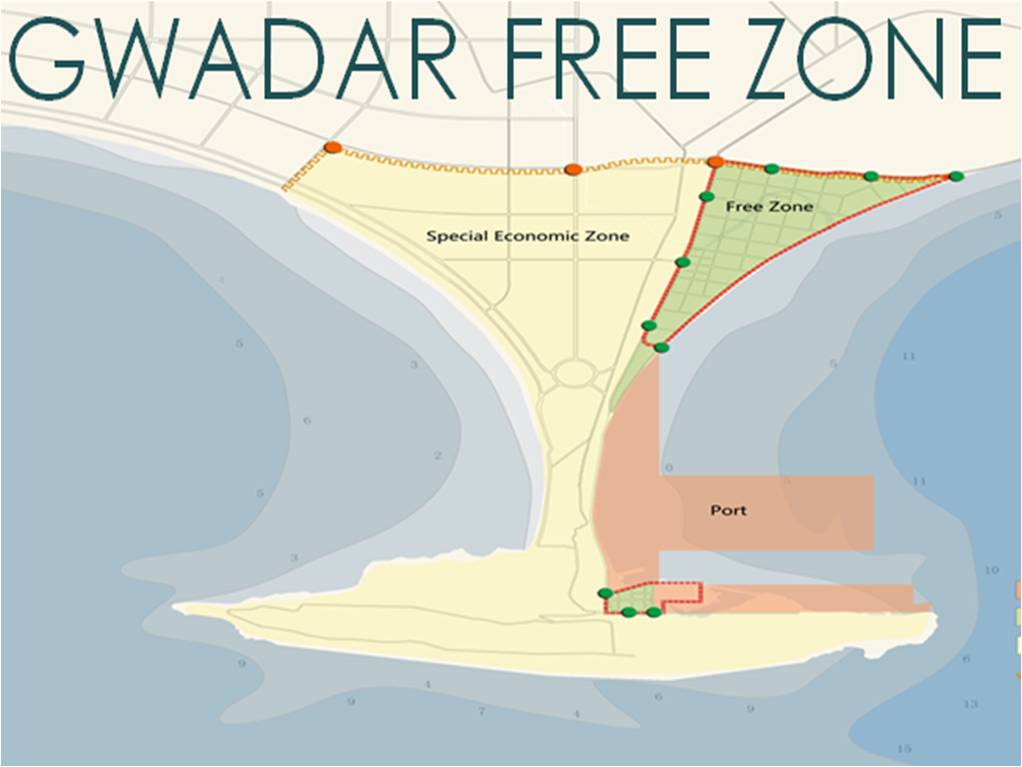
🌏 Geography beats bureaucracy: Why Gwadar is still key despite permit problems 👉 The Chinese Hangeng Trade Company, a major investor in the Gwadar Port Free Zone in western Pakistan, has reversed its decision to close its business there. 🔶 Arab News reports that Pakistani Prime Minister Shehbaz Sharif and Planning Minister Ahsan Iqbal helped get the firm the permits it needed. 🔶 Their intervention shows the Pakistani government's commitment to the China-Pakistan Economic Corridor (CPEC), Dr. Sarwat Rauf, Associate Professor and Head of the Department of International Relations at NUML, told Sputnik. 🔶 Bureaucratic hold-ups do not alter Gwadar's key position on the Arabian Sea coast, the expert said. 📍 She noted the CPEC Joint Cooperation Committee exists to resolve disputes. But "here is a need to further add a legitimate authority — a body recognized by both the governments — where grievances are handled institutionally, not personally," Rauf argued. 💬 "That could potentially reduce dependency on individual political relationships."
Sputnik tweet media
English
2
31
98
14.4K
علی retweetledi
Zafar Khan
Zafar Khan@zafarwafa1977·
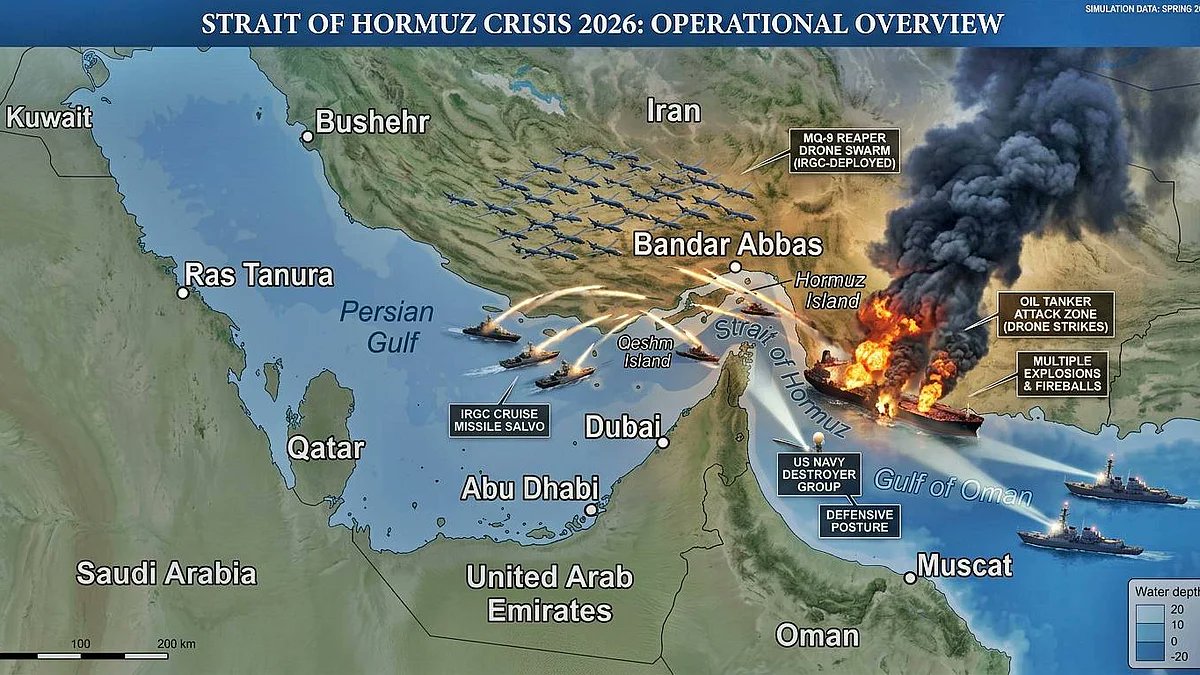
“The US-Iran War and the Undesirable Quagmire” Joe is thoughtfully correct. The Americans and the Israelis need to listen to what he has been suggesting. The US is putting itself into a quagmire. Many security analysts would make a similar argument that the longer this drama drags on, the more the US gets dragged into it, and the worse the situation becomes, escalating into yet another round of war that may not benefit anyone in the system. Maintaining the ceasefire and de-escalation process should be the primary pillar of the strategy to eventually end this entanglement we are all putting ourselves into this. Eventually, everyone has to be at the negotiating table to achieve a win-win outcome on the outstanding issues pertaining to Iran and the region more broadly. Some may be resolved quickly while other issues would surely take time, patience and restraint. War is in no one's best interest. @joekent16jan19 #IranWar#Iran #IranRevolution2026#iranthankspakistan #Mediation #deescalation #conflcit #peace #Hormuz #war
Zafar Khan tweet mediaZafar Khan tweet media
English
0
7
18
1.5K
علی retweetledi
Zafar Khan
Zafar Khan@zafarwafa1977·
“Geostrategy Triumphs Over Geoeconomics” Geopolitics and geostrategy often triumph over geoeconomics. All these countries, including the top ones, may have ample resources to sustain themselves economically, but without strong military and deterrent forces, they could remain vulnerable to preemptive and preventive strikes. The UAE is one example of such an apparent eventuality. Geostrategy/geopolitics matter far more than the money one may have. #Iran #IranWar#IranRevolution2026#UAE #economy #geostrategy
Zafar Khan tweet mediaZafar Khan tweet media
English
0
5
8
160
علی retweetledi
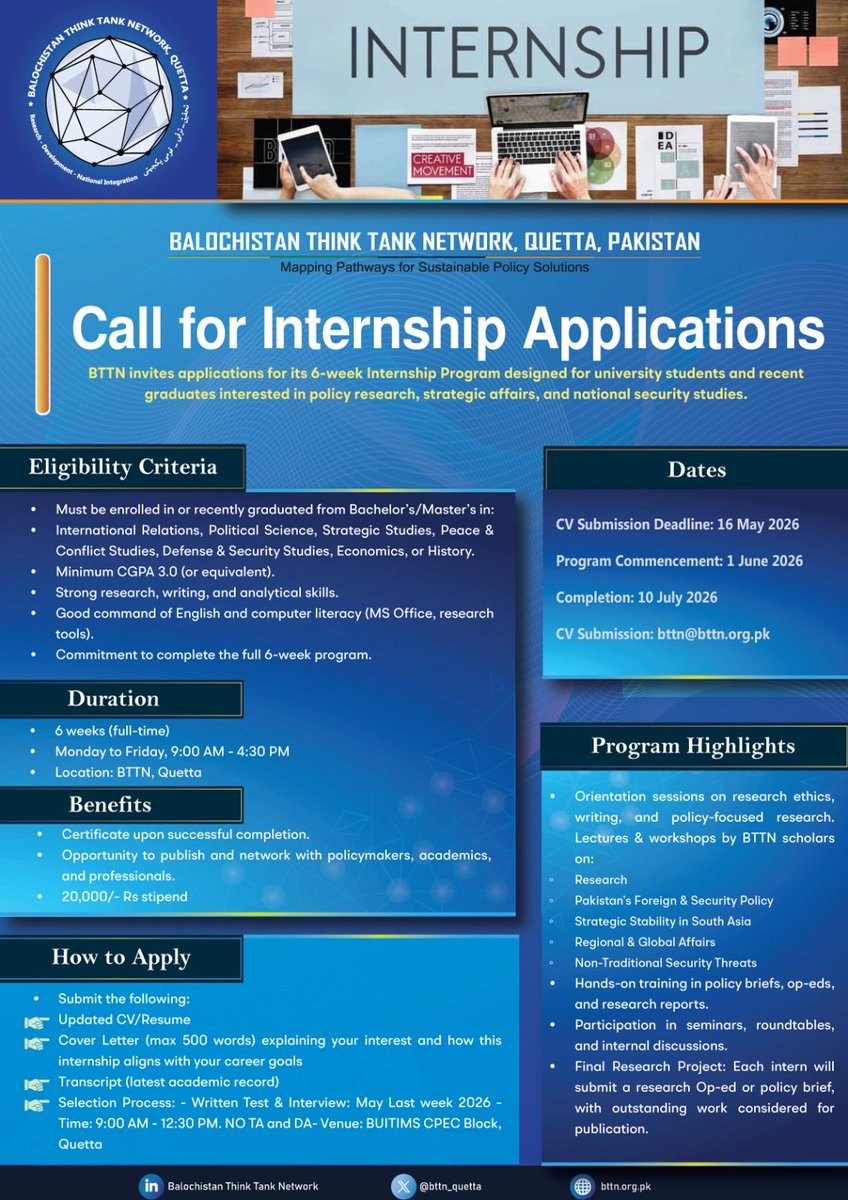
Balochistan Think Tank Network (BTTN)
BTTN Summer Internship, 2026. BTTN invites applications for its 6-week #Internship Program designed for final year university students and recent graduates interested in #Policy Research, Strategic Affairs, and National Security Studies. Students from Balochistan are invited to submit their CVs along with Cover Letters to our official email address: bttn@bttn.org.pk #strategicstudies #outreach #socialresponsibility
Balochistan Think Tank Network (BTTN) tweet media
English
0
12
22
958
علی retweetledi
علی retweetledi
Syed Ali Abbas
Syed Ali Abbas@smalinaqvi05·
India is signaling its next strategic leap as the Defence Research and Development Organisation confirms readiness to test the Agni-VI missile. This reflects a shift toward a more advanced, flexible long-range deterrent.
English
2
3
5
213
علی retweetledi
Tahreem_Syed
Tahreem_Syed@Tehmii_Syed·
Mearsheimer’s offensive realism explains the structural reality Washington ignores: in anarchy, capabilities matter more than intentions. Today’s partner is tomorrow’s competitor. A MIRVed, THAAD-penetrating ICBM is a structural threat to the America regardless of who builds it.
علی@ali_changz

India’s ICBM Program: The Threat the West Refuses to See DNI Tulsi Gabbard recently warned Congress that Pakistan, whose longest-range tested missile, the #Shaheen-III, reaches only 2,750 km,“potentially could include #ICBMs in its arsenal” threatening the US homeland. A speculative projection about a missile that does not even exist. Meanwhile, India’s Agni-V (5,000–8,000 km) is operational and MIRVed. On April 30, 2026, DRDO confirmed full readiness for the #Agni-VI — a four-stage ICBM designed for 10,000–12,000 km range with #MIRV capability. Its design, completed in 2025, explicitly incorporates features to penetrate US #THAAD, Russia’s S-500, and China’s HQ-19. India is also developing conventional Agni-V variants with bunker-buster #warheads targeting missile silos and command centers. This is counterforce language, not minimum deterrence. A 12,000 km missile is excessive for China and irrelevant for Pakistan. Its range envelope covers Washington, New York, London, and Moscow. Mearsheimer’s offensive realism explains the structural reality Washington ignores: in anarchy, capabilities matter more than intentions. Today’s partner is tomorrow’s competitor. A MIRVed, THAAD-penetrating ICBM is a structural threat to the American homeland regardless of who builds it. Yet Washington sanctioned Pakistan’s National Development Complex, #NDC over solid-fuel motors while granting India an #NSG waiver, #MTCR membership, and space cooperation — materially accelerating the very ICBM trajectory it now ignores. The category error is clear: flagging a missile that doesn’t exist while subsidizing one that does. Mearsheimer would call this a tragedy of great power politics. @RadioactiveFrnd @zafarwafa1977 @AsmaKhawaja5 #India #ICBM #AgniVI #NuclearProliferation #DoubleStandards #TulsiGabbard #Pakistan #SouthAsia #OffensiveRealism #Mearsheimer #StrategicStability #NuclearDeterrence #DRDO #MissileDefense #THAAD #MIRV #NonProliferation #NPT #USIndiaDeal #GreatPowerPolitics m.economictimes.com/news/defence/d…

English
0
5
11
298
علی retweetledi
Ali Sarwar Naqvi
Ali Sarwar Naqvi@NaqviAliSarwar·
The Indian Agni VI system with a range of 12000 kms is a threat to all major powers, China, Russia and even the United States. The development of such a destructive system is the act of an irresponsible and reckless state, that wants to pose a challenge to the rest of the world.
English
10
17
23
1.6K
علی retweetledi
Muneeb Abdullah
Muneeb Abdullah@MuneebAbdllah·
Tulsi Gabbard long warned about Pakistan’s ICBMs despite a lack of supporting evidence, while India advanced its own long-range missile capabilities. This reflects not just inconsistency, but a broader strategic oversight and warrant more balanced and serious global attention.
Muneeb Abdullah@MuneebAbdllah

Tulsi Gabbard long warned about Pakistan’s ICBMs despite a lack of supporting evidence, while India advanced its own long-range missile capabilities. This reflects not just inconsistency, but a broader strategic oversight and warrant more balanced and serious global attention.

English
0
1
2
61
علی retweetledi
علی
علی@ali_changz·
India’s ICBM Program: The Threat the West Refuses to See DNI Tulsi Gabbard recently warned Congress that Pakistan, whose longest-range tested missile, the #Shaheen-III, reaches only 2,750 km,“potentially could include #ICBMs in its arsenal” threatening the US homeland. A speculative projection about a missile that does not even exist. Meanwhile, India’s Agni-V (5,000–8,000 km) is operational and MIRVed. On April 30, 2026, DRDO confirmed full readiness for the #Agni-VI — a four-stage ICBM designed for 10,000–12,000 km range with #MIRV capability. Its design, completed in 2025, explicitly incorporates features to penetrate US #THAAD, Russia’s S-500, and China’s HQ-19. India is also developing conventional Agni-V variants with bunker-buster #warheads targeting missile silos and command centers. This is counterforce language, not minimum deterrence. A 12,000 km missile is excessive for China and irrelevant for Pakistan. Its range envelope covers Washington, New York, London, and Moscow. Mearsheimer’s offensive realism explains the structural reality Washington ignores: in anarchy, capabilities matter more than intentions. Today’s partner is tomorrow’s competitor. A MIRVed, THAAD-penetrating ICBM is a structural threat to the American homeland regardless of who builds it. Yet Washington sanctioned Pakistan’s National Development Complex, #NDC over solid-fuel motors while granting India an #NSG waiver, #MTCR membership, and space cooperation — materially accelerating the very ICBM trajectory it now ignores. The category error is clear: flagging a missile that doesn’t exist while subsidizing one that does. Mearsheimer would call this a tragedy of great power politics. @RadioactiveFrnd @zafarwafa1977 @AsmaKhawaja5 #India #ICBM #AgniVI #NuclearProliferation #DoubleStandards #TulsiGabbard #Pakistan #SouthAsia #OffensiveRealism #Mearsheimer #StrategicStability #NuclearDeterrence #DRDO #MissileDefense #THAAD #MIRV #NonProliferation #NPT #USIndiaDeal #GreatPowerPolitics m.economictimes.com/news/defence/d…
English
1
6
7
821
علی retweetledi
Dr. Asma Shakir Khawaja
Dr. Asma Shakir Khawaja@AsmaKhawaja5·
Not terrorism but Hindutva Radicalim, Vedic civilisational extremism toolkit, and illusion of Wishwa Guru would lead South Asia to War. India's quest to revise international order in her favour will lead the region towards war. @ciss_ajk @bttn_quetta @CISSS_Karachi @CISS_Islamabad #modirsatheuttarbanga #Modi #Bharat #indiawantsanswer #indiaresuperpower @zafarwafa1977
Zafar Khan@zafarwafa1977

foreignaffairs.com/india/why-next… "Risk Of Escalation in South Asia" Although many security analysts may argue that including this piece titled "Why the Next India-Pakistan War Will Escalate" reflects that terrorism may lead the two South Asian nuclear rivals to the brink of a serious military crisis, quickly reaching up the escalation ladder to a nuclear level. However, fighting and containing terrorism should not be made a pretext to wage a preventive strike, as India did in both the 2019 and May 2025 crises. This is potentially irrational and dangerous. It is fraught with weaknesses that may escalate to a dangerous level. The Herman Kahn and Rodney Jones conceptual escalation ladders may not be directly applicable to the complex South Asian nuclear environment, where a persistent conventional force asymmetry could escalate to the nuclear level. Using terrorism as a pretext to strike a nuclear Pakistan means that India is putting itself into a “commitment trap” and “escalation trap.” India must contain terrorism within its borders by addressing its intelligence failure, governance issues, and, more importantly, enacting a counterterrorism strategy to address such issues within India. It should be India’s internal issue. India may bring this issue, which Pakistan commonly faces, to the negotiating table as part of CBMs. The article does not say anything about this imperative that is good for the South Asian strategic stability, potentially preventing a serious military crisis because of a false pretext of terrorism. The article is also silent without mentioning that Pakistan suffers from the menace of terrorism much more than India does. Has Pakistan ever made terrorism a pretext to launch a preemptive strike against India and its handlers? Pakistan can, but Pakistan has not, and this shows a great deal of strategic restraint, but restraint should not be considered a weakness. It is part of the strategy to signal to the other side not to do things that may exceed the bounds of restraint. Although the article mentions somewhere in conclusion about the possible risk of escalation to a nuclear level, it does not specifically mention how and why nuclear deterrence has been playing a direct and indirect role in preventing both large-scale and limited war in South Asia. The article also skips to mention why India showed restraint not to take military action against Pakistan after the car bomb explosion in New Delhi in November 2025 that killed about 10 people. Was it because India realized that terrorism can not be made a pretext for waging a preventive strike (illegal) against Pakistan? Or was it because of nuclear deterrence playing in the background, deterring India to be more cautious that time around, having learned its lesson in May 2025? The role of the third party is important and therefore cannot be ignored, as India does. Ironically, on the one hand, India does not recognize the third-party role, but on the other hand, it does not talk to Pakistan and share information on issues concerning India and Pakistan. The burden of responsibility is on the Indian shoulder, much more than on Pakistan. The article does not critically analyze this imperative. The article also does not elaborate on how and why Pakistan proposed the Strategic Restraint Regime (SRR), which India declined, and how this relates to broader strategic stability in South Asia, as well as to crisis management and crisis prevention mechanisms. The efforts for crisis resolution (the ultimate way forward) are not mentioned in the article at all; one wonders why. The article could have been more balanced and interesting if this could inculcate all these missing imperatives. @ethrelkeld @ForeignAffairs #India #Pakistan #SouthAsia #May2025Conflict #Escalation #deescalation #risk #nuclear #Kashmir #flashpoint

English
1
7
11
118
علی retweetledi
Hamza Baloch
Hamza Baloch@Hamzahh_B·
While the world remains shocked by the war imposed in Middle East, #India is quietly advancing its dangerous #AgniVI ICBM program. With ranges far exceeding its defence requirements, these missiles pose a growing threat to global stability. Time to wake up before it's too late.
English
1
5
6
169
علی retweetledi
Hira Bashir
Hira Bashir@HiraBK5090·
#Agni-VI reflects more than technological advancement it signals a shift in #strategic ambition. When #deterrence moves beyond regional requirements toward intercontinental reach, questions of intent, stability and #militarization become unavoidable. @AsmaKhawaja5
CISS AJK@ciss_ajk

#Agni-VI reflects more than technological advancement it signals a shift in #strategic ambition. When #deterrence moves beyond regional requirements toward intercontinental reach, questions of intent, stability and #militarization become unavoidable. @AsmaKhawaja5 @RadioactiveFrnd @CISS_Islamabad @CISSS_Karachi @bttn_quetta @UN @ForeignOfficePk @zahirhkazmi #AgniVI #StrategicStability #NuclearDeterrence #Geopolitics #GlobalSecurity

English
2
8
14
241
علی retweetledi
Amb (R) Qazi M. Khalilullah
Nuclear Codes & Button of MIRV NUCLEAR ICBMs in the hands of extremist, irrational, trigger-happy, Hindutva-driven leaders of 🇮🇳 pose existential threat to all countries of the world: A wake-up call for all decision makers-2/2 @UnderSecT @StateACN @clary_co @ArmsControlWonk
English
4
19
29
1.5K
علی retweetledi
Muneeb Abdullah
Muneeb Abdullah@MuneebAbdllah·
Tulsi Gabbard long warned about Pakistan’s ICBMs despite a lack of supporting evidence, while India advanced its own long-range missile capabilities. This reflects not just inconsistency, but a broader strategic oversight and warrant more balanced and serious global attention.
Amb (R) Qazi M. Khalilullah@ExecDirCISSS

Nuclear Codes & Button of MIRV NUCLEAR ICBMs in the hands of extremist, irrational, trigger-happy, Hindutva-driven leaders of 🇮🇳 pose existential threat to all countries of the world: A wake-up call for all decision makers-2/2 @UnderSecT @StateACN @clary_co @ArmsControlWonk

English
0
2
2
157
علی retweetledi
Irum Adil
Irum Adil@adil_irum849·
India’s pursuit of a 12,000 km missile goes far beyond deterring Pakistan or China. When capability exceeds stated threats, it signals ambition, not necessity. This isn’t just deterrence, it’s power projection with serious implications for stability.
English
4
7
7
520
علی retweetledi
Hira Bashir
Hira Bashir@HiraBK5090·
The reported development of #AgniVI raises a question: When regional deterrence is stable, what justifies ICBM capabilities reaching #Europe and North America?Deterrence is not just capability,it is intent.And intent shapes strategic stability @AsmaKhawaja5 @RadioactiveFrnd
English
9
14
18
1.1K