Terra API

535 posts

Terra API banner
Terra API

Terra API

@TerraAPI

Connect your app to health data and AI. @YCombinator, @generalcatalyst

Katılım Kasım 2021
16 Takip Edilen1.9K Takipçiler
Sabitlenmiş Tweet
Terra API
Terra API@TerraAPI·
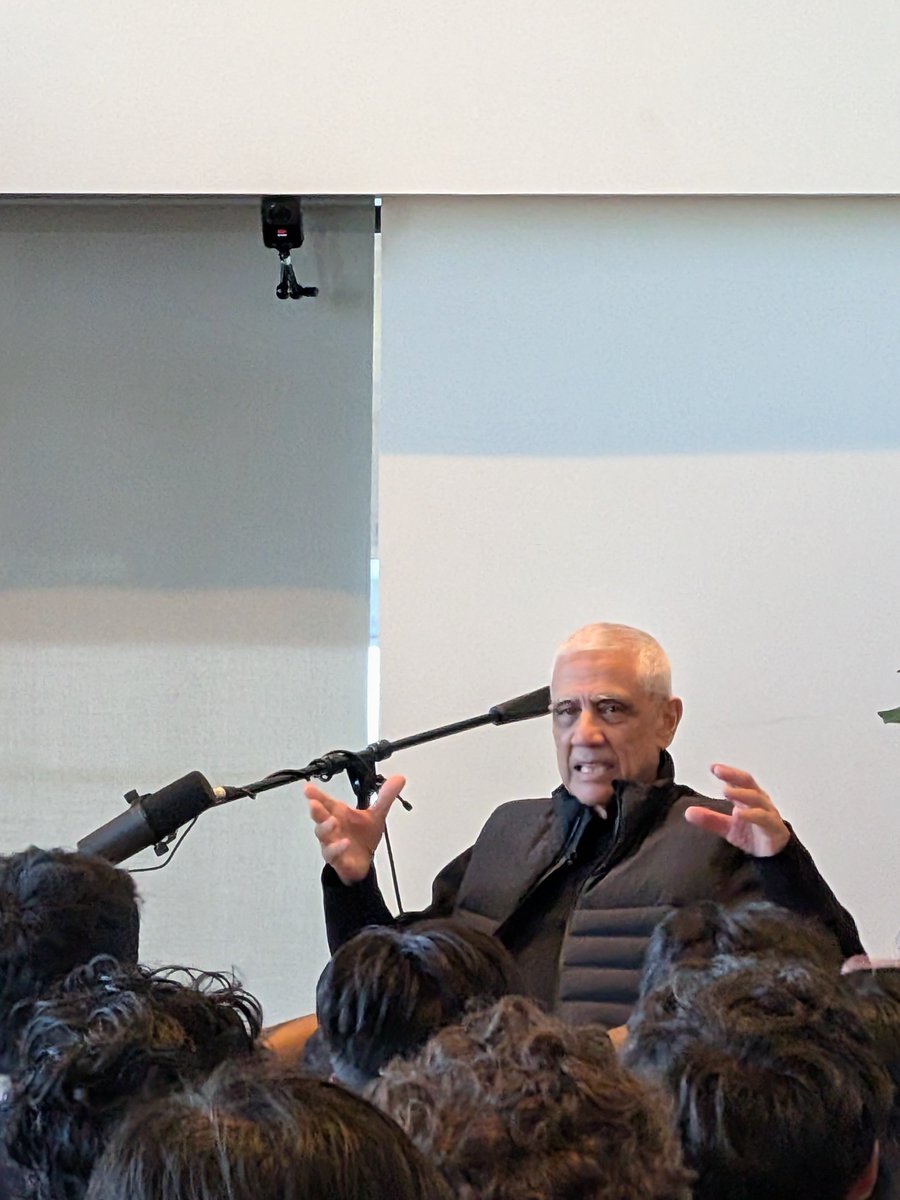
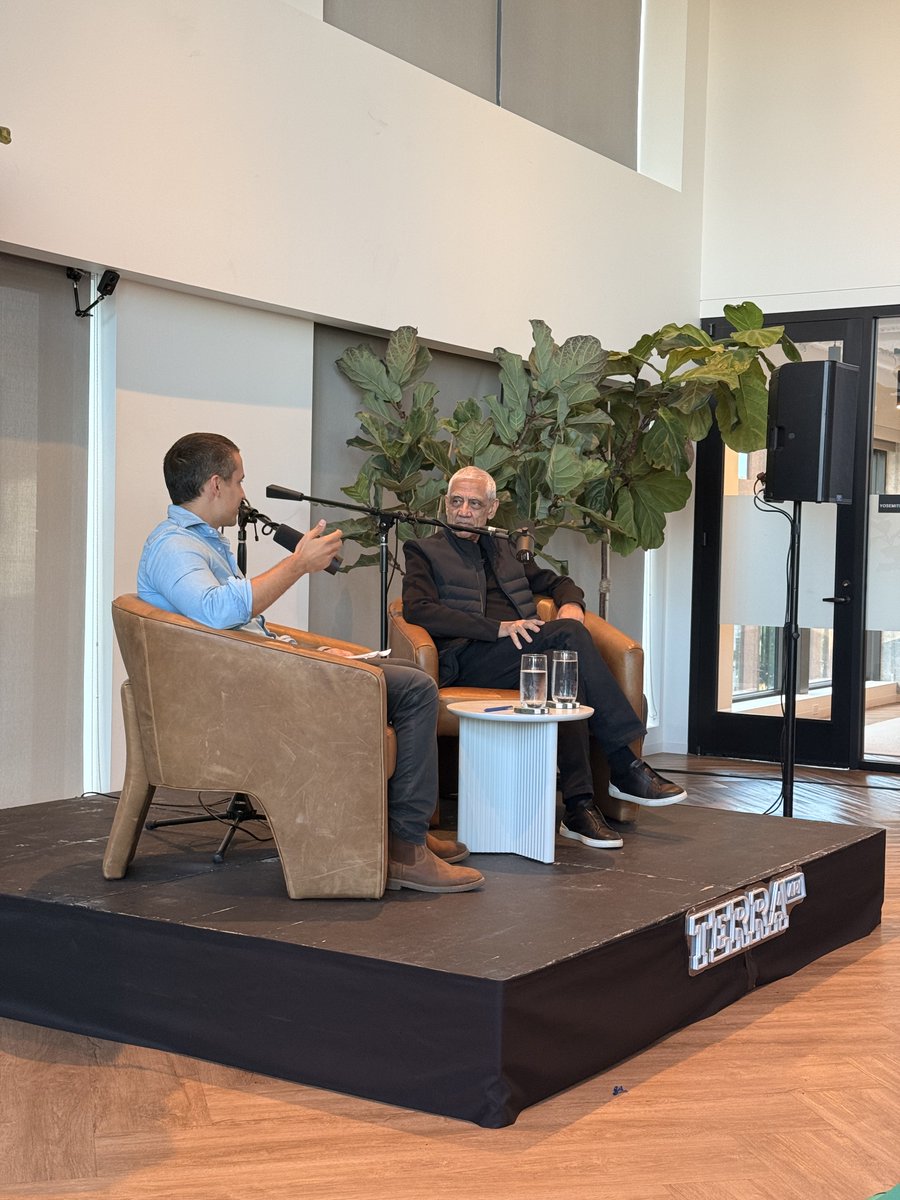
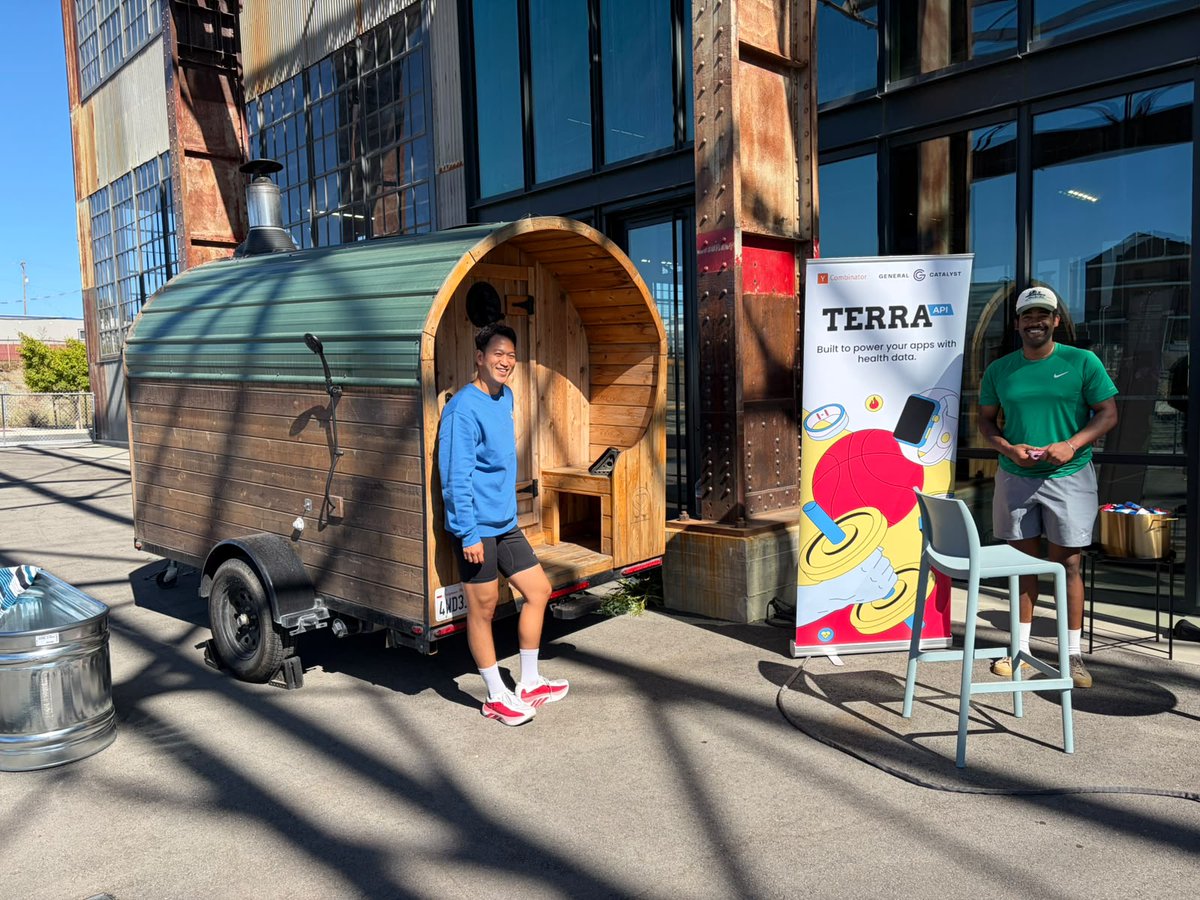
That’s a wrap-up for the first Terra Health Day in San Francisco. Hundreds of @ycombinator founders got their morning workout kick with Pickleball games and some pull-ups. @bryan_johnson, the world’s most measured man, then took the stage to speak about the philosophy of longevity: Don’t Die @lancearmstrong then, in discussion with @kyriakosel, spoke about the early days, the Tour De France, the winning mindset, and the secrets of investing. More details soon!
English
4
4
31
313.1K
Terra API retweetledi
Kyriakos Eleftheriou
Kyriakos Eleftheriou@kyriakosel·
David Lee (@davidlee) was diagnosed with stage 4 lymphoma at 25 - and didn't let it stop him. He went on to early Google, made partner at SV Angel during the Airbnb / Twitter / Dropbox / Snapchat era, and now runs @SamsungNext, Samsung's global venture fund. His take: digital health still hasn't had its "reusable rocket" moment. The puncture in the equilibrium that pulls everything forward by 5 years. He makes the case for why the NFL gets the #1 draft pick wrong half the time and what that means for picking founders, why most professional athletes are scared in the big games, and the "red zone of intelligence" he believes AI will never touch - the 20 yards where taste, judgment, and reading the room still belong to humans. What I'll remember most is his line on leadership: "Your kids will never do what you tell them. They'll always copy what you do." He uses the same lens on Jensen Huang, Elon Musk, and every founder he backs - what do they actually do on a Saturday. Enjoy. 00:00 Intro 02:30 Why digital health hasn't had its "reusable rocket" 07:00 "Law school is coding for your mind" 11:00 Telling Yo-Yo Ma from a college cellist 14:00 The NFL gets the #1 pick wrong 50% of the time 16:30 Most pro athletes are scared in big games 19:30 Without a killer product, you have no strategy 22:00 Vanity beats health 29:00 Your kids copy what you do, not what you say 32:30 Jensen, Saturdays, and setting the tone 37:30 The "red zone of intelligence" AI will never touch 38:30 Why the great fitness instructor gets paid more in the AI era 40:30 Why VC is the wrong financing model for the next decade 41:30 Mike Ovitz, CAA, and the playbook for winning in AI
English
2
3
11
4.1K
Terra API retweetledi
Alistair Brownlee
Alistair Brownlee@AliBrownleetri·
Yesterday in London, two men ran under the two-hour marathon. Sawe in 1:59:30, Kejelcha in 1:59:41. A barrier that has stood for decades, gone. None of their watch data is on Terra. But 571 other runners on the same streets are, and their data turned up something I wasn't expecting. The spread of the field alone is fascinating. Finish times ranged from sub-2:12 to nearly 7 hours. Heart rates told a counterintuitive story too: sub-3 runners averaged 167 bpm for the entire race, while six-hour finishers averaged 154. But the calorie data is what really jumped out. Garmin and Coros watches agreed on heart rate. They agreed on distance. They disagreed on calories by 12% at the median, and the gap got much worse for slower runners. Here's the part that I think matters: kcal/km should be roughly flat across finish-time bands on the same course on the same day. The fact that one device produces a flat line and the other produces a steep one is a self-contained plausibility check on the calorie algorithm. Calories from a watch are a model output, not a measurement, and the slower you run, the further the model can drift from physiology. This is exactly the kind of question we're tackling at the Terra Research Run Club this Thursday, built to advance our understanding of wearable data in the real world, and ask how well our watches actually capture what's happening. Link for the Research and Run club below @TerraAPI
English
15
31
444
311.7K
Terra API
Terra API@TerraAPI·
Alistair Brownlee@AliBrownleetri

It is my birthday today, so I allowed myself a completely self‑indulgent data analysis. I have had the “what is the hardest endurance sport” argument in so many changing rooms and cafes that I lost count years ago. Swimming feels psychologically hardest for me. Cycling feels highest risk. Running just feels brutally honest. So this time I tried to answer it with data. I pulled nearly a million sessions across nine endurance sports and looked at what each one does to the cardiovascular system, both per minute and per session. Here is what I found: - Every sport has a distinct heart‑rate “fingerprint”. Running is a tight, right‑shifted bell around 145 bpm. Walking and ski touring sit broader and lower. Downhill skiing is all peaks and troughs. - Running really is hard on the heart. It has the highest session average, peak HR, and sustained intensity ratio. - Walking’s “high” intensity ratio is a statistical trick. Low average, low peak, very flat sessions that only look hard on paper. - Downhill skiing has the biggest swings. Peaks rival outdoor cycling, but average HR sits near walking. That 47 bpm gap matches the feeling of short bursts and a lot of standing around. - Cross‑country skiing behaves like running at the top end and like cycling on average. Huge peaks, long gliding recoveries. - Indoor cycling is the purest steady effort after running. The sustained profile is similar in relative terms, but the absolute load is lower because seated cycling simply costs less than weight‑bearing running. Within the same person, running still wins. Among 1,480 people who both run and ride outside, 93% hit a higher fraction of their personal max HR when they run. Same body, same heart, different biomechanical demand. Then I changed the question. Because intensity is only part of the story and I recently cycled for 35 hours at a low Heart Rate, but it certainly felt pretty hard! Do you want to reward time on feet, or time in the red zone? Full research below.

ZXX
1
0
0
772
Terra API
Terra API@TerraAPI·
Happy birthday to the GOAT @AliBrownleetri 🎂 He spent it settling the argument every endurance athlete has had: Which sport is actually the hardest, according to the research team — across 9 sports and ~1M sessions. Now covered by @Olympics 👇
Terra API tweet media
English
1
0
4
1.1K
Terra API retweetledi
Alistair Brownlee
Alistair Brownlee@AliBrownleetri·
It is my birthday today, so I allowed myself a completely self‑indulgent data analysis. I have had the “what is the hardest endurance sport” argument in so many changing rooms and cafes that I lost count years ago. Swimming feels psychologically hardest for me. Cycling feels highest risk. Running just feels brutally honest. So this time I tried to answer it with data. I pulled nearly a million sessions across nine endurance sports and looked at what each one does to the cardiovascular system, both per minute and per session. Here is what I found: - Every sport has a distinct heart‑rate “fingerprint”. Running is a tight, right‑shifted bell around 145 bpm. Walking and ski touring sit broader and lower. Downhill skiing is all peaks and troughs. - Running really is hard on the heart. It has the highest session average, peak HR, and sustained intensity ratio. - Walking’s “high” intensity ratio is a statistical trick. Low average, low peak, very flat sessions that only look hard on paper. - Downhill skiing has the biggest swings. Peaks rival outdoor cycling, but average HR sits near walking. That 47 bpm gap matches the feeling of short bursts and a lot of standing around. - Cross‑country skiing behaves like running at the top end and like cycling on average. Huge peaks, long gliding recoveries. - Indoor cycling is the purest steady effort after running. The sustained profile is similar in relative terms, but the absolute load is lower because seated cycling simply costs less than weight‑bearing running. Within the same person, running still wins. Among 1,480 people who both run and ride outside, 93% hit a higher fraction of their personal max HR when they run. Same body, same heart, different biomechanical demand. Then I changed the question. Because intensity is only part of the story and I recently cycled for 35 hours at a low Heart Rate, but it certainly felt pretty hard! Do you want to reward time on feet, or time in the red zone? Full research below.
Alistair Brownlee tweet media
English
30
39
379
94K
Terra API retweetledi
Kyriakos Eleftheriou
Kyriakos Eleftheriou@kyriakosel·
A couple of years ago, I was walking through Salesforce Park in SF with @AliBrownleetri, talking about something surprisingly frustrating: how little usable data exists in health research. That conversation sparked an idea - what if we built an internal team focused on cutting through the noise and open-sourcing the most useful insights on physiology, exercise, and supplementation? Fast forward, the team grew significantly, and we have released some of the most interesting insights across the industry: - Saunas can lower nighttime heart rate by ~5% - Melatonin impacts heart rate more than actual sleep quality - Cold plunges show measurable effects on key biomarkers - Where you live may influence your sleep more than your habits - Alcohol’s impact on sleep is more nuanced than most think Today, we’re releasing our latest quarterly findings in a comprehensive report
Kyriakos Eleftheriou tweet media
English
2
4
8
2.4K
Terra API retweetledi
Kyriakos Eleftheriou
Kyriakos Eleftheriou@kyriakosel·
We studied 170,000 days of cold plunge - it's a stressor until you adapt; the threshold is 3 sessions in 14 days Below that, sleep heart rate goes up by about 1 bpm, consistent with an acute sympathetic response Above it, recovery score improves by 1.33, sleep score by 1.01, and daily heart rate drops by nearly 1 bpm Combining sauna and cold gives the highest recovery composite, but sauna alone gets you most of the way there In women, cold exposure during the luteal phase raises sleep heart rate by 1.68 bpm even with frequent use - the follicular phase shows no effect Adaptation is the whole story
Kyriakos Eleftheriou tweet media
English
2
7
15
5.7K
Terra API retweetledi
Alistair Brownlee
Alistair Brownlee@AliBrownleetri·
601 km. 35 hours. No sleep. I’ve spent the last few days digging into the data from last week’s ride, and a few things really surprised me. My heart rate at the same power output dropped 15 bpm from early to late in the effort
Alistair Brownlee tweet mediaAlistair Brownlee tweet media
English
9
7
135
30.4K
Terra API retweetledi
Kyriakos Eleftheriou
Kyriakos Eleftheriou@kyriakosel·
1.8 million people racing this year with HYROX, across the US, Japan, China, Brazil, India It started with 600 people in Hamburg I sat down with Chief Growth Officer Douglas Gremmen, at @Stanford Here's how it all happened: 00:00 – Intro 05:44 – Origin Story 08:59 – From First Event to Leading Global Expansion 12:36 – New Markets: Japan, Brazil, India 14:56 – Why the US Was the Hardest Market 17:28 – Losing Money in America 19:09 – The $1M Bet That Turned the US Around 21:52 – From 600 to 42,000 Tickets 25:39 – Why Athletes Keep Coming Back 28:00 – HYROX 365: 15,000 Gym Affiliates 34:27 – HYROX as a Gym Retention Play 36:49 – Fragmented Gym Tech & the Data Opportunity 38:23 – HYROX vs. CrossFit 43:10 – The Pickleball Analogy 46:49 – The Path to 100 Million People 49:50 – HYROX x Puma: The First Dedicated Shoe 54:14 – Back to Fundamentals 56:35 – Events vs. Social Media 59:11 – Post-COVID Perfect Storm 01:01:09 – HYROX in 5 Years
English
1
3
5
428
Terra API retweetledi
Alistair Brownlee
Alistair Brownlee@AliBrownleetri·
The body whispers long before it shouts. This week we analysed ~2.5M sleep and symptom records shows that PMS leaves only a subtle trace on wearables, but a loud one in how we feel. Night-time breathing rate is the clearest physiological signal, rising around PMS days, while heart rate and sleep metrics shift only slightly. Yet the largest effects are in emotional and physical symptoms, echoing what broader PMS research shows: most women experience premenstrual symptoms, and for many, they are highly impactful. So if your app tells you “all good” but you feel off, that’s not in your head — it’s in your data, just not always on your wrist. Listen to your body first; use the metrics as context, not the judge. Read the full research linked in the comments below. @TerraAPI #WomensHealth #DataScience #Wearables #PMS #HealthTech #ListenToYourBody
Alistair Brownlee tweet media
English
2
1
13
4.8K
Terra API retweetledi
Alistair Brownlee
Alistair Brownlee@AliBrownleetri·
If you're like me, you probably think that the first glass of wine helps you drift off. And honestly? It probably does. But then what? At Terra Research, we analysed 15,000 nights of sleep data from people who logged alcohol before bed vs. those who didn’t, using a mixed-effects model to control for individual differences. What did we find? Alcohol makes you restless, but it barely touches your sleep stages. Here's what we found: → +398 seconds extra time spent awake in bed (SE: 116s) → More wakeup events throughout the night → Increased respiratory rate (p=0.02) → No significant change in light, deep, or REM sleep proportions That last point is the one that caught my eye. Decades of sleep lab research consistently show REM suppression and increased slow-wave sleep in the first half of the night after alcohol. So why don't we see it in 15,000 real-world nights? I think there are a few reasons. Lab studies typically use controlled doses administered at precise intervals. Real-world drinking is messier. Timing varies. Dose varies. Some people have one glass of wine, others have several pints. The wearable devices capturing our data also measure sleep stages differently from polysomnography, which picks up fine-grained EEG changes that a wrist sensor likely won't. But where wearables are most accurate in measuring wake events, fragmentation, and respiratory rate, our findings align with the literature. So the practical message? That glass of wine probably isn't destroying your deep sleep or REM in a way your wearable can detect. But you are setting yourself up for a restless, fragmented night. Your body has to work harder to breathe, you wake up more, and that "guarantee" of falling asleep within 15 minutes vanishes. Full analysis in the comments below #sleep #healthdata #wearables #terraresearch @TerraAPI
Alistair Brownlee tweet media
English
9
7
53
17.3K
Terra API retweetledi
Kyriakos Eleftheriou
Kyriakos Eleftheriou@kyriakosel·
We studied 59,000 sauna days - the effects are immediate; Nighttime heart rate drops by 5% That's roughly 3 bpm, pointing to a recovery effect that goes beyond movement Women show lower nighttime heart rate on sauna days across the cycle, but the clearest shift shows up in the luteal phase Sauna pushes the body, then the body shifts into recovery Heart rate rises during heat exposure, then cooling brings a parasympathetic response that shows up later that night
Kyriakos Eleftheriou tweet media
English
15
41
495
85.8K
Terra API retweetledi
Alistair Brownlee
Alistair Brownlee@AliBrownleetri·
GLP-1 raises your resting heart rate. Exercise helps. But your HRV? It doesn't care how fit you are. This week at @TerraAPI research we analysed 70,000+ activities from 305 GLP-1 users. The findings: • Nighttime min HR increases ~1.1–1.2 bpm on GLP-1 • HRV drops ~1.7–1.8ms — and stays down regardless of how much you exercise • Fitter individuals show smaller HR increases, but HRV doesn't budge That last point is the most interesting to me. HR and HRV are telling completely different stories. At first, I thought the HR increase might be metabolic — GLP-1 partly speeds up metabolism, which helps drive weight loss, right? But the literature is actually mixed. Some reviews show a neutral effect on resting energy expenditure, and GLP-1 therapies can even reduce sleeping energy expenditure through adaptive thermogenesis after weight loss. The more likely explanation is sympathetic activation. GLP-1 directly raises sympathetic tone, increasing heart rate independently of metabolic demand. And the exercise interaction backs this up: higher fitness builds a greater parasympathetic reserve (essentially, a better ability to slow your heart rate), which helps offset the sympathetic drive from GLP-1. It's a cardiovascular efficiency story, not a metabolic one. But HRV doesn't follow. It drops and stays suppressed regardless of fitness. The parasympathetic buffering that protects HR doesn't seem to extend to the broader autonomic recovery captured by HRV. There also seems to be a sweet spot. ~30 mins above your usual baseline? Recovery metrics barely shift. Push well beyond your normal volume? HR climbs while HRV stays persistently suppressed. This isn't medical advice — it's observational data from wearables at scale. But the question stands: Is your training load matched to your actual recovery capacity, and how is GLP-1 impacting that? Full analysis on the @tryterra Research blog. Thanks to Rocio for leading on this one. Link below
Alistair Brownlee tweet media
English
4
2
24
5.7K
Terra API
Terra API@TerraAPI·
We have partnered with @perplexity_ai to let users securely connect their consented health and wearable data. From today onwards, people are able to understand and act on their health, continuously and in real-time. Your sleep Your stress Your activity Your workouts Your patterns over time All unified, securely consented and in your control. This opens up an entirely new layer of understanding: - Ask questions grounded in your real, continuous data - See how your body actually responds over days, months, years - Understand cause and effect across habits, recovery, and performance - Build personalized insights, tools, and agents on top of your own physiology
Terra API tweet media
English
1
2
25
8.1K
Kyriakos Eleftheriou
Kyriakos Eleftheriou@kyriakosel·
Perplexity is now powering health connectivity for millions of users through @TerraAPI Given that the best AI labs are moving into the health space, here's what I think is coming: You make thousands of daily decisions that change by the second Biomarkers, workouts, meals, sleep cycles, and stressors We are not meant to hold all this information No matter how brilliant your physician is, they see you for 15 minutes and work from a snapshot. The human brain doesn't scale to this problem AI does The doctor becomes the person you go to for surgery, and for judgment under uncertainty No doctor will ever know you better than your AI And software will be written for you daily Today, a doctor looks at a snapshot and puts you in a bucket. "Pre-diabetic", "at risk". These are population labels applied to an individual They tell you where you are. They don't tell you where you're going With continuous, full-context reasoning, the system doesn't label you, it tracks you. Your testosterone has drifted 10% over 10 months, your performance is dropping, here's exactly what to change this week to reverse it Medicine finally gets a feedback loop Chronic means we caught it too late. By the time you get the label - diabetes, heart disease, autoimmune - the damage has been accumulating for years. The disease isn't the problem. The delay is A system that monitors continuously doesn't wait for symptoms. It sees the drift at month 2, not year 10. The intervention is early, precise, and adjusts as your data changes. The feedback loop confirms it's working in days, not decades Chronic disease is a timing failure. The timing problem is solved
Kyriakos Eleftheriou tweet media
English
11
12
69
12.9K
Terra API retweetledi
Alistair Brownlee
Alistair Brownlee@AliBrownleetri·
We tracked melatonin across 200,000 nights. It doesn't do what you think. Most people, including me, take melatonin to sleep better. When I travel, cross time zones, and sleep in unfamiliar beds, I’m convinced it helps me get a better night's sleep. Our latest data analysis at Terra API suggests it doesn’t. We analysed 200,000+ sleep records, excluded nights with alcohol, late caffeine, and illness, and compared melatonin nights to non-melatonin nights using mixed-effects models. There was no measurable effect on sleep duration, latency, or onset. But we did detect physiological impacts of melatonin on our users. Overnight heart rate dropped, and HRV rose, peaking around days 3–5. After a week, the effect fades. That's probably a sign that, for many, Melatonin helps your body find its rhythm, then steps back as it adjusts (attenuates) it. And we found no evidence of withdrawal. When users stopped, metrics returned to baseline within 2 days, with no rebound or worsening. So why doesn't it show up in sleep? Probably because people reach for it on their hardest nights. Travel, stress, early alarms, I certainly do. The context overwhelms whatever benefit melatonin provides. Full research blog in comments. Great work by the @TerraAPI research team on this one.
Alistair Brownlee tweet media
English
5
9
83
20.8K