Dimity-Lee Duke

2K posts

Dimity-Lee Duke

Dimity-Lee Duke

@TheDuke912

Professional Ironman Triathlete and offroad motorcycle racer

Bunbury, Western Australia Katılım Eylül 2013
503 Takip Edilen387 Takipçiler
Dimity-Lee Duke retweetledi

Alan Couzens
Alan Couzens@Alan_Couzens·
Do the work. Ignore the noise. Repeat tomorrow.
English
4
14
230
7.1K
Dimity-Lee Duke retweetledi
Sports Psychology
Sports Psychology@SportPsychTips·
A good player-coach relationship is built on trust. As a coach, you earn your players’ trust by helping them improve and showing that you truly care about them. And as a player, you earn your coach’s trust by giving your best effort and being coachable.
English
4
62
254
16.4K
Dimity-Lee Duke retweetledi
Tim Reed
Tim Reed@Timboreed·
The path to great improvement as an endurance athlete can be quite simple. 1) Lots of aerobic volume with some intensity. 2) Years of consistency (don't get injured or burnout). 3) Lots of race experience. However! If the athlete enjoys variety to keep them on the path of enjoyment and consistency then you may need to consider complicating it beyond your stock standard sessions even if you know the physiological benefits could be achieved with a more simple program. Proven training principles might be relatively simple but personalities are complicated.
English
4
5
27
1.8K
Dimity-Lee Duke retweetledi
Alex Auerbach
Alex Auerbach@AlexAuerbachPhD·
A coach shared a powerful insight about personality that changed how they lead teams: Most people think personality is fixed - "that's just who they are." The science tells a different story: Your personality is more like weather patterns than a permanent climate. It shifts based on context and goals. Take Michael Jordan - fierce competitor on court, playful jokester off it. Same person, different contexts. The research shows 5 key personality dimensions that explain this: Extraversion isn't about being social - it's sensitivity to rewards. That's why some players "turn it on" during big games but are quiet at practice. Neuroticism isn't being emotional - it's how you handle goal frustration. Some fight back, others withdraw. Conscientiousness drives long-term success. It's why some players show up at 5AM while others hit snooze. Openness determines how you explore and learn. It explains why some players get creative while others stick to the system. Agreeableness shapes how you coordinate with others. The "glue guys" who hold teams together score high here. The game-changing insight: Stop asking "Who is this person?" Start asking "What goals are driving their behavior right now?" Phil Jackson once said: "The strength of the team is each individual member. The strength of each member is the team." Understanding personality as flexible rather than fixed helps unlock both. When you see personality as a tool for pursuing goals rather than a fixed trait, everything changes. Your coaching improves. Your players grow. And your team reaches new heights. Because great coaches don't try to change who people are. They create contexts where who people are naturally leads to success.
English
2
4
13
2.1K
Dimity-Lee Duke retweetledi
Dr. Jim Afremow
Dr. Jim Afremow@goldmedalmind·
🤔 What Makes a High-Performance Team Truly Unstoppable? Trust is the lifeblood of every great team—on the field, in the office, or in the operating room. It’s not born from big speeches or shiny frameworks but from showing up, putting in the work, and proving, day in and day out, that everyone is all in for the same mission. When the stakes are high and the pressure mounts, trust is the super glue that holds everything together. Step One: See What Matters Before jumping to solutions, slow down and really watch what’s happening. Not just the obvious stuff—like who’s the loudest in meetings or who racks up the most points—but the quieter things. Who’s listening? Who’s lifting others up? Who takes care of the grunt work without needing recognition? These moments might seem small, but they reveal the heart of a team. Step Two: Know the Culture Culture is like the air a team breathes. You can’t see it, but you can definitely feel it in every interaction. Ask yourself: -Do people genuinely feel safe to share their thoughts? -Do they understand the real value of their contributions? -Do they have a clear grasp of their role and how it drives the team’s mission? -Do they find purpose and fulfillment in being part of this team? If you’re off on any of these, no strategy or motivational pep talk will fix it. Step Three: Make Space for Growth Pressure is a gift when paired with unwavering support. High performers thrive when they’re coached, challenged, and given space to recover and reflect. Teams can’t grow if burnout or fear of mistakes take over. As a leader, it’s your job to create a space where both success and struggle drive progress. Teams can’t grow if everyone’s burned out or dreading making mistakes. It’s on you as a leader to create a space where both success and struggle are part of the journey. Step Four: Measure What Matters Forget tracking every single metric. Instead, focus on what really counts: -Are people learning from mistakes instead of running away from them? -Are they connecting with each other more meaningfully than they were yesterday? -Are they chasing excellence, not just playing it safe to avoid errors? -Do they take pride in their progress and ownership of their role? These are the signs you’re heading in the right direction. Step Five: Celebrate Progress, Not Just Results Progress fuels belief. Celebrate the moments that matter—the lessons learned, breakthroughs made, and growth experienced: a thoughtful assist, a bold idea, or a tough conversation handled with grace. These small victories add up, reminding people why they show up, push themselves, and trust one another to keep moving forward. Great teams aren’t built or sustained by chance. They’re shaped deliberately, with attention to the details most overlook. When trust, culture, and growth come first, success becomes inevitable. It’s not about forcing results; it’s about fostering an environment where people thrive together. For more insights on building winning teams, check out my book "The Leader's Mind" or visit drjimafremow.com
Dr. Jim Afremow tweet media
English
0
9
40
12.4K
Dimity-Lee Duke retweetledi
Words
Words@itswords_·
Words tweet media
ZXX
92
9.4K
31.9K
1.4M
Dimity-Lee Duke retweetledi
Tim Reed
Tim Reed@Timboreed·
The 120 grams of CHO per hour ‘can’ work in cool races. Athletes vomiting in a hot race where blood is even more shunted away from digestion than usual is not surprising. Less can be more, especially in Kona. You can come back from a hypoglycemic patch, you can’t come back from shutting your guts and down and not being able to stay hydrated. #IMWC
English
10
5
127
13.2K
Dimity-Lee Duke retweetledi
Eric Partaker
Eric Partaker@Eric_Partaker·
It took me a while to understand this. When I stepped into my first leadership role, I believed success was a result of perfect systems and processes. But, as Mike Ettore so eloquently points out in this image from his book “Trust-Based Leadership”, you LEAD PEOPLE and MANAGE THINGS. It wasn't until years later that I truly grasped this profound difference. But once I did, I began to see people, not as resources to be managed, but as individuals to be led with purpose and care. Here are the most significant lessons I've learned from my experience: 1. Human Connections > Business Metrics While KPIs and metrics are important, leaders build genuine relationships. They make the effort to know the person behind the role—understanding their aspirations, their concerns, and what motivates them beyond the numbers. 2. Distribute Decision-Making Power Across All Levels Leaders trust their team enough to let them make their own decisions. I've repeatedly found that empowering your people builds their confidence, inspires them to be creative, and makes them accountable. 3. Come Down to Their Level Leaders adapt to each team member's unique needs. Flexible work, personalized feedback, whatever it is… meet people where they are if you want them to thrive. 4. There is Power in Vulnerability Leaders are transparent about struggles and uncertainties. I've learned that being open about my own challenges and seeking help when I need it builds trust. You share, you grow. 5. Identify And Celebrate Diversity A high-performing team is also a well-rounded team. Identify and nurture each member’s strengths and create a space where they feel safe to contribute. Their varied perspectives and skills will only help you thrive. 6. Create Purpose-Driven Work Your people are inspired when they understand how their contributions shape the bigger picture. Help them find meaning in their work and they will champion your business. Leadership is not just about achieving outcomes but about enriching the lives of those you lead. And that can only happen by leading with compassion, kindness, and empathy. Let's lead with not just our minds, but also our hearts. ❤️
Eric Partaker tweet media
English
46
397
1.8K
642.5K
Dimity-Lee Duke retweetledi
Library Path
Library Path@LibraryPath·
15 Powerful Quotes That Will Make You Think: 1.
Library Path tweet media
English
59
2.6K
20K
2.1M
Dimity-Lee Duke retweetledi
Karun Pal
Karun Pal@karunpal·
Introverts don't chase status or money. What fulfils their soul is authenticity. Understanding how shit works. How everything is connected to everything. Their own mind. Emotions. Their inner world. And solving the ultimate puzzle "who am I".
English
100
1.2K
5.4K
187.1K
Dimity-Lee Duke retweetledi
Tim Noakes
Tim Noakes@ProfTimNoakes·
"My take? Some carbohydrate ingestion during competition is good, but more isn’t always better". Correct. This is because body glucose stores are treated as seperate entities in humans. The large glucose pool in the muscles and the small pool in the liver/blood/intestine. The large glucose pool has little impact on exercise performance pubmed.ncbi.nlm.nih.gov/36845048/ whereas the small glucose pool is decisive. CHO ingestion during exercise needs to be enough to keep the small glucose pool replete. This takes a relatively low rate of CHO ingestion. The ingestion of too much glucose during exercise impacts on the metabolism of the large glucose pool by increasing its rate of glucose (glycogen) use. This is paradoxical if one believes that glucose ingestion delays muscle glycogen use during exercise. If high rates of CHO ingestion during exercise are beneficial it's because they have another effect that is not directly metabolic. That is, perhaps a stimulatory effect on the (reward centres) in the brain . @theplews1 @sweatscience @Alan_Couzens
Dan Plews PhD@theplews1

NEW BLOG: After some recent blogs, looking into CHO dosage and performance was the logical next step. Surprisingly few studies, and most certainly don't point towards the dose-response relationship many believe. endureiq.com/blog/the-more-… @sweatscience @ProfTimNoakes @maunder_ed

English
10
20
130
65.1K
Dimity-Lee Duke retweetledi
The Winning Difference
The Winning Difference@thewinningdiff1·
The secret to greatness lies in mastering the basics. It's not just skill, but your willingness to embrace the boredom of consistency.  This is what separates the ordinary and the extraordinary.
The Winning Difference tweet media
English
2
215
767
158.6K
Dimity-Lee Duke retweetledi
Coach AJ 🎯 Mental Fitness
Coach AJ 🎯 Mental Fitness@coachajkings·
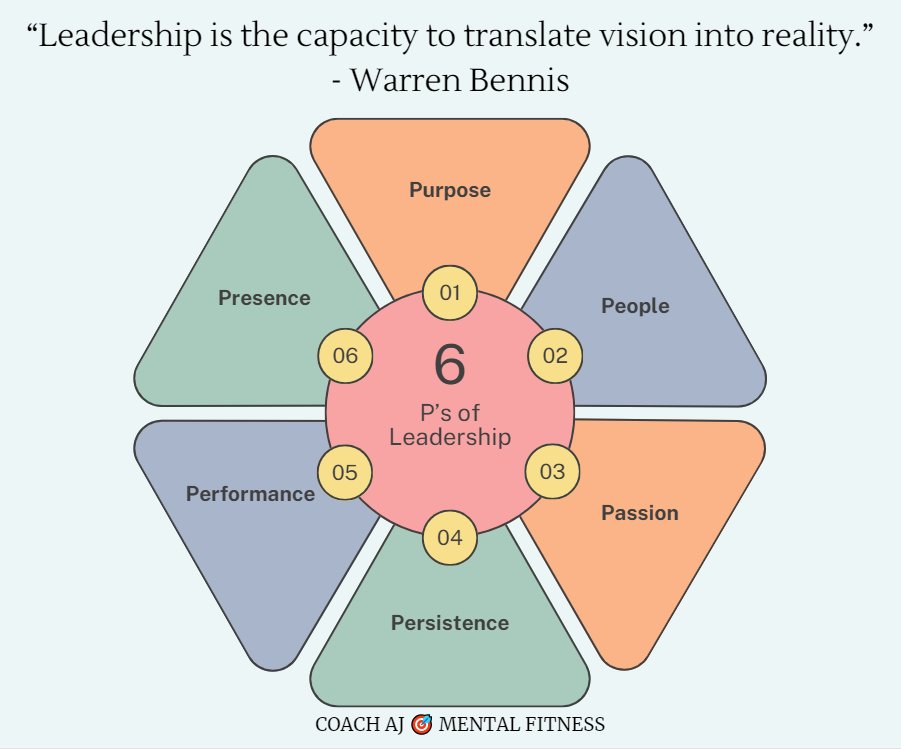
Buzz Williams said, “Leadership is about making others better as a result of your presence and making sure that impact lasts in your absence.” Leadership is your behavior. It means setting the standard and being the example of that standard every day. Leadership isn't about being in charge, it’s about inspiring and connecting with others. The 6 P's of Leadership: Purpose - Purpose is the foundation of effective leadership. It means having a clear vision and a strong sense of why you are leading, which guides decision-making. It gives your team a direction to follow. A leader with a strong purpose can inspire and align their team towards common goals and a shared mission. People - Leadership is fundamentally about people; understanding them, connecting with them, and getting the best out of them. Effective leaders focus on build strong relationships, foster teamwork, and develop the talents and potential of their team members. They prioritize their team's development and well-being. Passion - Passion in leadership manifests as enthusiasm and a deep commitment to one's work and goals. A passionate leader is driven, motivated, and able to inspire and energize their team. This energy can be contagious, encouraging others to put their heart into their work and strive for excellence. Persistence - Persistence is about maintaining determination and resilience in the face of challenges. Leaders who exhibit persistence stay focused on their goals despite obstacles and setbacks, demonstrating a steadfast commitment to their vision. This trait is crucial in motivating a team to keep striving forward, even when times are tough. Performance - Performance is a measure of a leader's effectiveness in achieving results and executing strategies. Leaders focus on performance, set high standards for themselves and their teams, and use metrics and goals to drive progress. They are results-oriented, constantly seeking ways to improve outcomes and efficiency. Presence - Leaders have confidence in their vision, message, and practice the power of being present. They are approachable, engaging and confident, as well as having the ability to command respect and attention. A leader with a strong presence can effectively communicate, influence others, and lead by example, creating a positive impact on their team and organization.
Coach AJ 🎯 Mental Fitness tweet media
English
13
140
598
231.5K
Dimity-Lee Duke retweetledi
Precision Fuel & Hydration
Precision Fuel & Hydration@precisionfandh·
Stocked up yet? Load up for your next training block during our only site-wide sale of the year! 🤟🏻 Head to pfandh.com/products No code required, discounts auto-applied. Easy peasy.
Precision Fuel & Hydration tweet mediaPrecision Fuel & Hydration tweet media
English
0
2
3
550
Dimity-Lee Duke retweetledi
Alan Couzens
Alan Couzens@Alan_Couzens·
Some brief thoughts on training females... ♀️ It is a common belief among many coaches that females can handle more intensity than the guys. Elements of physiology support this... For one, females (on a per kilo basis) tend to naturally burn more fat than males across the exercise intensity spectrum, so higher intensity exercise has less of a glycogen cost for them than it does for male athletes. Also, females tend to be smaller, so the absolute energy expenditure tends to be lower, also resulting in less glycogen output at the same relative intensity. However, just because they *can* work harder, doesn't mean they *should*. Females, on the whole tend to have significantly lower #HRV than male athletes, ie. they don't have as much of a binary "switch" from sympathetic to parasympathetic mode. For guys, when they get fatigued, they shut down. For the ladies, it's less binary. They are able to keep it rolling. This is both a blessing and a curse. The majority of true cases of Overtraining Syndrome that I've seen, have been in female athletes, because of this very fact: They have the ability to dig a very deep hole before their PNS will shut them down. Long story short: While female athletes may have a leg up in some of the physiological changes that we seek in low-intensity base training, e.g. fat oxidation, they are at a deficit in other very important adaptations, e.g. strength of the Parasympathetic Nervous System. Development of this is at least as important, if not more important, than it is for the guys. Without conscious development of this "dampener", it's very easy for females to push over the edge into Overtraining.
English
14
22
213
99.8K
Dimity-Lee Duke retweetledi
Prof. Feynman
Prof. Feynman@ProfFeynman·
• Work hard. • What others think of you is none of your business. • It's OK not to have all the answers. • Experiment, Fail, Learn and Repeat. • Knowledge comes from experience. • Imagination is important. • Do what interests you the most. • Stay curious.
English
67
2.1K
8.9K
686.6K
Dimity-Lee Duke retweetledi
Prof. Feynman
Prof. Feynman@ProfFeynman·
When you are dead, you don't know you are dead. It's pain only for others. It's the same thing when you are stupid.
English
297
4.7K
20.7K
1.5M
Dimity-Lee Duke retweetledi
Steve Magness
Steve Magness@stevemagness·
Move Your Body Often, Sometimes Hard, Every Bit Counts If exercise could be bottled up and sold as a drug, it would be a billion-dollar blockbuster. Get outside and move regularly. What type of exercise? Do what you enjoy! Even better if it's with people you enjoy!
English
3
12
98
13.3K