TimDraimin

10.9K posts

TimDraimin banner
TimDraimin

TimDraimin

@TimDraimin

Social + Systems Innovation maven, field builder, envisaging x-sector-collab platforms + transition&equity-enabling philanthropy | FRSA |@timdraimin.bsky.social

Toronto Katılım Ocak 2009
4.7K Takip Edilen5.3K Takipçiler
Sabitlenmiş Tweet
TimDraimin
TimDraimin@TimDraimin·
How do we join up Canada’s fragmented and underperforming innovation system so that it integrates social innovation and social purpose more explicitly and centrally to achieve societal impact? I make the case for using a Mission framework, see latest blog. bit.ly/3RLm1TN

TimDraimin tweet media
English
1
0
6
402
TimDraimin retweetledi
Susan Delacourt (real)
Susan Delacourt (real)@susandelacourt·
I am so sad to learn this news. It was my great pleasure to work with Hugh for so many years. His curiosity and his kindness never flagged. He even took me once on a day-long sail down the canal and I was honoured when he asked me to speak at his 60th birthday. RIP Hugh.
Doug Saunders@DougSaunders

Saddened to lose my colleague Hugh Winsor, who taught me a lot about the inner workings of government and would fill me up with excellent gossip whenever I was in Ottawa. Terrific guy and elegant writer whose first byline was 1969 and last was 2024.

English
4
9
64
13K
TimDraimin retweetledi
Daron Acemoglu
Daron Acemoglu@DAcemogluMIT·
Dear followers, please see my article about the implications of the recent US action against Venezuela. What Now for the “Rules-Based Order”? by Daron Acemoglu @ProSyn prosyn.org/mHr3yFF
English
52
126
519
248.9K
TimDraimin retweetledi
Mark Bourrie
Mark Bourrie@MarkBourrie·
In 1916, the United States traded any interest it had in Greenland to Denmark as part of its compensation for the Danish West Indies, which are now the U.S. Virgin Islands. Heard about that from media or politicians? Teaching history is important diis.dk/en/research/wh…
English
263
7.8K
16.9K
337.8K
TimDraimin
TimDraimin@TimDraimin·
Important new OECD research on social innovation based on European Social Fund bit.ly/4nr1vpO Analyses the main existing levers and policy orientations to further support social innovation.
English
0
0
0
58
TimDraimin retweetledi
Geoff Mulgan
Geoff Mulgan@geoffmulgan·
I'll be doing a talk at UCL next week on the strange institutional conservatism of UK public science and technology; lessons from around the world; and the possible shape of new institutions in the future - with responses from Anjana Ahuja from the FT, William Cullerne Brown and others: it's 4-530 on Weds 30th April at 2 Wakefield St (near Russell Square). eventbrite.co.uk/e/do-we-need-a…
English
1
2
7
1.2K
TimDraimin retweetledi
Toha Khan
Toha Khan@HeyToha·
I don't understand why so few people use AI tools. Most people only know about ChatGPT. Here are 12 hidden gems you need to know:↓
Toha Khan tweet media
English
82
656
3.6K
1.2M
TimDraimin retweetledi
Steven Johnson
Steven Johnson@stevenbjohnson·
All @NotebookLM users now have access to a major new feature: Discover Sources. Define a topic and notebook retrieves the ten most relevant web sources & annotates with summaries based on your query. Then you can do Q&A, create audio overviews, mind maps, study guides, etc.
GIF
English
24
106
780
45K
TimDraimin retweetledi
Max Fawcett 🇨🇦🇨🇦🇨🇦🇨🇦🇨🇦
There's been lots of talk lately about the "lost decade" under the Liberal government. It revolves around this chart: Let's dig into it with a quick thread. 🧵
Max Fawcett 🇨🇦🇨🇦🇨🇦🇨🇦🇨🇦 tweet media
English
326
691
2.8K
425.5K
TimDraimin retweetledi
James Shepard
James Shepard@jumpjim·
Boeing 787 pricing is going to be interesting going forwards under Trump’s new tariff regime.. 🤦🏻
James Shepard tweet media
English
856
4.5K
17.8K
1.5M
TimDraimin retweetledi
Branko Milanovic
Branko Milanovic@BrankoMilan·
To have a successful transition to democracy you have: 1 To have a high growth rate so that *all* people feel richer 2 To have your country become internationally more powerful or acknowledged 3 To have liberalization of moeurs (i.e. customs): social, sexual. I think of three countries: Spain, Chile and Poland.
English
16
35
165
30.1K
TimDraimin
TimDraimin@TimDraimin·
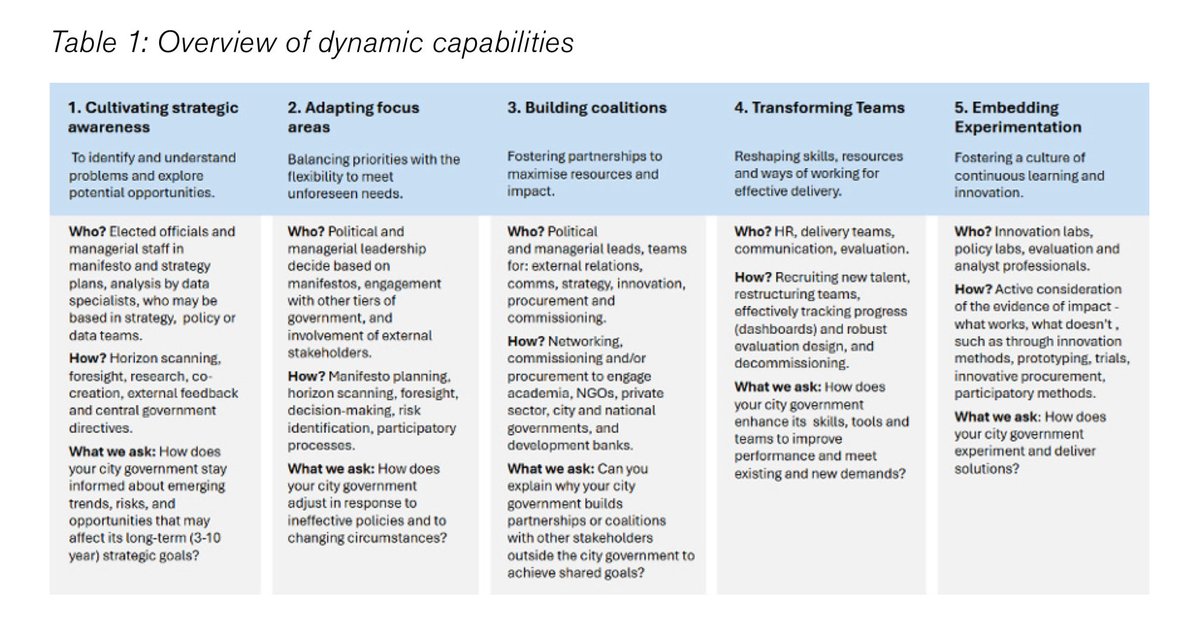
Valuable new IIPP report by @MazzucatoM Rainer Kattel & @RPuttick laying out 5 areas of dynamic capabilities including #experimentation:
TimDraimin tweet media
Mariana Mazzucato@MazzucatoM

A new report from our @IIPP_UCL Public Sector Capabilities Index (PSCI) is out now, synthetizing findings from our research on assessing city governments’ capacity to solve problems. This is the first global attempt to measure where government capacity is strong and where critical public sector skills–such as citizen engagement, cross-sector collaboration, and leveraging data infrastructure and digital platforms – must be built up.  Read the report here ➡️ ucl.ac.uk/bartlett/publi… More about PSCI ➡️ ucl.ac.uk/bartlett/publi…

English
0
0
2
107
TimDraimin retweetledi
Helen Bevan
Helen Bevan@HelenBevan·
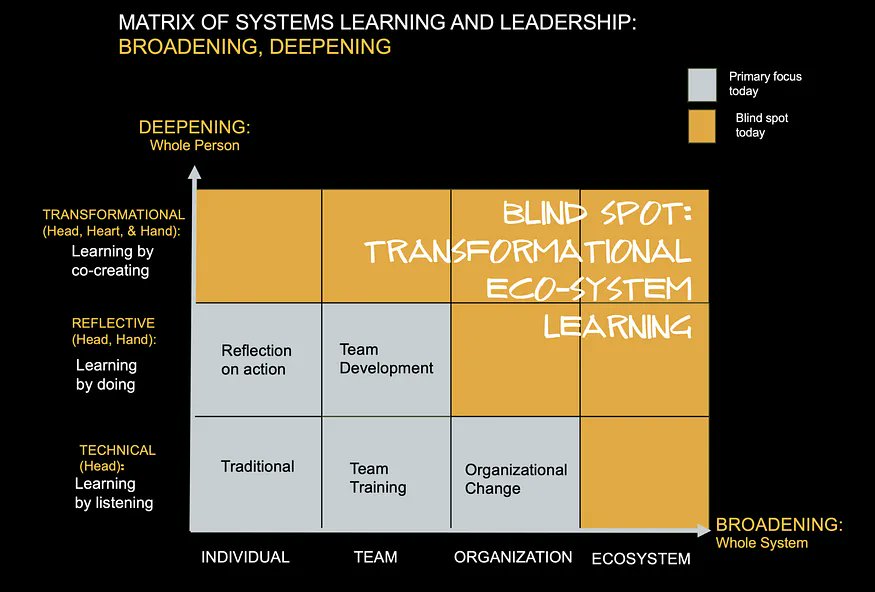
Change starts from the edge of organisations & systems: the best change ideas come from those who operate at the edge. It's tough being a change leader at the edge. Our views get dismissed by the centre for being unconventional or unrealistic. Often we feel we don't belong. Yet at the edge we can see things that others don't see. We're uniquely positioned to connect people & ideas, see options that others have overlooked & create significant change. The edge is where some of the greatest opportunities for change & innovations often hide. Research into creative success in Hollywood found that the most successful people were consistently those who operated with one foot in the centre & one foot in the periphery & were able to straddle both worlds. How to support those at the edge to thrive, survive & realise the opportunity for innovation & change: 1) Look outside but act inside: help create an interplay between the secure & the unknown 2) Fight groupthink & find an ally: even the support of one like-minded champion at the centre can break the chains of conformity 3) Translate the outside into inside language: find ways to express "edge" ideas in ways that the intended audience can grasp 4) Build a receptive culture: encourage people to value unique perspectives & preferences alongside the established norms & values of the group 5) Ride the inflection points: when pressure mounts systems under strain become unexpectedly receptive to new ideas: sloanreview.mit.edu/article/lesson…. Via @mitsmr
Helen Bevan tweet media
English
3
38
103
7.3K
TimDraimin
TimDraimin@TimDraimin·
The Purpose Lens:Transforming Investment Practices in Canada April 1 lu.ma/bl2gkr1a Join the Canadian Purpose Economy Project and Millani for a conversational webinar introducing Purpose Investing, an emerging impact investing and ESG investment strategy @CoroStrandberg
English
0
0
0
51
TimDraimin retweetledi
Helen Bevan
Helen Bevan@HelenBevan·
There are some fantastic (free) resources for change & great graphics in the Registered Nurses' Association of Ontario (@RNAO) "Leading Change Toolkit". I particularly like the content on the "social movement action framework", a people-led, grassroots approach to change that develops in response to an urgent shared concern or strongly desired change as well as a readiness for purposeful action by individuals, groups & organizations. rnao.ca/bpg/leading-ch… One of the key graphics has been adapted by @TCI_ca: thecenterforimplementation.com/toolbox/social…. If we typically led more change this way (with & by people, rather than to or for people) we would make quicker progress.
Helen Bevan tweet media
English
7
74
207
13.5K
TimDraimin retweetledi
Helen Bevan
Helen Bevan@HelenBevan·
Very often, when we have sought to create change at scale, we've focussed on how we can influence the behaviour of many individuals; nudging people towards better choices, designing interventions that encourage positive behaviours or compliance with a process. Is it time to shift the balance from changing individuals to changing the systems around them? Not just just redesigning choices - but reshaping the conditions that create them. Three strategies: 1) From isolated interventions (programmes that focus on single issues) to connected ecosystems (addressing the wider structures that reinforce them) 2) From downstream fixes (helping people cope with existing systemic barriers) to upstream redesign (removing those barriers altogether). 3) From designing for individuals (individual compliance) to designing for relationships (family, workplaces, communities, institutions). @noelito/from-behaviour-change-to-systems-change-rethinking-how-we-create-impact-8ffeac6faf01" target="_blank" rel="nofollow noopener">medium.com/@noelito/from-…. By @noelito who posts consistently great content on @Medium on local systems change & deserves a big audience.
Helen Bevan tweet media
English
9
29
163
12.6K
TimDraimin retweetledi
Helen Bevan
Helen Bevan@HelenBevan·
How, as leaders, do we motivate people to do their most productive work? New research says that too often we make assumptions linked to "agency theory": that people need strong managerial control, targets, monitoring & regulation to work effectively. The researchers say that assumptions based on "self-determination theory - creating the conditions so people are intrinsically motivated to do their best work (autonomy, competence, and relatedness) - get significantly better results. The key is to shift assumptions to shift practice: sloanreview.mit.edu/article/what-l…. Via @mitsmr. I paired this with a graphic from Landmark: landmarkspace.co.uk/wp-content/upl…
Helen Bevan tweet media
English
11
58
190
16.3K
TimDraimin retweetledi
giulio quaggiotto
giulio quaggiotto@gquaggiotto·
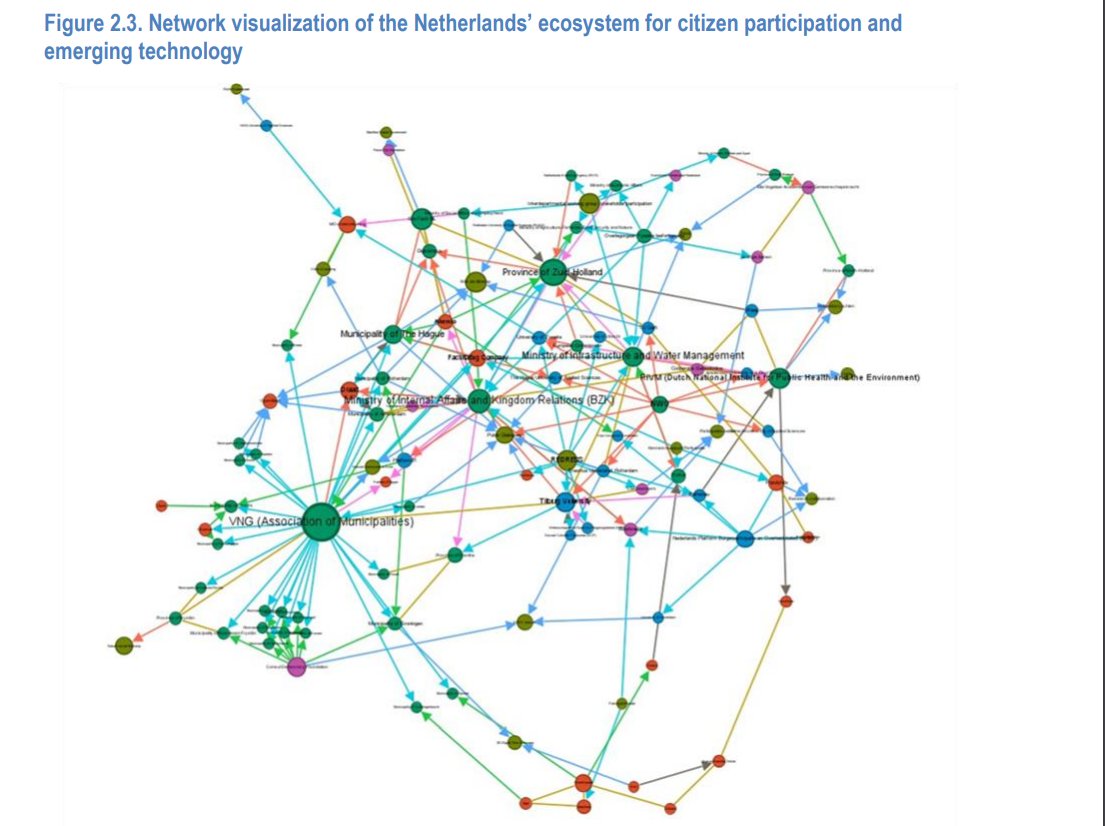
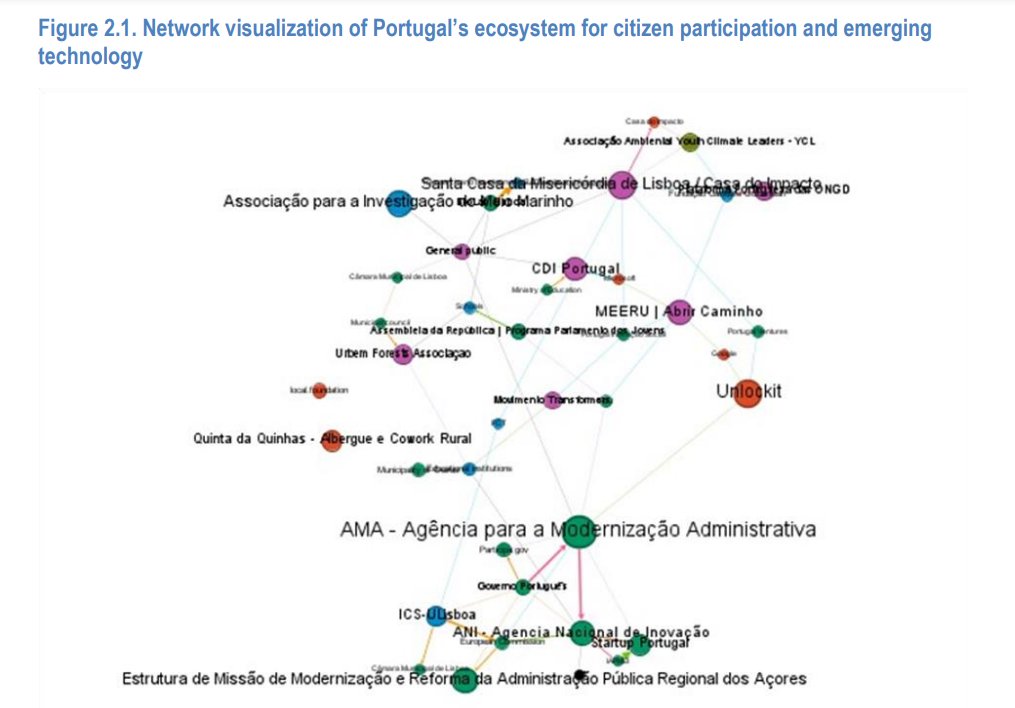
Mapping the ecosystem for citizen participation and emerging tech: Netherlands vs. Portugal (from new OECD report) oecd.org/en/publication…
giulio quaggiotto tweet mediagiulio quaggiotto tweet media
English
0
4
13
544
TimDraimin retweetledi
Helen Bevan
Helen Bevan@HelenBevan·
Power gradients (the gap between those with the most power & least power in a team or system) create risks, barriers to communication, a negative sense of "us & them", less innovation & poorer patient & performance outcomes. Jade Garratt says that addressing power gradients is THE most effective lever for increasing psychological safety within a team. This means: 1) Reducing the power held or overtly displayed by the most powerful individuals; &/or 2) Increasing the power & influence of those with the least. There are many ways to reduce power gradients. It doesn't necessarily require radical rethinking of the authority structure (& we may redraw the structure yet not reduce the power gradient): psychsafety.com/reducing-power…. Via @tom_geraghty (sign up for his weekly newsletter on psychological safety. It's brilliant)
Helen Bevan tweet media
English
9
72
187
20K