Timothy Kassis

6.1K posts

Timothy Kassis banner
Timothy Kassis

Timothy Kassis

@TimothyKassis

Co-Founder & CTO @k_dense_ai | Ph.D. in Bioengineering. Previously @biostateai, @matterworks_bio, @MIT, @GeorgiaTech.


Palo Alto, CA Katılım Aralık 2020
470 Takip Edilen3.1K Takipçiler
Sabitlenmiş Tweet
Timothy Kassis
Timothy Kassis@TimothyKassis·
Claude Science but with any model you like including local models. In use already by thousands of scientists worldwide. Please repost. github.com/K-Dense-AI/k-d…
English
2
9
19
954
Sam Altman
Sam Altman@sama·
also, a reason to favor open-source harnesses.
English
352
121
4.5K
609.5K
Timothy Kassis
Timothy Kassis@TimothyKassis·
@sama Very good model. Thanks for keeping it usable for scientific applications especially in the life sciences.
English
0
0
2
169
Sam Altman
Sam Altman@sama·
5.6 sol growth is insane. the inference team has done heroic work to be able to support demand. we are going to move mountains to continue to scale, but it is possible there are some hiccups soon.
English
688
237
8.8K
1.5M
Timothy Kassis
Timothy Kassis@TimothyKassis·
@OfficialLoganK We agree! And I think the most valuable and hardest to obtain right now is scientific data.
English
1
0
6
333
Logan Kilpatrick
Logan Kilpatrick@OfficialLoganK·
it’s surprising to me how many people seem to not understand that great models are built with super high quality curated data finding novel ways to create / get this data is a huge edge
English
390
210
4.8K
662.5K
Timothy Kassis retweetledi
Timothy Kassis
Timothy Kassis@TimothyKassis·
Claude Science but with any model you like including local models. In use already by thousands of scientists worldwide. Please repost. github.com/K-Dense-AI/k-d…
English
2
9
19
954
Timothy Kassis
Timothy Kassis@TimothyKassis·
RT @kdensemaya: POV: you’re using @k_dense_ai BYOK as your research assistant 🧬 In this vlog, I walk through how I'm using BYOK — from org…
English
0
2
0
37
Timothy Kassis retweetledi
Kat
Kat@katyenko·
First episode of the muniverse, a podcast by @muni_bio focusing on frontier science. Synthesis might be the most underrated bottleneck in drug discovery. While everyone is racing to build better AI models for molecule design, @onepot_ai is building a world where molecules can be designed, made, tested, and shipped on demand. I sat down with onepot co-founders @daniil_boiko and @andrei_tyrin, alongside my co-founder @derekalia. 00:00 - What onepot actually does 00:16 - Why synthesis became the bottleneck 02:52 - The Moscow lab origin story 04:41 - Why CRO timelines take months 07:00 - How automated is the chemistry stack? 08:58 - Where humans still beat robots 11:14 - The hidden labor behind “automated” labs 13:58 - Drug discovery vs materials 15:53 - Small molecules beyond pharma 17:09 - Why small molecules are harder than biologics 18:26 - The 10-year chemistry bet 20:47 - Personalized medicine needs faster synthesis 21:56 - Predicting toxicity before human trials 23:20 - Oil, ore, polymers, and drugs 26:28 - Why complex chemistry is still underbuilt 30:47 - Zero-person biotechs 33:32 - 3D molecules, cages, and exotic reagents 36:30 - The US-China chemistry advantage 38:20 - onepot in plain English 40:45 - Why biotechs outsource chemistry
English
4
12
45
4K
Philipp Schmid
Philipp Schmid@_philschmid·
Today, we're shipping 4 new capabilities for Managed Agents in the @GoogleDeepMind Gemini API! Background Execution, Remote MCP servers, Custom Function Calling and credentials refresh. ⏱️ Run long-running tasks asynchronously on the server (`background: true`) 🔌 Connect agents directly to internal endpoints via remote MCP servers ⚙️ Combine server-side code execution with local custom function calling 🔑 Refresh API tokens across turns without resetting your sandbox state We're optimistic about making agents true background teammates rather than interactive chatbots. Let me know what you think, feedback has been incredibly helpful so far! Documentation and Agent Skill below ⤵️
Philipp Schmid tweet media
English
14
21
234
21.3K
Stephan Lauermann
Stephan Lauermann@s_lauermann·
Here is a brief idea for using GPT-5.5 Pro to systematically proofread a paper. I just sent it to a graduate student. Maybe useful for others, too, given the approaching job market paper writing season: Prompt 1: Help me audit and review the attached chapter/paper in depth. Write me N proofreading prompts in code boxes/markdown file that I can give to N AI agents to work on. Ensure overlap for critical tasks. Do not try to be smarter than the AI agent. The main job of the prompts is to distribute the tasks and ensure diligent, in-depth auditing work by the AI agents. Parallel Prompt 2a,...,2n Work on this task (copy and paste the previous prompt) Parallel Prompt 3a,...3n: Take another pass over your writing and check it critically. For each major issue (i) provide counterexamples or repairs and (ii) discuss why you may be wrong. Parallel Prompt 4a,...,n Make a Markdown with all your comments. Include concrete replacement suggestions where appropriate. Include anchors in the PDF for easier location. Double-check what you wrote. Prompt 5a Here are n Markdown files with comments. Merge them. Prompt 5b Write the comments as replyable comments directly into the PDF. Your work Read the comments in the PDF. You could then reply to each comment, save it, and then give the PDF with your instructions to codex/pro for implementation. Notes: (i) Use a project and upload the pdf/latex of the paper as a source. (ii) This sort of workflow makes sense only for 5.5 Pro Webchat. You won't need it for an agent like Fable in cowork (if you have the usage left). Similarly, you would not need it for codex --- but codex gives only access to thinking, which seems weaker, especially for math. (iii) Be respectful of the costs of 5.5 pro. Keep N modest, do not automate the browser workflow, and stay within normal interactive use. This is a manual quality-control workflow, not a scraping or batch-generation setup.
English
4
12
51
7.5K
Timothy Kassis
Timothy Kassis@TimothyKassis·
(Fable 5 + 1000 tokens/sec - bio filter) would be groundbreaking for AI co-scientist platforms. Will we see it from @OpenAI today?
English
0
0
8
383
Timothy Kassis retweetledi
Prof Linda Gay Griffith
Prof Linda Gay Griffith@LindaGGriffith1·
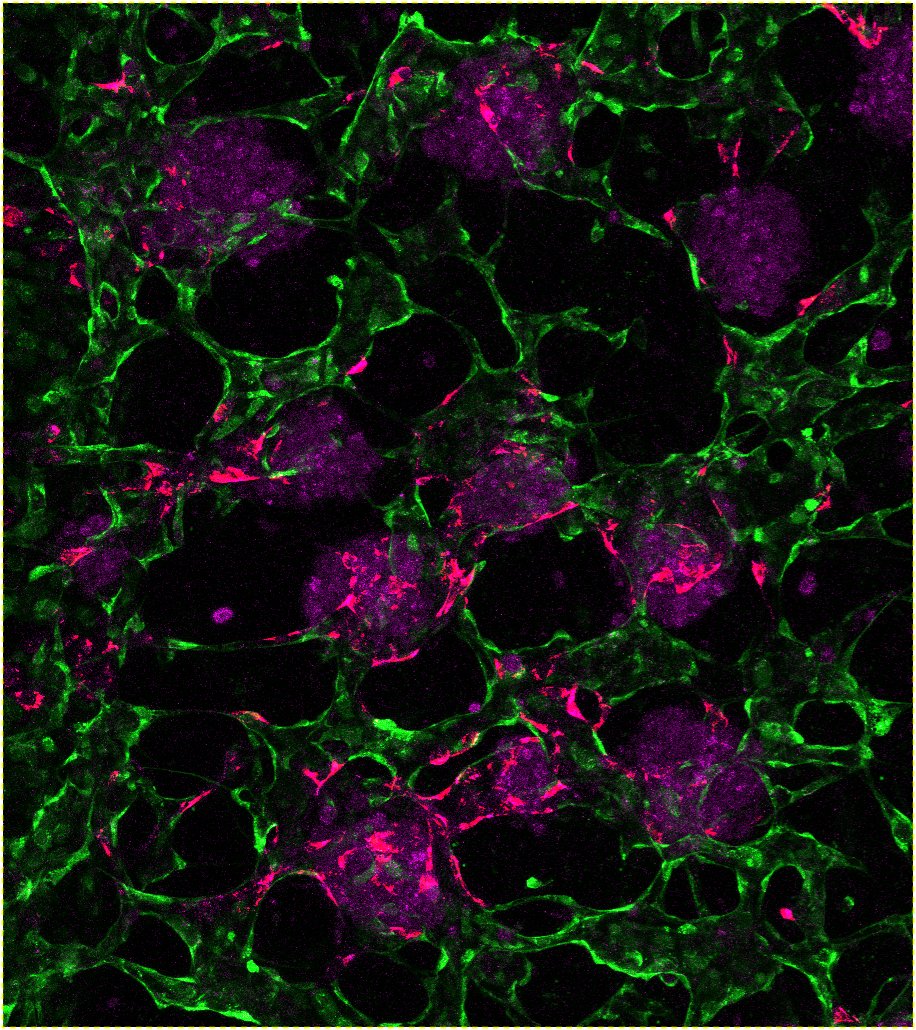
Postdoc position in vascularized liver NAMs for applications in drug development and disease modeling, as part of the new NIH-funded NAMs Technology Development Center for Women's Health. Emphasis on sex-specific model development, interactions with biologics, and metabolic behaviors. Email cv, statement, and list of references to griff@mit.edu
Prof Linda Gay Griffith tweet media
English
1
11
20
4.1K
Timothy Kassis
Timothy Kassis@TimothyKassis·
@meowmeow_lingo @SynScience We cannot support all local model providers. We have to choose one only to make maintenance and improvements more practical for us as a small time. Sorry.
English
0
0
0
37
meow_meow
meow_meow@meowmeow_lingo·
@TimothyKassis @SynScience But why? At least for me LMStudio is much more convenient, I have preferred models there. But now I have to download all this stuff the second time for Ollama just to try things out
English
1
0
0
22
Synthetic Sciences (YC W26)
Synthetic Sciences (YC W26)@SynScience·
Introducing OpenScience. A better, open-source Claude Science. • Any model: GLM, Kimi, DeepSeek, Claude, GPT, your own fine-tune. Switching is one flag. • 250+ research skills across ML, comp bio, cheminformatics. All readable, editable, extensible. • No throttling, no gatekeeping, no one vendor deciding what science is okay. • Native Atlas integration: many agents, one shared reproducible research graph. • Runs on your infra. Your data stays yours. Scientific AI should be open. One company shouldn't own the tools the rest of us discover with, or decide who gets to.
English
79
223
1.8K
232.7K
Kareem Carr, Ph.D.
Kareem Carr, Ph.D.@kareem_carr·
I'm a little confused about who this product is for. Scientists who already know how to code can probably figure out Codex or Claude Code. Scientists who don't know how to code should probably learn enough coding first, rather than churning out things they don't really understand. This product feels like it's trying to be a one-stop shop for doing the whole research project, which makes me feel a little locked in. Personally, I'm already uneasy about being locked into Anthropic's ecosystem, especially after the Fable 5 refusal issues, so I would much rather use tooling that's model-agnostic.
Claude@claudeai

Introducing Claude Science, a new app designed with every stage of research in mind. Artifacts traced to their code, environments managed on demand, and 60+ optional scientific databases that you can connect. Available now in beta.
English
94
22
454
112.8K
yrzhe.top
yrzhe.top@yrzhe_top·
试了一下 Claude Science,感觉很适合做科研早期调研。它会把一个研究问题拆成多个检索面,连接 OpenAlex、arXiv 这样的文献库,抓取真实文献数据,然后自动去重、过滤、聚类、画图,最后生成一份带主题地图、增长趋势和代表性论文的研究报告。 我让它分析 human-AI collaboration,它先抓了 2301 篇文献,清洗后留下 1711 篇,再自动分成 10 个主题社区,并生成了完整的研究地图。 对于刚进入一个领域、想快速知道“这个领域有哪些方向、谁在做、哪些论文重要、趋势在哪里”的人来说,非常有帮助。 当然它不能替代严格的系统综述,但作为科研初步调研和选题探索工具,效率非常高。
yrzhe.top tweet media
中文
7
47
233
15K
Timothy Kassis
Timothy Kassis@TimothyKassis·
RT @yhhonx: I’m hosting a free beginner-friendly workshop with @KdenseAI on building your own Scientific Agent Skill! We’ll use the K-Dense…
English
0
1
0
46