Ting-Feng Lin

67 posts

Ting-Feng Lin banner
Ting-Feng Lin

Ting-Feng Lin

@TingFengLin1

Neuroscientist, cerebellum, intrinsic plasticity, live imaging, mouse and zebrafish

Katılım Ekim 2018
883 Takip Edilen103 Takipçiler
Ting-Feng Lin
Ting-Feng Lin@TingFengLin1·
@JacquesCarolan Thanks! If you know any PhD candidates who has interest in building a light-sheet microscope for voltage imaging in zebrafish, please let them that I can recruiting!
English
0
0
1
29
Jacques Carolan
Jacques Carolan@JacquesCarolan·
@TingFengLin1 thanks ting-feng! hope you are doing well and congrats on setting up the lab!
English
1
0
0
39
Ting-Feng Lin retweetledi
Jacques Carolan
Jacques Carolan@JacquesCarolan·
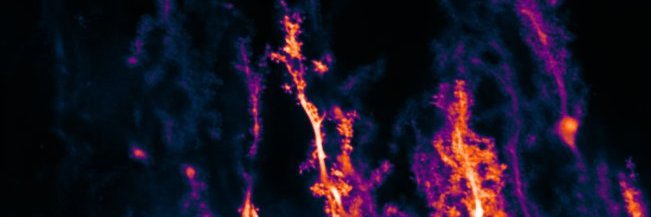
SUPER excited that my first ever *real* neuroscience paper is published today in Nat Comms!🥳 We combined two-photon voltage imaging ⚡️and optogenetics 🔦to probe synaptic plasticity in the cerebellum of awake behaving animals. 🧵
Jacques Carolan tweet media
English
5
37
219
13.5K
Ting-Feng Lin
Ting-Feng Lin@TingFengLin1·
I am in the process of setting up my Utrecht University website and would greatly appreciate any feedback you might have! uu.nl/staff/TFLin
English
0
0
1
95
Ting-Feng Lin retweetledi
Spencer Brown
Spencer Brown@spencrbrown·
Check out my recent paper in @CellReports, where we optically recorded action potentials in vivo from up to 300 fast-spiking interneurons at 3–4 kHz, using state-of-the-art genetically encoded voltage indicators from @StPierreLab and @mkannan3112, alongside advanced camera technology from @phantomhispeed. Voltage imaging is paving the way for addressing questions about population neural codes that were previously unreachable. cell.com/cell-reports/f… The video captures 250 milliseconds of voltage imaging data from molecular layer interneurons of the cerebellum, slowed down 80-fold for visualization. Each brief flash of light corresponds to an action potential.
English
1
6
26
3.7K
Ting-Feng Lin
Ting-Feng Lin@TingFengLin1·
If you're interested in my postdoc work at @UChicago_Brains, come join my talk on ramping neuronal activity and parallel fiber–Purkinje cell LTD at the JNS 2025 (7/24, 17:30–17:45, Room 5). Grateful to @SfNtweets for the JNS Meeting Award that made this opportunity possible!
Ting-Feng Lin@TingFengLin1

Hi #neuroscience! As I transition into my new role as an Assistant Professor at Utrecht University in the beautiful Netherlands, I’m excited to share that I’ll soon be recruiting a PhD student to study cerebellar neural plasticity and development using larval zebrafish.

English
0
0
2
205
Ting-Feng Lin
Ting-Feng Lin@TingFengLin1·
Hi #neuroscience! As I transition into my new role as an Assistant Professor at Utrecht University in the beautiful Netherlands, I’m excited to share that I’ll soon be recruiting a PhD student to study cerebellar neural plasticity and development using larval zebrafish.

English
0
0
8
612
Ting-Feng Lin retweetledi
Kuo-Hua Huang
Kuo-Hua Huang@KuoHuaHuang1·
Our new paper is published in Current Biology! In this project, we developed a model showing how social and depth information are integrated to drive affiliative behavior in zebrafish. See: sciencedirect.com/science/articl…
Kuo-Hua Huang tweet media
English
4
11
21
1K
Ting-Feng Lin retweetledi
Silas E Busch
Silas E Busch@SI_plasticity·
Inspired by Cajal, the Hansel lab's new work in @eLife provides a comparative histological analysis of human and mouse Purkinje cell morphology. Following our 2023 study, we detail differences of scale and kind between the neurons of the two species 🧵👇 elifesciences.org/articles/105013
English
2
5
26
5.7K
Ting-Feng Lin retweetledi
Sheng-Jia Lin
Sheng-Jia Lin@ShengJiaLin9413·
Our five years of work is finally out! This was truly a team effort—huge thanks to the team members in @varshneylab and to Gaurav for his great support! Proud of what we’ve accomplished together!
Gaurav@varshneylab

Our paper "Optimizing gRNA selection for high-penetrance F0 CRISPR screening for interrogating disease gene function" is now published in @NAR_Open doi.org/10.1093/nar/gk…. This work was led by our super postdoc @ShengJiaLin9413 * Several papers on F0 mutagenesis have been published, including those by Jao et al., Burger et al., Wu et al., Kroll et al., and others—all methods work well. We set out to test and compare strategies to achieve the highest phenotype penetrance using minimal resources. * We utilized indel prediction models such as Lindel (or inDelphi/ForeCast and others) to design gRNAs with high predicted success. * Targeting the N-terminal half of functional domains worked best. We tested 324 gRNAs across 125 genes, targeting key protein domains with just 1-2 gRNAs. * Our data shows that targeting the N-terminal half of a functional protein domain significantly increases phenotypic penetrance compared to targeting other regions of the gene. Selecting gRNAs with high Lindel scores (>75) substantially improved knockout efficiency. * Transcriptomic analysis revealed that gene expression patterns in F0 knockouts closely mimic those in stable knockout lines. * We validated 37 candidate disease genes across 8 tissues and screened 63 hearing-related genes, identifying 52 with hearing defects. Also, we identified 10 new neurodevelopmental disorder (NDD) genes in zebrafish.

English
0
1
3
206
Ting-Feng Lin retweetledi
Joachim Goedhart
Joachim Goedhart@joachimgoedhart·
Happy to announce our new preprint "A green lifetime biosensor for calcium that remains bright over its full dynamic range" which is now available on bioRxiv: biorxiv.org/content/10.110… Why yet another biosensor for Ca2+? Here's a thread 🧵
English
7
56
185
19.8K
Ting-Feng Lin retweetledi
NeuroCalc
NeuroCalc@CalcNeuro·
Proud to present our latest preprint by Elliot Birkett. In this paper we asked whether stimuli with different behavioural relevance evoke different adaptation in #zebrafish. biorxiv.org/content/10.110…
NeuroCalc tweet media
English
2
9
23
2.5K
Ting-Feng Lin retweetledi
Tom Baden
Tom Baden@NeuroFishh·
New preprint by the twitterless Tessa Herzog & colleagues: Individual cones of the vertebrate eye are exceptionally reliable and precise, but functionally heterogeneous as a population: shorturl.at/aGIMT @TaYoshimatsu @neonsynapse @JosMoyaDaz1 BenJames
English
2
20
48
7.9K
Ting-Feng Lin retweetledi
Eric Betzig
Eric Betzig@Eric_Betzig·
#FluorescenceFriday #zebrafish #bioart To see cells as they really are, it's necessary to see them in the native multicellular environment in which they evolved. However, the deeper we peer into living tissue, the more our view is obscured by optical aberrations. Here, take a trip as we dive 200 um down from the optic tectum to the hindbrain in a living zebrafish, turning on adaptive optics to correct these aberrations as we go, to see oligodendrocytes (orange) and neural nuclei (green). doi.org/10.1038/nmeth.…
English
7
45
282
26.3K
Ting-Feng Lin retweetledi
Ari Arrenberg's Lab
Ari Arrenberg's Lab@ArrenbergLab·
We're recruiting a lab technician at the University of Tübingen for our neurobio research group. It is an E9b position (TV-L, 100%) supporting our zebrafish animal facility and our mol-bio lab. uni-tuebingen.de/universitaet/k…
Ari Arrenberg's Lab tweet media
English
0
4
7
899