If you invest $1,000 in a stock, the most you can lose is $1,000.
But if you’re right, you can make $5,000, $10,000, even $20,000.
That’s the edge:
asymmetric returns.
You don’t need to be right often.
You just need a few big winners.
If you invest in 5 companies, one of them going 5–10x can carry your entire portfolio — even if the others fail.
Most investors don’t lose because they’re wrong.
They lose because they sell too early.
They panic on the drop.
They take profits too soon.
When you find a great company, time is your advantage.
Let it work.
Tesla Never Stopped Developing The Model S — Revelations with @JasonCammisa
The Tesla Model S is the most significant car of the last 75 years. It entered production as a Car of the Year winner, but never stopped improving. The world's first software-defined car was continually upgraded, in both hardware and software, so that the final Signature Edition shares little more than its name and skin with the original. This is the story of the Tesla Model S.
“I'm a drummer, the back of the stage. And all I ever see is the back of the singer's head. So, I don't care what he's singing about,” says Stewart Copeland of The Police. “I just want to bang stuff.” cbsn.ws/4sHw2B2
MacOS on my M5 iPad Pro!
This is done via Workbench, a very good RDP client made specifically for Mac and iOS. Can access my headless M4 Mac mini from anywhere, making my iPad Pro just about as useful as if it had MacOS itself natively!
Gonna use this a ton heheheh
NEWS: Namibia just rejected Starlink for refusing to meet their 51% "local ownership" rule, exactly like South Africa’s racist quotas.
Namibia’s communications regulator rejected Starlink’s license because it wouldn’t hand over 51% local ownership.
These governments are demanding race-based ownership instead of simply letting the best technology win for their people.
South Africa’s presidential spokesperson literally tweeted: “There are 193 UN countries… good money in the other 192. It’s okay to move on.”
This is the woke mind virus in full effect: punish excellence, reward race, and leave your own people stuck in the digital dark ages.
Starlink is already transforming remote areas worldwide with high-speed internet. Africa could be next-level… but only if governments drop the race quotas and let real innovation win.
The people of Namibia and South Africa deserve Starlink.
Africa, wake up. Drop the racist rules.
@TSLA_inside_ Judging by the route map in the top right of the screen, it appears the vehicle turned to early. But it still headed towards the destination...
ESA vs SpaceX
Elon Musk gründete SpaceX im Mai 2002. Sein privates Startkapital betrug etwa 100 Millionen US-Dollar. Zum Börsengang wird die Firma mit etwa 1,75 Billionen USD bewertet. Elon Musk hat sein Kapital um den Faktor 17.500 vervielfacht.
Die Europäische Weltraumorganisation (ESA) wurde seit dem Jahr 2000 von Steuerzahlern mit etwa 130 Mrd. € finanziert. Es wurden keine bedeutsamen Werte erschaffen. Die Raketentechnologie gilt als veraltet und überteuert.
Warum so viele Deutsche auf staatliche Strukturen schwören, ist mir ein Rätsel.
BREAKING: Australian Energy Minister Chris Bowen unwittingly just admitted to having 4.1 billion litres of fuel headed for Australia over the next 4 weeks.
Slight problem.
Australia consumes 5 billion litres a month. He’s just CONFIRMED a 20% shortfall
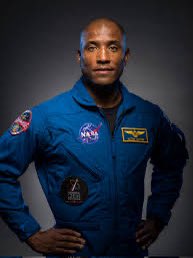
Victor Glover is the embodiment of modern exploration: U.S. Navy Captain, test pilot, and NASA astronaut who piloted SpaceX Crew-1, the first operational Crew Dragon mission, helping restore human spaceflight from U.S. soil. He spent 168 days aboard the International Space Station, conducted multiple spacewalks. Coming back to earth today as the pilot for Artemis II, he’s is a true Hero of the Planet. 🚀
Artemis II may have splashed down, but our photos and videos from the mission are still rolling in! Keep an eye on the latest: nasa.gov/artemis-ii-mul…
A community college professor taught the same study skills lecture for 30 years, and the video quietly became one of the most watched educational recordings on the internet.
His name is Marty Lobdell. He spent his career as a psychology professor watching students fail not because they were lazy, but because nobody had ever taught them how their brain actually works under the pressure of learning something hard.
The lecture is called "Study Less Study Smart." Over 10 million views. Passed around in Reddit threads, Discord servers, and university study groups for over a decade. And the core insight buried inside it has been sitting in cognitive psychology research for years, waiting for someone to explain it in plain language.
Here is the framework that completely changed how I think about effort.
Your brain does not sustain focus the way you think it does. Studies tracking real students found that the average learner hits a wall somewhere between 25 and 30 minutes.
After that, efficiency doesn't just decline. It collapses. You're still sitting at your desk, still looking at the page, but almost nothing is going in.
Lobdell illustrated this with a student he knew personally. She set a goal of studying 6 hours a night, 5 nights a week, to pull herself out of academic probation. Thirty hours of studying per week. She failed every single class that quarter.
She wasn't failing because she lacked effort. She was failing because she had confused time spent near books with time spent actually learning. The 25-minute crash hit her at 6:30pm every night. She spent the next five and a half hours sitting in the wreckage of her own focus and calling it studying.
The fix sounds almost too simple. The moment you feel the slide, stop. Take five minutes. Do something that actually gives you a small reward. Then go back. That five-minute reset returns you to near full efficiency. Across a six-hour window, the difference is not marginal. It is the difference between thirty minutes of real learning and five and a half hours of it.
The second thing he taught destroyed something I had believed about how memory actually works.
Highlighting feels productive. Going back over your notes and recognizing everything feels like knowing. But recognition and recollection are two completely different cognitive processes, and your brain is very good at making you confuse them.
You can see something you've read before and feel completely certain you understand it, even when you couldn't reconstruct a single sentence from memory if the page were blank.
He proved this live in the room. He read 13 random letters to his audience. Almost nobody could recall them. Then he rearranged the same 13 letters into two words: Happy Thursday. The whole room got all 13 without effort.
Same letters. Same count. The only thing that changed was meaning.
The brain stores meaning. Not repetition. The moment new information connects to something you already understand, the retention changes entirely.
This is what the cognitive psychology literature calls elaborative encoding, and it is the mechanism underneath every effective study technique.
The third principle was the one that hit me hardest, and the one almost nobody applies.
Lobdell cited research showing that 80 percent of your study time should be spent in active recitation, not passive reading. Close the material. Say it back in your own words.
Teach it to someone else, or to an empty chair if no one is around. The struggle of retrieval is where the actual learning happens. Reading your notes again is watching someone else do the work.
His parting line has stayed with me longer than almost anything else I have read about learning.
He told the room that if what he shared didn't change their behavior, they hadn't actually learned it. It would just live in their heads as something they had heard once and felt good about.
He was right. And most people leave every lecture exactly like that.
The students who remember everything aren't putting in more hours.
They stopped confusing the feeling of studying with the fact of it.
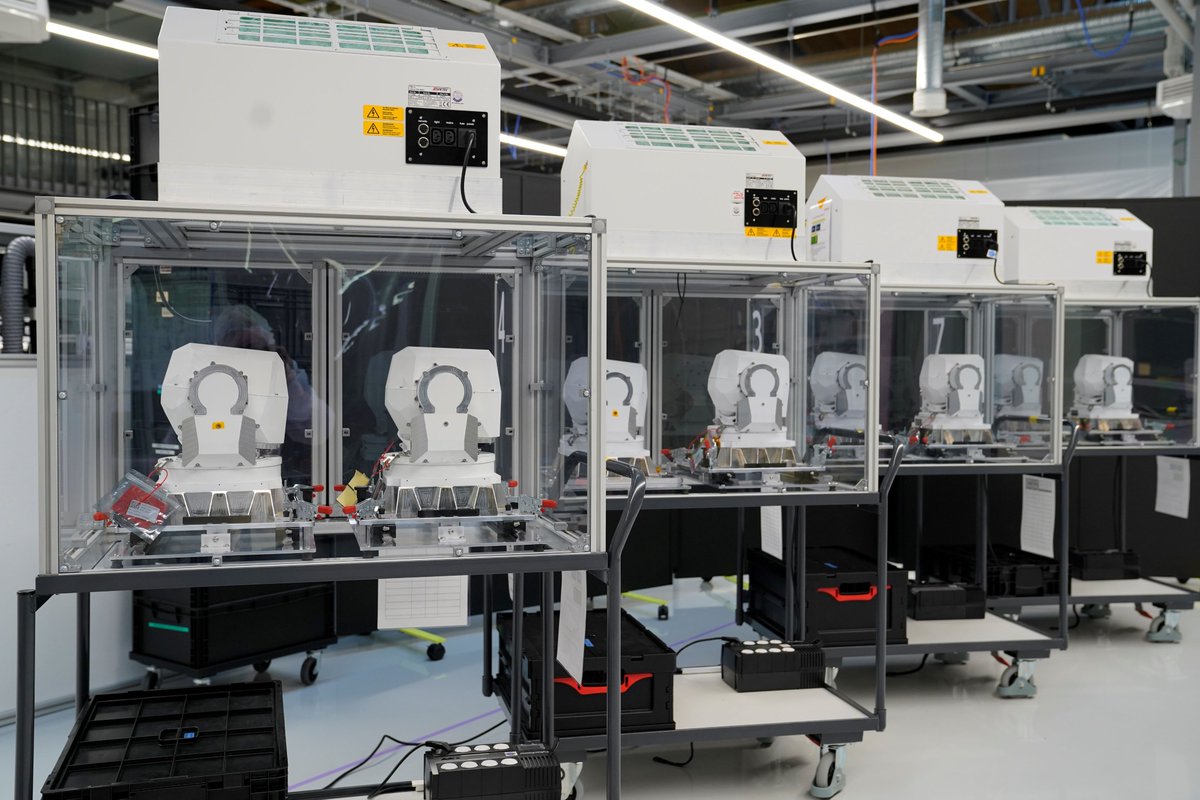
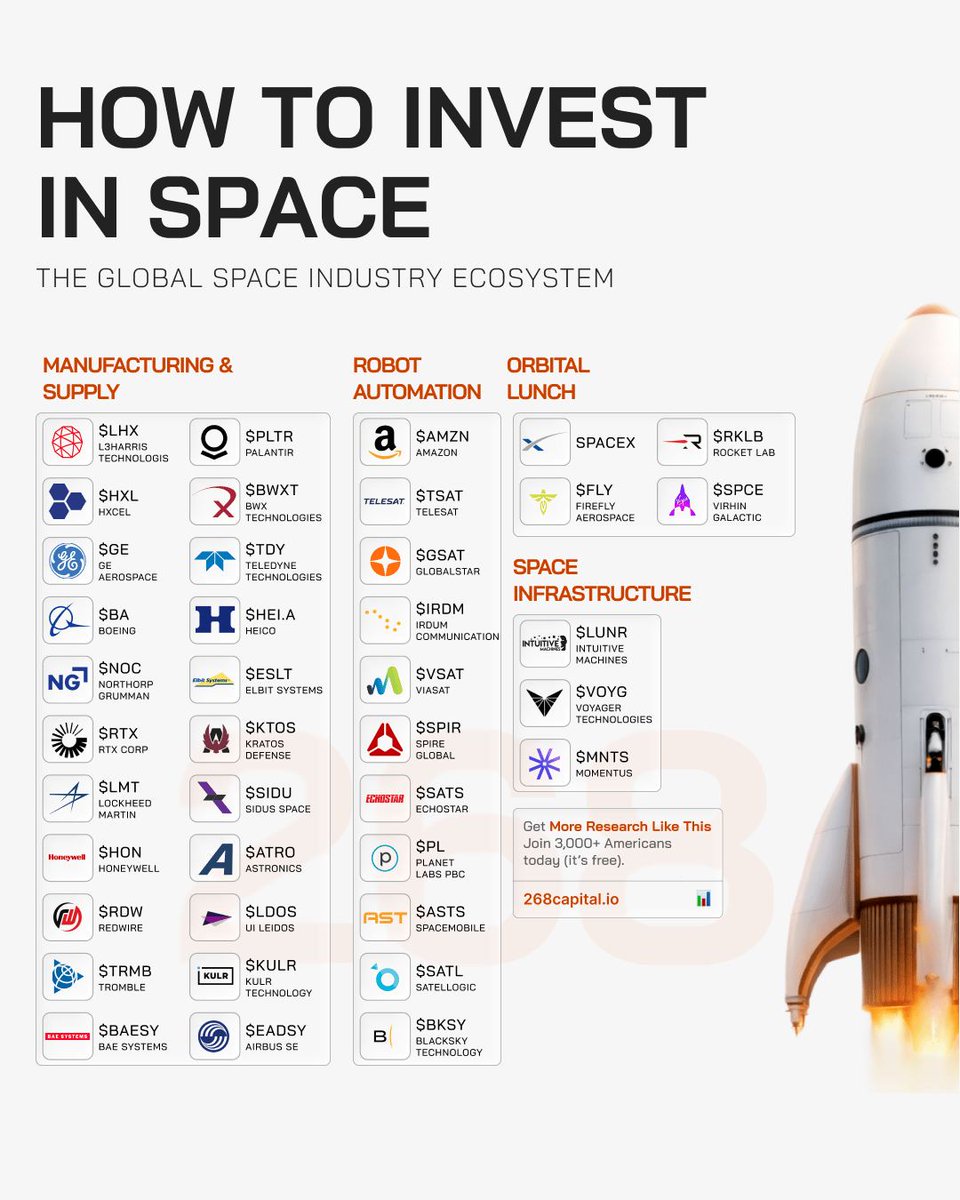
Rocket Lab has received regulatory approval to acquire Mynaric ✅
The transaction has been approved by Germany’s Federal Ministry for Economic Affairs and Energy. As a result we expect the transaction to close in April.