Dr Satoshi Akima FRACP 『秋間聰』

25.1K posts

Dr Satoshi Akima FRACP 『秋間聰』 banner
Dr Satoshi Akima FRACP 『秋間聰』

Dr Satoshi Akima FRACP 『秋間聰』

@ToshiAkima

Nephrology & Internal Medicine. Immunothrombosis incl DIC. ISTH Member. No Conflicts of Interest. Views my own etc

Sydney, Australia Katılım Eylül 2012
3.2K Takip Edilen32.4K Takipçiler
Sabitlenmiş Tweet
Dr Satoshi Akima FRACP 『秋間聰』
A lie oft repeated remains an abject lie. Nobody has ever produced a shred of evidence that a Cochrane review is a universally valid scientific “Gold Standard” applicable to all health outcome measures. Just repeating a lie is not enough.🧵news.com.au/lifestyle/heal…
English
64
439
1.5K
360.9K
Dr Satoshi Akima FRACP 『秋間聰』 retweetledi
Hiroshi Yasuda (保田浩志)
From an autopsy-based case–control study, "COVID-19–positive cases demonstrated significantly increased reactive gliosis and microglial activation in the olfactory bulb, along with a higher frequency of mild perivascular lymphocytic infiltration in the frontal cortex.. Systemic pathological findings in COVID-19–positive cases were consistent with severe multisystem disease. [In conclusion,] COVID-19 is associated with region-specific but non-uniform neuropathological alterations dominated by reactive and vascular changes rather than encephalitic processes." People change after contracting COVID. 'Histopathological changes in the olfactory pathway in COVID-19: An autopsy-based case–control study' link.springer.com/article/10.100…
English
8
128
300
21.8K
Dr Satoshi Akima FRACP 『秋間聰』 retweetledi
PolyBio
PolyBio@polybioRF·
Follow along with the #polybiospringsymposium2026 in this thread👇🏻 11:00 am ET—Dr. Amy Proal kicked off this Spring symposium with an overview of PolyBio’s new commercialization network that will help translate Long COVID biomarkers from the lab & therapies from coordinated clinical trials into useful tools in the clinic. She also discussed how this commercialization infrastructure can be applied to other IACIs.
PolyBio tweet media
English
23
56
163
23.2K
Dr Satoshi Akima FRACP 『秋間聰』 retweetledi
Barry Hunt
Barry Hunt@BarryHunt008·
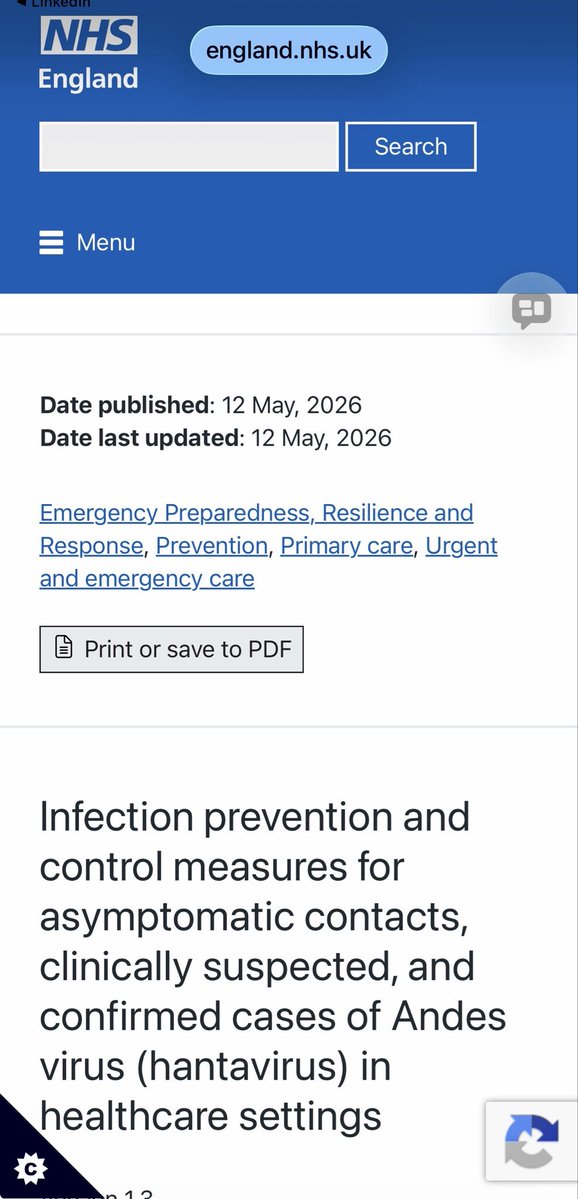
Has everyone seen this new NHS UKHSA guidance for ANDV? ***FFP3 RESPIRATORS *** For EVERYONE in Healthcare Patients & Staff In contact w suspected cases And contacts I kid you not Hell hath frozen over 👏👏👏 england.nhs.uk/long-read/ipc-…
Barry Hunt tweet media
English
23
232
739
32K
Dr Satoshi Akima FRACP 『秋間聰』 retweetledi
Zdenek Vrozina
Zdenek Vrozina@ZdenekVrozina·
This may be one of the more important long COVID papers in a while. A new study in Frontiers in Immunology suggests that COVID can trigger new-onset insulin resistance - and that this may drive abnormal NETosis in neutrophils months after infection🧵
English
16
260
751
24.9K
Dr Satoshi Akima FRACP 『秋間聰』 retweetledi
Danielle Beckman
Danielle Beckman@DaniBeckman·
It is interesting to me that many people assume dementia “runs in the family,” when most dementia cases are actually sporadic rather than directly inherited. Family history can increase risk, but truly hereditary forms are relatively rare. #Alzheimer, for example, is the most common cause of dementia, accounting for an estimated 60–80% of cases. Yet only about 5% of Alzheimer’s cases are caused by inherited genetic mutations, and these forms usually begin at a younger age. Most cases develop from a combination of aging, vascular health, lifestyle and environmental exposures, including to pathogens. We know that conditions such as high blood pressure, diabetes, high cholesterol, obesity, and heart disease damage blood vessels and increase dementia risk because the brain depends heavily on healthy circulation. These conditions can disrupt the blood–brain barrier (BBB), increasing its permeability and allowing inflammatory molecules and other harmful substances to affect brain tissue. Physical inactivity and poor sleep also play an important role. Regular exercise supports blood flow, reduces inflammation, and improves insulin sensitivity, while chronic sleep disruption is associated with increased accumulation of abnormal proteins linked to Alzheimer such as tau (NFTs) and amyloid (AB). What receives less attention is the growing evidence that some infections may also contribute to dementia risk through several possible mechanisms. Can be direct infection of the brain cells (seen in HIV, #Covid, herpesviruses and others) or by chronic immune activation and inflammation, which damage blood vessels and contribute to vascular impairment. There is also growing research linking reactivation of dormant viruses after an infection, and interactions between infections contributing to dementia in some individuals. Overall, chronic systemic inflammation appears harmful to brain health. Repeated severe infections or persistent inflammatory states may contribute through vascular damage and prolonged immune activation. There is still a great deal we do not understand about dementia and neurodegenerative diseases, which is one reason why truly effective treatments are still not available.
Danielle Beckman tweet media
English
15
210
654
13.9K
Dr Satoshi Akima FRACP 『秋間聰』 retweetledi
Raina MacIntyre
Raina MacIntyre@Globalbiosec·
Transmission of #Ebola is being debated yet again. In the catastrophic West African epidemic in 2014, health workers were forced to work in surgical masks and many got infected. Medical journals refused to publish us, instead, publishing articles saying "less PPE is better". A nursing journal published us, because #nurses are at the frontline 1/2 sciencedirect.com/science/articl…
English
33
344
911
88.3K
Jackie Seidel, PhD
Jackie Seidel, PhD@JackieSeidel1·
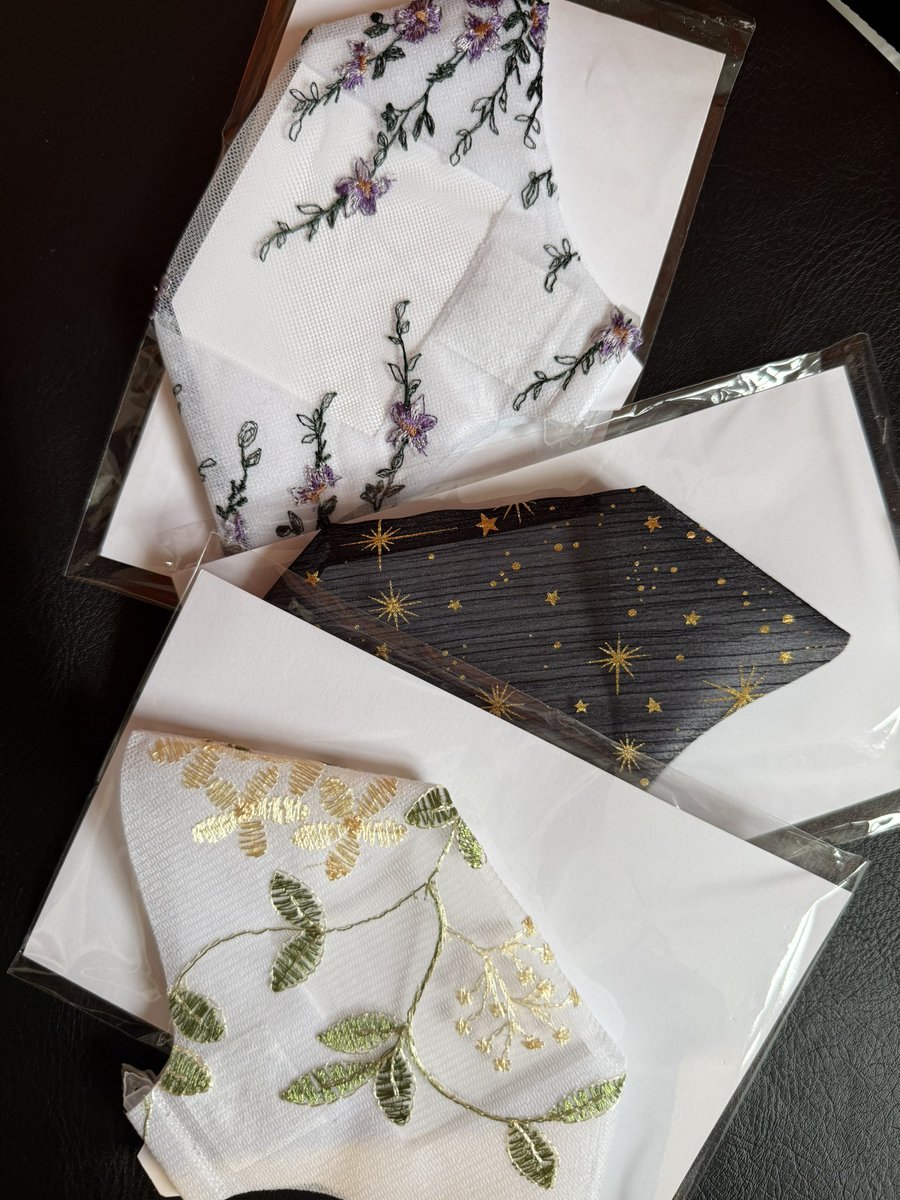
I can’t remember who here recommended these Aura mask covers. They are more beautiful than in photos and so well made. Doesn’t seem to affect breathability. You can still see the 3M branding thru them (as you can see the shipping cardboard in them here). But only faintly.
Jackie Seidel, PhD tweet media
English
16
80
698
13.2K
Dr Satoshi Akima FRACP 『秋間聰』 retweetledi
Linsey Marr linseymarr.bsky.social
Fully agree. "Close contact" describes behavior, but it does not describe how the virus gets from one person to the other. It could be through touch, inhalation of small particles in the air, or spray of large droplets.
Kristen K. Coleman@drkristenkc

Something I touch on repeatedly in my Airborne Infection course is that “close contact” is not a good way to describe how a virus is transmitted. It can be communicated as a risk factor for infection, but it does not say what the actual biological mechanism of transmission is.

English
6
72
319
17.9K
Dr Satoshi Akima FRACP 『秋間聰』 retweetledi
Danielle Beckman
Danielle Beckman@DaniBeckman·
I moved to the U.S 10 years ago dreaming about helping develop a novel model of #Alzheimer, closer to humans. Happy to share that our last study at the journal of the @alzassociation, was within the top 10% most-viewed in 2024. The model now is being used to test therapies 🤓🧠
Danielle Beckman tweet media
English
26
96
544
10.5K
Dr Satoshi Akima FRACP 『秋間聰』 retweetledi
Danielle Beckman
Danielle Beckman@DaniBeckman·
For #FluorescenceFriday, the work that motivated my move to Germany! I join the @erturklab to help develop novel approaches to neutralize and eliminate residual viral proteins commonly observed in #LongCovid patients, particularly in the brain. Keep an eye out for our work!🧠💪🔬
Ali Max Erturk@erturklab

Our new study shows that SARS-CoV-2 spike protein accumulates & persists in the body for years after infection, especially in the skull-meninges-brain axis, potentially driving long COVID. mRNA vaccines help but cannot stop it🔬🧠🦠🧵👇@cellhostmicrobe cell.com/cell-host-micr…

English
10
161
583
15.2K
Dr Satoshi Akima FRACP 『秋間聰』 retweetledi
Harry Spoelstra
Harry Spoelstra@HarrySpoelstra·
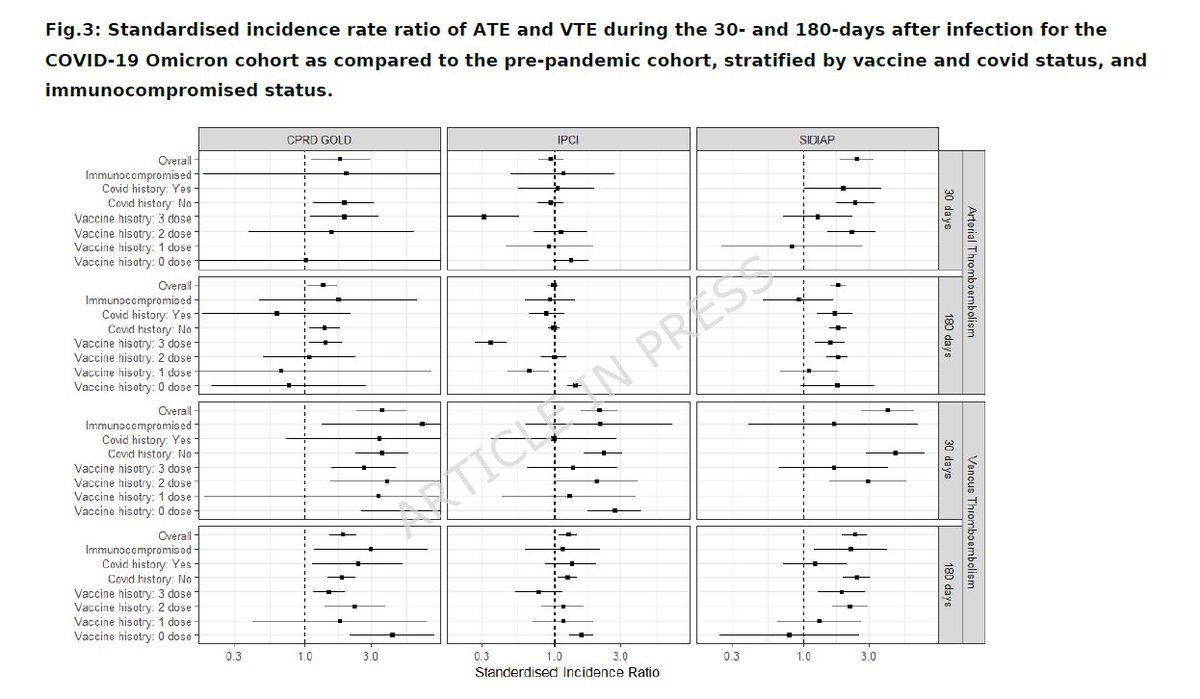
Venous and arterial thromboembolic events after COVID-19 during the Omicron period in three European countries 🚨OOOOh boys and girls, WE WARNED YOU: With “Mild” Omicron COVID your blood-clot risk is still highly elevated, even if you’re vaccinated. A new 7.6-million-person study just dropped: clots nearly 4× higher in the first month… and still doubled at 6 months!! • Large-scale European cohort study (UK CPRD GOLD, Dutch IPCI, Spanish SIDIAP, >7.6 million pre-pandemic controls, ~780 000 Omicron-era COVID-19 cases) mapped to OMOP model. • Compared incidence of VTE, arterial thromboembolism and other CV events at 30/60/90/180 days post-infection vs 2017–2019 background rates. • Age-sex standardised incidence ratios (SIRs) for VTE: 3.61× (UK) to 4.10× (Spain) in the first 30 days, remaining 1.88–2.37× at 6 months……even in vaccinated populations, • Risks remained raised up to 6 months for pulmonary embolism (strongest signal), stroke, and heart failure, • Highest risks in immunocompromised and infection-naïve individuals. Prior infection and higher vaccine doses blunt (but do not eliminate) the increase, • Vaccination stratified by doses: individuals with exactly one dose showed numerically lower crude VTE/ATE rates (wide CIs, small subgroup),🤔 • Limitations: observational biases (testing, healthcare access, unmeasured confounders), heterogeneous coding across databases, no direct variant sequencing, ‼️Published yesterday, the pre-print “definitive version” of the three-country Omicron preliminary report from 2025, the data are unambiguous: even in the vaccinated, “milder-wave” era, COVID-19 drove a 3.6- to 4.1-fold surge in life-threatening blood clots during the first 30 days and left risk nearly doubled (1.9-2.4×) at six months. Prior infection and higher vaccine doses blunt, but do not eliminate, the hazard. The virus continues to damage the cardiovascular system long after “mild” symptoms fade and by doing so, SarsCov2 remains a potent cardiovascular hazard! #AvoidSars2 #AvoidReinfections #Mitigate #COVID19 #Thromboembolism nature.com/articles/s4159…
Harry Spoelstra tweet media
English
11
190
415
17.2K
Dr Satoshi Akima FRACP 『秋間聰』 retweetledi
Lisa Oshima
Lisa Oshima@lisawhelan·
Raw sewage in streets and cholera in drinking water once seemed normal. Now it’s unthinkable. Yet we tolerate the airborne equivalent in too many indoor spaces, including schools, doctor's offices, work & more. Clean, healthy air is the next public health and economic frontier.
Linsey Marr linseymarr.bsky.social@linseymarr

Clean water. Clean food. Clean air. I'm leading one of four Performer teams for the @ARPA_H BREATHE program. We're building a system that ensures clean air in buildings. We're demonstrating this in child care centers to improve health for kids and their families.

English
6
471
1.7K
56.7K
Dr Satoshi Akima FRACP 『秋間聰』 retweetledi
Prof. Jose-Luis Jimenez
Prof. Jose-Luis Jimenez@jljcolorado·
@adamscochran This is totally incorrect from an aerosol science angle. N95 work both ways much better than surgical masks And size of virus doesn't matter. They are contained in much larger particles of saliva or respiratory fluid
English
24
170
1K
18.6K
Dr Satoshi Akima FRACP 『秋間聰』 retweetledi
Linsey Marr linseymarr.bsky.social
It's widely accepted that hantavirus transmits from rodent excreta to humans via inhalation of aerosolized virus, so I don't understand why we're so reluctant to acknowledge the inhalation route for human-to-human transmission. nytimes.com/2026/05/14/hea…
English
254
3.1K
21.1K
2.4M
Dr Satoshi Akima FRACP 『秋間聰』 retweetledi
Michael Lin, MD PhD 🧬
Michael Lin, MD PhD 🧬@michaelzlin·
Ensitrelvir succeeded where Paxlovid had failed to show efficacy, in post exposure prophylaxis. It’s also been known for years that it prevents severe late disease in those already symptomatic as well as Paxlovid. Ensitrelvir should have been approved long ago. If it were from an American rather than Japanese pharma, it would have been.
nature@Nature

An antiviral pill has, for the first time, been shown to prevent COVID-19 in people exposed to the SARS-CoV-2 virus go.nature.com/4nAMi6g

English
18
235
964
36.9K
Dr Satoshi Akima FRACP 『秋間聰』 retweetledi
Christos Argyropoulos MD PhD 0kale/acc 🇺🇸
Old news - I saw this when I was in Japan back in March for a conference and my web and X feeds were full of Japanese news 😎. Ensiltrevir is a much better drug than paxlovid in *every* single aspect: higher antiviral activity, longer half life, fewer drug - drug interactions and better clinical data (remember #Paxlovid failed their prophylaxis trials). The American citizen should ask the FDA why they are delaying @ShionogiUS review/approval process. Not unlike to what the FDA did to #Lucira, @Novavax and @Invivyd , true innovation in diagnostics, prophylactic and therapeutics was/is unnecessarily delayed to keep the 1st generation product cash flows intact. If we did this during the 90s to HIV, we would still be stuck with Crixivan and Norvir.
nature@Nature

An antiviral pill has, for the first time, been shown to prevent COVID-19 in people exposed to the SARS-CoV-2 virus go.nature.com/4nAMi6g

English
19
223
776
25.5K