Trader Joh

26 posts

Trader Joh

Trader Joh

@TraderJoh

No beginning. No end
New Jersey, USA Katılım Mart 2010
448 Takip Edilen146 Takipçiler
ValaiPechu Anthanan
ValaiPechu Anthanan@Anthanan_Offl·
சுட்டாய்ங்களே... சரியா சுடக் கூடாதா? ச்சைய்
தமிழ்
33
11
429
115.3K
Krithika ✨
Krithika ✨@traversingkrith·
Please don't confuse current politics with ancient Tamil heritage. I’m no expert, but the evidence is there. The term 'Kaniyan' literally means traditional astronomer (Kaniyan Poongundranar is a prime example). Treatises like Paripaadal and Tholkappiyam also record sophisticated solar observations. I value Sanskrit scientific texts too, but I’d suggest researching other Indian languages before negating their contributions. Science here has always been a shared dialogue. 😊
English
2
0
4
428
Krithika ✨
Krithika ✨@traversingkrith·
🤗 Have you ever wondered why we celebrate the birth of certain Tamil months exactly three weeks after the actual astronomical events? We celebrate Chithirai 1, Aadi 1, Aippasi 1, and Thai 1 as rituals, but our ancestors were actually tracking the Sun's precise movement. While we teach children that "the Sun rises in the East," the reality is that the sunrise point shifts from Northeast to Southeast in a year-long cycle. Our festivals mark these four pillars: 🌻 Chithirai 1: The Sun is at "True East" (Equinox). 🌬️ Aadi 1: The Sun reaches the Northeast limit (Solstice). 🌨️ Aippasi 1: The Sun returns to the center, heading South. 🌞 Thai 1: The Sun reaches the Southeast limit (Solstice). But here is the catch:👉 the actual astronomical Solstices and Equinoxes happen about 20 to 24 days before our festival dates. This isn’t a calculation error. It’s a deliberate observation of Nature’s Response Time. Our ancestors knew this. When the Sun "turns" in the sky, it takes time for the winds to shift, the soil to warm, and the crops to ripen. They didn’t just celebrate a coordinate in the sky; they waited until that cosmic shift actually manifested as a tangible change on Earth. Don't you think this as a truly high-level science behind our traditions? 😊👍
English
20
368
1.2K
38.6K
NammaTNPages
NammaTNPages@NammaTNPages·
@TraderJoh @traversingkrith Just because you are not aware does not mean it does not exist !! Trader Joh - Go and drink that Ginger,Lemon, echnicea juice and look at things with an open mind and a working pair of eyes !!
English
1
0
0
15
பரம்பொருள்
பரம்பொருள்@paramporul·
இதுவல்லவோ லட்சியம்.. சிறந்த கட்சி.. சிறந்த தலைவன்.. சிறந்த ரசிகைகள்…
பரம்பொருள் tweet media
தமிழ்
148
783
2.2K
94.3K
Trader Joh
Trader Joh@TraderJoh·
@thekaipullai In USA upward mobility, equality - present, and the biggest draw racism, nepotism, cronyism - present, but insignificant to stop the driven individual
English
0
1
17
2.4K
The Kaipullai
The Kaipullai@thekaipullai·
USA"s greatest strength is that it has created an ecosystem where people from any nationality and ethnicity perform better in the USA than what they would've had they stayed back at home. And it has been the case since the beginning. The British migrants did better in USA than what they could do in Britain Same with Germans and Italians Now the trend is repeating with Indians and Chinese. What USA has showed to the rest of the world is that, if you want to become one of the greatest countries in the world, all you have to do is provide a social and a cultural environment, where a mind can be at its best.
English
56
179
1.5K
47.7K
Stock Talk
Stock Talk@stocktalkweekly·
WHAT TARIFFS ARE MEANT TO DO, WHY OTHER COUNTRIES HAVE THEM, AND WHY PRESIDENT TRUMP'S HAPHAZARD TARIFF PLAN WILL DO MORE HARM THAN GOOD I'll preface these comments by noting that I'm an American, I approve of the use of tariffs as a policy tool, and I support President Trump & his administration (and did prior to the election as well). I'm not a partisan, and I think there is a distinction between support of policy in theory, and endorsing every detail of that policy's implementation. Many Americans want to see middle-class jobs come back to America, and feel they have been left behind. Emotional impressions left by their parents & grandparents, have led many Americans to perceive these jobs as the same middle-class jobs of old -- in fields like car manufacturing and steel production. When generations of your family work in a particular industry, the fate of that industry is especially important to you as a person. I understand that, and I empathize with the hardships that these Americans express. But I also believe that there is a misconception regarding economic transformation, and the inherent evolution that developed economies experience over time. Tariffs are economic tools traditionally used to protect infant industries. "Infant industry" refers to new sectors within a country’s economy that lack the scale, efficiency, or technological sophistication to compete with established foreign competitors. By imposing tariffs on imported goods, governments temporarily provide domestic firms with competitive price advantage. This “breathing room” allows infant industries to grow, learn-by-doing, develop scale, and invest in technological improvements. Historically, there are many examples of specific tariffs being used for specific industries. For example, the United Kingdom relied heavily on tariffs during its mercantile era (from the late 17th century to mid-19th century), to shield its industries from stronger European competitors. From the Civil War through the Great Depression, when our nation was younger, the United States used tariffs to nurture industries like textiles & steel. South Korea used them for their electronics sector in the 20th century, and Brazil used them to protect its burgeoning automobile industry during the 1960s and 70s. On the subject of "fairness", this is precisely why many smaller economies have such high tariffs today. They cannot compete with the juggernaut economies of America and China. They also have no hope to have balanced trade with nations like the United States. They simply don't have the purchasing power to do so. Do we really, practically expect Vietnam to buy as much of our stuff as we do theirs? Of course not. Now, are tariffs universally being used for protection of infant industry? No. There are many cases in which tariffs have been far too long-standing leading to inefficiency, rent-seeking, and technological stagnation. Many of these improper tariffs and trade barriers need to be specifically addressed and resolved. However, sweeping reciprocal tariff measures devoid of nuance are not the way to do it. On the subject of bringing manufacturing back to the United States, we have to be specific. Do we want to make plastic toys and cotton t-shirts here again? Some may think so, but the reality is that it's impossible. We have an $83,000 per capita GDP. Our wages are simply too high to affordably make these things. Manufacturing didn't leave America because we "forgot how to make things" (companies like SpaceX demonstrate world-leading manufacturing capabilities in the United States) -- it left because our nation became wealthy. Reverting to low-value manufacturing would be a sign of economic regression. We'd just be going backward. As economies grow and become wealthier, their labor-cost advantage erodes. China's "perfect blend" over the past 15 years has been lower labor costs, massive population, and the necessary logistics & infrastructure to facilitate manufacturing. Over time, as China becomes even wealthier, they will inevitably producer fewer low-value goods. We've already seen parts of Southeastern Asia begin to siphon business from China over the past 5 years, as they can offer comparable or better labor-costs for manufacturers, while also mitigating political risks Some people profess that automation is a solution for this, but the brief counter to that argument is that the technology simply isn't ready yet. Could the issue of wages and labor-costs be solved in an economy where useful robots & artificial intelligence can make these things without human input? Sure. But that economy doesn't exist yet. It probably won't for another decade, maybe five years at best. This capacity certainly wouldn't be available immediately, and it is silly to suggest that this is a solution for reshoring manufacturing. We still need people to make things, and American workers are too expensive in the context of producing low-value goods. Now, the above arguments aren't meant to imply that tariffs can only be used to protect infant industries. In the process of becoming wealthier & more complacent, the United States has allowed strategically critical industries to leave the nation, namely semiconductors, steel, and shipbuilding. These industries are national security interests, because in a wartime scenario we do not have enough domestic capacity to meet our industry needs in these categories. That puts us at major risk for being leveraged against in a time of conflict. These industries also offer high-paying jobs that would fit with American wage-standards. Tariffs can be used in these specific industries to help reshore capacity. However, they must be rolled out mindfully and practically. A multi-year time frame should be provided, allowing industries to build factories, train workforces, and adapt supply chains. Clear benchmarks should be set, permitting tariff reductions when foreign nations invest in the U.S. or make meaningful trade concessions. Rolling these tariffs out overnight with less than a week for companies & countries to respond, creates unnecessary, avoidable economic chaos. On the subject of negotiation, there is a delicate balance between assertive use of economic leverage, and unpredictable, unilateral economic policy. Both are matters of perception. Some onlookers perceived Trump's initial tariff policy as hardline bargaining tools aimed at securing concessions. The absurdity of the policy at face-value seemingly implied this. While this may or may not be the true purpose, the issue with this type of policy messaging is that it dramatically increases uncertainty. Why? Because no one knows what comes next. The tariffs seem too high to logically keep in place, and so many are procedurally looking forward to them being softened or removed. But, in the case that they aren't, the potential global economic impact is too large to ignore when conducting risk calculus. There's a high-stakes gamble at play. The hope is that all major nations come to the table to renew trade agreements, but if they don't, then you have a global trade war overnight. There is only one immediate effect from the policy: a decline in economic confidence resulting from uncertainty. Investments will stall, and so will spending, because who wants to empty their pocket-book when they don't know what could happen next? This tariff plan will almost certainly cause a global economic recession if it's implemented as it was originally announced last week. Millions of people, including Americans, will lose their jobs. We risk a stagflation scenario where prices for basic goods skyrocket in the short-term coupled with a significant economic slowdown. The worst part? Global central banks are currently between a rock and a hard place, where they are juggling their fight with inflation with an incrementally weakening labor market. The timing couldn't be worse for injecting massive economic uncertainty. The reactionary monetary policy support that we're used to in scenarios like this may not be available this time. There are some influential people within the Trump Administration who follow this account, and without naming them, I hope that they consider this post (and other criticisms of the tariff policy) with an open-mind. The Trump Administration should immediately move to refine this policy to avoid a global economic recession. The Administration should designate accountability (find a fall guy, whether that's Lutnick or some other economic advisor), walk back the initial policy, clarify its overall stance, and provide a buffer period for negotiations with major trading partners. Leveraging the current fear & chaos strategically, the White House can secure new trade agreements and introduce detailed, phased tariff policy for strategically critical industries like semiconductors, steel, and shipbuilding. This would be a more rational and sophisticated approach to address the re-ordering of global trade.
English
57
44
268
50.4K
Trader Joh retweetledi
President Donald J. Trump
"From now on, women's sports will be only for WOMEN." –President Donald J. Trump 🇺🇸
English
4.3K
20.3K
144.6K
15.8M
Steve Burns
Steve Burns@SJosephBurns·
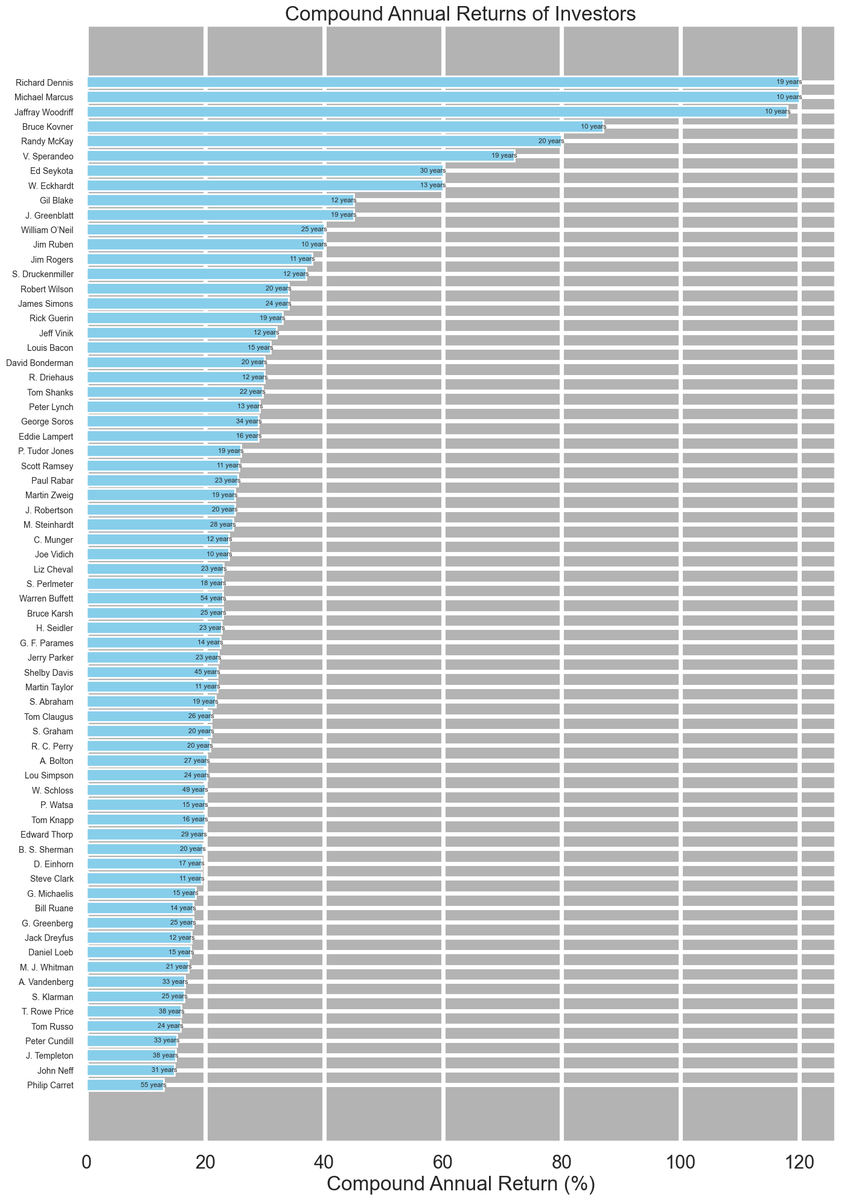
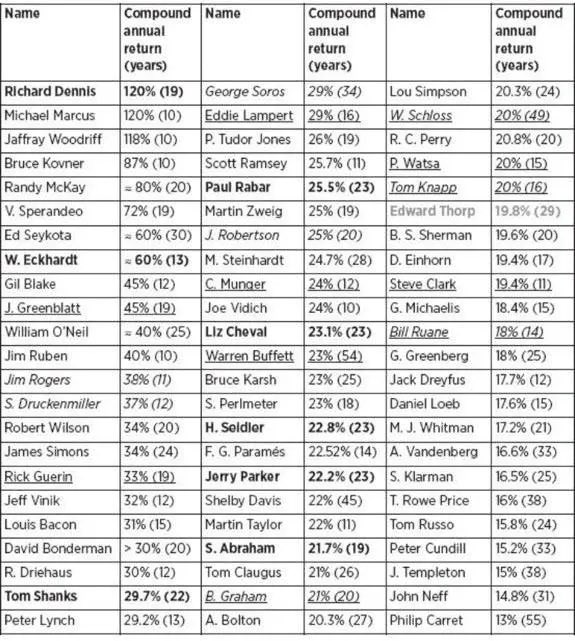
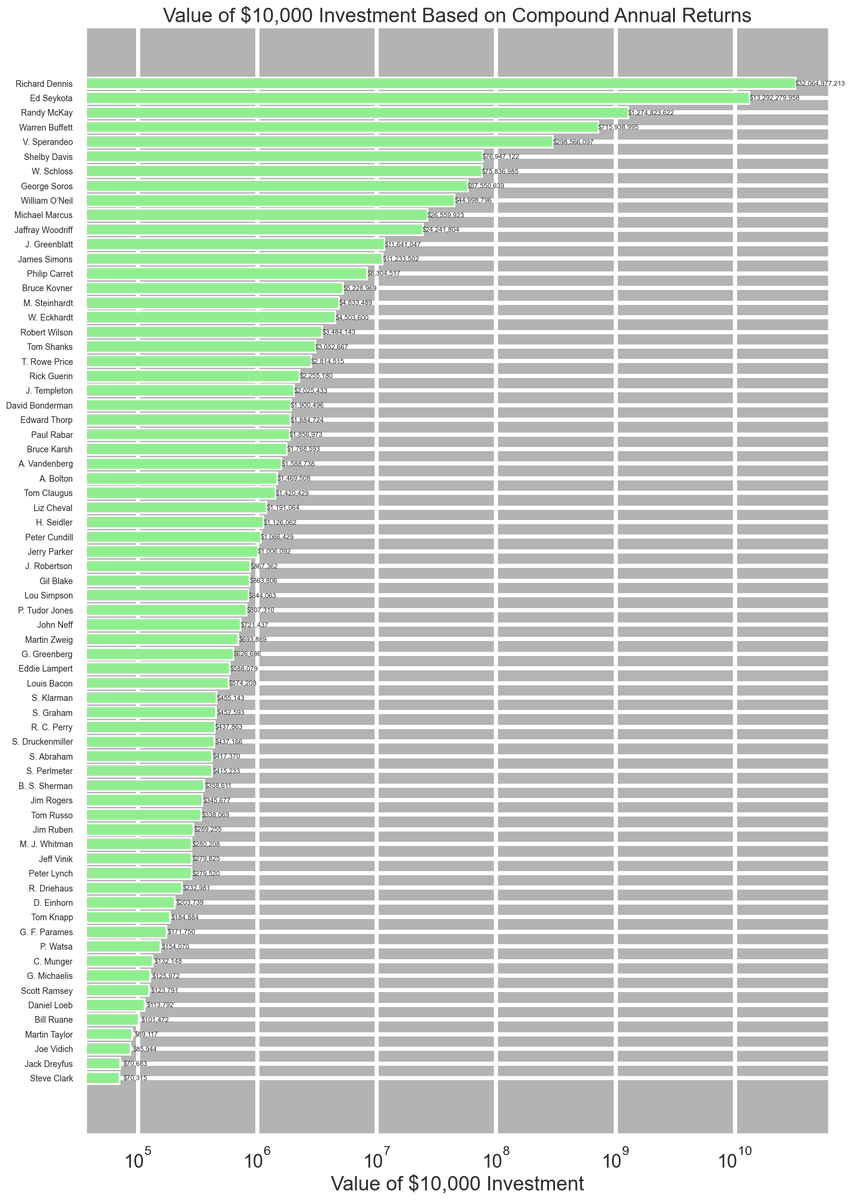
Best traders of all time: What do they have in common?
Steve Burns tweet media
English
218
281
2K
420K
Trader Joh
Trader Joh@TraderJoh·
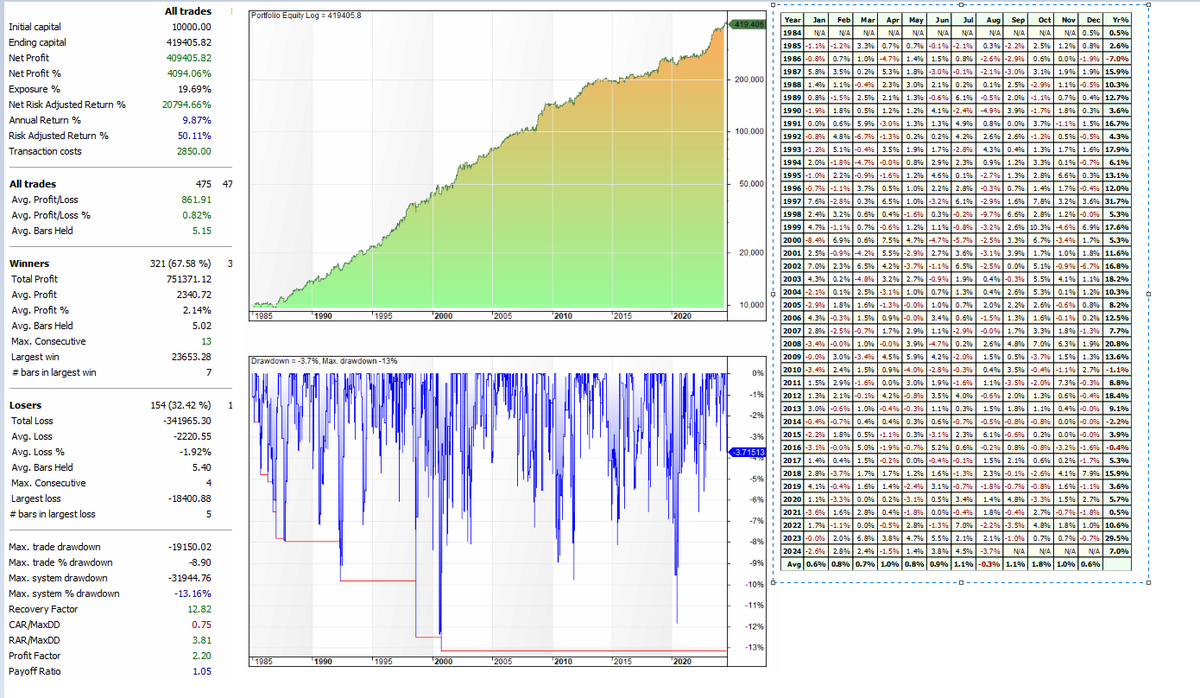
@momentmal2022 would suggest using SPY (instead of SPX) and QQQ (instead of NDX) while backtesting and comparing results SPX, NDX do not reflect Total Returns as they exclude dividends
English
1
0
2
135
Joachim Klindworth
Joachim Klindworth@momentmal2022·
Coming back to my previous post on the ultimo effect. This is the same strategy applied to the SPX and NDX trading max 1 position. Statistics for 1982 to 2000 and 2001 to today are basically identical. This indicates that this seasonal effect is so far a lasting effect.
Joachim Klindworth tweet media
Joachim Klindworth@momentmal2022

Last year I came across seasonality. This strategy trades the ultimo effect adding a bit of secret sauce. If you want to know more about seasonality listen to open.spotify.com/episode/28PWgN… Or write in comment. Current Position TLT and TLH.
English
6
2
47
7.7K
Trader Joh retweetledi
Vivek Ramaswamy
Vivek Ramaswamy@VivekGRamaswamy·
So proud of my friend, classmate, and fellow southwest Ohioan today. We used to watch Bengals games at the bar in law school, it’s awesome we’re now here a decade later with JD joining the strongest presidential ticket in our lifetime. He’ll be an outstanding Vice President and I look forward to everything ahead for him and for our country. 🇺🇸
English
8.9K
20K
241.5K
10.2M
Trader Joh retweetledi
Allan
Allan@allan_quantifi·
I finally backtested the intraday strategy of a paper claiming +100% annual returns. I added: ✅ Backtest on other assets (BTC, SPY, TSLA) ✅ New time frequencies (5, 15, 30m) ✅ Sensitivity analysis ✅ Detailed trade analysis To receive the FULL Python code: Follow + RT
Allan tweet mediaAllan tweet mediaAllan tweet mediaAllan tweet media
English
87
109
201
31.3K
Trader Joh
Trader Joh@TraderJoh·
@GekkoGirish In the porn industry, we start drinking at 7pm, move on to drugs by 11 and get on with the hoes from 2 am to 5am Bidness is done the next day
English
0
0
3
231
Trader Joh retweetledi
SagasofBharat
SagasofBharat@SagasofBharat·
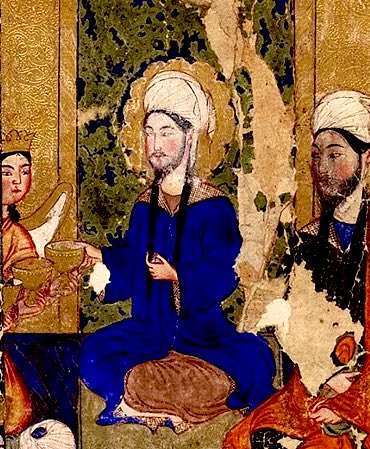
THREAD 🧵 Visual depiction pf Prophet Mo Do you know? Although it is popularly believed that Visual depiction of Prophet Mo is forbidden in Islam, there exists a variety of historical & poetic texts largely produced in Turkish & Persian spheres- both Sunni & shiite, that includes visual depictions of him.
SagasofBharat tweet media
English
89
730
2.6K
504.7K
Trader Joh retweetledi
Vala Afshar
Vala Afshar@ValaAfshar·
10 habits of happy people: 1 kind to others 2 optimistic and appreciative 3 no sense of entitlement 4 forgiving 5 honest and humble 6 good manners 7 purposeful work 8 mindful and self-aware 9 physically and mentally fit 10 quality time with loved ones
English
3
53
160
24.8K
Trader Joh
Trader Joh@TraderJoh·
@OmerRozen_ Thanks for sharing details on how you went about it.
English
0
0
1
83
Z
Z@ZeeContrarian1·
THE PATH TO ATTAINING INNER PEACE has been a interesting journey for me as I cannot recall the last time I felt sad, angry, frustrated, or envious. Although negative emotions do surface every once in a while, their presence is fleeting. But how did I achieve this state? 🧵
Z tweet media
English
27
15
202
48.5K
Trader Joh retweetledi
Hidden Monopolies
Hidden Monopolies@HiddenMonopoly·
@NeckarValue Investing is the hardest multi-player game of all: - many players - (almost) no rules - very large game board - highly incentivized players - mostly high educated players - no clear definition of win/lose ... but it is one of the greatest games of all !
English
1
1
8
771