English
LINK watcher ⬡
824 posts



One of the better looking charts in crypto right now. $ETH looks ready to go on an absolute tear. $9-10k remains my target. Bring it on.



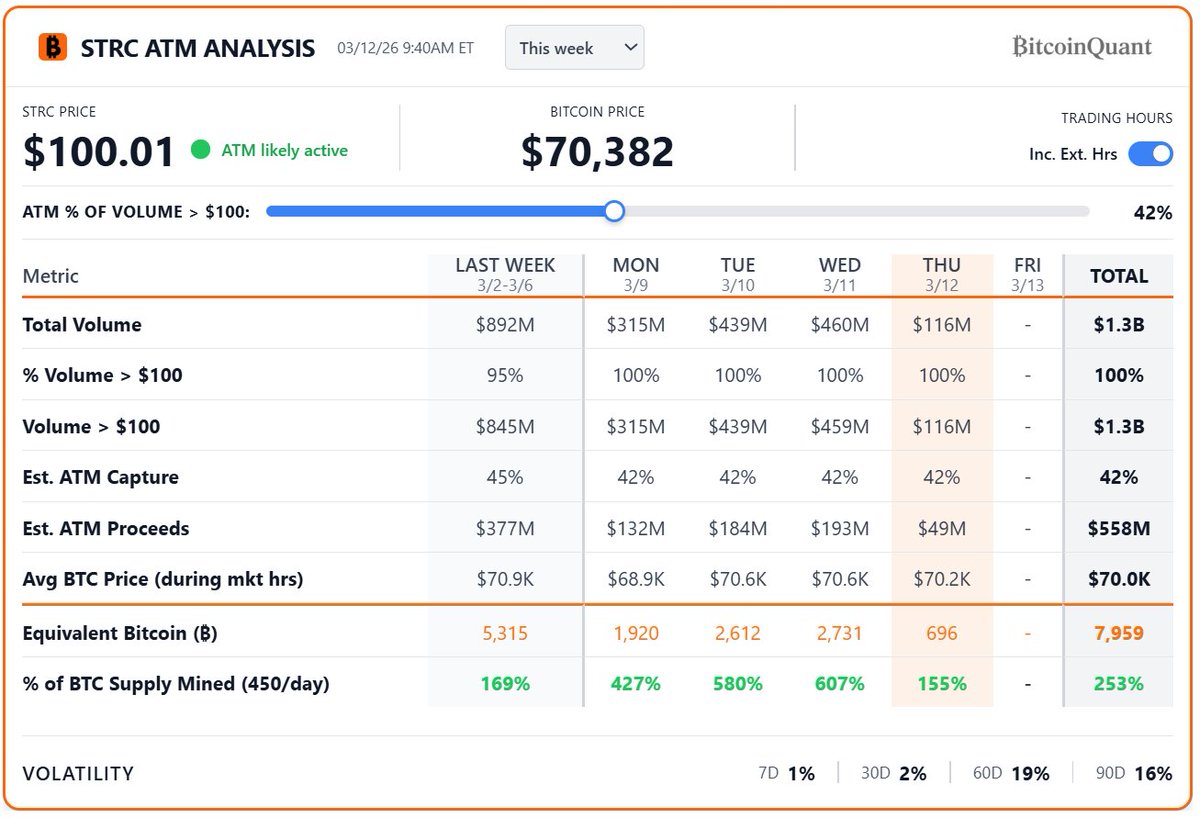


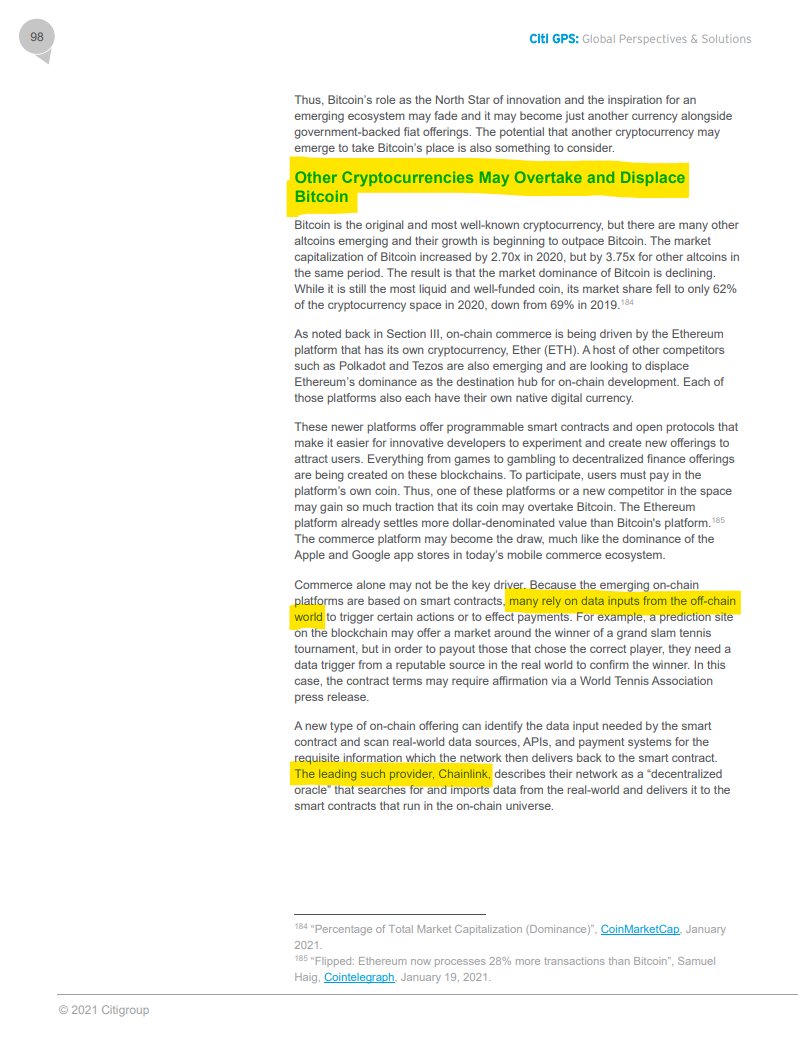
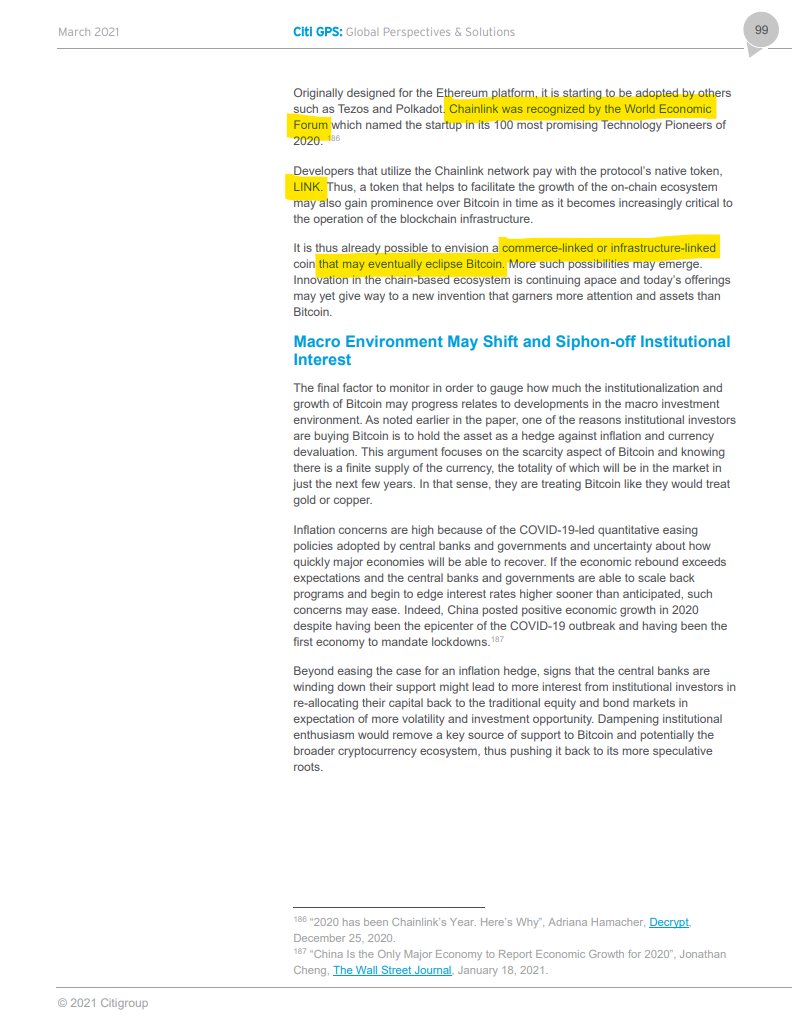


13 weeks later, nothing but $LINK inflows 😎 💦
Now Live: Ondo Global Markets is on @binance Alpha, bringing tokenized U.S. securities to hundreds of millions of new users. Starting with 10 assets at launch, including: ✅ QQQon ✅ AAPLon ✅ TSLAon ✅ NVDAon ✅ CRCLon ✅ METAon ✅ AMZNon ✅ MSFTon ✅ GOOGLon This marks a major step in expanding exposure to widely traded global securities through Binance’s platform. (Note: Neither Binance nor Ondo tokenized stocks and ETFs are available in the U.S.)
RESERVE UPDATE 🔗 Today, the Chainlink Reserve accumulated 136,898.30. Total holdings: 2,172,261.86

seeing a lot of layerzero hype. i know they've done good work w/ interop. i very quickly posted the most cynical questioning i could muster into claude to get a gut check, and attached the below article's content. this is claude's response. i don't know how much is timely/accurate. presenting w/o comment. my prompt (this is crude, and intentionally very cynical, which, to be fair, may be "leading the witness". and biasing toward a negative response): "blockchain has long promised new, increasingly scalable L1 blockspace/tech - typically these things are either not decentralized, not scalable when under stress, or just don't see organic usage successfully bootstrapped. solana seems meaningfully to have solved this in 2026, feeling fast/free and has broad organic usage. there's a newcomer in town called 'layer zero'. i can't tell if this is actually revolutionary, or just "here's a lot more TPS and tech jargon", but won't find PMF or organic usage. can you look at this promotional article + their launch partners (will need to do online research) and tell me if this is real, or just another EOS, ICP, monad, etc? or generally if it's another low float coin that i feel like has been captured by VC money and will extract retail:" response: Great question — let me dig into this. The document is clearly promotional, so let me research what's actually happening with the project in practice.OK, I now have a clear picture. This is actually quite timely — the "Zero" blockchain was literally announced today by LayerZero Labs (the cross-chain interoperability protocol). Let me give you an honest assessment. What's actually happening LayerZero Labs — already a well-funded cross-chain messaging protocol (a16z, Sequoia, $3B valuation) — just announced they're building a new L1 blockchain called "Zero," pivoting from being infrastructure connecting chains to competing with them. The launch partners announced today are genuinely impressive names: Citadel Securities (strategic investment in ZRO + collaboration on trading/settlement), DTCC (exploring tokenization services), ICE (Intercontinental Exchange), ARK Invest (Cathie Wood joining advisory board), Google Cloud, and Tether. Launch is targeted for fall 2026. The bull case (what's different here) The institutional partner list is a cut above what EOS, ICP, or Monad announced. Citadel Securities and DTCC are not "crypto-native VCs looking for exit liquidity" — they're actual TradFi infrastructure players. The thesis is clearly aimed at tokenized securities settlement, not "fast DeFi chain #47." If even a fraction of DTCC's $2+ quadrillion annual clearing volume touches this, it's meaningful. LayerZero also has an existing product with real usage — their interoperability protocol connects 165+ blockchains and has processed substantial volume. They're not starting from zero (no pun intended) in terms of developer relationships. The bear case (why your instincts may be right) Tokenomics are rough. Only about 20% of ZRO supply has been unlocked, with the full schedule extending into 2027. The allocation is 32.2% to strategic partners and 25.5% to core contributors — that's nearly 58% going to insiders. The token is currently ~$1.75-1.93, down from an ATH of ~$7.50. Private investors bought at $2.50, so many are currently underwater, but once price recovers and unlocks continue, there's massive overhang. The FDV is ~$1.75B against a circulating market cap of only ~$400-525M — that's a lot of dilution coming. The blockchain doesn't exist yet. Everything in that whitepaper — QMDB doing 3M updates/sec, FAFO doing 1.2M EVM TPS, Jolt Pro at 1.61GHz, SVID at 10 GiB/s — is aspirational engineering. The chain launches in fall 2026. You're being asked to buy the token now based on a whitepaper and some partner press releases. The tech claims (2M TPS per Zone) are extraordinary and unproven in production. The "partnerships" deserve scrutiny. Citadel is "collaborating to evaluate" and "made a strategic investment in ZRO." DTCC will "investigate ways to leverage." Google Cloud will "explore." These are the softest possible commitment verbs. TradFi firms sign these exploratory MOUs constantly — it doesn't mean they'll actually route real volume through this chain. Compare to how many "enterprise blockchain partnerships" IBM Hyperledger, R3 Corda, and others announced that went nowhere. The fee switch keeps failing. The governance vote to activate protocol fees failed to reach quorum in December 2025, pushed to June 2026. The existing LayerZero protocol generated only ~$4,874 in fees in the last 24 hours. That's... not a lot for a protocol valued at $1.75B FDV. The pivot itself is a yellow flag. LayerZero was built as interoperability infrastructure. Now they're launching a competing L1. This is a significant strategic pivot that could alienate the chains they currently serve (why would Ethereum, Solana, etc. want to deeply integrate with a protocol that's now also a competitor?). My honest take Your instinct about the pattern is well-calibrated. The playbook is familiar: VC-backed project with low float, impressive-sounding tech claims, big-name "partnerships" announced with maximum PR, timed to generate retail FOMO while insiders have massive locked positions waiting to vest. The whitepaper reads like it was written to impress — phrases like "92% theoretically optimal" and "2,500x faster than BNB chain" are marketing, not engineering documentation. That said, this is a better version of that playbook than EOS or ICP ran. The partner names are more credible, the team has shipped a real product before, and the TradFi settlement angle is a genuine market opportunity. But "better than EOS" is a low bar, and the chain literally doesn't exist yet. The most telling comparison might actually be to Solana circa 2020 — also a VC-heavy, high-TPS-claims L1 that most people dismissed. Solana eventually found PMF, but it took years of near-death experiences and organic builder culture to get there, not just tech specs and press releases. Bottom line: The token at current prices is pricing in a lot of hope for a chain that won't launch for 8+ months, with 70-80% of supply still locked and pointed at your head. Even if the tech is real, buying ZRO now is essentially a bet that retail enthusiasm will outrun insider unlocks — which is exactly the dynamic you identified. The partnerships could become meaningful, but you'd want to see actual production usage, not "exploring collaboration," before treating this differently than the long graveyard of L1s that came before it.

As Zero sets out to power the world economy, we are bringing on a world-class advisory board. We cannot think of a better group to help us accelerate the inevitable future: - @CathieDWood (ARK Invest) - @mblaugrund (ICE) - Caroline Butler (formerly BNY Mellon)