Trevor Zitting

186 posts

Trevor Zitting banner
Trevor Zitting

Trevor Zitting

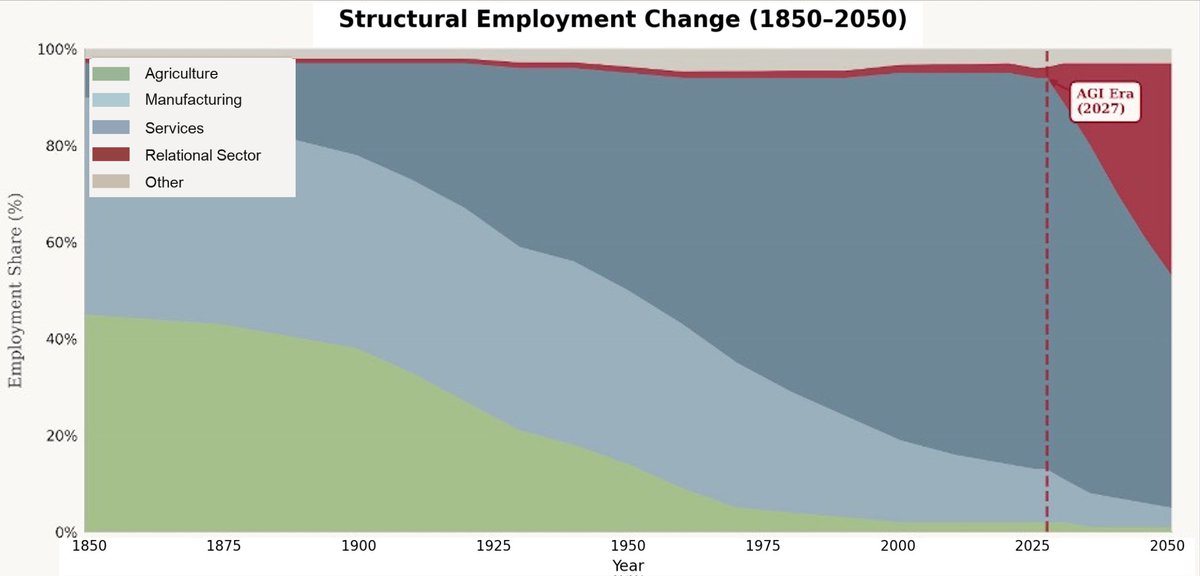
@Trevorzitting

Founder: https://t.co/b23cX7zqqB

Katılım Ocak 2024
51 Takip Edilen14 Takipçiler
Trevor Zitting retweetledi

Flo Crivello
Flo Crivello@Altimor·
Insane that we'll end up producing 99% of our energy from space, and send it down as intelligence. Literally no other way to send this much energy back — intelligence ended up being the densest form of energy we discovered.
English

56
102
785
157.5K
Trevor Zitting
Trevor Zitting@Trevorzitting·
The ultimate experience would be if it could actually talk back (over audio) after it does something and you could have a conversation about the implementation details. Perhaps it’s a long way out, but if you could have a verbal convo with it like you might with an engineer who did the work that’d be op.
English
0
0
7
284
Kath Korevec
Kath Korevec@simpsoka·
Codex users: I'm curious how you feel about its personality/communication style. When do you want it more concise vs more explanatory? More direct vs more collaborative? Examples where it talked to you especially well, or badly, would be gold. DMs open!
English
177
9
323
36.8K
Trevor Zitting
Trevor Zitting@Trevorzitting·
@ErRahul337 @theo Did you have to keep closing the codex app and re-opening or does it appear on its own when you get access?
English
1
0
0
48
rahul
rahul@ErRahul337·
@theo Finally received the access, going to try lot of things
rahul tweet media
English
1
0
1
589
Theo - t3.gg
Theo - t3.gg@theo·
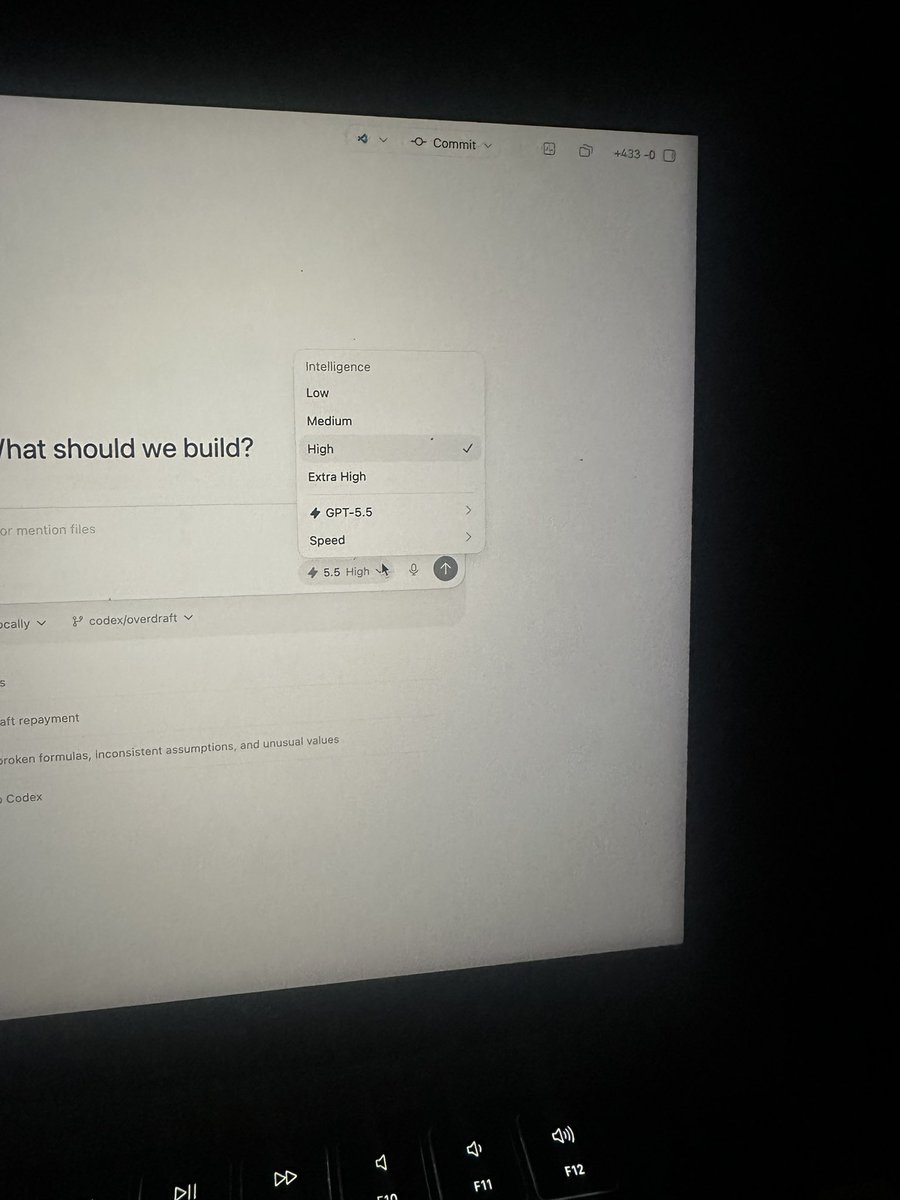
How are you guys feeling about 5.5 so far?
English
486
5
1.7K
303.3K
Trevor Zitting retweetledi
Alex Imas
Alex Imas@alexolegimas·
New essay on the economics of structural change and the post-commodity future of work. 1. Almost any question about the impact of advanced AI on the economy needs to start at the same place: what is still scarce? Answer that, and the analysis becomes pretty straightforward. This essay explores what becomes scarce if AI really can replicate most of what humans do in production, and what this mean for the future of jobs. 2. My conjecture, working through the economics: labor reallocates across sectors, and the sector it reallocates to has properties that keep labor a meaningful share of the economy. Ultimately this is about the structure of demand itself. For this, we have to go back to Girard, Augustine and Rousseau: once people's base needs are met, their preferences shift to comparative motives (e.g., status, exclusivity, social desirability). This motive is inherently non-satiated. 4. The key paper is Comin, Lashkari, and Mestieri (Econometrica 2021). As people get richer, they don't buy proportionally more of everything. They shift spending toward sectors with higher income elasticity. They estimate income effects account for 75%+ of observed structural change. 5. The ironic consequence: the sector that gets automated becomes a smaller share of the economy, not a larger one. Agriculture got massively more productive and its share of employment collapsed. Manufacturing too. The "stagnant" sectors absorb the spending and the jobs. 6. So the question is: which sectors have high income elasticity in a post-AGI world? I argue it's what I call the relational sector. Categories where the human isn't just an input into production, it is part of the value. 7. Why does the relational sector have high income elasticity? Because human desire has a mimetic, relational dimension. We don't just want things for their intrinsic properties. We want what others want, and we want it more when others can't have it. Girard, Rousseau, Augustine, and Hobbes all saw this. 8. In work with Kristóf Madarász, we showed this experimentally: WTP roughly doubles when a random subset of others is excluded from the good. And in new work with Graelin Mandel, AI involvement kills the premium. Human-made art gains 44% from exclusivity; AI-made art only 21%. 9. This all comes together for the core argument. The sector that absorbs spending as AI makes commodity production cheap is one where human provenance is part of the value, and demand for it grows faster than income. Exactly the profile that keeps labor meaningful. 10. To be clear about the claim: I'm NOT saying aggregate labor share must rise. It may fall. The claim is about sectoral composition, i.e., where expenditure and employment go once commodities get cheap, and the fact that the sector that will absorb reallocated labor maps to a substantial component of human preferences and desire. 11. If you're interested in the formal model, a linked companion technical note works out all the economics. Read the essay here: aleximas.substack.com/p/what-will-be…
Alex Imas tweet media
English
155
461
2.5K
863.4K
Trevor Zitting
Trevor Zitting@Trevorzitting·
@thsottiaux Loving codex and using it none stop. It would be nice to dispatch stuff from my phone but have the work be done on the Mac app open on my computer.
English
0
0
1
239
Tibo
Tibo@thsottiaux·
Hello builders. What are we getting wrong with Codex, what can we improve?
English
2.4K
64
2.9K
325.6K
Trevor Zitting
Trevor Zitting@Trevorzitting·
@beffjezos That’s potentially fluff too. The real question is probably what impact has your technology had.
English
0
0
0
11
Beff (e/acc)
Beff (e/acc)@beffjezos·
I don't care how much you've raised. Show me what you've built. How much tech progress have you achieved. Everything else is fluff.
English
81
23
390
13.4K
Techstars
Techstars@Techstars·
Pitch us your startup in 1 sentence. 👀
English
915
23
536
66.7K
Trevor Zitting
Trevor Zitting@Trevorzitting·
I've never had a better crm than codex with access to a postgres database
English
0
0
0
11
Rhys
Rhys@RhysSullivan·
codex watching me paste 200k tokens of logs into context
Rhys tweet media
English
62
140
5K
102.4K
Umesh Khanna 🇨🇦🇺🇸
Umesh Khanna 🇨🇦🇺🇸@forwarddeploy·
Building your own version of OpenClaw or productivity tool that uses agents? Want free xAI API credits to supercharge it with Grok? Reply below (or DM if stealth mode) Hackathon MVPs, side projects, wild experiments - let’s see ’em all! 🦞
English
728
75
942
114.5K
Trevor Zitting
Trevor Zitting@Trevorzitting·
@eigenron It's because magnesium has two competing effects. It inhibits some activity in the brain stem which lowers core body temperature and promotes physical relaxation, but it also excites NMDA receptors which has a stimulating effect. For some the latter effect wins out.
English
0
0
0
51
Trevor Zitting
Trevor Zitting@Trevorzitting·
@eigenron Yep it's exactly the same for me. I sleep great for the first 2-3 hours and then wake up feeling wired and relaxed at the same time, unable to get good sleep for the rest of the night. I love taking it during the day but just not after noon.
English
1
0
1
53
eigenron
eigenron@eigenron·
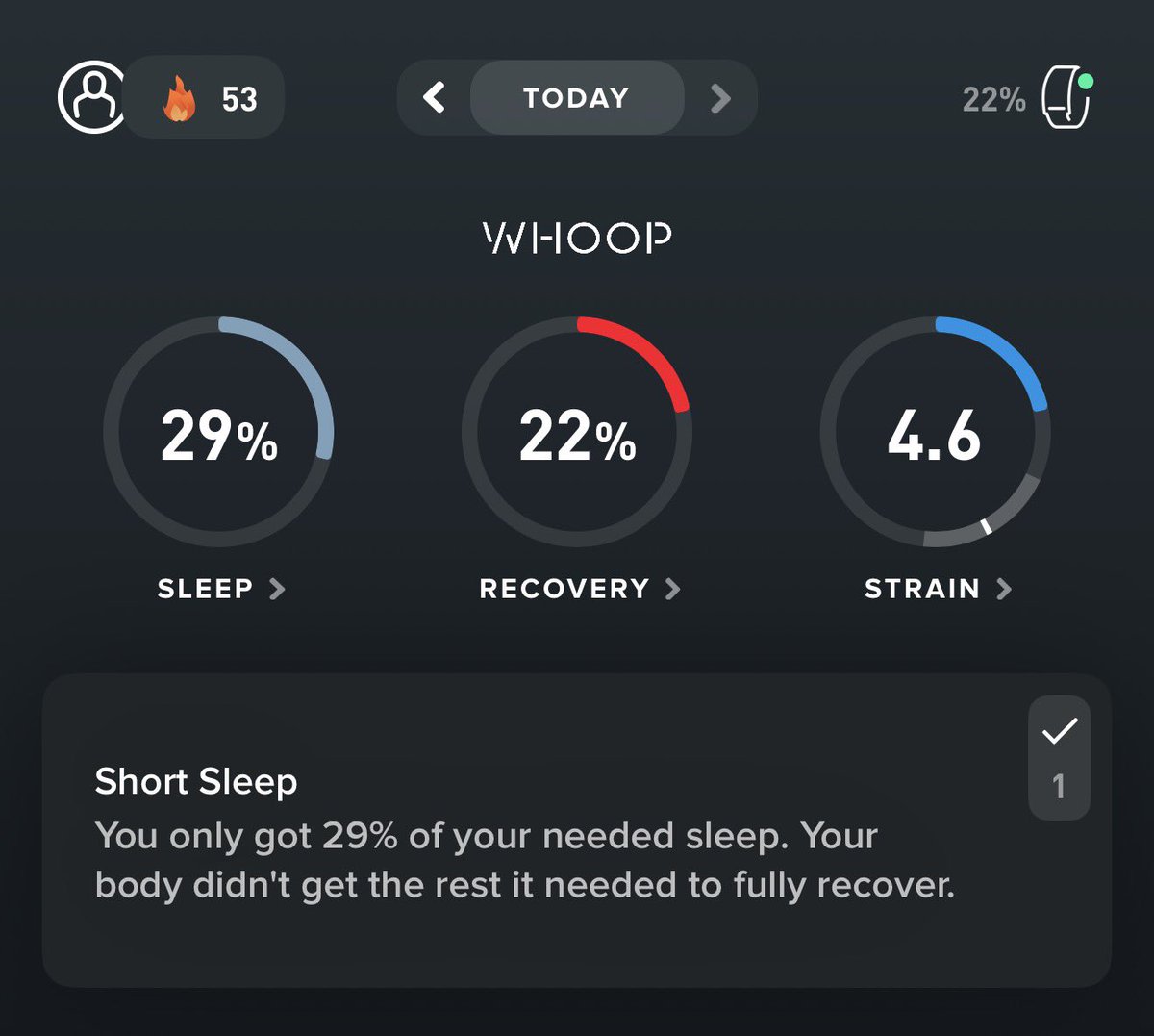
tried magnesium glycinate (240mg 1 hour before bed) for the first time yesterday, and my recovery went from 90% -> 22% wow
eigenron tweet media
English
21
0
172
41.8K
Trevor Zitting retweetledi
Greg Brockman
Greg Brockman@gdb·
taste is a new core skill
English
894
1.4K
10.5K
2.9M
Ankur Goyal
Ankur Goyal@ankrgyl·
Agents simplifying everything to file systems reminds me of Hadoop. Hadoop’s big idea was that analysts can just write scripts that access files directly instead of specialized interfaces like SQL. Substitute people with agents and now you’re in 2025… I think we will relearn the same lessons: modeling every problem as a file system is slow, brittle, and insecure at any interesting scale. The reason this happens every N years, however, is that as computing paradigms change, the abstractions we have built up to support them start to crack. File systems allow you to cut past them and reinvent things from scratch. In the data world, many of the ideas from Hadoop (eg parallel compute at scale) found their way into Snowflake and Databricks, which are much more sophisticated abstractions. I’m quite excited to see the new abstractions that emerge from our collective learnings right now. I’m also bearish that filesystems are the long term solution.
English
28
16
309
76K
机器之心 JIQIZHIXIN
机器之心 JIQIZHIXIN@jiqizhixin·
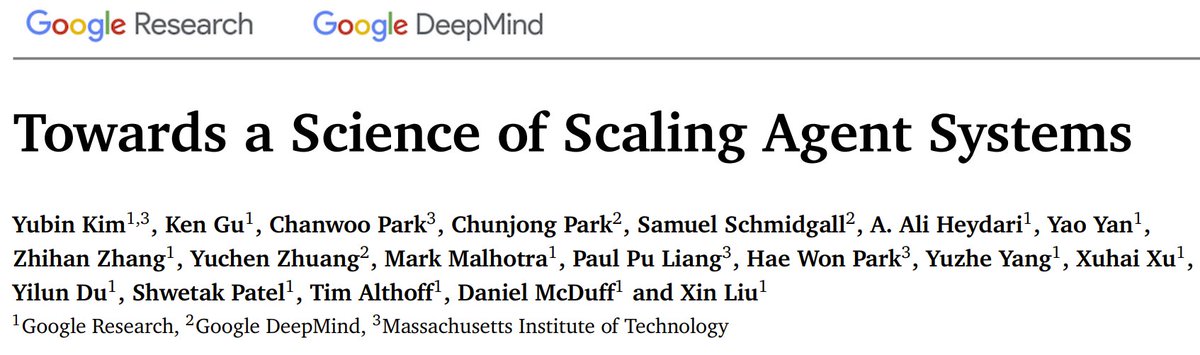
Google just found the agentic scaling law! Forget "more agents is all you need." After 180 experiments across GPT, Gemini, and Claude, the results are in: - The 45% Trap: If a single agent has >45% accuracy, adding more agents often hurts performance. - Tool Tax: Tool-heavy tasks suffer disproportionately from coordination overhead. - Error Spirals: Independent agents amplify errors by 17.2x. They derived a formula that predicts the best architecture with 87% accuracy. Agent design just moved from alchemy to science. Towards a Science of Scaling Agent Systems Paper: arxiv.org/abs/2512.08296
机器之心 JIQIZHIXIN tweet media
English
25
131
1.2K
104.3K
Trevor Zitting retweetledi
Jack Wotherspoon
Jack Wotherspoon@JackWoth98·
Improving the multimodality of Gemini CLI 🔊🖼️📺 Got a few things on the go right now 👀 First one is updating our read file tool description to better handle audio and video files. Thanks @Trevorzitting for calling this out, finally had some time to go in and make the change!
English
12
10
120
9.3K
Dwarkesh Patel
Dwarkesh Patel@dwarkesh_sp·
It's sad how much random hate Lex gets. He's exposed millions of people (who don't have your Twitter feed) to ideas in science/tech which they'd never have encountered otherwise. And there's 100s of hours of recorded insights from great minds that wouldn't exist without him.
English
346
81
4.5K
300.8K