

@primetateHQ Never seen someone who so much believes people give a crap about him.
News flash the dudes who watch you enjoy seeing you in your underwear videos.
Congrats you are a gay soft porn star
English
Dave
17K posts







Michael Heiser made it cool for Christians to talk as if the Bible teaches many gods exist. I don't claim to know exactly what Heiser himself believed. But many of his followers cheerfully affirm polytheism and don't seem to realize it. Blog post dropped 👇



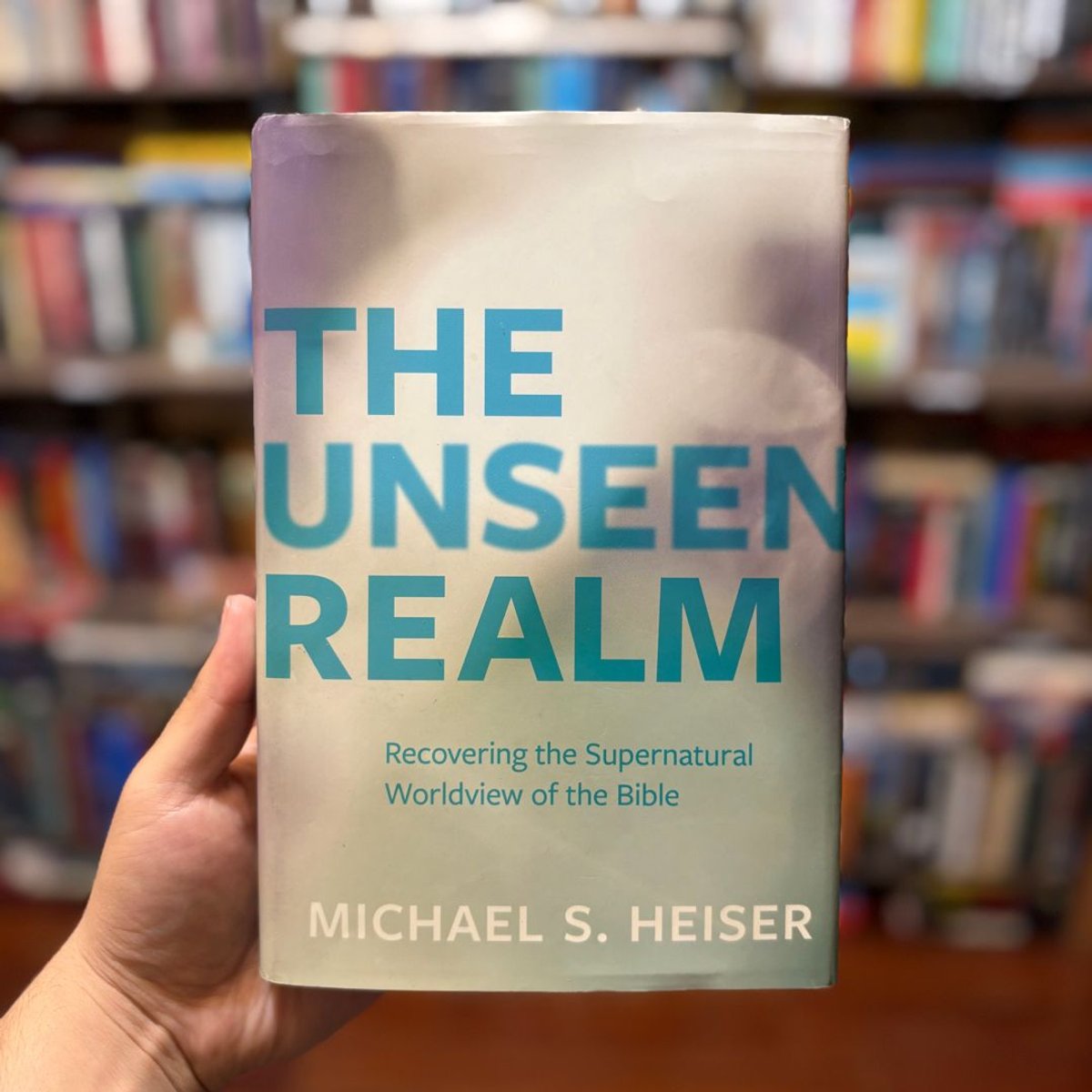
To lump Dr Michael Heiser in with this lot of trash is obnoxious. I’m keeping Unseen Realm and putting Josh Barzon in the bin

FIRST ON FOX: Democratic Maine Senate candidate Graham Platner's deleted Reddit account reveals graphic posts about masturbating in portable toilets and praising explicit military restroom graffiti — the latest in a growing trail of vulgar comments that could define his race against Susan Collins. Platner has dismissed past controversies as 'joking' and 's***posting,' but GOP strategists say the pattern raises fundamental questions about his judgment and fitness for office. He became Democrats' presumptive nominee after Gov. Janet Mills dropped out last month.


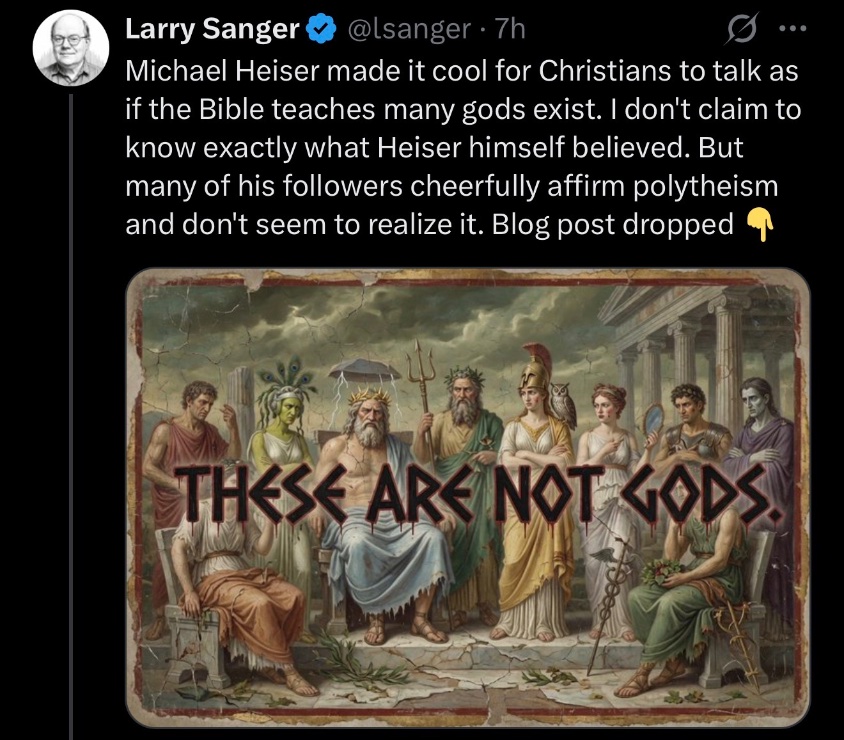
Larry is either lying, illiterate, or misinformed. My hope is that he is simply misinformed. Let me refute his article… The charge that Mike Heiser “supported polytheism” only works if we redefine polytheism and ignore how Heiser himself defined elohim. Mike never taught that Yahweh is one god among many equal gods. He taught the opposite:m often saying, “Yahweh was an elohim but no other elohim was Yahweh.” Heiser’s point was that elohim is not a word for a set of divine attributes like omnipotence, eternality, or creatorhood. Rather, it is a “place of residence” term for beings of the spiritual realm. Yahweh alone is uncreated, sovereign, incomparable, and worthy of worship.  So the Larry’s main mistake is simple: he assumes that calling a being elohim means granting it the status of the one true God. But Scripture itself does not use the word that way. The Bible uses elohim for Yahweh, members of Yahweh’s council, the gods of the nations, demons, the deceased Samuel, and angels/the Angel of Yahweh. Heiser’s argument was not “there are many Gods like Yahweh” but that the Bible’s vocabulary is wider than our English word ‘God.’”  Psalm 82 is not a “quotational” use. The text says, “God stands in the divine assembly; he administers judgment in the midst of the gods.” The Hebrew has elohim twice: the first is singular, the second is plural. Heiser points out that the grammar requires a group: God is judging “in the midst of” other elohim. These beings are then called “sons of the Most High” in Psalm 82:6, and they are condemned for corrupt rule. That is the biblical writer speaking in his own voice. To suggest it’s a pagan quotation is actually insulting to the Word. The “human judges” view also fails miserably. Psalm 89 locates the council “in the skies” and “among the sons of God,” not in an Israelite courtroom. Heiser rightly says there is no biblical text where Jewish leaders are placed over the nations in the heavens. Psalm 82 ends by asking God to “inherit all the nations,” which makes sense if the corrupt rulers are supernatural beings over the nations, not Israelite magistrates. Deuteronomy 32:17 is also not a rescue for Larry. It says Israel sacrificed “to demons, not God, to gods they had not known.” Heiser’s pointed out how the shedim are called elohim! Paul follows that logic in 1 Corinthians 10:20–21 when he says pagan sacrifices are offered to demons. So yes, Paul calls them demons. But that does not prove they are not real elohim in biblical vocabulary. It proves what Heiser argued, which is that rebellious spiritual beings can be both “demons” and “gods” in the biblical sense. Larry also mishandles “there is none besides me.” That language does not mean no other spiritual beings exist. It means no other being compares to Yahweh. Heiser gives the obvious parallels that make sense. Babylon and Nineveh say “there is none besides me” in Isaiah 47:8 and Zephaniah 2:15, but no one thinks that means no other cities existed. It means incomparability. That is exactly how Deuteronomy 4:35 works! Yahweh alone is God in the ultimate, sovereign, covenantal, creator sense. So my answer to the challenge is this: the Old Testament itself supplies the non-quotational examples. Psalm 82:1, 6. Psalm 89:5–7. Deuteronomy 32:8–17. Psalm 29:1. Job 1:6; 2:1; 38:7. These are not pagan slogans whatsoever but rather show the Bible’s own supernatural worldview. And the New Testament does not erase that worldview. Paul says idols are nothing in themselves, but the spiritual beings behind pagan worship are demons, and Christians must not have fellowship with them (1 Cor 8:4–6; 10:20–22). This is more sound biblical theology than what Larry seems to be suggesting. So no, Mike Heiser did not smuggle polytheism into Christianity. He forced us to stop protecting ourselves from the Bible. As he put it, “The biblical writers weren’t polytheists,” but there is also “no need to camouflage what the Hebrew text says.”  I believe in one God: Father, Son, and Holy Spirit. I believe Yahweh alone is eternal, uncreated, sovereign, omnipotent, and worthy of worship. But I also refuse to pretend the Bible does not say what it says. The biblical writers believed in a real unseen realm. They believed Yahweh had a heavenly host. They believed rebellious spiritual beings existed. They called those beings elohim when appropriate, and they still confessed, without contradiction, “Hear, O Israel: Yahweh our God, Yahweh is one” (Deut 6:4). So there ya go Larry. I hope this shows how you were tearing down a strawman. God Bless

“STOP THE DOOM SCROLL… AND PRAY.” 🙏 @JonathanRoumie, who portrays Jesus in The Chosen, delivers a powerful message on faith, prayer, and why America’s greatest need isn’t found online — but in turning back to God.
Chilling warning about 'antichrist' messages hidden in UFO encounters