Uncut Mountain Press

1.8K posts

Uncut Mountain Press banner
Uncut Mountain Press

Uncut Mountain Press

@UncutMountain

A traditional Orthodox publisher specializing in faithful translations of the writings of the Holy Fathers.

Florence, AZ Katılım Eylül 2015
174 Takip Edilen3.1K Takipçiler
Uncut Mountain Press retweetledi
Orthodox Ethos
Orthodox Ethos@OrthodoxEthos·
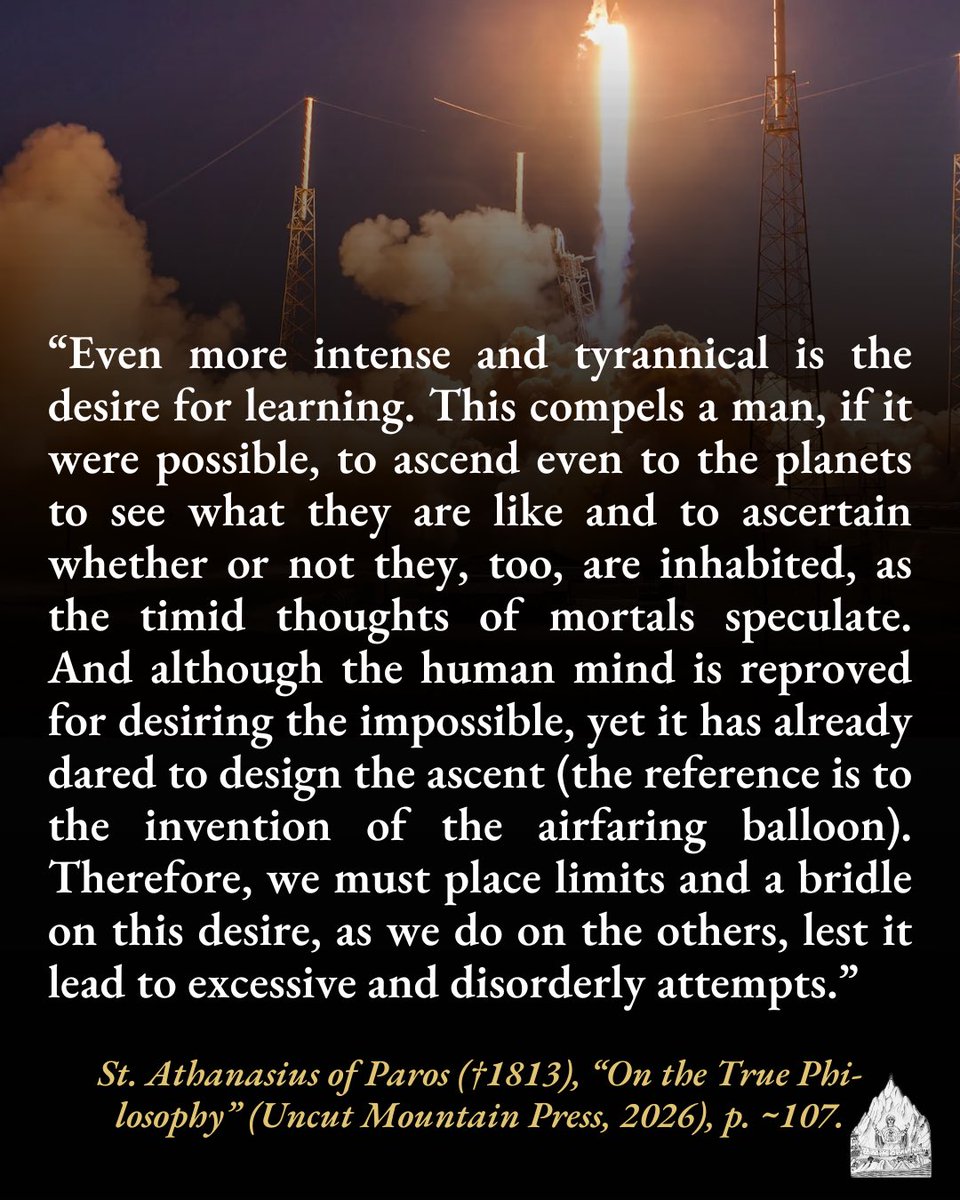
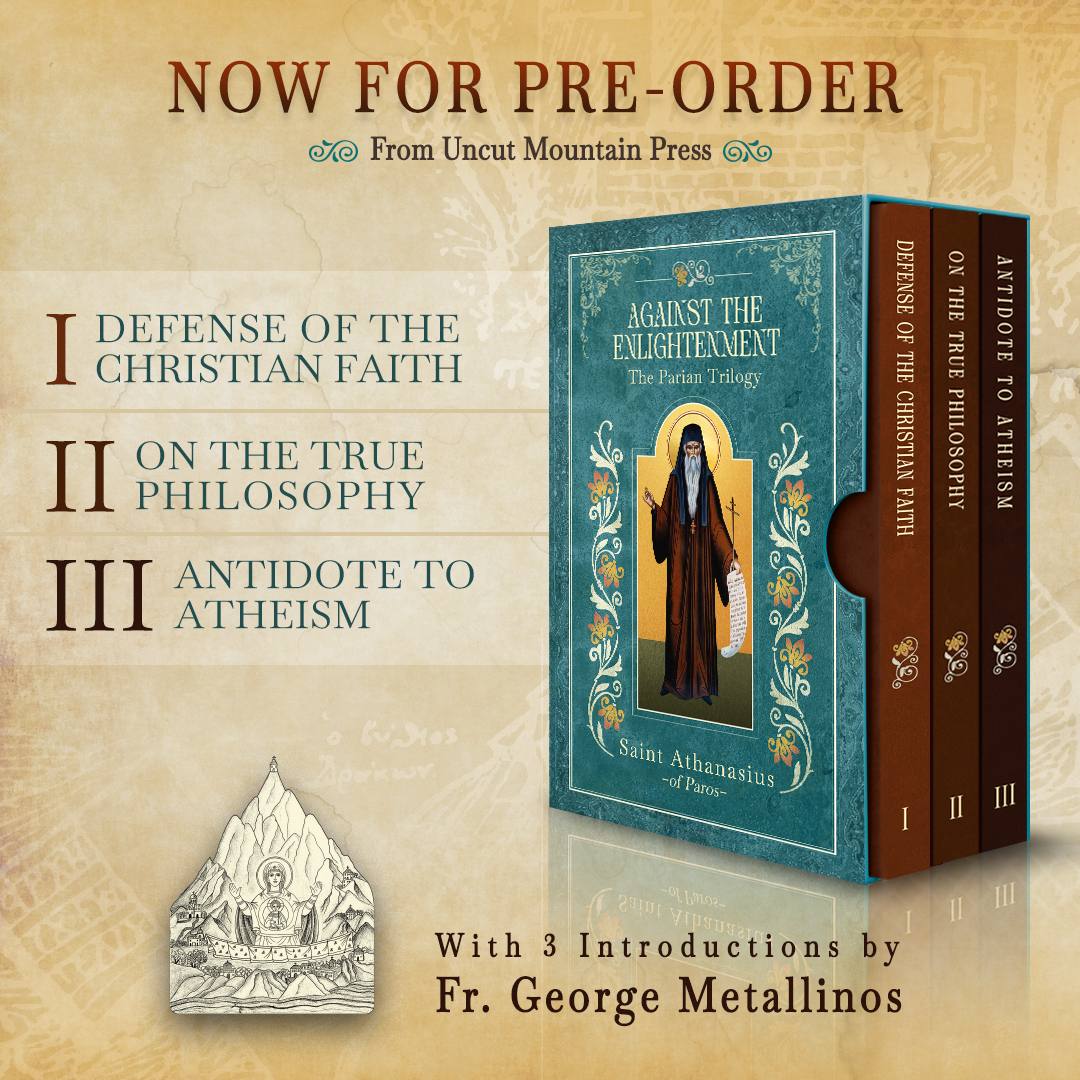
From "On the True Philosophy," the second of the three volume work "AGAINST THE ENLIGHTENMENT" by St. Athanasius of Paros (†1813). PREORDER now at a discounted price!… (See below)
Orthodox Ethos tweet mediaOrthodox Ethos tweet media
English
5
18
91
16.7K
Uncut Mountain Press
Uncut Mountain Press@UncutMountain·
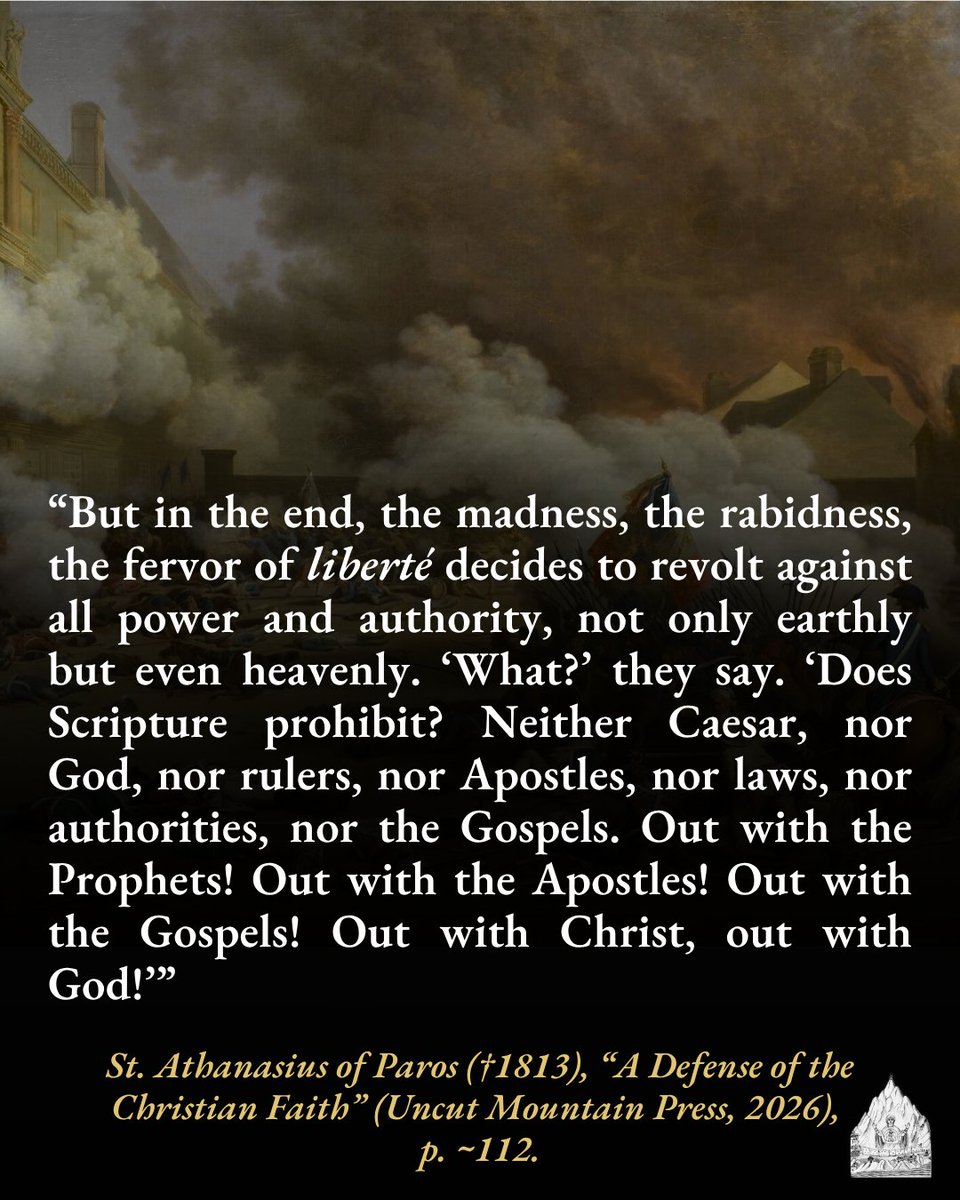
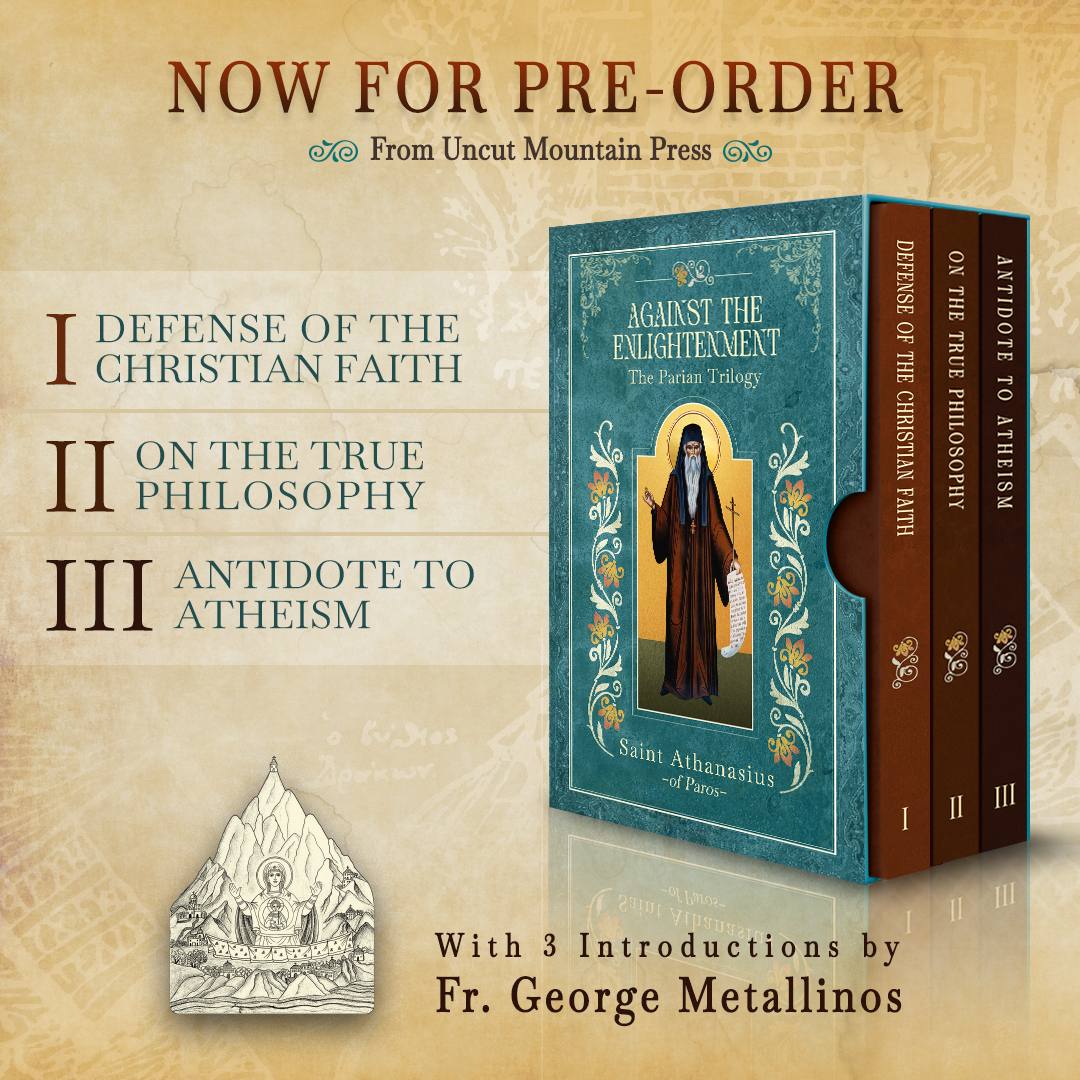
From "A Defense of the Christian Faith," the first of 3 volumes "AGAINST THE ENLIGHTENMENT" by St. Athanasius of Paros (†1813). PREORDER now at a discounted price! ⬇️⬇️⬇️
Uncut Mountain Press tweet mediaUncut Mountain Press tweet mediaUncut Mountain Press tweet media
English
1
4
27
1.6K
Uncut Mountain Press
Uncut Mountain Press@UncutMountain·
NEW! AGAINST THE ENLIGHTENMENT: THREE-VOLUME SET — By St. Athanasius of Paros Pre-Order now at discounted price! (Link below.) • Regular Retail Price is $95 • Limited quantities. Solidly based on the Holy Scriptures and the Fathers, Saint Athanasius exposes the ideals of the Enlightenment as serpentine lies that lead their adherents away from Christ and into the pit of destruction. — Introductions to each book by Fr. George D. Metallinos (†2019), Dean of the School of Theology of the University of Athens. • Length: 512 pages (total) • Index and Bibliography • Hardcovers Link below.
Uncut Mountain Press tweet mediaUncut Mountain Press tweet media
English
1
5
36
2.5K
Uncut Mountain Press retweetledi
Orthodox Ethos
Orthodox Ethos@OrthodoxEthos·
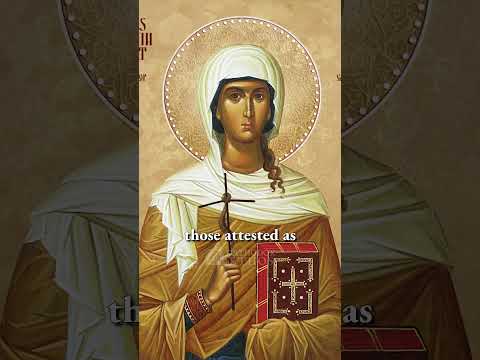
“KEEP THE TRADITIONS” Follow humbly, faithfully, those attested as eye-witnesses in every generation…: youtube.com/shorts/_cLEMqM… “Therefore, brethren, stand fast, and hold the traditions which ye have been taught, whether by word, or our epistle.” — 2 Thess. 2:15
YouTube video
YouTube
English
0
20
51
2.9K
Uncut Mountain Press
Uncut Mountain Press@UncutMountain·
From "A Defense of the Christian Faith," the first of 3 volumes "AGAINST THE ENLIGHTENMENT" by St. Athanasius of Paros (†1813). PREORDER now at a discounted price! ⬇️⬇️⬇️
Uncut Mountain Press tweet mediaUncut Mountain Press tweet media
English
4
8
33
2.9K
Uncut Mountain Press retweetledi
Or☦︎hodemia
Or☦︎hodemia@LayOrthodemia·
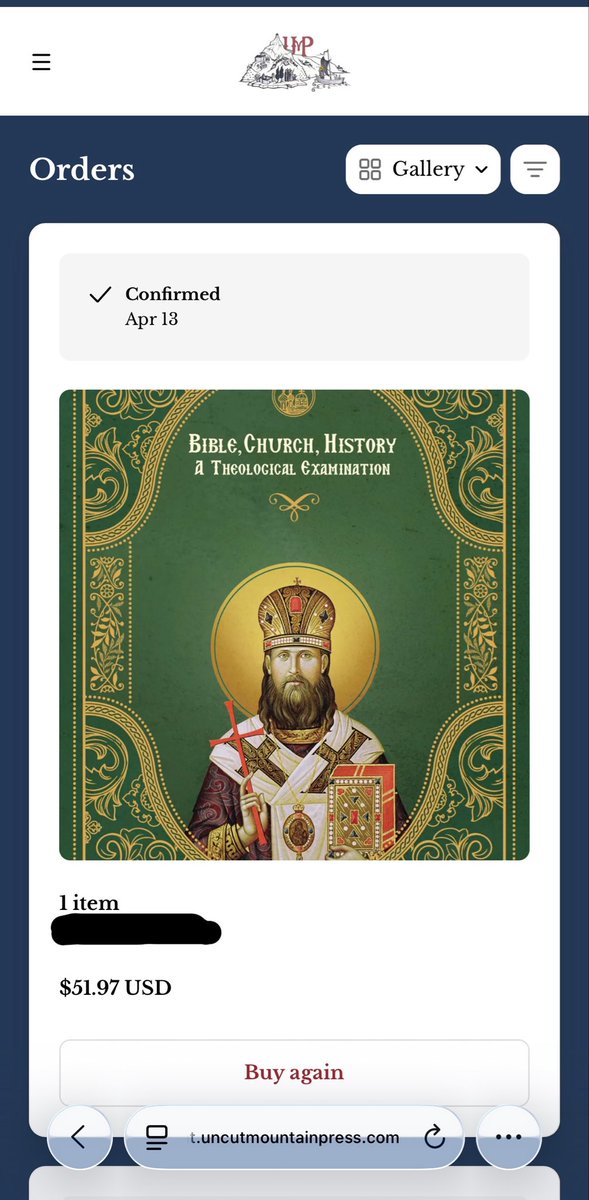
If I was you I'd run through it again! it’s one of those books like it’s a good movie that you can watch over and over and over again lol This is exactly the kind of work I’ve been hungry for. The density of it is remarkable! Saint Hilarion doesn’t waste a single word, he is so easy going yet brilliantly meticulous and the commentary and footnotes alone are a treasure trove worth sitting with on their own which I NEVER DO honestly 🤣. I’m not exaggerating when I say I’ve had to stop multiple times just to pray and let what I’m reading settle into my heart. This isn’t a one-read book so I’ll be returning to it for years and if I have an opportunity to speak to someone else about the Church, dogma or anything significant I'll have this book on hand lol Dude I also just picked up Saint Hilarion (Troitsky)’s The Bible, Church, History: A Theological Examination because I refuse to miss out. If you’ve been watching @UncutMountain catalog, you know these titles are selling out fast and rightfully so. The work they’re putting into the English-speaking world is invaluable. Don’t sleep on it brother Ephrem! And I’ll say this what strikes me most about On the Dogma of the Church is how powerfully it speaks on its own terms. Saint Hilarion lays out the reality of the Church, it's dogma and the brief history lessons in each essay with such clarity and patristic grounding. It's astounding! I can go on and on, but I think people should pick up this book and honestly, I wouldn’t be surprised if this work in years and years to come becomes part of a catechetical curriculum for those entering the Orthodox Church if it isn't already (probably more Russian Orthodox but still) It’s that foundational. I genuinely believe if a Protestant, a Catholic, or even someone practicing Judaism picked this book up with a humble and open heart to be changed, it could be the very thing that draws them into the fullness of the Faith and understanding the foundation of Church. Saint Hilarion doesn’t argue at you he reveals something to you, presenting questions, articulating dogmatic claims and more about The Church and the Orthodox faith with such grace and that’s what makes it so powerful to me. I actually want to talk to my priest to see if I can buy at least three of these books for the parish but yeah if someone is honestly seeking truth or just looking to broaden their understanding of the Orthodox Church they are baptized in and participating in sacramentally, this book will meet them where they are. I will say this if you do read this book I think you should really talk about it and not keep this treasure of wisdom to yourself!
Or☦︎hodemia tweet media
English
0
1
3
240
Orthodox Mickey
Orthodox Mickey@KingMic92357513·
Excerpt from The Ecclesiological Renovation of Vatican II (Go buy it) by Fr. Peter @OrthodoxEthos and @UncutMountain "Pope Clement XI issued his dogmatic constitution Unigenitus, which was a condemnation of 101 different propositions made in a book by Paschasius Quesnel. Among the propositions condemned was “Outside of the Church, no grace is granted” (no. 29). Indirectly, this was at the same time a condemnation of the teaching of Blessed Augustine that “no man can receive the Holy Spirit, or be a partaker of the divine love, who is not a member of the unity of Christ,” for “essential grace is lacking . . . to all those outside the Church”—that is, “the grace of charity, the first of the Spirit’s fruits.” Therefore, in addition to bypassing the patristic consensus on our question, an unmitigated return to Blessed Augustine’s theology by the theologians of the nouvelle théologie and Vatican II was also ruled out as a result of the Jansenist condemnation. Karl Adam, one of the most important figures in the early twentieth-century renewal of Roman Catholic ecclesiology, explains this departure from Blessed Augustine thus: We are not to regard these sacraments [of non-Catholics] thus administered outside the Church as being objectively valid only, and not also subjectively efficacious. Blessed Augustine seems to have held such a view regarding the efficacy of these sacraments. . . . The Jansenists in the seventeenth century followed Blessed Augustine and advocated the same erroneous opinion, setting it up as their principle that “outside the Church there is no grace” (extra ecclesiam nulla conceditur gratia). But again it was Rome and a pope that expressly rejected this proposition. The assertion that the Catholic Church of later centuries has developed the ideas of St. Cyprian and Blessed Augustine . . . is in contradiction with the plain facts of history. For the truth is that the later Church corrected the original rigorism of the ancient African theologian and maintained that God’s grace worked even outside the Catholic body. Non-Catholic sacraments have the power to sanctify and save, not only objectively, but also subjectively. It is therefore conceivable also, from the Church’s standpoint, that there is true, devout and Christian life in those non-Catholic communions which believe in Jesus and baptize in His Name. Adam touches upon a very important point: Rome, after the Great Schism, expressly rejected Blessed Augustine’s view and maintained that God’s grace works outside the Church, in the “sacraments” of schismatics and heretics. But, in fact, this view was not peculiar to Blessed Augustine, as much of his ecclesiology was. It is ironic that, precisely on that point on which Blessed Augustine agreed with all his predecessors—that there is no sacramental Grace outside the Church—on that point Rome “expressly rejected” the proposition. This is of the utmost importance, really the basis for the entire post-schism development of Latin theology in regard to this question." Over 700 citations and praise from: - Metropolitan Hierotheos (Vlachos) of Nafpaktou and St. Vlassios - Bishop Basil of Wichita & Mid-America, Antiochian Archdiocese of North America - Rev. Archimandrite Luke (Murianka), Abbot of Holy Trinity Monastery and Rector of Holy Trinity Seminary - Protopresbyter George Metallinos, Professor and Dean Emeritus, Theological School of the University of Athens - Archpriest Stephen Freeman, Rector of St. Anne Orthodox Church, Oak Ridge, TN - Hieromonk Luke of the Holy Monastery of Grigoriou, Mt. Athos, Greece - Demetrios Tselingides, Professor of Dogmatic Theology, Theological School of the University of Thessaloniki - James L. Kelley, author of A Realism of Glory: Lectures On Christology in the Works of Protopresbyter John Romanides
Orthodox Mickey tweet media
English
3
4
25
1.5K
Uncut Mountain Press retweetledi
Or☦︎hodemia
Or☦︎hodemia@LayOrthodemia·
@OrthodoxEthos @UncutMountain uncutmountainpress.com/products/overv… Get the book here! Will be reading this all day today.
Or☦︎hodemia@LayOrthodemia

I have been finally getting around to reading Saint Hilarion Troitsky's book On the Dogma of the Church and I'm only on page 53 and have been deep in such a well of wisdom and insightful teachings. I am completely absorbed and in awe of this book !. This in particular was interesting to me so far especially in American society so dominated by Protestant "Church" life that feels, from experience, so bare bones perhaps even dry. St. Hilarion begins by showing that the early Church understood herself to be every bit as definite and actual an entity as the Hebrew nation of the Old Testament had been. The New Testament writers, being Jews themselves, used the same terms such as chosen generation, royal priesthood, peculiar people, God's own portion because the Church is not a new invention. She is a continuation of God's covenant community under a new law. The Church is, as Troitsky puts it, the sole cord-measured portion of God not merely in a dogmatic sense, but in an actual one. From there he moves to St. Paul, who most frequently calls the Church the Body (σώμα). And here is where it gets devastating for the Protestant conception: a body is not a random mechanical collection of members, each isolated in its own life. It is explicitly a single organism with a single, indivisible life. Two separately growing trees are not connected in any way only the branches of a single tree are organically connected to each other. There is one fold and one Shepherd. Then St. Hilarion makes the pneumatological argument: the Church is one because the Holy Spirit is one. The unity of the Church is not caused by human agreement or doctrinal consensus it is caused by the Spirit Himself. The shared faith of the Church is real, objective and non-negotiable, but it is the fruit of the Spirit's indwelling. As Vladimir Lossky teaches, theology and mysticism cannot be separated both flow from the same Spirit working in the same Body. And this is where the Protestant error becomes truly catastrophic. If the Church is one tree animated by one Spirit who leads into all truth (Jn 16:13) and preserves her as one just as God is one (Jn 17:21), then how can that same Spirit produce contradictory fruits on the same tree? One Spirit cannot teach two contradictory doctrines, contradictory gospels, forty thousand contradictory denominations. A tree bearing contradictory fruit is not a tree with many branches it is many trees pretending to share one root. They look identical (trees) yet DIFFERENT. The Spirit who makes the Church one cannot be the author of division. St. Hilarion doesn't stop there! Through Chrysostom, Theophan, and Theophylact, he teaches that the Church is the fullness of Christ. Not just where Christ lives and gathers but how Christ is made complete and manifests in the world. Chrysostom says Christ the Head has need of each single member and not only of all in common: the hand, the foot, every part. The whole body is not filled up until all are knit together. Bishop Theophan says the Church is the fulfillment of Christ the way a tree is the fulfillment of a seed what the seed contained in reduced form, the tree manifests fully matured. And that hit me personally because If the Church is Christ's fullness and the Head is not complete until every member is active, then there is no such thing as a passive Christian. A passive member of the Body is a contradiction — like a hand that refuses to move And the slothful servant in Matthew 25 wasn't condemned for heresy. He wasn't condemned for believing the wrong thing. He was condemned for doing nothing with what he was given. Passivity was the condemnation. If the Church is Christ's fullness manifest in the world, the KINGDOM OF GOD ON EARTH, then every baptized member is called to be an active icon of Christ ! hands that serve, feet that go, a mouth that confesses, ears that listen, eyes that see the suffering of the neighbor and does something about it. Passivity is not a mirror of God’s love.

English
1
3
12
1.9K
Uncut Mountain Press retweetledi
Orthodox Christianity
Orthodox Christianity@Orthodoxy2019·
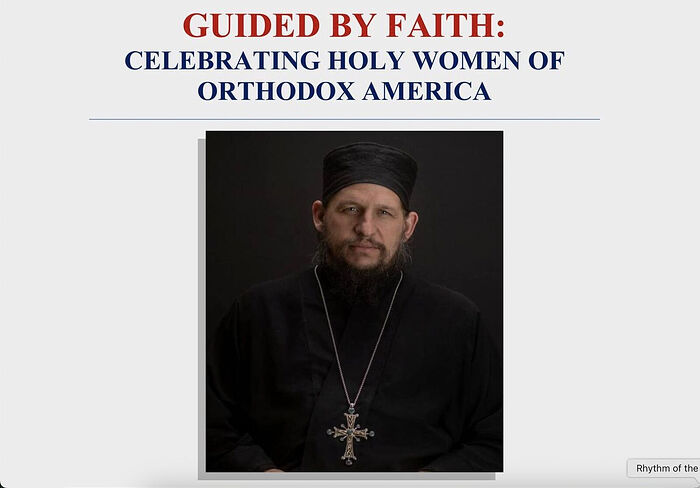
Fr. Peter Heers offering online talk on holy women for Romanian Metropolia lecture series orthochristian.com/175846.html Fr. Peter will “reflect on the lives and witness of holy women who strengthened the Orthodox faith through love, courage, sacrifice, and devotion to Christ and fa...
Orthodox Christianity tweet media
English
3
18
98
2.9K
Uncut Mountain Press retweetledi
Orthodox Ethos
Orthodox Ethos@OrthodoxEthos·
Talk on Three Holy Women of America: St. Olga of Alaska, Gerontissa Taxiarchia, and Abbess Alexandra orthodoxethos.com/post/talk-on-t… Fr. Peter’s talk will be held on Saturday, February 21, at 3:00 PM EDT / 2:00 PM CST / 12:00 PM PST. It will be broadcast live on Facebook at facebook.com/mitropolia.us and via Zoom (Meeting ID: 821 3530 5093, Passcode: ROMA). All are welcome to attend.
English
0
10
43
1.4K