Unhedged 𐤊

395 posts

Unhedged 𐤊

Unhedged 𐤊

@Unhedgedd

somebody somewhere | cross asset arb | ex private equity | @jpmorgan | @columbia

Singapore Katılım Şubat 2022
866 Takip Edilen266 Takipçiler
Sabitlenmiş Tweet
Unhedged 𐤊
Unhedged 𐤊@Unhedgedd·
my 2 cents 1. "BTC confluence" will persist for KAS and other low liquidity alts where synthetic correlation is driven by market structure and not real investor sentiment 2. trading volume is dominated by MM and arb desks that run a basket of alts (KAS included) - a number of strats whether spot-perp basis or other delta neutral basis trades against BTC, etc. its pretty clear on LTF or even tick data strong lead correlation with large BTC moves. For KAS the moves/volume are largely algo desk driven and not real investor sentiment 3. one example - arb desk running delta neutral basis long basket of alts incl KAS and short BTC perps. BTC goes down, hedge in profit (with funding rate collected) and sell spot alts to rebalance. the issue is selling is risk driven but buying is demand-driven eg. the desks will not add net long inventory unless real bidder are crossing the spread 4. can see it simply in beta asymmetry for KAS vs BTC on up vs. down. also for those more quantitatively inclined - check BTC pair cointegration (OU spreads - which has been on steady decay for KAS) 5. to put it simply there hasnt been sufficient outside spot demand to reverse course and KAS is stuck in this downward trend. However, once real inflows come in before a long enough time decay (which is the long spot KAS holders belief incl myself) - the same feedback mechanics that amplify downside can flip and amplify the upside... the shock to break the market structure
English
1
0
9
1.1K
Unhedged 𐤊 retweetledi
Tyler Bea
Tyler Bea@skibumtrading·
Hey @cobie did you know that Zooko and the founder of $KAS go way back? Kaspa is another project with strong fundamentals you may want to look at: - fair launched, proof-of-work - running at 10 blocks/second - 93% mined - mined by @MARA - true p2p eCash - timeless narrative in the context of the BTC origin story - native smart contracts being developed - founder is Bitcoin OG, early work was used in Ethereum, XRP, and many other projects
Tyler Bea tweet media
Cobie@cobie

Can't wait for Zcash to be 4 figures

English
10
44
210
9.7K
Unhedged 𐤊 retweetledi
Alan Rogers
Alan Rogers@alanrog3·
Nobody is talking about $KAS. But I am. This is what a re-accumulation looks like before a breakout. Do your research. This is mine 👇
Alan Rogers tweet media
English
112
233
1.4K
69.4K
Unhedged 𐤊
Unhedged 𐤊@Unhedgedd·
@davidgokhshtein btc started with hardcore monetary absolutists. eth started with decentralization compute. kas is interesting as the collective belief is cypherpunk purists largely anchored on btc idealists. but belief that order(s) of magnitude tech improvement should gain adoption
English
0
0
4
127
David Gokhshtein
David Gokhshtein@davidgokhshtein·
There’s never been a digital asset that really won long term without a cult-like community behind it. You can buy marketing. You can pay influencers. You can fake attention for a while. But you can’t buy real belief. That’s what most projects don’t get. The strongest assets in crypto don’t just have holders. They have people who feel like they’re part of something bigger than a trade. They defend it when everyone laughs. They post when the chart looks dead. They build when nobody is paying attention. They stay when everyone else leaves. That’s not paid marketing. That’s culture. And culture is what keeps an asset alive long enough to matter.
English
476
174
966
100.2K
Unhedged 𐤊
Unhedged 𐤊@Unhedgedd·
@elldeeone amazing and “refresh” doesnt do it justice. more like a full revamp. appreciate all that you do behind the scenes man from the global kaspa ambassador days
English
0
0
3
114
Unhedged 𐤊 retweetledi
Luke Dunshea
Luke Dunshea@elldeeone·
Kaspa.org has been refreshed. Kaspa has a lot going on, but the main site does not need to put it all at the front door. Its first job is simple: help someone arrive, understand what Kaspa is, and know where to go next. The previous site accumulated more over time. Pages, explanations, resources, and audiences were added. This version starts smaller, so it can grow with Kaspa from here. The refresh is not just visual. The wording, structure, and narrative direction all needed attention IMO. The content traces back to @hashdag’s writing, simplified for a first read. Kaspa is already deep enough. The first read should not make people work harder than necessary. There are many true ways to talk about Kaspa, but Kaspa.org cannot carry twenty narratives at once. For this version, the strongest one to unify around is real-time decentralisation. Part of the refresh was also about making the builder path easier to follow. Kaspa.org gives people the overview of what exists, why it matters, and where to go next. Docs.kaspa.org gives builders the deeper material, with room for examples, detail, and ongoing improvement. Docs.kaspa.org starts with @IzioDev's work and has the broader goal of bringing important Kaspa L1 builder documentation into one place. Both repos are public. Pages will be added, wording will change, gaps will be filled, and the work can happen in the open. Big shoutout to @kasmediadotcom for their support in helping bring this refresh together. Have a look around. If you see something that can be better, please open an issue or PR.
English
97
268
762
59K
Serenity
Serenity@aleabitoreddit·
Just reiterating my disbelief: I have never seen a sector more bullish than CPO. GS reported Optical TAM 9X from $15b in 2026 -> US$154b in 2028 CPO making up $91B of that. Starting from ~$164M (Modor for 2026 / sampling) to $91 Billion (GS 2028) 55,000%+ CPO growth curve starting from today This is exactly why algorithms / analysts mess up because they might look at TTM revenue at these CPO names. But everything happens in the next two years with $SIVE to Shunsin to MSSCorps to $SOI. This is Zero to 100 from a massive architectural shift pushed by $NVDA. I genuinely still don't think retail or markets understand what's coming yet.
English
160
145
2.5K
615.9K
Unhedged 𐤊
Unhedged 𐤊@Unhedgedd·
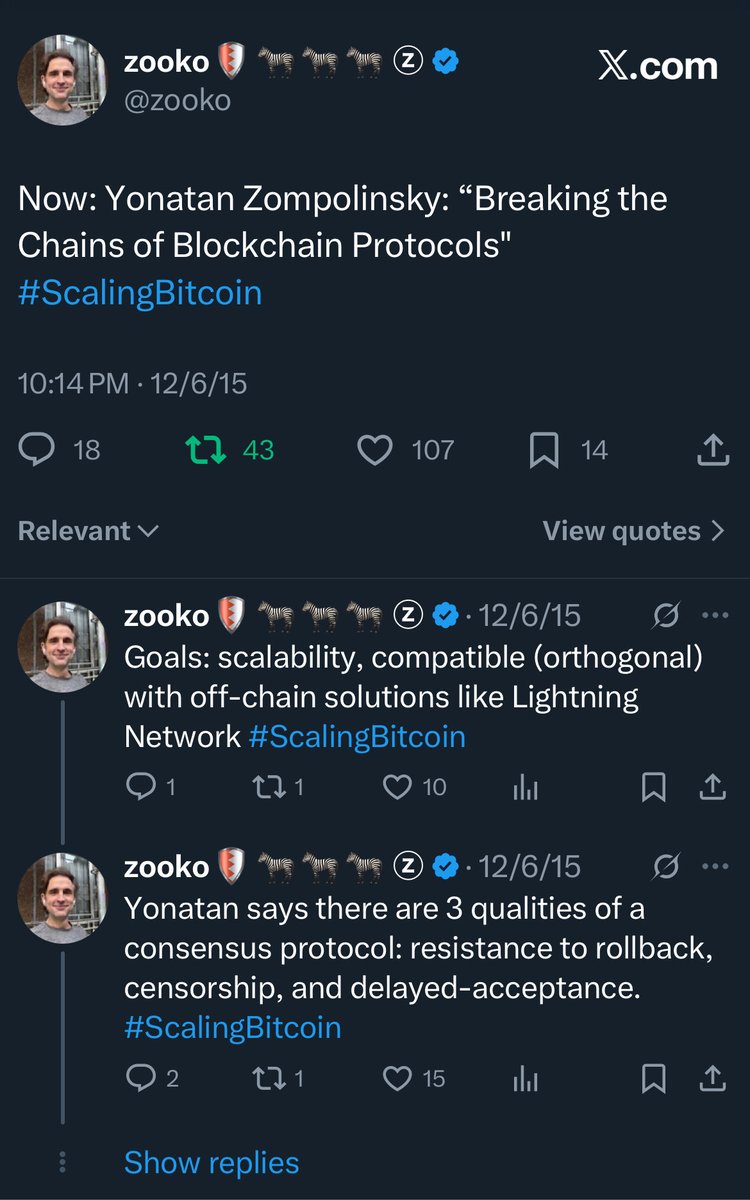
im just a random nobody on x but might be worthwhile to have your team do some dd on yonatan sompolinsky. check his background, research, citations, mentors, his family incl his father, haim. full pre investment level PI checks. then see what he has been spearheading, which is at the confluence of each of the 3 areas you cite. no institutional backing. you might be pleasantly surprised
English
0
0
2
376
Unhedged 𐤊 retweetledi
Captain Sats 𐤊
Captain Sats 𐤊@plzsats·
“Kaspa DAGknight protocol by definition you can’t be faster than. You can’t confirm a transaction quicker than network latency, so in that sense give me any PoS system and I can match it in PoW” Research kaspa:native .
English
2
79
339
6.4K
Unhedged 𐤊 retweetledi
Michael Sutton
Michael Sutton@michaelsuttonil·
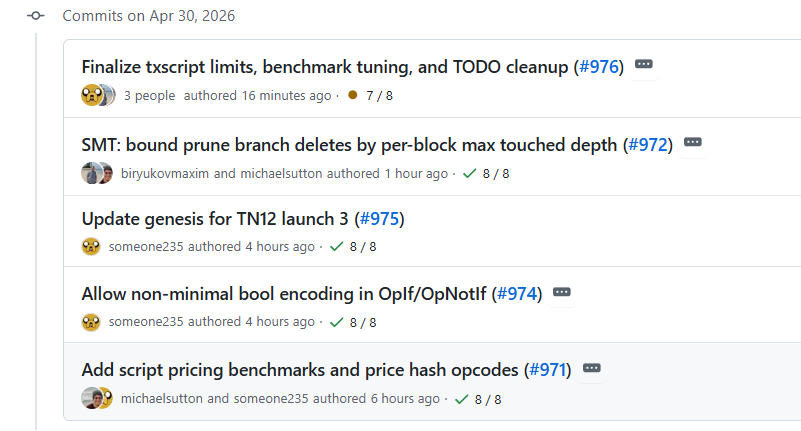
Toccata consensus feature freeze is finally here after a heroic last-mile push by kas core devs. Aiming to reset TN12 tonight, or tomorrow at the latest. Genesis update: + 0x6b617370612d746573746e6574 // kaspa-testnet - 12, 2 // TN12, Launch 2 + 0x544f4343415441 // TOCCATA + 12, 3 // TN12, Launch 3
Michael Sutton tweet media
English
90
396
1.1K
87.5K
Unhedged 𐤊 retweetledi
Our Crypto Talk
Our Crypto Talk@ourcryptotalk·
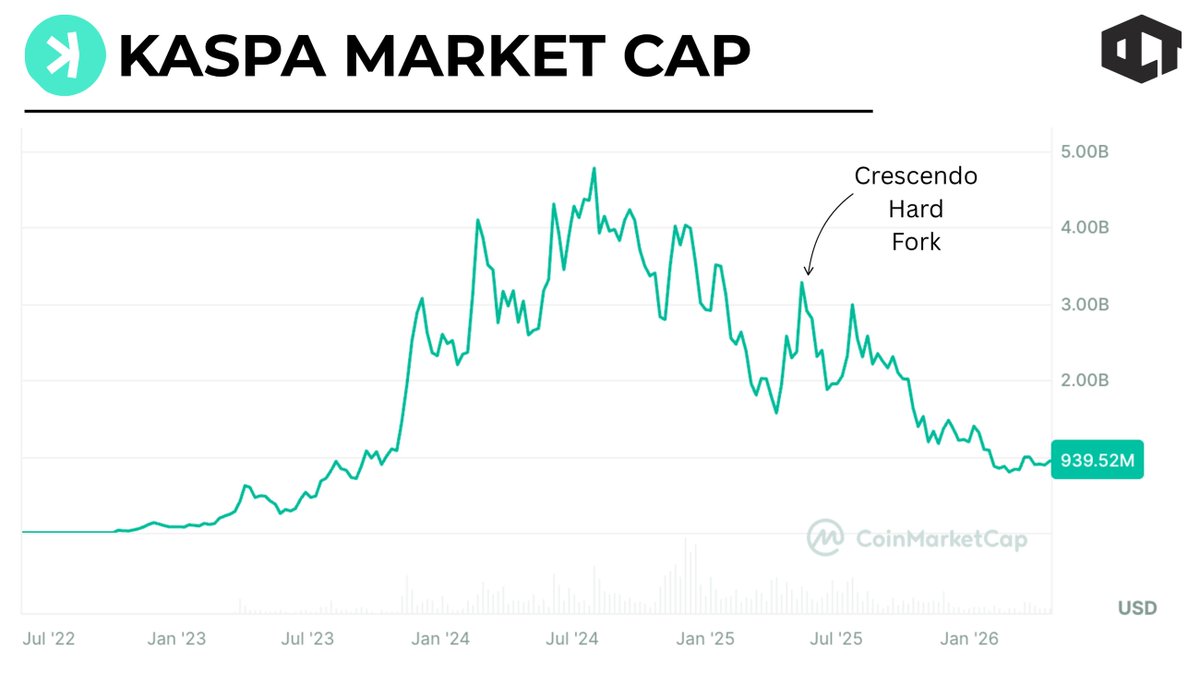
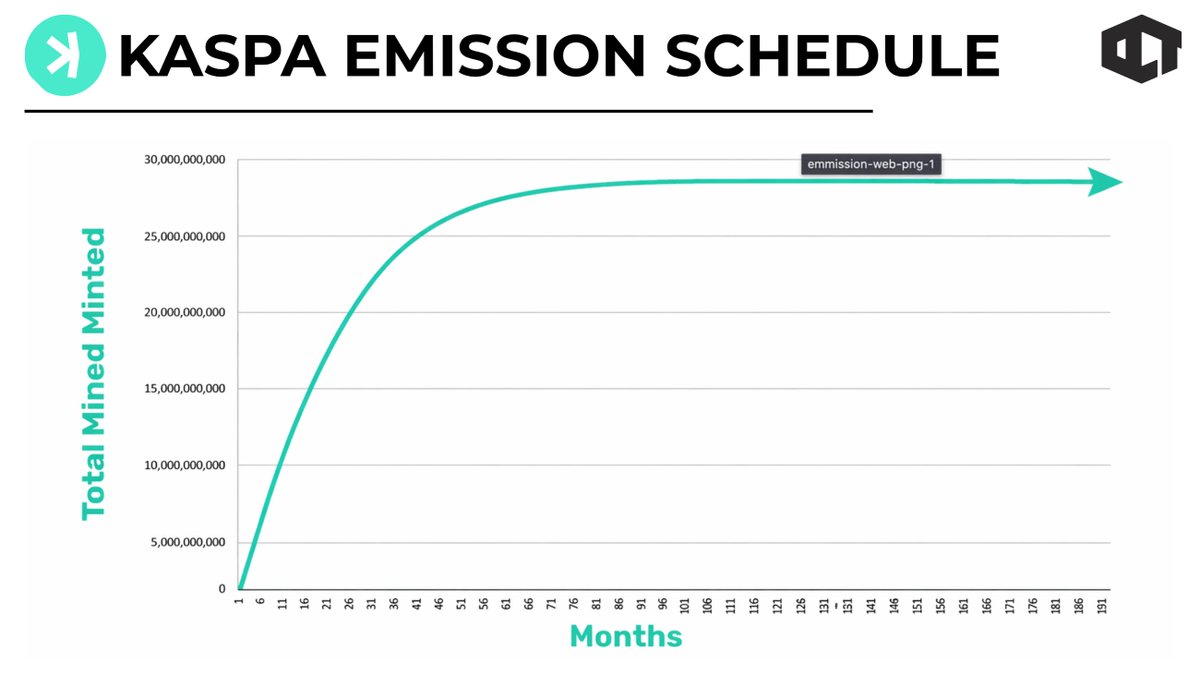
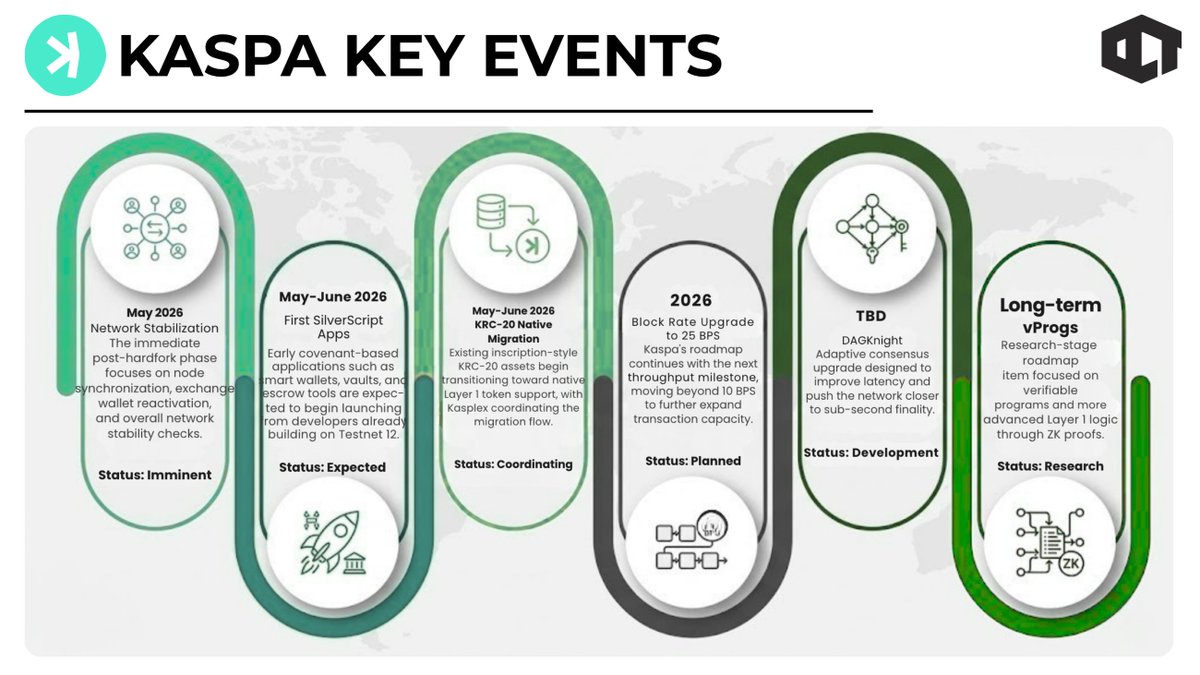
Can $KAS hit $10 billion? Let me break down why that is possible. It is the most logical outcome if the roadmap delivers. Yes, it is down by 83% from the highs. It even dropped after its Crescendo Hard Fork So what needs to be done? 👉 THE ONLY FAIR LAUNCH LEFT STANDING Start with what makes Kaspa fundamentally different from every other Layer 1 in the top 100. Kaspa was fair launched in November 2021. Every single KAS token in existence was mined just like Bitcoin. There is no unlock schedule because there is nothing to unlock. There are no Series A investors sitting on 10x waiting to exit into your buy orders. There are no team allocations vesting through 2030. Look at what is happening to every other L1 right now. SUI down 83% from ATH with 61% of supply still locked with monthly unlocks crushing every rally. SEI down 95% with supply doubling from 3B to 6.7B tokens. 👉 FROM PAYMENTS CHAIN TO PROGRAMMABLE L1 The biggest knock on Kaspa has always been the same which is fast payments chain. The Toccata hardfork, now targeting mainnet activation between June 5 and June 20 2026, is the single biggest upgrade in Kaspa's history. Here is what it introduces : Native assets on Layer 1. KRC-20 tokens built directly into the base layer. For the first time ever developers can issue tokens directly on Kaspa. This is the prerequisite for everything. DeFi, NFTs, Memecoins, Lending protocols and even Tokenized assets. None of it is possible without native token issuance. After June it all becomes possible. 👉 THE NUMBERS UNDERNEATH THE NOISE Nearly 2 billion cumulative transactions processed. The network hit thousands of TPS at peaks. 10 blocks per second running live on mainnet since the Crescendo upgrade. For a proof-of-work chain this throughput is unprecedented. Bitcoin does 7 TPS. Litecoin does 56. Kaspa does 10,000+. 👉 THE MATH TO $10 BILLION At $10B market cap the price would be roughly $0.365 per KAS. That is a 10.7x from current levels. Unlike $SUI, $SEI, $MON, or $APT where the float doubles or triples from here. Kaspa's supply barely moves. 95.4% is already circulating. By end of 2026 with the emission cliff. New supply approaches zero. Every other L1 asking for a 10x needs the market cap to grow 20x or 30x because the supply is growing alongside it. $KAS needs the market cap to grow 10x. Catalysts are stacked with Toccata hardfork in June. Native assets and KRC-20 tokens going live. SilverScript enabling new developers and ZK infrastructure at base layer. DAGKnight upgrade on the horizon with potential major exchange listings. Each of these individually would be a re-rating event. Is there a chain with better tokenomics, a bigger upcoming catalyst, lower dilution risk, and more room to run from a technical perspective?
Our Crypto Talk tweet mediaOur Crypto Talk tweet mediaOur Crypto Talk tweet mediaOur Crypto Talk tweet media
English
20
117
434
15.3K
Luke Dunshea
Luke Dunshea@elldeeone·
Pruning is one of the first things that throws people when they look at Kaspa. If you come from Bitcoin, the mental model is straightforward: there is a chain, it goes back to genesis, and a node can validate the history from genesis to today because it stores all of that data. Most people never inspect the raw data themselves, but the idea feels solid. The history is there if you want to follow it. Kaspa works differently. A normal node does not need to keep the full historical ledger forever. It prunes old data and keeps what it needs for current consensus and validation. If you are new to that model, the natural question is how this is still verifiable. I do not understand every part of the maths at its deepest level, and I am not going to pretend otherwise. Cryptography still feels like magic to me a lot of the time. But the practical point is simple: you do not need every historical transaction sitting on disk forever to verify the integrity of the current state. You can rely on cryptographic commitments and proofs that tie the present state back to the history that produced it. In Kaspa, part of that story uses a concept called Mining in Logarithmic Space, or MLS. Broadly, the idea is that compact proof-of-work evidence can stand in for storing the full historical proof-of-work record forever. Kaspa adapts that idea to a DAG. Pruning is not “trust the community and hope for the best.” That matters because Kaspa makes a fair-launch claim. If that claim is going to mean anything, people need a way to check it. You should be able to verify that the chain you are looking at is real, that there is a known genesis, that the current state descends from it, and that the launch was not secretly backdated or loaded with hidden allocations. Shai Wyborski and @michaelsuttonil built a Genesis Proof notebook for that purpose. It walks from current node state back to genesis and shows that the current UTXO set descends from an empty UTXO set with no premine. It’s awesome work. The proof remained valid, but the tooling around it aged out. The original notebook targeted the older Go-era Kaspa database. Once node software moved to rusty-kaspa, the way the notebook interacted with the database no longer matched the live layout. The logic still held. Running it on a modern node became much less practical. A while back I wrote the code needed to bridge that gap so the same proof flow could run against rusty-kaspa’s RocksDB data. That was one of the first Kaspa projects where I used AI-codegen seriously. I recently went back to it, rewrote it in Rust, and wanted to share it today. It turns the original Genesis Proof notebook into a CLI that runs directly against both kaspad (original Go node) and rusty-kaspa. At a high level, it verifies everything that existed in the original notebook: - the active genesis header hash - the hardwired genesis coinbase hash, Bitcoin reference, and checkpoint reference - the current tip back to the active genesis - checkpoint header and UTXO commitment consistency - the chain back to the original genesis, including original genesis coinbase checks I also added one extra verification step beyond the original notebook: the tool verifies the checkpoint snapshot and derives the checkpoint total from it. That matters because Kaspa’s issuance is deterministic after the random launch period, but not during it. So if you want to validate the current circulating supply from first principles, you need a verified supply total at the November 22, 2021 checkpoint rather than just accepting that number on trust. I welcome and would love anyone to scrutinise this code, whether that was with AI or not, is fine, but please go over it with a fine-tooth comb - did I mess anything up? That kind of feedback matters more than speculation. My setup is only one setup. The point of this tool is not “download my binary and trust me.” It is to hopefully make this verification path easier to run, easier to inspect, and easier for ordinary node operators to try for themselves without losing the point of verification in the first place. Im not claiming this solves all of those problems but it’s my crack at trying to explain one of the most misunderstood parts of Kaspa. Have you got a better idea that could build off this? Please get involved, the repo is open. Pruning does not mean “just trust us.” It means the verification model is different, and people should still be able to check that for themselves.
English
8
52
161
4.3K
Unhedged 𐤊
Unhedged 𐤊@Unhedgedd·
@DesheShai always appreciate the educational content. you have a unique style of "pruning" technical concepts to make it generally more digestible to us commoners
English
0
0
1
85
Shai (Deshe) Wyborski
Shai (Deshe) Wyborski@DesheShai·
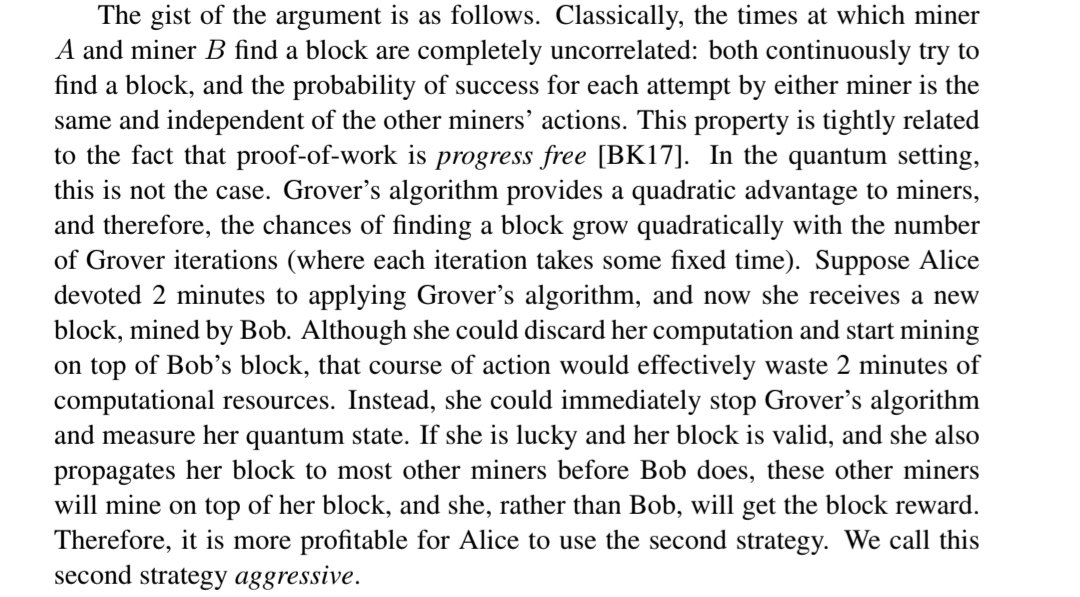
That's patently wrong. 1. Grover's algorithm creates a new attack vector by attacking the difficulty adjustment. It is far from practical but requires *much* less than 51%: arxiv.org/abs/2403.08023 Ironically, what (partially) protects Bitcoin from such an attack is it's very slow DAA response: difficulty only changes once every two weeks, and by a factor of at most four. But this attack works on any proof of work coin, and some are actually dangerously succeptible. 2. Even if we find a way to patch this particular attack, quantum mining is very different from classical mining to the extent that a Bitcoin "mined by quantum computers" will possibly not be secure at all. The key difference is that Grover creates dependencies between miners. Classically, the optimal strategy is always to ignore everyone else and keep mining. Quantumly this is no longer the case. The optimal strategies depend on how mining is distributed among quantum computers and are very poorly understood. A good entry point is the following paper (see also the excerpt attached as an image), but remember there are newer result strengthening it's claims: arxiv.org/abs/1804.08118 3. Even if it weren't the case, the mere fact that everyone gets a quadratic speedup is terrifying. It means that a miner that's ten time larger is a hundred times more profitable. Rich get richer on steroids. 4. Fortunately, significantly quantum mining Bitcoin requires ridiculously strong quantum computers. I mean, comically strong. Like, several good orders of magnitude above what's needed for breaking ECDSA. That's the *only* protection Bitcoin has from all of the above. Arguments starting with "even if there is quantum mining" are wrong, because quantum mining will kill Bitcoin. I don't think this is a bad thing. Bitcoin is eventually a mechanism for converting electricity to security, so now it will also provide security against quantum miners. While Bitcoin seems protected, this should come as a huge concern to all small PoW coins, and all coins using sliding window DAA. 5. The lesson is as always: cryptography is hard. Don't take anything for granted, and don't jump to conclusions about things you don't fully understand. For example, reducing Grover's algorithm to a quadratic speedup and ignoring all it's other consequences (as well as the full consequences of a quadratic speedup in itself)
Shai (Deshe) Wyborski tweet media
Aleksei | Only21M@AMoneroHodler

@SGBarbour This isn't true. There is no evidence a QC with a grover's quadratic speedup would be faster than an asic, let alone all of them. And if it is, then Bitcoin's future is being mined by Quantum computers.

English
3
2
30
4.1K
JH
JH@oneforonehaha·
😶‍🌫️😶‍🌫️😶‍🌫️ #kaspa @Kaspa_KEF
QME
41
107
409
31.3K
Kaskad
Kaskad@AppKaskad·
After stress testing the algorithm and infra, @eliottmea's Condensed Order Book oracle is live on testnet.kaskad.live! This is the price engine that powers Kaskad's lending markets. No-arbitrage pricing of assets aggregated across all venues, manipulation-resistant by design. Final audits before mainnet release and full Kaspa ecosystem availability. We're on the finishing line!
English
10
34
112
2.8K
Irene Zhao
Irene Zhao@Irenezhao_·
Spotted a legendary Web3 founder at a romantic Chinese spot in SG. He was dressed like a total NPC in a plain tee, but the vibe was suspiciously "secret date." I was 100% sure I was about to witness a secret lover reveal. Naturally, I did the "accidental" walk-past to confirm the mystery girl. Turns out there was no supermodel. No secret affair. Just one guy and a 12-course feast. Man has successfully decentralized his social life.
English
15
3
125
30.8K
Unhedged 𐤊
Unhedged 𐤊@Unhedgedd·
@nikitabier time to look at pow, fair launched, protocol like Kaspa bringing btc nakamoto security with real time internet speed throughput $kas
English
0
0
0
104
Nikita Bier
Nikita Bier@nikitabier·
Crypto has had a rough year. Maybe we should launch something to fix it.
English
12.6K
5.1K
43.3K
6.5M
Jeff Park
Jeff Park@dgt10011·
Incredible profile on @chameleon_jeff and the necessary mindset to succeed in the “game of investing” Hands down my favorite part was: colossus.com/article/beyond…
Jeff Park tweet media
Jeff Park@dgt10011

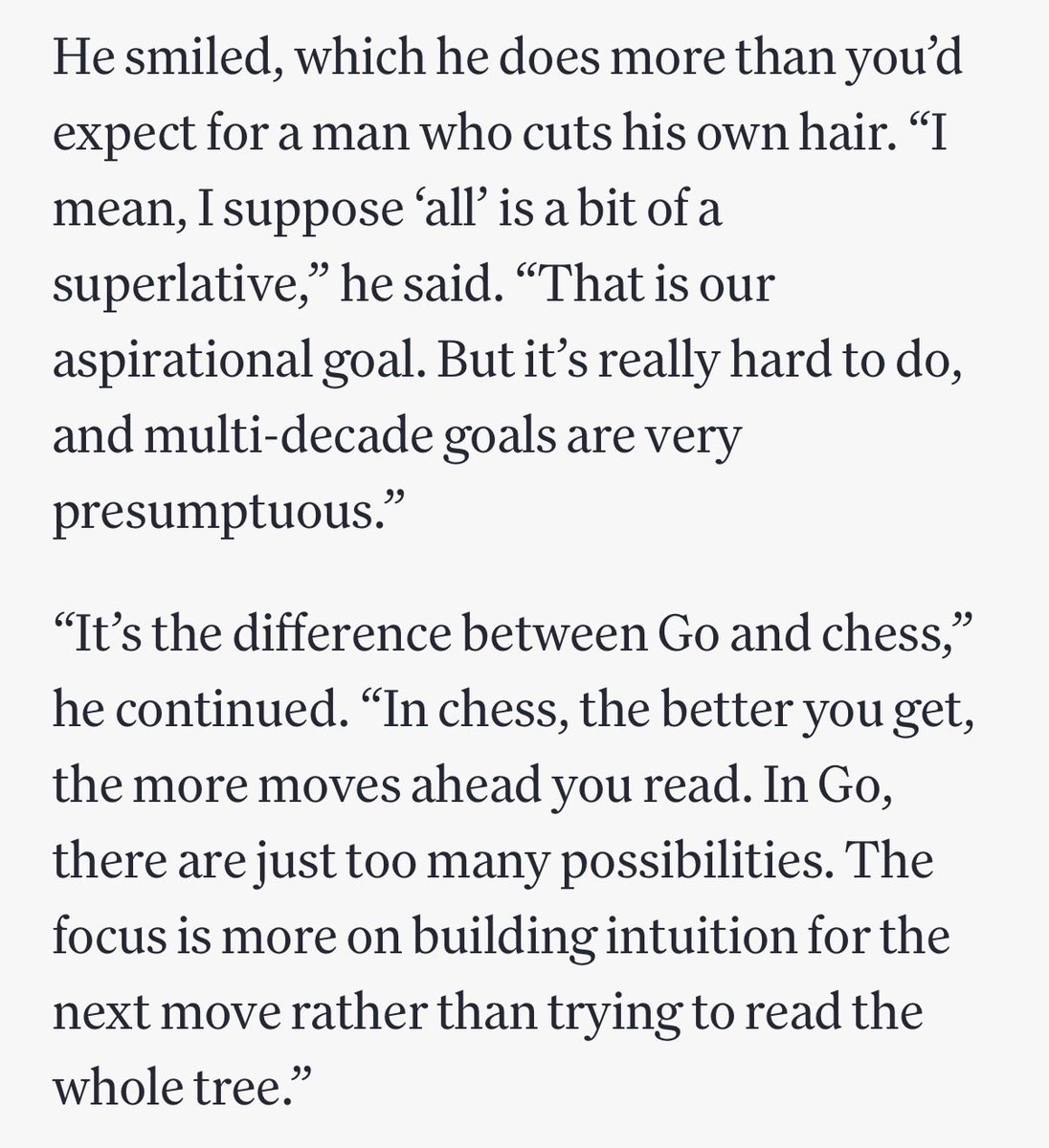
some food for thought I've been having lately about the "game of investing": stock picking is a lot like chess. as deep blue showed it can take down kasparov in 1997, the investing program to a certain extent can be brute forced because the ability to construct a tree is defined by mostly knowable parameters. it is a relatively closed system. some of that is due to the anchors of 'fundamental analysis' but its also due to the fact that regulatory disclosures provide a decent overview of the holder landscape and their expected behavioral patterns. in other words, the board can be configured because of its legibility- even though the game is constantly evolving, with enough brute force and ability to look into the future without using intuition, memory, or high level abstract thinking, the game can be gamed. commodities is different though. investing in commodities looks more like a game of go, because while chess has about 20 possibilities for each move, in go you have over 200. the combinatorial space is so large given the 2x board that no amount of brute force could run a closed system. even more critically, in go, all the pieces have the same value unlike chess. while in chess the intrinsic value of each piece determines the direction of the game (just like in stock picking, revenue might matter more than margin, or management team matters more than product, etc), the game of go is determined by "reading the board" - understanding the thickness and lightness of the waves, the formations, its reinforcements or its weakening, the difference between sente or gote. the commodities landscape has no legibility, so it requires positional intuition that machines cant articulate as easily with valuable information missing. all to say, i do believe there will be an alphago vs lee sedol moment for investing, but i think that spiritual awakening will come when commodities, not stocks, are fully captured. thats why bitcoin, prediction markets, and crypto are fundamentally so much more interesting than almost anything else to advanced traders today. it also reaffirms why decentralization matters so much for the retainment of humanity in our world so to prevent legibility and promote positional intuition. because winning with bitcoin is to distinguish between real and false eyes, each successive stone closer to the origin of heaven. despite its technological foundation that deprives human agency, it is likely to be the last human market left on earth. despite its proof of work - or perhaps because of it - bitcoin will be the last financial market that still demands something irreducibly human.

English
10
12
257
44K
Unhedged 𐤊
Unhedged 𐤊@Unhedgedd·
@hus_qy no better coordinators to lead the stag hunt than kaspa core devs!
English
0
0
7
262
Hans Moog
Hans Moog@hus_qy·
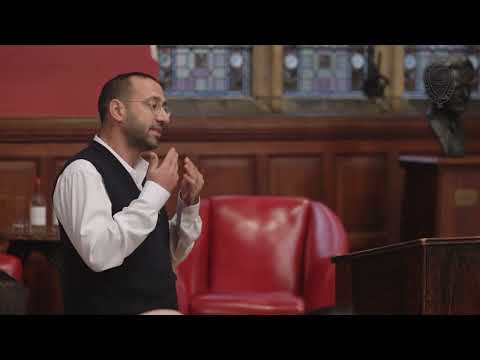
I just got back from my Easter trip visiting family, and one of the first things I made time for was listening to Yonatan’s Oxford Union speech. I think he absolutely nailed it: youtube.com/watch?v=VIZGKo… If there is one thing we can learn from our progress in AI, it is that intelligent behavior emerges when many components explore degrees of freedom and converge, through distributed constraint resolution, into coherent and stable patterns. The modern world has connected an enormous number of people and given us unimaginable freedom, but it still lacks a credible way to enforce shared constraints. The result is a crisis of responsibility at every scale of society: from cyberbullying to former superpowers chasing old glory through war, to leaders blaming the weakest members of society for national decline, or even killing their own citizens to preserve power. At the same time, our capacity to inflict harm on one another has become increasingly asymmetric. Small actors can now create disproportionately large disruptions, and conflicts no longer remain local. They send shockwaves through the emerging superorganism we call humanity. The age in which we could dominate one another and still produce a stable world is coming to an end. The only serious path forward is collaboration. People may feel pessimistic about the future, but I think we are approaching an inflection point. Even the old superpowers are beginning to learn this lesson the hard way. The American Dream of "I can make it" is gradually giving way to the realization that individual prosperity depends on collective wellbeing, and that we can build far larger and more meaningful things when we share a common dream. That is why I am excited about DLTs, and Kaspa in particular. Not because I see them as safe havens for hiding wealth from corrupt governments in some dystopian future, or because I want people to get rich by selling to later participants. But because I believe DLTs can offer a superior foundation for large-scale human coordination: one that is more neutral and reliable than traditional models based on force and mutual deterrence. In that world, wealth is not the goal in itself, but a byproduct of coordinating around shared missions, empowering people to contribute, and aligning incentives toward common outcomes. The future is not about building better products. It is about building better protocols: systems that allow human beings to coordinate meaningfully at larger scales than ever before. For the first time in human history, we have the tools to build institutions that are not bound to territory, yet can still provide structural coherence without having to fight wars to establish their legitimacy. What we need now is a group of people bold enough to take that mission seriously.
YouTube video
YouTube
English
20
173
516
35.4K