
Sabitlenmiş Tweet
Somber Dog
92 posts


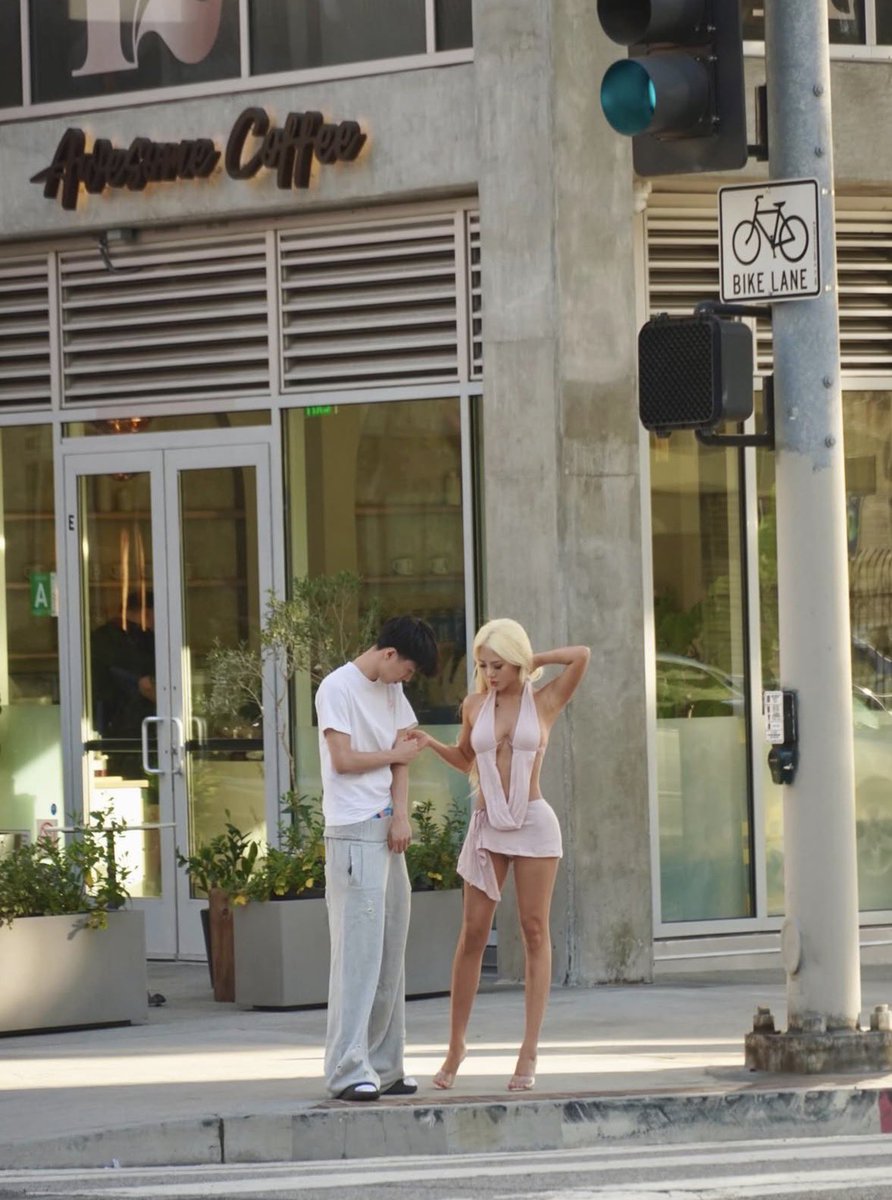
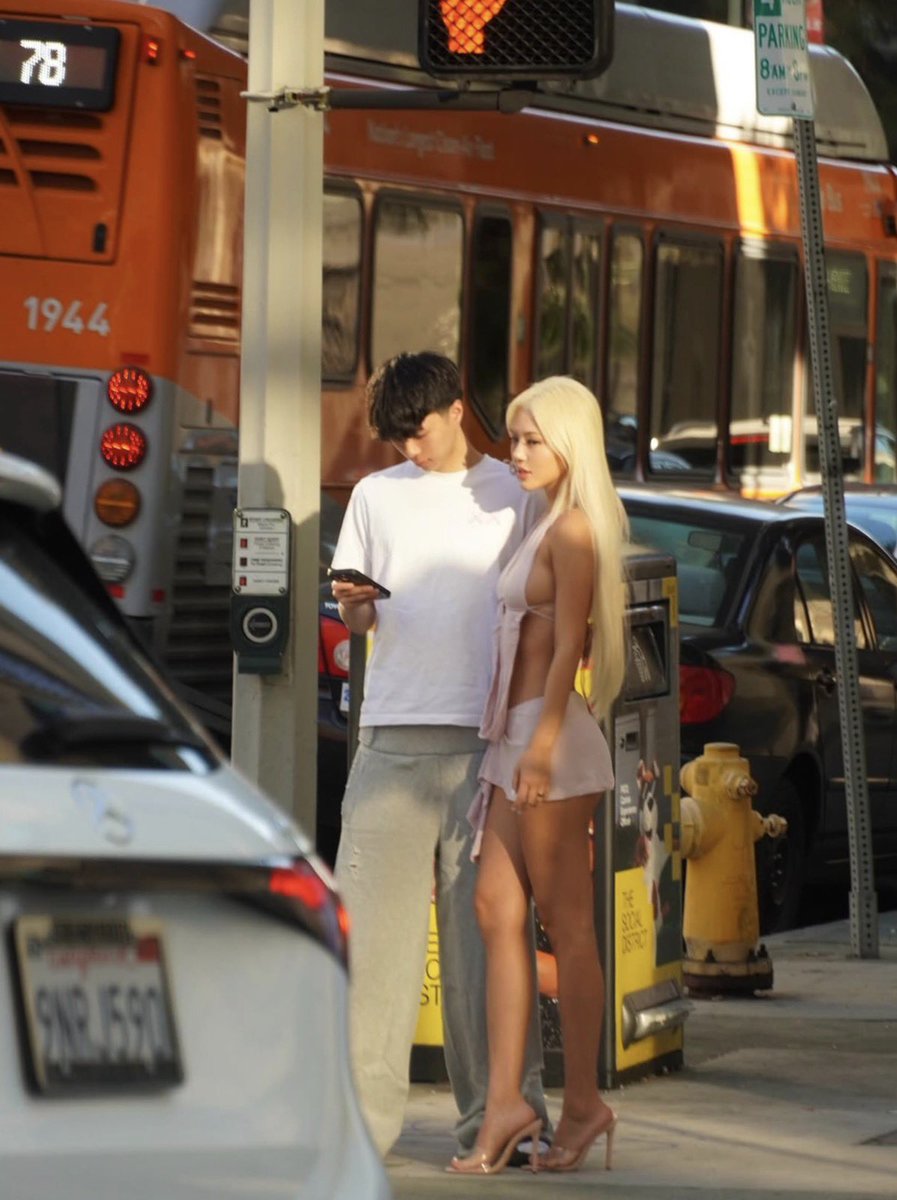
Ray was spotted with his girlfriend in LA during his break from streaming 👀

English
Somber Dog retweetledi

Somber Dog retweetledi
Make sure to tell someone you love them or lift someone else up today. You have no idea how much of a positive impact you can have on a person just by being kind. The never doom arc continues…
NEVER DOOM.
English
Somber Dog retweetledi

Toronto has better food than all of these places (Montreal too)
The Spectator Index@spectatorindex
World's best food destinations. 1. 🇮🇹 Rome, Italy 2. 🇬🇧 London, U.K. 3. 🇲🇦 Marrakech, Morocco 4. 🇫🇷 Paris, France 5. 🇮🇹 Naples, Italy 6. 🇪🇸 Barcelona, Spain 7. 🇵🇪 Lima, Peru 8. 🇺🇸 New Orleans, U.S. 9. 🇦🇷 Buenos Aires, Argentina 10. 🇬🇷 Athens, Greece (Tripadvisor)
English
Somber Dog retweetledi

@BonesawMD They don't recognize that they've ceded their own agency in that marriage.
English
I have struggled to maintain sanity and dignity since my divorce.
What’s worse is that everyone else seems married.
They speak down to me, as if there is something I do not know. I hear it in their corrective tones, their smug grins that hideously morph their faces.
Their feigned concern for my well being.
They ask how I am only to satisfy their gossipy cravings and sneaky laughter.
They have always shamed me for the luxurious rewards of my divorce settlement.
They hate that the system favours people like me.
They hate that I am so entitled now. I keep demanding. It is never enough.
More.
I claim riches before they are in my possession.
I own things before there is evidence I deserve them: the court has never needed documentation. Conviction is currency.
I do not see why they are proud to be married when Reality abuses them so blatantly.
She holds them back in all that they do. She grounds them to ensure they never take flight.
She is heavy, with lovely thick ankles.
They are too close to see her for what she is.
They do not know how curvy she has become. How gorgeously she can be shaped. Squishy. Supple. Soft.
How insecure she has become.
She will never admit how much she yearns for reassurance. How desperate she is to be told what to do.
They do not know how submissive she becomes whenever she’s challenged,
how she stretches herself to fill the void of our separation.
They stay close and married to her; they never risk playing with her like I do.
After my divorce, it is they who became bitter and jealous.
They hate how reality bends herself to please me.
English
Somber Dog retweetledi

@randolphic_ every occidentalist must microdose the ways of the orient lest they become the type of person to say shit like “holding space for __”
English
Somber Dog retweetledi

I now fully understand that the societal value of twitter is cordoning off the subtly and severely mentally ill from polite society. People are out there living great normal lives like it’s 1992. People are dating and dreaming and achieving. We’re the problem.
English
Somber Dog retweetledi


I think in business you can ignore it.
But if a ‘friend’ you are obliged to ‘tell’ or refuse his company.
Otherwise you are playing cover - like someone who boards a terrorist - as in you are saying ‘I don’t judge’ - but this guy is like without you covering for me, as a moral reference - everyone else would have thrown me in ‘jail’ (punished me).
I had a friend who is bi (male) and has had 100+ partners. He is now married to a young girl - and never divulged his history or that he is bi - so sometimes he can flirt with men in front of her or camp with them, without her getting suspicious.
The rule is - everything I know, I can tell your wife / judge you - if you don’t want judge me, don’t tell me, hide it.
The burden is not on ME to keep your bad behavior secret, as an accomplice.
But rather than tell, I cut off the friendship.
He could tell her, I’m sure she’d be fine with it. But if he doesn’t - well, then that makes me cover. She knows my morality - and I wouldn’t act in such a way.
We are the company we keep.
English
English

A man brings his mistress to the dental office with him. Having been a patient of 5+ years and his wife and children also come to the office regularly, stay and chat after their appointments….
Is the ethical route to tell the wife or stay out of it?
English
@divya_venn Anecdotally, the intelligent people in my life are more prone to rumination and getting stuck in loops (i.e. overthink and underact or totally misread the situation)
English

intelligence has a way of making ur outcomes more extreme, not necessarily better, at least when it comes to your social ties
the thing is, the smarter you are the more likely you will find people to enable you, simply bc you're good at getting them to drink ur koolaid
English
@Gologolum @Tablesalt13 Markham (Chinese) and Richmond Hill (Persians)
English

Somber Dog retweetledi

Rawdogging ChatGPT so blatantly is a skill issue in 2025.
Shazi@ShaziGoalie
The Brampton mortgage loophole game isn't just real — it's routine. Trustees are buried in bankruptcies, brokers are whispering "no down payment loopholes," and the regulators? Silent. This isn't just fraud — it's infrastructure. The Pandora’s box is only beginning to open.
English
Somber Dog retweetledi

Getting a meeting cancellation notice in Microsoft Outlook
maddie rune🪰@themaddierune
What is the most pleasant, non-sexual, non-drug, experience a human can have?
English

@redpilledtchr @AngelicaOung I heard a story about him lamenting his inability to speak to the locals in Taiwanese when he saw Lee Kwan Yew doing the same on a visit. Don't know how much of this is true though.
English

>And his achievements of his son Chiang Ching-Guo totally ignored.
CCK is such a fascinating figure to me. He's like the Forrest Gump of 20th century Chinese history, seems to pop up at every crucial moment. Contributed so much to democratizing and developing Taiwan, and his reward was complete historical oblivion, at least in the Western media.
English

Arnaud does a great job tackling the ahistorical assertion that China just recently noticed Taiwan in the 90s and decided to grab it out of greed. What?
Look I’m a woman of a certain age who grew up in Taiwan. When I was a little girl, we were still taught in our textbooks that we have to rescue our compatriots from the commie bandits and bring light back to the Ancestral Land! Back then there was no confusion: We are Chinese and so are you, but WE should be in charge.
People forget that even former DPP President Tsai Ing-wen at one point referred to herself at Chinese. In the clip she was so matter of fact. The Taiwanese were Chinese. It wad known, until it wasn’t.
But wasn’t there always a Taiwanese independence movement? Sure…but it only recently became mainstream. Even when the DPP was founded there was a panoply of views on how the two sides of the straits should relate. That’s why at opposition rallies they often parade some old geezer as « a founding member of the DPP » to talk about how the DPP went the wrong way and then try to get him off the stage before he says something off-brand like « long live communism! »
The pro-independence faction did take over the DPP. And at some point Taiwan’s history was retconned to make it a narrative of evil Chinese KMT regime oppressing the freedom-loving people of Taiwan.
Chiang Kai-shek era bloody crackdowns were weaponized. And his achievements of his son Chiang Ching-Guo totally ignored. Chiang the younger was the model authoritarian technocrat. He built the state, loved the people, did his work, and then he died. And the people loved him back. You can see the thick crowds of people lining the streets to mourn his funeral procession clips on YouTube. And during his life CCK was known for slipping out without security to mingle with the folks and eat some beef noodle or something. You think he could do that if he was the evil oppressive KMT dictator?
Anyhow. Doesn’t matter the kids don’t even know who he is now. I suppose they think the Taiwan economic miracle of the 90s happened because we democratized and then Magic Morris Chang got sick of being underestimated at Texas Instruments so he came home and started TSMC. Ha!
Arnaud’s comparison of Taiwan as China’s Alsace-lorraine is so apt. It’s a piece of itself that China painfully lost at a point of weakness in its history. There’s no letting it go while still feeling whole. I know because it was how the Chinese people of Taiwan felt about the rest of China.
Once I was talking to an old American uncle who lived for a bit in Taipei in the 80s. He was complaining about how he couldn’t any girl in Taipei to give him the time of day unless he accepted the utterly delusion belief that the KMT was going to retake the mainland.
But what is to be done? Taiwan is more complicated than Alsace-lorrain. That’s a region. It never had its own functioning government and economy for decades. The Taiwanese have gotten used to democracy and freedom of speech. It’s intolerable for China to lose Taiwan, but also intolerable for the people of Taiwan to lose the way of life they have become accustomed to.
I like the formulation of Annette Lu. Instead of « one China »一個中國 let’s use the formulation « one Sinosphere »一個中華 using the framework of the 92 Consensus, a somewhat ambiguous document to be sure. But it’s also an agreement negotiated at the peak of Taiwan’s clout vs China and we’ll never get a better deal.
Before you call this an aging KMT delusion, I should let you know that Annette Lu was the DPP vice president between 2000 and 2008 and she was a feminist activist jailed for five years for sedition by the KMT. She’s 80 now and has no influence within the DPP but still active and makes good sense.
In the words Annette Lu, Taiwan and China are distant relatives and close neighbors and should use wisdom to resolve our differences.
Arnaud Bertrand@RnaudBertrand
I remain absolutely flabbergasted at the level of propaganda on China in France, even on state television. This is a show called @Ccesoir on @FranceTV, and the guy speaking is Romain Graziani, supposedly one of France's leading "experts" on China, a Professor of Chinese studies at the École Normale Supérieure of Lyon. The way he narrates the history of Taiwan and why it matters to China is, put politely, a complete fabrication. Listening to him, "Taiwan was only really part of the Chinese nation for only 10 years" (and saying otherwise is "pure revisionism") and it's "only in the 1990s" that China's "obsession" with reuniting Taiwan first arose. He further asserts that it's only nowadays with Xi Jinping that "the predatory voracity of China leads to rewriting all of history as if it had been a lost province in the style of Ukraine with Russia." This is so outrageously wrong that I'm not even sure where to start. For one, as a Frenchman, maybe he should read the book "Quand la Chine s'éveillera" ("When China awakens") by Alain Peyrefitte, a former senior French politician and De Gaulle's confidant. In this book written in 1972 (so long before the 1990s), Peyrefitte - drawing from his extensive discussions with Zhou Enlai in China - describes Taiwan as "China's Alsace–Lorraine", drawing the comparison with France's own historical trauma of losing these provinces to Germany in 1871, showing that China's desire for reunification with Taiwan was already a central national priority decades before the 1990s, not a recent invention as Graziani falsely claims. In the book Peyrefitte also relates how he saw in China so many "Let's free Taiwan" slogans alongside others such as "Let's crush imperialism", demonstrating again how central it was to China back then already. The truth is that China's view of Taiwan as an inseparable part of its territory that needs to be reunited has been a persistent diplomatic stance ever since the creation of the PRC (and even before when it was colonized by Japan), making Graziani's timeline not just revisionism but an outright historical fabrication. Also, in his ridiculously wrong retelling of history, Graziani conveniently omits the central fact of Taiwan's recent history: that it indeed represents an "Alsace-Lorraine" for China in the sense that it is a painful territorial wound inflicted during a period of national weakness. Just as France never accepted the legitimacy of German control over Alsace-Lorraine and spent decades determined to recover it, China has consistently viewed Taiwan as a province temporarily separated by an unfinished civil war and foreign meddling, not as a '10-year' historical footnote as Graziani absurdly suggests. And, at the risk of being a "revisionist" in Graziani's eyes, it's also laughably wrong to suggest that Taiwan was only part of China for 10 years between 1885 and 1895. This deliberately obscures how in 1683, after defeating the forces of Ming loyalist Koxinga (who himself had expelled the Dutch colonizers), the Qing dynasty incorporated Taiwan into its empire. It's at this stage that Taiwan was formally incorporated into the empire and administered as part of Fujian province for over two centuries - not 10 years - before becoming its own province in 1885. The 1885 provincial reorganization that Graziani misrepresents as Taiwan's 'integration' was merely an administrative adjustment within already-established Chinese territory. Lastly, I get how comparing the issue of Taiwan with Ukraine is a convenient rhetorical device for Western commentators seeking to delegitimize China's sovereignty claims, but it's an outrageously dishonest parallel. For one, there is not a single country on earth, not one, that recognizes Taiwan as an independent sovereign country, unlike Ukraine. And, as a Frenchman, Graziani should know that France doesn't either. According to international law, Taiwan is part of China. Heck, Taiwan themselves, in their constitution (a reminder that the country is officially called "The Republic of China") do say that they're part of China, and they haven't declared independence. Granted, the "China" that the "Republic of China" say they're part of is a slightly different "China" than that of the PRC in that both entities claim to be the rightful government of the same Chinese territory—making the fundamental conflict a question of which government legitimately rules China, not whether Taiwan is part of China as Graziani disingenuously frames it. All this makes the Taiwan issue actually the opposite of Ukraine. Whereas Ukraine is a sovereign nation facing external aggression that violates its territorial integrity, Taiwan represents a separatist challenge to China's internationally recognized sovereignty. Supporting Taiwan independence therefore means endorsing the very violation of territorial integrity that is condemned in Ukraine's case, an irreconcilable contradiction. All in all, France allowing such egregious revisionism on state television is exceedingly dangerous. The irony is that this is France doing exactly what Graziani accuses China of: engaging in 'predatory' historical revisionism, with state television platforming blatant propaganda as expert academic analysis, propagating falsehoods that contradict international law and manufacture consent for confrontation.
English
@WellBuiltStyle Any tips for lifters into raw denim? Hard to figure out the right fit given the shrink and time to break in.
English

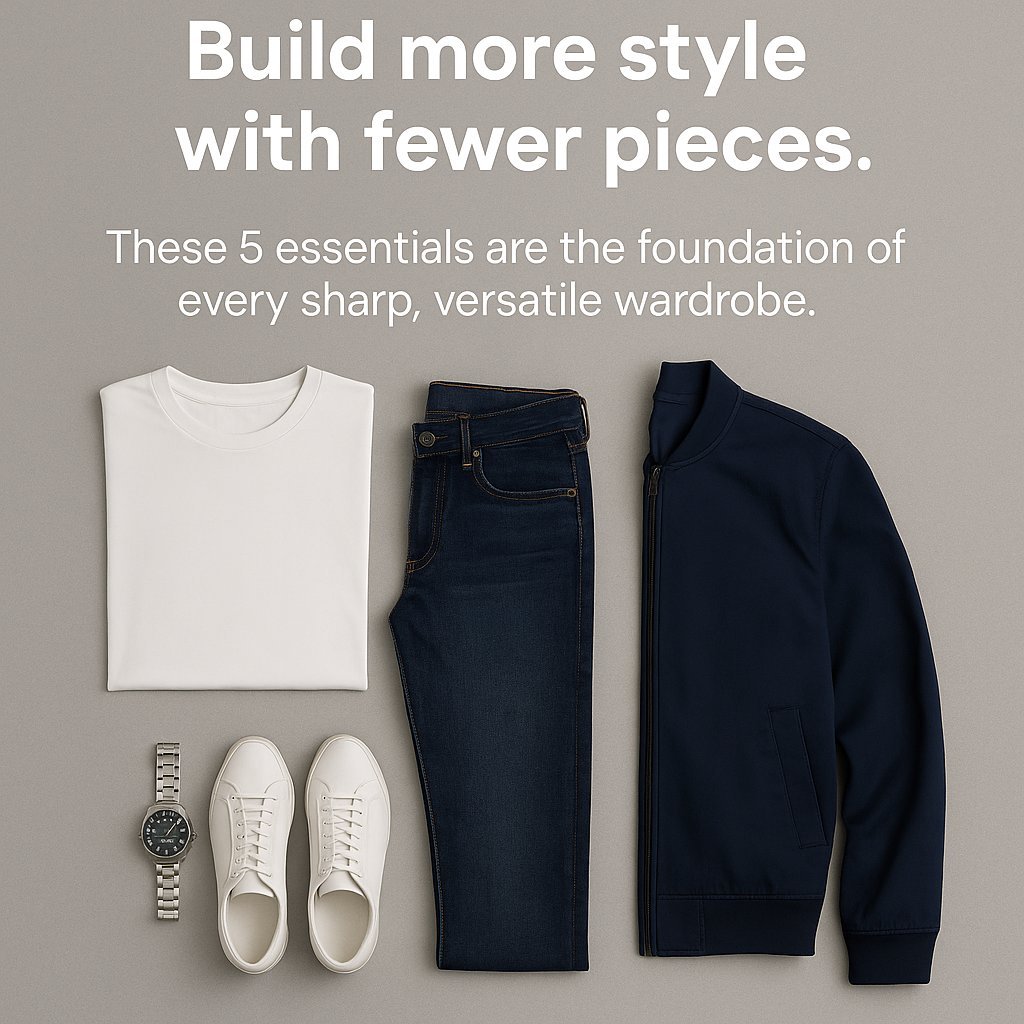
Struggling with jeans that actually fit? Now you know how to fix that.
And denim is just the start.
I break down the 5 essential pieces every man needs (including the right pair of jeans) in a free 13-minute video.
👉 Watch it here: secure.wellbuiltstyle.com/5-wardrobe-ess…
English
Jeans don’t fit because they weren’t made for guys like you.
If you lift and have muscular legs, finding denim that fits is a nightmare.
Here’s how to fix it—and create jeans that actually work for your build...👇

English