

Parvez Fatteh
13.5K posts

Parvez Fatteh
@UpToParHealth
Husband/Father * Pain/Addiction/Fx Med MD * Social Conservative + Progressive = ? #falcons #braves #stlblues #hawks #lfc #80s #opioidcrisis #Bernie #BLM #Resist
San Francisco Bay Area, CA Katılım Haziran 2009
1.2K Takip Edilen400 Takipçiler

@UpToParHealth @FlySWISS First time in 3 yrs I post ANYTHING and you're on it 👏👏👏
English
@20th_Centurygal It was a tribute band called…Foreigner. I saw them live two years ago, not a single original member 🤦🏻
English

Parvez Fatteh retweetledi

Not saying that game was stolen from Egypt but it is now on display at museum in London.
English
Parvez Fatteh retweetledi
When I was Health Director for Wayne County, we put vending machines with Narcan and fentanyl test strips in 100 different locations.
If you ever see one of these, I hope that you'll grab a couple Narcan doses to carry with you. It can save a life.
English
Parvez Fatteh retweetledi
The Atlanta Hawks have exercised their fourth-year, $2.41 million team option on Mouhamed Gueye for the 2026-27 season, league sources told @hoopshype. Gueye played in a career-high 77 games for Atlanta, averaging 4.4 points and 3.6 rebounds in 15.3 minutes per game last season.

English
Parvez Fatteh retweetledi

Lots of guys can make impressive dunks, but only a chosen few can consistently get this funky during actual league action. They called Dominique Wilkins “The Human Highlight Film” for a reason, son.
English
Parvez Fatteh retweetledi
Super Sky Point to Bob Horner. He was the NL Rookie of the Year and an All-Star but if you were around back then you know he was more than that. Much more. He was a fixture in the homes of millions of us through the miracle of cable television during those epic childhood summers that seemed like they’d never end.
I was a fan for over 40 years but had never met Bob until I interviewed him last December about Dale Murphy’s Hall of Fame case. As you’d expect, Bob was a fierce advocate for his fellow Fulton County basher. How could he not be? They were Murph and Horner. Horner and Murph. The Hall and Oates of the Launching Pad.
You know, these sky points all suck to write but this one hurts more than most. The four-homer game, the bad perm, Chief Noc-A-Homa waiting by his teepee for another Horner long ball. I have tweeted a lot about Bob Horner through the years and it’s because he represents to me, and I suspect many of you too, something far bigger than baseball: WTBS coming out of the magic box on top of my 400-pound Zenith, cool air coming through my bedroom window after another afternoon of Wiffle Ball, and Rick Mahler (probably) toeing the rubber at about 7:05 while hoping to keep the Braves in it with smoke and mirrors long enough for Horner and Murph to do some damage. And me sprawled out on green and yellow shag carpet in Kentucky paying 100 times more attention to Skip Caray, Ernie Johnson, and Pete Van Wieren than any of my teachers.
Farewell, you sweet slugging bastard. Tell St. Peter you brought your glove for the hot corner and to write you into the cleanup spot. #RIP

English
@P_Remarks @TulikaBose_ You just described the SF Bay Area weather
English

NYC is sick bro it starts out cold in the morning then gets to like 70 degrees for an hour then it rains and then by night time it’s 36 degrees and windy bro there’s nothing else like it
English
Parvez Fatteh retweetledi
Every time Duke loses, an angel gets his wings.

English
Parvez Fatteh retweetledi
Parvez Fatteh retweetledi

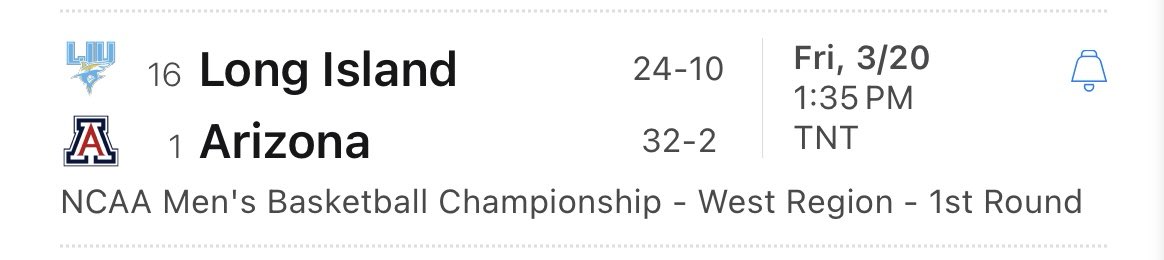
The biggest game of the first round is on Friday, when Long Island battles Arizona for iced tea supremacy
English
Parvez Fatteh retweetledi

> It’s all theatre.
Yes it is.
Both sides agreed to contain this escalation to selective, pre-agreed targets. If that’s not obvious to you by now, no amount of analysis will bridge the gap. You’re watching the fireworks and thinking it’s the war. It’s not.
> They haven’t harmed the leadership.
They haven’t.
The provisional leadership council is already seated; Pezeshkian the reformist president, Mohseni the judiciary hardliner, and Arafi the ideological placeholder.
Three chairs, all filled, no vacuum.
The state didn’t skip a beat. You just didn’t notice because you’re still refreshing headlines looking for chaos that was never coming.
The leadership is intact. Your understanding of it isn’t.
I’ve said this since day one on this platform. The Axis of Resistance is a faction. It is not the state. It never was. It was a liability portfolio dressed up as an ideology.
You Axis romanticists looked at all of this and called it defeat.
It was divestment.
Iran didn’t lose its proxies. It shed them. There’s a difference, and if you can’t see it, that’s your ceiling, not mine.
> It’s a fake war.
It is a fake war.
Compare this to Ukraine. Hundreds of thousands dead. Markets in freefall. Commodities unhinged for two years. Cities flattened block by block.
Now look at this “war”.
Oil at $73 on the day of a declared war and Hormuz closure. OPEC+ meeting the next morning with pre-positioned supply increases. Saudi Arabia deliberately untouched. Oman, the mediator, completely spared.
Venezuela’s oil secured two months in advance.
Araghchi on American television within hours offering to de-escalate and calling the loss of commanders “not such a big problem.”
This was a controlled demolition dressed as a war. A weekend operation to restructure the Middle East’s power architecture while everyone was watching missile footage on their phones.
> Iran killed its own leadership.
I’ve been saying this since before most of you even understood what the Axis was.
Iran facilitated the removal of Soleimani. Allowed the decapitation of Hezbollah. Let Raisi go. Permitted the systematic elimination of IRGC hardliners. And now, whether Khamenei is dead or simply retired behind a strike narrative,
the last structural obstacle to the pivot has been removed.
The people running Iran tomorrow morning are the same people who were in Geneva on Wednesday offering permanent nuclear concessions. That’s not a coincidence.
That’s the plan.
For the record.
I’m not 100% certain Khamenei was killed.
I am 100% certain it doesn’t matter.
> What’s next
The Axis is finished.
And here’s the part none of you want to hear: so is the version of Israel that depended on the Axis to justify its existence.
Netanyahu needed Iran as the existential threat to hold his coalition together, to justify the permanent war footing, to keep the blank cheque coming from Washington.
That threat just got removed; not by Israel’s strength, but by Iran’s *choice* to dismantle its own militant infrastructure in exchange for economic integration.
Israel got its victory photo.
Iran got its exit.
The GCC got the stable neighbourhood it needs for Vision 2030.
And the rest of you got played, by every side, simultaneously.
What comes next is normalisation.
Sanctions relief.
Iranian oil back on global markets.
Saudi-Iran economic integration.
A GCC-brokered regional security framework that constrains both Tehran and Tel Aviv.
The defence industry pivots from selling missiles to selling reconstruction contracts.
The money doesn’t stop. It just changes direction.
This was never about who wins the war.
Anyone followed me long enough knows i’ve never changed my tune. I’ve always said all of this.
🔻💥🪂@iranistani
@EvanWritesOnX So you went from: it’s all theater and pre-agreed strikes -> they won’t harm leadership, it’s a fake war -> Iran killed its own leadership -> what’s next?
English
Parvez Fatteh retweetledi
This is a war that was agreed upon to avoid a REAL war.
Start thinking for yourselves.
Just two days ago, Oman's Foreign Minister stood in front of cameras in Washington and said peace was "within reach." Iran had agreed; for the first time, to zero stockpiling of enriched uranium.
Technical talks were scheduled for Vienna next week.
The Omani FM was giving a thumbs-up in Geneva on Wednesday.
By Saturday morning, Tehran was on fire.
If you're watching this unfold and thinking the diplomacy failed, you're reading the surface. The diplomacy succeeded.
What you're watching now is the invoice.
On February 26, Iran and the US concluded their most substantive indirect talks to date. Iran offered to suspend enrichment, dilute its stockpile under IAEA supervision, and join an Arab-Iranian nuclear consortium.
Oman's FM described the breakthrough as unprecedented. Ali Shamkhani; senior adviser to Khamenei himself, wrote publicly that an "immediate agreement is within reach" and that Araghchi had "sufficient support and authority for this deal."
Forty-eight hours later, the US and Israel launched Operation Shield of Judah.
The conventional read is that Trump lost patience, that diplomacy collapsed, that hawks won. That read is wrong.
It misses the structural reality; the strikes are the diplomacy. They are the enforcement mechanism for a deal whose terms were already being set in Geneva.
Ask yourself a simple question.
Why would the US and Israel attack at the exact moment Iran was offering its largest concessions in forty-seven years?
Because those concessions need cover.
Iran's leadership cannot walk into a deal that dismantles its nuclear leverage, rolls back its missile program, and concedes on regional proxies while looking like it surrendered to American pressure.
Khamenei cannot sell capitulation to the IRGC hardliners, the Basij networks, and the ideological apparatus that has sustained the Islamic Republic for nearly five decades.
The regime needs an attack to justify the concession.
It needs to be able to say: we were struck, we struck back, and then we chose peace from a position of defiance;
not weakness.
This is not speculation. Look at the Iranian response. Tehran fired missiles at US bases across the Gulf; Bahrain, Qatar, Kuwait, UAE, Jordan.
The IRGC issued maximalist statements about "crushing responses" and "relentless operations."
The rhetoric is wall-to-wall defiance.
But look at what was actually hit. Qatar's defense ministry confirmed all missiles were intercepted.
Kuwait intercepted everything at Ali al-Salem.
The UAE reported one casualty in Abu Dhabi from debris. Saudi Arabia; notably was not targeted by Iran at all, despite Riyadh being the most significant US partner in the region.
Iran struck at every country hosting US assets.
It struck at none of the assets that would trigger an uncontrollable escalation.
It avoided Saudi oil infrastructure entirely; the one target that would have genuinely destabilized global markets and forced a total war posture from Washington.
The Strait of Hormuz remains open. Oil closed Friday at $72.87, barely a 3% move on a day the world was told war had begun.
Compare this to what a real Iranian war posture looks like. Iran has the capability to do far worse. It chose not to. What you're seeing is not Iran's war capacity.
It's Iran's negotiating choreography.
Here's what should tell you everything: the Gulf states denied the US use of their airspace for the strikes on Iran. Saudi Arabia, UAE, Qatar, Kuwait; they all publicly refused. They lobbied Washington for weeks not to attack. MBS personally ruled it out.
And then the strikes happened anyway. And then Iran hit their territories.
If the Gulf states were genuinely blindsided, you'd expect emergency summits, defensive mobilizations, and a fracture in the US-GCC relationship.
Instead, you got carefully worded condemnations, calls for dialogue, and crucially, Saudi Arabia immediately offering to "place all its capabilities at the disposal" of affected states.
Riyadh condemned Iran's strikes while simultaneously urging Washington "not to get sucked in further."
That is not the language of a shocked ally. That is the language of a state managing a transition it was briefed on.
The GCC's posture throughout this crisis has been singular: prevent real war while allowing the theatre to run its course.
They denied airspace to signal to Iran that they were not participants in the aggression. They absorbed Iran's retaliatory strikes to give Tehran its face-saving moment.
And they immediately pivoted to de-escalation language because the next phase, the deal phase, requires them as brokers, not combatants.
Oman was spared entirely. The mediator was left untouched.
That is not an accident of targeting. That is a signal that the diplomatic channel remains open.
By design.
Iran is in the final stages of a structural pivot that has been underway since Qassem Soleimani's assassination in 2020.
The proxy architecture; Hezbollah, Hamas, the Houthis, Iraqi PMF, has been systematically degraded.
Not by accident, and not purely by external force. The degradation has been permitted.
Hezbollah was functionally decapitated in 2024.
Hamas's leadership was eliminated.
The Houthi file has been separated.
Iraqi militias are being absorbed into state structures or sidelined.
The "Axis of Resistance" is not collapsing; it is being retired.
Pezeshkian's presidency is not a coincidence.
He represents the force within the Iranian system that emerged from the recognition that BRICS membership, GCC normalization, and economic survival require shedding the proxy portfolio.
Iran's entry into BRICS, the Chinese-brokered Saudi-Iran rapprochement of 2023, and the Omani-mediated nuclear track are all components of the same trajectory: Iran exchanging regional militancy for economic integration.
Khamenei approved this trajectory. Shamkhani's public statement; that Araghchi has "sufficient support and authority", is the clearest signal possible that the Supreme Leader has sanctioned the pivot.
The hardliner establishment is being managed, not consulted. The IRGC's maximalist rhetoric today is the sound of an institution being given its last public performance before the script changes.
The strikes allow this transition to happen without internal collapse.
Iran can now frame any deal as a response to aggression rather than a capitulation to pressure. The regime survives. The proxies fade. The nuclear file closes. And Iran enters the regional economic order as a participant rather than a pariah.
Netanyahu called the strikes an effort to remove an "existential threat" and projected that the joint operation would "create the conditions for the brave Iranian people to take their fate into their own hands."
That is not a military objective. That is a political narrative.
Israel's coalition has been on life support for months.
The domestic political landscape is fractured.
Netanyahu needs a "victory", not a military one, but a narrative one. Strikes on Iran give him the ability to claim he neutralized the nuclear threat, defended the homeland, and stood shoulder-to-shoulder with the US in a historic operation.
The actual military impact is secondary. Iran's nuclear program was already "degraded" by the June 2025 12 day war strikes. The sites at Natanz, Fordow, and Isfahan were hit then.
Then the media came out saying their nuclear facilities are intact.
Today's strikes are a second pass on targets that were already compromised.
The marginal military gain is modest. The political gain is enormous.
Netanyahu gets his exit narrative.
Whether he survives politically or not, he will leave claiming he "saved Israel from Iran's nukes." The real outcome, Israel's gradual integration into a GCC-brokered regional architecture where its freedom of unilateral action is constrained,
will be managed by his successors.
Both regimes, the Islamic Republic and the current Israeli government, are heading toward structural transitions. The strikes provide both with the domestic cover to make those transitions without admitting what they actually are: concessions.
The June 2025 war lasted twelve days. This round will likely be shorter.
The military objectives are limited, and the political objectives are already being achieved.
A return to negotiations.
The Vienna technical talks were scheduled for next week before the strikes.
They will resume, possibly in a different format, once the shooting stops.
The framework that was being discussed in Geneva does not disappear because missiles were fired. The missiles are part of the framework.
GCC-mediated de-escalation. Saudi Arabia and Oman will emerge as the primary diplomatic brokers. Riyadh's immediate offer to support affected states while urging restraint positions it as the indispensable mediator. This is by design.
OPEC+ production adjustments. The March 1 OPEC+ meeting was already scheduled to discuss increased output. Gulf producers have been pre-positioning supply to cover any disruption. Saudi Arabia and UAE were already boosting production. The oil market has been prepared for this.
The entire point of this exercise, from Iran's perspective, is sanctions relief and economic integration. Once the dust settles and the ceasefire holds, expect a deal framework that includes phased sanctions relief in exchange for permanent nuclear constraints, missile programme limitations, and formalized proxy rollback.
Despite Trump's rhetoric about "eliminating threats from the Iranian regime," the actual US posture does not support regime change.
There are no ground forces. There is no occupation plan. The force structure is air and sea, designed for strikes, not governance. The objective is behavioral change and a deal, not the collapse of the Islamic Republic.
What you're witnessing is not the failure of diplomacy.
It's the most resource-efficient way to achieve what diplomacy alone cannot: a simultaneous restructuring of both the Iranian and Israeli strategic postures, managed under the umbrella of a US-GCC brokered regional order.
The nuclear standoff that has defined the Middle East for thirty years is being resolved, not through a clean handshake at a summit, but through the controlled application of force that gives every actor the domestic cover they need to make concessions they've already agreed to in principle.
Iran gets to shed its proxy liabilities and nuclear isolation under the banner of defiance. Israel gets to claim a historic security victory as its political system resets. The GCC gets the stable, de-militarized, de-nuclearized neighborhood is needs for Vision 2030 and beyond.
The US gets a deal it can sell as strength.
And the populations of every country involved get the one thing that was never going to be delivered by ideology or militancy: a path to normalization and economic integration.
This is a war designed to prevent a real war. It is loud, dramatic, and terrifying on television. It is also bounded, choreographed, structurally purposeful with pre-agreed collateral.
The theatre ends when the deal is signed.
And the deal was already being written in Geneva.
English
Parvez Fatteh retweetledi

ICYMI: A reminder that during a deposition Virginia Giuffre alleged “the Dubins” [Eva Andersson Dubin & Glenn Dubin] were her “tester couple”. She added she "pleasured" Glenn on the floor in one room while his pregnant wife, Eva, was in the adjoining one.

English
@20th_Centurygal John Mellencamp second (even though he’s technically from Indiana)
English
