V

1.3K posts

V banner
V

V

@V1ado

NorCal Katılım Aralık 2009
1.2K Takip Edilen151 Takipçiler
V
V@V1ado·
@ChadMoran Directly related. Less cycles = less degradation Just look at how hybrids take care of their battery packs. Never discharge below ~40%
English
4
0
0
38
Chad Moran
Chad Moran@ChadMoran·
@V1ado This has nothing to do with cycles. It’s range retention.
English
1
0
0
286
Chad Moran
Chad Moran@ChadMoran·
Now you can see Tesla battery degradation per mile broken down by model year. #retention-curves" target="_blank" rel="nofollow noopener">teslaroamer.com/stats#retentio
Chad Moran tweet media
English
28
6
107
105K
V
V@V1ado·
@brandenflasch That’s because it’s all about depth of discharge and not about fast charging or charging to 100%. Don’t let your battery dip below 30% and see what happens..
English
0
0
0
37
V
V@V1ado·
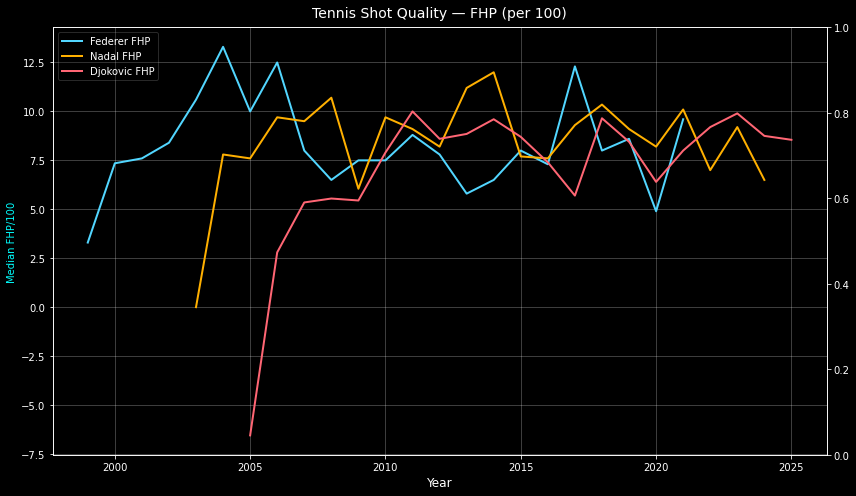
@QGaslighter What happened to Fed forehead post 2005?
English
0
0
0
94
FRO$T
FRO$T@Frost40GT·
@UnskullSam Thanks,Got any info on current fuel cell capacity?
English
1
0
1
26
Daniel Valente 🏎️
Daniel Valente 🏎️@F1GuyDan·
🚨 The FIA updated the ADUO regulations 🚨 • Period 1 is now races 1-5 • Period 2 is now races 6-11 • Period 3 is now races 12-18 • There's also a new category to help engine manufacturers who are more than 10% behind Have to wonder if the last change was to help Honda.
Daniel Valente 🏎️ tweet media
English
8
90
642
53.3K
Ben Noll
Ben Noll@BenNollWeather·
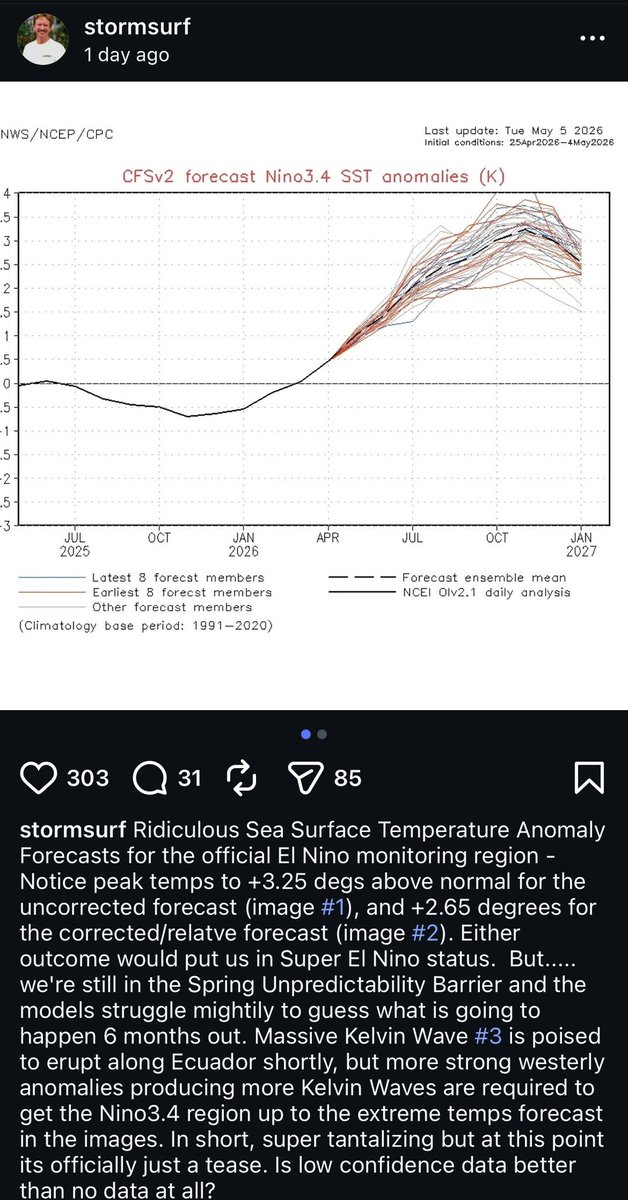
El Niño conditions require the ocean and atmosphere to be coupled, meaning they respond to one another. Coupling is forecast to become robust by June as rising air intensifies over warming Pacific waters, probably leading to more typhoons and hurricanes there this year.
GIF
English
8
93
309
16K
V
V@V1ado·
@scotsrule08 Don’t let it discharge below 30%. Depth of discharge is crucial with these batteries
English
0
0
1
13
Spencer
Spencer@scotsrule08·
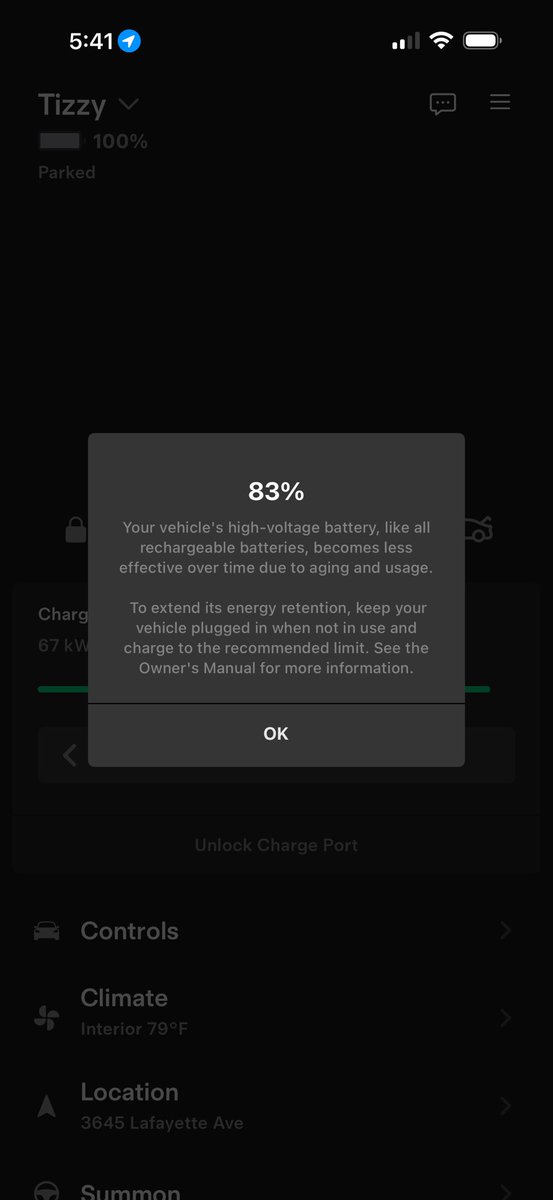
Battery health check on my 2024 Model Y Performance.🔋 83% at 42,000 miles. Down from 85% at 31k miles just 11,000 miles ago. The degradation has slowed but was so steep initially. 17% capacity lost in under 2 years of ownership. Would you consider this acceptable? Data nerds rejoice 🤓
Spencer tweet mediaSpencer tweet mediaSpencer tweet media
English
231
10
219
156.4K
Tech in Cheek
Tech in Cheek@jackyharuhiko·
@tijmenschreur Exactly this. So much for 250kW Supercharging that I never experienced, since I don’t deep discharge the car.
English
1
0
1
81
V
V@V1ado·
@Credib1eGuy Diabetics have been taking GLP type drugs for a long time now so you can look for data there. Plenty of data available
English
0
0
0
237
Guy
Guy@Credib1eGuy·
All this peptide and retratide whatever stuff, GLP, ozempic etc I feel like it’s gonna come out with some crazy bad side effects or consequences in 10 years It’s just common sense nothing in life has no trade offs
English
300
22
1.1K
522K
V
V@V1ado·
@itskyleconner @olddiesel Depth of discharge is the most important metric when it comes to prolonging battery life. Don’t let it discharge below ~40% and it will last much longer. Hybrid cars have been doing this for decades now…
English
1
0
0
223
Kyle Conner
Kyle Conner@itskyleconner·
@olddiesel You know this comes with a lifetime battery warranty as well as some amazing retention results. The fast charging vs energy retention argument hasn’t held up well as Tesla charges slow but also has bad capacity fade
English
16
5
217
7K
V
V@V1ado·
@machineica @itskyleconner @BYDCompany They should do the opposite and make the battery show zero when it actually has 20-30% of charge left. That would prolong the battery life significantly.
English
1
0
0
83
machineica
machineica@machineica·
@itskyleconner @BYDCompany Could be battery sandbagging. They might have a larger battery and they made it read at 100% of the battery level but will be 80% actual. Easy to do in software. That way it always charges to "100%" fast. Then battery degradation will be skewed and appear to last longer.
English
2
0
4
781
Kyle Conner
Kyle Conner@itskyleconner·
Charging on the @BYDCompany Flash Charger for the first time! This was a real demo - we went to a random dealership, found a crashed car (🤣), and charged faster than I ever have before Absolute insanity. Full video coming
English
32
34
616
70.5K
V
V@V1ado·
@dhh Passive cooling?
English
1
0
1
143
DHH
DHH@dhh·
Also remarkable that Intel laptops now run cooler than Apple MacBooks under heavy load. Total reversal there too.
DHH tweet media
English
6
7
252
29K
DHH
DHH@dhh·
I know I've been harping on about battery life, but it's truly astounding how the turns have tabled vs Apple's past and absolute dominance with the M chips. Viva La Intel!
DHH tweet media
English
110
50
1.2K
136.5K
F1BF90
F1BF90@F1BF90·
@FormulAnalyst Cant even call him a car merchant now… How can you lose so many poles in rocket-ships!! This is mediocrity!! Pathetic!!
English
2
0
0
356
Formula Analyst
Formula Analyst@FormulAnalyst·
🚨 Most Poles lost to Teammate 57 - Lewis Hamilton 56 - 55 - 54 - 53 - 52 - 51 - 50 - 49 - 48 - 47 - Rubens Barrichello 46 - Valtteri Bottas 45 - Mark Webber 44 - 43 - 42 - 41 - Alain Prost 40 - Sergio Perez 39 - 38 - 37 - David Coulthard 36 - Nico Rosberg 35 - 34 - 33 - 32 -
Daniel Valente 🏎️@F1GuyDan

🚨 Most Poles In F1 history 104 - Lewis Hamilton 103 - 102 - 101 - 100 - 99 - 98 - 97 - 96 - 95 - 94 - 93 - 92 - 91 - 90 - 89 - 88 - 87 - 86 - 85 - 84 - 83 - 82 - 81 - 80 - 79 - 78 - 77 - 76 - 75 - 74 - 73 - 72 - 71 - 70 - 69 - 68 - Michael Schumacher 67 - 66 - 65 - Ayrton Senna 64 - 63 - 62 - 61 - 60 - 59 - 58 - 57 - Sebastian Vettel 56 - 55 - 54 - 53 - 52 - 51 - 50 - 49 - 48 - Max Verstappen 47 - 46 - 45 - 44 - 43 - 42 - 41 - 40 -

Deutsch
64
87
1.3K
287.6K
V
V@V1ado·
@WmBrackbill @LhommeDesole Charging to 100% is way less harmful than depleting to below 20%, and especially even lower.
English
0
0
1
43
Cyber Ambassador
Cyber Ambassador@WmBrackbill·
My 2021 Model Y LR with 150k miles is at about 78-80%. I on occasion charge it to 100% and it achieves 260 miles of range which is 80% of 325 mi. The key to battery warranty is not range but does is even work. I talked to a battery replacement company Greentec and he says people drive generally drive their EV until the battery fails many time at 60% or below. If I can get to 200k mi on this battery and then have to replace it for a cost of around $11,000, I won't complain. No oil changes, no brake replacements, no transmission service, belts, plugs, and I have saved $1000's on gas too.
English
1
0
1
429
Colin 🇨🇦
Colin 🇨🇦@LhommeDesole·
I don’t think Tesla’s 70% degradation for battery warranty is acceptable. Anything over 80% is absolutely unacceptable and should warrant replacement. It’s obvious Tesla is playing the numbers because new models are seeing far more degradation than earlier models did. Current battery quality is worse than 8 years ago. Completely unacceptable
English
111
8
247
66.4K
90s Football
90s Football@90sfootball·
Sit back and enjoy 10 minutes of Ronaldo 🇧🇷
English
48
705
4K
256.5K
Defense Pulse
Defense Pulse@DefensePulseAi·
Every day Hormuz stays closed, the alternative system being built doesn’t need America in it at all. You assume Trump controls the timeline of the dialectic. He doesn’t. Iran does. And Iran just offered Europe the very thing Trump is withholding “safe passage “ without any of the conditions Trump wants to attach. The risk isn’t that Europe refuses to pay for security. The risk is that Europe finds a cheaper provider. And the moment that happens, the “reordered system” isn’t US-controlled. It’s multipolar ; with Iran, China, and Russia as the alternative underwriters. Trump isn’t wrong that the free ride needed to end. But the free ride doesn’t end with America at the center of the chessboard if someone else opens the strait first. Free of charge or pressure. Also, one highly neglected country in your analysis is Turkey. A NATO member whose ship was the first to receive Iranian safe passage through Hormuz. Not China. Not India. A NATO ally; acting independently, building its own relationship with Iran, positioning itself as the bridge between Europe’s energy needs and Iran’s leverage. Turkey isn’t freeloading on American security like Europe. It’s building an alternative to it; inside NATO. While Trump waits for Europe to come begging, Erdogan is quietly becoming the broker who can deliver what neither Washington nor Brussels can: access to the strait without a war. Some dessert for thought.
English
7
0
14
11.1K
James E. Thorne
James E. Thorne@DrJStrategy·
Food for thought. Trump, Hormuz and the End of the Free Ride For half a century, Western strategists have known that the Strait of Hormuz is the acute point where energy, sea power and political will intersect. That knowledge is not in dispute. What is new in this war with Iran is that the United States, under Donald Trump, has chosen not to rush to “solve” the problem. In Hegelian terms, he is refusing an easy synthesis in order to force the underlying contradiction to the surface. The old thesis was simple: the US guarantees open sea lanes in the Gulf, and everyone else structures their economies and politics around that free insurance. Europe and the UK embraced ambitious green policies, ran down hard‑power capabilities and lectured Washington on multilateral virtue, secure in the assumption that American carriers would always appear off Hormuz. The political class behaved as if the American security guarantee were a law of nature, not a contingent choice. Their conduct today is closer to Chamberlain than Churchill: temporising, issuing statements, hoping the storm will pass without a fundamental reordering of their responsibilities. Trump’s antithesis is to withhold the automatic guarantee at the moment of maximum stress. Militarily, the US can break Iran’s residual ability to contest the Strait; that is not the binding constraint. The point is to delay that act. By allowing a closure or semi‑closure to bite, Trump ensures that the immediate pain is concentrated in exactly the jurisdictions that have most conspicuously free‑ridden on US power: the EU and the UK. Their industries, consumers and energy‑transition assumptions are exposed. In that context, his reported blunt message to European and British leaders, you need the oil out of the Strait more than we do; why don’t you go and take it? Is not a throwaway line. It is the verbalisation of the antithesis. It openly reverses the traditional presumption that America will carry the burden while its allies emote from the sidelines. In this dialectic, the prize is not simply the reopening of a chokepoint. The prize is a reordered system in which the United States effectively arbitrages and controls the global flow of oil. A world in which US‑aligned production in the Americas plus a discretionary capability to secure,or not secure, Hormuz places Washington at the centre of the hydrocarbon chessboard. For that strategic end, a rapid restoration of the old status quo would be counterproductive. A quick, surgical “fix” of Hormuz would short‑circuit the dialectic. If Trump rapidly crushed Iran’s remaining coastal capabilities, swept the mines and escorted tankers back through the Strait, Europe and the UK would heave a sigh of relief and return to business as usual: underfunded militaries, maximalist green posturing and performative disdain for US power, all underwritten by that same power. The contradiction between their dependence and their posture would remain latent. By declining to supply the synthesis on demand, and by explicitly telling London and Brussels to “go and take it” themselves, Trump forces a reckoning. European and British leaders must confront the fact that their energy systems, their industrial bases and their geopolitical sermons all rest on an American hard‑power foundation they neither finance nor politically respect. The longer the contradiction is allowed to unfold, the stronger the eventual synthesis can be: a new order in which access to secure flows, Hormuz, Venezuela and beyond, is explicitly conditional on real contributions, not assumed as a right. In that sense, the delay in “taking” the Strait, and the challenge issued to US allies to do it themselves, is not indecision. It is the negative moment Hegel insisted was necessary for history to move. Only by withholding the old guarantee, and by saying so out loud to those who depended on it, can Trump hope to end the free ride.
James E. Thorne tweet media
English
2.3K
7.5K
25.3K
4.2M
V
V@hammertimev·
@V1ado @Auto_Racer_it I’ll repeat. He notified his engineer that he had no power on lap two. Kimi passed without Hamilton able to defend. Lap two. Sounds like you are saying nothing was wrong with his car when he said he had no power. No power is a problem
English
1
0
0
70
V
V@V1ado·
@hammertimev @Auto_Racer_it His pace in the first stint was perfectly fine, in line with everyone else around. Here: x.com/FormulaUR_/sta…
Rana@FormulaRana

TeamLH would you like the good news or the bad news? I’ll start with the bad news: I went through every single racing lap of telemetry from Japan, and it’s crystal clear Hamilton did not have an inherent PU problem. What he experienced was a lack of power on isolated laps, indeed caused by wheel-spin. However, I don’t believe these were from excessive tyre wear - especially at that stage of the race - but more just micro-errors exactly how Leclerc experienced it during the China Sprint qualifying. Errors that are not lap-time consuming in previous eras, are now more costly than ever. There are a few laps, after the SC restart, where on the off board shots you see HAM having major snaps over oversteer on exit of turn 9 and I believe they subsequently cost him power on those laps, but not permanently. In turn, that may have cost him the P3 still. The “good” news is that this year has proven to me once again that it all comes down to how the tyres are brought into a stint. The slower you bring in the tyre, the faster the overall stint will become. We’ve seen it across both Mercedes and Ferrari cars this year, and in these 2026 regulations it’s more prominent than ever. Bring in the tyre too quickly, you’ll get more sliding and more inconsistent deployment whilst also having a greater drop off towards the end of the race. HAM simply pushed far too hard on the SC restart and it destroyed the rest of his race. Exactly what he did in the China sprint, but the opposite to what he did in China’s GP and Australia.
English
1
0
0
202
V
V@hammertimev·
@V1ado @Auto_Racer_it He was on the radio with problems on lap 2 when Kimi passed. He told them he had no power to defend. That’s not a tire problem or excessive wheel spin on lap two. It continued the entire race (51 laps)
English
1
0
0
48
V
V@V1ado·
@hammertimev @Auto_Racer_it The problem was with the hard tire in the 2nd stint. If there was a problem with Hamilton’s PU they would’ve swapped the cars earlier.
English
1
0
0
39