Varun Navani

2.1K posts

Varun Navani banner
Varun Navani

Varun Navani

@VarunNavani

Like the color maroon but with a “v”. Founder @ Rolai. Secure Enterprise AI for Higher Ed & Healthcare. Forbes u30

BOS/NYC Katılım Aralık 2010
619 Takip Edilen2.5K Takipçiler
Nayrhit B
Nayrhit B@NayrhitB·
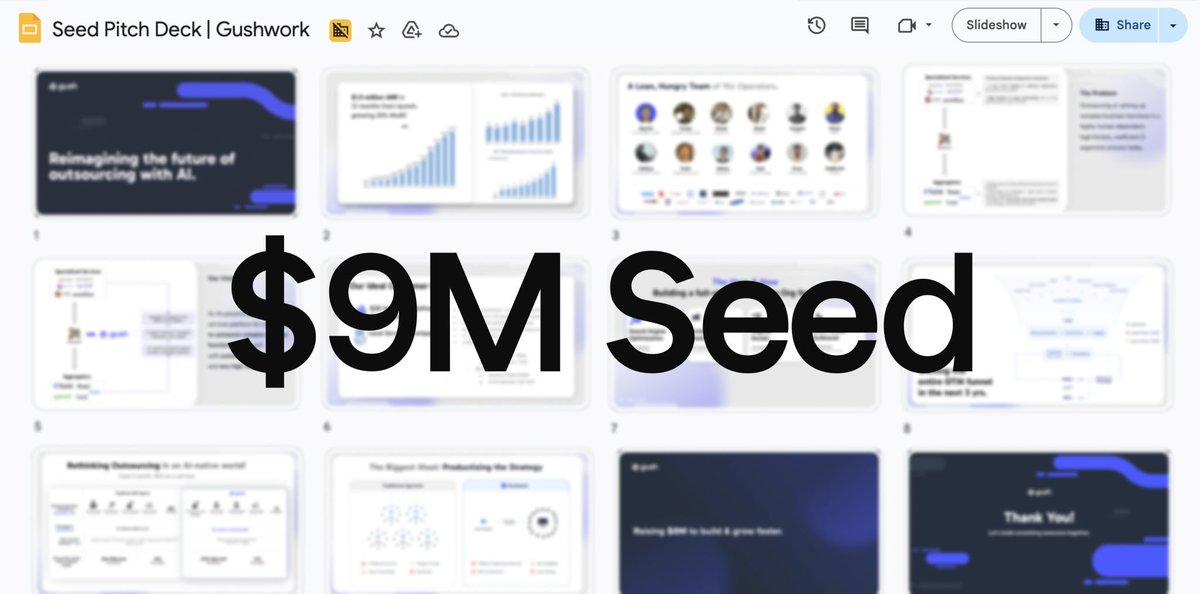
The exact pitch deck that helped us raise a $9M Seed Round copy whatever you want VCs that invested: → @SusquehannaVC (led) → @LightspeedIndia@BCapitalGroup → Seaborne Capital → @beenextVC@sparrowcapvc@2point2club joined. fundraising is hard enough without guessing what investors want to see. so - I'm making our deck public. if you're raising right now, take it and make it yours. Reply 'deck' + follow (so I can DM it over)
Nayrhit B tweet media
English
2.3K
112
1.7K
191.9K
Varun Navani
Varun Navani@VarunNavani·
@OfficialLoganK loving Gemini 3, but hating Preview purgatory. When can we expect to be able to test a meaningful workload?
English
0
0
0
19
Varun Navani
Varun Navani@VarunNavani·
@_avichawla Proud early customer and investor in Composio. The interesting conversation: how does this evolve when agent tools/skills are tied to enterprise systems (where the organization owns the learning data), versus being used in RL to improve the skill for everyone
English
0
0
0
168
Avi Chawla
Avi Chawla@_avichawla·
First tools, then memory... ...and now there's another key layer for Agents. Karpathy talked about it in his recent podcast. Tools help Agents connect to the external world, and memory helps them remember, but they still can't learn from experience. He said that one key gap in building Agents today is that: "They don't have continual learning. You can't just tell them something and they'll remember it." This isn't about storing facts in memory, but rather about building intuition. For instance, when a human masters programming, they don't just memorize syntax. Instead, they develop heuristics, learn edge cases, understand context, and build genuine expertise/skills through repeated interaction. But current agents typically start from scratch every time. Karpathy mentioned one possible path forward, which is to provide Agents with some kind of "distillation phase" that takes what happened during interactions, analyzes it, generates synthetic examples, and updates their understanding via RL. This is similar to how humans consolidate experiences into learning. Composio is actually building the infrastructure to solve this and provide a shared learning layer for Agents to evolve. Think of it as the "skill layer" that gives Agents an interface to interact with over 10k tools while building practical knowledge from those interactions. Interestingly, this direction also aligns with what Anthropic is exploring, codifying repeated agent behaviors as skills .md files. Both approaches point toward a similar design pattern where agents progressively turn experience into reusable, composable skills. So when one agent learns how to handle specific API edge cases, that knowledge becomes available to every other agent via Composio's collective AI learning layer, resulting in Agents that don't just automate but rather develop real intuition. This is what Karpathy meant by continual learning, where Agents don't just memorize, but accumulate skills as they interact. I have shared the Composio GitHub repo in the replies!
English
20
71
574
50.3K
Lian Lim | Dashboard & AI Automation Expert
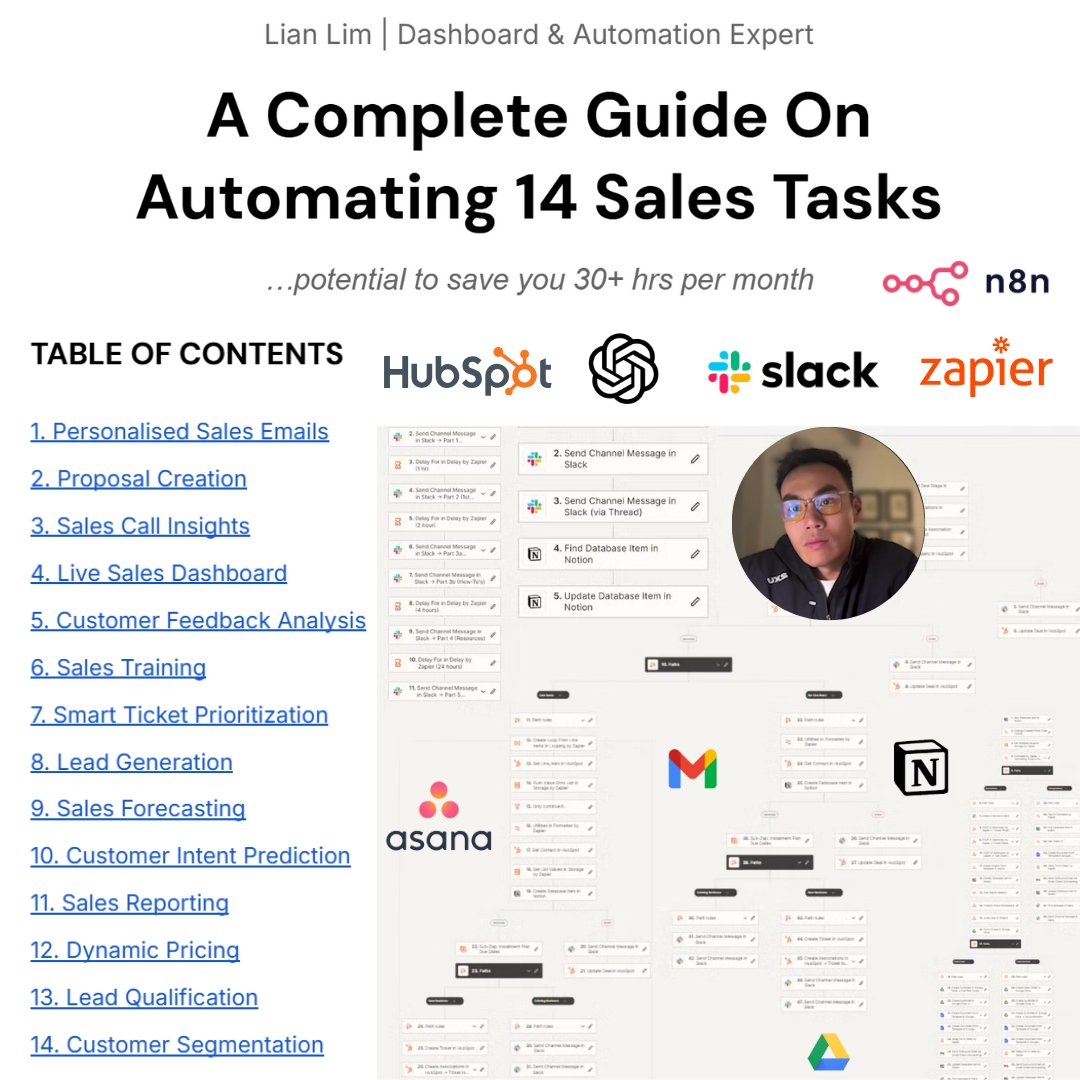
I've created a full guide on how to automate 14 sales tasks From lead capture and follow-ups to proposal generation, CRM updates, Sales Training, forecasting, and more All these will save you so many hrs/mo Like + Comment "AUTOMATE" and I'll DM you the guide (Must be following)
Lian Lim | Dashboard & AI Automation Expert tweet media
English
910
140
1.4K
132.9K
Ben Lang
Ben Lang@benln·
Rebooting my X group chat for people who like to build on Sundays. One rule: you can only post in the chat on Sundays. Let me know if you want in.
English
796
8
1.1K
126K
Varun Navani retweetledi
Nozz
Nozz@NoahEpstein_·
Everyone's losing their minds over OpenAI's Agent Builder. I spent the last 24 hours testing it and analyzing community reactions. Here's what nobody's saying about the $4B "democratization" play that's actually just vendor lock-in with a canvas: The hype: "Agent Builder democratizes AI! No-code revolution! Zapier killer!" The reality: It's a drag-and-drop builder for developers that's locked to GPT-only models. That's not democratization. That's an ecosystem play. I tested it against n8n, Make, and Flowise. Complexity level: Same (if not slightly higher) Integration flexibility: Worse (thin node sets) Model options: One (GPT only) Migration benefit: Zero The GPT-only lock is the real killer. I use Claude for complex analysis. Gemini for specific tasks. GPT for... honestly, the braindead simple stuff. Being forced into one model is like telling a carpenter they can only use hammers. Community reactions are split exactly how you'd expect: Positive takes: → "Built a buyer agent in hours, 70% iteration reduction!" (Ramp) → "Game-changer for prototyping" (@piotrmacai) → "Seamless OpenAI integration" (obviously) Reality checks: → "UI too complicated, features basic" (@wyndomb) → "Not autonomous, just rigid scripts" (@Vivek_5151) → "No migration incentive" (me + many others) The pattern I'm seeing: Great for prototyping IF you're already deep in OpenAI's ecosystem. Not great for: Production systems, multi-model workflows, anyone using n8n/Make successfully. Here's what the docs won't tell you: ✓ Fast prototyping (true) ✓ Good for demos (true) ✓ Enterprise features (true) ✗ Vendor lock-in risk (ignored) ✗ Limited node library vs competitors (ignored) ✗ Still requires technical knowledge (ignored) ✗ Not actually "no-code" for non-technical users (ignored) The "democratization" claim falls apart under scrutiny. Community feedback shows it's "too technical for teams" and "missing features for production-scale." It's low-code for developers, not no-code for everyone. Real talk: If your workflows already work in n8n or Make, save yourself the migration headache. The math doesn't add up: → Rebuild all integrations → Learn new platform → Lock into single model → Hope features catch up For what benefit? "OpenAI native" that you can already get via API calls? Where Agent Builder actually makes sense: 1. You're already 100% in OpenAI ecosystem 2. You need fast prototyping for demos 3. You're building customer service bots (their sweet spot) 4. You don't care about model flexibility Everyone else? This is a solution looking for a problem. The controversial truth: Agent Builder validates visual agent building as a category, but it's not the revolution they're selling. It's an incremental improvement for a narrow use case wrapped in "democratization" marketing. The winners: OpenAI (ecosystem lock-in), enterprises already using their stack The losers: n8n/Make users expecting a reason to switch, anyone needing multi-model flexibility My take: Good prototyping tool. Not worth migrating for. Overhyped by 3-5x. The real opportunity isn't in the tool itself. It's in the $400M-$4B consulting market that opens up when everyone realizes prototyping ≠ production deployment. Stay where you are. Let others debug the hype cycle. Your existing automations work. Your team knows the platform. Your models are flexible. "OpenAI native" isn't a feature when you can call their API from anywhere. Agree? Disagree? Drop your take below. I'm curious if anyone found a compelling reason to migrate that I'm missing.
OpenAI Developers@OpenAIDevs

Introducing AgentKit—build, deploy, and optimize agentic workflows. 💬 ChatKit: Embeddable, customizable chat UI 👷 Agent Builder: WYSIWYG workflow creator 🛤️ Guardrails: Safety screening for inputs/outputs ⚖️ Evals: Datasets, trace grading, auto-prompt optimization
English
71
84
854
169K
Varun Navani
Varun Navani@VarunNavani·
@zaidmukaddam Hiring at Rolai.com and you get to work directly with our brilliant team on using LLMs and Agents to solve the biggest problems at leading US universities and enterprises. DM’s open!
English
0
0
0
47
Zaid
Zaid@zaidmukaddam·
Anyone hiring? Would love to work for a short term.
English
45
12
316
54.4K
Varun Navani
Varun Navani@VarunNavani·
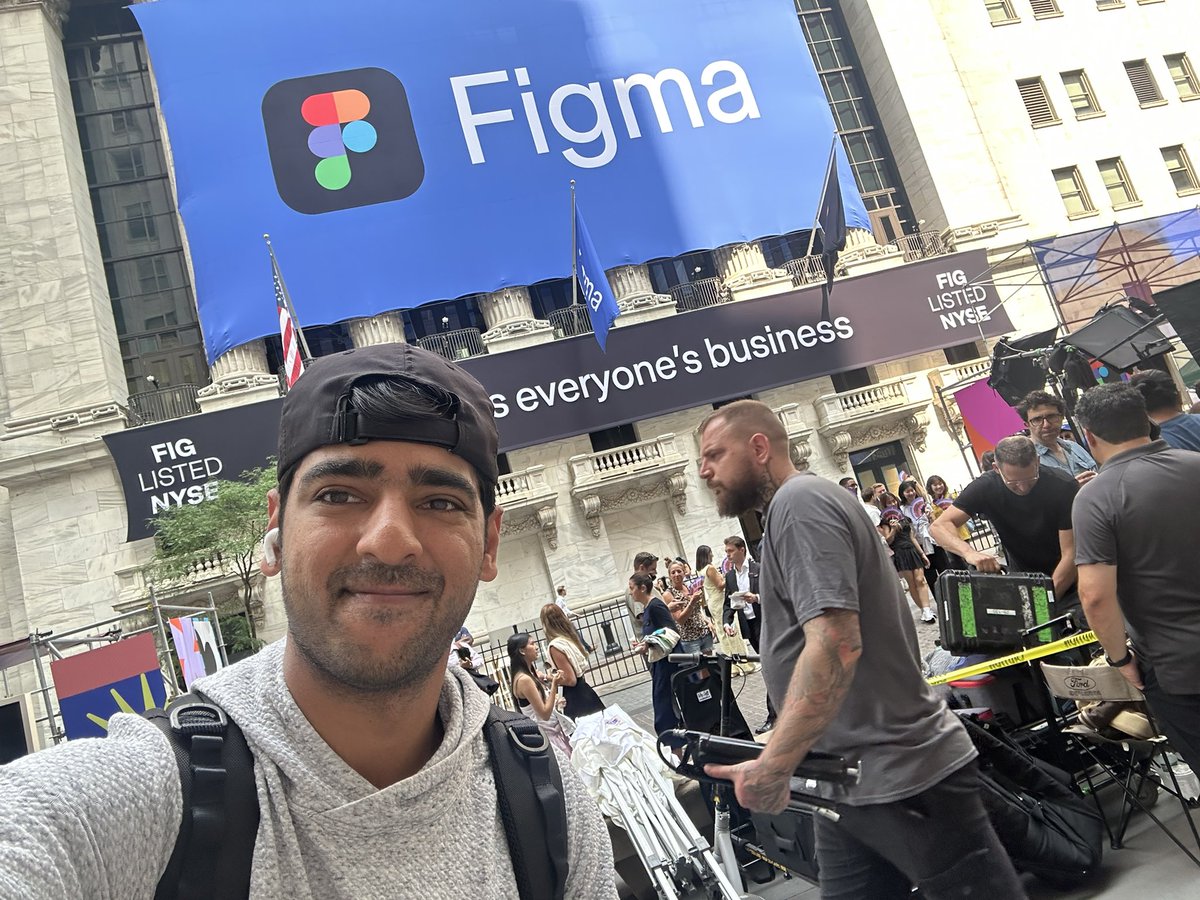
Inspiring to see a tool I had never used 4 years ago become not only a part of my pinned apps almost immediately, but also becoming a household name so soon after. Congrats to the @figma team on their public listing today! Glad I coincidentally walked down Wall Street today.
Varun Navani tweet media
English
0
0
4
436
Varun Navani
Varun Navani@VarunNavani·
@MarkKnd You deserve all the recognition man, amazing talent and work ethic. All love from me and the Rolai team
English
0
0
0
133
Mark Vassilevskiy
Mark Vassilevskiy@MarkKnd·
7 months ago I opened my agency… Now we’re making bill boards on Time Square Can’t be more happy
English
52
5
274
34.8K
Varun Navani
Varun Navani@VarunNavani·
@_utkh We’re live in production within academic institutions and enterprise but not self serve. Happy to chat, shoot me a message.
English
1
0
0
22
Utsav Khandelwal
Utsav Khandelwal@_utkh·
@VarunNavani Hey, landed on this post a lil late but curious to learn more about your evals stack. Interesting work at Rolai, are the agents generally available or still in PoC?
English
1
0
1
36
nico
nico@nicochristie·
Introducing Shortcut — the first superhuman Excel agent. Shortcut one-shots most knowledge work tasks on Excel. It even scores >80% on Excel World Championship Cases in ~10 minutes. That's 10x faster than humans. Our early preview is live. Just comment for an invite code.
English
6.3K
990
12.6K
4.2M
Varun Navani
Varun Navani@VarunNavani·
@MarcelFromMimic You should link the Rolai website or atleast tag @MarkKnd to give him credit if you’re going to try and copy his work on our branding and site
English
0
0
3
116
Lovable
Lovable@Lovable·
Announcing The AI Showdown OpenAI, Anthropic, and Google are partnering with Lovable to host The AI Showdown this weekend: a public comparison of the world’s leading AI models. During the weekend everyone will have unlimited free access to Lovable (with occasional rate limiting during high demand). For the first time, users will be able to switch between these AI models and see how each performs at vibe coding inside Lovable compared to each other. The goal of The AI Showdown is to see beyond traditional benchmarks and instead surface public perception. By opening up access and encouraging public analysis, we aim to bring transparency to one of the most important questions in software today: Which AI is best at writing code? To support this, we’re launching two open competitions: - Content challenge ($25,000 prize): Create the best model benchmarking content focused on comparing the capabilities of the models across practical use cases. - Build challenge ($40,000 prize): A build challenge to showcase what each model can create inside Lovable. Winners will be selected by Lovable, OpenAI, Anthropic, Google, and our board of judges. You can participate and follow the live model comparison dashboard at: aishowdown.lovable.app It officially starts this Saturday at 8AM CET.
English
234
295
2.3K
515.9K
Varun Navani
Varun Navani@VarunNavani·
How does @diabrowser perform and manage its memory/context with respect to context switching? people use their browser for variations of the same thing or thousands of different things from finding the right shoes, to booking travel, to doing biology research. Seems really great for high intent searches with possible limitations for shorter more general web searches which are common. Would love to learn more
English
0
0
3
1.2K
Josh Miller
Josh Miller@joshm·
Here's the big idea behind @diabrowser: You know how TikTok gets better with every swipe? Dia gets more personalized with every tab you open. This is 100x more context than ChatGPT, automatically. And we believe it changes what's possible with AI. But we need your help...
English
192
82
2.1K
450.8K
Brett
Brett@BrettFromDJ·
Introducing Logo Lottery. Submit your logo in the comments and I'll redesign as many of them as I can today, free of charge. Good luck.
GIF
English
462
36
1.4K
136.3K
Yash Dulla
Yash Dulla@yashdulla·
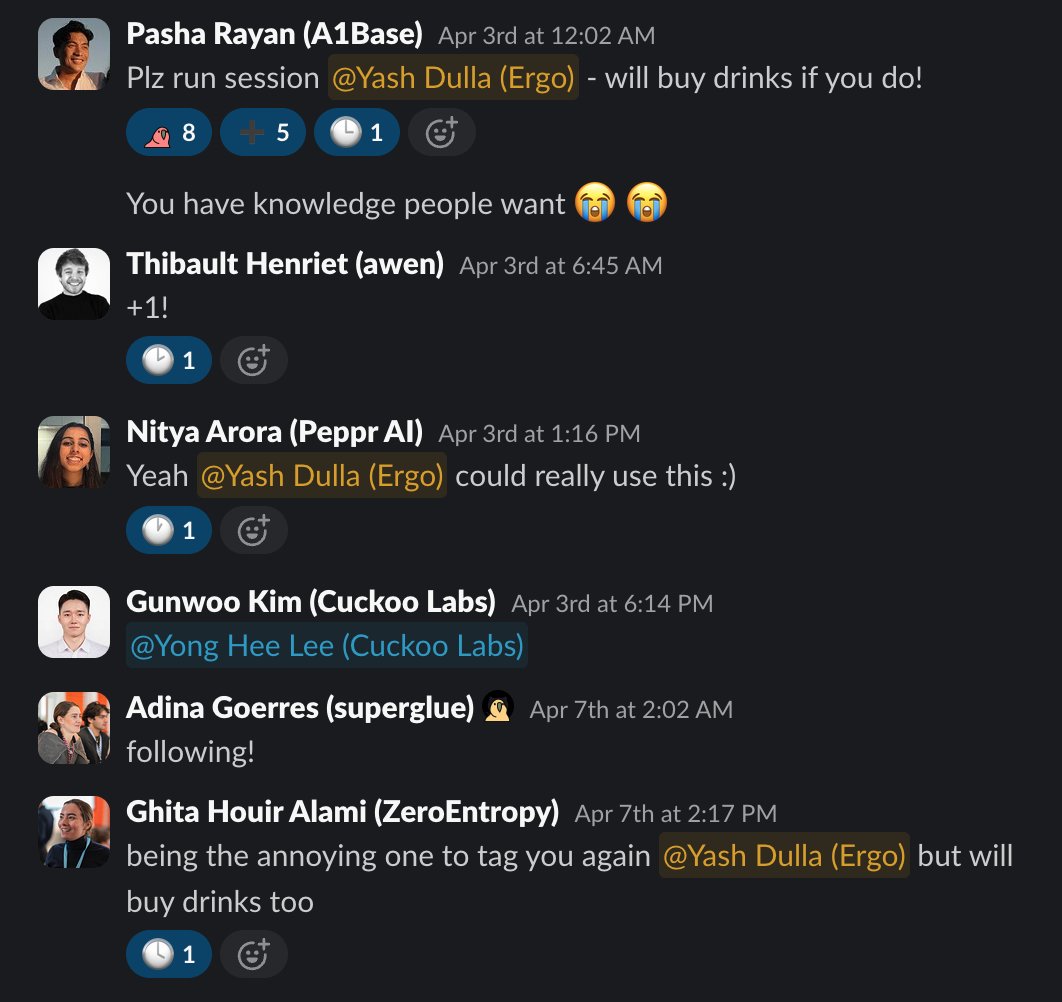
A few weeks ago the @ycombinator batch begged me to make a CRM crash course for founder-led sales. After multiple drink offers 🍻— I gave in. The session itself went semi-viral inside the batch, and people keep asking for the video. If you’re doing founder-led sales, the CRM might feel like this clunky behemoth system—it doesn’t have to. In the video I go over the absolute basics: → The only 3 CRM objects that REALLY matter (Deals, Contacts, Companies) → CRM best practices → Why logging every interaction isn't optional → How to set up/automate your CRM so it becomes your single source of truth (and sales doesn't hate using it) I wasn’t planning on releasing this outside the YC group, but given the response, happy to share it with others running early sales teams. If you want the video → just comment "CRM" and I’ll DM it to you. Thank you to Aaron Zelinger, @ghita__ha, @Pashpops, @JoshSabol, Thibault Henriet. @NityaArora14, @gunwoo__kim, @adinagoerres for making sure I got this out. This ended up being one of the highest ROI hours I’ve spent lately — founders really need better sales and CRM playbooks. If you’re in the trenches with founder-led sales and figuring this out, happy to help.
Yash Dulla tweet mediaYash Dulla tweet media
English
1.1K
28
752
135.6K