Vivek Sunder

198 posts

Vivek Sunder banner
Vivek Sunder

Vivek Sunder

@Vivek_Sunder

Foodie, Technophile, Bibliophile, Polyglot, Photophile, Acrophile, Nemophile, Philomath...

Bengaluru, India Katılım Ağustos 2011
277 Takip Edilen806 Takipçiler
Vivek Sunder
Vivek Sunder@Vivek_Sunder·
@anishmoonka Aryabhata estimated it remarkably accurately in Surya Siddhanta. The Arabs learnt from this and wrote into Zij al-Sindhind. The Europeans got from there. Copying from a neighbour without knowing the concept is as dangerous in exams as in global exploration, clearly.
English
0
0
0
532
Anish Moonka
Anish Moonka@anishmoonka·
Columbus pitched this exact trip to Spain in 1492. He said it was a 3,500-mile journey. The real distance is more than 8,000 miles. He survived only because two entire continents nobody in Europe knew existed happened to be sitting in his path. The first mistake was a translation problem. Columbus was working off a calculation by a 9th-century Persian geographer named Al-Farghani, who said one degree around the Earth was about 57 miles. That was correct, but Al-Farghani measured in Arabic miles. Columbus assumed Roman miles. Same number, different ruler. Roman miles were shorter, so his version of Earth came out 25% smaller than the real one. Then he made it worse. He read Marco Polo and decided Asia ran way further east than anyone else thought. So he redrew his maps to match. Japan ended up sitting right next to the Azores, the Portuguese islands in the middle of the Atlantic. The actual Japan is on the other side of the entire Pacific Ocean. He moved a whole country 8,000 miles to make his pitch work. Spain’s royal experts ran his numbers in 1486 and rejected him. They were right. They told Ferdinand and Isabella that Columbus had badly underestimated the size of the planet. He got funded six years later anyway, but not because his math improved. Spain’s long war at home had just ended, and they wanted in on the Asia trade before Portugal locked it up. A Greek librarian had already figured out the actual size of Earth in 240 BC. That puts him 1,700 years ahead of Columbus. The librarian was named Eratosthenes. He used a stick, a deep well in southern Egypt, and the angle of the noon sun on the longest day of the year. His answer: about 25,000 miles around. The real number is 24,901. He was off by maybe 1 to 2%, depending on the Greek length unit he was using. He did this with hand tools, almost 2,000 years before anyone built the first telescope. Columbus knew about that calculation. He just didn’t like it. The bigger number meant the trip was impossible. No 15th-century ship could carry enough food and water to sail 8,000 miles nonstop, let alone the 15,000-plus to actual eastern China. So he picked a smaller number that fit the boat. He got lucky. The Americas were in the way. The map in this post does work in a literal sense, but it cheats. Flat maps stretch everything sideways. Any east-west line looks straight on them, even when it actually curves on a globe. If you’ve ever flown to Tokyo, you’ve seen the flight path arc up over Russia on the seatback screen. The arc is the actual shortest route. Columbus’s plan was wrong. The map that makes it look possible is wrong in a different way.
J R ❤️‍🔥@ResilienceX3

You can sail in a straight line from Spain to Japan

English
115
1.1K
12.8K
3.3M
Vivek Sunder
Vivek Sunder@Vivek_Sunder·
@gokulr Totally agree. Without segmentation, trying to do the 4Ps (Product/ Price/ Place/ Promotion) is a recipe for disaster. PMF should actually be PSF (product segment fit). And segment not in the ancient static demographic way but dynamic pschographic based.
English
0
0
1
420
Gokul Rajaram
Gokul Rajaram@gokulr·
SEGMENT, ALWAYS SEGMENT Most confounding business problems have the same root cause: you haven't segmented your customers. You look at the top-line number. It's flat, or weird, or inconsistent with what your gut tells you. You poke at it and you can't figure out why. The answer is almost always that you're staring at an average that's hiding two or three very different stories. A few places this shows up: 1. When your high-level metrics look wonky or divergent, break them out by segment. A flat retention curve often hides one cohort churning out violently and another expanding aggressively. A "meh" NPS usually has one segment of fanatics and one segment of detractors cancelling each other out. The average is a lie. The segments are the truth. 2. When your product is trying to be everything to everyone, you need to tailor it per segment. If your roadmap has SMB founders, mid-market IT buyers, and Fortune 500 procurement all fighting for features in the same backlog, that's three products in a trench coat pretending to be one. Pick the segment you're actually building for, and ship accordingly. 3. When your pricing or positioning feels wrong no matter where you set it, it's because one SKU or pitch is spanning segments with wildly different needs or willingness to pay. Enterprise will pay 10x what a startup will for the exact same thing. A single price point either leaves money on the table at the top or closes the door at the bottom. Segment the packaging. Segment the price. The pattern holds every time. Whenever a business problem is hard to reason about, break the population into segments and look again. Nine times out of ten, the fog lifts. Importantly, you don't need to use standard gender or demographic segments. You can build your own! (And AI is a superpower here). One of the best segmentations in real life was done by @davidweiden at TellMe Networks in the early 2000s. TellMe was selling phone automation software into financial services: a half-billion dollar market, and they had almost no traction. David built a custom segmentation framework called Rifle, which scored every prospect on five weighted criteria. Where the customer was in their buying cycle (engage before the RFP, not after). Whether their long-distance carrier was compatible with TellMe's deployment model. Three more criteria with explicit weightings, including negative scores that disqualified prospects outright. The whole company aligned on the scoring. Sales stopped chasing bad-fit accounts. Product stopped building features for customers who would never close. Marketing stopped spraying the market. Over two years, Rifle drove $20M in ARR inside the qualified segment and took TellMe from a loss to a profit. They literally would have failed without the segmentation. . Founders: when a metric confuses you, when your product feels scattered, when your sales pitch or pricing won't land, segment. Segment, always segment.
English
17
45
529
160.4K
Vivek Sunder
Vivek Sunder@Vivek_Sunder·
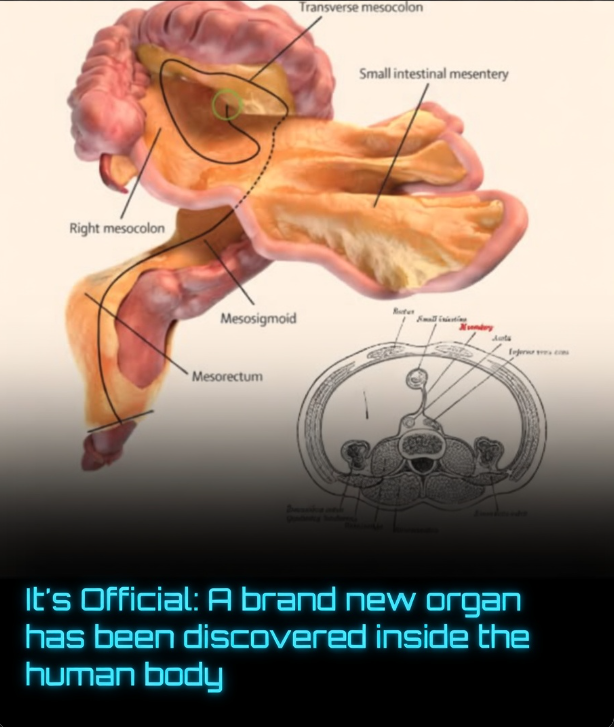
@Rainmaker1973 #Ayurveda knew of this organ from 3000 years ago and has described it and what it does and describes diseases that can afflict it. The organ is called Kloma. Another organ not known in western medicine till recently, Omentum is called Vapavahana.
English
0
0
1
412
Massimo
Massimo@Rainmaker1973·
Scientists have officially discovered a brand-new organ in the human body. The mesentery — a structure long thought to be a collection of fragmented tissues holding the intestines in place — has been reclassified as a single, continuous organ. This landmark discovery, led by researcher J. Calvin Coffey at University Hospital Limerick, has fundamentally changed our understanding of human anatomy. For centuries, the mesentery was dismissed as insignificant. Now, thanks to detailed research, it is recognized as one unified structure. The finding was so significant that it has already been incorporated into the latest edition of Gray’s Anatomy, the world’s most respected medical textbook. While the mesentery’s main function is to anchor and support the intestines, scientists believe it plays far more complex roles that are still not fully understood. Its formal recognition has given rise to an entirely new field called mesenteric science. Researchers hope that studying this organ will unlock new insights into digestive diseases, abdominal disorders, and potentially lead to better treatments for millions of patients. This discovery is a powerful reminder that even today, the human body still holds remarkable secrets waiting to be uncovered.
Massimo tweet media
English
47
550
2K
130.2K
Sreejan Choudhary
Sreejan Choudhary@sreejan_c·
For our sixth and final episode of @Revamp0fficial Season 1 (yes, we are reaching a milestone!), @shuklashobhit and I sat down with a guest who defies the modern "mile wide/inch deep" mindset: @Vivek_Sunder, CEO of Kerala Ayurveda Limited (@keralaayuusa). Vivek is a rare breed - a leader who has mastered brand building, consumer psychology, and storytelling across vastly different sectors. After our prep call, we knew this wasn't just a podcast; it was an education. We rarely meet people who have this uncanny ability to learn from any and every interaction - Vivek is one of those. Inside the episode: #1 The @ProcterGamble Era: How Vivek used market research to find brilliant solutions in unexpected places. #2 The @Swiggy Nudge: The UI secrets that turned an app into a daily habit for millions. #3 The Science of Ayurveda: How he’s reframing an ancient practice through rigorous, research-backed evidence (wait until you see the stacks of papers he brought to the recording!). Whether you’re a 20-something finding your path or a seasoned leader, this conversation on the human mind is essential listening. It’s a long one, but you won't feel the minutes pass. Podcast drops tomorrow! Link to the channel in the comments.
Sreejan Choudhary tweet media
English
2
3
4
110
Vivek Sunder
Vivek Sunder@Vivek_Sunder·
@EduOrSchooled Yep. This is a very good reason why I think we should have had mother-tongue medium education as a major priority in the post independence era in India. Versus making English medium education the one everyone aspired to for jobs and/ or social status.
English
0
0
0
17
Educated or Schooled
Educated or Schooled@EduOrSchooled·
“…vocabulary-rich children arrive at school with a hidden cognitive advantage ... They have heard “ridiculous” and “extraordinary” and “investigation” at the dinner table, in bedtime stories, in the overheard conversations of articulate adults. Their minds have been silently sketching the spellings of hundreds of words they have never read.. “Children from language-poor environments arrive without those skeletons… “It is a gap in prediction. And it compounds: the child who reads more easily reads more, hears more words in the context of text, forms more skeletons, and reads still more easily. The child who struggles reads less, encounters fewer new words, forms fewer skeletons, and falls further behind.”
Educated or Schooled tweet media
Carl Hendrick@C_Hendrick

We tend to think of reading as a visual act. But a growing body of research suggests that by the time a child encounters a word in print for the first time, their mind has already been preparing for that encounter. ⤵️

English
57
899
5.5K
471.5K
Vivek Sunder
Vivek Sunder@Vivek_Sunder·
@shuklashobhit Yes. And no. Bangalore's best pizza was not created by a mile wide/ inch deep chef. Connecting the dots from unrelated fields is a superpower, as is being insanely good at one narrow thing. :-)
English
0
0
1
14
Shobhit Shukla
Shobhit Shukla@shuklashobhit·
When you hire for a specific degree, you’re hiring for the "How" and in a world of knowledge work, the "How" is rapidly losing it's value. The real value now lies with the multidisciplinary generalist. It’s the engineer who understands content strategy, or the product guy who maps a "cradle-to-grave" process and rebuilds it with technology. They bring a different lens from another domain and apply it to yours; something that’s highly essential in a fast paced environment. We look for those who are mile wide / inch deep. People who have varied interests, from physics to video editing, because those "distractions" provide them the blueprint for how they solve problems better than a specialist. PS: Celebrating the grind at 10pm with Bangalore’s best pizza. (Yes, it was past my bedtime, but some crossovers are worth the late night.) @santyrandom @SamridhiOberoi @VazElishia
Shobhit Shukla tweet media
English
1
0
3
76
Vivek Sunder
Vivek Sunder@Vivek_Sunder·
Some jobs are waaay too tough. I took an elevator up 12 floors to see this man of steel hanging outside my office window going about his job nonchalantly.
Vivek Sunder tweet media
English
0
0
1
39
Shobhit Shukla
Shobhit Shukla@shuklashobhit·
@Vivek_Sunder 2000 years later, @bryan_johnson has arrived at the same conclusion. x.com/bryan_johnson/…
Bryan Johnson@bryan_johnson

Everything in society attacks sleep. It’s humanity's greatest risk because it strips clear thinking. Build your life around sleep. It’s worth it. Of all the longevity stuff I’ve done, I’m most proud of my learned ability to sleep. It represents overcoming the world's dysfunctions and achieving self mastery. Image below is last night’s perfect sleep: . asleep in two min . zero stress . no rumination . no awake . 4hr+ restorative sleep . 44 bpm . body cleaned out debris and rejuvenated Everything in society attacks sleep. Hustle culture wants you to believe if you’re sleeping more than 4 hours you’re not working hard enough. Social media wants you to feel that unless you’re performatively alerting the tribe to your existence, you don’t exist. Industrial food preys upon your late night stressed out vulnerability to glutton you with their slop. Lighting suppresses your melatonin. Screens seduce you to boil your nervous system alive. Societal angst from conflict, acrimony and meanness reverberates in your ruminations. Environmental toxins create bodily dysfunction. Stress keeps you tight as a knot. This is why people can’t sleep. And when people can’t sleep, emotional regulation and higher cognitive function shut down. The body can’t clear cellular debris. The body's ability to search and kill cancel cells is diminished. The immune system is suppressed.  The body and mind break down, rendering zombie status. I’ve built my life around sleep. There is no drug or therapy that is more potent for emotional stability, cognitive performance, happiness, and wisdom. What I eat, when I eat, when I exercise, my work schedule, how I socialize, and so forth. It’s all built around sleep. It’s worth it because nothing has the power to make life better and more rich than sleep. If you’re familiar with my work, you’ve heard me say these things hundreds of times. I’m going to say them again because people have told me that it took them hearing this 100 times before they gave it a try. Once they do, it’s a bit of an embarrassing feeling knowing that we’ve all been foolish, always knowing sleep is a good idea but then not doing it because of this or that reason. Do these things: Final meal 4 hours before bed. Screens off 60 min before bed. A 60 min wind down routine.  Walk, meditate, journal, bath, talk to a friend. Final caffeine around noon. Avoid blue lights in the evening. Use red and amber lights. Sunlight in eyes when waking. The marker for your success is your resting heart rate before bed. That which increases your heart rate before bed is bad for sleep (excluding sex) and that which lowers your heart rate is good for sleep. The list above includes things that lower your heart rate and calm your nervous system. Most importantly, it's an identity decision. Be someone who priorities sleep. People get trapped in the in-between state. They know they want it. They know it's good for them. But they're lured into the philosophies and norms of the early 21st century of sleep deprivation. Future generations will ponder

English
1
0
1
46
Vivek Sunder
Vivek Sunder@Vivek_Sunder·
World Sleep Day today. Charaka 2000 years ago ... निद्रायत्तं सुखं दुःखं पुष्टिः कार्श्यं बलाबलम्। वृषता क्लीबता ज्ञानमज्ञानं जीवितं न च॥ Happiness/ sorrow, obesity/ leanness, strength/ weakness, fertility/ impotence, knowledge/ ignorance, life/ death are all dependent on sleep.
1
1
2
47
Vivek Sunder
Vivek Sunder@Vivek_Sunder·
@shuklashobhit Yes, @shuklashobhit Ayurveda talks about Desha (region), Kala (time of day/ seasons) and Satmya (that which suits the self), and infact has a concept of Oka Satmya which specifically covers this. :-)
English
0
0
1
18
Vivek Sunder
Vivek Sunder@Vivek_Sunder·
@ShefVaidya The story behind Hina Matsuri is very cool. This festival has connections to Amaterasu Omikami-sama a celestial goddess. I had won a prize in a Japanese speech contest in 1995-6 where I described this story! :-)) @JapaninIndia #Hinamatsuri
English
0
0
0
87
Vivek Sunder
Vivek Sunder@Vivek_Sunder·
@SridharanAnand @Arati1411 Alas, that highly evolved "no attendance" norm has now been consigned to the dustbin of history for over two decades now. Hope the 75th anniv celebration in this decade resurrects it! #Joka #IIMCalcutta
English
1
0
0
120
Buggy Human
Buggy Human@SridharanAnand·
@Arati1411 Not requiring attendance makes it a magnet for many bright bulbs
English
2
0
12
2.3K
Kristie Leong M.D.
Kristie Leong M.D.@DrKristieLeong·
@Vivek_Sunder I'll have to read that, Vivek! You have me intrigued now. Thanks for sharing. It sounds like a treasure trove of information on nervous system care.
English
1
0
1
17
Kristie Leong M.D.
Kristie Leong M.D.@DrKristieLeong·
A daily bedtime foot massage could be your secret sleep weapon—research in Menopause found postmenopausal women slept an hour longer with this simple ritual. Beyond deep relaxation, the study saw big drops in anxiety and fatigue. Why not try a DIY foot rub tonight and find out if deep sleep really starts from the ground up? Source: Foot Massage Effective in Improving Sleep Quality and Anxiety in Postmenopausal Women (journal Menopause, North American Menopause Society). #SleepTips #BetterSleep
English
13
29
229
14.2K
Vivek Sunder
Vivek Sunder@Vivek_Sunder·
@DrKristieLeong Indeed Dr Kristie, there's an entire chapter of 52 verses on Dinacharya (daily routine) in the ancient classic Ashtanga Hridayam covering foot massage and more! A true treasure trove waiting to be rediscovered by the world. :-) #Ayurveda
English
1
0
1
15
Kristie Leong M.D.
Kristie Leong M.D.@DrKristieLeong·
@Vivek_Sunder Vivek, it's amazing how these ancient routines understood the nervous system long before we had the language for it. Foot oiling before bed really does create a kind of quiet the body remembers.
English
1
0
0
22
Vivek Sunder
Vivek Sunder@Vivek_Sunder·
@shuklashobhit @MeruPrastara @MeruPrastara has written a masterpiece. Even so, I am sure he has only uncovered a tiny fraction of the goldmine in Indian Mathematics. A fairly large section of the 9-30 m books burnt in Nalanda were maths so one can well imagine the scale of knowledge!
English
0
2
2
80
Shobhit Shukla
Shobhit Shukla@shuklashobhit·
I recently read The Imperishable Seed by @MeruPrastara. As a math student myself, it was eye opening to dive deep into the rich history of mathematics in ancient India (the civilization before it became a state). It is not possible to do justice to the book in a post but I will share a few tidbits here: - Arabic numbers (1-9) went from India to Arabia from where they were picked up by Europeans and appropriated to Arabia. - Negative numbers were first introduced by Brahmagupta c.600 AD - Algorithm (etymology - algorism) is from Al Khwarizmi and his book on ancient Indian number system - Algebra is from Hisab al-jabra by Al Khwarizmi in 820 AD while symbolic algebra was mainstream in c.600 AD thanks to Aryabhata and Brahmagupta - Pythagoras theorem was first introduced in Sulbasutras in c.800 BC (fascinating story of how ancient geometry was necessitated due to the creation of altars of various shapes) - Sine and cosine were described by Parameshwara centuries earlier - Pi value : It being an irrational number was something Aryabhata already knew centuries prior - combinatorics (nCr) was first stated by Mahavira from Mysore in the 9th century - Ujjain was the prime meridien till 1884. It is also fascinating to note that there was a period in history when Bengal and Bihar had over 100,000 schools for a population of 40M people - a school/population ratio that is higher than current day Europe. The obvious follow up questions of "what happened" or "why does it matter now" is for another day. I realised I little I knew (and continue to know) about ancient history of this land. And it you're into maths and/or want to learn more about the origins story, this book is not a bad place to start! Thanks to @Vivek_Sunder for recommending this gem.
English
2
1
8
354
Vivek Sunder
Vivek Sunder@Vivek_Sunder·
@muditfx Not sure how many of the evolved names in the last paragraph have no meaning/ unintended meaning! @MisraNityanand will have an informed view on this!
English
0
0
1
162
Mudit
Mudit@muditfx·
Evolution of Boomer, Millennial, Gen Z, Gen Alpha names in India in a nutshell.
Mudit tweet media
English
180
932
8.9K
480.1K
Vivek Sunder
Vivek Sunder@Vivek_Sunder·
@ThomasSowell Food is medicine. Stanford and Harvard. 2025 CE Food is the greatest medicine. आहारो महाभेषजम्. Kashyapa. 2nd Century CE When diet is wrong, medicine is of no use. When diet is correct, medicine is not needed. Charaka. 3rd Century BCE @RFKJr_Official @HHSGov
English
0
0
0
9
Thomas Sowell Quotes
Thomas Sowell Quotes@ThomasSowell·
RFK Jr: "There are studies coming out of Stanford and Harvard that show a lot of mental illness, including anxiety and depression, are related to food. Food is medicine. By changing your diet, you can lose some of those diagnoses."
English
153
1.5K
8.7K
205.5K