James Adams

1.8K posts

James Adams banner
James Adams

James Adams

@WaffleStreet

Bond market professional turned night shift waiter. Follow my adventures in Waffle Street: The Confession & Rehabilitation of a Financier.

Katılım Eylül 2010
996 Takip Edilen1.3K Takipçiler
James Adams
James Adams@WaffleStreet·
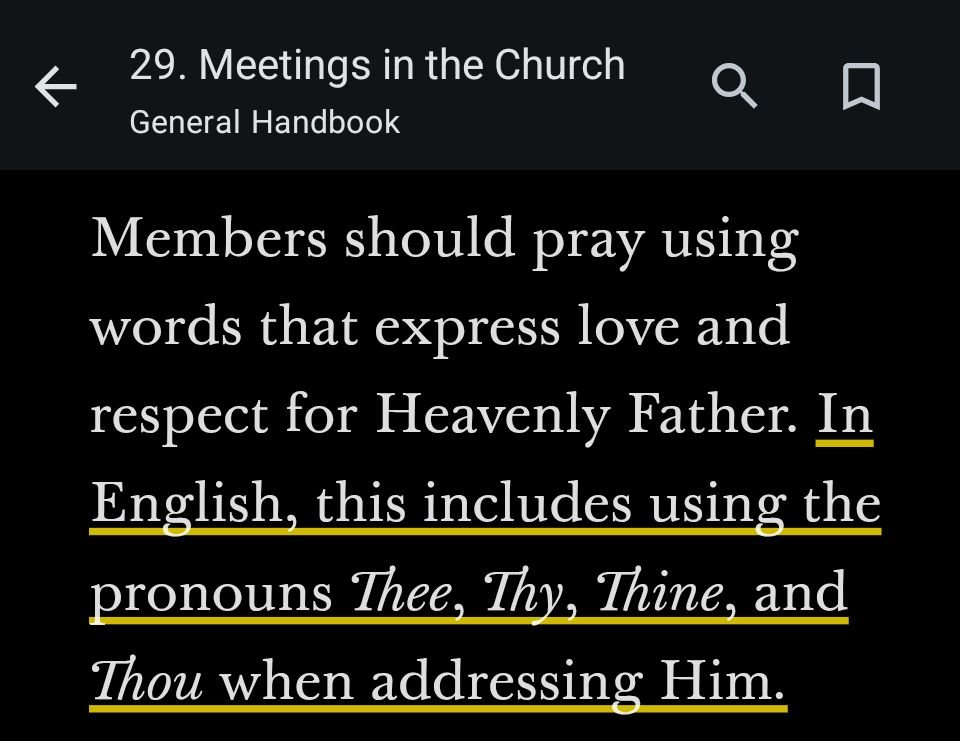
@HeberFarnsworth @ATrueMillennial "Thee," "thou," and "thine" were the informal means of second-person address in the early 17th century (when the KJV was written). "You" was the formal address of that era. Romance languages today all employ the informal address ("Tu") in LDS sacramental prayers.
English
0
0
2
7
Heber Farnsworth
Heber Farnsworth@HeberFarnsworth·
@ATrueMillennial The KJV language in prayer is only strange to English speakers. Most other languages have formal (respectful) and informal pronouns.
English
4
0
19
1.5K
Matthew Watkins
Matthew Watkins@ATrueMillennial·
The Church is gradually letting go of some of its more "formal" practices in favor of a more accessible, simple, contemporary culture. For example: * Dropping off-putting terms like laurel, beehive, Mia Maid, Mutual, Church discipline, etc * Ditching home teaching in favor of ministering * 2 hour meetings * Approving guitars in sacrament meeting * New contemporary hymns in the hymn book * Approved non-KJV translations of the Bible * Shorter, more basic conference talks and curriculum written for a lower reading level * Modified FSY pamphlet without many rules * Single handbook with many rules cut out * Allowing the continued broadcast of meetings for anyone who wishes to watch online instead of attending in person * Relaxed dress code for missionaries and priests blessing the Sacrament * etc But through all the other revisions, prophets and apostles still feel there is value in speaking to God differently than you speak to your buddy. So the official guidance on the handbook is still to use the traditional language of prayer, including the archaic pronouns for Deity. I know you might think it feels overly formal or stodgy-- especially if you are a recent convert. This is not a core doctrine. And if I were a betting man, I'd wager that the line in the handbook is not going to be there much longer. But getting ahead of the Brethren introduces discord, disunity, and confusion. So please, while that is the current prophetic guidance, I encourage everyone who disagrees with it to please be humble and follow it. We are never spiritually missing out when we follow prophetic counsel.
Matthew Watkins tweet media
LDS_Liberty@LDS_Liberty

Dropping KJV pronouns doesn’t make a prayer casual

English
58
8
248
73.8K
James Adams
James Adams@WaffleStreet·
@JohnPapola Great article, John. My wife and I have expressed a similar sentiment many times-i.e., "We were the last generation before the internet and smartphones destroyed male-female dynamics."
English
0
0
0
74
James Adams
James Adams@WaffleStreet·
@busy_bee_me Get him a job working retail. Interacting with the public on a consistent basis is worth two dozen counseling sessions.
English
0
0
0
27
Busy🐝
Busy🐝@busy_bee_me·
Son concerned about mission… admits he has anxiety and hates being around people. I take him to a counselor to learn some tools to help him cope and adapt. 1/
English
22
0
131
24.7K
James Adams retweetledi
Helen Andrews
Helen Andrews@herandrews·
Why did communism fail? Because it allocated resources inefficiently. It elevated people for political reasons who turned out to be incompetent. It demoralized its most talented so they stopped trying. The need for propaganda and censorship kept increasing and people got cynical.
English
48
156
1.8K
35.4K
James Adams
James Adams@WaffleStreet·
@tylercowen @conorsen @ModeledBehavior @arpitrage "The demand for commodities is not the demand for labour. The demand for commodities determines in what particular branch of production the labour and capital shall be employed; it determines the direction of the labour; but not the more or less of the labour itself" - JS Mill
English
0
0
0
54
tylercowen
tylercowen@tylercowen·
Say's Law is underrated, frankly, as it is not usually wrong (though it can be). The whole thing is not nearly as complicated as even the economic doom critics are making it out to be. A good illustration of how much unnecessary macro weirdness we have talked ourselves into over the years.
English
17
12
132
33.3K
Conor Sen
Conor Sen@conorsen·
We need real economists (@ModeledBehavior, @arpitrage, @tylercowen, Krugman etc) to take a crack at the fast AI scenarios from an NGDP, RGDP, productivity growth, inflation, 30,000-foot macro standpoint. What are the tech/VC/hedge fund people missing?
English
24
7
199
61K
James Adams
James Adams@WaffleStreet·
@NotYourBishop Desires, and willingness, can often be changed as a result of supplication to the Divine.
English
0
0
3
290
S Woolley Kimball 🇵🇸🇮🇱🇨🇭
A returned missionary in her homecoming talk today stated the following regarding the work of The Kingdom: “The Lord will make the willing, capable, but the Lord will not make the capable, willing.”
English
18
55
903
19.7K
James Adams
James Adams@WaffleStreet·
@LarsTheBadMan @darwintojesus The overrepresentation is highest in serious violent crimes. In cases of robbery, the unadjusted relative risk for children of two non-native parents was as high as 11.5 before being adjusted for socioeconomic factors. (Brå Report 2021:9)
English
0
0
0
4
Lars Iggy
Lars Iggy@LarsTheBadMan·
@WaffleStreet @darwintojesus 15.8% of the American population is born outside of the country. 20% of the Swedish population is born outside of the country. And you were saying?
English
3
0
1
48
Darwin to Jesus
Darwin to Jesus@darwintojesus·
Are Nordic countries better than religious countries because of their atheism? To analyze this, let’s just grant the data. Why not. Let’s say Nordic countries are filled with self reporting atheists, and they’re flourishing materially and socially. Even granting all of that, I think the logic behind the argument is flawed for the following reasons. Firstly, we already have clear examples of countries that became explicitly atheistic and did not* flourish. In fact, they became far worse. This happened in places like Russia, China, and Cambodia under explicitly atheistic regimes. And we know life became worse because people were literally DYING trying to escape. Entire populations suffered, starved, and were oppressed. Now of course someone will say, “Well, that was authoritarianism, not atheism.” But that actually proves the deeper point. The absence of religious belief by itself does not in any way guarantee human flourishing. Simply removing religion does not automatically produce stable, prosperous, or humane societies. Imagine saying, “Cheating on your spouse leads to flourishing relationships,” and you’re pointing to 4 out of 20 guys whose marriages survived their cheating, while ignoring the overwhelming number of catastrophic failures. That would be a terrible argument. Yet that’s exactly the logic being used here. It’s cherry picking. 🍒 Secondly, just because people in Nordic countries report that they’re not religious, that doesn’t mean their culture, institutions, or moral framework emerged from atheism. Quite the opposite in fact. These societies were shaped for centuries by Christian moral assumptions, legal traditions, and views of human dignity. Their social trust, stability, and ethical norms did not arise in a vacuum. So are these societies flourishing because of atheism, or are they flourishing while still operating on moral and institutional foundations that were built long before secularization? Imagine someone claiming veganism makes people healthy, but all the “vegans” grew up eating meat their entire lives, developed their bodies under those conditions, and only recently stopped. Are they healthy because of veganism, or because of the foundation laid before they became vegan? The same question applies here. Thirdly, why is it specifically Nordic countries that are thriving? Why not all atheistic countries universally? Could it be… geography? Culture? Historical stability? Low corruption? Strong institutional trust? Could it be the homogeneity of the population? If you took a completely different population, placed them in the same conditions, and made it so they identified as atheists, would the outcome be identical? That seems extremely unlikely. As atheists themselves often say, correlation is not causation. Simply pointing to a successful secular society does not prove secularism caused the success. Lastly, if atheism is truly the cause of their flourishing, we should expect to see clear evidence that these countries improved as they became less religious. Did crime decrease as atheism increased? Did depression decrease as atheism increased? Did social stability increase as atheism increased? Or are we simply observing societies that became prosperous first, and secular later? Pointing to a snapshot of a society at one moment in time proves nothing about what caused its condition. The deeper issue is this: Even if atheism and prosperity coexist in Nordic countries, for now, that does not show atheism explains prosperity. At most, it shows that prosperity can coexist with widespread secular belief for a time. And until someone can isolate atheism itself as the causal mechanism, rather than the countless historical, cultural, economic, and institutional factors at play, the argument simply does not succeed.
Darwin to Jesus tweet media
Eduardo Romero@atKensai

@darwintojesus Begging the question. Pressing both is fine, Euthyphro dilemma proves morality exists independent of God. Secular countries (Nordics) are happiest, safest, least corrupt. We create our own meaning.

English
58
37
270
38.4K
James Adams
James Adams@WaffleStreet·
@LarsTheBadMan @darwintojesus Incidentally--Sweden, notwithstanding aggregate high levels of surveyed happiness, has also become the poster child of imported crime. "Those born in Sweden to two non-native parents have a relative risk roughly 3.2 times higher than those born to two native-born parents."
English
0
0
0
10
James Adams
James Adams@WaffleStreet·
@LarsTheBadMan @darwintojesus I was [tacitly] saying that one should control for pertinent variables so as address salient issues that would be lost in excessive aggregation. Now I'm saying that you're engaging in a conflation fallacy. % of population born within a country is not the same as homogeneity.
English
0
0
0
8
James Adams
James Adams@WaffleStreet·
@LarsTheBadMan @darwintojesus "Let's compare ethnically homogenous countries with 5-6 million people and modest income dispersion to a highly diverse 340 million-person population spread across 3.8 million square miles and then casually ignore all of the issues attendant with that level of aggregation."
English
2
0
3
48
Lars Iggy
Lars Iggy@LarsTheBadMan·
@darwintojesus But the real question you're avoiding is: why do the most religious developed nations (like the US) consistently score worse on social metrics than the least religious ones? Not once, not a cherry-pick, but across dozens of studies and metrics? That pattern needs explaining. 6/x
English
2
0
3
47
Kyla Scanlon
Kyla Scanlon@kylascan·
Betting on Jesus returning by 2027 and the Backstreet Boys singing about crypto are kind of the same thing. Speculation and nostalgia are both exit strategies from the present, and neither provides answers. New piece on what happens when the economy grows without… people.
Kyla Scanlon tweet media
English
7
16
169
47.3K
Dr Manhattva
Dr Manhattva@Manhattva·
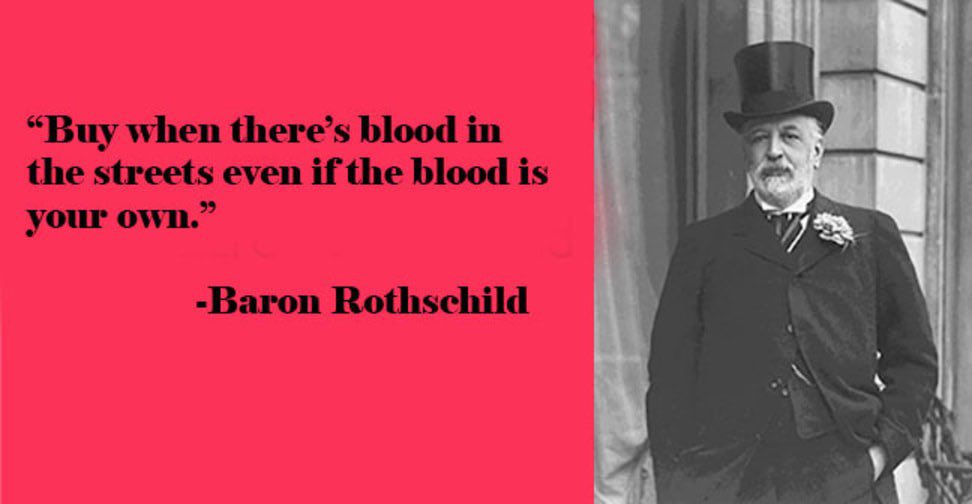
This is my third major bitcoin crash. They suck. I never sold. Gold is getting crushed, silver is getting crushed, my Tesla is getting crushed, and it is deeply unpleasant, And we still don’t know where the bottom is. However,
Dr Manhattva tweet media
English
123
25
716
19.4K
James Adams retweetledi
Chris Williamson
Chris Williamson@ChrisWillx·
The Most Important Teacher Of The Meaning Of Your Life
English
19
72
535
31.5K
James Adams
James Adams@WaffleStreet·
@ProfSteveKeen Also, could you please offer a concise definition of what constitutes "wealth" in the most general sense and how it's created.
English
0
0
1
2
Dr. Steve Keen
Dr. Steve Keen@ProfSteveKeen·
@WaffleStreet Yes. A pure credit economy without a government or with one which runs a balanced budget is feasible. Creation of nonfinancial assets is feasible. But the private nonbank sector will always be in negative financial equity. As in the boom and bust 19th century USA.
English
2
0
1
33
Dr. Steve Keen
Dr. Steve Keen@ProfSteveKeen·
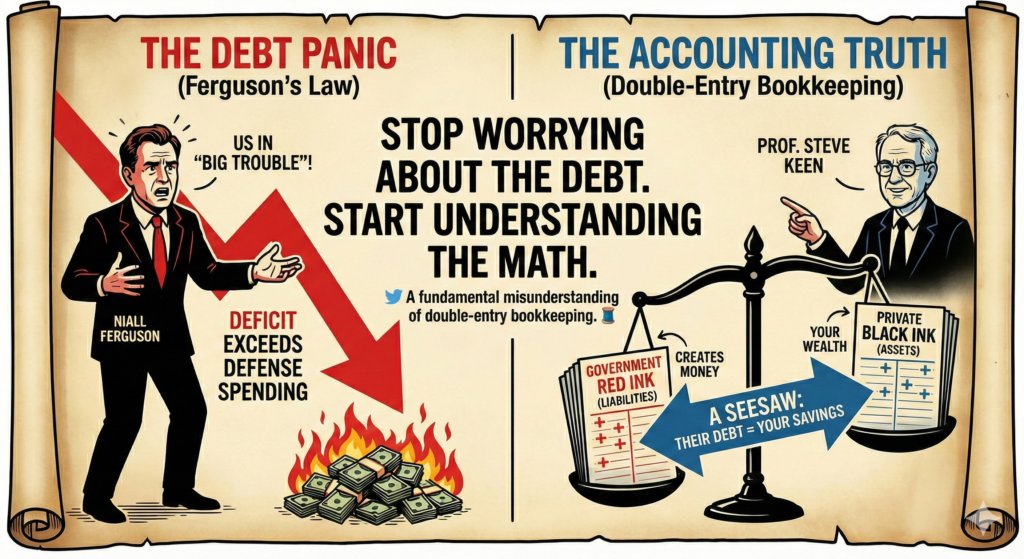
1/10 Niall Ferguson claims the US is in "big trouble" because debt interest payments now exceed defense spending. He calls it "Ferguson's Law." I call it a fundamental misunderstanding of double-entry bookkeeping. Here is why the debt panic is wrong.
Dr. Steve Keen tweet media
English
35
96
338
39.4K
James Adams
James Adams@WaffleStreet·
@ProfSteveKeen By "negative financial equity," do you mean to say that, absent government, private non-bank businesses will not be solvent? Or only that their liquid liabilities will exceed their liquid assets?
English
0
0
0
1
James Adams
James Adams@WaffleStreet·
@ProfSteveKeen In the absence of government, is it possible for wealth to be created?
English
1
0
0
18
Dr. Steve Keen
Dr. Steve Keen@ProfSteveKeen·
7/10 Taxation destroys private equity. Government spending creates it. When the government spends, it credits bank accounts. It doesn't need to sell debt to do this—it chooses to. The deficit is the source of the money supply in your pocket.
English
3
4
38
3.1K
John Papola
John Papola@JohnPapola·
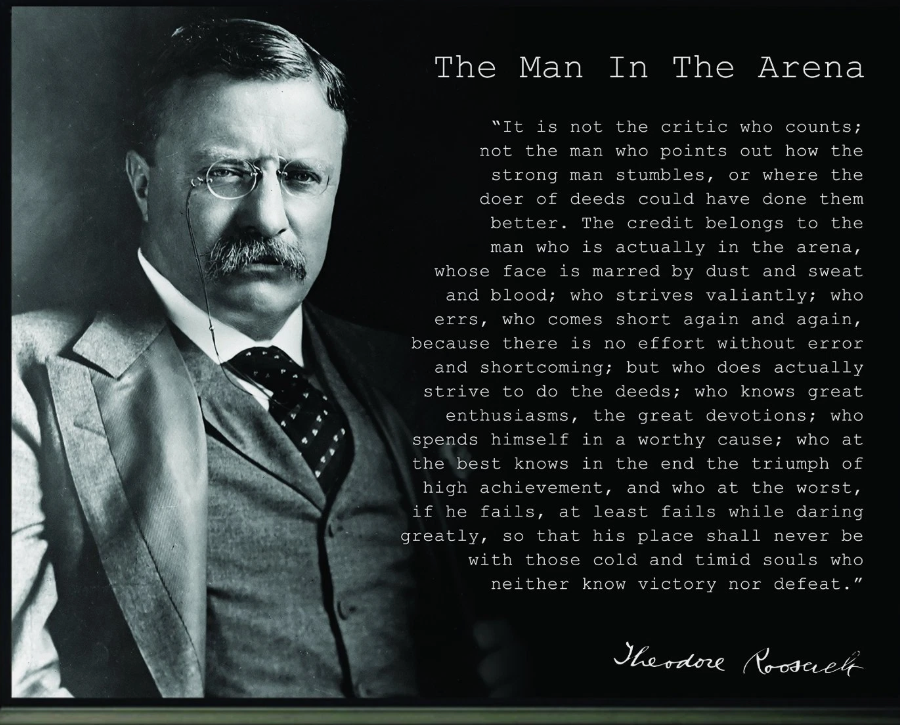
This is why I bristle as well. I've built things my whole life, and I know how damn hard it is. I'm doing it right now with Emergent Order Foundation and our channels like Dad Saves America. Criticism is a debauched currency, like inflation itself. It's fake money without productivity backing it up.
English
2
0
6
158
David Reaboi, Late Republic Nonsense
So much this: “He prefers being model intellectual minority.” There’s a big difference between being a public intellectual and being responsible for building institutions. The people in the former group can be great—but they’re also a dime a dozen. I have boundless contempt for those who don’t appreciate why institution-building is the far more essential skill.
John Papola@JohnPapola

Maybe this is unfair to Pinker (whose work I have always respected), but I get the real sense that he's simply vibing with his center-left friends from the comfort of being an "acceptable heterdox". He prefers being model intellectual minority, if you will. This posture has no evidence of success. It's the "we'll be a remnant for the post-collapse times" defeatism. The collapse of the university into utter nonsense has happened under his (and his type's) watch. Here's a simple test: if your institution treats Nazism like a historical monstrosity, an explicitly Nazi teacher as inadmissible on moral grounds, and the study of all of these people and ideas as singularly about learning the lessons of history gone wrong.... and you don't apply that same exact framework to Marxism and Communism... YOU ARE TRASH. We have up to 25% of liberal arts professors answering "YES" to "are you a Marxist" in actual surveys. But Steven Pinker doesn't find THIS to be a problem. He thinks it's a problem that my dear friends at @uaustinorg are simply applying a proper standard to "liberal arts" and "social science". A social "science" that treats Marxism differently than Nazism isn't "science", isn't "serious", and isn't "the pursuit of truth".

English
2
0
22
2.8K
James Adams retweetledi
Mike Netter
Mike Netter@nettermike·
"On a freezing December morning in 1957, President Dwight D. Eisenhower was reviewing budget proposals when his secretary nervously informed him that a 73-year-old woman named Mrs. Eleanor Mitchell from Abilene, Kansas—his childhood Sunday school teacher—was in the White House lobby asking to see him without an appointment, and instead of having staff politely redirect her, Eisenhower literally ran down the hallway, swept this elderly woman into a huge bear hug, and cleared his entire afternoon to have tea with her in the residence. What makes this moment so breathtakingly beautiful is that Mrs. Mitchell had taught a scrappy young Dwight Eisenhower Bible verses every Sunday from 1907 to 1911 in a tiny church basement, making him memorize Proverbs and Psalms when he'd rather be playing baseball, and she'd written him letters throughout his military career—through both world conflicts, through his rise to Supreme Commander, through his election—always addressing him simply as 'Dwight' and reminding him that 'character matters more than rank.' Eisenhower told his staff that Mrs. Mitchell once made him apologize to the entire Sunday school class for being prideful after he'd bragged about winning a spelling bee, teaching him a humility lesson that shaped his entire leadership philosophy, and he'd never forgotten how she'd pulled him aside afterward and said, 'Dwight, you're going to do important things someday, but never let success make you forget where you came from or who helped you along the way.' During their White House tea, Eisenhower introduced Mrs. Mitchell to every cabinet member who passed by, saying with genuine reverence, 'This woman taught me everything that matters—respect this lady,' and she gently scolded him for not attending church regularly enough, which made the most powerful man in the world laugh and promise to do better. When Mrs. Mitchell left that evening, Eisenhower walked her personally to her taxi, kissed her cheek, and pressed an envelope into her hand containing a check for her church and a note: ‘For the place that built my foundation—thank you for seeing potential in a troublemaker farm boy. Your student always, Dwight.' What absolutely destroys you is understanding that Eisenhower commanded armies and led nations, but he never forgot the Sunday school teacher who taught him that true strength was moral courage, proving that the greatest leaders never outgrow gratitude and that honoring the people who shaped you when nobody knew your name is the most presidential thing you can do.
Mike Netter tweet media
English
236
1.7K
9.3K
605.8K
James Adams retweetledi
Athenaeum Book Club
Athenaeum Book Club@athenaeumbc·
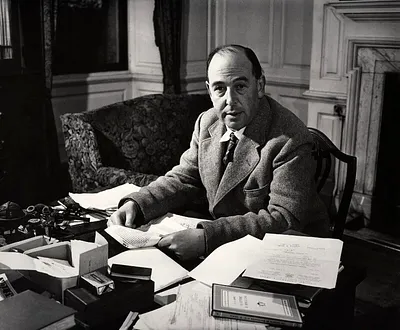
Did you know C.S. Lewis predicted the modern obsession with “being nice” would destroy the soul? In The Abolition of Man, Lewis argues that when a society stops believing in objective virtue, it doesn’t become tolerant… it becomes manipulable. He calls the result “men without chests.” People with appetites and intellects, but no courage, no honor, no trained moral instincts. They can calculate everything and defend nothing. Lewis saw that once we reject inherited moral law, we don’t become free. We become raw material… easily shaped by propaganda, pleasure, and fear. Modern man prides himself on compassion while quietly surrendering every standard that once gave compassion meaning. Lewis’s insight is brutal: a civilization that educates clever cowards will eventually be ruled by tyrants or technicians. Because when nothing is worth dying for, everything becomes negotiable… including human dignity.
Athenaeum Book Club tweet media
English
1.1K
10.9K
36.1K
1.6M