Warwick Simons

2.9K posts

Warwick Simons banner
Warwick Simons

Warwick Simons

@WarwickSimons

Managing $1bn of public equities for institutions & HNWs. Track record +4% p.a. above global equity markets. INSEAD, Bain, Goldman alum. Tweets aren't advice.

Greater Seattle Area, USA Katılım Haziran 2014
1.2K Takip Edilen1.8K Takipçiler
Sabitlenmiş Tweet
Warwick Simons
Warwick Simons@WarwickSimons·
***Looking for independent analysts*** I'm keen to find good independent stock analysts with a newsletter / research service who can help our process. Ideally they would be sector specialists with a time horizon beyond the next couple of months. Analysts I like include @dylan522p @fabknowledge @Citrini7 @heartbreakout Please link below 👇 🙏🙏🙏
English
0
0
4
2.1K
Warwick Simons
Warwick Simons@WarwickSimons·
@IanShepherdson Why would they block the strait with mines if it means they cannot export oil (so no revenue) and they piss of China that needs oil? Why create another enemy? I expect they will be more selective than laying mines.
English
4
0
4
1.4K
Ian Shepherdson
Ian Shepherdson@IanShepherdson·
On the mines: - They are old tech, but they work. A WWI-era mine almost sank the USS Roberts in 1988. - Iran reportedly has ~2000 mines. Including modern rising mines - Laying the latter is more complex than old ones. They might not be able to do it. - They have nothing to lose.
English
21
14
194
66.2K
Evergreen
Evergreen@evrgn11112231·
@WarwickSimons More likely to get to the truth and act with independent mindedness and in a profit maximizing manner (rather than social maximizing).
English
1
0
2
355
Warwick Simons
Warwick Simons@WarwickSimons·
@evrgn11112231 I suspect the people there are useful to search for any potential innovation and also depress margins to keep regulators off their back. Similar for GOOGL.
English
0
0
0
341
Evergreen
Evergreen@evrgn11112231·
This is going to be fun.
Evergreen tweet media
English
4
0
41
33.2K
Warwick Simons retweetledi
Varun Malhotra
Varun Malhotra@varunv_malhotra·
A founder wrote 5,000 words explaining why Bloomberg is dying. He's building the replacement. He built Fintool. He calls it "an Anthropic-backed company." Then he wrote the obituary for the industry he's trying to replace. Munger: "Show me the incentive and I will show you the outcome." The article is well written. But Fintool is a startup. Bloomberg still has 325,000 subscribers paying $28K a year. But that's not my issue with the article. He takes a thesis that applies to one slice of financial data and stretches it across ALL vertical software. Water utility billing across 50 regulatory jurisdictions. Court case management with chain of custody requirements. Hospital systems where a software error means the wrong patient gets the wrong drug. These aren't search layers. These are legally mandated systems of record where 80% compliance means you're in prison. And buried in his own framework? He admits five of his ten moats survive LLMs entirely. Regulatory lock in. Transaction embedding. Network effects. Proprietary data. System of record status. $CSU has all five. 98% retention. $1.7B free cash flow. Customers who take 18 months to buy a stapler. He wrote the bull case for $CSU and buried it under a headline designed to terrify you. Software isn't dead. The guy selling the replacement just needs you to think it is.
Nicolas Bustamante@nicbstme

x.com/i/article/2023…

English
11
8
175
44.2K
Warwick Simons
Warwick Simons@WarwickSimons·
Here’s a second good rebuttal. Bloomberg’s data moat is crucial. No way an asset manager with fiduciary responsibility for client capital is going to outsource data collection to an LLM.
Brett Caughran@FundamentEdge

A very thought provoking piece and well worth a read. I agree with some of the points here, disagree with many, with respect to the intellectual rigor & nuance embedded in this argument. A few thoughts I had, on the finance vertical LLMs specifically. (and fwiw big fan of Fintool...it was one of the highest rated finance co-pilots in the market on our internal evals...it's a genuinely helpful tool) 1) The downside of combinatorial competition. We have seen this play out in real time the finance copilot market. LLM's haven't enabled 10 new competitors...they have enabled 100+ new competitors. Much of the initial ARR is founder relationship driven, so this effectively serves to chop the market and lead to "demo fatigue" amongst clients. It feels like this will have to shake out at some point, and capital & staying power will become a moat. But "100 competitors chasing a market" is a lot more difficult than "1 competitor entering an established market" for simple scale & escape velocity reasons. 2) Single pane of glass is powerful (more powerful than most vendors realize). A friend mentioned to me "between these 7 different finance co-pilots, I can patch together quite a useful operating system". But, of course, that is a highly expensive, cumbersome set-up, and he defaulted back to "waiting for AlphaSense to catch up". Many investors are hoping for Bloomberg or FactSet (their incumbent provider) to build a helpful AI overlay. The combinatorial competition and the reality that many co-pilots are stuck in the $500k-$3m ARR neighborhood exert reflexive pressure on the ability to scale data & engineering to serve that full stack of workflows. To overcome this single pane of glass propensity requires highly meaningful differentiation...Tegus/AlphaSense is really the only vendor who has done this at scale over the last decade in finance, and they had to create a brand new category of research tool (expert network transcripts) to do it. 3) The moat (one of many) of the terminals is comprehensive data. It's not publicly disclosed, but Claude (via source: Getlaka) estimated Koyfin's revenue at ~$4m ARR. Koyfin is quite a well built tool. I am a big fan of the tool and teach to it in my ASU class. Koyfin licenses CapIQ data, per Claude. But of the 50 things I need a terminal to do, it can still only do 35. That's a problem. And it's sort of a binary yes or no 35/50 means my personal "single pane of glass" is still FactSet. $18k is a small price to pay of the seamless enablement of 50/50 of the workflows I need done. That seems to be a really hard nut to crack (requires a lot of capital and a "build it and hope they come" mentality). Unfortunately, I think a lot of finance LLMs will get stuck with the "Koyfin" problem - great tool, but limited data stack and hard to scale. I obviously take the "over" on business quality at Bloomberg, FactSet & CapIQ and think these will continue to be very hard businesses to disrupt (while keeping an eye on what @fiscal_ai is doing on the data side). To put it another way, Bloomberg is a business that probably could be disrupted, but it may take $300m of cash burn to do it (which, to be fair, may be down from $3bn pre LLMs) in any meaningful way. 4) There are some unit economics questions. Most (all?) finance co-pilots are still running on a CapIQ or FactSet API. If finance co-pilots do scale enough to eat terminal share, these data vendors can either 1) pull API access (not likely, in my view, as they view LLMs as a key distribution layer for their data) or 2) raise API price (likely, in my view). A typical finance co-pilot charging $3-5k a year sitting on an API of data that goes through a terminal at $15-$20k via FactSet or CapIQ. I still struggle to see how that reconciles & scales. If terminals did (at some point) start to lose seat share to LLM co-pilots, why would the terminals continue to subsidize their own death? The rational response at that point would be to 2x the price of the API... Also, as 5x more expensive LLMs deliver 50% better performance, end users will demand the latest frontier models, but many of these capital constrained co-pilots will struggle to keep up. My sense it is quite expensive to use Opus 4.6 / ChatGPT 5.2 API (are APIs available yet?). Need to dig a little more on this, but after using so many co-pilots I find myself coming back to Opus 4.6 directly as the model is just GREAT, when prompted & sourced. 5) Technical hurdles are still real, and not solved (yet). Are LLMs + MCP the right technical stack? Or is that too brittle? I have no idea, but LLMs + MCP still seem to make loads of mistakes, more errors of "omission" (needle in haystack problem). This is where nearly all internal builds have failed...IT teams don't have the context to know what good looks like, the tool gets in the hands of the investors, and misses a simple data point that was critical in answering the question well. I don't know exactly why this is, and it's getting better, but it's still not reliable enough to drive widespread behavior change in institutional finance. 6) Claude Excel isn't good. It can do a few small, interesting things here and there. But for any real institutional-grade workflow, it sucks. It breaks, it stalls, it gets confused. Now, at least Claude can interact with Excel! That is progress. Two way interactivity with Excel (push button builds, key driver identifications, distillation of broad research feeds back into Excel architecture) is the "holy crap" moment in AI for Finance. It changes the game, and is a big opportunity for the vendor who nails it (in my opinion). But today, AI Excel still isn't close to good enough, and Opus 4.6 is an absolutely, mind-blowingly good model in so many other ways. This isn't mean to be criticism at all. I've been trying to put myself at the intersection of finance & AI one because it is interesting, and two because it just has so much obvious potential. And I try to remind myself that 18 months ago I couldn't even really figure out anything helpful in my research workflow. That has certainly changed (though I still continue to update models & read transcripts the old fashioned way).


English
0
0
0
155
Warwick Simons
Warwick Simons@WarwickSimons·
@cap_zay Yeah - let's run into both early stage cyclicals and consumer staples....makes a ton of sense.
English
0
0
0
499
Zay Capital
Zay Capital@cap_zay·
This rotation is hilarious. We are bearish on tech/software so let's absolutely cram into consumer and industrials at ATH.
English
57
30
921
88.1K
Warwick Simons
Warwick Simons@WarwickSimons·
@pmje73 Who was that? I need to listen to that interview
English
0
0
0
252
Paul Enright
Paul Enright@pmje73·
Not confident I’d have anything interesting to say but am confident I would establish a Guinness record on Cheeky Pint
English
7
0
77
10.4K
Warwick Simons
Warwick Simons@WarwickSimons·
@BarrySchwartzBW @MoS_Investing I can see them announcing a buyback at a certain level, at least to put a floor on the stock. That will help boost internal morale, which must be flagging given how many employees own the stock (and encouraged to buy it). e.g. 25x trailing FCFA2S is ~2800 / share
English
2
0
0
124
Barry Schwartz
Barry Schwartz@BarrySchwartzBW·
@MoS_Investing why would it buyback when it can still earn 15%+ on acquisitions? Nothing has changed except market sentiment.
English
6
0
40
2.8K
Warwick Simons
Warwick Simons@WarwickSimons·
@optionsly SAP 5y forward EPS growth expected to be 16%... META is a little higher, but arguably more risky due to the nature of the business / product. (I own both)
English
0
0
1
40
ConsumerTechBets
ConsumerTechBets@optionsly·
Earnings for $meta are insane and a good reference point for any valuations in software. Q1 Rev guide +30.5% y/y on high end Acceleration of +24% y/y in Q4 (which is already insane) Trailing GAAP P/E 30x Meanwhile you can buy SAP ~30x p/e for 0% growth
English
3
0
7
1.2K
Warwick Simons
Warwick Simons@WarwickSimons·
Think forward not backward. $11bn is net income for 2025. Consensus for 2026 is $13.5bn. Stocks trade on forward earnings. Consensus for 2029 is $22.2bn. Long term growth is ~15%, and NFLX should trade at a premium as it is akin to a staple. WMT & COST trade on 40x PE, NFLX isn't quite as high quality but it is faster growing so maybe 35x PE 3y from now? That is $777bn market cap vs $358bn now, which is a 3y IRR of 29%. That's the math on core NFLX. I trust management on WBD, so I assume the transaction will be accretive over time, if it happens.
English
1
0
0
352
Drew Cohen
Drew Cohen@DrewCohenMoney·
$NFLX bulls, how do you make the math work? Core Netflix (pre WBD) With their current $11bn in profits that's 33x earnings. If we grow Netflix Core EBIT (pre-WBD) 15% annually, that's $17bn in 3 years. That's 21x three year out earnings. If they can still grow double digits then maybe a 25x is fair. (8% annualized return after including about ~$30bn of 3 year cummulative cash flow) Is someone more bullish assuming mid-teens growth beyond 3 years? (Here is what is implied in year 4) Growing 15% in year 4 means $2.5bn in incremental EBIT, or ~$8.5bn in revenues. Mathematically the majority of this growth MUST come from pricing. This is because if you assume half of this year 4 growth comes from members, that equates to around 50mn new members, which is more than ever before in a given year. If they grow that just through pricing it's definitely possible, but do we think they are going to be able to raise prices >10% every year? Warner Bros Math Things change with Warner Bros. A lot of different ways to do this math, but here is just one. 1) $2.9bn in NOPAT for Max HBO in 3 years (120mn subs x $10 ARPUs--higher than the current $7 on better advertising monetization and pricing) 2) Assuming $1.5bn in NOPAT for the studios business. Around what this segment is doing LTM, but it is very volatile on releases. (It is up more than 100% y/y. Also it may not totally line up with the assets Netflix is buying, but it is an okay assumption). 3) Churn reduction for Netflix core. Let’s assume Netflix’s churn is 2%/mo right now. If adding Warner Bros content could reduce this to just 1.5%, than that is 19.5 million more members. Paying an ARPU of $11.50 gets us $1.7bn in NOPAT. Adding these 3 sources together gets us $6.1bn for Warner. This is an implied 14x 3-year out synergized multiple Netflix is paying... not bad. Combining to Netflix core earnings (estimated above) is $17bn + $6.1bn = $23.1bn NOPAT Need to dock about $3bn in est. interest expense from the deal though. So about $20bn in earnings. Does it grow slower with Warner or faster? Mathematically the earnings base is higher so it makes sense to expect slower growth (even if $ are higher). This matters of course for the multiple we'll place on it. If "core Netflix" was growing 15% than with the Warner Synergies, 3 years out, it mathematically drops to 10% growth. With a 25x multiple that's $500bn market cap (not adding back cash because assuming excess cash goes to pay down debt). That is a 11.5% annualized return. Not bad, but how comfortable are you will all of these assumptions? 3-years of 15% growth with growth? Double digits to mid teens growth exiting year 4? Warner Bros acquistion goes extremely smoothly? Pricing power allows for regular 10% price hikes? What am i missing?
English
6
6
45
12.7K
Warwick Simons
Warwick Simons@WarwickSimons·
@evrgn11112231 @EricJhonsa I’d bet that manager mix has a lot of influence on this date. Pods are low net and high gross, which is what the data is showing. Would love to see the data of just SM without pods.
English
0
0
2
22
Evergreen
Evergreen@evrgn11112231·
@EricJhonsa is that data right that the avg US L/S fund was 70% net at the top in 2021? wonder how much of nets moving lower is mix due to rise of pods vs SM funds structurally running lower nets now
English
2
0
3
439
Eric Jhonsa
Eric Jhonsa@EricJhonsa·
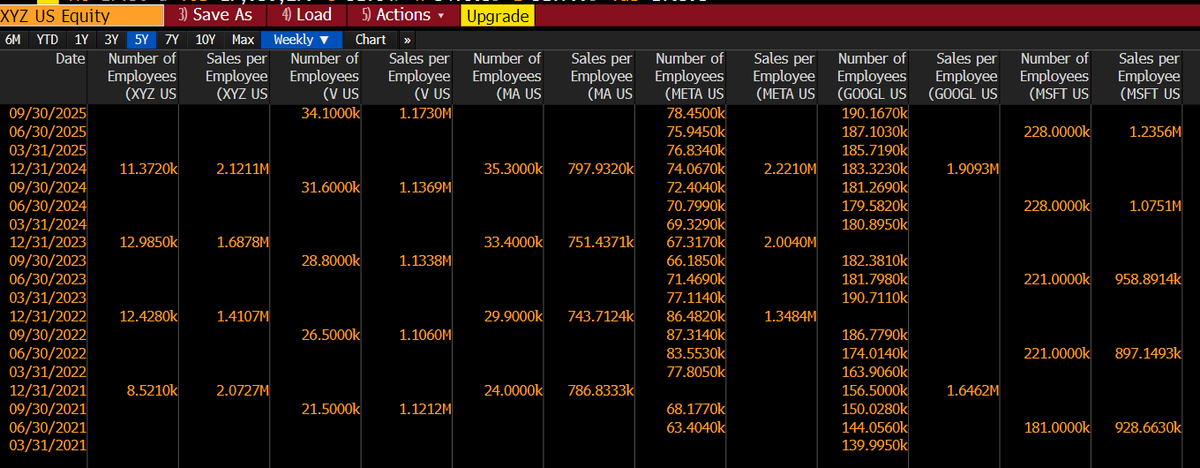
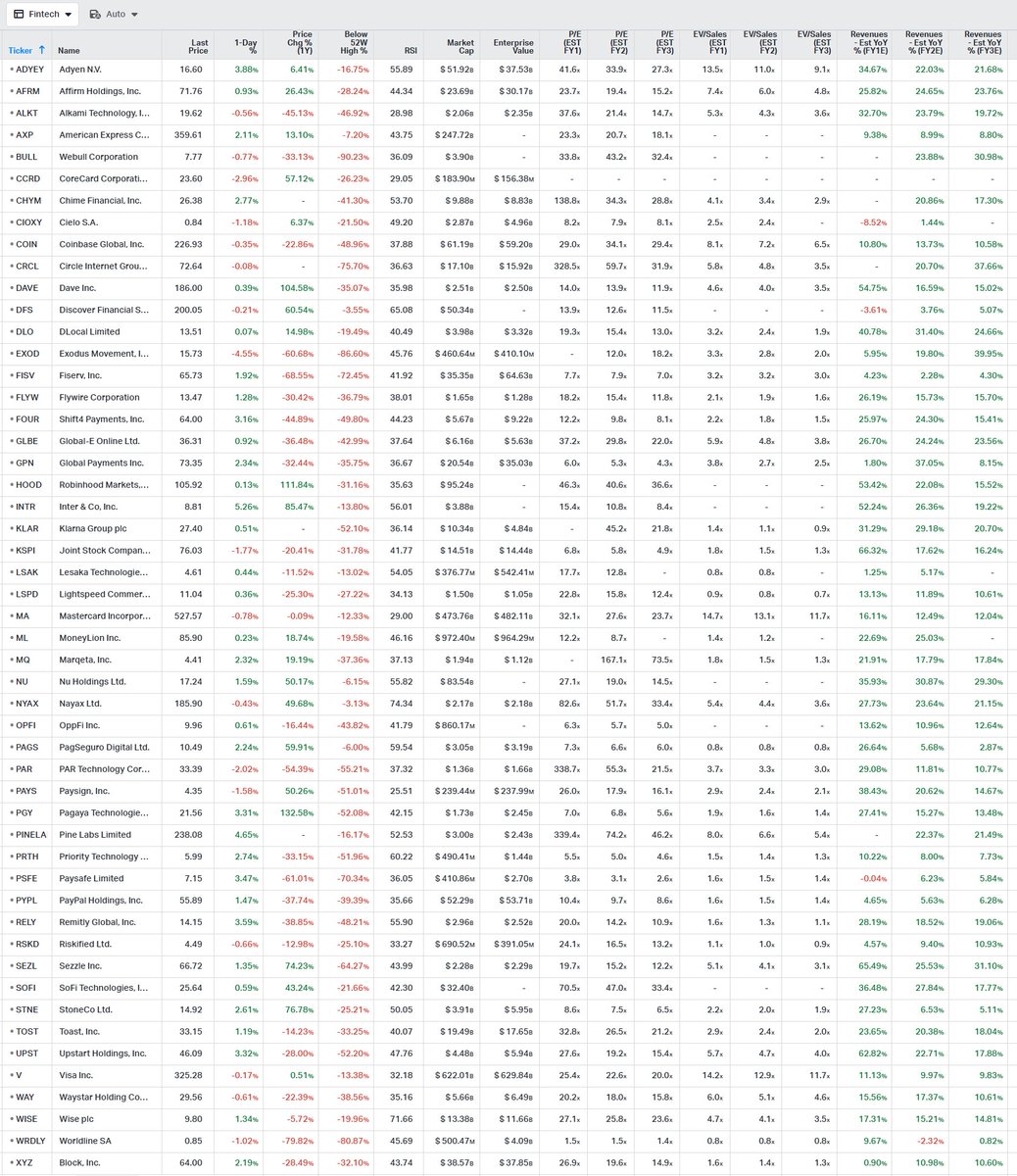
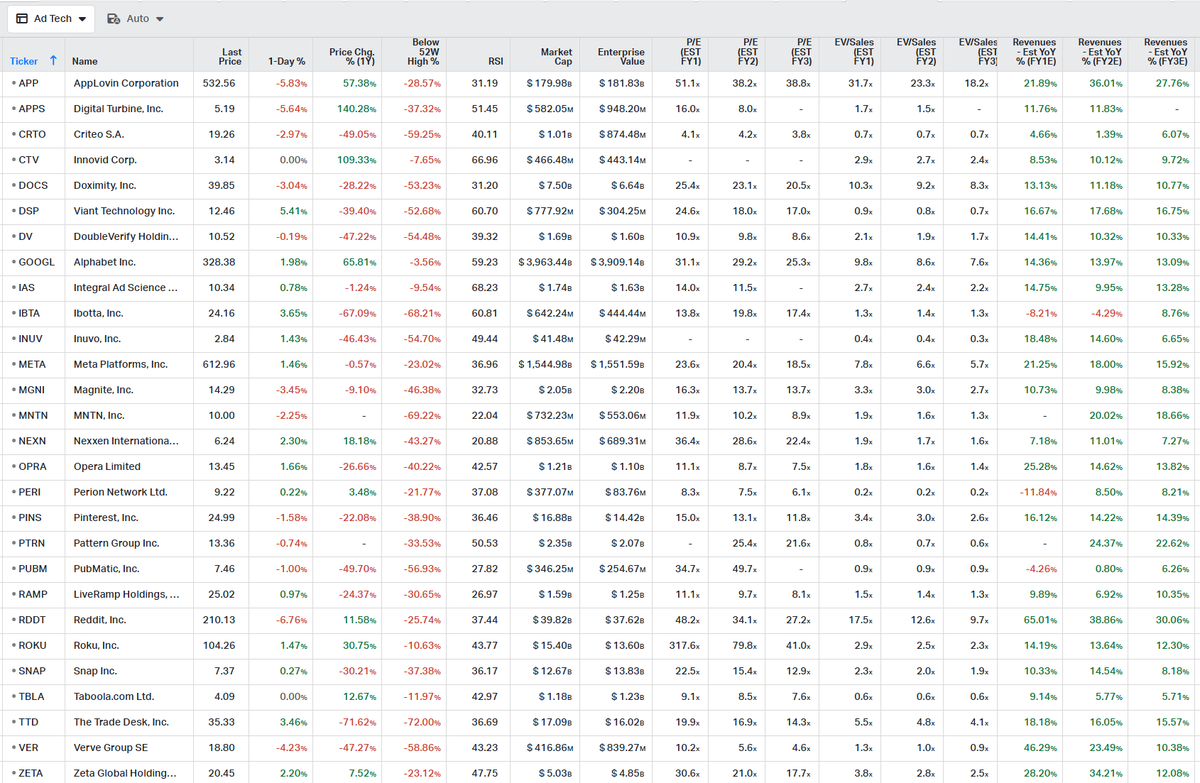
SaaS is far from the only part of tech where many stocks are bombed out. Can also see it in fintech, ad tech, random Internet stocks, etc. Bolsters the argument that at least some of this weakness is due to so much money flowing to AI infra/semis.
Eric Jhonsa tweet mediaEric Jhonsa tweet media
English
8
3
46
14.2K
Evergreen
Evergreen@evrgn11112231·
@WarwickSimons @bucketshopcap @chat_SBC no i was just saying the chart looks gross but not so gross that i'm licking my chops (which aligns with my fundamental view - cheap but could be cheaper)
English
1
0
0
166
13F investor
13F investor@cloneinvestor·
@NestBetter ML did say that he would only by at 1/4 May 2025 prices.
English
2
0
4
804
Warwick Simons
Warwick Simons@WarwickSimons·
@SleepwellCap @PythiaR It has to be close enough for a real live conversation. Unless their targets have also seen multiple compression so the alternative use of capital is even better.
English
0
0
2
237
Pythia Cap: Partially Conductive
Getting to the point where there’s probably significant internal morale problems being caused by the stock price at $CSU.TO
English
15
1
104
20.4K