Mark - WeHelp

391 posts

Mark - WeHelp banner
Mark - WeHelp

Mark - WeHelp

@WeHelpMindset

Author of The WeHelp Mindset Founder of WeHelp

Katılım Mayıs 2024
183 Takip Edilen96 Takipçiler
Sabitlenmiş Tweet
Mark - WeHelp
Mark - WeHelp@WeHelpMindset·
What is WeHelp? The goal is to get everyone in the habit of helping. To do this we are starting WeHelp clubs in school. How can I help? Start a WeHelp Club. We all want to help, but need organization and an excuse. Whether at school or work - create a club and you will be surprised by all the ways people think of to help. Call your mother. The Harvard Grant study found that men with strong relationships with their mother earned $87,000 more. I'll add to this that calling your mother adds years on to her life. Look up empty nest syndrome. Join our community, like, and subscribe!
English
0
0
0
80
Gin
Gin@GZhang76848120·
@AutismCapital People need purpose in life. What do you think will happen, if you don't need to work?
English
38
1
16
6.8K
Autism Capital 🧩
Autism Capital 🧩@AutismCapital·
🚨 NEW: Elon explains Universal High Income and gets called out by Peter Diamandis 😂 ELON MUSK: “We’re going to have Universal High Income. We’ll basically just issue money to people. We’re going to have deflation. AI and robots are going to make so much stuff that they’ll run out of things to do for the humans. Money will stop being relevant at some point in the future. DIAMANDIS: “So just as you’re becoming a multi trillionaire money starts to have less value?” ELON: “Yeah pretty much.” 😂 😂 😂
English
757
798
7.7K
1.3M
Mark - WeHelp
Mark - WeHelp@WeHelpMindset·
In 2023 almost 25% of American adults ate every meal alone on a given day, up from 17% in 2003; among under-30s the share has nearly doubled
English
0
0
0
4
Mark - WeHelp
Mark - WeHelp@WeHelpMindset·
@StefanMolyneux Every single successful person failed over and over again. But our take away from their eventual success shouldn't be self-help. It should be we-help. We hear about people that have had a significant positive effect on those around them.
English
0
0
0
47
Mark - WeHelp
Mark - WeHelp@WeHelpMindset·
@ScottAdamsSays @joelpollak Scott, when I first met you at the park, you and snickers walked on either side of a tree and got stuck. I will never forget snickers' reaction and your face. Thanks for the chats
English
0
0
0
12
Scott Adams
Scott Adams@ScottAdamsSays·
I have a favor to ask. If my work helped you, or someone you know, please follow my biographer and good friend @joelpollak and leave a comment here in case he wants to follow up with you on DMs. It gives me great joy to learn about any contribution I made. I tried to be useful.
English
10.2K
7.2K
66K
1.9M
Nooter22
Nooter22@Nooter22·
San Ramon getting pelted with back to back 3.8 earthquake after a 3.8 and 2.5 all within 10 minutes of each other.
English
3
4
11
2.2K
Mark - WeHelp
Mark - WeHelp@WeHelpMindset·
@kevinnbass Diabetes greatly increases CVD risk absent obesity. What is the mechanism for the CVD risk of ApoB and lp(a) vs diabetes. The question is on my mind as diabetes is not diagnosed properly and CVD risk occurs well before a diagnosis based on a1c.
English
0
0
0
12
Kevin Bass
Kevin Bass@kevinnbass·
No, this is not quite right. And since I've had a big cup of coffee this morning, I will explain in detail. Both ApoB and Lp(a) matter. If either are high, risk is increased. But risk is multiplicative. If only one value is elevated but everything else (blood pressure, smoking, obesity, etc.) is optimized, risk is (generally) relatively low. If several values are elevated, the elevated risk from each elevated value multiplies the risk from other elevated values. This is the danger zone. This is why it is even MORE important to control ApoB when Lp(a) is high, because ApoB is easier to control than Lp(a) cheaply. This is changing with newer technologies. Controlling ApoB when Lp(a) is high thus helps to reduce (not eliminate) the risk from the elevated Lp(a). When doctors say not to worry if there is a slightly elevated LDL, what they mean is that chasing one elevated value might not be worth the hassle. This is somewhat but not always true. Because of this, the decision about whether or not reducing an isolated elevated value is worth the effort for the marginal returns is a value judgment, not a scientific one. Hence the disagreement. Additional nuances and qualifications: 1. LDL is a very good surrogate for ApoB for most people, in the same way BMI is a very good surrogate for body fatness for most people. Not everyone, but most. ApoB simply provides additional granularity and precision. But the marginal returns of focusing on ApoB over LDL for most people are small. 2. All medications have side effects, including statins. Not all statins have the same side effect profile. Lipophilic statins tend to have more muscle and cognitive side effects. Atorvastatin, Simvastatin, Lovastatin, Fluvastatin, Pitavastatin are lipophilic statins. Pravastatin and rosuvastatin are lipophobic statins. Most cardiologists I know who are very attentive to the literature lean toward using the lipophobic statins. 3. There is a large amount of "residual risk" that is not captured by what we can measure in the clinical lab through blood pressure, lipids, etc. Much of this is genetic. This means that for individuals we do not know whether an isolated elevated LDL/ApoB value really will very substantially increase their individual risk or not. On average, it won't. But on an individual level, it might. If they have a high residual background risk, it will. If they have a low residual background risk, it won't. This is why some people with lifelong high LDL never have a heart attack, smoke, live to 90, etc. Meanwhile, others, apparently in excellent health, will have heart attacks. That comes down to residual, unmeasured/unmeasurable background risk. 4. Thus, every elevated value independently increases risk. Keeping everything low optimally reduces risk. This is important provided the uncertainty about background residual risk. 5. The science of cardiovascular disease risk management is very mature. Listen to your doctor. However, doctors should also concern themselves with patients' values in how they communicate. There is some wiggle room for not medicating at the tail end of lower risk (isolated slightly elevated lipid values), which a good doctor appreciates. 6. Blood pressure is even clearer. The recent, more aggressive changes to the blood pressure guidelines are probably correct. Make sure you're keeping your blood pressure optimized. Qualifications: I have genetics that predispose to elevated ApoB, Lp(a), and blood pressure, even when I'm in great health, so I pay close attention to these values, and I've read most of the literature carefully. I take rosuvastatin and ezetimibe. I control my blood pressure through careful attention to electrolytes.
@levelsio@levelsio

Dude my dad is a cardiologist and calls bullshit on statins if you're fit like you are, you're falling for the epic cholesterol hoax, but I don't wanna be a hater Get your ApoB tested, then your Lipoprotein(a). If your ApoB is high but your Lp(a) is low you have the genes where controlling cholestrol matters, if not you should ignore it mostly Again that is if you're not 300lbs overweight, in that case cholestrol does matter

English
2
1
14
3K
Mark - WeHelp
Mark - WeHelp@WeHelpMindset·
@FischerKing64 It is the pet food. It is poison and you can't avoid it. I'm working on changing that.
English
0
0
0
36
FischerKing
FischerKing@FischerKing64·
There was a wealthy family with a nice home - a ‘McMansion’ like you see in The Sopranos. Executives. Nice cars. Healthy people. Impressive, but then I saw the morbidly obese cats. Layers of fat that moved like jello when you touched them. Couldn’t look at the family the same.
English
19
7
397
22.9K
Chief Nerd
Chief Nerd@TheChiefNerd·
RFK Jr Says Something Happened Around 1989 Which Caused a Rise in Food Allergies, Autoimmune & Neurological Diseases “There's a different view of what could be happening in this country. We need to figure out what's causing it and eliminate it.”
English
73
302
1.8K
39.5K
Christopher Fishell
Christopher Fishell@chieffishell·
TSMC is having extreme difficulty staffing the Phoenix plant. @elonmusk if you want to build it, you'd be wise to build a "trade school" and start recruiting everyone from water systems management and HVAC to electrical engineers and circuit designers and coders straight out of high school with aptitude tests. cc @Tesla @Tesla_AI @teslaenergy
English
11
6
56
3.9K
amit
amit@amitisinvesting·
$TSLA ELON MUSK: “One thing I’m trying to figure out is how to make enough chips, maybe we’ll work with Intel, but even whe we extrapolate the best case scenario for chip production form our suppliers. it is still not enough. I cant see any other way to get to the volume of chips we are looking for, so i think we will have to build a gigantic chip fab.” Tesla getting into the chip game 👀
English
240
846
10.8K
770.6K
Mark - WeHelp
Mark - WeHelp@WeHelpMindset·
@ScottAdamsSays The internet is the junk food of social connection. You don't get the same immune system boost as you do meeting people in person
English
0
0
0
24
Mark - WeHelp retweetledi
Scott Adams
Scott Adams@ScottAdamsSays·
Makes sense. I'll explain on CWSA today.
Owen Gregorian@OwenGregorian

New Study: Helping Others Slows Cognitive Decline by Up to 20% | University of Texas at Austin Regularly volunteering or helping others outside the home can slow cognitive aging by 15–20%. Meaningful social connections may do more than lift spirits, they may help preserve the mind. Researchers from The University of Texas at Austin and the University of Massachusetts Boston have discovered that spending regular time helping others outside the home can slow cognitive decline in middle-aged and older adults. The study followed more than 30,000 U.S. adults over a 20-year period and found that those who volunteered or offered informal help to neighbors, relatives, or friends experienced 15%–20% less cognitive decline associated with aging. The benefit was strongest among individuals who spent around two to four hours each week assisting others. These findings, published in Social Science & Medicine, were supported by the National Institute on Aging at the National Institutes of Health and the Eunice Kennedy Shriver National Institute of Child Health and Human Development. “Everyday acts of support — whether organized or personal — can have lasting cognitive impact,” said Sae Hwang Han, an assistant professor of human development and family sciences at UT who led the study. “What stood out to me was that the cognitive benefits of helping others weren’t just short-term boosts but cumulative over time with sustained engagement, and these benefits were evident for both formal volunteering and informal helping. And in addition to that, moderate engagement of just two to four hours was consistently linked to robust benefits.” This research is among the first to explore both formal volunteering and more casual acts of assistance, such as driving a neighbor to a medical appointment, babysitting grandchildren, mowing a lawn, or helping someone prepare taxes. While roughly one in three older Americans participates in formal volunteer programs, more than half routinely provide help to others in their lives through these informal efforts. Informal Help, Real Impact “Informal helping is sometimes assumed to offer fewer health benefits due to its lack of social recognition,” Han said. But in fact, “It was a pleasant surprise to find that it provides cognitive benefits comparable to formal volunteering.” The researchers used longitudinal data from the national Health and Retirement Study, examining results from a representative sample of U.S. residents over the age of 51 dating back to 1998. The new study, which controlled for other contributing factors in volunteerism and helping behaviors such as wealth, physical and mental health, and education, found that age-related cognitive decline slowed as people began and sustained helping behaviors. That data suggests that greater gains may be expected in people who make helping behaviors a part of their routine, year over year. “Conversely, our data show that completely withdrawing from helping is associated with worse cognitive function,” Han said. “This suggests the importance of keeping older adults engaged in some form of helping for as long as possible, with appropriate supports and accommodations in place.” The paper offers the latest case for bringing a public health lens to discussions about volunteerism, helping and strengthening neighborhood relations, particularly in later life when diseases associated with cognitive decline and impairment, like Alzheimer’s, tend to set in. Helping as a Buffer Against Stress and Inflammation Another recent study, also led by Han, found that volunteering buffered the adverse effects of chronic stress on systemic inflammation — a known biological pathway linked to cognitive decline and dementia. The effect was especially pronounced among people with higher levels of inflammation. Together, the two studies’ findings suggest that helping behaviors can help boost brain health, whether by reducing the physiological wear and tear associated with stress or by fortifying social connections that bring psychological, emotional, and cognitive benefits of their own. In the context of an aging society and increasing concerns about loneliness and isolation, the findings also provide an important basis for continuing to involve people in opportunities to help, even once cognitive decline has set in. “Many older adults in suboptimal health often continue to make valuable contributions to those around them,” Han said, “and they also may be the ones to especially benefit from being provided with opportunities to help.” Read more: scitechdaily.com/new-study-help…

English
61
168
1.5K
112.5K
Magnus Andreas
Magnus Andreas@imMagnusAndreas·
@ScottAdamsSays It's the social interaction and the benefits that come from it. The reciprocal benefits of camaraderie, fellowship, friendship. Volunteering is just one way to get that.
English
1
0
0
7
Mark - WeHelp
Mark - WeHelp@WeHelpMindset·
@StealthStackerX @ScottAdamsSays Agreed - this is one of the more important parts of WeHelp. Help yourself and the people around you by establishing and maintaining strong relationships.
English
0
0
0
9
Mr. Mustard
Mr. Mustard@MrMusta10059358·
@ScottAdamsSays Human beings are social animals. If I’m feeling down, as soon as I leave the house and run into someone, even the guy pumping my gas, that small exchange makes me feel a lot better.
English
1
0
0
70
xAlan
xAlan@alanpennington·
@ScottAdamsSays Do you actually have to help others or just think you are helping?
English
1
0
0
127
Crémieux
Crémieux@cremieuxrecueil·
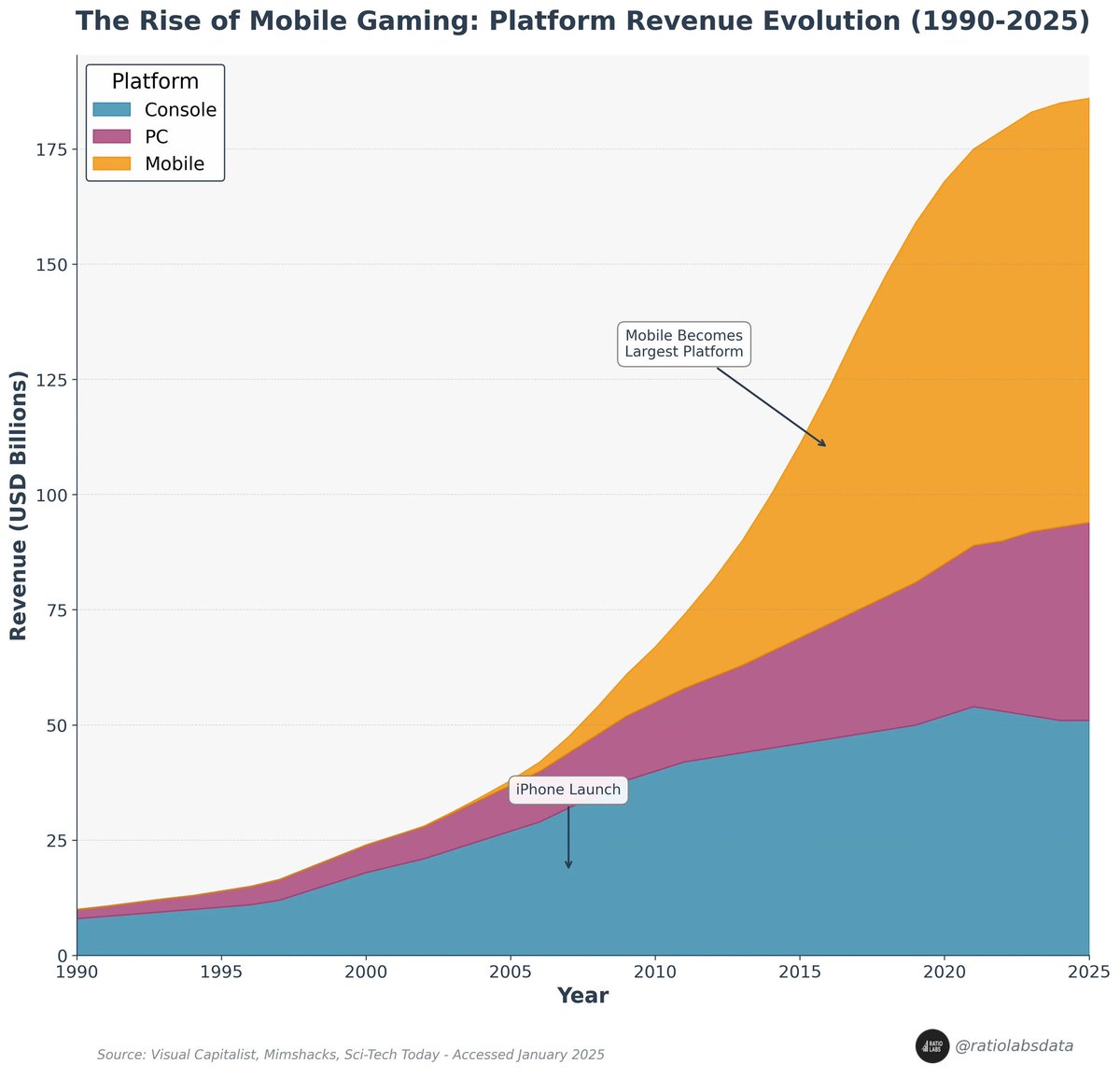
This is simply a trend that I cannot relate to at all. I don't play any games on my phone and I don't think I know many people who play mobile games either.
Crémieux tweet media
English
884
74
3.9K
351.4K