Web Wit Wisdom

241 posts

Web Wit Wisdom banner
Web Wit Wisdom

Web Wit Wisdom

@Webwitwisdom

Roaming the digital library, unravelling tales of wit and wisdom.

Down the rabbit hole I scroll Katılım Mart 2024
1 Takip Edilen606 Takipçiler
Sabitlenmiş Tweet
Web Wit Wisdom
Web Wit Wisdom@Webwitwisdom·
Models describe systems. Power behaves messily. If this is theatre, it’s theatre layered on a minefield. And the minefield has its own ideas.
English
2
1
30
2.5K
Evan
Evan@EvanWritesOnX·
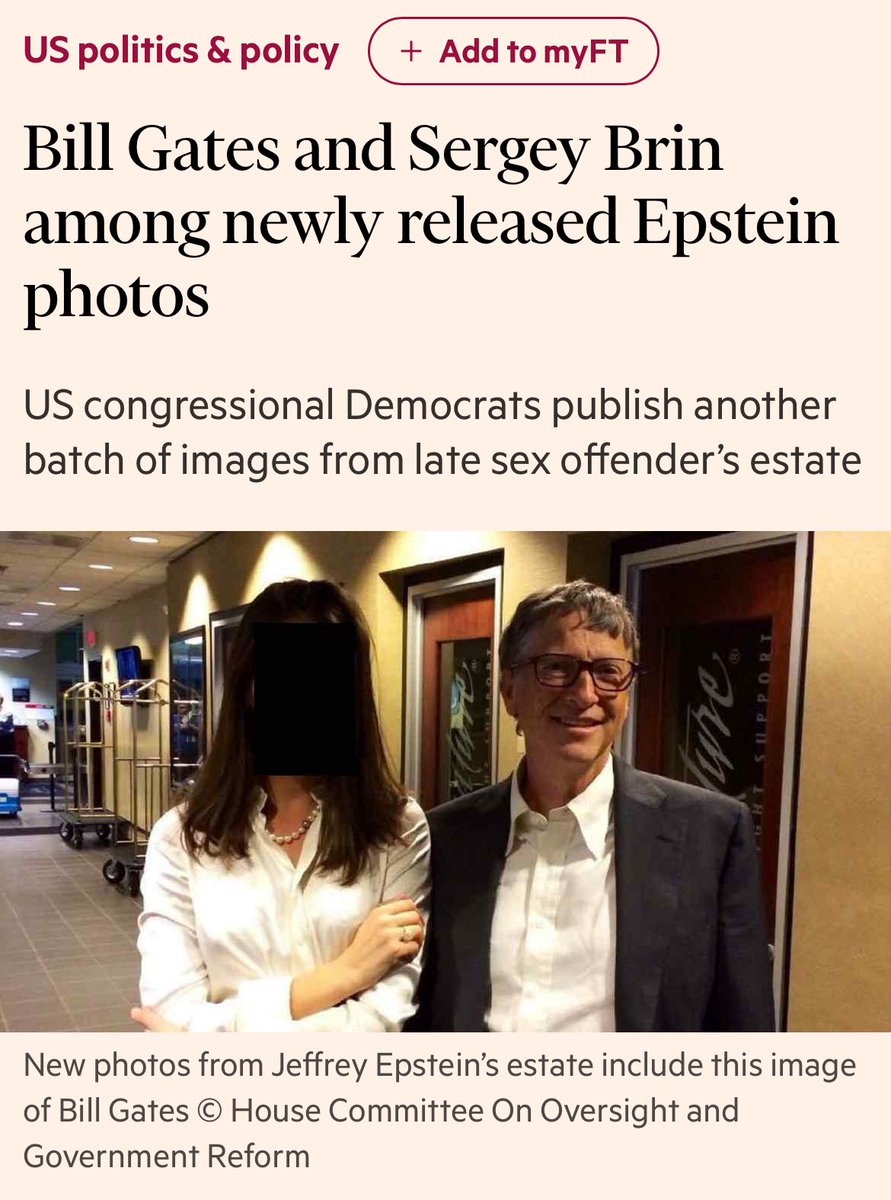
The Epstein Files Transparency Act gave the DoJ 30 days to release its files on Epstein, including evidence gathered during multiple criminal and civil investigations into the disgraced financier and his associates. The bill allowed the DoJ to withhold files that could jeopardise active federal investigations or pose national security concerns — raising concerns among some lawmakers that any disclosures could be heavily redacted. Brin, Brooks, Chomsky and Gates did not respond to requests for comment. Allen could not immediately be reached for comment.
English
1
0
37
3.4K
Evan
Evan@EvanWritesOnX·
History shows that all these slow-rolling drips and drabs are no different to Watergate tapes or Clinton-era scandals. It’s merely to manage public outrage without systemic collapse. Zero wrongdoing is alleged against those that are name dropped in the article, and the images are undated and benign, so this whole exposure acts as a low-cost narrative release valve, diffusing conspiracy theories, managing outrage. Article below for those who want to read.
Evan tweet media
English
7
5
95
5.7K
Web Wit Wisdom
Web Wit Wisdom@Webwitwisdom·
What if poverty reduction is less about building capacity and more about closing exit routes for surplus? Empirically, Kerala suggests constraint precedes redistribution.
Tricontinental Institute for Social Research@tri_continental

The Cooperative Movement in Kerala, India, is part of a series from us on Socialist Construction. It is about possible communism, the possibilities in our time of a future society. Read here: thetricontinental.org/study-kerala-c…

English
0
0
0
401
Web Wit Wisdom
Web Wit Wisdom@Webwitwisdom·
@EvanWritesOnX Resource luck is the easy part, discipline is the rarity. States diverge not on extraction but on who gets to set the limits—whether constraints serve the public or the networks that grow around the surplus. Some bind the surplus early. Others let the surplus bind them.
English
0
0
0
174
Evan
Evan@EvanWritesOnX·
Norways sovereign wealth fund is probably one of history’s biggest, rarest state success the world has ever seen. Brundtland and Bratelli are names people don’t even know, but these two individuals permanently changed the course of the country and single handedly insulated the entire nordic region from conflicts. Nobody wanted Norway’s sea floor in the 60’s. Big American oil companies at the time were basically drilling across the globe. When they came to Norway and asked to drill their ocean, Norway casually allowed, not knowing a goldmine was sitting underneath. Phillips Petroleum was the US company that drilled down to a gigantic pool of oil by complete accident. Instead of letting Phillips and other foreign companies keep almost everything in exchange for personal enrichment (which is what normally happened in the world), the Norwegian government took total control and ownership. They basically forced foreign companies to pump oil out at a 78% tax rate. Every time they sold a barrel, Norway took 78 cents out of every dollar of profit and put it in the government’s pocket. Then they pass a law that enforced a strict fiscal discipline on that oil money, spending none of it bar 3% of the interest it generated every year. That oil today is running out. Probably has 2-3 decades left. But the oil money fund is at 1.7 trillion. Biggest in the world. Untouched, and the government only uses the interest to pay for schools, hospitals, roads, and pensions. This $1.7 trillion sovereign wealth fund is like a massive, permanent customer for the TPS. Blackrock Vanguard etc get billions in fees just through indexation of this fund. So it’s in the TPS's best interest to keep Norway and the scandinavian region stable, because any chaos there could scare the fund into selling stocks or bonds, crashing global markets and wiping out TPS profits. Norway's boring, predictable stability means the fund just keeps buying and holding forever, pumping steady money into TPS pockets. It's a very rare positive sum arrangement where the TPS tolerates not interfering with the social fabric of Norway, getting reliable cash flow, while Norway gets growing returns for its citizens. This wealth tax hike derives from the same principles that made Norway successful The country doesn’t “need” to tax the rich for revenue. This is about politics and keeping the welfare dream alive without touching the fund. The labor government jacked up the tax to 1.1% in 2022 (plus tighter exit rules) mainly to fund social programs and fight inequality, which is huge for their voter base. And this acts as a backstop to not dip into their oil fund more than they have to. They would rather have a handful of mobile high net worths leave the country if it means generating revenue from the other handful that don’t leave. See UAE and Saudi Arabia followed a structurally similar but factionally distinct path to Norway in building oil-fueled sovereign wealth funds. They all recycled their resource rents into state survival vehicles, but Norway's position (NATO/Western bloc) enabled maximal transparency and frugality without coercion, while UAE/Saudi's proxy/hybrid ties to TPS/MIC insulated them via alliances rather than sovereignty. There was far more coercive tactics conducted by the TPS with the Gulf players. But that doesn’t take away from the fact that two Western individuals, more-so closest to the savage viking bloodline, formed a coalition to protect their own people across generations, against their own Wests zero-sum extractive nature.
Reuters Business@ReutersBiz

Norway's wealth tax trades millionaires for equality reut.rs/4is0ls7 reut.rs/4is0ls7

English
29
2
248
14.6K
Web Wit Wisdom
Web Wit Wisdom@Webwitwisdom·
The correction says agriculture, not data centers. Both are right. They’re drawing from the same substrate and the contest over primacy only obscures that. Water keeps its own ledger—cumulative extraction, distributed blame.
Rolling Stone@RollingStone

How Oregon’s Data Center Boom Is Supercharging a Water Crisis Amazon has come to the state’s eastern farmland, worsening a water pollution problem that’s been linked to cancer and miscarriages. Rolling Stone reports in collaboration with @fernnews: rollingstone.com/culture/cultur…

English
0
0
0
467
Web Wit Wisdom
Web Wit Wisdom@Webwitwisdom·
Evan — welcome back. Some of us were half-convinced you’d been drafted into the MIC as an involuntary consultant. Good to see you survived the ritual. Now, onto the circles. They remind me of those medieval cosmology diagrams where everything looks orderly until you realise the real turbulence sits in the margins. So here are a few dimensions from my side—just structural additions. First, the diagram captures the circularity, yet it arguably understates the direction of the flows. What we’re really seeing is an AI-era version of 20th-century industrial coordination: a closed loop where capital, compute and credibility reinforce each other faster than oversight can keep pace. That’s the essence of these valuation flywheels — they don’t need demand, only belief and energy inputs. And both have limits. Second, your point on government “subsidy” is essentially correct, but historically these subsidy regimes weren’t just buffers; they were disciplining mechanisms. Subsidy doesn’t only float the system — it anchors it to the state’s tolerance for risk, emissions, and balance-sheet exposure. Which means the TIC’s ambitions aren’t just capped by physics or capital markets — they’re capped by political patience. That ceiling rarely appears in Bloomberg diagrams, yet it always appears in real time when grids strain or deficits bite. Third, the sustainability question isn’t merely financial. It’s infrastructural. Every one of these loops runs on energy, water, land, minerals and cloud capacity — all finite, all geopolitically fraught. The deflation you mention might not only be engineered by financiers; it may be forced by physical constraints. Models scale infinitely. Transformers don’t. Finally, the real wild card isn’t hype-cycle fatigue or investor rotation. It’s the geopolitical overhang: BRICS industrial policies diverging, supply chains regionalising, and states rediscovering the idea of technological sovereignty. So yes — this ecosystem can be managed, slowed, even gracefully deflated. But it’s also sitting on top of resource bottlenecks and competing national strategies that don’t care about Silicon Valley’s preferred glide path. Happy to be corrected where I’ve missed something — or where your vantage point sees the stabilising forces more clearly than mine. As always, good to have your signal back in the noise.
English
0
0
1
138
Evan
Evan@EvanWritesOnX·
This is not a government bailout. This is government subsidy. The TIC's circular ecosystem is fully centered on interlocking deals with Nvidia, AMD, Oracle, and other peripherals purely for tactical self-sustainability. It’s just revenue recirculation, where investments fund procurements that flow back as supplier income, inflating valuations without immediate external cash burn. Obviously this isn’t sustainable. And they all know that. But it’s a bet. This tech-ecosystems job is to keep attracting investors. The government’s job is to subsidize while energy grids, co2 emissions etc max out at the expense of taxpayers. In other words, if this nice little diagram ends up being unsustainable by binding resource choke points, the damage would be offloaded to the host state. That’s WHY the government is subsidizing this. But just by reading FT headlines, I think the financiers have calmed this monstrosity by forcing corrections. The gap between these tech expansions and real-world constraints is being slowed and managed by your jpm, stanley, sachs etc. And for good reason. Too many SWFs are subject to index products and mandates. AI is a huge chunk of major indices. So the fight is between TIC trying to extract maximum amount of resources, and FIC maintaining stability across indices while allowing that to happen.
Evan tweet media
Financelot@FinanceLancelot

America's 2nd richest man (Larry Ellison) needs a government bailout. $ORCL & OpenAI can't pay for the $NVDA orders they've placed.

English
41
0
125
14.6K
Carlos
Carlos@agent_of_change·
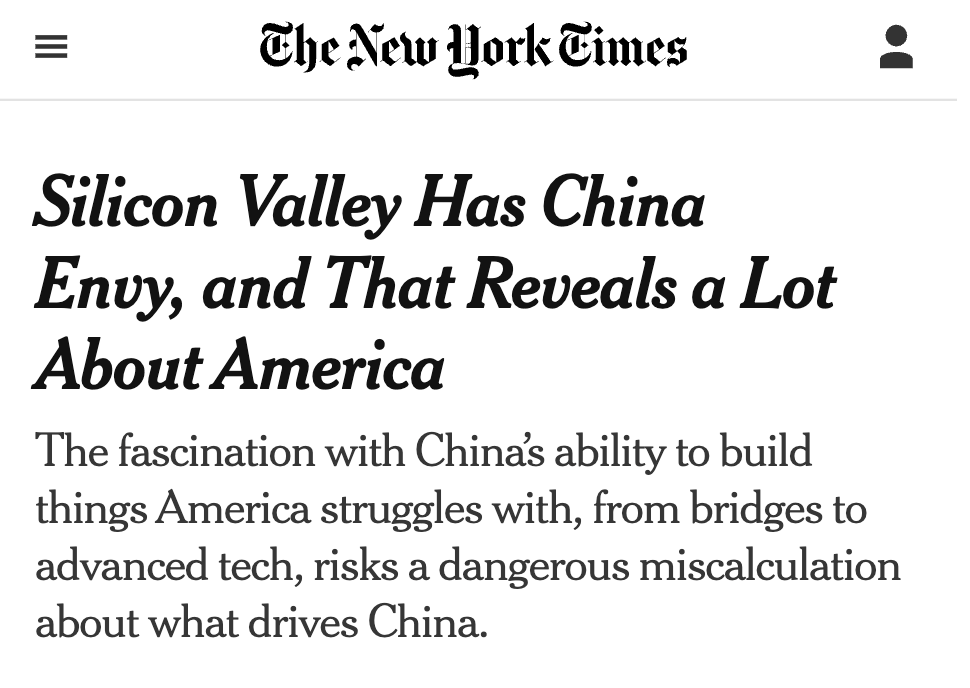
NYT reveals that socialist planning is good, actually. "Chinese firms once dismissed as copycats are being studied for lessons on efficiency and scale. China’s top-down, state-led system is being reframed not as a political liability but as a model of efficiency and execution."
Carlos tweet media
English
4
31
141
2.9K
Web Wit Wisdom
Web Wit Wisdom@Webwitwisdom·
@EvanWritesOnX We could go down the conspiracy route—maybe someone is trying to tell us something. They do say danger on them.
English
0
0
2
343
Evan
Evan@EvanWritesOnX·
There’s a lot of people that ask me about Mamdani. Here’s my take on him. No, he is not a direct puppet of the TPS. His policies aim to prioritize working-class New Yorkers over corporate profits, and his outspoken activism clashes with the establishment. Yet, his campaign relies on platforms like social media and progressive funding networks, that are indirectly tied to those same corporate systems. This makes him a complex figure. A reformer who challenges corporate control but operates within their infrastructure. If elected, he could shift some power toward everyday New Yorkers, but corporate forces will likely limit how far he can go. The TPS doesn’t need to directly control Mamdani to benefit. By allowing his campaign to gain traction, they can present an image of a “progressive” city without giving up real control. His critiques of inequality make the system look open to reform, which helps corporate powers maintain legitimacy while continuing to dominate the city’s budget and resources. Look at New yorks $100 billion budget that is heavily influenced by Wall Street, which manages the city’s pension funds (worth over $250 billion). Mamdani’s ability to challenge this is constrained by the city’s dependence on these financial systems. Futile endeavour. He is being used to produce a narrative over reality for the people. The moment he gains any substantive momentum, he’ll be pushed out. Until then, he’s useful for the narrative. Nothing less, nothing more.
FactPost@factpostnews

Mamdani: It is sad that we've let someone like Elon Musk take the words efficiency and fraud as if they are right-wing concerns. I want to increase taxes on the top 1% by 2%. And I want those same New Yorkers to be able to look at that increased revenue and say every single one of these dollars is being spent efficiently.

English
13
0
164
13.1K
Web Wit Wisdom
Web Wit Wisdom@Webwitwisdom·
@EvanWritesOnX If both Koreas are folded into the same investment architecture, does ideology even survive as a variable or just become branding for whoever owns the corridor?
English
0
0
1
149
Evan
Evan@EvanWritesOnX·
The TPS is setting itself up to exploit the peninsula’s untapped assets under a facade of “regional stability.” Both North and South Korea are going to hedge within an expanded BRICS framework co-opted by the TPS, sidelining ideological divides for profit-driven convergence, Theres’s going to be a “US mediated” economic detente between north and south korea that’s on the horizon for the first time in a while.
Evan tweet media
English
9
0
110
6.5K
Web Wit Wisdom
Web Wit Wisdom@Webwitwisdom·
@EvanWritesOnX Love the vibe in this piece on renewable diversification, though when growth puts on a solar panel it calls itself clean.
English
0
0
0
170
Evan
Evan@EvanWritesOnX·
The GCC is more likely to vassalize Morocco through deepening economic dependencies, including substantial remittances that account for around 10% of its GDP. So major investments in real estate, tourism, and energy etc etc. The Moroccan-Gulf investment forum is set up to solidify coalition alignments and reduce Maroc's autonomy in favor of Gulf-led regional architecture. The TPS will penetrate with targeted investments focused on Western Sahara projects but I think this is transactional. The structural dominance is going to come from the GCC. I think same goes for Algeria. The GCC holds greater vassalization potential as investments grow in hydrocarbons and diversification efforts. TPS penetration in Algeria has always been limited and actually more partnership-oriented, centered on energy deals like those with Chevron, without the same leverage for full subordination. The bigger question is, assuming Morocco-Algeria normalization occurs, which country comes out on top? I think Morocco will concede details on its autonomy plan for Western Sahara but will emerge on top with structural gains in control and resilience via international backing. Algeria will concede with reduced Polisario support, and restrained military aid, losing leverage as it sheds a proxy without equivalent gains. I think Morocco will consolidate regional influence through TPS/GCC alignments.
@Geopolitics_is_like_AoE@Geopolitics_AoE

Hey Evan, I guess the big question is how much the TPS can penetrate into both countries? I'm not too familiar on what they look like regarding economic prospects for the private sector interests. Basically what I'm really asking is this: Is there more of a chance for Algeria and Morocco to be more subordinate to the GCC or the TPS?

English
13
0
130
9.4K
Web Wit Wisdom
Web Wit Wisdom@Webwitwisdom·
@BlogRoberts Gold at $4,000 feels like a bet on managed decline— does the safe haven still work when the system itself starts failing by design?
English
0
0
0
75
Web Wit Wisdom
Web Wit Wisdom@Webwitwisdom·
Mao to Arafat: ‘You are the gate of the great continent.’ That’s the map they don’t teach.
Sovereign Media@sov_media

CHINA CALLED PALESTINE THE GATE OF ASIA In 1965, Mao Zedong told a Palestinian delegation: ‘You are the gate of the great continent. We are the rear.’ That moment wasn’t symbolic. It was strategic. For decades, China supported the Palestinian liberation struggle - not just in words, but in weapons, training and revolutionary theory. Palestinian fighters studied Mao’s writings on guerrilla warfare. China provided AK-47s, radio systems and tactical doctrine. Arafat visited Beijing 14 times. PLO fighters trained in Chinese camps. And Nakba Day was marked in Tiananmen Square. This video traces that forgotten history. From the high tide of national liberation to the modern battlefield of Gaza. Today, as Gaza faces a genocidal assault and the Axis of Resistance confronts Israeli and US power on multiple fronts, China’s role has returned to the conversation. Not as a militant sponsor, but as a geopolitical force shaping the balance of power. It’s refusing US demands to join the Red Sea blockade, speaking out at the International Court of Justice in defence of armed resistance and slowly distancing itself from Israel, politically and economically. But this story goes deeper than policy. It’s about memory - about the bond between people who shared the long road of resistance from China’s war against Japan, to Palestine’s war against Zionism. It’s also about the global information war, where platforms censor the oppressed and Chinese apps such as TikTok, Weibo and Bilibili have become unlikely spaces for pro-resistance content to survive. From the tunnels of Gaza to the factories of Shenzhen, from Hezbollah’s rockets to the ghost ships of the Red Sea, this is the new map of global struggle A map where Palestine is still the gate. And the world is shifting behind it. To learn more, please check out our March 2024 piece on China and the Palestinian resistance: qiaocollective.com/articles/pales… And our November 2024 translation, "Shattering the Iron Wall": qiaocollective.com/articles/iron-… @VoxUmmah @venanalysis @qiaocollective @ProgIntl @KawsachunNews @OrinocoTribune @blkagendareport

English
0
0
1
356