Wei Su

51 posts

Wei Su

Wei Su

@WeiSu19

Postdoctor at stanford university. interest in the interplay of nerve system and immune system in disease contexts

Stanford, CA Katılım Şubat 2019
100 Takip Edilen38 Takipçiler
Wei Su retweetledi
Jonathan Kipnis 🟦
Jonathan Kipnis 🟦@jonykipnis·
In this Opinion piece with @boskovic_p and @gao_wenqing we are comparing immune system in the brain to a road construction crew and proposing that cellular immunotherapies may be the solution for neurodegenerative (and maybe psychiatric?) disorders || Will cellular immunotherapies end neurodegenerative diseases?: Trends in Immunology cell.com/trends/immunol…
English

2
11
58
17.9K
Wei Su retweetledi
Yinpeng Zhan
Yinpeng Zhan@Zhanyinpeng·
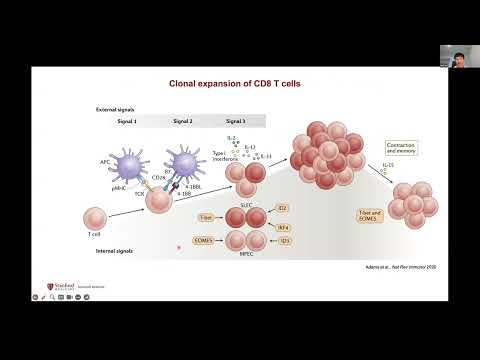
One more beautiful work from Chi lab shocked me again 😉😉; they identified a population of brain-resident PD-1+ CD8+T cells that communicate with microglia via the CXCL16–CXCR6 axis, actually 'restricting' Alzheimer’s disease (AD) pathologies in human brain and mouse model. 👍👍👍 nature.com/articles/s4159…
English
0
1
4
733
Wei Su retweetledi
Nature Immunology
Nature Immunology@NatImmunol·
Chi and colleagues identify brain-resident CXCR6+PD-1+CD8+ T cells that interact with microglia to limit immune-mediated pathology in a mouse model of Alzheimer’s disease. Read it here: rdcu.be/dlBHw nature.com/articles/s4159…
English
0
22
69
12.8K
Wei Su
Wei Su@WeiSu19·
@NeuroSGS Okay! We used beta amyloid mouse models that T cell phenotype is quite unique in mouse brain parenchyma. If focus on human and Tau model, the phenotype could be different. I am looking forward to seeing ur new results. Good luck!
English
0
0
1
47
Sammy
Sammy@NeuroSGS·
@WeiSu19 My work is in humans, with a particular focus on Tau pathology. We want to analyse brain-derived tau in plasma and correlate it with T-cells and markers of neuroinflammation (and assess their circadian regulation).
English
2
0
0
60
Wei Su
Wei Su@WeiSu19·
@NeuroSGS Which AD models do u look at? b-amyloid or Tau? Based on the immune profile by flow cytometry, they are more stem-like memory phenotype instead of exhaustion based on typical flow markers for memory vs. exhaustion from chronic virus or cancer models. Good luck to your findings
English
1
0
1
77
Sammy
Sammy@NeuroSGS·
Very interesting, but the protective role is surprising to me. We know CD8+ T-cells accumulate within the CSF and brain parenchyma, but they tend to correlate with cognitive decline. For part of my PhD, I’ll be looking at the sleep- & circadian-regulation of CXCL16 in plasma in Alzheimer’s patients (along with senescent and exhausted CD8 T-cell phenotypes). Will be more curious of my results now 🤔
English
1
0
1
129