
Sabitlenmiş Tweet
Sammy
13.9K posts

Sammy
@NeuroSGS
Neuroscientist (PhD). Research interests include sex differences, dementia, sleep/circadian rhythms, and neuroimmunology.
Katılım Mart 2009
110 Takip Edilen12.1K Takipçiler
@stringerbell99 @thehealthb0t Amyloid plaques leading to tau accumulation*
English

@thehealthb0t Stupid. Alzheimer’s is caused by tau protein accumulation leading to amyloid plaque buildup. Some statins don’t even cross the blood brain barrier and those that do don’t have any meaningful impact on brain cholesterol levels.
English

When someone cites a headline rather than a paper, you know it’s game over 🙈
Ann. Who? ❤️🇨🇦@annwmac
@DanniBrener You’re still confusing sex and gender. That’s your problem.
English
Sammy retweetledi

Puberty is not optional, and it can’t be paused and resumed later.
It’s a time-contingent window of development that puberty blockers permanently harm.
From my interview with @Outspoken_Sam.
English
Before asserting that “gender is in the brain,” several conceptual and methodological questions need to be addressed.
First, what precisely is meant by “gender identity” in this context? Is it being treated as a stable internal construct, a multidimensional psychological profile, a social identity, or some combination thereof? Which traits or experiences constitute it, and how is it operationalized empirically? Through self-report? Behavioral measures? Clinical criteria? Quantitative scales? Qualitative assessment?
Second, why should neuroanatomical sex dimorphism be assumed to underlie gender identity specifically? What is the proposed causal mechanism? Why privilege this explanation over alternative developmental, endocrine, cognitive, social, or biopsychosocial models?
Third, which neural regions or networks are implicated? Are findings convergent across studies, modalities, and populations, or are they heterogeneous and weakly replicated? To what extent are reported effects robust after correcting for sample size limitations, multiple comparisons, publication bias, and overlapping variance with biological sex?
Finally, how are confounding variables being handled? For example: hormone exposure, psychiatric comorbidity, medication, neuroplastic adaptation, cultural conditioning, sexuality, developmental history, and differences in self-concept formation. Which variables should be controlled for, and which may themselves be constitutive of the phenomenon under investigation?
Without resolving these questions, claims such as “a male brain can exist in a female body” risk exceeding the current evidential basis.
BigMama@PotatoDoggies
@lintcstealth @zattowangai @hyperartF @creepydotorg Yes, gender is in the brain, so a male brain can exist in a female body, and vice versa.
English
Sammy retweetledi

Online now: Slow-wave sleep engages brainstem circuitry to prevent stress-induced anxiety dlvr.it/TSdpHC

English

English

The way to maintain a healthy brain without neurodegenerative disease may be through the immune system. Sharp essay on the crosstalk between the immune system and brain, and how to leverage that to prevent Alzheimer's disease @ScienceTM science.org/doi/10.1126/sc…

English
Sammy retweetledi

Nature research paper: Sleep chart of biological ageing clocks in middle and late life
go.nature.com/4wERUjK
English
Sammy retweetledi

A Single-Cell Atlas of the Mouse Dural Meninges Reveals Pervasive Sex Differences Across Cellular Compartments biorxiv.org/content/10.648…

English
@One_Supernova @Thornexiii @SheelaArVe Assuming you are referring to this one:
pubmed.ncbi.nlm.nih.gov/21467211/
English

@Thornexiii @SheelaArVe Hey @NeuroSGS ! What's the link again for the study about sexual orientation being a confounding factor in "trans brain" studies?
English

Trans women are mentally ill men.
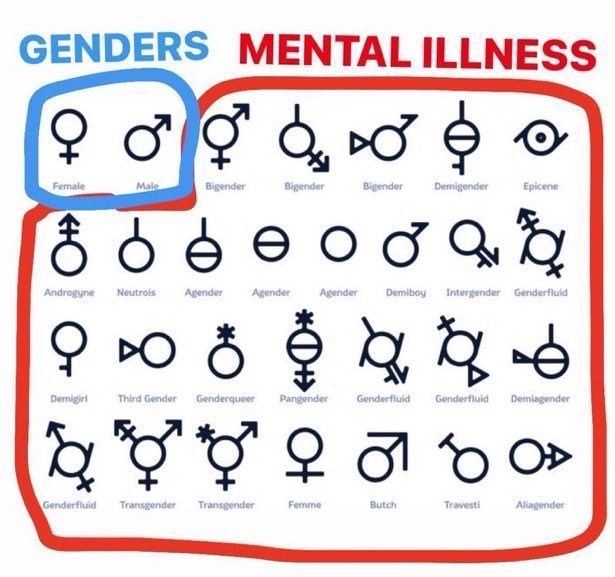
Ashlee VR 🏳️⚧️@ashleevrik
Yes I am trans 🏳️⚧️ and I am proud of being a beautiful woman!
English
Sammy retweetledi

By my longtime friends and colleagues, @ZUCKERKJ and @profjmb: Cognitive-Behavioral Treatment of Gender Dysphoria in Youth: Opportuni… sciencedirect.com/science/articl…
English
Chronic sleep restriction (4–6 hrs/night for 14 days) produces cognitive deficits comparable to those observed following 2 nights of total sleep deprivation (0 hrs sleep). Notably, subjective perception of cognitive impairment remains relatively stable during chronic sleep restriction, suggesting that individuals systematically underestimate the cognitive consequences of insufficient sleep:
highperformanceroutines.com/wp-content/upl…
English
Sammy retweetledi

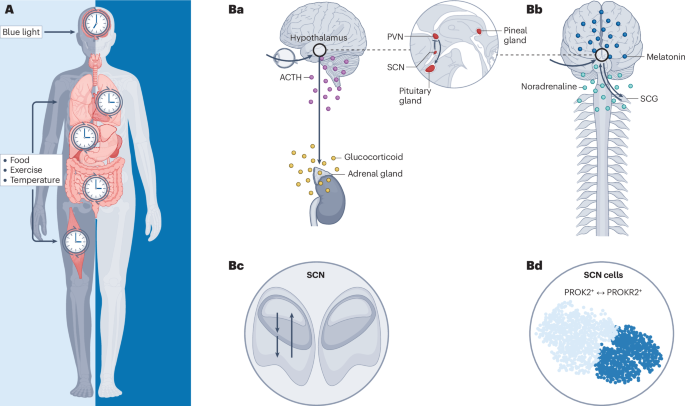
New online! Time matters: circadian genetics and the molecular logic of human health and disease dlvr.it/TSXQx9
English
Sammy retweetledi

New paper in Nature Aging led by PhD student @LuLina000147323! We mapped how APOE ε4 and APOE ε2 shape molecular changes in blood and cerebrospinal fluid across Alzheimer’s disease. nature.com/articles/s4358…
English
Sammy retweetledi
Aged circulating CD8+ T cells and their secreted factors drive cognitive decline cell.com/immunity/fullt…
@ImmunityCP

English
