
Mack Sussmann retweetledi
Mack Sussmann
9.1K posts

Mack Sussmann
@WizemanMatty
Cybersecurity▪️ AI Developer ▪️ Digital Nomad ▪️ LA ✈️ TLV 🇺🇸 AMERICAN ZIONIST 🇮🇱 SAY NO TO ☪️ TERROR 🙅🏻♂️
United States Katılım Ekim 2024
478 Takip Edilen130 Takipçiler

@jimmysnuker @TwoDropRules @koshercockney Hamas. With their dirty Muslim hands. Thank goodness and Allah those responsible are dead too. Along with the soul of Gaza.
English

English
Mack Sussmann retweetledi


- Reverse Searches
- key work algorithms
- local database of data that’s been pulled together over the years
- a weird medical conditional for remembering videos
- being grumpy and not believing anything posted on here until I verify it. x.com/hedgehoggeopol…
English
@TMT_arabic lol Muslims can’t even do propaganda right these days 🤦🏻♂️ hahahahahahah
English

🚨JUST IN: A multi-warhead smart Iranian missile has targeted the General Staff building in Tel Aviv.
Although it has not been officially announced that senior Israeli military personnel were killed in the attack, it is believed that few could have survived such a missile strike.
English
@iwasnevrhere_ This is old. You bots can’t even do propaganda correctly hahahahaha 🤦🏻♂️
English

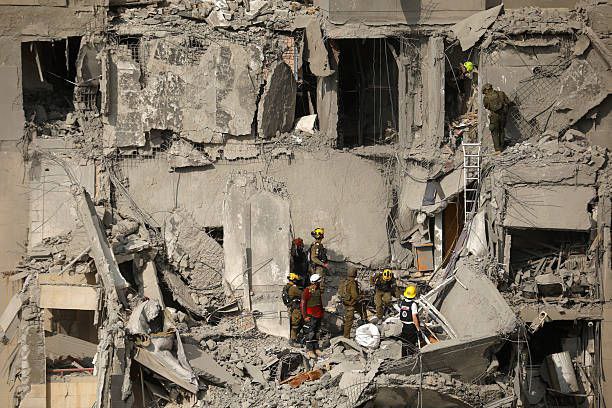
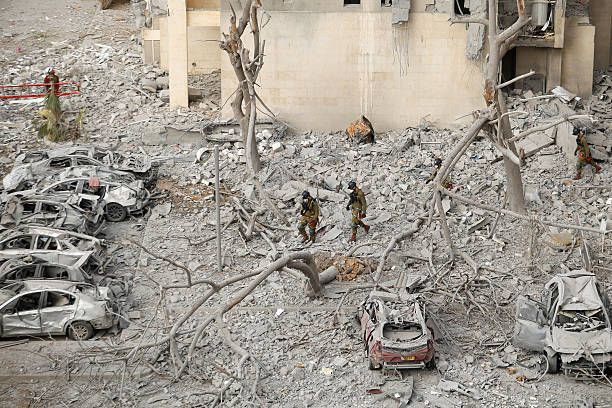
Destruction across Be’er Sheva this morning in southern occupied Palestine.

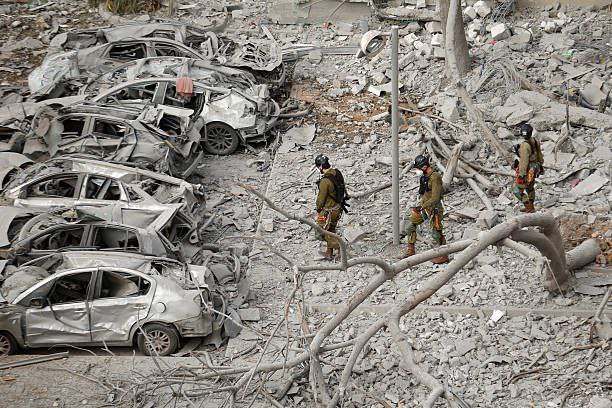
English
@SilentlySirs Hahahaha you people can’t even do propaganda correctly
English

“Hezbollah is hunting Israeli soldiers like birds 😁”
English
@Dawning_of_Dusk @sentdefender It’s far more likely they will see first hand what Israel deals with from its terrorist Muslim
Neighbors. From north to south 24/7. This is just going to make Israel into a more powerful country. 💪
English

@sentdefender Nothing will radicalize american soldiers more than being stationed in "Israel" and getting a real taste of apartheid. Not that American soldiers are saints by any measure but they usually have some flimsy justification (like oh its a "terrorist") the IDF does it for fun.
English
Israel, for the first time, is planning to propose to the Trump Administration the development of U.S. military bases on its soil, including the construction of new bases and the relocation of existing military bases in countries across the Middle East, senior officials tell Israel’s Channel 12.

English
Mack Sussmann retweetledi

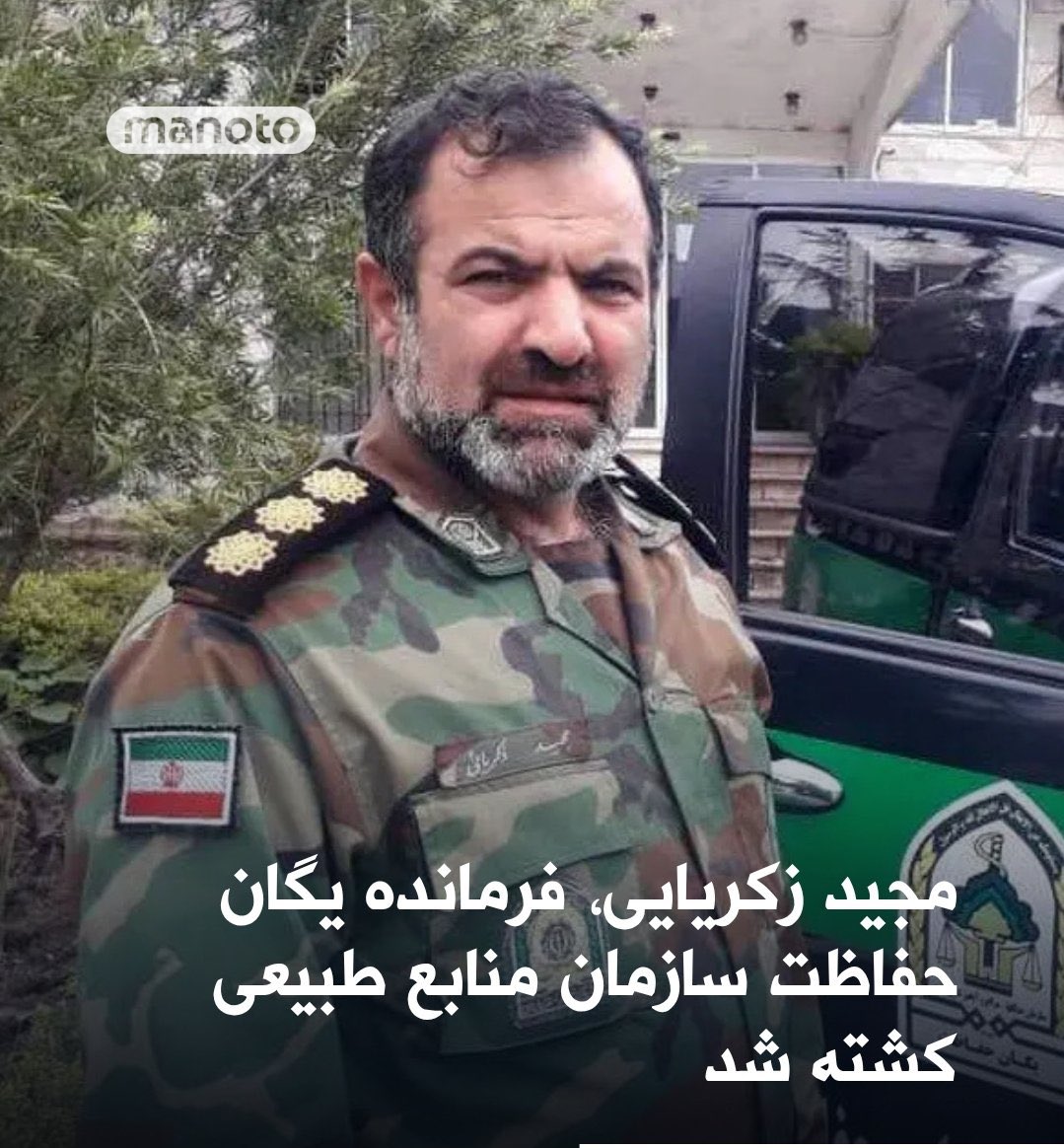
Commander of the Iranian Army’s Natural Resources. ELIMINATED
Now confirmed.
English
Mack Sussmann retweetledi
IRGC storage facilities in the Kian Shahr area, southeast of Tehran, were completely decimated by U.S. and israel.
English
Mack Sussmann retweetledi
Footage circulating of what is claimed to be Tehran tonight. Significant
English
Mack Sussmann retweetledi
President Trump: “I would only say that we're doing extremely well in that negotiation. But you never know with Iran, because we negotiate with them, and then we always have to blow them up.”
English
Mack Sussmann retweetledi
IDF continues relentless strikes on Tehran’s military sites, dropping over 120 munitions on weapons research, missile production, and Revolutionary Guards complexes.
Targets included ballistic missile facilities, satellite launcher R&D sites, and storage/launch areas threatening Israel. Over 150 jets have hit Tehran in the past 24 hours, aiming to cripple Iran’s long-built military capabilities.
English
Mack Sussmann retweetledi
@sentdefender Jesus didn’t start wars. But his followers did for hundreds of years - in his name 🤡
English
“(Jesus) did not arm himself, or defend himself, or fight any war,” Pope Leo said. “He revealed the gentle face of God, who always rejects violence. Rather than saving himself, he allowed himself to be nailed to the cross.”
OSINTdefender@sentdefender
While addressing tens of thousands in St. Peter’s Square in Vatican City on Palm Sunday, the start of the Holy Week leading to Easter, Pope Leo XIV said that God rejects the prayers of leaders who start wars and have “hands full of blood,” clearly directed at the ongoing conflict in the Middle East. “This is our God: Jesus, King of Peace, who rejects war, whom no one can use to justify war,” Pope Leo said. sunshine. “(Jesus) does not listen to the prayers of those who wage war, but rejects them, saying: Even though you make many prayers, I will not listen: your hands are full of blood,” he added citing the Bible.
English
@Yossi_Mansharof @prestonstew_ some supplementary insights for you
English
Mack Sussmann retweetledi

Rethinking Iran’s "Resilience": Signs of Growing Vulnerability
1. Claiming that Iran’s current leadership is more radical than it was under Ali Khamenei is a fundamental mistake. The significant progress by the Iranian regime under Khamenei in its efforts to assemble a nuclear weapons capability was one of the primary triggers for Israel's preemptive strike in June 2015. According to the IDF, Israel launched the June 2025 preemptive strike after detecting significant progress by the Iranian regime in its efforts to assemble a nuclear weapons capability. As the IDF reported, senior Iranian nuclear scientists were secretly advancing all the components necessary for a nuclear weapon. The program had accelerated, bringing the IRI significantly closer to obtaining nuclear weapons, representing clear evidence that Iran was actively pursuing a nuclear arsenal. Furthermore, the Iranian regime under Khamenei had prepared a massive, coordinated, multi-arena massacre in collaboration with Hamas. The plan, however, did not come to fruition, as Hamas’s leadership initiated an attack before final coordination with the Iranian regime had been completed, leaving Tehran caught off guard at the very start. Nonetheless, statements by Iranian officials prior to the June 2025 war indicate that Tehran did not abandon the idea of a multi-arena attack even after Hamas's massacre attack. Gholam Ali Rashid, the Khatam al-Anbiya commander eliminated in the June 2025 war, personally recounted how, prior to the conflict, he displayed a map of Israel to discuss with his peers how to annihilate it through an Iranian-led, multi-arena offensive.
2. While a strategic victory has not yet been achieved in this war, all signs indicate that we are on that path. The paradigm shift by Israel and the US signals that Iran’s deterrence has vanished. Tehran is now under attack by a determined policy that will not allow it a nuclear breakout. The deterrence Iran spent years painstakingly building has collapsed, as Israel and the US conduct multiple significant waves of attacks across Iran daily.
3. Sunni regional players may fear Iran, but that is not the metric for success. This war is expected to create optimal conditions for regime change. The IRI has lost even its minimal facade of legitimacy following the mass killings of protesters on January 8th and 9th. Now, fighting for its very survival, it is taking drastic measures, firing directly into homes (as seen in the attached video) and recruiting 12-year-olds, mirroring the desperate tactics it employed during the Iran-Iraq War.
4. Even when this war eventually ends, the IRI will have to fight for its existence every single hour, as the "show is over." The joint Israeli-American ambition for regime change, a crucial paradigm shift, will not dissipate. Therefore, alongside the policy ensuring Iran never achieves nuclear weapons, the policy of ousting the regime will be advanced with even greater intensity.
5. It is premature to conclude who the winner of this war is, though Iran will view its mere survival as a victory. It is worth noting that neither Reza Pahlavi nor Trump has yet called on the Iranian people to take to the streets. With the war still in full swing, such assessments should wait for its conclusion. I must emphasize that the IRI is fighting for its life in a way it has never felt threatened before.
6. In the Strait of Hormuz, the burden of proof lies with Trump. It is difficult to imagine that he will allow the current status quo to remain. By entering a military confrontation against Iran for the second time alongside Israel, Trump has demonstrated a commitment to defeating Iran. He utilizes both military means and the appearance of negotiations as tactical tools to prolong a campaign that will ultimately shape a new reality.
7. The Iranian regime has completely lost the "Republican" facade it once tried to maintain. It is not emerging from this strengthened, but hollowed out. Its paranoia regarding existential threats is likely to trigger mistakes that will play directly into the hands of the opposition, the US, and Israel.
8. The narrative that any outcome results in a loss against Iran is an illusion. The daily depletion of the regime's assets weakens it and brings it closer to its end. It is the regime that wants to end the war. Israel is demonstrating resilience, national strength, and heroism that defied Iranian expectations. It is unlikely that Israel, the US, and the Iranian opposition will emerge from this war without a central takeaway: the coordinated actions required to bring about the regime's downfall. The so-called "strategic resilience" attributed to Iran is a myth. Let us remember that the USSR also collapsed while possessing immense military and nuclear capabilities.
9. Ultimately, we must wait and see how the war truly ends. We still have a significant way to go and critical moments ahead. Every passing day regresses Iran and hastens the end of the IRI. Despite its attempts to retaliate with missiles and drones, the regime is fighting for its life. It will emerge from this war bruised, wounded, under much less experienced leadership, and with a shrinking social base facing a furious mob seeking both vengeance and freedom.
Danny (Dennis) Citrinowicz ,داني سيترينوفيتش@citrinowicz
Operational Success, Strategic Failure in Iran This is not a matter of opinion. It is a matter of facts. 1. Iran today is weaker than it was before the conflict, but it is also more radical. The Islamic Revolutionary Guard Corps has further consolidated its influence over decision-making, eroding what little internal balance once existed within the regime. Iran was never moderate under Ayatollah Ali Khamenei, but there were previously competing centers of power. That dynamic has largely disappeared, leaving a more ideologically rigid system in place. 2. To be sure, the United States and Israel have inflicted significant damage on Iran’s military capabilities. Their operational and intelligence superiority is unquestioned. But battlefield success does not automatically translate into strategic victory. Iran has demonstrated, time and again, an ability to rebuild. Nowhere is this more consequential than in the nuclear domain. With roughly 440 kilograms of uranium enriched to 60%, Tehran retains a latent capability that cannot simply be bombed away or seized. Counting destroyed targets is not the same as achieving a durable strategic outcome. 3. The regional picture further complicates the narrative of success. Key Gulf actors, such as Oman and Qatar, have pushed for de-escalation and, in some cases, openly criticized Israel’s role in the conflict. Qatar continues to maintain functional ties with Iran. Even among U.S. partners that normalized relations with Israel, such as the UAE and Bahrain, public unease is evident. Saudi Arabia, is unlikely to advance normalization under current conditions surrounding the Palestinian issue. The idea of a cohesive regional alignment against Iran remains overstated. 4. More fundamentally, the campaign’s implicit objective was not merely to degrade capabilities, but to alter the strategic landscape, ultimately by creating conditions for regime change. That outcome has not materialized. Instead, hardline leadership remains in place, now facing incentives to reassess its nuclear posture. A regime that feels both threatened and vindicated may be more,not less, inclined to pursue a nuclear weapon. 5. If the conflict ends under current conditions, Iran may emerge as the strategic winner despite suffering tactical losses. It can claim resilience in the face of sustained pressure from two of the world’s most capable militaries. Meanwhile, global competitors of the United States stand to benefit. Russia gains breathing room and geopolitical leverage, while China watches Washington become further entangled in the Middle East. 6. Even the situation in the Strait of Hormuz underscores the paradox. What was open at the outset of the conflict may now require diplomatic or military effort to reopen—turning a return to the status quo into a perceived achievement. 7. There would be no more positive development for the Middle East than the fall of the Iranian regime. That remains the strategic prize. But it is far from clear that the current campaign, as it stands, has advanced that outcome. If anything, there is a growing risk it has produced the opposite effect. 8. The more immediate question is how this ends. The administration faces a narrowing set of options, none of them particularly good. One path is a negotiated agreement. But under current conditions, such a deal is unlikely to be favorable. From Tehran’s perspective, the regime has withstood sustained military pressure and can claim a form of strategic resilience. That perception matters. It reduces any incentive to compromise on the core pillars of its security and ideology such as its missile program, its drone capabilities, and ultimately its nuclear posture. A deal reached under these circumstances risks formalizing, rather than rolling back, Iran’s long-term threat. The alternative is escalation: a broader military campaign, potentially including the seizure of strategic assets such as Kharg Island or contested Gulf or Hormuz straits. But such moves would not be decisive. Iran is not a state that can be coerced into collapse through limited territorial losses. Instead, escalation would likely prolong the conflict, expand its scope, and increase the risks of regional spillover—without guaranteeing a strategic breakthrough. In short, there is no good option as long as this regime in Tehran remains in place and at present, it is not going anywhere. 9. There is also a second-order effect that deserves attention in Washington. The U.S.-Israel alliance remains a cornerstone of Israel’s security and long-term future. That is not in question. But it is less clear that this campaign strengthens Israel’s standing in the United States. On the contrary, prolonged conflict, especially one that lacks a clear strategic end state, risks deepening political and public friction. If United States is being drawn into an open-ended Middle Eastern conflict without a clear payoff, the political cost for Israel could become significant. The bottom line is clear - this has been a remarkable operational performance, driven by close coordination between U.S. Central Command and Israel. But if it concludes without meaningful strategic change, it will be remembered as a strategic failure. The risk is not an Iran that is weakened and deterred, but one that adapts, emerging more determined, more radical, and potentially closer to a nuclear threshold, resembling Pakistan or North Korea rather than the "new" Venezuela for example #IranWar
English
@TwoDropRules @koshercockney They existed. They were seen on camera being abducted by Hamas. Then they received their bodies.
English

@koshercockney @TrinityMustache This is why no one in Gaza deserves to live after October 7. We should have shipped them all away as consequences for their endless terror activities. At least we erased their cities as a reminder.
English