Yuri Beletsky

1.9K posts

Yuri Beletsky banner
Yuri Beletsky

Yuri Beletsky

@YBeletsky

Astronomer and nightscape photographer.

Santiago, Chile Katılım Ocak 2014
190 Takip Edilen7.7K Takipçiler
Yuri Beletsky
Yuri Beletsky@YBeletsky·
That’s why the Bortle scale should be used with caution when judging night-sky quality. In professional astronomy, modest light pollution near the horizon is usually tolerable because we rarely observe at such low elevations. A site may therefore receive a poorer Bortle rating, yet still be excellent for serious astronomical work. Context matters.
English
0
0
7
328
Jure Atanackov
Jure Atanackov@JAtanackov·
Seeing some takes on Bortle class sky rating that I think are good for some discussion. A Bortle class refers to the whole sky. Not part of the sky. The sky is not Bortle class 2 overhead and Bortle class 4 or 5 near the horizon. Each class has a description valid for the entire sky. For example, Bortle class 3: "Some indication of light pollution is evident along the horizon. Clouds may appear faintly illuminated in the brightest parts of the sky near the horizon, but are dark overhead. The Milky way still appears complex …" And it then goes on to other indicators and criteria. This is valid for the entire sky. Clouds - dark overhead, may be faintly illuminated near the horizon. The Milky Way still appears complex. If there is uncertainty, perhaps some indicators from a class above or below are present (and this may depend on the atmosphere - how much humidity and aerosols there are), it could be Bortle class 2-3 or 3-4. The better rating under good conditions, the worse rating under poor conditions. But not class 2 overhead and class 4 or 5 near the horizon. The Bortle dark sky scale has some elements that depend on factors other than light pollution. Airglow is in my experience visible *far more often* than the scale indicates, especially around solar maximum. Bright airglow can be mistaken for high clouds illuminated by light pollution. It can be bright enough to brighten the sky tremendously. My Bortle class 3 location goes to 21.5-21.6 mpsas during solar minimum, but even on very transparent, clear nights during solar maximum it can reach just 20.9-21.0. The other factor is visual limiting magnitude. I have observed meteors together with a number of observers and groups over the years and under the same sky the limiting magnitude can vary tremendously between observers, up to a full magnitude. It is not just myopia or astigmatism, some people have sharp eyesight but apparently less sensitive eyes. Or there may be different thresholds to positive detection: one person may be convinced they see a star if they can hold it constantly with direct or averted vision, an experienced observer may be confident even if they see the star only 10% of the time (or in the case of Stephen James O'Meara only a few % of the time). Photo: Bortle class 3 sky at Šebreljski vrh (Šebrelje Peak), Slovenia during an average summer night and the corresponding sky brightness map from Lightpollutionmap. The LP at 3 to 6 o'clock is from way SW in Italy. Thanks, Italy ...
Jure Atanackov tweet mediaJure Atanackov tweet media
English
4
10
73
3.6K
Yuri Beletsky
Yuri Beletsky@YBeletsky·
@astrophoto1976 @JAtanackov @GeminiObs It has indeed increased over the past decade or so, however the observing conditions are still very good. In professional astronomy we rarely observe below 45 degrees elevation. Visually, from that location, you certainly see the distant city glow.
English
0
0
0
32
Mark Egan
Mark Egan@astrophoto1976·
@YBeletsky @JAtanackov @GeminiObs Would you say the light pollution has increased around those observatories? Would you say that Bortle 1 visual conditions are still possible from there?
English
1
0
0
39
Yuri Beletsky
Yuri Beletsky@YBeletsky·
Bortle scale is subjective. It integrates the whole visual experience, such as horizon glow, extended-object contrast, color perception. Therefore a site with zenith SQM of 21.8 (typical for an excellent sky) can still feel like Bortle 4 if there are bright city domes on the horizon.
English
1
0
0
31
Eric Paré
Eric Paré@ericpare·
We've been quiet about this, but we signed a book deal a while ago, and we've been working on this for over a year. This is an official announcement 💕 lightpaintingbooks.com Preorders: join my substack (from the link above)
English
4
3
10
538
Haru🇦🇺大学院inブリスベン
今年最後の天の川アーチをバイロンベイの滝の上から撮ってきました。黄道光がさそり座と天の川中心部を照らして幻想的でした。この形のアーチと黄道光のコラボは天の川シーズン終わりの今だけしか撮られない期間限定。ちなみに、アーチの外にひっそりとスワン彗星が写っています。
Haru🇦🇺大学院inブリスベン tweet mediaHaru🇦🇺大学院inブリスベン tweet mediaHaru🇦🇺大学院inブリスベン tweet media
日本語
1
1
20
740
Christian Perrier
Christian Perrier@christnperrier·
@YBeletsky Las Campanas Du Pont, OGLE and other telescopes (from Magellan tel I guess) 👏👏 So impressive to get the ZL with a smartphone ! I have seen it several times with the naked eye. As you say, we now have extraordinary capabilities!
English
1
1
3
211
Yuri Beletsky
Yuri Beletsky@YBeletsky·
The Zodiacal light above the Pacific Ocean. I obtained this image with my Samsung S25 Ultra smartphone from the Atacama Desert in Chile 🇨🇱 The amount of details captured by the phone is truly impressive, showing how far smartphone astrophotography has come. We are definitely living in the new era ! 🤩 @SamsungMobile @SamsungLatin
Yuri Beletsky tweet media
English
10
68
359
13.7K
Scott Grant
Scott Grant@skymango_x·
@YBeletsky That's a lovely grab! 👏🏻👏🏻 I often use a Samsung S24 ultra - which produces incredible images. Did you use the standard phone app or something else?
English
1
0
1
129
Yuri Beletsky
Yuri Beletsky@YBeletsky·
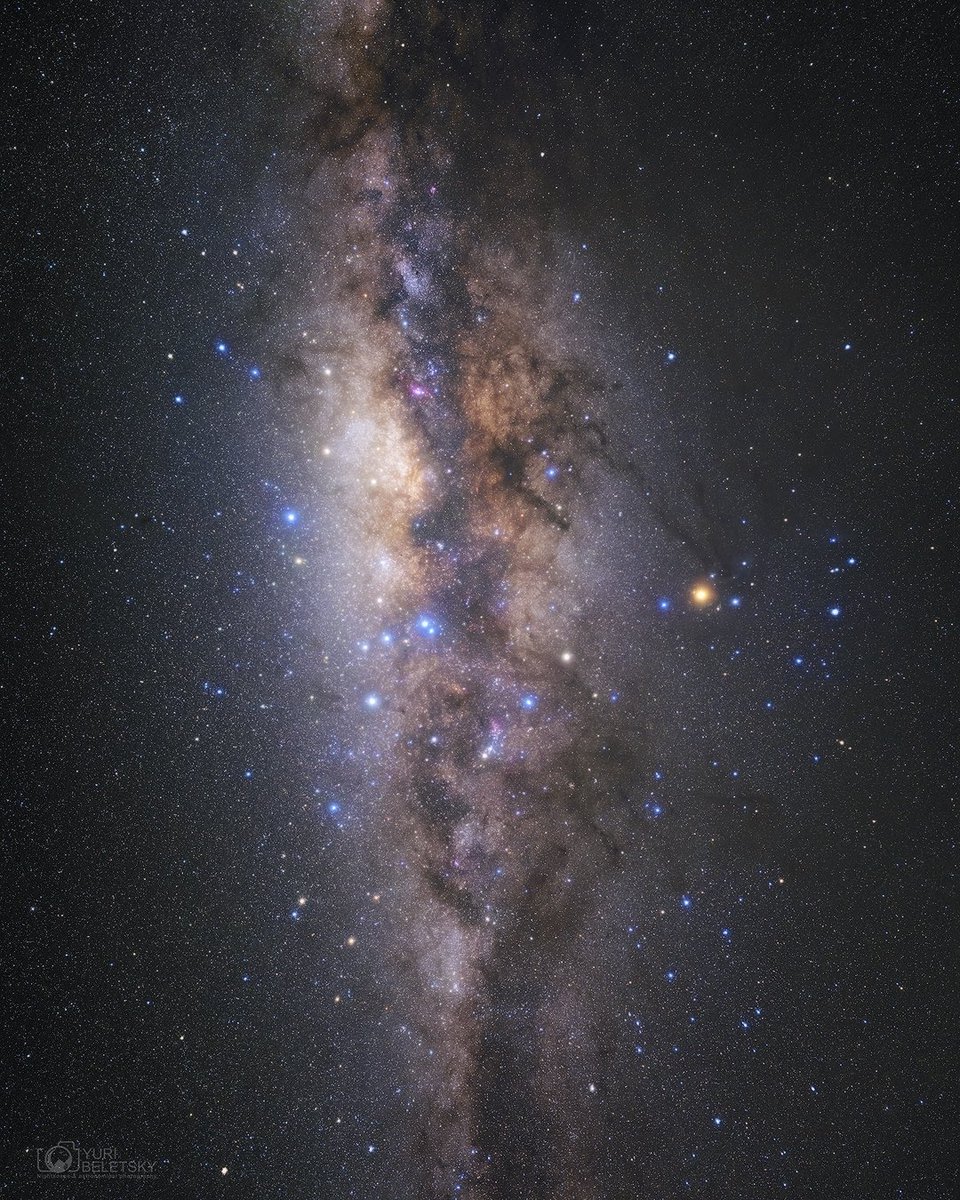
I captured this image of the Milky Way's galactic core using my Samsung S25 Ultra smartphone in Chile's Atacama Desert 😃 That's right, it's smartphone astrophotography we are talking about here ! If you ask me why to use a smartphone? Well, challenge is everything and I am curious indeed & We are definitely living in the new era ! ✨
Yuri Beletsky tweet media
English
24
89
604
14.4K
Yuri Beletsky
Yuri Beletsky@YBeletsky·
@VicKDurandPM I was taking images in RAW format. It’s a different thing from that Moon situation from years ago.
English
0
0
0
45
mark stewart
mark stewart@StewarrMark·
@YBeletsky These looks super sharp for 30 seconds did you put the phone on a star tracker?
English
1
0
1
79
Space Enthusiast
Space Enthusiast@spce_enthusiast·
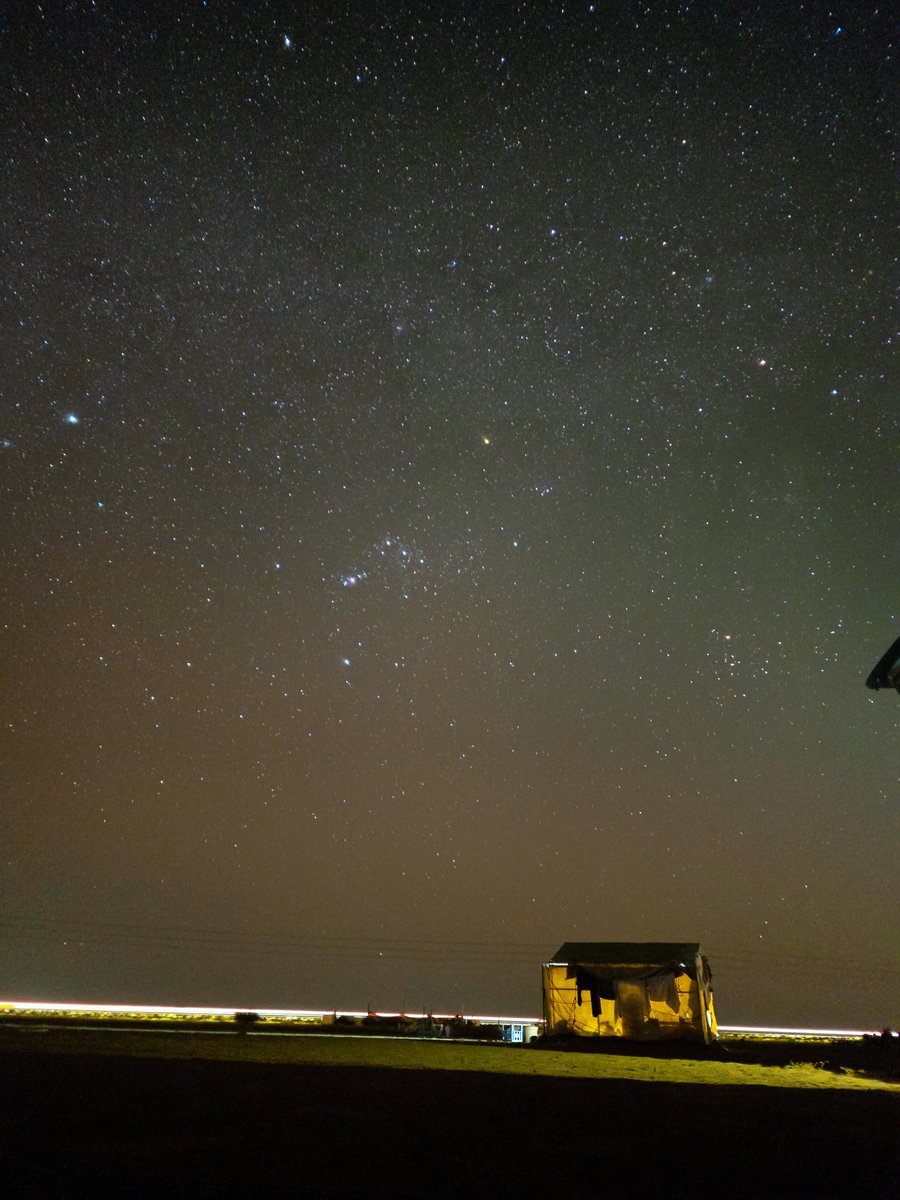
@YBeletsky Did you stack any images or did you just use the default astrophotography mode? Because if it's the latter, that's extremely impressive! Best I could do with astrophotography mode (on an S22) is this image, under rural skies (ofc nowhere near the sky quality of Atacama)
Space Enthusiast tweet media
English
2
0
7
296
Yuri Beletsky
Yuri Beletsky@YBeletsky·
@AwareSolar I took a sequence of 30 sec exposures in RAW format using Pro mode 👍
English
0
0
1
159
Bakry | بكري 🛰
Bakry | بكري 🛰@BakryBaso·
@YBeletsky Great shot, Yuri! especially impressive considering it was taken with a phone! Here is an image I took under a bortle ~3.5 sky with S22 Ultra 😁
Bakry | بكري 🛰 tweet media
Makkah Al Mukarrama, Kingdom of Saudi Arabia 🇸🇦 English
2
1
13
646
Kevin
Kevin@tatramtn·
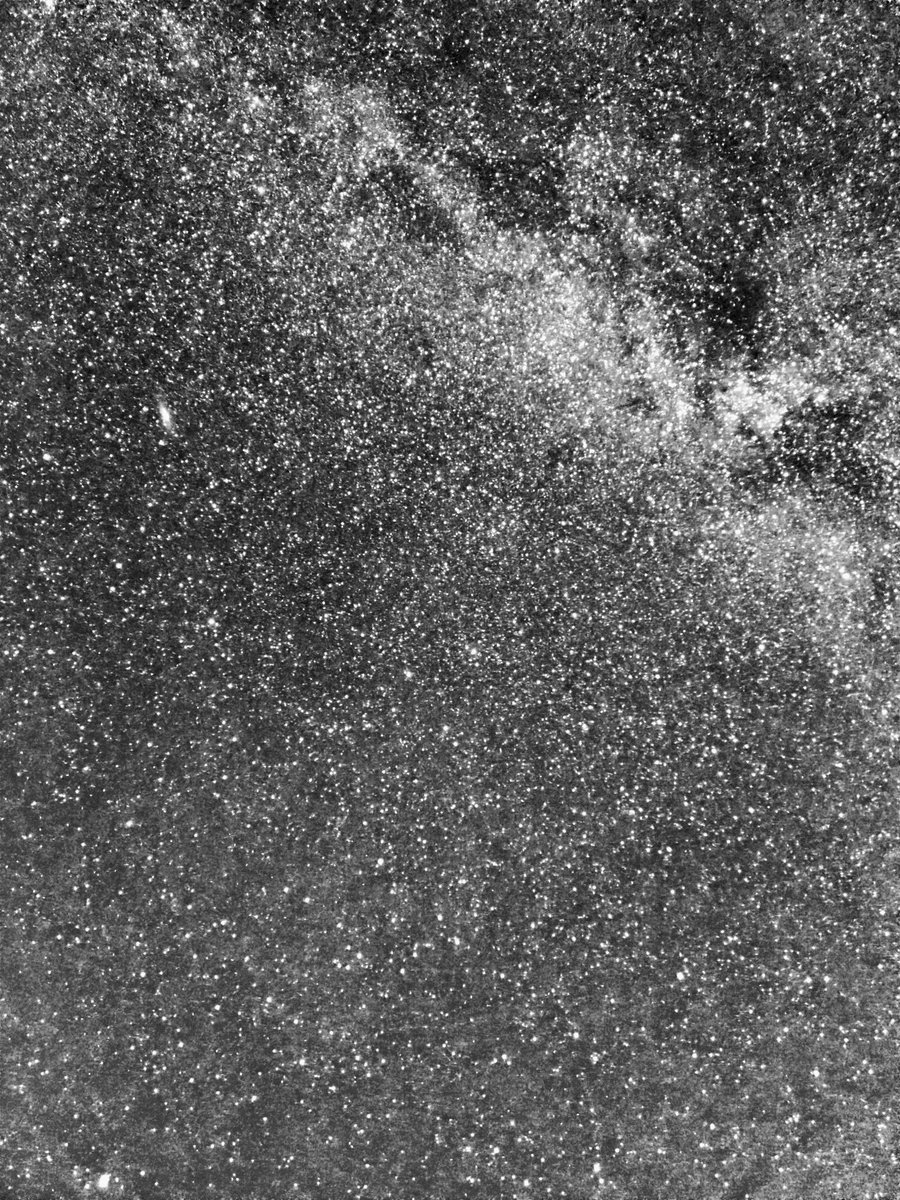
@YBeletsky I got these with an S24 Ultra in a relatively dark sky, maybe Bortle 3 or so. Pleiades rising over the trees. Two shots of the Milky Way, one with a tiny Andromeda Galaxy visible.
Kevin tweet mediaKevin tweet mediaKevin tweet media
English
2
1
13
322
Yuri Beletsky
Yuri Beletsky@YBeletsky·
@Tameemi Thanks a lot 🙏😃 Yes, it’s Bortle 1 sky. But modern smartphones are also quite capable of capturing images in low light conditions.
English
1
0
1
264
تميم التميمي
تميم التميمي@Tameemi·
@YBeletsky Absolutely stunning capture, Yuri! The level of detail here shows what’s possible only under extremely dark skies, probably close to Bortle 0! Incredible to see smartphone astrophotography reaching this level. Truly inspiring work! 📱
English
1
0
2
276