Sabitlenmiş Tweet
Catholicism & Creation
416 posts
Catholicism & Creation
@YECatholic
Ignorant, naive, fundamentalist, fideist literalist from the bible-thumping backwoods or something. I prefer Telegram: https://t.co/2zbHnJg36L
Katılım Eylül 2025
43 Takip Edilen251 Takipçiler

Your reminder that just because a learned man said it doesn't mean we don't have to think about it and continually measure ourselves in the light of Christ.
Hence Molina:
"Whether it is lawful to burn slaves with drops [of hot liquid] or with wax, as some masters are accustomed to do, I would not dare to condemn, provided it is done moderately and without danger to life or notable injury to the slave, and when the offense is worthy of so great a punishment, or when the slave is so hardened and incorrigible that necessity points to such a punishment for him, so that, being corrected, he may keep himself within his duty. Nevertheless, masters should always be advised to use milder punishments instead.”
English

@StephenKokx @AmericanReform_ @IntegritasMag For context on the quote about "whether a Jew can really be human", the full passage they quoted from Blessed Peter the Venerable is certainly provocative, but he is not *literally* claiming that Jews are not humans. Rather, it is a rhetorical comparison, albeit a harsh one.


English

The debut of @AmericanReform_ at @IntegritasMag, where he clarifies the real controversy taking place at Benedictine. Importantly, he provides the latest details to the story. integritymagazine.org/2026/05/15/chu…
English

@EsquireCatholic Thanks, Esquire! There's a tendency among traditionalists to assume that major preconciliar prelates were all orthodox, but that's far from the truth. The roots of the revolution run deep.
English

I loved this article. This is an excellent little piece that perfectly showcases the type of entertaining quality you can expect from Integrity on topics relevant to revolution being waged against the Catholic Church through Modernist heretics.
Integrity Magazine@IntegritasMag
Archbishop John Farley of New York was promoting Modernism at St. Joseph's Seminary in Yonkers until St. Pius X came along. @YECatholic 1l.ink/5CV4BCG

English

Archbishop John Farley of New York was promoting Modernism at St. Joseph's Seminary in Yonkers until St. Pius X came along. @YECatholic 1l.ink/5CV4BCG
English

@TD_Barrett Bellarmine required a real destruction for an authentic sacrifice, but that was not the only requirement he gave. This is not "preposterous" - it is deeply rooted in the Bible and St. Thomas.
muse.jhu.edu/pub/16/article…
English

If you go back and read it again, he criticizes and points out the error in Bellarmine's understanding.
I offered the book as one example of a representative theologian, not as a collection of all theologians who have commented on this.
Bellarmine thought the sacrifice was made authentic the fact the bread and wine were destroyed. This is of course preposterous: the value of the sacrifice of the Mass is in no way connected with the destruction of the bread and wine. The sacrifice is authentic because it is Christ Himself being offered to the Father. And the Church has since clarified this on multiple occasions.
English

One of the primary criticisms of the Novus Ordo is the claim it minimizes the sacrifice of the Mass.
I want to briefly point out a couple reasons why this criticism is not fair, but more importantly, why it misses the fact that the old mass was already deficient with regards its expression of the sacrifice and can be easily/greatly improved in this regard.
One of the few substantial changes to the ordinary text of the liturgy was the replacement of the offertory.
The old offertory, the critics claim, was important for the sacrifice - or at least, removing it indicated an intention to minimize the sacrifice.
Intentions aside, when we look at the old offertory, while we see a sacrificial note, we do not see the sacrifice presented in an ideal way. The old offertory, before the consecration has happened and while nothing is actually on the altar except mere bread and wine to offer God, speaks of offering to God, not the body and blood of Christ, but “this spotless host” and “the chalice of salvation.” While the reference for liturgical geeks and theology nerds is implicitly obvious, Christ is the spotless host, the chalice of salvation contains Christ’s blood, etc, nevertheless there is an obvious deficiency in speaking this way, using language that could be easily understood as referring to the bread and to the wine, especially since at this point only bread and wine is available.
The new offertory instead gives thanks to God for the bread and the wine, clearly referencing the actual bread and wine which is at this point the only thing on the altar, and after thanking God for them, declares that they “will become for us the bread of life/spiritual drink.” While the old offertory wants to look ahead to the sacrifice to come, the new offertory is more synced up with the actual time in the liturgy where it occurs, giving thanks and talking about what is about to happen in transubstantation. The new offertory is not without mention of the sacrifice however, since it ends with the prayer “may our sacrifice in your sight this day be pleasing to you, Lord God.”
At this point one may still want to emphasize that the old offertory was more sacrificial, and that the anticipatory reference to the coming sacrifice is completely valid and meaningful, that referring to the subject being offered in sacrifice as the "host" and the "chalice" occurs also in the Novus Ordo, and that even apart from all this, all things equal, the traditional prayer should be given pride of place over innovations.
I would only say that while this argument has a pull to it, and I personally would not oppose going back to the old offertory, nevertheless the new offertory is not absent the sacrifice, and the old offertory’s approach to the sacrifice was already deficient and could be greatly improved. But for a suggestion as to how exactly it could be improved, first we must go through the prayer where the sacrifice is offered.
The actual sacrificial prayer of the liturgy, where the Church’s actual offering of the sacrifice of the Mass occurs, is immediately after the consecration. Today this is often referred to as the Anamnesis, but it has also been called the Unde et memores. In the old mass the wording went like this:
“Wherefore, O Lord, we, Thy servants, as also Thy holy people, calling to mind the blessed passion of the same Christ, Thy Son, our Lord, His resurrection from the grave, and His glorious ascension into heaven, offer up to Thy most excellent majesty of Thine own gifts bestowed upon us, a victim which is pure, a victim which is stainless, the holy bread of life everlasting, and the chalice of eternal salvation.”
Before I get to offering a suggestion for how this could be improved (the same way the offertory can be), we first need to look at the four different options for this prayer in the Novus Ordo:
EP 1
Therefore, O Lord, as we celebrate the memorial of the blessed Passion, the Resurrection from the dead, and the glorious Ascension into heaven of Christ, your Son, our Lord, we, your servants and your holy people, offer to your glorious majesty, from the gifts that you have given us, this pure victim, this holy victim, this spotless victim, the holy Bread of eternal life and the Chalice of everlasting salvation.
EP 2
Therefore, as we celebrate the memorial of his Death and Resurrection, we offer you, Lord, the Bread of life and the Chalice of salvation, giving thanks that you have held us worthy to be in your presence and minister to you.
EP 3
Therefore, O Lord, we celebrate the memorial of the saving Passion of your Son, his wondrous Resurrection and Ascension into heaven, and as we look forward to his second coming, we offer you in thanksgiving this holy and living sacrifice.
EP 4
Therefore, O Lord, as we now celebrate the memorial of our redemption, we remember Christ’s death and his descent to the realm of the dead; we proclaim his Resurrection and his Ascension to your right hand; and as we await his coming in glory, we offer you his Body and Blood, the sacrifice acceptable to you which brings salvation to the whole world.
As you can see, if the priest offering the Novus Ordo uses EP1, the prayer in which the sacrifice of the Mass is offered, is identical with the prayer from the old mass. EP2 is a condensed form of the same substance, and EP3 is a bit more downplayed but retains the substance, but EP4 is what we want to focus on here.
I said I was going to offer a suggestion for how the offertory and the Eucharistic prayer could both be improved from the old mass. Here in EP4 we get a glimpse of the most important change: instead of referring to the sacrifice in terms of "bread" and "chalice", or "host", or even "victim", EP4 says explicitly: “we offer you His body and blood.”
In the centuries after the council of Trent there was debate among Catholic theologians, for Trent had defined that the Mass is a true propitiatory sacrifice, but it did not explain how it was a sacrifice. Everyone was agreed that it has a connection with, and in some way is even identical with, the sacrifice of Christ on the Cross. But what in the mass actually made it a sacrifice, and in what way was the Church actually offering that sacrifice? Plenty of theories, some more strange than others, were floated. Even doctors of the Church like Bellarmine were confused and in error on this subject. To this day, most Catholics do not understand the Mass, except that it is a sacrifice, and in some way is the sacrifice of Christ on the Cross.
What the liturgy needs, and what the Church needs, is for our prayer to make this explicit. How is the Mass a sacrifice? There are different ways to look at that question. But when it comes to the Mass as a sacrifice “offered by the Church to God”, the answer is this: the Church has Christ sacramentally present on the altar, and the Church looks up to Heaven, and offers this very Christ to the Father. This may seem simple, or it may seem still vague, but in the providence of God we have already been given a prayer which both offers the sacrifice and explains the nature of the sacrificial offering in the most clear and explicit terms:
“Eternal Father, we offer you the body and blood, soul and divinity, of your dearly beloved Son, our Lord Jesus Christ, in atonement for our sins, and for those of the whole world. For the sake of His sorrowful passion, have mercy on us and on the whole world.”
This divine mercy prayer represents an infinite improvement on both the prayers available in the Novus Ordo and on the prayer from the old mass.
It makes explicit the nature of the sacrifice in the very offering of the sacrifice, and it invites the congregation into the sacrificial offering with the priest, in a way that by the very words themselves, makes it a fully conscious, fully intentional, fully-understood-by-those-doing-the-offering, example of active participation in the sacrifice of the Mass.
How could this same prayer be used to improve the offertory? By simply changing the language so that it is anticipatory. Something like:
“Eternal Father, as we prepare for this bread and wine to become the body and blood of your Son, we plead with you for mercy; Graciously accept our offering of Him to you, as our sacrifice, in atonement for our sins, and for those of all the living and all the dead. For the sake of His sorrowful passion, have mercy on us.”
Of course, these suggestions for ways to improve the sacrificial prayers in the old and new liturgies, and the claim that those prayers - in both the old and the new - are deficient and can be improved - should not be taken as a prejudice, or as an accusation or derogation of either liturgy.
One of the minor points I tried to briefly make here is that the Novus Ordo retains the same essential sacrificial substance of the old liturgy. Both forms are fully Catholic and beautiful.
The other point, the primary point, I am trying to make in this short essay (is it even an essay?), is that
(1) the divine mercy prayer is the best expression of the sacrifice of the mass that God has in His providence and grace given us,
(2) the liturgy could be improved by replacing the sacrificial prayers with the divine mercy and with variations of it,
(3) for my readers to embrace the divine mercy as a prayer for their own private devotion when they are attending mass, to pray in quiet as they kneel during the mass, during the consecration, and during the offering of the priest immediately after, as their own way of actively participating in the same.
English

@Arrrrrrrach @writriverdale The full story is way too long and discursive for a standalone film.
English

Journet states that Bellarmine's explanation "preserved the true and proper sense of the notion of sacrifice in general and the notion of Christ's sacrifice in particular", but contends that it could have been explained in a better way. After enumerating the other types of Post-Tridentine solutions, he finishes by noting that none of the types have been condemned, and though they all come with certain difficulties, only the Magisterium could adjudicate between them authoritatively.
This is far cry from your claim that Bellarmine was "confused and in error" as if it was an established fact. The fact that theologians proposed various ways of explaining the Tridentine formula in no way supports your contention that "even doctors of the Church did not understand the sacrifice of the Mass."
And Journet is not "every Catholic theologian since before the Council."
English

Well then you'll be going with an explanation that every Catholic theologian, since before the Council, has already rejected. See for example this work by Cardinal Charles Journet from before the Council. Towards the end you will find him showing the wide range of explanations among post-Tridentine theologians, including his criticism of Bellarmine's error.
lib.undercaffeinated.xyz/get/PDF/10134/…
English

@TD_Barrett Sorry buddy, I'm gonna go with St. Robert Bellarmine's explanation of the sacrifice over yours or Daly's or whoever's.
English

You might think it absurd, but I point out the obvious in my post above, and the fact even doctors of the Church did not understand the sacrifice of the Mass, even after Trent had defined it, is a matter of historical fact not subject to the whims of what you think is absurd.
One example that may help you:
the New Testament in many places, and the earliest Christians for a long time, expressed Christology in ways that could easily lead people to error, were not sufficiently explicit and articulated, etc. For example, even our Lord said, "my Father is greater than I," "The Son knows not the day/hour," "why do you call me good? Only God is good." Etc. These are obviously easily misleading towards forms of Arianism etc. The earliest Christians did not come to an explicit and clear formulation, which could not be easily misunderstood, for centuries.
English

True, his alleged vote for Sacrosanctum Consilium is certainly a mark against him, although at the time nobody knew what the resulting change to the offertory was going to look like. In any case it's not like Lefebvre's actions are a benchmark for imitation that any traditionalist has to follow to be intellectually consistent. He flip flopped on several things.
Ultimately, it's absurd to suggest that the very offertory of the Catholic Mass for almost 400 years was a deficient expression that could lead one into error, or that the nature of the propitiatory sacrifice was not sufficiently defined, as you claimed.
English

I repeatedly affirmed the text of the old liturgy, affirmed that it contains the substance of the sacrifice of the Mass, affirmed that it was Catholic and beautiful, etc.
The notion Lefebvre didn't think there should be a change to the text is not supported by the passage you copy/pasted. He voted for the reform, which explicitly included changing the text.
English

Got it, so an "obvious deficiency" in the offertory which fails to properly communicate the very nature of the sacrifice, and therefore needed a "substantial" change, is not the same as an "error" 🙄
Also, Lefebvre early on did support some changes to the rubrics regarding the vernacular and the actions of the priest at the beginning of Mass, but not a change in the actual text of the Mass.

English

This is a weird thing to comment. Even Lefebvre knew and wrote that the old mass had certain imperfections that needed to be reformed. That doesn't mean it contains "errors", nor did I imply anything remotely like error was contained in either form of the liturgy.
But now that I look at your profile, and see your self-description, maybe this is a troll account doing troll things, and mocking certain types of fundamentalist traditonalists by imitating them in a sarcastic way.
English

Happy to announce that I will be a contributor on the brand new @IntegritasMag! I will be sharing historical content tracing the roots of liberal exegesis, Concordism, and Biblical Modernism, as well as content focused more directly on Creation.
integritymagazine.org/2026/05/06/the…
English
Catholicism & Creation retweetledi

🚨 WATCH 7pm EST: The Counter-Revolutionary Roman Catholic movement has arrived. ⚔️ youtube.com/watch?v=80S0Rp…

YouTube
English

@AmericanReform_ Looks very valuable, hopefully we get an English translation soon.
English

If Holy Mother Church, gathered universally as a Council, even without the intent to define a new dogma, cannot be trusted at least to competently express the Catholic Faith, who can? If Vatican II failed to properly teach the Faith, then the Church Herself failed... unless, of course, you are willing to accept that Vatican II does not come from the Catholic Church.
English

@PhilCatholic An interesting endeavor, but ultimately futile, as St. Thomas' concept of causality does not fit with the transmutation of the species. Fr. Woods explains well in Chapter 12 of this book:
drive.google.com/file/d/1AnGFcK…
English

From the very first issues of the Revue Thomiste, faithful Thomists were working to provide a metaphysical scaffolding for discussing evolution. These are the final two articles, after six other important texts:
athomist.com/articles/ambro…
English

@AuditeInsulae Mark, do you agree with Sheen's contention on Firing Line that the excommunications of the Modernists by St. Pius X were a result of "rigidity" and the Church being "closed in on itself"?
English

Honestly??? Fulton Sheen spent his life preaching Christ crucified, defending the Eucharist, exposing Communism, promoting Marian devotion, calling people to repentance and converting souls to Catholicism.
He spoke constantly about sin, judgement, sacrifice, holiness, and the supernatural life.
If that now counts as “radical and progressive”, then some people have lost all historical and theological proportion. The real problem here is that for certain online factions, anyone who accepted Vatican II, remained obedient to Rome, or refused schismatic rhetoric gets retrospectively rewritten as an enemy.
That is not any kind of serious history, it's just a kind of sectarian myth-making.
You do not have to agree with every prudential judgement Sheen made to recognise that he was one of the great Catholic evangelists of the modern age.
American Reform@AmericanReform_
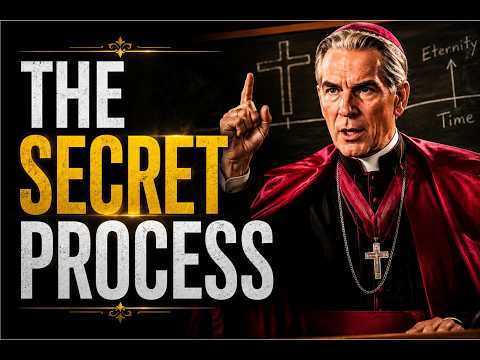
@AuditeInsulae Sheen was one of the most radical and progressive prelates after the council. He is not someone who should be remembered positively.
English

@AmericanReform_ @AuditeInsulae He was a radical and progressive prelate before the Council, too.
English

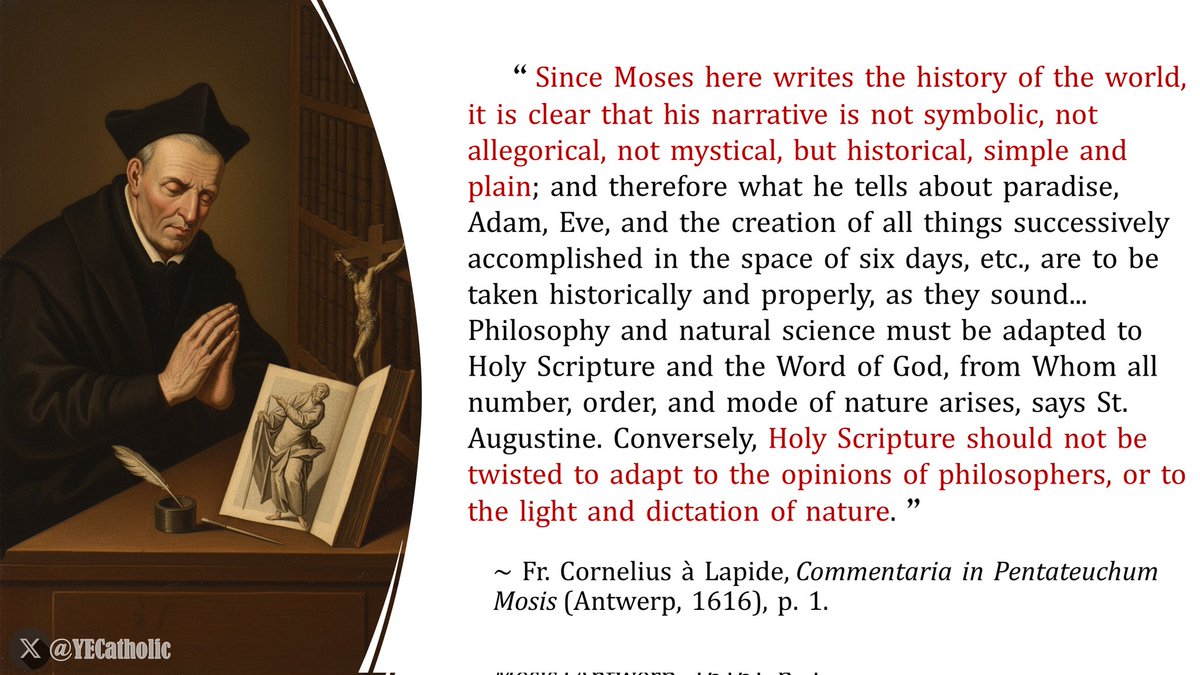
@AuditeInsulae Sheen was one of the most radical and progressive prelates after the council.
He is not someone who should be remembered positively.
English

Have you watched our fabulous interview with Msgr Jason Grey? He is the Executive Director of the Fulton J. Sheen Foundation. A canon lawyer who led the investigation of Sheen’s approved miracle for beatification in 2011, he worked for the Vatican's Dicastery for the Causes of Saints in Rome from 2012 to 2015. He tells us the inside story of the incredible miracle that cleared the way for Sheen's beatification. Don't miss it! youtu.be/dNnGgYwHKf0

YouTube
English