Esfandyar Batmanghelidj

34.9K posts

Esfandyar Batmanghelidj banner
Esfandyar Batmanghelidj

Esfandyar Batmanghelidj

@yarbatman

Investing in economies in West and Central Asia. Studying how sanctions are reshaping Iran and the world. CEO of @boursebazaar. Teaching at @SAISHopkins.

Katılım Ağustos 2014
1.9K Takip Edilen41.9K Takipçiler
Sabitlenmiş Tweet
Esfandyar Batmanghelidj
Esfandyar Batmanghelidj@yarbatman·
I share my opinions and analysis here in the hopes that they can be useful, in some small way, for people forming their own opinions or seeking to understand the situation in Iran. When I started this account years ago, most people who followed me either knew me or my work. They didn’t have to wonder about my motivations. But that’s not the case for many people seeing my tweets today. Understandably, without any context, people might wonder about my “priors” and whether my opinions and analysis are presented in good faith. They might make assumptions about my politics or place me in a certain camp, especially in view of the polarized debate on Iran. I’ll admit I don’t fully understand the motivations of a lot of people posting here. We are debating and discussing through tweets what would have in an earlier time been examined through essays and books, where the author could situate their argument more fully. This is also why I have begun to post longer tweets—hot takes don’t help in moments like this. If you have any questions about my motivations, feel free to ask (you can reply to this tweet, for example). Explaining why we hold certain positions is a really important part of having a healthy political discourse and I believe this process of explication should be a bigger part of our engagement with the question of what Iran’s future should look like. Authenticity matters.
English
54
6
155
109.6K
Esfandyar Batmanghelidj
Gas prices in the U.S. are 45% higher than they were in January and this is without Iran going scorched earth in its targeting of upstream infrastructure in the Gulf. Trump can't meaningfully strengthen his negotiating position, but he can easily end up in a much deeper crisis.
Esfandyar Batmanghelidj tweet media
English
1
24
46
2.6K
Esfandyar Batmanghelidj
NEW EPISODE: The German economy has faced four major crises in just six years: the COVID-19 pandemic, the Ukraine war, Trump's tariff obsession, and the closure of the Strait of Hormuz. How is Germany trying to navigate the geoeconomic 'zeitenwende?' Josefine Petrick speaks with @SWPBerlin's Sascha Lohmann about the vulnerabilities of Germany's once vaunted model of export-led growth. Listen here: thesanctionsage.com/p/germanys-vul…
Esfandyar Batmanghelidj tweet media
English
0
1
4
771
Esfandyar Batmanghelidj retweetledi
Seyed Abbas Araghchi
Seyed Abbas Araghchi@araghchi·
Events in Hormuz make clear that there's no military solution to a political crisis. As talks are making progress with Pakistan's gracious effort, the U.S. should be wary of being dragged back into quagmire by ill-wishers. So should the UAE. Project Freedom is Project Deadlock.
English
2K
8K
38.1K
1.3M
Esfandyar Batmanghelidj retweetledi
Adil Haque
Adil Haque@AdHaque110·
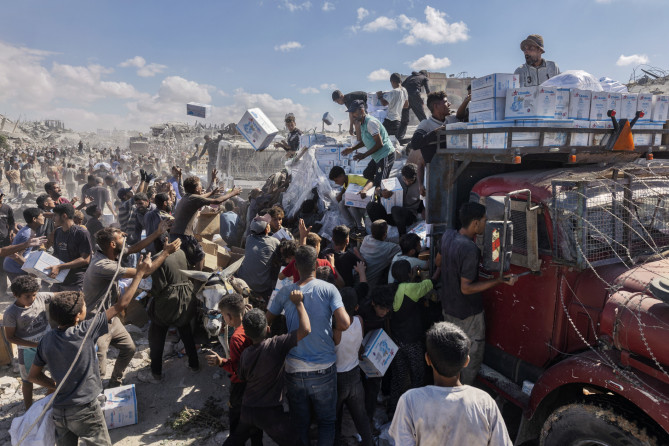
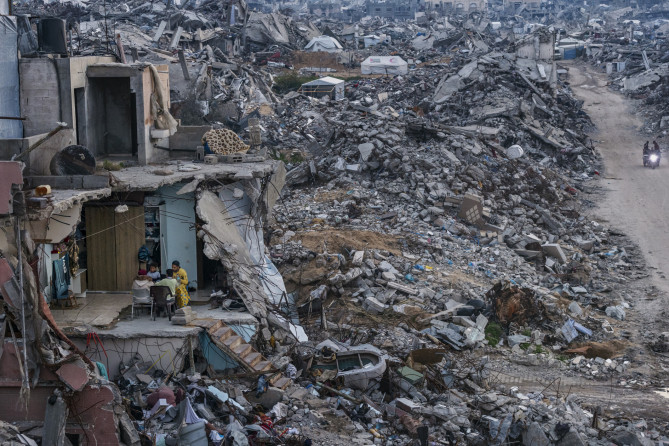
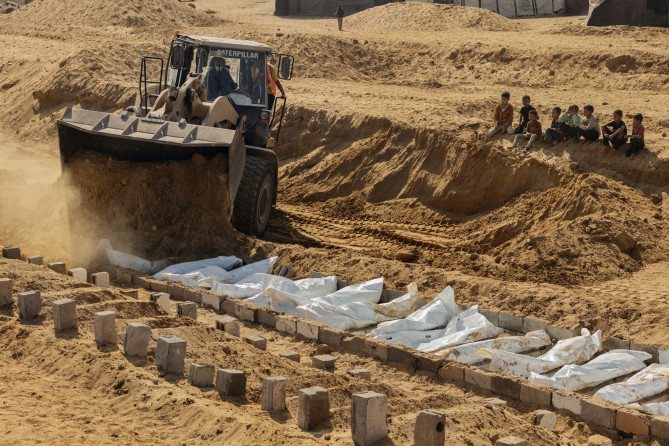
Saher Alghorra (NYT) has won the Pulitzer Prize for Breaking News Photography for "his haunting, sensitive series showing the devastation and starvation in Gaza"
Adil Haque tweet mediaAdil Haque tweet mediaAdil Haque tweet mediaAdil Haque tweet media
English
40
2.2K
5.3K
256K
Esfandyar Batmanghelidj retweetledi
Albert Pinto
Albert Pinto@70sBachchan·
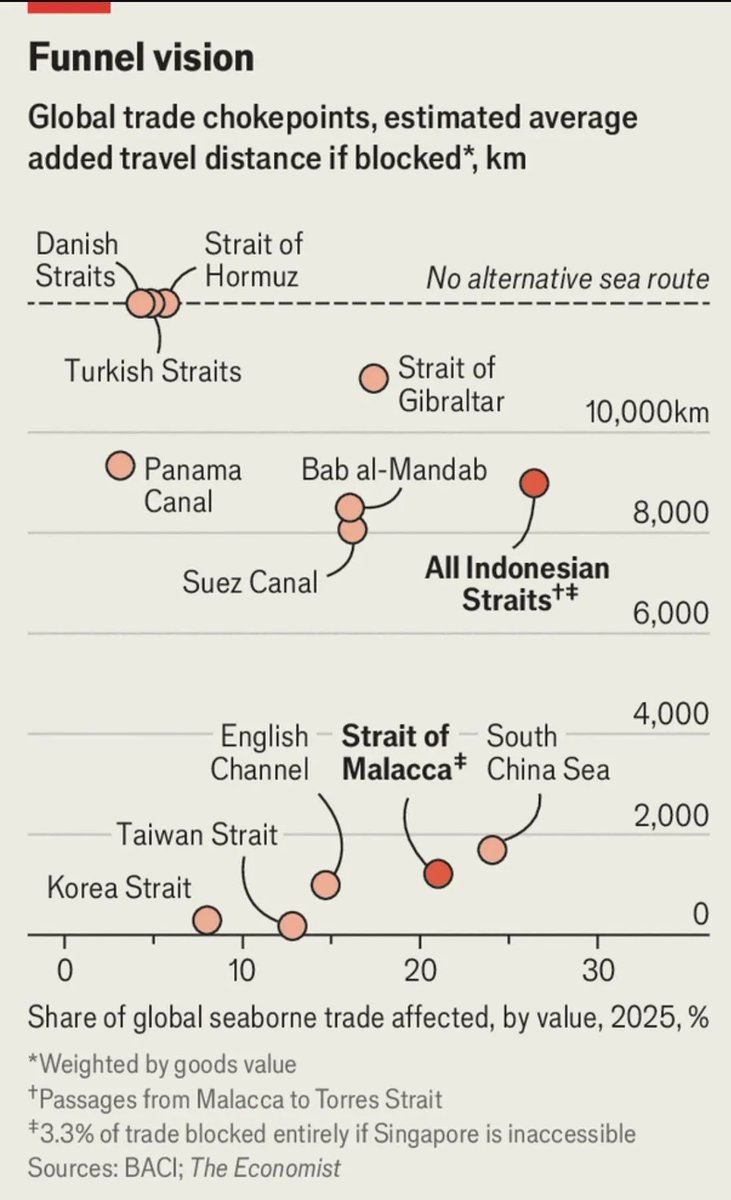
Shocked by people who say strait of Malacca is a bigger chokepoint than Hormuz. You do realise that there are alternatives around Malacca that take longer, but there is no alternative for Hormuz because it is one-way traffic to get outside the Persian gulf nice metric here:
Albert Pinto tweet media
English
2
23
90
6K
Esfandyar Batmanghelidj retweetledi
Nicholas Kristof
Nicholas Kristof@NickKristof·
Israel's mass slaughter in Gaza, enabled by the US, was a moral outrage. And now, as the @nytimes reports, Israel is applying the Gaza model in Lebanon -- and once again we Americans are enabling this moral catastrophe. nytimes.com/interactive/20…
English
541
2.4K
4.2K
204K
Esfandyar Batmanghelidj retweetledi
Rory Johnston
Rory Johnston@Rory_Johnston·
Of course, there is no additional oil, beyond the SPR release—just the rest of the world still willing to pay more than Americans for American barrels, at least for now. So long as that’s true, more steep stock draws cometh.
Rory Johnston tweet media
English
16
40
380
31.7K
Esfandyar Batmanghelidj retweetledi
Mohammad Ali Shabani
Mohammad Ali Shabani@mashabani·
Former chief FX strategist at Goldman Sachs appears to have no idea about Iran's multi-tier exchange rate regime and what the open market exchange rate reflects. Making up only estimated 5% of FX market, latter is mainly a gauge for consumer sentiment. It's also a means for interest groups to put pressure on the central bank and the government, all while many of the same groups benefit from arbitrage opportunities. As for the notion of capital flight resulting from the blockade, that suggests unawareness of how sanctions have bottled up money inside Iran. Even few regional outlets, including UAE, are no longer safe. Crypto being targeted too. Main impact is thus likely the movement of money into FX, gold, property, cars, capital goods etc. Lastly, the idea that the Islamic Republic sees the rial's value as a status symbol is from the early 2000s. US secondary sanctions under Obama completely changed dynamics on that, with successive Iranian administrations not only devaluing the national currency to promote exports but also to fill budget deficits.
Robin Brooks@robin_j_brooks

An underappreciated channel of how the US blockade works is to cause panic and capital flight in Iran. That's why the Rial is falling sharply. A country like Iran sees its currency as a status symbol, so they'll have resisted this until it got impossible. robinjbrooks.substack.com/p/what-a-succe…

English
6
38
175
24.5K
Esfandyar Batmanghelidj retweetledi
Gregory Brew
Gregory Brew@gbrew24·
This gets it wrong. Iran has multiple exchange rates, and forex flows largely take place at different rates than the floating market rate. In fact, Iran's central bank has generally favored lower rates as they encourage exports (which the govt has generally prioritized over imports). Finally, capital flight is actually quite difficult due to sanctions, since it's very hard for Iranians to get money out of the country. The blockade is likely to replicate the effect of sanctions, though on a compressed timeline: Iranian consumers come under greater pressure, more economic power is concentrated in the hands of a fortunate elite (often connected to the guards), the Iranian people are further impoverished while the regime digs in its heels.
Robin Brooks@robin_j_brooks

An underappreciated channel of how the US blockade works is to cause panic and capital flight in Iran. That's why the Rial is falling sharply. A country like Iran sees its currency as a status symbol, so they'll have resisted this until it got impossible. robinjbrooks.substack.com/p/what-a-succe…

English
5
30
110
26.3K
Esfandyar Batmanghelidj
Robin, you are looking at the wrong exchange rate—Iran’s economy doesn’t run on the free market rate—and you also have the politics of Iran’s currency markets backwards. Iranian policymakers have consistently favoured exporters over importers have repeatedly allowed sharp devaluations of the central exchange rate to encourage hard currency revenues to flow back into the country. This happened most recently in December. Ironically, capital flight in Iran is suppressed by sanctions—the government doesn’t impose significant controls for this reason. The free market exchange rate is mainly a signal of dismal economic sentiments among ordinary Iranians. The economy has adjusted in ways that allow the government and firms to push the costs of sanctions and trade disruptions onto ordinary people. The free market exchange rate has been sliding for 8 whole years and yet the coercion hasn’t worked. You should be asking why that is the case before claiming that the blockade is some masterstroke policy.
Robin Brooks@robin_j_brooks

An underappreciated channel of how the US blockade works is to cause panic and capital flight in Iran. That's why the Rial is falling sharply. A country like Iran sees its currency as a status symbol, so they'll have resisted this until it got impossible. robinjbrooks.substack.com/p/what-a-succe…

English
13
48
251
28.8K
Esfandyar Batmanghelidj retweetledi
Nathalie Tocci
Nathalie Tocci@NathalieTocci·
Trump’s latest moves on trade and troops in Europe reconfirm two simple facts: no deal with Trump is worth the paper it’s written on & no degree of bending the knee to him makes an iota of a difference (other than shredding European dignity)
English
49
422
1.4K
49.7K
Esfandyar Batmanghelidj retweetledi
Javier Blas
Javier Blas@JavierBlas·
China ordered its national companies to ignore US sanctions on domestic oil refiners that Washington said were buying Iranian oil. In a rare order issued on Saturday, it said Chinese entities shall "not recognize, implement, or comply with the sanctions" in order to "safeguard national sovereignty, security, and development interests." mofcom.gov.cn/xwfb/xwfyrth/a…
English
71
579
2.4K
215.5K
Esfandyar Batmanghelidj retweetledi
Gregory Brew
Gregory Brew@gbrew24·
The Carter Doctrine is gone, Hormuz is shut, OPEC is falling apart. The global oil economy is entering a new period of instability. And it's because of US action (or inaction). The consequences will be profound. My latest for @nytopinion nytimes.com/2026/05/02/opi…
English
14
194
469
129.6K
Esfandyar Batmanghelidj retweetledi
Brad Setser
Brad Setser@Brad_Setser·
The US Treasury is too poor (and has too few reserves) to bailout -- or even provide a swap to -- the very rich Gulf family oil and investment businesses ... With @StephenPaduano ft.com/content/1f93e4…
English
12
66
238
30.7K
Esfandyar Batmanghelidj retweetledi
Farnaz Fassihi
Farnaz Fassihi@farnazfassihi·
As Iranians Face War, There’s Still Solace in a Cafe Cafes and coffee shops give Iranians affordable places to talk about their hopes, fears and the cost of living as well as to seek company in uncertain times. nytimes.com/2026/05/01/wor…
English
0
52
154
49.5K