White Horses

280 posts

White Horses

White Horses

@Yo26348024

Katılım Ekim 2020
48 Takip Edilen22 Takipçiler
Sabitlenmiş Tweet
White Horses
White Horses@Yo26348024·
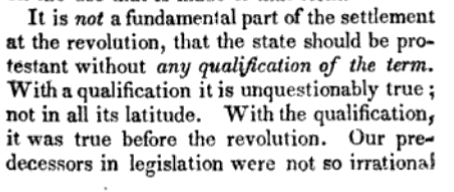
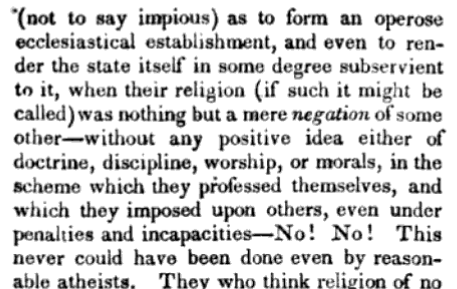
Defensio Regia, pro Carolo I, p. 468 - Claudius Salmasius
White Horses tweet media
Lietuvių
0
0
0
153
White Horses
White Horses@Yo26348024·
@cath_cov @2D0XPS Convocation objected to, but those who Protest against the errors of Rome, then England must be considered the preeminent Protestant Church as a Church who protests where the fulness of truth is found. But then this just comes to how we understand the term and how it has evolved.
English
1
0
0
17
laudablePractice
laudablePractice@cath_cov·
A really good point. Pre-19thC, it describes the normative Protestant Episcopalian self-understanding - Jeremy Taylor, George Bull, George III, Burke, Jane Austen (amongst many others). I think it also describes a still very significant proportion of CofI opinion in the pews.
Joshua Penduck@JoshuaPenduck

On my morning walk I've contemplated that forgotten Anglican tradition: non-Evangelical Protestantism; a tradition not rooted in revivalism, nor making any accommodation to Tractarianism (like the Broad Churchmen). Figures like Phillips Brookes, Hensley Henson, Stephen Sykes.

English
3
1
16
1.8K
White Horses
White Horses@Yo26348024·
@cath_cov @2D0XPS *apologies, Protestant religion was the term they objected to in the King's Declaration.
English
0
0
0
8
White Horses
White Horses@Yo26348024·
@cath_cov @2D0XPS I'm not denying that the Church of England is Protestant; I'm just showing some of the reasoning for why some Anglo-Catholics objected to the term in a sense. The Tractarians did not like term for the same reason as the Lower House didn't like the term "Protestant Church"
English
2
0
1
19
White Horses
White Horses@Yo26348024·
@cath_cov @2D0XPS discuss the term agree that the Church of England is Protestant in so far as it protests the errors of Rome. However, as during this period the term was becoming increasingly used for Dissenting Churches and people who protest against the sacramental system as a whole, they
English
1
0
2
34
White Horses
White Horses@Yo26348024·
@cath_cov @2D0XPS "The lower house requested the omission of the words this and and, lest the Church of England should suffer diminution in being joined with foreign Protestant Churches."
English
1
0
0
12
White Horses
White Horses@Yo26348024·
@cath_cov @2D0XPS Homilies, as well as by its Hierarchy and that the term Protestant Churches was much more equivocal, since Socinians, Anabaptists, and Quakers assumed the title." - Vox Cleri and Lathbury's History of Convocation.
English
1
0
0
12
White Horses
White Horses@Yo26348024·
@2D0XPS @cath_cov Neale and Littledale, though not Tractarians (yet still connected with the movement) have 2 short essays on the theological content of the term Protestant. Additionally, the Lower House of Convocation in 1689 objected to Anglicanism being called part of the "protestant religion".
English
1
0
2
31
White Horses
White Horses@Yo26348024·
@2D0XPS @cath_cov Blanket terms like Tractarian, Anglo-Catholic can oft be difficult. "The Tractarian view of objective presence" - sure, do you mean Pusey and Denison's view, or Keble's, Palmer's and Mozley's. Bp Bull was very influential for the Tractarian understanding of justification.
English
1
0
1
41
White Horses
White Horses@Yo26348024·
@HappyThurifer @hmkherman Herbert Thorndike's Of the Laws of the Church Book 3, Chapter 31 discusses Nicaea II at length in LACT. Also, not LACT, but Field discusses it at length in Of the Church Book 3.
English
1
0
1
12
Fr Christopher Poore
Fr Christopher Poore@HappyThurifer·
@hmkherman Hoping someone driving by sees your tweet and points me in the right direction if there's something in there.
English
1
0
1
20
Fr Christopher Poore
Fr Christopher Poore@HappyThurifer·
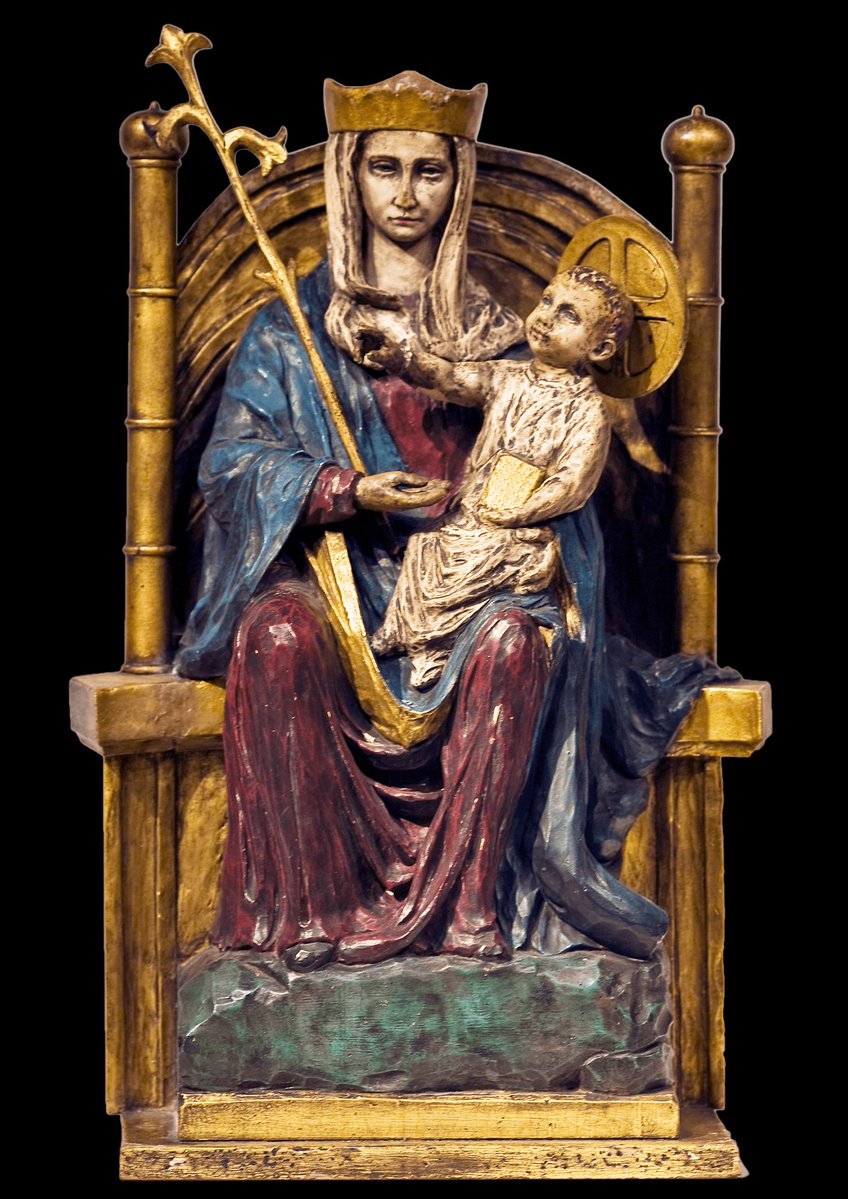
Can anyone point me to ritualist/Anglo-Catholic defenses of sacred images? Specifically on theological grounds? Preferably 19th century? Feel like most of what I've seen is based on liturgical history, the ornaments rubric, etc.
Fr Christopher Poore tweet media
English
5
0
12
1.2K
White Horses
White Horses@Yo26348024·
@HappyThurifer I would second Fr Brandon's recommendation of Moss. However, there are a couple mistakes with the Project Canterbury scan. Additionally, Moss misses lots of other early Anglican witnesses in favour of veneration, most notably Thorndike, Bp Montagu, Archbps Wake & Tenison.
English
0
0
1
18
White Horses
White Horses@Yo26348024·
@RevJaredJones In the words of that eminent Anglican Divine and involved in the authorship of the 1662 BCP, Herbert Thorndike - the Eucharist is the crown of public service as the altar is the greatest place of God's residence upon earth, greater than the pulpit.
English
0
0
0
16
White Horses
White Horses@Yo26348024·
@RevJaredJones The most important part of the Church is the God whom we serve on the altar.
English
1
0
0
48
Jared
Jared@RevJaredJones·
Also, respectfully, no, the most important part of a church is the gathered congregation of faithful men and women. The clergy, font, table, pulpit, building entire, all are there to serve them, not the other way around.
John ♰☭️@hoosier_cs

@MimiSchizo I think(?) behind the pulpit. Just a horrible design really. The altar is THE most important part of a church and the layout should suggest this.

English
5
0
36
3.2K
White Horses
White Horses@Yo26348024·
@kyotoisreformed There are a number of works in there that haven't been translated as well, so hopefully they'd do that as well. People would also finally see his letter and realise the Body of Divinity isn't his...
English
0
0
1
48
kyoto! 🍫⚓️
kyoto! 🍫⚓️@kyotoisreformed·
can someone reprint ussher’s opera next pretty please?
Reformation Heritage Books@RHB_Books

The 21 volumes are divided into six sections: —Doctrine (Volumes 1-8): These are book-length, polemical treatises that reflect Rutherford's learning, lucidity, and theological wisdom, including some freshly translated from the original Latin by Dr. David Noe and Dr. Joseph Tipton (Feel free to chime in with more details @LatinPerDiem!) —The Magistrate (Volumes 9-10): Two volumes of classical, Reformed thought on the civil magistrate, untampered-with and thoroughly resourced. Dr. Van Dixhoorn writes that "Lex, Rex bought Rutherford his most powerful enemies; A Free Disputation earned him his most eloquent foes, including the poet John Milton." —The Church (Volumes 11-14): "How should the Church relate to the state?" "How should the Church govern herself?" Rutherford argues clearly and forcefully against Congregationalism, Episcopalianism, and Erastianism, subjects hotly debated in his day (and ours!), —The Christian Life (Volume 15): Rutherford's treatise on prayer and sermons in Trial and Triumph of Faith represent his most devotional published works. —Sermons (Volumes 16-17): The fullest text of Rutherford’s sermons and notes of his sermons ever published, including sermons and sermon notes never before printed. Complete with editorial guidance and introductions. —Letters (Volumes 18-19): If Rutherford is most revered for his political theology, he is most beloved for his letters. The bedside companion to many Christians over the years, these personal correspondences are filled with the aroma of Christ from cover to cover. —Shorter Works + Index (Volumes 20-21): Many of these works are ecclesiastical in nature; some are polemical, some pastoral. It is here that Rutherford’s catechism will be found, as well as his Latin poetry. Volume 21 includes a series index to supplement the index in each volume.

English
1
0
10
746
Elias
Elias@cavalierelias·
@AngloSouthern Do you know of any old TEC churchmen who have published a commentary on each of the the Thirty-Nine Articles, before women’s ordinations and gay marriage?
English
2
0
0
69
SouthernAnglo
SouthernAnglo@AngloSouthern·
Just because a practice existed in the church before 1054 AD doesn’t mean it should be retained. Anglicans wisely understood this. We can get rid of paedocommunion, waiting till death for baptism, monasticism, prayers for the dead & etc.
English
12
2
56
3.8K