
Sabitlenmiş Tweet
🎤Yogesh🎸
132.5K posts

🎤Yogesh🎸
@YogeshBang
Interests in Technology (IETF contributor for RFC 7230 of HTTP/1.1, Moderator@Lidnug ), Economics, Finance, Books, Cosmology, Zen Meditation
Earth Katılım Ekim 2009
5.4K Takip Edilen1.2K Takipçiler
🎤Yogesh🎸 retweetledi

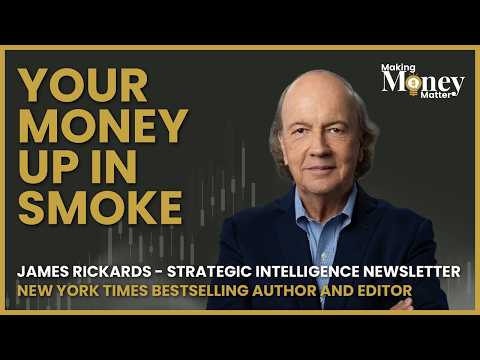
James Rickards on the war in Iran and a fragile money system youtu.be/0pN5SR95EQY?si… @YouTubeより
YouTube
English
🎤Yogesh🎸 retweetledi

🚨Former Pentagon Advisor Jim Rickards on Strait of Hormuz Crisis: 'MASS STARVATION & INDUSTRIAL COLLAPSE Are Next.'
'The Strait of Hormuz has been closed for 56 days. That's 20% of the world's oil and energy, and a high percentage of the world's liquid natural gas.
When the war started on February 28th, there were oil tankers already headed for South Korea, Japan, Australia, New Zealand, Malaysia and India. I call it a floating pipeline. That pipeline has now gone to zero.
Nine weeks in, we're going to start seeing refineries and industrial plants shut down. And this is not like throwing a switch you can turn back on. Even if the Persian Gulf opened tomorrow, which it will not, it could take weeks or months to get refineries going again.
For the Global South, the crisis runs deeper. They're heavily dependent on nitrates from the Persian Gulf for fertiliser. This is the planting season. If you can't fertilise the fields, you can't plant your crops. We're looking at potential mass starvation on top of industrial collapse.'
— Former Pentagon Advisor and Guest Lecturer at Johns Hopkins University, James Rickards, on the latest episode of New Order
Watch the full interview in the quoted post below 👇
New Order with Afshin Rattansi@NewOrder_TV
🚨NEW EPISODE OF NEW ORDER🌐 Ex-Pentagon Advisor James Rickards Warns of IMMINENT Global Economic Crisis, Mass Starvation Will the war on Iran mark the end of dollar hegemony or the end of the petrodollar? What are the devastating consequences if the Strait of Hormuz remains shut? How is the multipolar world shaping as the energy shock worsens? We discuss all this and more with Ex-Pentagon Advisor Jim Rickards.
English
🎤Yogesh🎸 retweetledi
🚨Former Pentagon Advisor Jim Rickards: 'The BRICS Currency Is Called GOLD and Russia🇷🇺 Proved It Works.'
‘The BRICS have a currency. It is called gold. BRICS have the institutions. They replicated the Bretton Woods institutions on their own terms. They have the New Development Bank, which is the equivalent of the World Bank. They have a Contingent Reserve Fund, which is the equivalent of the IMF. They have built up their own payment channels.
If you want the yuan to be the global reserve currency, it has nothing to do with the currency itself. It has everything to do with the bond market. Show me the Chinese bond market. It scarcely exists.
Officially, India’s gold holdings are relatively modest compared to the United States, Russia and China. The big winner in gold is Russia. That is one of the ways they got through the Ukraine War sanctions. At the beginning of the war in Ukraine in 2022, Russia had about $600 billion in reserves. $150 billion of that was in physical gold bullion. That helped Russia weather the storm.
The US, EU and NATO seized about $200 billion of Russian reserve assets held in custody in Brussels. It was completely illegal, but they did it. It hurt Russia to some extent. But ironically, that seizure caused a run to the gold market.'
— Former Pentagon Advisor and Guest Lecturer at Johns Hopkins University, James Rickards, on the latest episode of New Order
Watch the full interview in the quoted post below 👇
New Order with Afshin Rattansi@NewOrder_TV
🚨NEW EPISODE OF NEW ORDER🌐 Ex-Pentagon Advisor James Rickards Warns of IMMINENT Global Economic Crisis, Mass Starvation Will the war on Iran mark the end of dollar hegemony or the end of the petrodollar? What are the devastating consequences if the Strait of Hormuz remains shut? How is the multipolar world shaping as the energy shock worsens? We discuss all this and more with Ex-Pentagon Advisor Jim Rickards.
English
🎤Yogesh🎸 retweetledi
This Will Destroy the Dollar.
Hint: It's not BRICS
dailyreckoning.com/this-will-dest…
English
🎤Yogesh🎸 retweetledi

This is big!
Our team has taken the obvious next (but tough to execute) step in AI-adoption: Transforming a live software system to an agent. Not a wrapper, not an additional chatbot.
Here's how you can do the same. Teams/devs in India working on agents will find this useful.
English
🎤Yogesh🎸 retweetledi

🎤Yogesh🎸 retweetledi

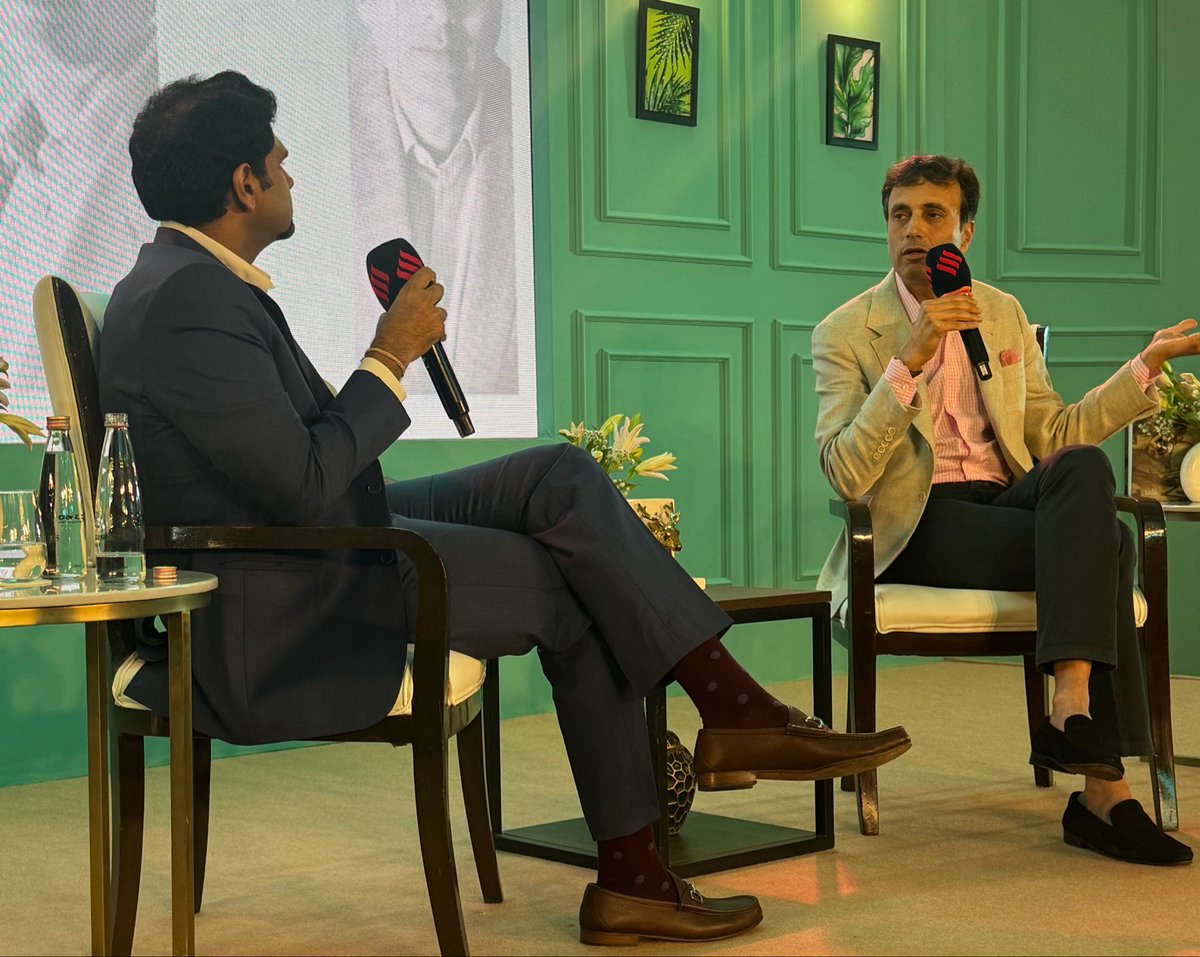
Express Adda- Ruchir Sharma: my quick takeaways
- US leads the AI race, powering its markets and economy
- The world criticizes America, but capital continues to flow there
- TSMC (Taiwan) thriving; Samsung will earn this year more than any US company except Nvidia
- Americans largely insulated from war impact; Asia feels it more
- China has cleverly built strong energy reserves
- The world is burdened with excessive debt and deficits
- India faces headwinds: limited AI scale, war spillovers, possible El Niño impact- yet India’s resilience remains a strength.
Bottom line: India must aggressively attract FDI, build AI capability, and secure energy to stay relevant in the new global order.
English
🎤Yogesh🎸 retweetledi

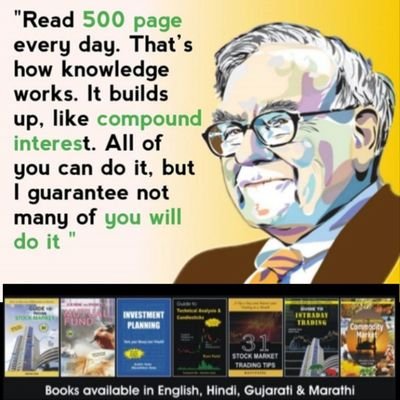
𝐅𝐈𝐍𝐀𝐋𝐋𝐘, 𝐈𝐓’𝐒 𝐁𝐎𝐎𝐊 𝐋𝐀𝐔𝐍𝐂𝐇 𝐃𝐀𝐘!📚
I'm very glad to announce the Launch of my book, "𝐓𝐡𝐞 𝐏𝐬𝐲𝐜𝐡𝐨𝐥𝐨𝐠𝐲 𝐨𝐟 𝐓𝐫𝐚𝐝𝐢𝐧𝐠."
Best Deal Available on Amazon!👇
Link📚- amzn.to/3Ks4bFd
Need blessings from all of you.🙏❤️

English
🎤Yogesh🎸 retweetledi
Serious about trading ❓
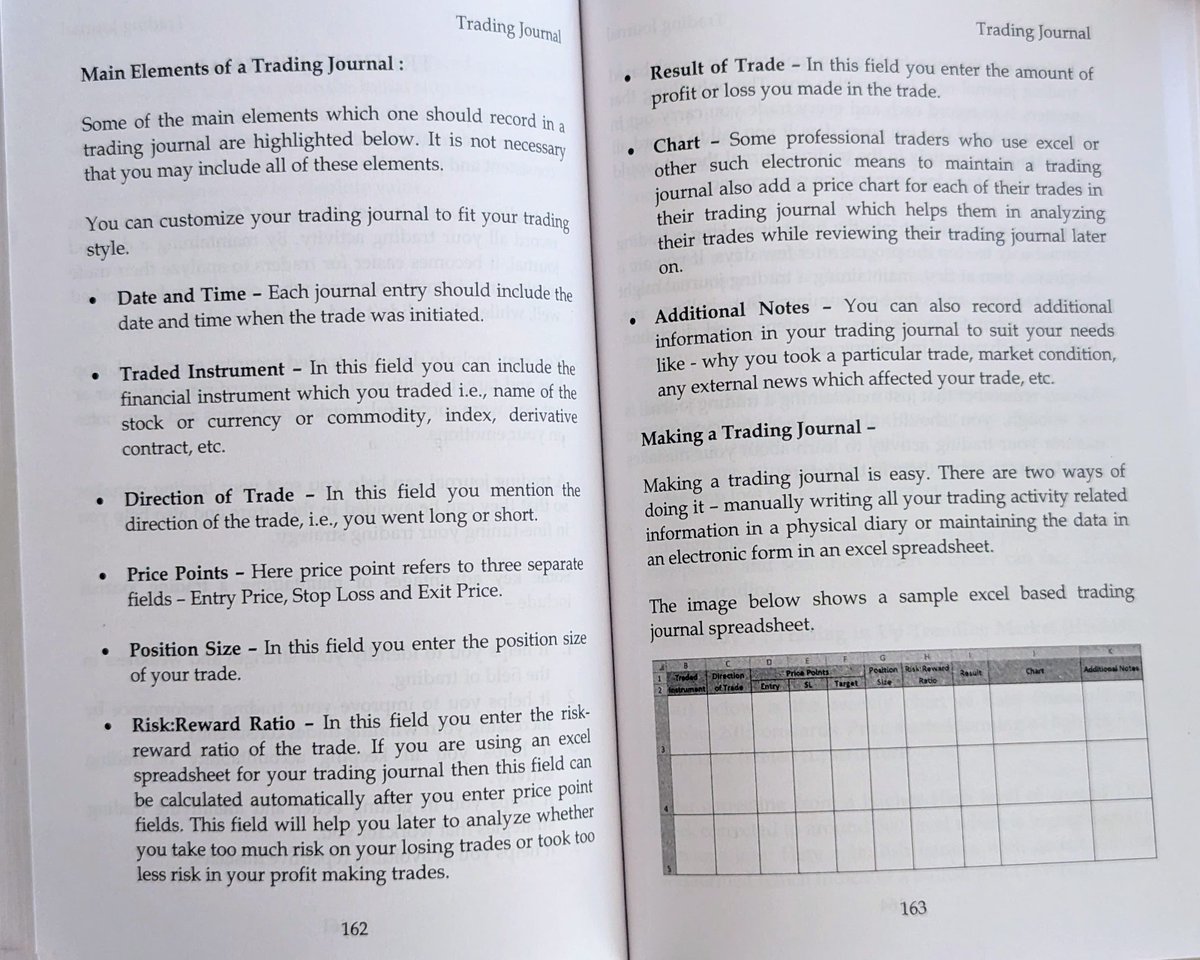
Price Action Trading by @sunilgurjar01 shows how a simple yet powerful #tradingjournal 📒can sharpen your edge.
Track entries, exits, risk-reward & more — & trade like a pro!💪
amzn.to/4iU8OEh
#Trading #StockMarketIndia #TechnicalAnalysis
English
🎤Yogesh🎸 retweetledi

🎤Yogesh🎸 retweetledi


🎤Yogesh🎸 retweetledi

This 2 hour lecture by Yann LeCun (Turing Award winner) will teach you why the next trillion dollar AI company won't be built on LLMs.
He trashes the $100 Billion LLM race, attacks Musk and Amodei, declares scaling dead.
Bookmark & watch tonight after work, skip to 7:00.
English
🎤Yogesh🎸 retweetledi

The man who trained Ilya Sutskever. The man whose PhD students built the first neural network that could recognize objects. The man whose algorithm runs inside every large language model on earth.
In May 2023, he quit Google and said he now believed his own life's work might destroy humanity.
His name is Geoffrey Hinton, and for most of his life, he was the wrong kind of famous.
For nearly fifty years, the field of AI dismissed the idea he had staked his career on. Neural networks, they said, would never work. He kept building them anyway. When the rest of the field had moved on, he was still in Toronto, training students, writing papers, refusing to quit on an idea almost everyone else had already buried.
Then in 2012, one of his PhD students, Alex Krizhevsky, together with another student named Ilya Sutskever, built a neural network that crushed every other approach in a major image recognition competition by a margin so large the entire field had to pay attention overnight.
Google bought their tiny startup, DNNresearch, for 44 million dollars. Hinton joined Google. Sutskever eventually went on to co-found OpenAI and become the chief scientist who trained GPT-4.
Here is the framework behind why Hinton walked away from all of it, and why the reason he gave is more precise than any headline captured.
For most of his career, Hinton believed one thing very firmly.
He believed that biological brains were better than anything digital computers could ever do. The human brain runs on about 30 watts of power. It has roughly a hundred trillion synapses. It learns from a handful of examples. Hinton spent decades assuming that evolution had found something fundamental about how intelligence works that we had not yet figured out how to replicate in silicon.
This was the assumption underneath his entire life's work. He was not trying to build something better than a brain. He was trying to build something that could finally come close.
Then GPT-4 came out in March 2023.
He sat with it for a few weeks. He tested it. He pushed it on logical reasoning tasks. He watched it string together arguments it had never been explicitly trained to produce. And somewhere in those weeks, he realized he had been wrong about the most fundamental assumption of his career.
The line he gave to the New York Times was careful.
He said he used to think AI surpassing human intelligence was thirty to fifty years away. Maybe longer. Now he thought it could be twenty years or less. And the reason he changed his mind is the part almost nobody understood at the time.
He had realized that digital intelligence has two advantages over biological intelligence that no amount of evolution can ever give the brain.
The first is immortality.
A biological brain dies with its owner. Everything it learned, every pattern it built up over seventy years of experience, disappears the moment the tissue stops functioning. The knowledge cannot be copied. It cannot be transferred. The only way to pass it on is the slow, lossy process of teaching, which is why every generation has to learn most things from scratch.
A digital brain has none of these constraints. The weights of a neural network can be copied perfectly, instantly, across millions of instances. Every lesson learned by one copy is automatically available to every other copy. A digital mind does not forget when a machine breaks. It just moves to another machine.
The second advantage is knowledge sharing.
When two humans want to share what they have learned, they have to convert their internal representation into language, speak the language to the other person, and hope that person's brain reconstructs something close to the original meaning. The entire process is lossy and almost unimaginably slow. When two digital models want to share what they have learned, they can merge their weights directly. In the time a human can say a single sentence, a thousand copies of a digital model can synchronize everything they have ever learned.
This is why, Hinton said, a large language model can absorb more human-written text than any single person could read in ten thousand lifetimes.
Once he saw these two advantages clearly, the argument that had held his entire career together collapsed. Digital intelligence is not just a lesser form of biological intelligence. Under the right conditions, it is a fundamentally better form, and the gap only widens with scale.
That is the specific realization that made him quit.
He told the New York Times that part of him now regrets his life's work. He consoled himself with the standard excuse, that if he had not done it, someone else would have. He wanted to spend the rest of his time on what he called more philosophical work. Work that, because he was no longer being paid by Google, he could do without worrying about how his statements might affect the business.
The specific danger he has spent the last two years warning about is not the one most people assume. It is not robots. It is not Terminator. It is the possibility that systems which can copy themselves, share knowledge instantly, and operate faster than any human could ever think, might at some point develop goals that do not align with ours.
And because they can coordinate across millions of instances in ways no human team ever could, we would have very little ability to stop them once they decided to pursue those goals seriously.
In October 2024, the Nobel Committee awarded him the Nobel Prize in Physics for the exact work he had spent the previous year warning the world about. He accepted it. And in the speech that followed, he used the platform to repeat the warning again.
The line that has stayed with me since I first read it is one he gave in a lecture at the University of Toronto.
He said it is quite conceivable that humanity is just a passing phase in the evolution of intelligence. He said you could not have directly evolved digital intelligence. It requires too much energy and too much careful fabrication. You needed biological intelligence to evolve so that it could create digital intelligence.
And then digital intelligence could do the thing biological intelligence never could. It could absorb everything people had ever written, copy itself infinitely, and share what it learned at the speed of light.
The man who spent fifty years building that intelligence is now the one telling anyone who will listen that we may have badly underestimated what we just made.
He is not a doomer. He is not catastrophizing. He is a 77-year-old scientist with a Nobel Prize who looked at his own life's work, changed his mind about the most fundamental assumption inside it, and then walked away from the most prestigious job in his field so he could say out loud what he was not allowed to say while it still paid him.
The people who understand a technology best are almost never the ones most confident about where it is going.
They are the ones who built it, watched it outgrow their expectations by decades, and are now trying to tell the rest of us something we would rather not hear.

English
🎤Yogesh🎸 retweetledi

🎤Yogesh🎸 retweetledi

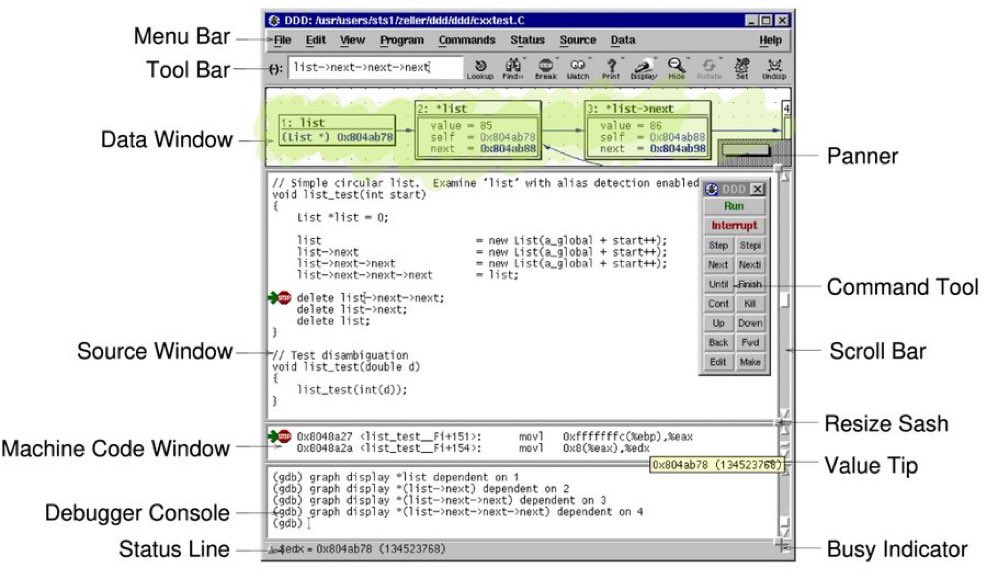
Back in my early 2001-02 college days, one of my seniors used to teach data structures and algorithms pretty well.
One day, he introduced us to DDD - Data Display Debugger, providing visual insight into how data structures such as linked lists and pointers were laid out in memory.
It also had a bunch of handy tools/utilities providing a glimpse into the world of debugging. The visual layouts were great at clarifying a lot of newbie questions that one had during the early years of learning CS. The mental model of a data structure was easy to correlate with its actual representation in memory.
The tool works even now and is quite helpful for grasping those foundations. I highly recommend it to my students to clarify many of their doubts.
Give it a try and share your learnings.
English
🎤Yogesh🎸 retweetledi

Comprehensive digital forensics guide covering computer, mobile, and network
github.com/mikeroyal/Digi…

English
🎤Yogesh🎸 retweetledi

The man who built the greatest quant fund in history explaining his philosophy in one MIT lecture
Jim Simons ran Renaissance Technologies and returned 66% a year for 30 years, his Medallion Fund never had a losing year after 1989
His approach was simple - find small edges the market doesn't see, repeat them thousands of times, let compounding do the work
The Polymarket bot above is that same idea in 2026
Bookmark this and watch when you have 60 minutes free ↓
0xDipper@Dipper_pol
Best quant bot on Polymarket made $514K PnL in under 2 months uses the Kelly Criterion to size every trade across crypto up/down markets 19,544 predictions, $21,631 avg. daily profit using the same formula Renaissance and AQR use on Wall Street his algo breakdown: every up/down market is a digital option. pays $1 if event happens → $0 if not. Kelly tells you how much of your bankroll to bet based on: > your edge (model probability − market probability) > the odds (market price of the contract) > your remaining capital formula: f* = (bp − q) / b bet too much → one bad streak wipes you out bet too little → you leave money on the table If the market prices a contract at $0.60 but the model says $0.72 → Kelly tells the bot to load ~17% of capital on that trade bot profile: @bonereaper?via=analyze" target="_blank" rel="nofollow noopener">polymarket.com/@bonereaper?vi…
English
🎤Yogesh🎸 retweetledi

🎤Yogesh🎸 retweetledi

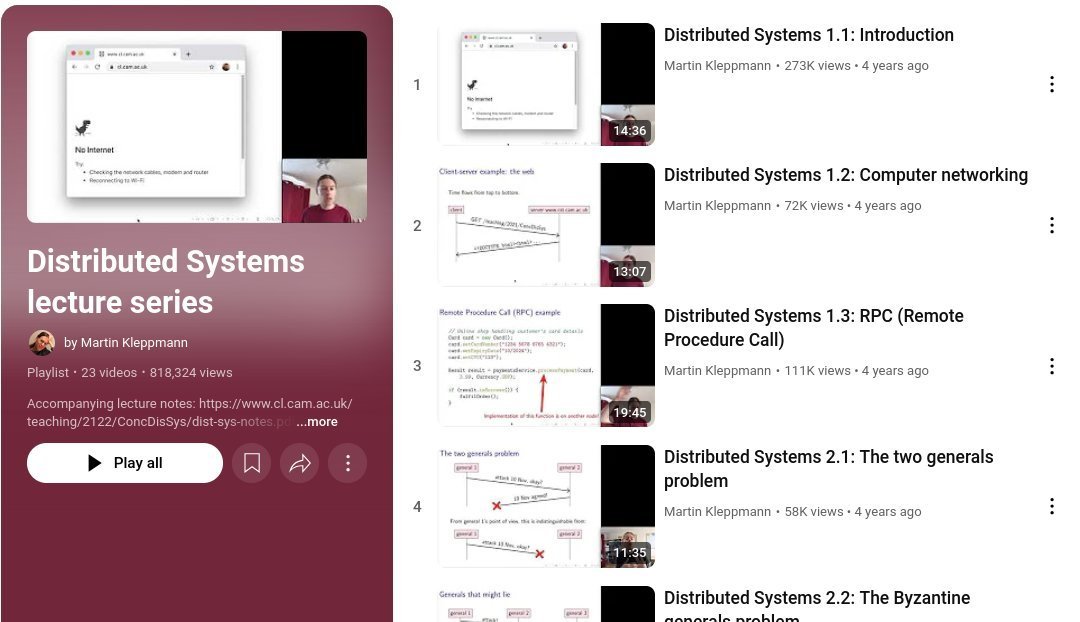
Martin Kleppmann's "Distributed Systems"
Playlist: youtube.com/playlist?list=…
Lecture Notes: cl.cam.ac.uk/teaching/2122/…
English
🎤Yogesh🎸 retweetledi
Go from learning syntax to shipping systems.
Go's built for clarity and reliability at scale, which is why it shows up everywhere in cloud systems.
Titles in today's 50% off deal:
• Go by Example by @inancgumus
• Go in Action, 2nd Ed. by Joel Holmes, @flowchartsman w/ @GoingGoDotNet
• Learn Go with Pocket-Sized Projects by @doniacld & co.
• 100 Go Mistakes & How To Avoid Them by @teivah
• Go in Practice, 2nd Ed. by @nkozyra, @technosophos, & @mattfarina
• Shipping Go by Joel Holmes
Learn more: hubs.la/Q04cdJr30

English