ZeitTwittBrett

5.2K posts

ZeitTwittBrett banner
ZeitTwittBrett

ZeitTwittBrett

@ZeitTwittBrett

Mensch im digitalen Informationszeitalter

Katılım Ağustos 2021
686 Takip Edilen903 Takipçiler
ZeitTwittBrett retweetledi
Paul Walsh
Paul Walsh@Paul__Walsh·
It’s not an expert report written by technical experts. It’s produced by the EU to back its own mandate. This is irresponsible reporting. I have analysing the report. Below are my insights regarding its protective rhetoric lies. This is a calculated campaign of misinformation, misdirection, and unprecedented scope creep. Part I: The Illusion of Scope (The "Social Media+" Trap) The report deliberately relies on an extraordinarily broad, feature based definition rather than identifying services by company name, category, or legal classification. The key definition appears in the "Scope and Terminology" section, which introduces a new catch all term: "Social media and other digital services (in short, social media+)" The report states that "social media+" is used to: "broadly define services that may be available to minors and contain age-inappropriate and or risky features… and or content." It labels basic, industry standard interactive elements as "addictive and harmful features," specifically calling out: 🇪🇺 Infinite scroll 🇪🇺 Autoplay 🇪🇺 Recommendation algorithms 🇪🇺 Persistent notifications The definition then expands aggressively to encompass: 🇪🇺 Social media and video sharing platforms 🇪🇺 Online platforms acting as intermediaries for third party content 🇪🇺 App stores 🇪🇺 AI systems and AI companions 🇪🇺 Video games What the Report Conspicuously Omits: 💡 No limitation to traditional social networks. 💡 No limitation to user generated content platforms. 💡 No limitation to services whose primary purpose is social interaction. By defining the regulated space via universal features like notifications, recommendation algorithms, and app distribution, they've quietly drafted a blueprint to regulate almost the entire internet. Part II: The True Objective Behind "Chat Control" This sweeping "social media+" definition can't be viewed in isolation. It's directly feeding into the broader legislative push for mandatory online scanning, colloquially known as "Chat Control". While European Parliament President @EP_President and the @EPPGroup forced through Chat Control 1.0, a "voluntary" precursor designed to normalise corporate scanning, the permanent, mandatory framework of Chat Control 2.0 was authored by @PHummelgaard . Serving as the Danish Minister of Justice and leveraging Denmark’s influential role during its EU Council Presidency, Hummelgaard designed a regime to eliminate end to end encryption. His own words expose the authoritarian philosophy driving this legislation: "We must break with the totally erroneous perception that it is everyone's civil liberty to communicate on encrypted messaging services." This is the ultimate goal, stated by the law's chief architect: the end of private human conversation. By treating the right to private digital communication as a "totally erroneous perception" to be corrected by the state, Hummelgaard's framework turns every personal device into a government wiretap. Orwell warned of a world where "nothing was your own except the few cubic centimetres inside your skull." Hummelgaard’s infrastructure ensures the state controls those, too. Part III: Key Concerns 🆔 Identity Infrastructure: The demand for "effective age assurance" is a privacy fallacy. Despite claims of "privacy preserving" tech, reliable verification ultimately depends on a government ID, biometric scan, credit card information, or deep personal data profiles. Once identity's verified, true anonymity is lost. 🌐 Expansion of Scope: Sold as a targeted restriction on social media, the broad "social media+" umbrella means citizens have got to undergo identity checks simply to download an app, play a game, query an AI, or browse a website. ❄️ Chilling Effects on Free Expression: If accessing basic digital services requires proving who you are, marginalised individuals, political dissidents, and people researching sensitive health or personal topics will self censor and avoid seeking information or support. 📈 Mission Creep: History proves surveillance powers are never contained. Telecommunications metadata and financial monitoring systems were introduced under narrow, exceptional mandates and later expanded into permanent, everyday tracking tools. 🪪 De Facto Digital ID: Age estimation is highly inaccurate. The stricter regulators demand age assurance to be, the more pressure there's to rely on government backed, identity linked verification. This creates an unavoidable path toward mandatory, digital identity wallets. 🏛️ Centralisation of Power: The framework strips parents and individuals of agency, placing government regulators in charge of deciding which ideas, features, and platforms are "appropriate" for citizens. ⚠️ Weaponisation under Future Regimes: Technology outlives the politicians who build it. The turnkey surveillance state built by today’s well meaning policymakers will eventually be inherited by administrations with vastly different views on speech, privacy, and political opposition. 🔄 A Contradictory Standard: The report demands that platforms restrict child access while simultaneously requiring providers to prove their services are "safe by design" for minors. If children are legally barred from entry, forcing platforms to reconstruct their entire architecture to accommodate them is a logical paradox. 🔒 Regulatory Capture: Tech giants can easily absorb the massive compliance and verification costs of these regulations. Smaller competitors, open source projects, and startups can't, effectively locking in the monopoly of the dominant platforms. About the Author (Me) 👨‍👦‍👦 Father of 3: I’m a father of 3, but that doesn't qualify my expert opinions. Being a parent drives my passion, but it doesn't dictate my understanding of what’s technically possible, what’s not, what’s actually feasible, or the severe cost of getting it wrong. There’s always a delicate, necessary play between security and privacy, and getting it wrong destroys both. 👤 AOL Child Safety Pioneer: I was first introduced to child safety tech and content moderation in 1996, when I led the new technologies team at AOL and helped launch AIM. 🌐 W3C Standard Creator: I cofounded the W3C standard for Content Labelling and URI Classification in 2004, which formally replaced PICS in 2009. I'm also one of the seven founders of the Mobile Web Initiative at the W3C where I was tasked with rewriting Tim Berners-Lee's vision of "One Web". 🪪 Co-Inventor of Account Verification: I co invented the concept of user account classification on the internet, the foundational idea behind features like Twitter Verified, though it's not really implemented as well as I'd imagined. While I'm an advocate for platforms offering optional identity verification, I've got zero tolerance for any government enforcing it on citizens to access software and services on the web. 🧠 Trust and Human Behaviour Expert: I've spent my career studying human behavior around online trust, reputation, and visual indicators because psychology and technology go hand in hand. 📱 Deep Security: I've designed some of the most intrusive security services for mobile devices, including custom Android firmware that intercepted every HTTPS request inside every app. I've built API services for mobile device OEMs, browser extensions for computers, and custom web browsers for iPad and iPhone. 📜 Deep Security Patents: Most leading security companies benefit from my patents for in app security, a proprietary portfolio covering 65 distinct categories of URI lookup, including malware, phishing, disinformation, child safety, identity, child abuse, and pornography. 🏛️ Strategic Government Advisor: I've advised both the IWF and NCMEC, the very organisations the EU constantly references to justify Chat Control. I've also hosted coordination calls between NCMEC and the DOJ on how to implement proactive monitoring on the web for child exploitation. In 2012, I advised the UK government during its original parliamentary inquiry into online safety, where I pushed for new controls, but allow parents can turn on for their children rather than blanket state mandates. They went ahead anyway and it has failed to keep teens off porn sites for 10+ years. No need to look at the failures in Australia. 🛡️ The App vs. Content Distinction: We must recognise that content filtering on social networks is an entirely different conversation that requires a completely different approach and set of solutions. The truth is that most big tech companies don't care enough to build tools that allow people to easily avoid what they don't want to see on their platforms. But blocking or restricting entire apps and websites at the infrastructure layer is a vastly different, far more dangerous beast that threatens the architecture of the open internet.
POLITICOEurope@POLITICOEurope

The EU expert report on protecting children online has backed a minimum age of 13 for using social media — a measure presented as part of a gradual introduction of minors to the digital world. That approach could lead to broader regulation of Big Tech. politico.eu/article/eu-new…

English

3
77
226
7.3K
ZeitTwittBrett retweetledi
Christoph Lütge
Christoph Lütge@chluetge·
Was Leyen plant, ist weder mit dem deutschen Grundgesetz noch mit der europäischen Charta der Grundrechte - noch ganz allgemein mit Kerngedanken von Demokratie und Freiheit – vereinbar. Das muss gestoppt werden.
Dr. Michael Spehr@MicSpehr

Um es noch einmal klar zu sagen: es geht nicht um Kinderschutz, sondern um das Ende der anonymen Nutzung des Internet, um Klarnamenpflicht, Chatkontrolle und eine Pflicht zur Nutzung der EUDI Wallet. Das ist das Ende des freien Internet. Vieles davon widerspricht dem deutschen Grundgesetz oder höchstrichterlicher Rechtsprechung.

Deutsch
40
382
2.1K
21.7K
ZeitTwittBrett retweetledi
Verfassungsschutz und Forensik ⛨
Sie wissen genau, dass anonyme Altersverifikation nicht funktionieren kann. Es ist eine slippery Slope, die am Ende zu Identifikationspflicht führt. Viele aus Politik und Zivilgesellschaft sind leider auf die absurde Behauptung hereingefallen, dass es anonym funktionieren könne.
Paul Moore - Security Consultant @Paul_Reviews

Bypassing the latest #EU #ageVerification app (2026.07-1) with a Chrome extension... again. Despite 3 months of security hardening and genuine improvements across the board, the fundamental issue cannot be solved. Anonymous age verification doesn't work.

Deutsch
0
7
25
467
ZeitTwittBrett retweetledi
Politics UK
Politics UK@PolitlcsUK·
🚨 BREAKING: Keir Starmer will announce a midnight social media curfew for 16 and 17-year-olds tomorrow
English
1K
519
8.2K
3.1M
ZeitTwittBrett retweetledi
sudox
sudox@kmcnam1·
sudox tweet media
ZXX
4
18
141
1.7K
ZeitTwittBrett retweetledi
Paul Moore - Security Consultant 
Bypassing the latest #EU #ageVerification app (2026.07-1) with a Chrome extension... again. Despite 3 months of security hardening and genuine improvements across the board, the fundamental issue cannot be solved. Anonymous age verification doesn't work.
Paul Moore - Security Consultant @Paul_Reviews

I honestly don't know how @vonderleyen can say it's "privacy preserving" with a straight face. Do I need to hack it again?

English
181
1.8K
11.1K
985.7K
ZeitTwittBrett retweetledi
BitBeller 🐶
BitBeller 🐶@BitBeller·
Was während der Fußball-WM in Amerika durchgedrückt wurde: - Abschaffung der Bitcoin-Haltefrist angekündigt - Chatkontrolle per Verfahrenstrick durchgebracht - Gesichtserkennung an Bahnhöfen beschlossen - Überwachungspaket mit KI-Datenanalyse für Polizei vorgelegt - Anlasslose IP-Vorratsdatenspeicherung auf den Weg gebracht - Von der Leyen kündigt Alterskontrollen fürs Internet an - Digitaler Euro mit Haltelimit einen Schritt weiter - Rekordhaushalt mit Rekordschulden beschlossen - Gesundheits-Sparpaket kurzfristig durchgewunken Du wirst nichts besitzen und glücklich sein.
Deutsch
52
580
2.7K
48.9K
ZeitTwittBrett retweetledi
Nym
Nym@nym·
They are not building safety infrastructure. They are building compliance infrastructure. And calling it child protection.
English
5
34
180
5K
ZeitTwittBrett retweetledi
Adam Goldschnitt
Adam Goldschnitt@a_goldschnitt·
Jede Sekunde, in der sich ein Journalist oder ein Redakteur in Europa nicht gegen diese Dystopie auflehnt und mit aller ihm zur Verfügung stehenden Macht dagegen kämpft trägt aktiv zur Zeitlupe bei, in der dieser Kontinent zugrunde gerichtet wird.
Deutsch
71
714
3.7K
35.1K
ZeitTwittBrett retweetledi
Paul Walsh
Paul Walsh@Paul__Walsh·
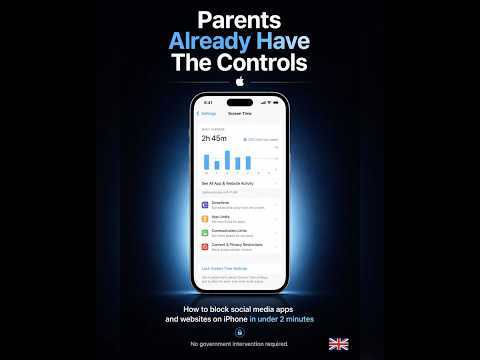
This 2-minute video shows how fast and easy it's for any parent to block specific apps and websites on an iPhone. Unless you have the PIN code, there's no way to get around it. Parental controls were awful 10+ years ago, but today they're excellent. They're a hundred times more likely to protect kids than any other approach you can think of. Even a VPN can't circumvent these device level controls. So called social media bans is a smoke screen for online surveillance and control by the state. youtube.com/shorts/tv6vxRB…
YouTube video
YouTube
English
5
70
274
16.7K
ZeitTwittBrett retweetledi
Dr. Friedrich Pürner, MPH
Wer jetzt immer noch die Augen verschließt und nicht kapiert, dass es hier eiskalt um die totale Kontrolle und systematische Überwachung geht, dem ist beim besten Willen nicht mehr zu helfen!
Deutsch
280
2.6K
10.9K
107K
ZeitTwittBrett retweetledi
𝐿𝑖𝑛𝑢𝑥 𝑢𝑠𝑒𝑟
I love how Digital IDs, and social media bans are coordinated all over the world over different governments and (apparently) different countries and constitutions.
English
25
92
592
8K
ZeitTwittBrett retweetledi
Paul Walsh
Paul Walsh@Paul__Walsh·
Ursula von der Leyen has confirmed that everyone in the EU will need to use the EU's app for identity authentication before being able to access or post on social media websites. 🇪🇺 As an expert in online child safety, I am here to expose the misinformation and misdirection in von der Leyen's statements. Today von der Leyen said: "This is not about whether children can access social media, it is about whether social media can access our children". 💡The first part is true. This isn't about children. It's about surveillance and combating political dissent. A state that can't control its own citizens is more dangerous than a state rife with criminals. The second part is a PR soundbite that politicians are using like a campaign slogan straight out of 1984. 🇪🇺"The question is no longer if children face risks online, but what can we do to give children a safer start online". 💡No. You can't give children a "safer start" online any more than you can offline. In the offline world, the government doesn't enforce curfews or ban children from entering liquor stores, bars or restaurants. That's a parent's responsibility. The digital world should be no different. 🇪🇺"The age verification app is one of the tools to get it done". 💡This is a contradiction because she also said "It won't be foolproof". 🇪🇺"It's easy to use, it is privacy preserving and it is open source". 💡The app was compromised as soon as it was released. "Privacy-preserving" age verification is an oxymoron. You can't verify a person's age without verifying their identity. Where or how that age is shared afterwards is irrelevant. 🇪🇺"This is basically about putting back the power into the hands of parents". 💡More from 1984. The EU is doing the opposite. Parents are having their authority stripped by politicians who think they know better. Many parents are capable and unaffected by peer pressure, and they know how to use parental controls to block any app classified as 13+. Some teens are safe, their parents trust them, and the state has no business overruling that trust. 🇪🇺"We don't give our children keys to the car before they have their licence" 💡Comparing an app to a car is a false equivalence used to justify mass surveillance. Governments don't decide when a young person is ready for car keys, guardians do. 💡Forcing every adult and child into a biometric checkpoint just to use an app or website is not licensing drivers. It's the state seizing everyone's keys, locking the garage, and forcing every driver to ask a private company for permission to take a drive. 💡 This is a gross, unethical overreach that strips authority from parents while imposing state sanctioned identity verification on every adult who doesn't even have a child. 💡Additionally, people who pass a test, obtain a licence and drive a car aren't forced to use an app to constantly authenticate their suitability to drive. 🇪🇺"We do not let them buy alcohol until they are legally allowed" 💡False equivalence. We don't force every person to show ID at a shopping mall entrance just because a few people might buy alcohol with a meal at a restaurant. Some parents are okay with their 12 year-old going to the mall with friends while others aren't. Either way, it's their choice. Whatever irresponsible decisions some parents might make, every adult in the country shouldn't be forced to pay the price. 🇪🇺"It won't be foolproof" 💡This is all the proof we need to show that the EU and every government know that banning social media for teens won't protect them. When pressed by journalists about VPNs being used to circumvent a ban, politicians always state the ban isn't a silver bullet and will take time. The Mayor of London, Sadiq Khan went as far as to say "we know it's not the solution". 💡Either age verification works, or it doesn't. As a technical expert in this space, I can tell you there are no additional steps to take and no progress to be made. Either the approach does what it is supposed to do, or it's not fit for purpose. If they claim a bulletproof solution is coming, it can only mean one thing. They intend to ban or restrict VPNs to people who verify their identity. 🇪🇺"It will take time to invite the cultural change that is already taking shape in our society, just as it took time to outlaw drink driving, just as it took time to use seatbelts in the cars. Great change never happens overnight, but when it comes to our safety it is always worth it". 💡Comparing a social media ban and age verification to seatbelts is a completely broken analogy. Seatbelts are a safety feature that protects children while allowing them to travel in a car. A ban doesn't give kids a seatbelt. It kicks them out of the car entirely. 💡Instead of supporting parents who want to guide their own children through the digital world, this heavy-handed law strips away parental authority by banning the apps and websites that many parents are perfectly fine with and actively monitor. 💡Furthermore, enforcing these bans requires biometric age verification, which means forcing millions of adult citizens to scan their IDs, faces or credit cards just to browse the internet. That isn't a common-sense traffic law. 💡It's a digital checkpoint on every street. True safety means teaching kids how to navigate the digital world safely with real guardrails and parental guidance, not burning down digital spaces for everyone under the guise of protection. 🇪🇺☠️ The EU wants to ban teens from social media so every person is forced to verify their identity before they can read, share or post anything online. In their words, this is to protect children from dangerous content. 🇪🇺☠️ The EU wants to enforce "Chat Control" so every app has to monitor everything people say privately inside it, including apps with end-to-end encryption. In their words, this is to protect children from dangerous criminals. 💡Where this ends 🇪🇺 "If you want a picture of the future, imagine a boot stamping on a human face - forever". George Orwell, 1984.
English
519
3.2K
7.4K
803.8K
ZeitTwittBrett retweetledi
DeepHumor
DeepHumor@DeepHumor·
You will forever be remembered as a corrupt criminal who tried to strip away the privacy of millions of people We will all celebrate the day when you no longer have political power
Ursula von der Leyen@vonderleyen

We need age-appropriate restrictions on platforms. This is not about whether children can access social media. It is about when social media can access our children. For a safer start online for every child ↓ x.com/i/broadcasts/1…

English
7
119
413
3.6K
ZeitTwittBrett retweetledi
Reclaim The Net
Reclaim The Net@ReclaimTheNetHQ·
Macron and the head of the WHO just put out a joint statement calling for online age verification to protect kids. Here is the part they skip over: to check a child's age, a platform has to check everyone's identity. The age gate logs the adults too. The WHO and France warn that data profiling threatens your privacy, then in the same statement they demand age verification systems that collect even more of your identity. reclaimthenet.org/france-and-who…
English
45
243
658
30.7K
ZeitTwittBrett retweetledi
Eric B.
Eric B.@LostinEU·
Das EU-Parlament hat ohne Not den Weg für die Chatkontrolle wieder freigemacht – und seine eigene Ohnmacht offenbart. Die Abgeordneten haben sich entmündigen lassen. Das entmündigte EU-Parlament, Geld für Ungarn - und die ukrainische Nato lostineu.eu/das-entmuendig…
Deutsch
1
14
55
6.4K
ZeitTwittBrett
ZeitTwittBrett@ZeitTwittBrett·
@PolitRealist Eigentlich muss man nicht besonders klug sein, um zu dieser politischen und gesellschaftlichen Bestandsaufnahme zu kommen. Dennoch scheint es für viele unserer prominenten und politischen Demokratiedarsteller nicht möglich zu sein, diesen Fakt als Realität anzuerkennen.
Deutsch
0
0
3
65
PolitRealist
PolitRealist@PolitRealist·
Kluge Frau 👩
Deutsch
25
99
701
8.9K
ZeitTwittBrett
ZeitTwittBrett@ZeitTwittBrett·
Wenn weitreichende Gesetzesänderungen bevorstehen, braucht es meist eine "mediale Sensibilisierung", damit Menschen von der Notwendigkeit überzeugt sind. Verschwiegen wird jedoch, wie ein Social-Media-Verbot umgesetzt werden soll. Es würde bedeuten, dass sich alle Bürger im Internet ausweisen müssen, um digitale Dienste zu beanspruchen. Das wäre de facto die komplette Vernichtung unserer Privatsphäre. Das Internet würde zu einem Checkpoint mutieren, in dem deine Identität darüber entscheidet, ob du Zugang erhältst oder nicht. Obwohl es zahlreiche Möglichkeiten gibt, seine Kinder im Internet zu schützen, bspw. mit routerseitigen DNS-Einstellungen für das Heimnetzwerk und Kindersicherungen auf dem Smartphone. Zu den elterlichen Pflichten gehört es aber auch, über die Gefahren im Internet aufzuklären und den digitalen Konsum seiner Kinder stets zu kontrollieren. Ausgerechnet jetzt haben es sich Politiker weltweit zur Aufgabe gemacht, sich als Erziehungsberechtigte aufzuspielen. Ein Schelm, wer Böses dabei denkt. Diese Gesetze, die gerade weltweit wie Pilze aus dem Boden schießen, dienen nicht dem Kinderschutz, sie sind das Feigenblatt im Zeitalter der Überwachung. zeit.de/thema/social-m…
Deutsch
0
2
6
79