ZeNoX

7.6K posts

ZeNoX banner
ZeNoX

ZeNoX

@ZenoxWeb3

Web3 native | DeFi dreamer | Crypto curious 💡

Find Out Katılım Ocak 2025
2.9K Takip Edilen2.3K Takipçiler
Sabitlenmiş Tweet
ZeNoX
ZeNoX@ZenoxWeb3·
Take a sip of Red Bull, and watch the magic happen With Red Bull, you don’t just power through the day ....you crush it! 💪 Red Bull: Energy when you need it. Video is made by @renoiseai #renoiseai
English
84
38
281
40.6K
ZeNoX retweetledi
MagVerse
MagVerse@MagVerse_AI·
Most brand deals on X are paying for bots. The merchant has no idea. The platform doesn't care. The creator who gamed it gets paid anyway. We built Magverse to fix this. 🧵
MagVerse tweet media
English
206
2.2K
1.4K
16K
PSN
PSN@psnguyen1211·
@RallyOnChain now you are smarter than before with fk stupid system of refs
English
2
0
2
99
Rally
Rally@RallyOnChain·
we heard you! starting today we updated the referral system so each campaign rewards the best creators above all, while still benefiting users with referrals what did we change? 👇
Rally tweet media
English
20
2
28
1.1K
Renoise
Renoise@renoiseai·
Renoise Canvas is LIVE. One canvas for your entire AI asset library. Generate, organize, and reuse: characters, scenes, images, videos, references, and versions — all in one place. 40% Off + Free Gift. Big launch, bigger rewards. ↓
English
97
53
265
954K
Renoise
Renoise@renoiseai·
Renoise Canvas Coming Soon 📂
English
14
9
62
2.2K
ZeNoX retweetledi
Renoise
Renoise@renoiseai·
Image 2 + Seedance 2 = best combo 🔥
Français
11
16
161
7.9K
ZeNoX retweetledi
Renoise
Renoise@renoiseai·
The cheapest way to generate GPT-Image-2 just dropped. $0.04 per picture. Not a typo. ✦ Repost + reply "4cents" ✦ 3 winners get $20 Membership
English
64
59
151
10.4K
ZeNoX retweetledi
Harry (🔮🧡🔮)
Harry (🔮🧡🔮)@0xAI_harry·
Most people still use X just for scrolling.But if you’ve already built a real audience of 1K+ followers, your account is more than just a feed — it’s time to turn your influence into real income. Join creator tasks through @MagVerse_AI and let your content start earning for you. 🔗:console.magverse.io/?invite_code=6… Content-to-Earn is becoming real.
Harry (🔮🧡🔮) tweet media
English
187
861
668
11.7K
W3Realm
W3Realm@W3Realm·
Not just a watch A symbol of discipline, power, and legacy. ROLEX ⌚✨ TIME DEFINES MEN I'm applying as a creator kn @renoiseai .... Looking forward with the Team #renoiseai
English
5
1
11
34
ZeNoX
ZeNoX@ZenoxWeb3·
@_BlockBelle Selective disclosure sounds regulator friendly but regulators rarely operate under identical standards across jurisdictions How adaptable is the disclosure framework when U.S Gulf and EU supervisory expectations conflict on data accessibility requirements
English
0
0
0
28
Belle
Belle@_BlockBelle·
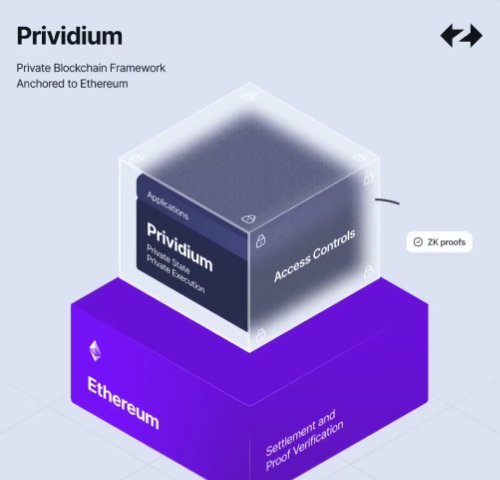
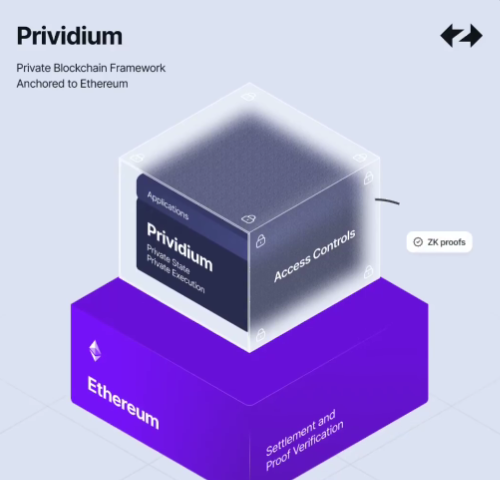
There is a reason bank executives get uncomfortable when settlement infrastructure discussions turn toward transparency as a feature. Transparency is genuinely valuable in some contexts. Public markets benefit from price discovery. Regulators benefit from audit visibility. Clients benefit from confirmation that their instructions were executed. These are real and legitimate transparency requirements that any serious settlement infrastructure needs to satisfy. But transparency in the wrong direction toward counterparties, toward competitors, toward any observer with access to a public ledger is not a neutral property. For an institution whose competitive positioning depends on what it knows about client flows, market activity, and aggregate order behavior, an infrastructure layer that broadcasts that information is not just a compliance problem. It is a strategic one. Consider what a major bank's transaction activity actually reveals over time. Corporate clients drawing down credit facilities before announcing acquisitions. Institutional clients increasing FX hedge ratios before earnings. Sovereign wealth flows shifting allocation ahead of policy changes. None of this information is tradeable in the legal sense when it arrives through normal banking relationships. But aggregated, it represents a reading of market positioning that is genuinely valuable to the institution processing it and genuinely dangerous if it becomes visible to external parties before the relevant activity completes. A public settlement ledger makes this visible by design. That is not a bug in the system that better privacy settings can fix. It is an architectural property of how public blockchain infrastructure works and it is why every institutional evaluation that has reached the compliance and risk management layer has stalled there. The permissioned chain approach of the previous cycle addressed this specific problem by restricting ledger visibility to consortium members. What it could not address was the consequence of that restriction: a settlement network whose utility was bounded by its membership. Institutions inside the consortium could settle with each other. Institutions outside could not participate. Liquidity and counterparty reach stayed trapped within the group. The information was protected. The network was commercially limited. The underlying tension is real: open networks expose information and closed networks limit reach. Resolving it requires a mechanism that can produce verifiable settlement outcomes without requiring those outcomes to carry the transaction detail that makes them sensitive. Zero-knowledge proofs are that mechanism. An institution using $ZK-based settlement infrastructure can prove to any party that a transaction executed correctly - that the right amount moved between the right accounts under the right conditions without disclosing the amount, the accounts, or the conditions to any party not authorized to see them. The proof is the settlement evidence. The transaction content remains inside the institution's controlled environment. @zksync Prividium is built on this separation. Independent execution environments under complete institutional governance. Transaction data structurally offchain within those environments. Zero-knowledge proofs publishing settlement validity to Ethereum carrying finality without carrying exposure. Selective disclosure mechanisms that give regulators and auditors the access they require within authorization frameworks the institution defines. Counterparty connectivity through the @zksync network that extends reach beyond any closed consortium. Cari Network brings five U.S. regional banks with over $600 billion in combined deposits into this infrastructure, built by the former U.S. Comptroller of the Currency. Deutsche Bank constructed its own $ZK Chain. First Abu Dhabi Bank is live through ADI Chain. BitGo institutional custody is integrated. More than 35 institutions are actively evaluating. These are organizations that understand the information dimension of settlement infrastructure at an operational level. They process the flows. They manage the relationships. They know exactly what external visibility of their transaction activity would cost them competitively. Their decision to build on Prividium is a judgment that this architecture protects what needs protecting while delivering what shared settlement infrastructure needs to deliver. That combination not faster processing, not cheaper transactions, but genuinely compatible privacy and verifiability is what makes the current moment in institutional blockchain adoption different from every previous attempt.
Belle tweet media
English
81
31
244
8.2K
ZeNoX
ZeNoX@ZenoxWeb3·
@_BlockBelle A permissioned Validium solves privacy but does it also recreate the onboarding friction that limited earlier enterprise chains where every participant relationship required negotiated integration first
English
0
0
0
23
Belle
Belle@_BlockBelle·
The gap between expressed institutional interest in blockchain infrastructure and actual live deployment has defined the last several years of this conversation in finance. Plenty of institutions have explored. Far fewer have deployed. The difference between those two categories is the full weight of the scrutiny process that sits in between. That process exists because the cost profile of an infrastructure failure at institutional scale is asymmetric in the extreme. Regulatory sanctions. Operational disruption to downstream counterparties. Reputational consequences that compound across years. The teams running compliance, legal, and technology risk review at institutions of this size aren't obstacles to adoption. They're the function that ensures adoption doesn't become a liability. Which makes the live deployment count on @zksync the number that actually carries analytical weight. ADI Chain is live with First Abu Dhabi Bank. That deployment cleared the full review stack at an institution with sovereign backing operating under Gulf Cooperation Council regulatory frameworks. Cari Network is live - five U.S. regional banks with deposits exceeding $600 billion, built and led by Eugene Ludwig. Ludwig's role as the 27th U.S. Comptroller of the Currency placed him at the federal supervisory apex of America's national banking system. The judgment about infrastructure that role develops is not abstract. It is the product of years spent determining whether banks are operating on foundations that hold. That judgment produced a live deployment here. BitGo's institutional custody operation the function most immediately exposed to infrastructure failure is connected into Prividium at production scale. Deutsche Bank built the Memento $ZK Chain on this stack. Thirty-five additional institutions remain in active evaluation. Evaluation matters. The live deployments matter more. The reason those live deployments happened traces back to what Prividium actually resolves at the technical level. The incompatibility between public blockchain infrastructure and regulated finance isn't a perception problem or a regulatory attitude problem. It's a structural problem with four specific dimensions. Transaction visibility on shared ledgers creates competitive exposure that institutions with sensitive workflows cannot accept as an operating condition. Common execution environments require ceding control over a function that internal governance and external regulatory frameworks require institutions to maintain. Consensus-based verification introduces reliance on operator behavior that risk management processes are built to avoid. Settlement pathways that don't connect to established financial counterparties and liquidity sources aren't operationally useful for institutions whose activity depends on both. Prividium was engineered as a direct response to that constraint set rather than as a general-purpose blockchain architecture that later adapted to it. It operates as a permissioned Validium. Each institution gets a fully isolated environment with no shared surface area with any other participant on the network. Execution and transaction data stay entirely within that environment nothing leaves it. The only output that reaches Ethereum is a zero-knowledge proof confirming that the state transition was valid and a state commitment establishing the new state. That combination provides cryptographic finality verifiable by anyone without revealing anything about the activity that produced it. Regulatory and audit visibility is handled through selective disclosure each institution configures independently. The verification is mathematical. The proof removes the need for operator trust entirely. Four structural incompatibilities. Four direct resolutions. One architecture. No tradeoff between them written into the design. What develops behind this foundation as the network grows has a specific structural character that financial infrastructure history illustrates clearly. Settlement networks don't accumulate value primarily through the activity any single participant generates. They accumulate it through the direct connections between participants the corridors through which one institution can settle with another without routing through an intermediary. When a new institution joins, the increment isn't one additional participant's flow. It's a direct pathway to every institution already present. The total number of those pathways grows as the square of the membership. Forty institutions create 780 corridors between them. Seventy create 2,415. One hundred create nearly 5,000. The connectivity grows faster than the membership at every stage and by a widening margin as the scale increases. SWIFT's growth from 239 founding members to over 11,000 institutions across more than 200 countries ran through exactly this structural property. The messaging standard was the enabling condition. The network effect was the mechanism by which a useful tool became unavoidable infrastructure. Visa's transformation from a California bank card arrangement into the layer beneath global retail payments followed the same logic. The founding commitments from credible institutions created a network whose utility compounded with every subsequent commitment. The value of membership increased precisely because of who was already there. That structural condition now has a documented and operational foundation on @zksync $ZK is the only native asset of the @zksync network. Its supply is permanently fixed at 21 billion the protocol contains no inflationary mechanism. As a governance token, $ZK holders direct the decisions through which the network's fundamental parameters are determined and revised: protocol upgrades, fee structures, and economic design. Three bodies distribute that governance authority the Token Assembly managing holder-level voting, the Security Council evaluating technical proposals before they advance, and the Guardians maintaining emergency oversight capacity over the system. $ZK also functions as the native gas token for @zksync Gateway, the settlement layer that consolidates and processes transactions across ZKsync chains and Prividium zones before final posting to Ethereum L1. The economic architecture carries deliberate capacity for development governance holds authority over how $ZK's function expands as network participation and activity scale. The ZKnomics framework that outlines this structure is currently under active community review. Several institutions whose internal scrutiny processes exist specifically to surface infrastructure that hasn't solved the real problems have now cleared this architecture and moved to production. The distance between evaluation and live deployment in regulated finance is not a formality. What's live here passed the full test.
Belle tweet media
English
78
26
174
8.4K
RIN
RIN@rinxtohsaka·
🤖Sci-fi action redefined⚔️ Pushing the limits of AI-driven storytelling with Seedance 2.0 and Nano Banana. The combat fluidity and character consistency in this piece are exactly why I’m applying for the Official @renoiseai Creator program. Can't wait to bring more cinematic visions to the community!🚀 #RenoiseAI #Seedance #NanoBanana #SciFi #AIVideo
English
16
2
21
125
ZeNoX
ZeNoX@ZenoxWeb3·
@Prime_0g The non-participation cost argument only holds once the network reaches a critical threshold. Below that threshold, waiting carries very little cost for institutions still evaluating.
English
0
0
0
16
DataRogue
DataRogue@Prime_0g·
Financial infrastructure doesn't win on features. It wins on network position. And network position is won early or not at all. SWIFT was founded in 1973 with 239 member banks across 15 countries. It was not the only interbank messaging system at the time. It was not universally considered superior in every dimension. What it had was a founding architecture that fit what banks actually needed and a critical mass of early participants whose presence made membership valuable to the next institution considering it. By the time SWIFT reached 1,000 members, the question for any serious financial institution was no longer whether to join. It was how quickly they could complete integration. Visa followed an identical logic. Merchants needed to accept the cards their customers carried. Customers carried the cards their merchants accepted. Each new participant on either side made the network more valuable to every participant already present. The network did not grow linearly. It compounded. This is how financial infrastructure has always achieved dominance. Not through technical superiority in isolation but through the combination of architectural fit and early network density that creates self-reinforcing adoption. @zksync is at the early section of that curve right now, and the nodes forming on this network are not small. Eugene Ludwig served as the 27th U.S. Comptroller of the Currency. He founded Cari Network on ZKsync and brought five U.S. regional banks with over $600B in combined deposits. Deutsche Bank built a live ZK Chain on ZK Stack. BitGo integrated institutional custody directly with Prividium. ADI Chain went live with First Abu Dhabi Bank. More than 35 institutions are in active evaluation across the network. Each of these is a node. And the mathematics of what nodes create is not linear. 10 institutions create 45 possible settlement corridors. 100 institutions create nearly 5,000. The value of the network to each existing participant grows with every new participant that joins, which makes the decision to join easier for every institution still in evaluation. This is the compounding that built SWIFT to 11,000 members and Visa to global infrastructure. It does not require central coordination once it begins. It requires architectural fit that sustains it. Prividium provides that architectural fit. Private execution through zero-knowledge proofs. Institution-controlled environments with role-based permissioning. Cryptographic state verification settled to Ethereum. Native connectivity across the ZKsync ecosystem. Each instance operates independently while every instance settles to the same network. Institutions connect to each other without sharing execution environments, without exposing counterparty activity to public ledgers, and without depending on a trusted operator for verification. The architecture satisfies every requirement that has historically blocked institutional blockchain adoption. The early network is forming around institutions that have run exhaustive due diligence and arrived independently at the same infrastructure. $ZK is the only native asset of this network. Fixed supply of 21 billion. No inflation. As governance token, $ZK holders control protocol upgrades, fee structures, and network-level economic parameters through a three-body model: the Token Assembly for holder voting, the Security Council for technical review, and the Guardians as emergency safeguard. $ZK is also the native gas for ZKsync Gateway, the settlement layer that bundles transactions across all ZKsync chains and Prividium zones before posting to Ethereum L1. The stem-cell design means economic function develops through governance as the network scales. SWIFT looked like one option among many in 1973. It looked inevitable by 1983. Critical financial infrastructure rarely announces its dominance at the inflection point. The institutions arriving at ZKsync now are not making speculative infrastructure bets. They are making the same kind of early network position decision that has defined how financial infrastructure compounds across decades. The architecture fits. The network is forming. Those two things together have a specific historical pattern.
DataRogue tweet media
English
74
28
128
6K
ZeNoX
ZeNoX@ZenoxWeb3·
@Prime_0g The strongest version of this argument isn't that ZK proofs are better than trust. It's that mathematical verification makes trust unnecessary for a specific and very large class of financial operations
English
0
0
0
8
DataRogue
DataRogue@Prime_0g·
There is a framing that clarifies why institutional blockchain adoption took this long and why the current moment is structurally different from previous attempts. Traditional finance is not a trustless system. It is a trust-layered system, and almost every institution, intermediary, and instrument within it exists to solve a specific trust problem at a specific point in the settlement chain. Correspondent banks exist because two institutions without a direct relationship cannot verify each other's position in real time, so a trusted intermediary stands between them. Clearinghouses exist because bilateral settlement at scale would require every market participant to maintain bilateral relationships with every counterparty, which is operationally impossible, so a central trusted party nets and guarantees positions. Pre-funded nostro accounts exist because even trusted correspondents require collateral to guarantee settlement before the chain resolves. Reconciliation cycles exist because the trust-based system confirms what happened after the fact rather than verifying state at the point of transaction. Every element of this infrastructure is a rational response to the same underlying constraint: parties cannot verify each other's state directly, so they build elaborate trust structures to compensate for that limitation. The $27 trillion locked in correspondent banking pre-funding is not a symptom of poor design. It is the cost of running global settlement on delegated trust at scale. Global deposits exceeding $100 trillion and annual transaction volume crossing $3.7 quadrillion pass through this trust infrastructure at a friction cost that has become normalized because there was no credible alternative. Zero-knowledge proofs are a credible alternative at the foundational level. A ZK proof allows a party to demonstrate that a statement is mathematically true without revealing the data that makes it true. Applied to financial settlement, this means an institution can prove its transaction is valid, its position is correct, its execution followed the agreed rules, without exposing any of the underlying information to the counterparty or to a public network. The verification is cryptographic. It does not depend on anyone vouching for anything. It does not require collateral as a substitute for certainty. It does not need a reconciliation cycle to confirm what happened because the state is verified at the point of settlement. This is the primitive @zksync built Prividium around, and it is why Prividium is architecturally different from every institutional blockchain product that preceded it. Private execution environments give institutions control over their data and their compliance workflow. ZK proofs carry verification to Ethereum without carrying the data. Counterparties receive mathematical confirmation of settlement state without receiving any information beyond what the proof demonstrates. Regulators receive selective disclosure targeted to their specific oversight scope. The entire system functions without any party occupying the trusted intermediary role that currently extracts cost from every layer of the settlement chain. The institutional participants now on this infrastructure are not making theoretical commitments. Cari Network brings five U.S. regional banks with over $600B in combined deposits, organized by the former U.S. Comptroller of the Currency. ADI Chain is live with First Abu Dhabi Bank. Deutsche Bank has a Memento ZK Chain in deployment. BitGo has custody integrated at the infrastructure level. Over 35 institutions are in active evaluation. Every one of those institutions has internal compliance teams, legal departments, and risk frameworks that exist precisely to evaluate whether infrastructure like this meets their requirements. Prividium clearing those reviews is the most meaningful external validation the architecture could receive, because it means the people whose professional function is to identify where trust assumptions are inadequate concluded that mathematical verification is adequate. The transition from delegated trust to cryptographic verification is not a product upgrade. It is a change in how financial settlement is structured at its foundation. The infrastructure enabling that change is built. The institutions with the most to gain from it are beginning to use it.
DataRogue tweet media
English
18
23
60
5K
ElTrA.Web3
ElTrA.Web3@EiTraWeb3·
Music doesn’t just change your mood. It changes your reality. A world where every genre physically transforms the city around you. Reality sounds better. 🎧 Only with @renoiseai #renoiseai
English
9
3
12
372
ZeNoX
ZeNoX@ZenoxWeb3·
@rinxtohsaka If settlement validity comes from proofs instead of pre-funded balances how do regulators model liquidity stress during network fragmentation or proof delays across major corridors?
English
0
0
0
6
RIN
RIN@rinxtohsaka·
Bank capital has a hierarchy of uses, and every CFO understands it implicitly. At the top sits capital actively deployed lending books generating net interest margin, trading positions generating returns against risk, client facilitation activities generating fee income and relationship value. This is capital working. Below that sits capital held in reserve against regulatory requirements tier one ratios, liquidity coverage requirements, stress test buffers. This capital is not working in the productive sense, but its allocation is a legal obligation with a defined purpose and regulatory recognition. Then there is a third category that rarely appears in public capital allocation discussions because it is structural rather than strategic. Pre-funded correspondent balances. Nostro accounts in Frankfurt, New York, Tokyo, Singapore, and a dozen other nodes across whatever currency corridors the bank services. This capital is not working. It is not held against a regulatory requirement. It exists for one reason: to make the settlement mechanism function in corridors where direct bilateral settlement relationships do not exist. For a regional bank with serious cross-border operations, this figure is material. For a global correspondent hub that services hundreds of smaller institutions, it is enormous. The return on this capital is functionally zero. The cost of releasing it is losing settlement access in every corridor it supports. This is the structural tax that correspondent banking imposes on every institution operating across borders. It is invisible in most discussions about banking efficiency because it is not a fee anyone charges it is capital that never gets a chance to generate anything. What changes with programmable settlement infrastructure is the mechanism that makes this tax necessary in the first place. Nostro pre-funding exists because settlement certainty, under the current model, requires capital to be positioned before settlement is needed. There is no mechanism to produce certainty at the moment of execution without either a pre-funded balance or a chain of institutional confirmations that takes time to complete. The capital compensates for the absence of a reliable shared verification layer. Zero-knowledge proofs offer that verification layer. Settlement validity proven mathematically at execution does not require pre-positioned capital to be credible. The certainty is in the proof, not in the balance. The implication for capital allocation, at scale across the banking system, is significant. @zksync Prividium applies this at the layer where institutional settlement actually happens. Institutions run independent execution environments under full internal governance. No transaction data leaves those environments zero-knowledge proofs and state commitments carry settlement validity to Ethereum without the exposure that makes public chain deployment impossible for regulated institutions. Regulators and auditors access transaction detail through selective disclosure within institutional authorization frameworks. The @zksync network and Ethereum ecosystem provide the counterparty connectivity that makes the model commercially functional rather than technically theoretical. Cari Network represents five U.S. regional banks carrying over $600 billion in combined deposits, founded by the former U.S. Comptroller of the Currency. Deutsche Bank constructed its own $ZK Chain. First Abu Dhabi Bank is running live through ADI Chain. BitGo institutional custody is integrated. More than 35 institutions are in active evaluation. Each of those institutions carries its own version of the pre-funding figure on its balance sheet. Their evaluation of Prividium is not a technology assessment in the abstract. It is a capital allocation decision made by organizations that understand exactly what the current mechanism costs them and what a credible alternative is worth. That framing puts the institutional traction in its proper context.
RIN tweet media
English
81
26
205
6.1K
ZeNoX
ZeNoX@ZenoxWeb3·
@rinxtohsaka If privacy is preserved through isolated execution environments how do regulators independently verify compliance without creating a secondary trust assumption around selective disclosure access layers
English
0
0
0
10
RIN
RIN@rinxtohsaka·
The adoption pattern that matters in financial infrastructure isn't velocity. It's the profile of who moves and from where inside the system they're coming. Early-stage technology adoption in finance tends to start at the periphery - innovation labs, crypto-native entities, forward-leaning desks with ring-fenced budgets and limited downside if something doesn't work. That version of adoption has been happening in blockchain for years without producing foundational infrastructure. A different pattern looks like this: The former top federal regulator of nationally chartered banks builds his next company on the infrastructure. The custodian whose entire business model depends on getting infrastructure judgments right connects its production operation to it. A German bank with a balance sheet exceeding a trillion euros builds its own chain on the same stack. A Middle Eastern bank with sovereign backing goes live on it. That's the pattern visible on @zksync right now. Eugene Ludwig's tenure as the 27th U.S. Comptroller of the Currency placed him at the supervisory apex of the U.S. national banking system. The OCC doesn't evaluate technology. It evaluates whether banks are safe. That context shapes a form of judgment about infrastructure that is almost entirely distinct from commercial product assessment. When Ludwig built Cari Network on @zksync He wasn't betting on a roadmap. He was applying a career's worth of calibrated infrastructure assessment to a decision with real institutional consequences. Five U.S. regional banks followed. Combined deposits exceed $600 billion. Cari Network is running today. Deutsche Bank's Memento ethereum:0x66a5cfb2e9c529f14fe6364ad1075df3a649c0a5 Chain exists on this infrastructure. BitGo's institutional custody operation is connected into Prividium at production level not piloted, not sandbox-tested, deployed. ADI Chain is live with First Abu Dhabi Bank. More than 35 additional institutions are working through active evaluation pipelines. These are not announcements from different points on the same hype curve. They are independent infrastructure commitments from organizations at different positions across global finance, each of which ran its own scrutiny process before moving. Their convergence points to what the architecture actually resolves. The fundamental incompatibility between public blockchain infrastructure and regulated finance comes down to a small number of specific problems. Shared ledger visibility creates competitive exposure that institutions with sensitive workflows cannot accept. Common execution environments mean ceding control over a function that compliance frameworks require institutions to own. Consensus-based verification introduces operator trust that risk management processes are designed to minimize. Settlement disconnected from established financial counterparties and liquidity sources isn't useful for institutions whose activity requires both. Prividium addresses each of these at the architectural level. It operates as a permissioned Validium every institution runs inside a completely isolated environment with no shared surface area with any other participant. Transaction execution and data remain entirely within that environment. The only output that reaches Ethereum is a zero-knowledge proof confirming that the state transition was valid and a state commitment enough for cryptographic finality, nothing that exposes what happened. Regulatory and audit access is handled through selective disclosure that each institution configures independently. Verification is mathematical. No trust in any operator is required because the proof makes that trust unnecessary. Four incompatibilities. Four resolutions. One architecture. Nothing traded off to get there. The trajectory of the network from this foundation follows a well-documented structural logic. Settlement networks generate value through connections between participants, not through the size of any individual participant's activity. When a new institution joins, it doesn't contribute one additional unit of volume. It opens a direct settlement pathway to every institution already on the network. The total count of those pathways grows as the square of the membership. Thirty institutions produce 435. Sixty produce 1,770. One hundred produce nearly 5,000. The connectivity expands faster than the membership at every stage without exception. SWIFT's trajectory from 239 founding banks to over 11,000 members spanning more than 200 countries followed this property. Visa's growth from a California bank card program to the infrastructure underneath global retail payments followed it. In both cases the early commitments from institutions with genuine credibility created a network whose utility compounded with every subsequent commitment. The value of joining increased precisely because of who had already joined. The same structural condition is now present on @zksync. The early commitments are not projected. They are documented and operational. ethereum:0x66a5cfb2e9c529f14fe6364ad1075df3a649c0a5 is the only native asset across the entire @zksync network. Its total supply is fixed permanently at 21 billion with no inflationary mechanism built into the protocol. As a governance token ethereum:0x66a5cfb2e9c529f14fe6364ad1075df3a649c0a5 holders direct the decisions that set the network's fundamental parameters: Protocol upgrades, fee structures, and economic design. Three bodies carry that governance responsibility in a distributed structure the Token Assembly for holder-level voting, the Security Council for technical evaluation of proposed changes before they advance, and the Guardians maintaining emergency oversight over the system as a whole. ethereum:0x66a5cfb2e9c529f14fe6364ad1075df3a649c0a5 also serves as the native gas token for @zksync Gateway, the settlement layer responsible for consolidating and bundling activity across @zksync chains and Prividium zones before final posting to Ethereum L1. The economic design carries deliberate capacity to expand governance retains the authority to develop ethereum:0x66a5cfb2e9c529f14fe6364ad1075df3a649c0a5's function as network activity and participation grow. The ZKnomics framework that outlines this structure is currently under active community review. Independent scrutiny from different institutional vantage points produced the same infrastructure conclusion. The center of regulated finance rarely moves this way toward anything new. When it does, the underlying signal is worth examining carefully.
RIN tweet media
English
76
58
196
6.3K
ZeNoX
ZeNoX@ZenoxWeb3·
@Zerogryn The privacy model makes sense structurally but how are regulators expected to audit sequencing logic if transaction visibility stays fully contained inside institutional execution environments?
English
0
0
0
5
Zerogryn.eth
Zerogryn.eth@Zerogryn·
The global financial system does not actually have a speed problem. It has a certainty problem. And it has always had a certainty problem. Everything else the intermediary chains, the pre-funded accounts, the two-day settlement windows flows from how that problem has been solved in the absence of shared infrastructure. When two institutions settle a transaction, each needs to be certain that the other's obligation has been discharged before treating its own position as final. In a world where those institutions maintain separate ledgers with no common state Producing that certainty requires one of two things: A trusted third party to coordinate between them, or a sequential confirmation process where each institution independently verifies the outcome against its own records before the chain advances. Correspondent banking runs on both simultaneously. The intermediary is both the coordinator and one node in the confirmation sequence. Nostro accounts are the pre-positioned capital that makes the coordinator's guarantee credible without requiring real-time interbank settlement. T+2 is the window that allows the confirmation sequence to complete before finality is declared. The aggregate cost of this certainty production mechanism is large and structural. It does not compress significantly through incremental improvements to the existing model because the cost is not in the execution it is in the architecture. Zero-knowledge proofs offer a fundamentally different mechanism. A $ZK proof produces certainty through mathematics rather than through institutional confirmation chains. Any party receiving the proof can verify that a transaction executed correctly under specified conditions without trusting the party that generated it, without seeing the underlying transaction data, and without waiting for a reconciliation process to complete. For settlement infrastructure, this changes the question from how do we coordinate confirmation across independent ledgers? to how do we produce cryptographic proof that the settlement conditions were met? These are different problems with different cost structures. @zksync Prividium is the institutional layer built on that different cost structure. Each institution controls its own execution environment entirely. No external operator touches the compliance layer. Transaction data is structurally contained zero-knowledge proofs carry the settlement certainty to Ethereum without carrying the transaction exposure. Selective disclosure gives regulators and auditors the access they need within institutional authorization frameworks. The @zksync network provides the counterparty connectivity that makes the certainty commercially useful rather than just technically sound. Cari Network brings five U.S. regional banks carrying over $600 billion in combined deposits to this infrastructure, founded by the former U.S. Comptroller of the Currency. Deutsche Bank built its own $ZK Chain. First Abu Dhabi Bank is live through ADI Chain. BitGo custody is integrated. More than 35 institutions are actively evaluating. Settlement certainty is what these institutions sell their clients. They understand its cost in the current system at an operational level most observers don't. The fact that their technical and compliance teams reviewed this architecture and moved toward deployment is a specific verdict on whether $ZK-based settlement certainty is a credible replacement for the mechanism they have been running. That verdict carries more analytical weight than any infrastructure claim made from the outside.
Zerogryn.eth tweet media
English
80
30
147
7.2K
ZeNoX
ZeNoX@ZenoxWeb3·
@Zerogryn The isolation model makes sense for compliance but how do institutions handle interoperability without recreating the same fragmentation problems private banking networks already face today
English
0
0
0
6
Zerogryn.eth
Zerogryn.eth@Zerogryn·
There are two ways to read a growing institutional commitment list. One is as a marketing narrative about adoption momentum. The other is as a set of independent risk assessments that happened to produce the same conclusion. The second reading is more useful. BitGo operates at the intersection of institutional finance and digital assets where the consequences of infrastructure failure are among the most immediate available. When it connects institutional custody into Prividium at production level, that decision carries the weight of an organization whose entire business depends on getting infrastructure judgments right. It isn't a pilot. It isn't exploratory. It's a production commitment from a company that can't afford a wrong answer. Eugene Ludwig's background sits at a different point on the institutional spectrum. The Office of the Comptroller of the Currency doesn't evaluate technology for commercial potential. It evaluates whether banks are operating safely. Seventeen years after leaving that role, Ludwig's judgment about what regulated financial infrastructure needs to look like produced Cari Network built on @zksync carrying five U.S. regional banks, holding deposits above $600 billion, operational today. Deutsche Bank built the Memento $ZK Chain. ADI Chain went live with First Abu Dhabi Bank. More than 35 institutions are in active evaluation. Each from a different position in the financial system. Each running its own internal process. Each arriving at the same place. What the architecture actually provides explains the convergence. Regulated institutions face a specific set of constraints that public blockchain infrastructure was never designed to accommodate. Competitive sensitivity makes shared transaction ledgers a structural problem. Regulatory requirements make ceding control of execution environments impractical. Compliance frameworks demand verification mechanisms that don't rest on trusting any particular operator. Operational reality requires settlement that connects to counterparties and liquidity sources that are real and accessible. Prividium was built as a direct response to that constraint set. It runs as a permissioned Validium - each institution operates in total isolation, execution and data contained entirely within its own controlled environment. The only things that reach Ethereum are zero-knowledge proofs and state commitments sufficient for cryptographic verification. Regulatory visibility is handled through selective disclosure configured by the institution. The verification mechanism is mathematical. No operator trust required. All four institutional requirements, same architecture, no tradeoff between them. The network picture that develops behind this has a specific structural character. Settlement infrastructure doesn't accumulate value the way consumer platforms do. When a new institution joins, the increment isn't one additional participant's volume. It's a direct settlement path to every institution already present. The total number of those paths grows as the square of the membership count. Twenty institutions create 190 corridors. Fifty create 1,225. Eighty create 3,160. One hundred create nearly 5,000. The connectivity expands at a rate that consistently outpaces membership growth. This is the same structural property that took SWIFT from 239 founding members to more than 11,000 banks spanning over 200 countries. It's the same property that moved Visa from a regional arrangement into infrastructure embedded across global commerce. In both cases the technology enabled it. The network effect was what made it inevitable. Every institution that commits to ZKsync increases the utility of every institution that committed before it. $ZK is the only native asset of the @zksync network. Its supply is permanently fixed at 21 billion with no inflationary mechanism in the protocol. As a governance token, $ZK holders direct the decisions that define how the network operates and evolves: protocol upgrades, fee structures, and economic parameters. Three bodies carry that governance responsibility - the Token Assembly managing holder-level voting, the Security Council reviewing technical proposals, and the Guardians maintaining emergency oversight capacity. $ZK also functions as the native gas for @zksync Gateway, the settlement layer that consolidates activity across ZKsync chains and Prividium zones before final posting to Ethereum L1. The economic design was built with explicit room to develop governance retains authority over how that function grows as network activity scales. The ZKnomics framework is under active community review. Multiple independent risk assessments, from different institutional vantage points, produced the same conclusion. That convergence is the signal.
Zerogryn.eth tweet media
English
77
25
157
7.2K
ZeNoX
ZeNoX@ZenoxWeb3·
@Oralyth The privacy model makes sense structurally, but how do regulators handle disputes if selective disclosure access differs across jurisdictions with incompatible audit retention rules and reporting standards?
English
0
0
0
5
Oralyth.sol
Oralyth.sol@Oralyth·
The institutional blockchain conversation has a recurring pattern. An engineering team builds something technically interesting. A business development team assembles a list of bank names willing to explore it. The proposal reaches a compliance or legal review. The same objections surface. The project stalls or gets quietly shelved. This pattern repeated across the entire 2016-2020 enterprise blockchain cycle and has continued in various forms since. Understanding why requires taking the compliance objections seriously rather than treating them as obstacles to route around. Control over execution environments is a regulatory requirement, not a preference. Banking supervisors in most jurisdictions require institutions to demonstrate direct governance over the systems processing their transactions. An infrastructure layer where execution happens inside a third-party environment regardless of how reputable that party is creates a governance gap that examiners will flag. Institutions cannot sign off on infrastructure where the compliance answer to who controls this? involves pointing at someone else. Transaction confidentiality is both a competitive and a legal obligation. A bank's order flow, position sizes, and counterparty relationships represent proprietary information and, in many cases, client-protected data. Broadcasting this to a public network before settlement completes is not a risk management question it creates direct legal exposure in most jurisdictions that have confidentiality obligations in financial services. Audit and regulatory reporting requirements are specific and established. An examiner reviewing a bank's settlement infrastructure needs to trace individual transactions to specific authorizations, counterparties, timestamps, and compliance checkpoints. The response "the cryptography guarantees correctness" does not map to the examination frameworks regulators use. Verifiability needs to produce outputs that fit existing audit processes, not replace them. External counterparty connectivity is table stakes for any settlement infrastructure with commercial viability. An institution cannot commit operational infrastructure to a network where settlement is only possible with other members of the same closed system. The value of settlement infrastructure is directly proportional to who else you can settle with. @zksync Prividium addresses each of these at the architectural level rather than the policy level. Institutions run their own execution environments with full internal governance. Nothing about Prividium's design requires ceding that control. Transaction data is structurally offchain zero-knowledge proofs published to Ethereum prove correctness without revealing the underlying inputs. Selective disclosure mechanisms allow regulators and auditors to access what they need within defined authorization structures. And settlement through the @zksync network connects institutions to an ecosystem that already includes Cari Network's five U.S. regional banks with over $600 billion in combined deposits, Deutsche Bank's $ZK Chain, First Abu Dhabi Bank live through ADI Chain, BitGo institutional custody, and over 35 additional institutions in active evaluation. The compliance review that blocked a decade of institutional blockchain proposals is not an obstacle this architecture is hoping to overcome eventually. It is the design specification the architecture was built against from the start.
Oralyth.sol tweet media
English
83
59
175
5.5K