Sabitlenmiş Tweet
Zinduko
74K posts

Zinduko
@Zinduko
Thought Catalyst: (East) African, Kenyan citizen; rooted in the Ziwa Kuu / Swahili Sea world; Cultural worker; Oraturist; Scholar. Retweets not endorsements.
Kenya Katılım Aralık 2012
2K Takip Edilen3.5K Takipçiler
Zinduko retweetledi

En la antigua Grecia, las mujeres tenían prohibido estudiar medicina, hasta que alguien rompió la ley.
Un día Hagnódica se cortó el pelo y entró en la facultad de medicina de Alejandría vestida de hombre. Mientras caminaba por las calles de Atenas tras completar sus estudios de medicina, oyó los gritos de una mujer de parto. Sin embargo, la mujer no quería que Hagnódica la tocara, a pesar del intenso dolor, porque creía que Hagnódica era un hombre.
Hagnódica demostró su identidad femenina desnudándose y ayudando a la mujer a dar a luz. La historia pronto se extendió entre las mujeres, y todas las enfermas comenzaron a acudir a Hagnódica.
Los médicos varones, envidiosos, acusaron a Hagnódica, a quien creían hombre, de seducir a sus pacientes
En su juicio, Hagnódica compareció ante el tribunal y demostró su identidad femenina, pero esta vez fue condenada a muerte por estudiar y ejercer la medicina siendo mujer. Las mujeres se rebelaron contra la sentencia, especialmente las esposas de los jueces que la habían condenado a muerte.
Algunos decían que si Hagnódica moría, morirían con ella. Incapaces de soportar la presión de sus esposas y otras mujeres, los jueces anularon la condena de Hagnódica , y a partir de entonces, las mujeres pudieron ejercer la medicina, siempre y cuando solo atendieran a mujeres.
Así, Hagnódica dejó su huella en la historia como la primera médica, ginecóloga y especialista en medicina griega.
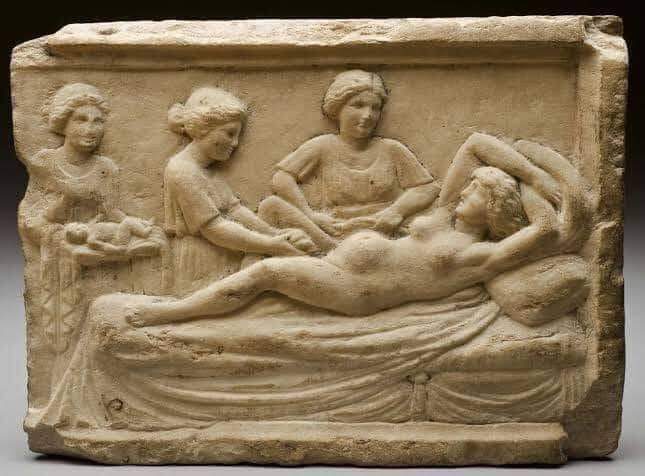
Esta placa que representa a Hagnódica trabajando fue excavada en Ostia, Italia.
Español
Zinduko retweetledi


Zinduko retweetledi

Ferdinand Omanyala's mother on how his son's success has helped them!
English
Zinduko retweetledi

Vietnam Savaşı sırasında Amerika’nın köprüleri bombalamasının ardından, kadınların Vietnamlı askerlerin geçiş yapabilmesi için adeta insan köprüsü olması tarihin tozlu sayfalarından bir kare.
Türkçe
Zinduko retweetledi

I have two things you can look at...One is a history of Nairobi from pre colonial era. The other is a look into the first workers' strikes and how the various estates in Nairobi played into that. Links:
1.scribd.com/document/64247…
2. libcom.org/article/nairob…
Njeri Waridi@Njeriwaridi
Is there a book that compiles the history of Mathare over the years? It would be such an important read @AnganaKeith
English
Zinduko retweetledi
“Kenyatta National Hospital is an assassins’ den, not a medical facility,” a pastor says, adding that the Kenyan healthcare system is in the ICU.
English
Zinduko retweetledi

Legend recognizes legend.
Siya Kolisi × Eliud Kipchoge, Siya greeting EK on the startline.
Two great sons of Africa who inspire far beyond Africa and far beyond their sport.
This continent is truly blessed saaaana.
( 🎥 @SiyaKolisi )
English
Zinduko retweetledi

Arsenal are the first team in Premier League history to go a whole season without receiving a red card or conceding a penalty.

English
Zinduko retweetledi

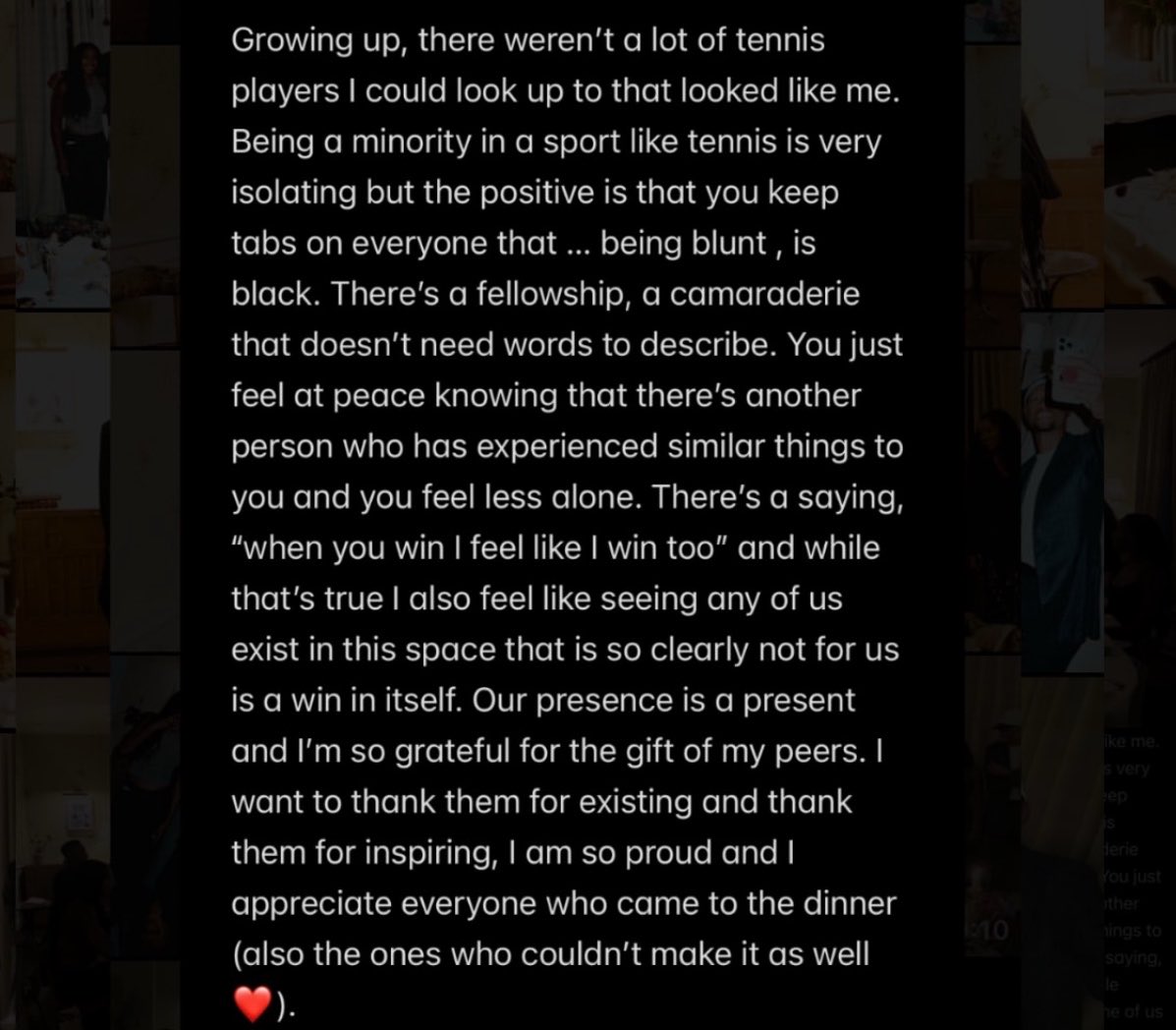
Naomi Osaka on why she chose to host a party for the black tennis players:
“You know I'm seeing a little bit of-
‘Why can't you love everyone for all skin tones?’ and ‘what if someone had an all white party?! First of all I do love everyone for who they are no matter their race + ethnicity, (I'm literally half Japanese lol). I can only speak from my experiences in my own life though, growing up as a tennis player I didn't see many people that looked like ME and I feel like it's important to celebrate them.
Secondly I feel like it's important to note that there have been all white dinners/parties. I don't know how else to tell you this, I literally seen them all the time and never had an issue with it at all. To the people who ask this question I want to ask you this question too, ‘What is it about POC getting together that unsettles you so much?’
I want to end this by saying I grew up watching my dad get discriminated against, having the cops called on him multiple times at the tennis court. There are multiple things I will apologize for in my life but celebrating being black and appreciating who we are will never be something I would consider saying sorry for. Thanks.
Actually I lied, I am sorry. I'm sorry for the people who cannot comprehend in their brains that this is not about exclusion, this is a celebration about how far we have come 🖤”
(via Naomi on Threads)

English
Zinduko retweetledi

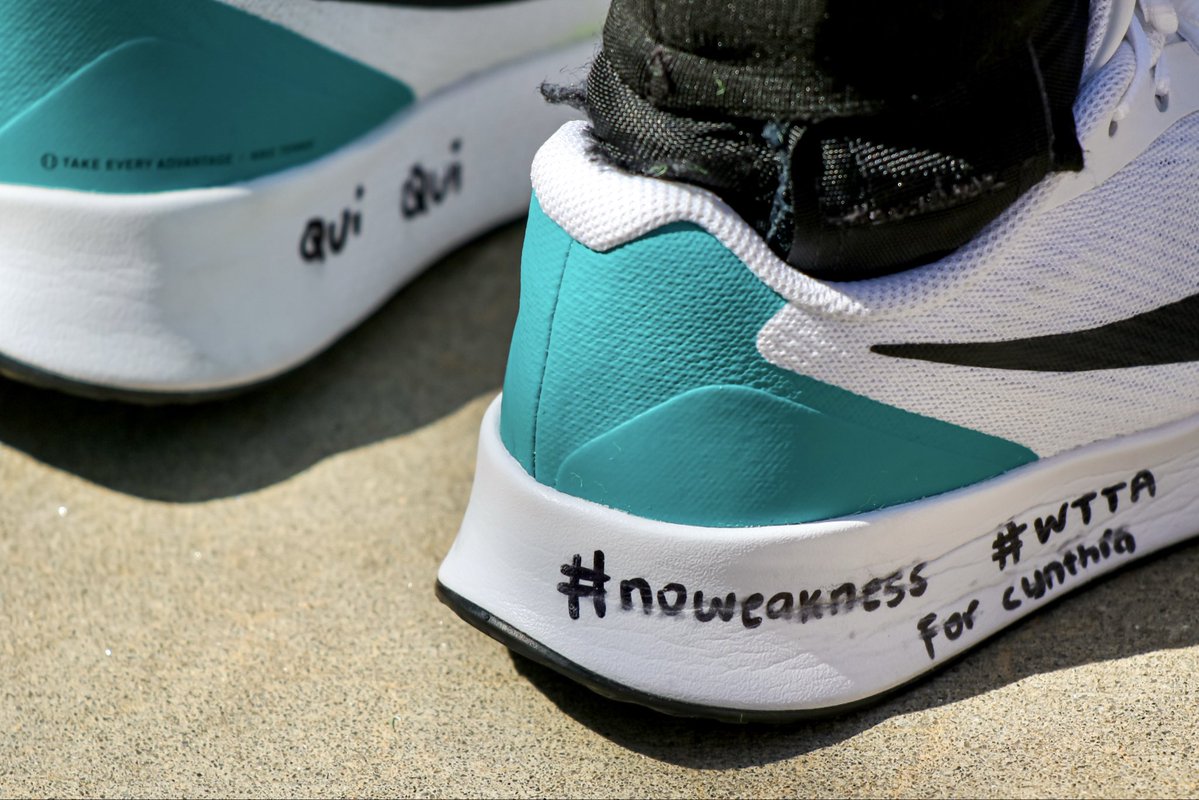
4 YEARS LATER ITS OVER !!
Thank you @AuburnWTennis for everything , wouldn’t trade it with anything !!
Cynthia I did it !! 🥹❤️
#noweakness #wtta #winanyway



English
Zinduko retweetledi

2/2 school. Mom was in the bedroom so comes downstairs, meanwhile pick up van team is extra agitated and insisting they’re getting late but leave when they hear mother is coming down citing time. School is shocked says no way and 5 mins later the real bus is there! Be careful!
English
Zinduko retweetledi
1/2 I’ve been told of a lady I know whose nanny saved the kids from being stolen. School bus came but different from the usual, they said this is the one they’re using today because the school bus is spoilt. Nanny was hesitant n insisted on calling the mom to confirm with
English
Zinduko retweetledi

Angella Okutoyi’s 4 year journey with Auburn Tennis has officially come to an end.
Congratulations, @Okutoyiangella2
#NoWeakness


English
Zinduko retweetledi

Imagine you've gone to a police station to see your son who was arrested,
Only for the police to usher you into a room where a chaplain and a counselor are sitting for counseling yet you still don't know what you are being counseled for.
Brian Njunge Ndung'u was killed inside the Kiambu Police cells.
I rule out suicide!
English
Zinduko retweetledi

Eliud Kipchoge spotted running alone behind the first group at the Cape Town Marathon in South Africa

English
Zinduko retweetledi

The trial unfolded over nearly two years.
Over one hundred witnesses spoke, each adding a fragment to a story that refused to become whole. Judge Robert Mutitu presided, at least initially raised questions why the allegations of torture had not been raised earlier,Then he stepped down. Not because of the case, but because the judiciary itself had become in need of “radical surgery”. A government purge of judges implicated in corruption. Timing, however proved decisive.
A new judge, Nicholas Ombija, inherited the case. He reviewed the proceedings, the testimonies, the inconsistencies, the technicalities and on December 4, 2006, he declared a mistrial. Procedure had been compromised. The accused were minors.
The case ended.
The boys those who had lived carried trauma while those accused walked free. Back there, The memorial remains, the school gate is usually locked. It opens occasionally for parents who are still alive, still patient enough to ask questions that have outlived the expectation of answers.
They walk among the graves.Ten sons per plot. One nation’s negligence, carefully arranged. Somewhere, perhaps, Felix Mambo Ngumbao and Davis Onyango Opiyo continue their lives. Or perhaps they don’t.
The flowers still grow.
English
Zinduko retweetledi

Kenyan long-distance runner Kalipus Lomwai secured a podium finish at the Cape Town Marathon, crossing the line in third place behind the winner, Ethiopia's Mohamed Esa and his compatriot Adane Kebede.
Kenyan marathon legend Eliud Kipchoge finished in 16th place.

English
Zinduko retweetledi

People MUST resist Freehold Land being turned into Leasehold and oppressive TAXES imposed with the Land being auctioned upon failure to pay the those taxes.Objective is to disposess people of their Lands and turn them into labourers for the new owners.We have a CRIMINAL regime

English
Zinduko retweetledi

A team of researchers in New Zealand followed 1,037 babies from the day they were born for the next 45 years to find out what actually determines a successful adult life, and the strongest predictor they found had almost nothing to do with intelligence or family wealth.
The findings have been published in the most prestigious scientific journals in the world.
Almost no parent has heard of them.
His name is Avshalom Caspi.
Her name is Terrie Moffitt.
They are a husband and wife research team based at Duke University and King's College London, and the study they have spent their careers running is called the Dunedin Multidisciplinary Health and Development Study. It started in 1972 in a single hospital in Dunedin, New Zealand. Every baby born there in a 12-month window was enrolled. 1,037 of them. The study is still running today.
The retention rate is the part that should astonish anyone familiar with how research usually works. After more than 45 years, over 90 percent of the original participants are still being tracked. Most longitudinal studies lose half their sample inside ten years. The Dunedin team has lost almost nobody.
They measured everything. Blood. DNA. Brain scans. Income. Criminal records. Romantic relationships. Drug use. Dental health. Sleep. Mental health. Lung function. They flew participants who had moved abroad back to Dunedin every few years for a full day of assessments. Some of those people now live in seven different countries. They still show up.
For the first decade of life, the team did something nobody else was doing systematically. They measured each child's self-control. Not IQ. Not family income. Not parenting style. Self-control. They watched 3-year-olds in a research lab and rated their ability to wait, regulate frustration, follow instructions, and resist impulsive reactions. They added teacher ratings. They added parent ratings. They added the children's own self-reports as they grew older. They combined all of it into a single highly reliable score.
Then they did the thing nobody else had the patience to do. They waited.
When the data came in at age 32, the result was so consistent it should be illegal to teach a child without it.
The children who scored lowest on self-control at age 3 grew into adults with worse physical health, more substance dependence, lower incomes, more credit card debt, higher rates of single parenthood, more criminal convictions, and worse mental health than the children who scored highest. The pattern was not subtle. It was a clean gradient. Every step up in childhood self-control produced a measurable step up in adult outcomes across every domain the team could measure.
The detail that should disturb every parent reading this is what happened when the researchers controlled for the obvious objections.
When they controlled for IQ, the effect held.
When they controlled for family income and social class, the effect held.
When they compared siblings inside the same family, the sibling with lower self-control still had worse adult outcomes than the sibling with higher self-control. Same parents. Same house. Same dinner table. The trait was running independently of everything researchers expected to explain it.
The paper landed in the Proceedings of the National Academy of Sciences in 2011. The title was as plain as it gets. "A gradient of childhood self-control predicts health, wealth, and public safety." It has been cited thousands of times since. Almost no policy maker has acted on it.
The reason most people resist this finding is that it sounds like a sentence handed down before the child could speak. If the trait that determines your adult life is locked in by age 3, the rest of your life is a formality.
The Dunedin researchers say that is the wrong way to read the data.
They found something else in the same paper that almost nobody quotes. Some of the children whose self-control scores improved between childhood and adolescence ended up with adult outcomes far better than their early scores predicted. The trait is not destiny. It is a muscle. Children who learned to wait, regulate, and resist between ages 5 and 15 caught up with kids who started ahead.
Self-control is the one childhood trait nobody seems to teach on purpose anymore. Schools focus on test scores. Parents focus on activities. Coaches focus on performance. The part of the brain that decides between five seconds from now and five years from now is left to develop on its own, and the data shows it usually does not.
The most uncomfortable part of the research is the cost calculation Moffitt and Caspi ran. They estimated that if a country could move the bottom 20 percent of children up one rung on the self-control ladder, it would measurably reduce healthcare spending, welfare dependency, and incarceration costs at the national level. The intervention is cheaper than almost any other public health investment available. Almost no country has tried it at scale.
The reason adults struggle with money, weight, addiction, and relationships is rarely intelligence. It is the gap between what you want right now and what you want in ten years, and which side of that gap your nervous system is built to listen to.
Most people lost that fight at age 4 and never went back to learn the technique.
You were not behind because life dealt you a bad hand.
You were behind because the part of you that decides between right now and the rest of your life was never taught how to choose. The good news is the muscle is still there. Almost nobody trains it after age 10.
You can be the one who does.

English
Zinduko retweetledi