Andrew Leduc

1.9K posts

Andrew Leduc banner
Andrew Leduc

Andrew Leduc

@_AndrewLeduc

Post-doc @slavovlab Interests: Non-canonical protein sequences Protein degradation Single cell analysis

Boston, MA Katılım Şubat 2020
316 Takip Edilen795 Takipçiler
Sabitlenmiş Tweet
Andrew Leduc
Andrew Leduc@_AndrewLeduc·
The big one is finally out!! In this paper, we set out to provide insight into the fundamental question; How do the individual cells from complex tissues regulate their proteomes? Brief summary of our findings 👇 biorxiv.org/content/10.110…
English
6
39
199
41.2K
Andrew Leduc
Andrew Leduc@_AndrewLeduc·
@lpachter Sure but this hasnt been their obsessive burden for as long
English
0
0
1
28
Lior Pachter
Lior Pachter@lpachter·
@_AndrewLeduc Mathematicians are facing a future where access to expensive AI is essential for research and it is not at all obvious where they might secure funding.
English
2
0
3
429
Lior Pachter
Lior Pachter@lpachter·
Mathematicians: AI => what is math? Biologists: AI => increase grant funding probability?
English
6
0
74
11.1K
Mathurin Dorel
Mathurin Dorel@MathSRIsh·
@_AndrewLeduc Do you have a reference for those numbers? As far as I know state of the art is closer to 1-2k proteins for a few thousand cells (100-300ng). For 10k you need in the 100ug range so closer to a million cells. But granted my reference is 6 years old. nature.com/articles/s4146…
English
3
0
0
15
Andrew Leduc
Andrew Leduc@_AndrewLeduc·
Its hilarious the extent to which people dont understand that mass specs actually work amazingly well right now today for protein sequencing I think it is primarily the fault of our community in doing a poor job of applying the technology.
Steve Jurvetson@FutureJurvetson

🐠 Everything we know about biology has been built on an incomplete picture. DNA tells us what a cell might do. Proteins tell us what it’s actually doing. Pumpkinseed announced their $20M Series A today (led by Future Ventures and NfX) to build the platform that reads proteins directly—for the first time. Proteomics has always faced a fundamental constraint: you can only measure what you already know to look for. The current workhorse, mass spectrometry, requires matching protein fragments against reference databases. If a protein isn't in the database, or doesn't ionize reliably, it's invisible. Other approaches rely on fluorescent labels or antibody-based affinity methods, which introduce their own biases and blind spots. The result is a field that has spent decades generating an increasingly detailed map of a small, well-lit corner of the proteome, while biology’s most important data layer remains hidden. This isn't a sensitivity problem. It's a category problem. Existing tools were never designed to read proteins directly de novo. They were designed to find what researchers already suspected was there. Pumpkinseed is built to find everything else. And proteomics is harder than most people outside the field appreciate. When we account for post-translational modifications, non-canonical amino acids, and glycan decorations, there are roughly a thousand distinct chemical monomers in the proteomic alphabet, compared to the four bases of DNA. deSIPHR (de novo Sequencing and Identification of Proteins with High-throughput Raman spectroscopy) is Pumpkinseed's proprietary nanophotonic chip platform, fabricated with semiconducting manufacturing. With over 100 million sensors per square centimeter, it reads proteins, known or unknown, letter by letter — amino acid by amino acid — without a reference catalog of proteins, and at high-throughput. The result is direct, high-resolution proteomic data, including post-translational modifications, non-canonical amino acids, and single-cell detail, that mass spectrometry-based approaches cannot match. What is Raman spectroscopy? Rather than tagging or fragmenting proteins, Raman spectroscopy reads the molecular vibrations of individual molecules. Each amino acid vibrates at a characteristic frequency, producing a unique physical signature that deSIPHR detects directly. This is physics reading biology in the most literal sense. With conventional Raman spectroscopy, only about one in ten million photons interacts with a molecule usefully, far too weak for single-molecule work. Pumpkinseed's answer is a silicon photonic chip patterned with a billion sensors per wafer. Those sensors concentrate light into volumes smaller than a single protein, amplifying Raman scattering efficiency by over 10 million-fold. And their future ventures? “The longer-term ambition is the virtual cell, a computational model that simulates not just how proteins fold but how they interact, respond to drugs, and behave under perturbation inside a living system. AlphaFold demonstrated what structural AI can do once a sequence is known. The gap that cannot be closed is determining the sequence itself from biological samples, particularly for proteins carrying modifications absent from existing databases. Pumpkinseed is designed to supply that input layer. "If the Human Genome Project was the data infrastructure that enabled genomic medicine, we believe the high-resolution proteomic dataset Pumpkinseed is building could be the analogous foundation for AI-driven biological discovery," co-founder Dr. Jen Dionne says. "In our vision, the molecular signatures driving disease, aging, and ecosystem health become fully legible. Medicine shifts from reactive to proactive. Optimal healthspan moves from aspiration to achievable reality." —synbiobeta.com/read/pumpkinse… • The biology mining company: Pumpkinseed.Bio • Today’s News: pumpkinseed.bio/news/pumpkinse…

English
6
2
24
4.4K
Andrew Leduc
Andrew Leduc@_AndrewLeduc·
@MathSRIsh The large change has been with the advent of DIA-MS which means you no longer need millions of cells. The reason you needed millions of cells was to do offline fractionation which now is mostly not needed because we do parallel ion accumulation as opposed to one at a time)
English
0
0
1
11
Andrew Leduc
Andrew Leduc@_AndrewLeduc·
@MathSRIsh This article is outdated and overstated on challenges. "Data-independent methods (DIA) improve inter-run stability to some extent, but require careful calibration and adjustment of the collision energy to allow comparison of measurements, even on the same instrument" Not true
English
0
0
0
6
Andrew Leduc
Andrew Leduc@_AndrewLeduc·
@MathSRIsh You can measure 200-300k distinct peptides today from ~10k proteins with just a few thousand cells of sample. I dont think you appreciate how incredibly challenging it would be for another tech to solve the various challenges inherent to this
English
1
0
0
9
Mathurin Dorel
Mathurin Dorel@MathSRIsh·
@_AndrewLeduc I think you completely missed my point. Sure you can have good sequence coverage for a specific, and even up to hundreds of enriched peptides. But when you want to quantify between samples, the methods are highly variable. And that is the problem most people are interested in.
English
2
0
0
17
Andrew Leduc
Andrew Leduc@_AndrewLeduc·
@MathSRIsh I dont think you know much about the field the field and the inherent challenges with protein sequencing, The Quant comment is just not true and if you need to detect a specific part of a protein you can use multiple proteases and obtain pretty good sequence coverage these days
English
2
0
0
24
Mathurin Dorel
Mathurin Dorel@MathSRIsh·
@_AndrewLeduc I would say people are more interested in protein (and PTMs) quantification than protein sequencing. And for that MS is far from working amazingly well. It's closer to single cell transcriptomic than bulk for bulk quantification. Reliably finding a peptide is still a challenge
English
2
0
0
24
Andrew Leduc
Andrew Leduc@_AndrewLeduc·
@KentsisResearch @afederation For sure, I have also worked in this quite a bit (was accepted other day 😁) pubmed.ncbi.nlm.nih.gov/39253435/ I think for these seq technologies, they need to be very accurate/sensitive to out perform MS here. Gains in denovo MS will come before these far fetched seq approaches i think
English
1
0
0
36
Andrew Leduc
Andrew Leduc@_AndrewLeduc·
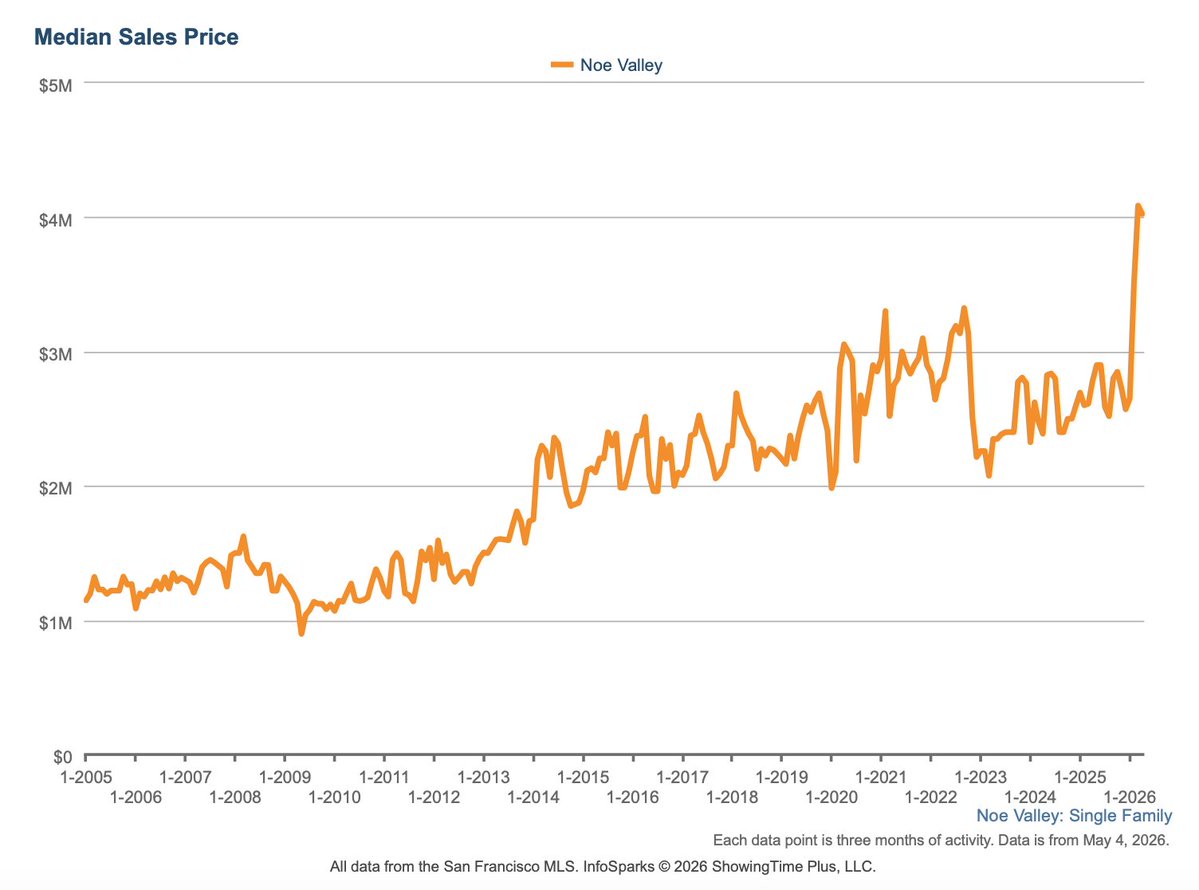
@dagarfield @rohindhar I was just looking at houses in Noe Valley on Zillow the other day and was a bit depressed haha this confirms what I was seeing 😅
English
0
0
0
33
Rohin Dhar
Rohin Dhar@rohindhar·
Median single family home sale price in Noe Valley, San Francisco Jumped $1.5 million in the first three months of this year
Rohin Dhar tweet media
English
23
17
412
93.7K
Anders Sejr Hansen
Anders Sejr Hansen@Anders_S_Hansen·
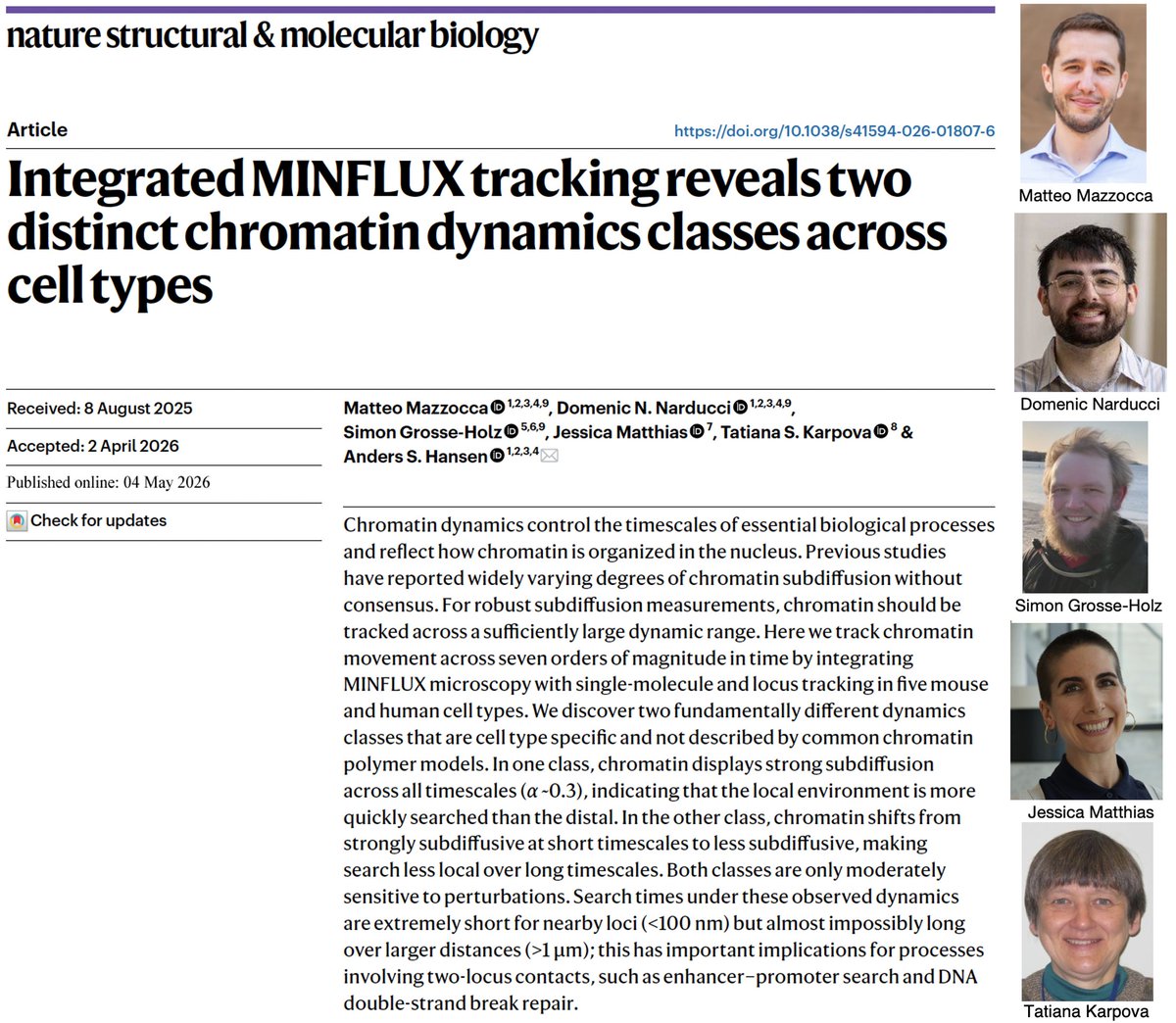
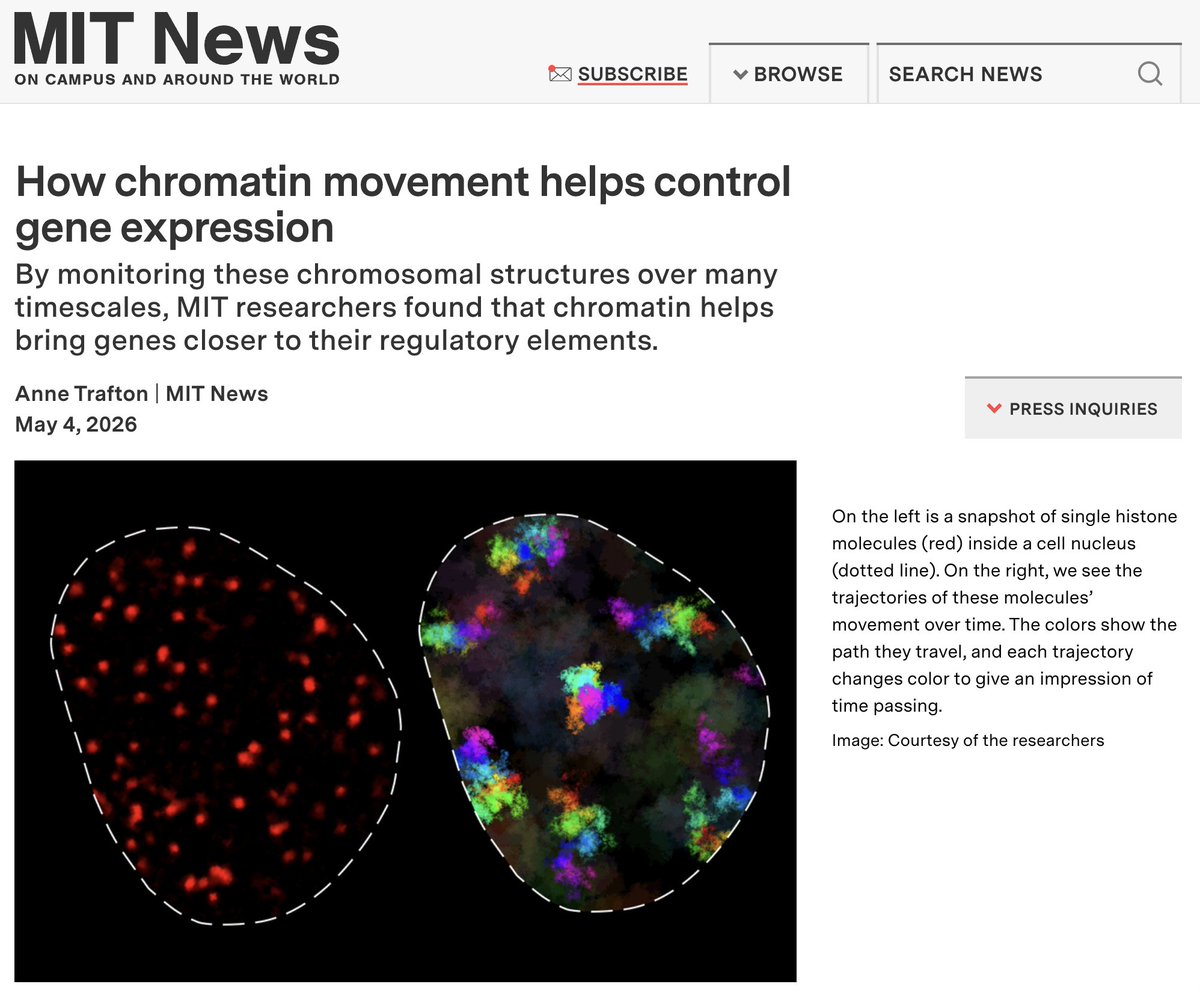
(1/n) Super excited to share that our preprint is out today in @NatureSMB with a new name "Integrated MINFLUX tracking reveals two distinct chromatin dynamics classes across cell types" and more than 2x more data: nature.com/articles/s4159… MIT NEWS: news.mit.edu/2026/how-chrom…
Anders Sejr Hansen tweet mediaAnders Sejr Hansen tweet media
Anders Sejr Hansen@Anders_S_Hansen

(1/13) Thread on @mazzocca_matteo @DomenicNarducci @SGrosseHolz @_jessematthias new preprint Q: how does chromatin move? Using MINFLUX, SPT & SRLCI, we track chromatin dynamics across 7 orders of magnitude in time to provide some answers biorxiv.org/content/10.110…

English
4
37
171
20K
Andrew Leduc retweetledi
CNIC Proteomics Lab
CNIC Proteomics Lab@cnic_proteomics·
It is our pleasure to announce that @slavov_n (Northeastern University, Boston) will be giving a talk at @CNIC_CARDIO this coming Monday, May 11th, at 12:00 pm in the Auditorium. We look forward to an engaging presentation on the field of single-cell proteomics. #singlecell
CNIC Proteomics Lab tweet media
English
0
3
8
1.8K
Andrew Leduc
Andrew Leduc@_AndrewLeduc·
@girishkaitholil No word at all, we were invited to submit revisions and it is still in the system so not sure why it would be rejected without telling us
English
1
0
0
15
Girish Kumar, PhD
Girish Kumar, PhD@girishkaitholil·
@_AndrewLeduc Six months of silence after revisions is the editorial-overload signal. The asymmetric burden lands on first-authors who can't safely send a second paper anywhere until this one closes. Has the editor confirmed it's still in active review?
English
1
0
0
47
Andrew Leduc
Andrew Leduc@_AndrewLeduc·
We submitted a paper to cell systems, it got sent out for reviews, we got the reviews back and responded a month later. It has been 6 months and we have had 0 correspondence from the journal. No updates of any kind despite sending a number of emails to editors. Is this normal?
English
2
0
7
1.5K
Andrew Leduc
Andrew Leduc@_AndrewLeduc·
@arjunrajlab Yeahh... Im a busy person as well. No one is too busy to send at least a 2 sentence email saying "Hey sorry, the reviewers aren't responding, will let you know soon." Thats all I am asking for, just a small update would be nice
English
0
0
2
40
Arjun Raj
Arjun Raj@arjunrajlab·
@_AndrewLeduc They are overloaded. FWIW, the editors at Cell Systems are really great—both as editors and human beings. I would assume they are swamped. But I can imagine it is very frustrating. I’ve learned these days to just wait patiently.
English
5
0
12
986
Andrew Leduc retweetledi
Prof. Nikolai Slavov
Prof. Nikolai Slavov@slavov_n·
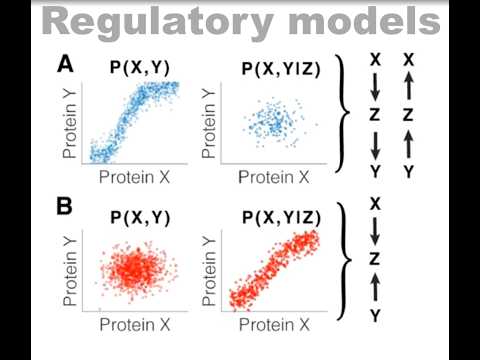
Biological functions arise from protein interactions, which are reflected in the natural variation of proteome configurations across individual cells. Emerging single-cell proteomics methods may decode this variation and empower inference of biological mechanisms with minimal assumptions. This presentation summarizes research projects aiming to infer protein regulatory interactions from protein covariation across single cells. Examples include the regulation of protein transport to the nucleus and cell fate determination during early development. youtu.be/ggr3NWzP-yM?si…
YouTube video
YouTube
English
0
6
25
4.1K