Michael ☕️🤯

5.3K posts

Michael ☕️🤯 banner
Michael ☕️🤯

Michael ☕️🤯

@_MRogers

Thinking out loud.

Edge of Chaos Katılım Eylül 2008
3.8K Takip Edilen462 Takipçiler
Michael ☕️🤯
Michael ☕️🤯@_MRogers·
TBPN@tbpn

"We're about to see the explosion of analog." @garyvee wants to open a restaurant that makes you check your phone in at the door and seats you at communal tables. "Extreme AI is creating extreme analog. I think it's a barbell." "I could not be more interested in physical retail, event-driven businesses, in concerts and venues." "There are a lot of interesting non-digital realities that are coming as a countermove to the insanity of AI advancements." "We're literally within a half decade of not believing a single video that's on the internet. In 5 years, if we're having this interview, most of the audience is trying to figure out if we're real or not." "That is very real, and has substantial counter-opportunities." "Any real entrepreneur, they're not crying about AI killing them. They're curious about how AI at scale is going to create opportunity for them."


ZXX
0
0
0
26
Michael ☕️🤯
Michael ☕️🤯@_MRogers·
@mckaywrigley > anthropic has got to figure out the compute thing. you can feel it as a user. vibes are all out of whack bc of it. 100%, you can feel it viscerally enjoying codex, feel it's less good compared to ghostty + claude code for spinning up 5 agents at once how do you handle that?
English
0
0
0
166
Mckay Wrigley
Mckay Wrigley@mckaywrigley·
some random ai thoughts: - for code, i went from 80/20 claude/gpt to 80/20 gpt/claude in <3 months. surprised by this tbh, and interested to see where the split is at in another 3mo. - claude still mogs gpt for non-coding agent stuff. codex feels like an engineer (which is great for coding!), whereas claude still feels like a general purpose coworker. gpt still lacks that coworker magic - i’m pretty meh on opus 4.7. my experience hasn’t been *bad*, but it certainly hasn’t been good. sideways if anything. - anthropic has got to figure out the compute thing. you can feel it as a user. vibes are all out of whack bc of it. my opinions above are all likely downstream of this. it’s an issue. - anthropic labs continues to be the goat of ai product. claude design is another hit. it’s fantastic. idk why it’s not talked about more? a+ - updated claude code app is great. i finally switched out of the terminal for it. very well done. - how are people STILL sleeping on the claude agent sdk? i feel like i’m going insane. - gpt 5.5 is incredible. the level to which i trust it for engineering is amazing. if i could only have one model rn, it would be this one just bc of strong need for the coding use case. - codex team is killing it. app has been the gold standard since 5.3 release (buuut i credit conductor team for the ui innovation that everyone is using now). though i could do with a little less passive aggressive shots at ant from the codex team. TARS, dial up class by 30%. it’s a long race guys haha - i uninstalled cursor this month and am now back to vs code for my ide. composer just can’t hang with claude/gpt, and the product feels a bit all over the place. pretty stoked about the xai thing though, because their team is absolutely stacked and i’m excited to see what they might be able to do with that compute. codex and claude code are t1, cursor is t2. i would love if this deal got xai/cursor to t1 for a real trio there. - gemini…? seems like this is 2-3 models now where the model seems like a great release and then nobody ever uses it? i’m bullish google/deepmind but weird it hasn’t translated to product use in any form. kinda disappointed still - no open source models have hit the opus 4.5 level. was hopeful the new deepseek would get there, but nope. good oss agents will have to wait a few more months it would seem…
English
151
88
1.6K
218.7K
Gustav Söderström
Gustav Söderström@GustavS·
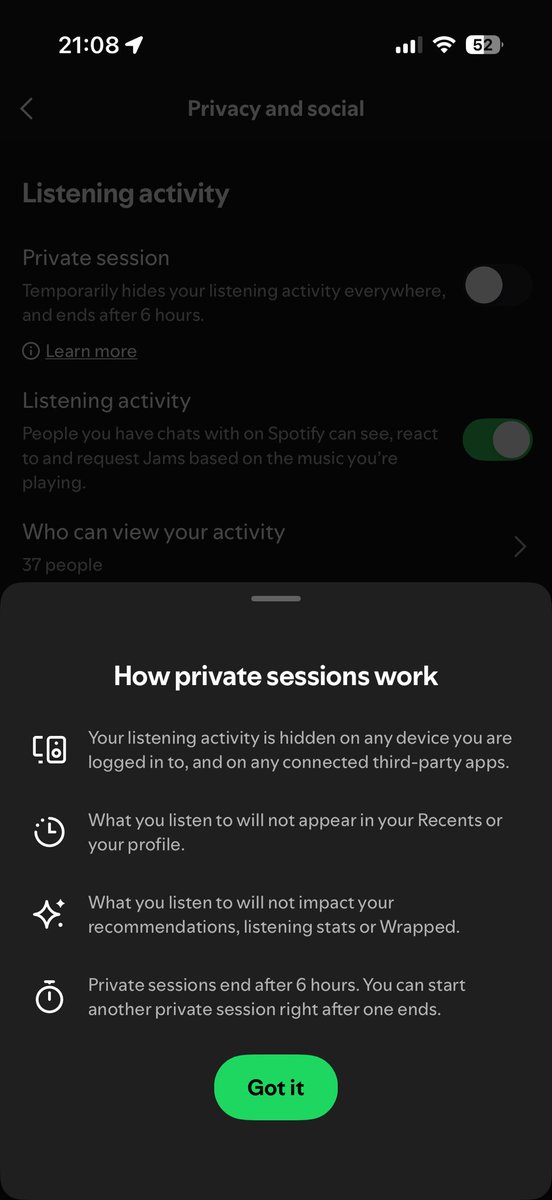
Hey @danielcberk We currently have two different tools to help you with this challenge (which I have myself as well btw 🙂): 1. You can create a separate playlist and choose to exclude it from your taste profile (see screenshot). 2. If you just want to be able to use the whole app without it affecting your taste profile for a while, you can start a private session (see screenshot). More coming, but that’s it right now.
Gustav Söderström tweet mediaGustav Söderström tweet media
English
34
3
599
73K
Daniel Berk 🐝
Daniel Berk 🐝@danielcberk·
Spotify needs to release a “kids” setting so I can play all the songs my kids listen to without it affecting my own Discovery algorithm. Insane that I can’t do this already. My Discover Weekly is just nursery songs and Moana. @Spotify please fix this.
English
481
387
20.4K
1.3M
Riley Brown
Riley Brown@rileybrown·
The Codex Super-App (Full Beginners Guide) The All Purpose Interface for AI Agents Part 1: Codex Basics Install Codex, Projects, Chats, Documents, Plugins, Custom Skills, Automations Part 2: Multitasking with Codex - iOS App Designs - Build an iOS App - Landing Page - Launch Video - Investor Deck - Social Media Automation TIMESTAMPS: Part 1: Codex Basics 00:00 Intro 02:54 Downloading Codex 03:20 Overview of Codex interface 03:56 Chats, Prompting, & Built in Search 04:53 Creating Projects 07:37 Creating Spreadsheet 09:43 How Files are stored and mentioned within projects 10:42 Quick Codex Overview 12:47 Search (CMD G) and Folder Organization 14:29 Skills and Plugins 16:29 Using Calendar Plugin 18:07 Creating Automations on Codex 19:18 Learn about Plugins (Figma) 21:37 Built in Image Gen 22:37 MCP Example (Paper for Design) 24:17 Opening Chats in mini-window 25:26 Steering vs Queueing the Agent 27:35 Creating Own Skill with API's 31:34 Using YouTube Researcher Skill (That we created) 33:24 Creating Automation with your custom skill Part 2: Multitasking (More chaotic and fun) 35:27 Part 2 Multitasking: Building iOS App, Web App, Investor Deck, Launch Video, Mobile Designs, and Automated X Posts 37:54 Creating Project 38:31 Planning my 6 Projects 40:25 Mobile Design Skill 41:47 Setting up iOS App 45:08 Implementing Desings into Mobile app 46:13 Creating a landing page that collects user info 46:45 Tally for form submission (Great for lead magnets) 49:43 Organizing and Renaming Chats for multitasking 52:12 Database for Mobile App (Supabase) 53:19 Generating app icons 54:08 Launch Video (Remotion) 59:32 Remotion Video Timeline and Seeing the Video Editor 01:05:37 Editing instructions for Remotion (Gridlines) 01:07:11 Editing Web App 01:09:46 Using CLAUDE CODE Inside Codex for Design (Terminal) 01:17:20 Forking a Chat to create investor deck 01:19:09 Using Claude 4.7 Opus for Designing Deck 01:20:22 Testing Canva Export (It's good) 01:22:33 Running Mobile App on Actual Phone (Not Simulator) 01:28:58 Finishing up All Projects (Mobile App, Landing Page Launch Video) 01:31:56 Exporting Deck and making changes in Canva 01:33:13 Deploy to Vercel using the Vercel Plugin 01:33:44 Adding Song to Remotion Video 01:35:26 Setting up x Post automations (Typefully) 01:37:57 Our App is on Testflight! 01:39:58 Final Remotion Video 01:41:04 Final Thoughts, Reflections, Summary
English
95
430
3.5K
422.8K
Michael ☕️🤯
Michael ☕️🤯@_MRogers·
@signulll This is what a product manager is/was. The “professionalisation” of the job was the worst thing that happened to it. It way @lennysan is so big and popular. Something went wrong, his material helps bring the function closer to this.
English
0
0
0
28
signüll
signüll@signulll·
the most underrated hire right now is a great product person. when i say product person i'm def not talking about a product manager. perhaps i think there has to be somewhat of a new role. i don't have a good name for it yet but maybe something like "product thinker".. someone with an intuitive grasp of the product as it exists, where it's soft, where it sings, & how to iterate it toward something even sharper. in some sense, this person has to cohesively hold in their head where this product should be 2 years from now & work backwards from that. i say this cuz when building was hard, engineering was the bottleneck & the status hierarchy often reflected that. building is no longer hard. which means the variance in outcomes has shifted almost entirely to judgment on what to build, how to sequence it, & how to talk about it. & the story matters as much as the thing. internally, it organizes the team around a shared model of why. externally, it shapes the interpretive frame users bring to their first experience. you can't retrofit narrative onto a product & expect it to land, it has to be load bearing from the start. the rarest version of this person sits at the intersection of culture & deep technology. someone genuinely bilingual. they know what's technically possible & they know which cultural currents are real vs. ephemeral. that combo is what separates products that feel inevitable from products that feel assembled. before ppl clap back with this person has always been valuable, i know.. i am just saying now they might be the most *important* person in the room. their value compounds like never before.
English
447
742
6.3K
1.4M
Michael ☕️🤯
Michael ☕️🤯@_MRogers·
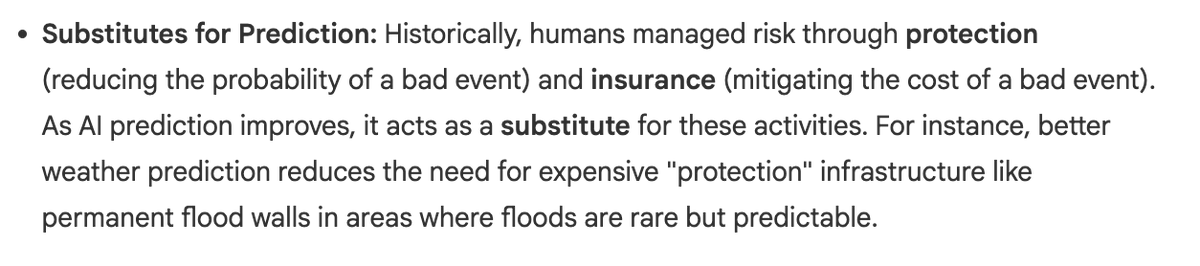
@jposhaughnessy Would love another "Charts from the vault" I asked Claude to update 3. Enterprise Value-to-Invested Capital for U.S. Companies, 1963-2023 This time is different right?
Michael ☕️🤯 tweet media
English
0
0
1
27
Brie Wolfson
Brie Wolfson@zebriez·
what is the best technical primer on a topic you've ever read?
English
20
5
107
32.4K
Michael ☕️🤯
Michael ☕️🤯@_MRogers·
@petergyang @dwr Why can’t superwhisper do the short dictation? I also have it in mobile. But getting fomo from hearing good things about wispr flow.
English
0
0
0
64
Peter Yang
Peter Yang@petergyang·
@dwr Both. Wispr flow for short dictation at laptop. Superwhisper for going on a walk and dictating for 10 min
English
4
0
40
6.7K
Dan Romero
Dan Romero@dwr·
Superwhisper or Wispr Flow?
English
136
1
106
294K
Michael ☕️🤯
Michael ☕️🤯@_MRogers·
@pdrmnvd Do you switch toe “explanatory” output? It’s a little bit of a pain to do so with config, worth a hotkey?
English
0
0
1
89
pedram.md
pedram.md@pdrmnvd·
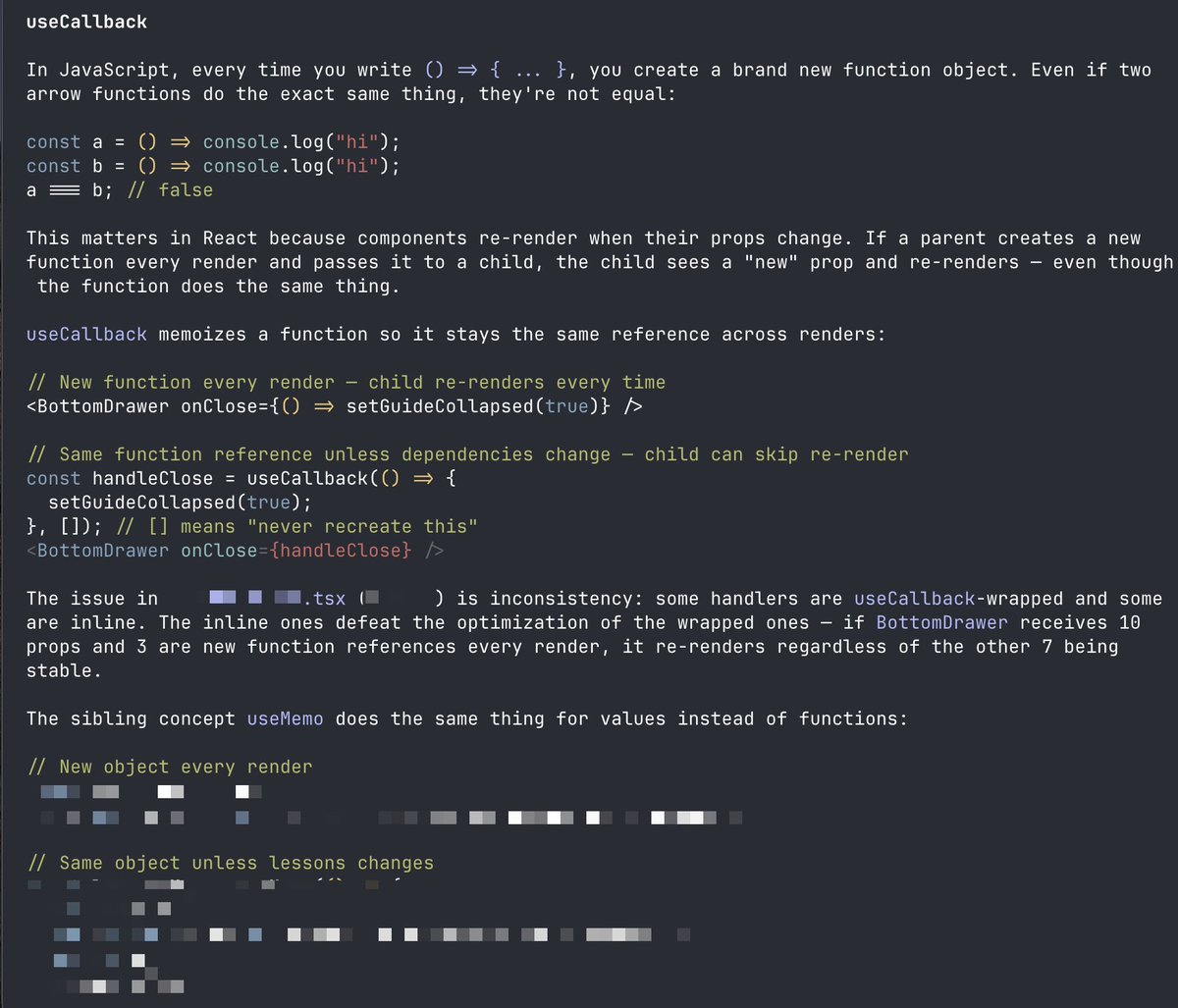
underrated claude code routine: when you (or Claude) finds issues with your code, have it explain concepts for you dusing your own codebase. here's claude explaining issues my use of useEffect and useCallback. so much nicer than just reading a random doc.
pedram.md tweet mediapedram.md tweet media
English
5
1
29
3.1K
Eleanor Berger
Eleanor Berger@intellectronica·
OK I finally switched back to @obsdmd, because obviously md + agents wins. It's awesome! I'm using the ACP plugin and the CLI + @kepano's skills. What else should I check out? Any cool plugins, tips, guides, videos, forums I should explore?
English
16
3
140
13.9K
Abraham Thomas
Abraham Thomas@athomasq·
Hatchards is my favourite by a large margin. I also like the bookstore at the British Museum. The Daunt tote bag is tourist cringe but the bookstore itself is fine. Waterstones is chain-y but nonetheless very good. I used to love the 2nd-hand stores along Charing Cross but most have disappeared, "Any Amount" is one of the few that remain.
English
1
0
1
744
Will Manidis
Will Manidis@WillManidis·
what are the best bookstores in London?
English
50
3
55
19K
Brian Albrecht
Brian Albrecht@BrianCAlbrecht·
"The China Shock destroyed millions of American manufacturing jobs." At least that's a claim. But prices connect everyone. When you shock one part of the market, the "control" group moves. Today we have 3,000 words on "The Missing Intercept" problem. economicforces.xyz/p/the-invisibl…
English
15
72
394
96.2K
Maxime Beauchemin
Maxime Beauchemin@mistercrunch·
Officially a **data renegade** now that I was on the show of the same name. Talking data, agentic coding, open source, and how the landscape is changing so FAST right now. heavybit.com/library/podcas…
English
2
1
12
795
Lenny Rachitsky
Lenny Rachitsky@lennysan·
My biggest takeaways from @stewart: 1. Product design is about creating understanding, not removing friction. Teams obsess over reducing friction and removing steps, but 70% to 80% of product design challenges are actually about helping people *understand* what your product does and what to do next. Users arrive barely interested and confused about what you offer. If they can’t quickly grasp what they’re looking at, they’ll leave. Making confusing things faster just gets users to the exit quicker. The mantra should be “Don’t make me think,” not “reduce friction.” 2. You’re not selling features—you’re selling outcomes. Nobody wants a saddle; they want to go horseback riding. Nobody wants a hammer; they want something built. People understand cars and beer without explanation, but new software needs an explanation of both what it is and why people should want it. Slack wasn’t selling messaging features—it was selling better team coordination and reduced email chaos. If you can’t articulate the transformation your product creates in people’s lives, you’re just listing features. 3. Organizations naturally fill with fake work that looks exactly like real work, what Stewart calls “hyper-realistic work-like activities.” Meetings to preview deck slides, analysis of tiny feature differences, elaborate processes around insignificant decisions. People aren’t stupid or lazy; they’re responding to having more workers than valuable work to do. Leaders must continuously ensure there’s enough clearly valuable work and explicitly say no to projects that can’t possibly generate meaningful impact. 4. The value of a feature exists on a "utility curve." There’s the initial flat zone where a feature is too weak to matter, then a steep rise where it brings users to the "aha" moment, then the value levels off where improvements don’t matter much anymore. Teams often give up in the first flat zone or waste resources in the third. The key question isn’t whether you have a feature, but whether you’ve invested enough to reach the steep part of the curve where it becomes genuinely valuable. 5. Small conveniences create emotional connections that drive word-of-mouth growth. No one switches products because of a good time-zone picker or smooth password recovery, but these details make users love or hate your product. Slack grew largely because people who used it at one company would join a new company and advocate strongly for adopting it. That advocacy came from accumulated small delights, not major features. 6. The “owner’s delusion” explains why bad experiences persist everywhere. Restaurant owners create terrible websites even though they’ve experienced the frustration of visiting other terrible restaurant websites. Business owners assume visitors care deeply about their product, when in reality people arrive distracted, in a hurry, just above the threshold of caring at all. The solution is to regularly step back, pretend you’re a normal person with limited time and patience, and honestly evaluate if your product makes sense. 7. Only pivot after exhausting all reasonable ideas. The right time to pivot isn’t when things get hard—it’s when you’ve genuinely tried every non-ridiculous approach and can coldly, rationally assess that the expected value has dropped below alternatives. Pivoting is humiliating because you’ve convinced investors, employees, and users of a vision you’re now abandoning. That emotional cost means most people either pivot too quickly or wait until they run out of money. 8. Treating customers and employees with extraordinary generosity creates a competitive advantage. Slack pioneered fair billing (not charging for unused seats), gave free credits during Covid, and automatically refunded customers for downtime without their asking. This wasn’t just ethics—it helped attract better employees, created positive stories, and built long-term customer loyalty. The mantra was “In the long run, the measure of our success will be the amount of value we create for customers.”
Lenny Rachitsky@lennysan

Stewart Butterfield (@stewart) rarely does interviews. After 2 years of trying, I finally convinced him to come on. In this special conversation, Stewart shares the frameworks and mental models that most helped him build two of the most important products in tech history (@Flickr, and @SlackHQ—which he sold for $28B, and which powers how basically every company collaborates these days). We discuss: 🔸 "Utility curves" — his framework for prioritizing ideas 🔸 "The owner's delusion" — why restaurant websites suck 🔸 "Tilting your umbrella" — a hilarious Slack core value 🔸 "Hyper-realistic work-like activities" — my new favorite concept 🔸 "Don't make me think" — Stewart's foundational design philosophy 🔸 The story behind "We don't sell saddles here" Listen now 👇 • YouTube: youtu.be/kLe-zy5r0Mk • Spotify: open.spotify.com/episode/42JBWU… • Apple: podcasts.apple.com/us/podcast/sla… Thank you to our wonderful sponsors for supporting the podcast: 🏆 @WorkOS — Modern identity platform for B2B SaaS, free up to 1 million MAUs: workos.com/lenny 🏆 @getmetronome — Monetization infrastructure for modern software companies: metronome.com 🏆 @Lovable — Build apps by simply chatting with AI: lovable.com

English
25
69
633
130K
Ben Lang
Ben Lang@benln·
We're booking out a cafe on December 10th in London Grab coffee, Cursor credits, co-work, and meet the team Let me know if you'd like to come by
Ben Lang tweet media
English
403
46
1.3K
137.8K