Sara Silverstein

195 posts

Sara Silverstein banner
Sara Silverstein

Sara Silverstein

@_S_Silverstein

Historian. Writer. Public & global health, rights, internationalism, migration, statelessness, Mod. & E. Europe. Prof. @UConnHistory & @UConnHRI. Views my own.

Katılım Ocak 2017
78 Takip Edilen658 Takipçiler
Sara Silverstein
Sara Silverstein@_S_Silverstein·
"MAHA, were it a serious movement, would criticize capitalism, or at least the bloated 'health sector' of the American economy. And that would be the right target. But MAHA... diverts profits from one set of businesses to another." snyder.substack.com/p/consumptive-…
English
0
0
4
41
Sara Silverstein
Sara Silverstein@_S_Silverstein·
"MAHA leadership criticizes the pharmaceutical industry’s profit motives in order to promote the wellness industry, which of course also operates according to the profit motive." Here I situate the American health drama in a history of health care. snyder.substack.com/p/consumptive-…
English
0
2
2
146
Sara Silverstein
Sara Silverstein@_S_Silverstein·
Failure to seriously critique capitalism & commercial medicine will make us all sicker. MAHA instead criticizes pharma's profit motives in order to promote the wellness industry, with its own profit motive. I situate this drama in a history of health care: snyder.substack.com/p/consumptive-…
English
0
1
2
140
Sara Silverstein
Sara Silverstein@_S_Silverstein·
One way concentration camps become zones where law doesn't apply is by neglecting policies & standards that would protect health & provide healthcare. You deny laws & norms & dehumanize your victim. See "Illness & Inhumanity in Stalin’s Gulag," Alexopoulos texastribune.org/2026/02/07/ice…
English
0
259
537
17.6K
Sara Silverstein retweetledi
ProPublica
ProPublica@propublica·
Expectant mothers were left so hungry after the U.S. cut foreign food aid that one woman ate clay and charcoal. Her baby struggled to gain weight after being born prematurely. propublica.org/article/kakuma…
English
1.9K
326
556
299.4K
Sara Silverstein
Sara Silverstein@_S_Silverstein·
Journalists & media: stop bothsidesing attacks on childhood vaccines. We look to you to report what is happening & what the effects will be, not repeat the administration’s rhetoric. Effects will be more sickness & death. That is not something to bothsides. Hold power accountable
English
0
2
11
821
Sara Silverstein
Sara Silverstein@_S_Silverstein·
I’m honored to be part of the Ukrainian History Global Initiative, contributing on state forms & statelessness. It’s a privilege to be welcomed into the vibrant community of scholars committed to humanities & knowledge in the midst of war. I’ve learned so much from my colleagues.
Timothy Snyder@TimothyDSnyder

We are told that, under stress, the humanities must be sacrificed. But amidst a war of aggression scholars in Ukraine have undertaken one of the most ambitious knowledge projects of our time. It's a privilege to be involved with Ukrainian History Global Initiative snyder.substack.com/p/ukrainian-hi…

English
0
0
3
195
Sara Silverstein retweetledi
Timothy Snyder
Timothy Snyder@TimothyDSnyder·
Hugely proud of and happy for Prof David Petruccelli, whose history of Interpol is published by OUP today. It provides a complete revision of a major chapter of the history of international policing, and is full of amazing anecdotes from the history of international crime. global.oup.com/academic/produ…
English
6
86
399
36.9K
Sara Silverstein retweetledi
MSF International
MSF International@MSF·
For our colleagues working in a hospital in Kherson, Ukraine, when the lights shut off, providing care doesn’t stop. Our latest documentary shows what its like to work as a humanitarian near the frontline 👇 msf.org/working-near-f…
English
1
7
18
2.3K
Sara Silverstein retweetledi
Eerik N Kross 🇪🇪🇺🇦🇮🇱🇪🇺
Spent my Saturday analysing the 28-point plan. The result: If the US is seriously considering enforcing this plan, it would place itself in violation of: • 13 binding treaties and international instruments • 23 political commitments, declarations, and authoritative resolutions • 35 explicit articles, clauses, and legal principles Total: 71 separate international legal or political obligations. Full analysis below — and keep in mind that even this list is far from exhaustive. ......... This is structured by principles. Under each principle I first state the core rule, then list key treaties/commitments, and show which points of the Witkoff–Dmitriev 28-point plan collide with them. (References to the plan use its point numbers.) I. Non-recognition of territorial acquisition by force and Ukraine’s territorial integrity Core idea: No state may recognize as lawful any territorial change achieved by aggression; all states must respect Ukraine’s territorial integrity within its internationally recognised borders. Key commitments and instruments the US is bound to or has endorsed UN Charter – Article 2(4): prohibition on the threat or use of force against the territorial integrity or political independence of any state. – Creates peremptory norms (jus cogens) and erga omnes obligations not to recognize or assist serious breaches. UN General Assembly resolutions on Ukraine’s territorial integrity – Resolution 68/262 (2014) “Territorial integrity of Ukraine” (Crimea). – Resolution ES-11/1 (2022) “Aggression against Ukraine”. – Resolution ES-11/4 (2022) “Territorial integrity of Ukraine: defending the principles of the Charter of the United Nations”, which: • declares the referendums and annexation of Donetsk, Kherson, Luhansk and Zaporizhzhia “invalid” and “illegal under international law”; • calls on all states not to recognize these territories as part of Russia and demands Russia’s full withdrawal. Declaration on Friendly Relations (UNGA Res. 2625, 1970) – States that no territorial acquisition resulting from the threat or use of force shall be recognized as legal Definition of Aggression (UNGA Res. 3314, 1974) – Reiterates that no territorial acquisition or special advantage resulting from aggression is or shall be recognized as lawful. OSCE Helsinki Final Act (1975) and Charter of Paris for a New Europe (1990) – Inviolability of frontiers; territorial changes only in conformity with international law and by peaceful agreement, not by force. PACE Resolution 2605 (June 2025) on the legal and human rights aspects/consequences of Russia’s aggression – Stresses that inviolability of borders and non-recognition of territorial acquisitions resulting from use of force are core tenets of international law and of the rules-based order. UNGA Resolution ES-11/5 (2022) on remedies and reparations for Ukraine – Reaffirms Ukraine’s sovereignty and territorial integrity, and links it to accountability and reparations. How the Witkoff–Dmitriev plan conflicts – Point 21: • “Crimea, Luhansk and Donetsk will be recognised as de facto Russian, including by the United States.” • Kherson and Zaporizhzhia “frozen along the line of contact,” amounting to de facto recognition. • Part of Donetsk Oblast that Ukraine currently controls is to be vacated by Ukraine and the withdrawal zone is to be “internationally recognised as territory belonging to the Russian Federation.” – Point 2: “All ambiguities of the last 30 years will be considered settled” – in context, this means settling Russia’s unlawful territorial gains and closing the file. By agreeing to these, the US would: • directly contradict multiple UNGA resolutions it voted for (68/262, ES-11/1, ES-11/4, ES-11/5); • breach the customary principle of non-recognition of territorial acquisition by force; • undermine OSCE commitments and the PACE line that such acquisitions must never be recognized. II. Sovereign right of states to choose their own alliances and foreign policy (no “sphere of influence”) Core idea: Every sovereign state has the right to determine its own security arrangements and alliances; no other state may veto that choice or coerce it to change orientation. Key commitments UNGA Resolution 2625 (Friendly Relations, 1970) – Every state has the right “to choose its political, economic, social and cultural systems, and to determine freely its foreign policy.” – No state may compel another to subordinate its sovereign decisions. OSCE Helsinki Final Act (1975) – States may belong or not belong to alliances and organizations; they have the right to neutrality and to choose their own security arrangements. OSCE Charter of Paris (1990) – Affirms freedom of states to choose their own security arrangements. OSCE Istanbul Summit Declaration (1999) – “Each participating State has an equal right to security” and “the right to choose or change its security arrangements, including treaties of alliance.” – No state or group of states may claim any pre-eminent responsibility for others’ security (direct rejection of “spheres of influence”). OSCE Astana Commemorative Declaration (2010) – Reaffirms inherent right to choose or change security arrangements, including alliances. How the plan conflicts – Point 3: “Russia will not invade neighbouring countries and NATO will not expand further.” – Point 7: Ukraine must enshrine in its constitution that it will not join NATO, and NATO must amend its own statutes to exclude Ukraine permanently. – Point 8: NATO agrees never to station troops in Ukraine. This would: • institutionalise a Russian veto over Ukraine’s (and potentially other states’) security choices; • contradict the OSCE acquis (Helsinki, Paris, Istanbul, Astana) to which the US is a participating State; • run against UNGA 2625’s prohibition on compelling a state to alter its foreign policy orientation. If the US were to sponsor or enforce this arrangement, it would be acting contrary to its own commitments to these principles. III. Prohibition of aggression and duty not to reward or stabilise its results Core idea: Aggression is “the supreme international crime”; states must not aid or assist in maintaining situations created by aggression and must cooperate to end such breaches. Key commitments Nuremberg Charter and Nuremberg Principles (UN, 1950) – Aggressive war defined as a crime against peace. – Aggression is “the supreme international crime” because it contains all others. UN Charter and UNGA Resolutions ES-11/1 and ES-11/4 – Russia’s invasion is characterized as aggression and a breach of the Charter; states must not recognize outcomes of aggression and must demand withdrawalUNGA Res. 3314 (Definition of Aggression) – Annexation or occupation of territory by force constitutes aggression; no territorial advantage from aggression is lawful. ILC Articles on State Responsibility (Arts. 40–41) – For serious breaches of peremptory norms (like aggression and territorial acquisition by force): • no recognition of the situation as lawful; • no aid or assistance in maintaining that situation; • obligation to cooperate to bring the breach to an end. PACE Resolution 2605 (June 2025) – Qualifies Russia’s conduct as continued aggression and stresses that the inviolability of borders and non-recognition of territorial acquisitions from use of force are foundations of the rules-based order; – supports creation of a special tribunal for the crime of aggression and comprehensive accountability. How the plan conflicts – Point 21 again: locks in territorial gains from aggression and requires US recognition. – Point 13: rapid reintegration of Russia into the global economy, including G8 return and large-scale strategic cooperation, without prior withdrawal and accountability. – Point 14: remaining frozen Russian funds are partly turned into a joint US–Russian investment vehicle, incentivising the status quo rather than its reversal. By endorsing such a settlement, the US would be: • stabilising and legitimising the main fruits of a recognized act of aggression; • potentially violating the duty not to recognize or assist serious breaches of peremptory norms; • contradicting the direction of PACE and broader Western policy to insist on accountability and full respect for territorial integrity before normalisation. IV. Prohibition of amnesty for war crimes, crimes against humanity and other core international crimes Core idea: Serious international crimes must be investigated and prosecuted; blanket amnesties for such crimes are incompatible with modern international law. Key commitments Geneva Conventions (1949) – US party – Common Article 1: obligation to “respect and ensure respect” for the Conventions. – Grave breaches (wilful killing, torture, inhuman treatment, unlawful deportation, etc.) must be searched for and prosecuted (GC I Art. 49, GC II Art. 50, GC III Art. 129, GC IV Art. 146). Customary international humanitarian law (ICRC Rule 158) – States must investigate war crimes allegedly committed by their nationals or on their territory, and prosecute the suspects; – No amnesty is permitted for war crimes. Convention Against Torture (CAT, 1984) – US party – Articles 4–7: obligation to investigate and prosecute torture; amnesty for torture is incompatible with these duties. Nuremberg Charter and Principles – No immunity for officials (Article 7); no defence of “just following orders” (Article 8); war crimes and crimes against humanity are crimes under international law and cannot be neutralised by domestic measures or political deals. UN Security Council and Secretary-General practice – Repeated statements and policies that UN-endorsed peace agreements must reject amnesty for genocide, war crimes, crimes against humanity and gross human rights violations. PACE Resolution 2605 (and earlier PACE texts) – Calls for full accountability, supports the special tribunal for the crime of aggression, and stresses that there can be no impunity for serious crimes committed in Ukraine. How the plan conflicts – Point 26: • “All parties involved in this conflict will receive full amnesty for their actions during the war and agree not to make any claims or consider any complaints in the future.” This is a blanket, across-the-board amnesty covering all parties and all acts during the war, without distinction between lawful and unlawful conduct. If the US were to sponsor and enforce such a clause, it would: • contradict its obligations under the Geneva Conventions and CAT to prosecute grave breaches and torture; • run counter to the customary prohibition on amnesty for war crimes and other core crimes; • undermine the Nuremberg-based anti-impunity framework; • directly conflict with PACE’s push for a special tribunal and with the broader international effort toward accountability for crimes committed in Ukraine. V. Victims’ right to remedy, reparations and justice Core idea: Victims of gross violations of human rights and serious violations of IHL are entitled to truth, justice, and reparation; states cannot pre-empt these rights by political deals or “no claims” clauses. Key commitments UN Basic Principles and Guidelines on the Right to a Remedy and Reparation (2005) – Victims of gross violations of international human rights law and serious violations of IHL have the right to: • equal and effective access to justice; • adequate, effective and prompt reparation; • access to relevant information concerning violations. UNGA ES-11/5 (2022) on remedies and reparations for Ukraine – Reaffirms the need for an international mechanism for reparation for damage, loss or injury arising from Russia’s internationally wrongful acts in UkraineCouncil of Europe’s Register of Damage and PACE texts – Council of Europe and PACE support creation of a Register of Damage and mechanisms for full reparation to Ukrainian victims and the state of Ukraine. How the plan conflicts – Point 26 (again): • “All parties… agree not to make any claims or consider any complaints in the future.” – This would extinguish, by political fiat, the claims of victims to justice and reparations. – Point 14: • Frozen Russian assets are partly repurposed into US–Russia profit-sharing ventures, and European frozen assets are unfrozen, rather than being dedicated in full to a victim-centred reparations mechanism consistent with ES-11/5 and CoE practice. US support for such provisions would be at odds with: • its own vote for ES-11/5; • the emerging international reparations framework for Ukraine; • the general UN principle that victims’ rights cannot be traded away in peace deals. VI. Collective commitments on sanctions, non-normalisation, and accountability for aggression Core idea: Sanctions and diplomatic isolation are tools to enforce respect for international law; states have committed to sustain them until aggression ends and accountability is ensured. Key political and legal commitments Multiple UNGA resolutions and state practice on sanctions and non-recognition of Russia’s annexations (2014–2024). PACE Resolution 2605 and prior PACE texts – Call for sustained pressure and accountability, including a special tribunal, until Russia ceases aggression, withdraws, and pays reparations; stress that normalisation and lifting of sanctions must be linked to compliance with international law. NATO, EU and G7 statements (which the US has signed onto) – Commitments to maintain sanctions and political non-recognition until Ukraine’s territorial integrity is restored and accountability ensured. How the plan conflicts – Point 13: phased reintegration of Russia into the global economy, including a new long-term US–Russia economic cooperation agreement and re-admission to the G8, without tying this to full withdrawal, reparations and accountability. – Point 14: use of frozen assets in ways partly aligned with rebuilding but significantly directed to joint US–Russia profit-making structures, and unfreezing of European funds, contrary to emerging EU/CoE approach that frozen assets should serve as a lever for reparations and law-compliant outcomes. By supporting such a package, the US would be undermining the unified sanctions and accountability front it has itself helped build and committed to maintain. If the United States were to support and enforce the Witkoff–Dmitriev 28-point plan in its current form, it would run contrary to, or directly collide with, at least six clusters of international commitments: Non-recognition of territorial acquisition by force and Ukraine’s territorial integrity (UN Charter; UNGA 68/262, ES-11/1, ES-11/4, ES-11/5; OSCE; PACE 2605). Sovereign right of states to choose their alliances and foreign policy (UNGA 2625; Helsinki, Paris, Istanbul, Astana OSCE documents). Prohibition of aggression and the duty not to reward its fruits (Nuremberg, UN Charter, UNGA 3314, ILC Articles, PACE 2605). Prohibition of amnesty for war crimes and other core international crimes (Geneva Conventions, CAT, customary IHL, Nuremberg, UN and regional practice). Victims’ right to justice and reparations (UN Basic Principles; UNGA ES-11/5; CoE Register of Damage; PACE). Collective commitments on sanctions, non-normalisation, and full accountability for Russian aggression (PACE, NATO/EU/G7 statements). VII. Conflict With the North Atlantic Treaty (Washington Treaty, 1949) (Treaty establishing NATO) The Witkoff–Dmitriev plan contradict both the letter and the foundational principles of the North Atlantic Treaty of 1949. The United States, as a founding member and depositary of the Treaty, would violate its obligations were it to support or enforce such provisions. 1. Violation of Article 10 – The Open-Door Principle Article 10 states: “The Parties may, by unanimous agreement, invite any other European state… to accede to this Treaty.” This means: NATO membership is open to any European democracy able to contribute to security; The choice belongs to NATO members and the applicant state; No third state (Russia or otherwise) can veto membership. Conflicts with the plan – Point 7: requires Ukraine to amend its constitution to renounce NATO membership permanently. – Point 3: requires NATO to halt enlargement. – Point 7 (second part): demands NATO itself amend its charter to exclude Ukraine categorically. Supporting these provisions would mean: the US agrees to abolish Article 10 in practice; the US accepts a Russian veto over NATO membership, contradicting the Treaty; the US repudiates NATO’s legally binding open-door policy. This would be a direct contradiction of the US-endorsed principle that “each state has the right to choose or change its security arrangements,” embedded in the 1949 Treaty and reaffirmed in every major NATO summit declaration. 2. Violation of Article 1 – Peaceful Settlement and Prohibition of Threat or Use of Force Article 1 requires Parties to: “settle any international dispute… by peaceful means” and “refrain from the threat or use of force in any manner inconsistent with the purposes of the United Nations.” Conflicts with the plan Supporting a settlement that: ratifies territorial gains obtained through aggression; legitimises Russian coercion of Ukraine’s foreign-policy orientation; imposes security constraints on Ukraine under threat of resumed force; …would align the United States with an outcome produced by the illegal use of force, contrary to the spirit and purpose of Article 1. NATO’s legal framework cannot be used to validate the consequences of aggression. 3. Violation of Article 2 – Strengthening Free Institutions Article 2 commits Allies to: “strengthen their free institutions.” Imposing a forced constitutional arrangement on Ukraine — dictating its alliance choices from outside — is incompatible with: democratic self-determination, sovereignty, independence of foreign policy choices. Support for such a provision would put the US against the principle of free institutions the Treaty requires it to promote. 4. Violation of NATO Summit Declarations (binding political commitments) While not formal treaty law, NATO Summit Declarations—from London (1990) to Madrid (2022)—are binding political commitments that interpret the Treaty. All reaffirm: the open-door policy; no third-country veto; sovereign equality of partners; support for Ukraine’s sovereignty and territorial integrity. Supporting the Witkoff–Dmitriev plan would contradict multiple clear statements of the North Atlantic Council. 5. Violation of US commitments as depositary of the Treaty The United States, as depositary of the North Atlantic Treaty, bears special responsibility for upholding: the validity of the Treaty, the integrity of Article 10, the independence of NATO decision-making. Agreeing to outside constraints on NATO enlargement would be incompatible with that role. 6. Summary of NATO-Related Conflicts Supporting the Witkoff–Dmitriev plan would put the United States in contradiction or tension with: Article 10 – by accepting a Russian veto and abolishing NATO’s open-door policy. Article 1 – by legitimising territorial gains from aggression. Article 2 – by forcing political/constitutional restrictions on Ukraine’s free institutions. Decades of NATO acquis – by reversing principles repeatedly reaffirmed by the North Atlantic Council. US obligations as Treaty depositary – by endorsing external constraints on the Treaty’s functioning. In short: The plan requires the United States to violate the foundational principles of the North Atlantic Treaty, especially the open-door policy, sovereign equality, and collective defence architecture.
English
413
2.8K
6.5K
739.5K
Sara Silverstein retweetledi
The New Yorker
The New Yorker@NewYorker·
Last month, El Fasher, in Sudan’s Darfur region, fell to rebel forces. “The world hasn’t caught up to what a big deal El Fasher is,” a humanitarian researcher at Yale said. “We are talking tens upon tens of thousands of potential dead in five days.” newyorkermag.visitlink.me/ePchw0
English
9
111
155
91.7K
Sara Silverstein
Sara Silverstein@_S_Silverstein·
I'm delighted to give a pre-launch book talk at Dartmouth on 11/10. Why is eastern Europe necessary for understanding global health and health as a right? Come hear my talk and look for my book in the spring! "For Your Health and Ours" history.dartmouth.edu/events/event?e…
English
0
1
2
117
Sara Silverstein retweetledi
The New Yorker
The New Yorker@NewYorker·
One analytical model shows that, as of November 5th, the dismantling of U.S.A.I.D. has already caused the deaths of 600,000 people, two-thirds of them children. newyorkermag.visitlink.me/jUzNSc
English
489
735
1.1K
447.5K
Sara Silverstein retweetledi
Anne Applebaum
Anne Applebaum@anneapplebaum·
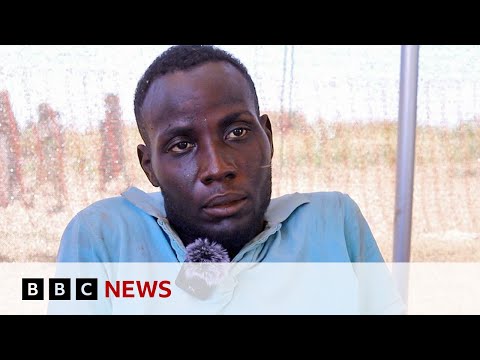
A horrific mass murder is unfolding in Sudan, where no one can see it. The RSF are murdering civilians in el Fasher, after having finally defeated the Sudanese army forces holding out in the city. The BBC has managed to speak to a few who escaped youtu.be/i7fC-Jf2V2g?si…
YouTube video
YouTube
English
91
1.3K
3.1K
522.6K
Sara Silverstein retweetledi
Christiane Amanpour
Christiane Amanpour@amanpour·
You can see the blood from space. Horrifying images are emerging from El Fasher after the RSF stormed the city. Executions, reports of mass killings in a hospital and satellite images that appear to show piles of bodies. @nadaabashir reports on the horror of Sudan's civil war.
English
64
573
1.1K
136.2K
Sara Silverstein
Sara Silverstein@_S_Silverstein·
I’m delighted to host David Petruccelli at the University of Connecticut on November 6th for a talk about how a 1968 Vienna trial over pornography sparked national and international debates on morality, law, and identity. Join us! events.uconn.edu/human-rights-i…

English
0
0
0
193