
_brian
778 posts


_brian
@_brianpmaher
I like computers and programming 🇧🇷🇺🇸
Bozeman, MT Katılım Eylül 2022
609 Takip Edilen887 Takipçiler

sorry folks:
htmx.org/CVE-2026-3682-…
English
_brian retweetledi

Every professional programmer can invert a binary tree. Not from memory; you don't need to memorize anything. You can do it from a short description of the problem. It's one step above fizzbuzz. Anyone who rails against this doesn't realize how trivial "invert a binary tree" is.
English


This will never happen. Regulators and policies are too broken to allow any new disruptive idea in. The best alternative, in a country that allows homeschooling, is for you to remove *your* kid and bet in a good microschool environment with other kids that want to learn.
Jen@jenteach13
You want to fix education? Let teachers remove kids who make it impossible for everyone else to learn.
English
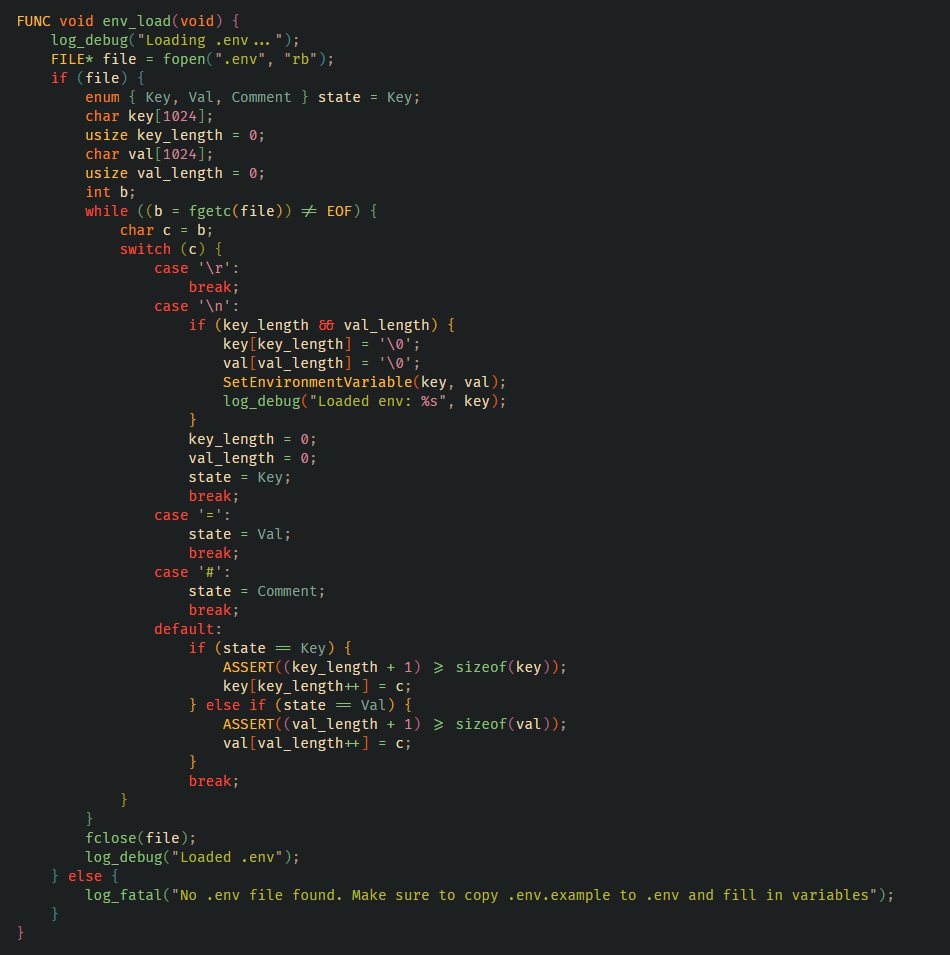
@grepmoney Ha! yeah it doesn't parse most of those, but maybe more to my point: I didn't make a general purpose .env parser that I'm publishing as a package for other people to use. I made a .env parser that parses the tiny subset of .env vars I'm actually using in my project.
English

i made a test case for you, paste into .env and delete the newline at the end 😜
PLAIN_OK=hello
EMPTY_VALUE=
SPACEY_KEY = spaced value
PASSWORD_WITH_HASH=abc#123
INLINE_COMMENT_VALUE=abc # this should be comment
DOUBLE_QUOTED_SECRET="hello # this is not a comment"
SINGLE_QUOTED_SECRET='also # not a comment'
VALUE_WITH_EQUALS=abc=def==ghi
export EXPORTED_STYLE=should_strip_export
DATABASE_URL=postgres://user:pass@localhost/db?sslmode=require
FINAL_LINE_NO_NEWLINE=vanishes
English

Stop writing OpenGL state machine management bugs with this one weird trick

English
@WarrenInTheBuff @dittolive They have a lot of Rust dependencies though lol
English

_brian retweetledi


this is what I'm saying: excel/spreadsheets should be taught in CS departments
Luke Seale@lbseale_hs
@htmx_org The most widely used programming language in the world is purely functional (Excel Formulas)
English

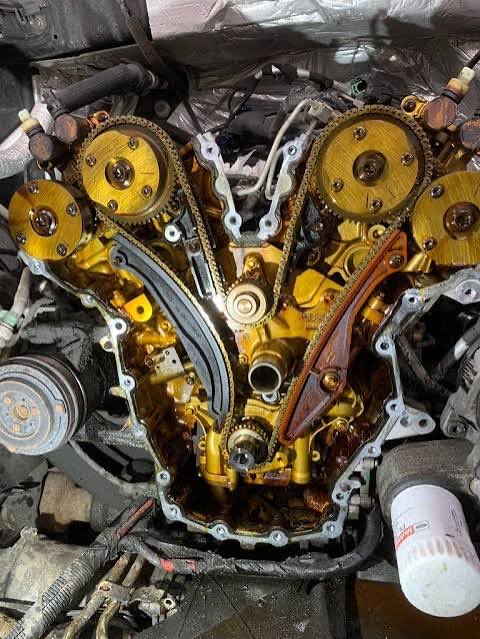

LFG!!!!
I’m going to work on the electronics plate today. I have the motor plate designed already just need to order it.


English
_brian retweetledi
inshallah i will be given control over the web design course at montana state university and wage holy butlerian jihad against flat ui chaos realms with the neophytes deus vult pray for me brothers and sisters

English


_brian retweetledi

One of the real bummers of the N64 software library is that despite being extraordinarily capable as a 2D system, almost all of the effort went into 3D games.
Makes sense, that was the shiny new selling point, but the hardware is capable of so much as a sort of Super-SNES.
English
_brian retweetledi

I don't know if a lot of people have thought why this happened.
To make Linux viable for the layman, Valve had to make Proton (derived from Wine) so that Win32 API became the first and only stable ABI on Linux.
Why did Linux Distro devs not care about stable ABI historically?
sudox@kmcnam1
English
_brian retweetledi

To be a little less vague, I suspect that we're likely (not certain, but likely) to be entering into a period of unprecedented software degradation, and we're going to be seeing an increasing frequency of outages like this across many high profile products.
But IMO the cause is actually not just the-one-thing-that-everyone-is-always-talking-about, it's a number of things that have all been bubbling away at just below critical levels for a long time. Some of the things off the top of my head:
- Poorly designed / optimised software has been getting a free ride on hardware improvements pretty much since the invention of the computer. That chapter is now coming to an end, and will only be worsened by the enormous industry-wide pivot to producing & innovating on AI specific hardware, rather than general purpose CPUs etc.
- The ZIRP era created a temporary suspension of reality in our industry, and now that it's ended we need to deal with the hangover. Companies that spent years making no profit, paying extravagant compensation to employees / shareholders and giving away server time for free are now pivoting into extraction mode, which is putting further pressure on their low quality software. QA is being laid off, hardware budgets are being reduced, timelines for shipping features are becoming more aggressive, etc.
- The enormous amount of free money incentivised too many new people to join the industry too quickly. This has led to an abundance of poor quality education programs (bootcamps, uncertified colleges etc) and an influx of people into the industry who frankly aren't interested in programming. If you compared the average person in the industry now to 20 years ago, I suspect the difference in motivations would be stark. I'm not saying it's these people's fault necessarily, it's simply an inevitable result of the absurd compensation / performance expectations ratio that our industry has enjoyed for the last 15+ years. Working for a tech company has also become socially prestigious, which further adds to the problem.
- Because computer programming was once an incredibly niche area of interest, many of our fundamental systems are built on trust. We're now starting to see that if systems like open source, public supply chain, discussion spaces, education etc become flooded with bad actors, we have no real mechanisms to deal with them.
- Our hiring / recruitment pipeline has totally misaligned incentives. Even before the AI resume / AI HR-filtering arms race disaster that we're experiencing now, the widespread adoption of the leetcode style interviews IMO selected for a very narrow personality type, and filtered candidates that would have made great contributions to the industry long term.
- The pivot from purchasing long term stable releases of software, to paying a subscription for constantly updating software has done huge damage to software quality as a whole. Companies have lost their incentive to get their software "right" because they can just "fix it later", and for the consumer - you can't just go back to the version of github that still works because the new one has problems.
This was all happening well before AI entered the picture. I won't belabor the point because there has been endless discussion about it. But to me personally, there are two additional and deeply worrying problems with AI code generation.
- It's undeniable at this point that it negatively affects the people who use it. It stops juniors from getting better, and it burns seniors out and makes them hate their jobs. Like it or not, humans are still the core of this industry, and I don't see this ending well.
- It's completely unfit for purpose in the most important, high-stakes situations. One of the reasons that we excuse all the small errors it makes, is because it's low effort to type "do it again and fix this bug". That kind of thing doesn't fly when you only get one attempt because a mistake results in data loss or an outage. The damage is done.
All the above has led to a silent exodus of many of our most experienced and impactful people. There are so many amazing programmers who made enough through stock options / compensation that they didn't need to work anymore, and were only doing it because they enjoyed it. Many of these people have just quit the industry and switched to doing hobby projects in the last 5 years. These are the types of people who have the experience and foresight to prevent the types of outages that we're seeing at github today.
It's very easy to assume that the proverbial straw that broke the camel's back is entirely to blame here. But I think it's a reckoning that has been on the horizon for a very long time.
English
