
Pantro
3.2K posts


Pantro retweetledi

Steve Jobs responds perfectly to a disrespectful question🤯
English
Pantro retweetledi

What would cause a millionaire to be so hateful and disrespectful to people he doesn’t even know?
English
Pantro retweetledi


Pantro retweetledi

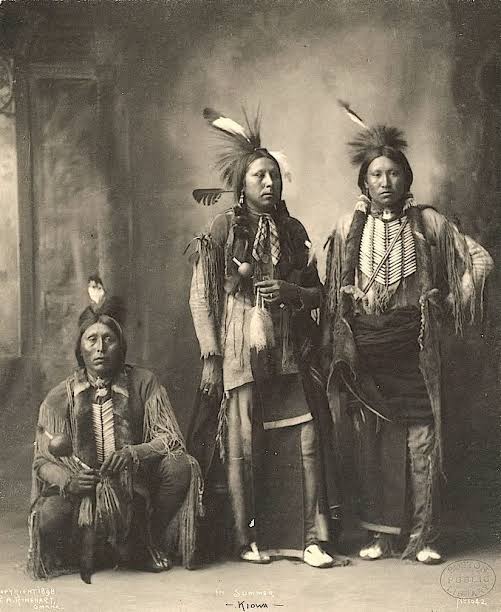
The Kiowa people of the Great Plains had a distinctive and highly practical hairstyle that became one of their most recognizable cultural markers in early American history.
Kiowa warriors traditionally cut their hair in a horizontal line from the lower outside edge of the eyes straight back to the ears.
This unique style was not simply a matter of fashion or tribal identity, though it certainly served both purposes.
The practical origin of the cut was rooted in the demands of mounted combat and hunting.
When a warrior drew a bowstring back to fire an arrow at full gallop, loose hair falling forward could easily become tangled in the bowstring at the critical moment of release.
A tangled bowstring could cause a misfired shot, injure the archer, or cost precious seconds in a battle or hunt where every moment mattered.
By cropping the hair at that precise horizontal line, Kiowa warriors eliminated the risk entirely, keeping their vision clear and their bowstring free.
The hairstyle was so distinctive and consistent among Kiowa men that neighboring tribes and early European observers used it as an identifying feature of the nation.
The famous American artist George Catlin, who documented Plains Indian cultures in the early 19th century, specifically painted Kiowa warriors wearing this characteristic style.
The hairstyle was also incorporated into Plains Sign Language, where the Kiowa were identified by holding two fingers near the lower outside edge of the right eye and sweeping them back toward the ear, physically tracing the line of the cut.
This means the Kiowa were literally defined in sign language by a gesture that recreated their haircut.
The fact that a practical military adaptation became both a cultural identity marker and a recognized symbol in intertribal communication illustrates how deeply function shaped Kiowa life and how everyday decisions in a warrior society rippled outward into culture, art, and diplomacy.
The Kiowa haircut tradition demonstrates how military necessity can become cultural identity. What began as a functional solution to a very real problem in mounted archery evolved into a tribal marker so recognizable that it was encoded into Plains Sign Language and painted by major American artists. This shows how adaptive innovations in warrior societies spread beyond their original purpose, shaping communication systems, artistic representation, and intertribal relations across the entire Plains region.
#archaeohistories
English
Pantro retweetledi
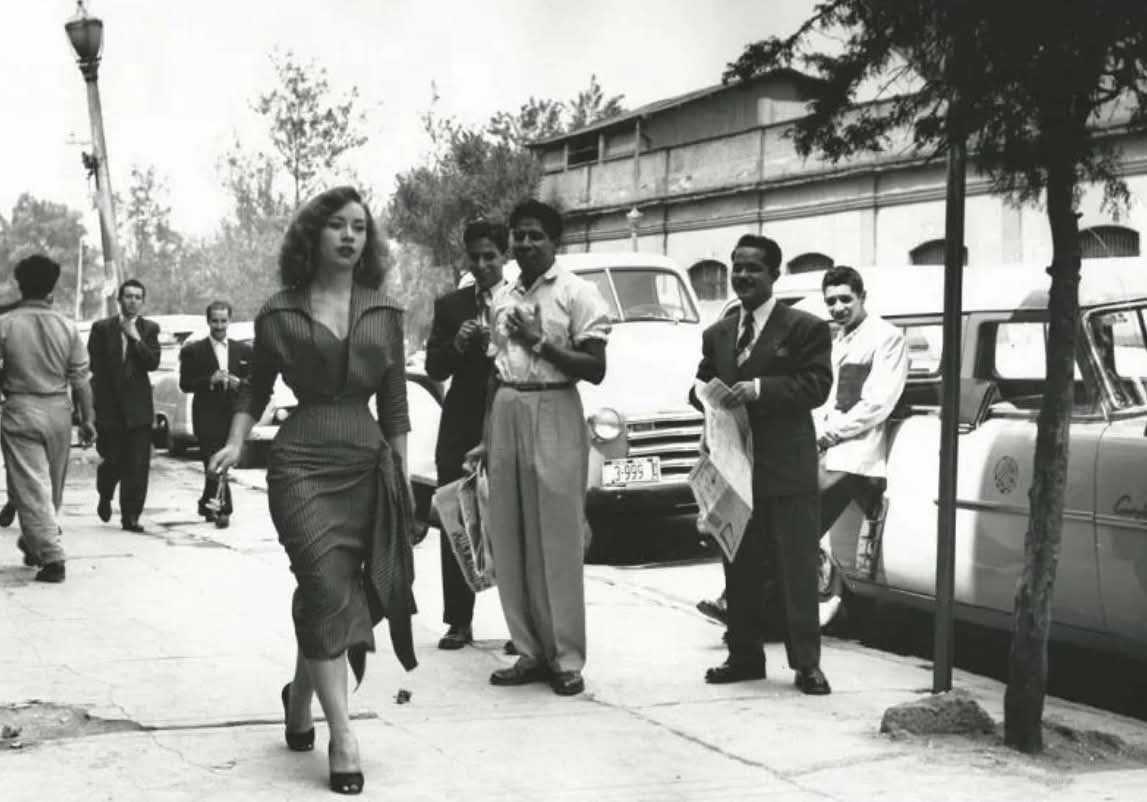
Nacho Lopez, Mexican photographer, decided to do a social-cultural experiment and asked actress Maty Huitron to go to the market while he went back to get more roll, then he hide and took photos while he followed her, capturing the reactions of the men in 1953.
In the early 1950s, a pioneering photojournalist, Nacho Lopez, set out to document how public space often becomes a stage for unspoken social behavior. By orchestrating a carefully planned real-world scenario, he revealed how a single walk through a busy urban setting could expose cultural expectations, gender dynamics, and the subtle ways attention and judgment are directed. The resulting images captured candid, unfiltered reactions that reflected the social climate of mid-century Latin America, where modernization, cinema glamour, and shifting gender roles were beginning to collide with deeply rooted traditions.
The work stood out because it blurred the line between journalism and performance art. Rather than simply observing life, it used storytelling to highlight everyday interactions most people ignored. Today, the series is considered an early example of socially conscious street photography, showing how the camera can reveal not just moments, but attitudes embedded within a culture.
Nacho Lopez later became known for producing narrative photo essays that were published in major Mexican magazines, helping transform photojournalism in Mexico by introducing staged social experiments that influenced documentary photographers across Latin America.
© History Pictures
#archaeohistories
English
Pantro retweetledi
The Moors were a group of North Africans who conquered and ruled Spain for nearly 781 years, from 711-1492 CE. They entered the Iberian Peninsula, Spain, after crossing the Strait of Gibraltar, passing through Morocco...
African Moors were known for their exceptional architecture and engineering skills, and they built numerous impressive structures, such as universities and mosques in Spain, which still stand to this day. They made significant contributions in various fields, including math, medicine, chemistry, philosophy, astronomy, botany, bricklaying and history.
The African Moors were the first to introduce the use of Arabic numbers in Europe, which are still used today. They also made significant advances in medicine, developed treatments for various diseases and created medical textbooks that were widely used.
In addition, the African Moors were skillful astronomers and developed advanced techniques to measure time and determine the position of celestial bodies. They also made important contributions to botany, introducing new plants in Spain and creating gardens admired by many.
African Moors were also known for their expertise in bricklaying and built numerous impressive structures, such as Granada's Alhambra, considered one of the most beautiful and impressive buildings in the world. Finally, they also wrote extensively about their history, creating numerous historical texts that are still being studied today.
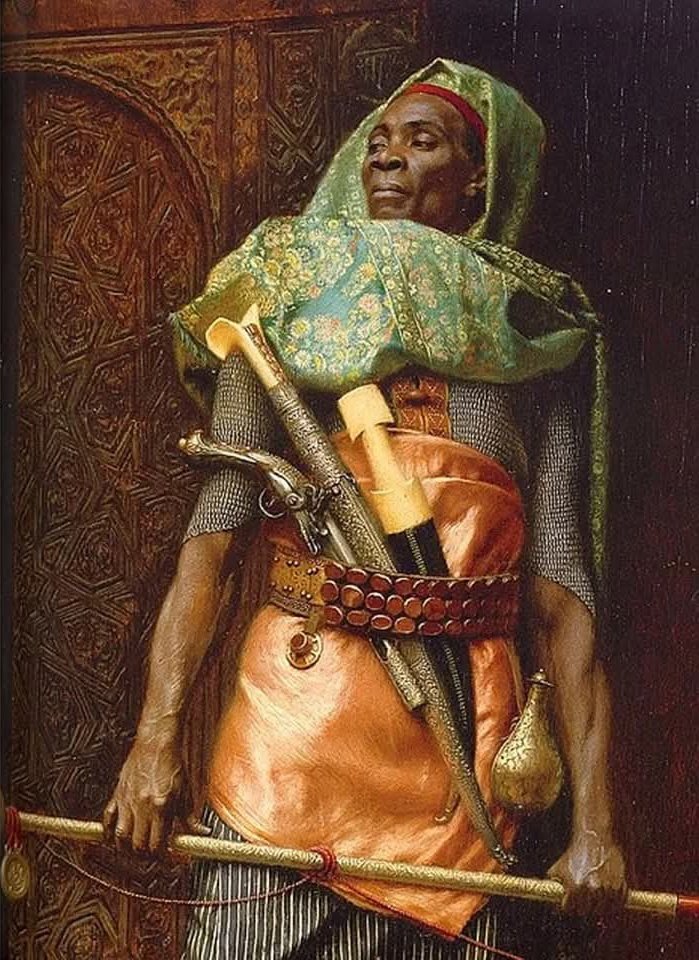
📷 : a painting of a figure often associated with the "Moorish" period or culture, particularly in the context of European orientalist art. This style of art, popular in the late 1800s, often depicted North African or Middle Eastern figures in elaborate attire, sometimes with a romanticized or exoticized view.
The term "Moor" in English usage historically referred to inhabitants of Roman province of Mauretania, and later, to the Muslim population of al-Andalus (Spain and Portugal), who were of mixed Arab, Spanish, and Amazigh (Berber) origins. The figure in the painting is dressed in a green head covering, a gold-colored garment, and carries weaponry, including a sword and a pistol, along with a staff.
Such depictions, sometimes referred to as "Blackamoors" in popular European decorative arts, represented African males in exotic attire in various art forms like paintings, statues, and jewelry.
#archaeohistories
English
Pantro retweetledi

Pantro retweetledi

How quickly a fish can swallow a giant hot dog
English
Pantro retweetledi


Pantro retweetledi

The East India Company was the most powerful corporation of all time.
It had an army larger than Great Britain's, and its influence shaped the borders of nations.
So how did a company become stronger than most countries?🧵

English
Pantro retweetledi

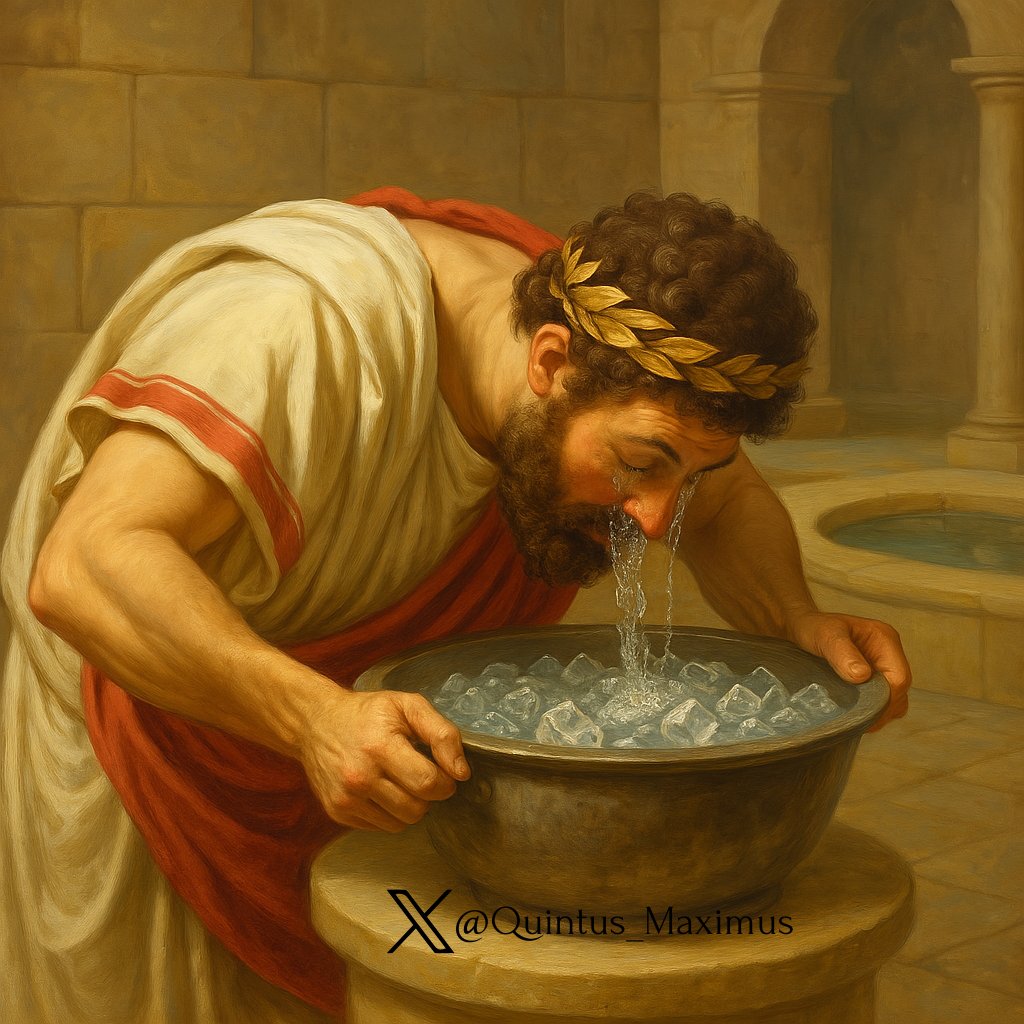
Marco Aurelio fue uno de los 5 mejores emperadores de Roma.
Y uno de los 3 grandes filósofos del Estoicismo.
Esta era la rutina del hombre más poderoso del mundo 👇
Español
Pantro retweetledi

Pantro retweetledi


Pantro retweetledi
The sword you choose says a lot about you—what’s your pick?

English
Pantro retweetledi

Pantro retweetledi

Reason Not to Take Your Watch Off at Airport Security
English
Pantro retweetledi
This female bull shark was probably wounded by a male bull shark attempting to mate with her. 27 days later it was almost healed
English