Timber
1.4K posts

Timber
@_timber1
Artist. Writer. CNFT Investor. (e)UTxO Maxi. Valorem per virtutem. BTC miner 2013.
United States Katılım Şubat 2016
2.1K Takip Edilen1K Takipçiler
Timber retweetledi

Timber retweetledi
Timber retweetledi

Hello Dune!
Hot off the back of last week’s announcement welcoming Pyth to Cardano, the Critical Integrations program is now bringing first-class analytics to the ecosystem, making Cardano’s on-chain activity legible in the same data environment used by the rest of the industry.
Following approval by the Steering Committee representing @IOGroup @Cardano_CF @emurgo_io @midnightfdn, we have signed a multi-year agreement with @Dune to integrate Cardano data directly into their analytics platform.
A thread 🧵

English

@txpipe_tools This is fantastic! I just purchased some hardware to setup a Cardano Node.
English
Timber retweetledi

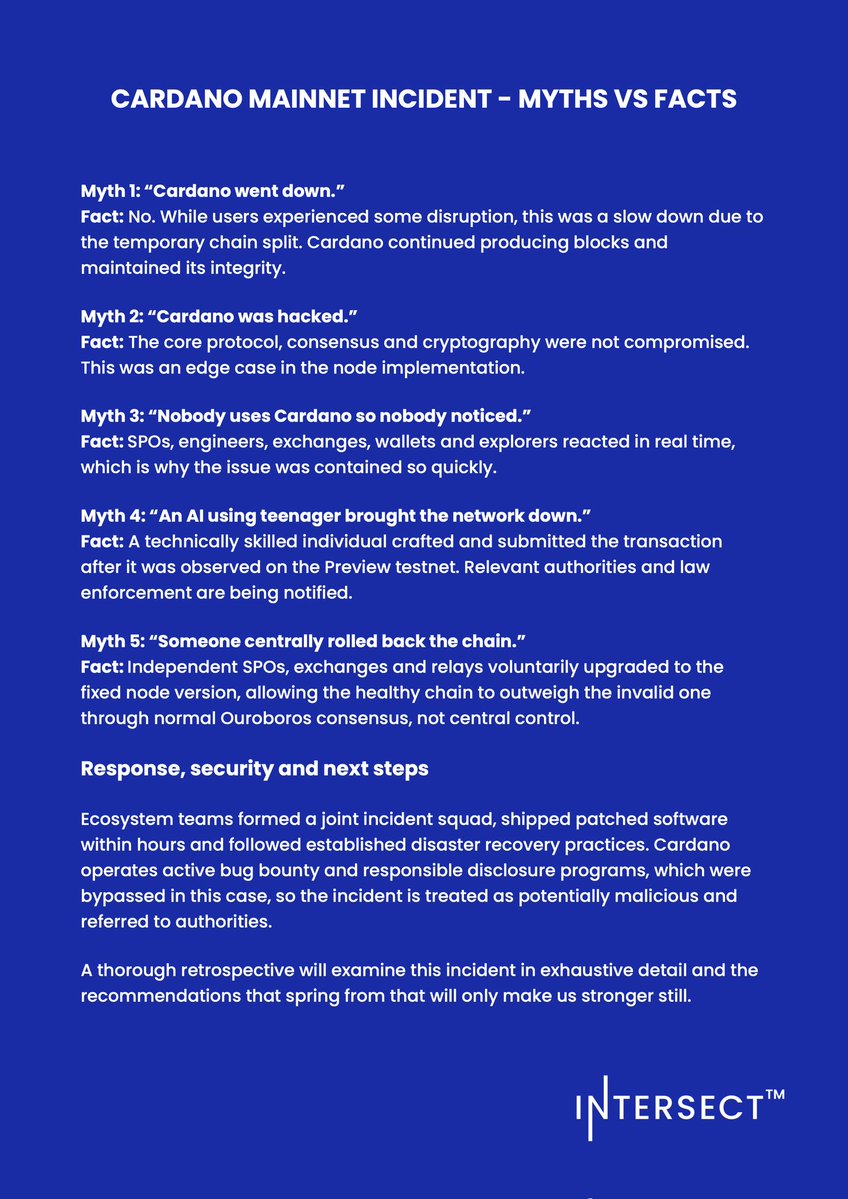
Below you will find my write-up as an independent after action report for the issue impacting Cardano late last week, along with things I learned, why I was impressed, and what I think we can do better at in the future.
I try to strike the balance between confronting the seriousness of the issue, while defusing most of the over-stated positions from talking heads on Twitter. This is an adult conversation, not whatever the children are engaging in on Twitter this week.
I don't think it's productive to get into debates of what constitutes "downtime" or not; Instead, I tried to equip you with a framework where you, dear reader, can think about these things for yourself, and decide what you want to call it.
I just ask that you make that decision for yourself, or allow your audience to do so, rather than parroting some pre-decided talking points.
More informed discussion leads to a higher quality industry overall.
314pool.com/post/cardano-p…
English
Timber retweetledi

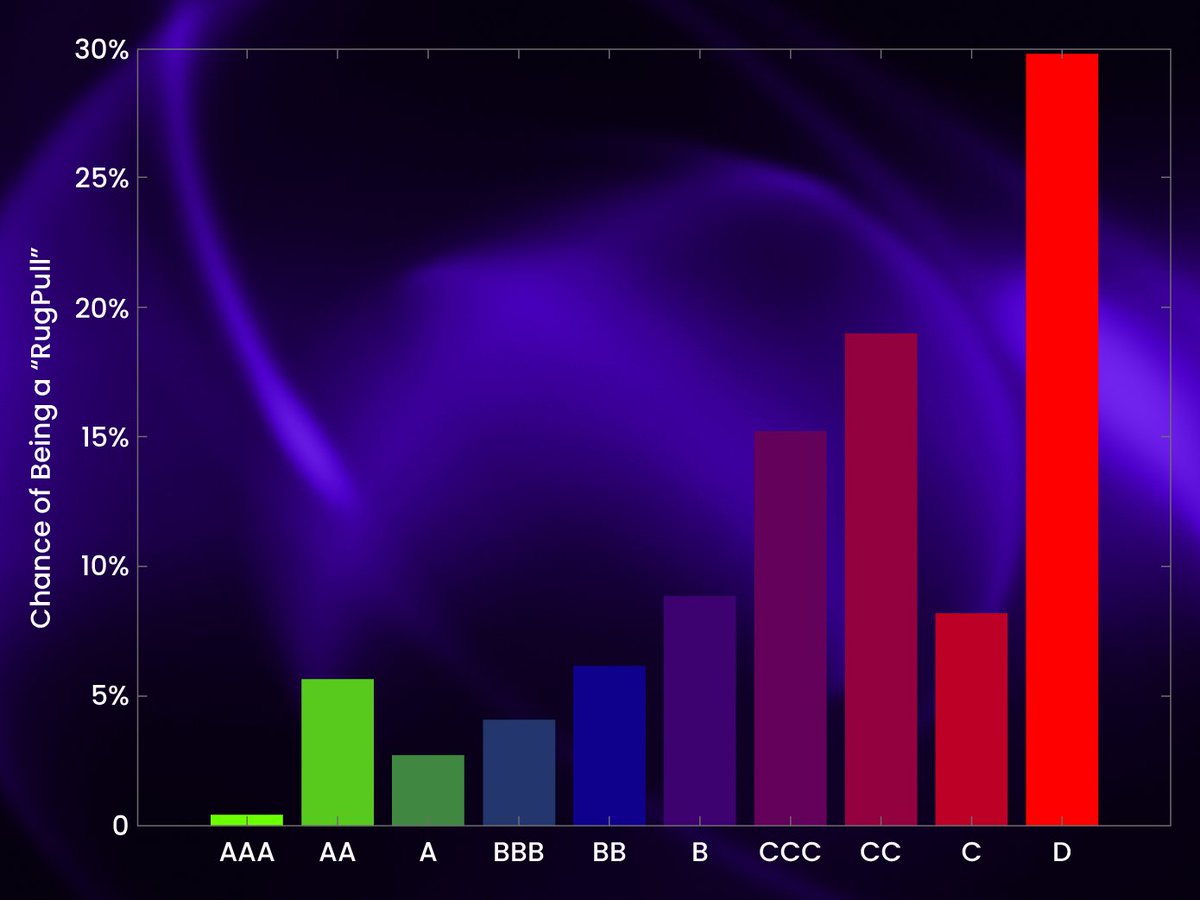
All IPOR Fusion vaults will soon get risk-rated by @xerberus.
⚡️ The industry’s first vault risk scoring.
Fusion liquidity providers will be able to determine risk for each vault at a glance, using the familiar scoring nomenclature - AAA, AA, A, B, etc.
How does it work? 🧵⬇️

English
Timber retweetledi
Timber retweetledi

Cardano uses Nakamoto consensus, which has the following properties:
It prefers liveness over correctness.
Short-term ambiguity of the unique global blockchain state is tolerated, as it is more important that the blockchain never stops.
Block finality is probabilistic. Each newly appended block confirms all previous blocks - adds another confirmation.
Within a given period (in the Cardano network, it is about 20 seconds), a single node mints a new block, which is disseminated to all other nodes before the next block producer takes its turn. This is the ideal case.
Short-term forks occur when two blocks are minted in the same slot, or in slots that follow each other shortly.
All nodes in the network do not know about all blocks at a given time. Some nodes might not have received the block as they are distant from the block producer.
Therefore, they can append a new block to a block that is supposed to be orphaned according to the rules.
A short-term fork of a blockchain is a situation that is expected and is relatively common.
The protocol rules determine which chain will be preserved in the event of a fork and which will be orphaned, i.e., discarded.
If all new blocks meet the protocol rules, everything works perfectly. The entire stake (all nodes) builds a single canonical chain.
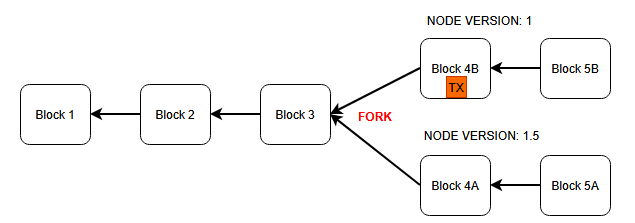
However, different nodes can run different versions of the Cardano protocol (client), or even different implementations of the protocol.
This means that nodes can have slightly different rules for accepting a transaction or block.
A specific transaction may appear that some nodes accept while some nodes reject.
Together with the rejected transaction, the entire block is rejected.
A blockchain fork occurs, and at the same time, the stake (nodes) in the network is divided.
Imagine that a uniquely formatted transaction is submitted.
Only some nodes in the network accept it and continue building chain A, while the other part of the nodes reject this transaction and build chain B.
If a transaction is rejected, the entire block and all subsequent blocks are rejected (by part of the network).
This conflict cannot be resolved without the operators (SPOs) agreeing on what to do next.
All blocks are finalised after 2160 blocks have been appended.
Theoretically, there would be two alternative chains forever.
Fortunately, there is a rule about the longer chain.
This means that the correct (winning) chain is the one that will be longer after some time - i.e. will have more blocks.
The rate of adding new blocks to chain A and chain B usually differs because the stake is distributed unevenly.
If chain A is built by 70% of the stake in the network, blocks will be added faster than in the case of chain B, which is only built by 30% of the stake.
Nodes building chain B will find that chain A is longer.
Operators building chain B (the shorter chain) may decide to upgrade the node version that will get them to the longer chain A.
After a while, chain B will be orphaned, and the majority of the stake will build only chain A again.
This process might be slow as multiple operators upgrade their nodes at different times.
The annoying thing is that some wallets or applications are on chain A while others are on chain B. But that is another story.
The important thing is that the Nakamoto consensus is unstoppable, but at the cost of short-term (or longer-term) uncertainty about the unique global state of the chain.
BFT chains prefer correctness over liveness.
There is always only one correct (unique global) state of the blockchain. If a conflict occurs, the chain stops (or is stopped) because it is usually not possible to resolve the inconsistency without external intervention.


English
Timber retweetledi

Inauguration of the Laboratory of the Center for Decentralized Computing and Digital Trust 🔴
On November 14 in Buenos Aires, Argentina, we hosted at the Input Output Buenos Aires offices the inauguration celebration of the new center of the Faculty of Exact and Natural Sciences at the University of Buenos Aires (UBA), supported and sponsored by Input Output and IOR (Input Output Research).
The event featured the participation of the distinguished cryptographer Juan Garay, an Argentinian national and Professor of Computer Science and Engineering at Texas A&M University, whose work notably includes, by way of example, “Searchable Symmetric Encryption: Improved Definitions and Efficient Constructions” and “Method and Apparatus for the Secure Distributed Storage and Retrieval of Information.”
In this new phase, Juan Garay returns to Argentina to inaugurate a research center established with the support of Input Output and IOR.
We were also joined by members of our national and international community who were visiting the country to attend the numerous events taking place during that period.
It was undoubtedly an evening to remember.
Our congratulations to UBA, Professor Juan Garay, and Input Output on this new collaboration.


English
Timber retweetledi

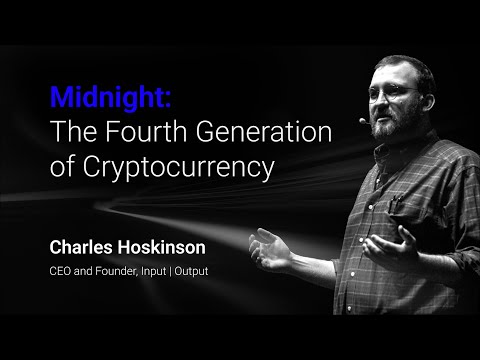
Here is my whiteboard video on Midnight. Thank you for letting me share my passion: youtube.com/watch?v=TMGkYE…

YouTube
English
Timber retweetledi

@elraulito Do you mind explaining how this is different from existing multi-sig and the benefits?
English

Now stop imagining
It's real 🫳
FROST multisig on Cardano

elraulito@elraulito
Imagine a regular address onchain but nobody knows the private key because it has been fragmented like horcrux between other users You can even decide a treshold of the wallets to pass and have as many fragments you wish At that point you can increase the composability level of ANY project. (or just support script users guys, it's easier, we do at Fluid, minswap does, sundae does)
English
Timber retweetledi
Timber retweetledi

I’ll always love #Cardano: 🧐the philosophy, 📚the rigor, 🧠the intent to build differently.
💡But sometimes, #innovation hides in plain sight.
🧮 Few try to understand what’s being built when it looks too complex… and I can understand this, it’s easier to ignore than to dig in.
That’s why I feel @xerberus wears a costume too small for what it’s becoming.
It’s not that Cardano lacks talent, it’s that depth often goes unnoticed until it succeeds elsewhere.
And when that moment comes, when #Xerberus’ relevance is undeniable, when it has scaled beyond this ecosystem and becomes indispensable elsewhere, many will look back, (re)discover what was being built right under its nose for years and realize that…. it wasn’t that complicated. 🤷🏾♂️
It was simply ahead of its time. 🔵
And, by then, the train will already be moving. 🚄📈
#Xerberus #RiskFi #Cardano #DeFi #Builders #Riskratings #RiskManagement #Ethereum #Base #Bitcoin #Solana #Monad #Arbitrum #Polygon
English
Timber retweetledi