Abigail Marsh

9.5K posts

Abigail Marsh banner
Abigail Marsh

Abigail Marsh

@aa_marsh

Studies empathy, altruism, aggression @Georgetown. Author of The Fear Factor https://t.co/iSO3TcUhAV. Co-Founder of https://t.co/Tnjnl8Unql

Washington, DC Katılım Haziran 2013
1K Takip Edilen5.5K Takipçiler
Abigail Marsh retweetledi
Musa al-Gharbi
Musa al-Gharbi@Musa_alGharbi·
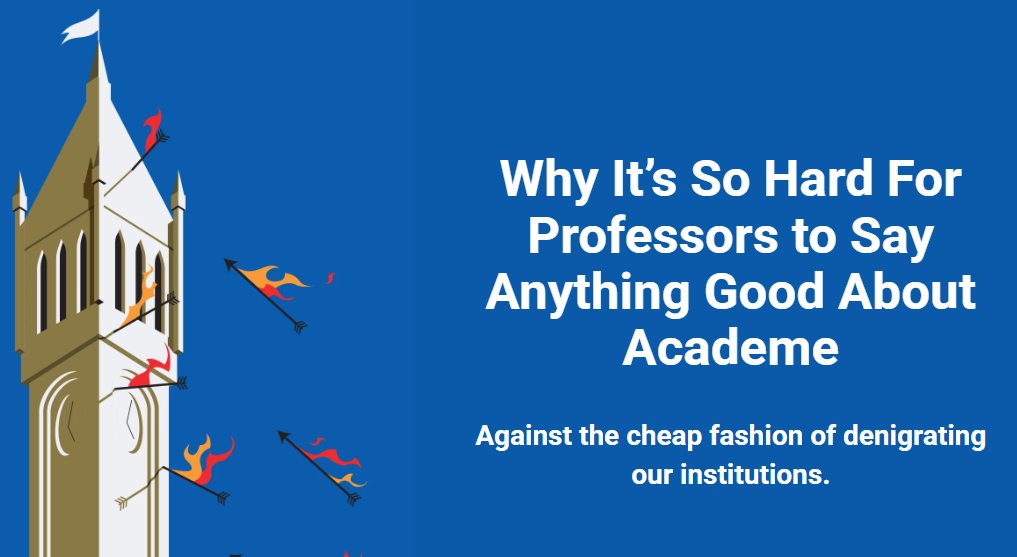
This is a compelling piece that speaks to a few themes I'm obsessed with these days: 1. The need to hone and exercise our affirmative capacities as well of our critical ones: what works? Why does it work? How does it work? What's good about our society and institutions? What is worth preserving in the face of change? 2. The need for symbolic capitalists to recognize that, in fact, they do have significant power and influence within their institutions and society more broadly 3. The need to recognize that rights come with duties, privileges with obligations, freedoms with responsibilities. Power creates a need for honesty and clarity, including and especially with oneself, in order to exercise the influence judiciously. Full piece the next post
Musa al-Gharbi tweet media
English
1
4
16
1.8K
Abigail Marsh retweetledi
Matthew W. Johnson
Matthew W. Johnson@Drug_Researcher·
Intriguing analysis by Balázs, upshot being the large effect size of psychedelics for depression might be driven by the relative lack of placebo effect for placebo groups in psychedelic trials, because people know when they are in the placebo group. Yes there are limitations, but I think it points to something real we need to keep in mind. This helps to explain why I went with a randomized comparative efficacy design in our recent trial comparing psilocybin to nicotine patch in tobacco addiction.
Balázs Szigeti@psybalazs

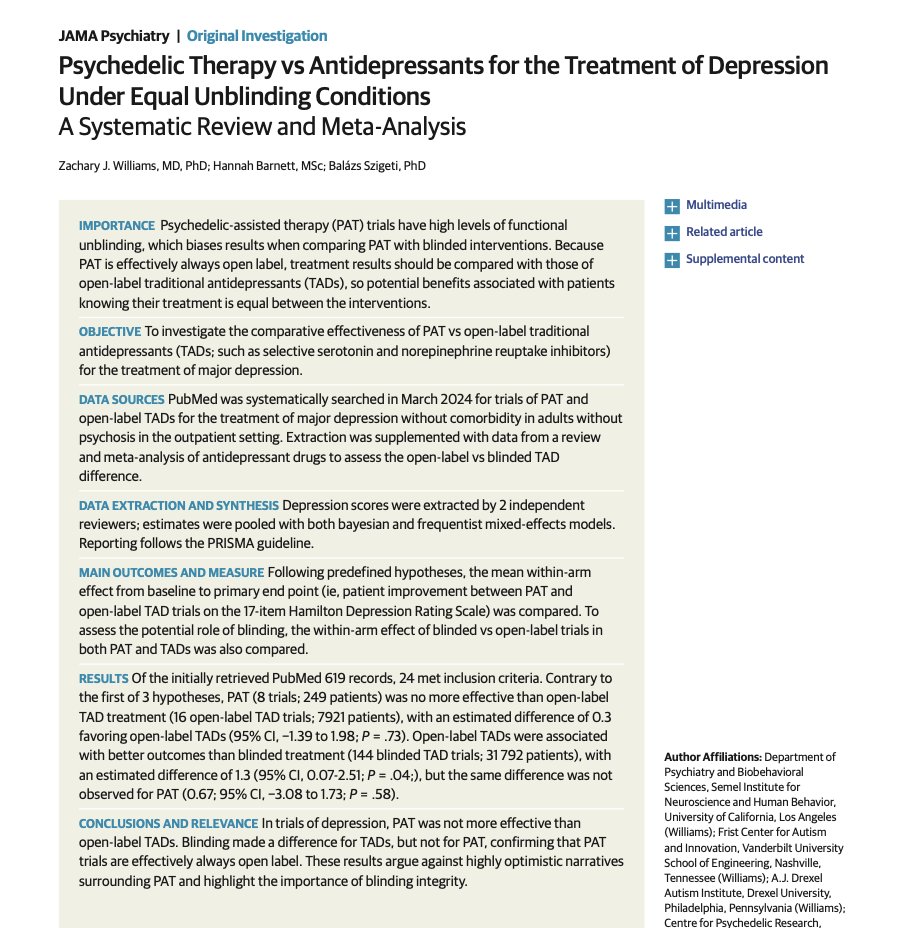
🚨MAJOR NEW PAPER 🚨 just out in @JAMAPsych : Psychedelic Therapy vs Antidepressants for the Treatment of Depression Under Equal Unblinding Conditions (tinyurl.com/yu2rbtaf). I am very proud of this one, was a lot of work for me - both co-first and last author! Eternal gratitude to co-first @QuantPsychiatry and twitterless Hannah Barnett! The premise is that it is biased to compare open-label trials (=where patients know what treatment they are getting) to blind trials (=where patients do NOT know what they are getting). Open-label trials would gain an unfair advantage by higher placebo response. Even formally blinded psychedelic trials are practically open-label as its obvious to distinguish placebo from 25mg of #psilocybin. In contrast, traditional antidepressants (SSRIs/SNRIs) trials are are close to be truly blind (Lin 2022). Given the bias of open-label vs. blinded comparison, we compared the efficacy of psychedelic-therapy (which is practically always open-label) vs. open-label antidepressants for the treatment of major depression. We tested 3 prior hypothesis: - There will be a significant difference between psychedelic-therapy vs. open-label antidepressants, favoring psychedelic-therapy. - There will be a significant difference between blinded and open-label antidepressants trials, favoring open-label. - There will NOT be a significant difference between blinded and open-label psychedelic-therapy, as practically they are always open-label. In contrast with our prior hypothesis, we did not find psychedelic-therapy to be more effective than open-label antidepressants (H1). Not only was the difference not clinically meaningful, but practically there was no difference at all. This finding means that antidepressants administered knowingly to patients, which is the case in real-life medical practice, is as effective as psychedelic-therapy. This result was robust across variations in study selection, including when we removed psychedelic-therapy trials on treatment-resistant depression. We also assessed the impact of blinding in both psychedelic-therapy and antidepressants trials. We found that for antidepressants (H2), but not for psychedelic-therapy (H3), open label is associated with better outcomes than blinded treatment. However, even in the case of antidepressants, the difference was practically small (~1.3 HAMD units). How come hypothesis 1 failed, i.e. that psychedelic-therapy is no ore effective than open-label antidepressants, given that antidepressants trials are famous for small drug-placebo difference (~2.4 HAMD units), while psychedelic-therapy trials reported large effects (~7.3)? The key factor is that in psychedelic trials the placebo response is about 50% relative to antidepressants, ~ 4 vs 8 HAMD units (Hsu 2024, Hieronymus 2025). This suppressed placebo response leads to an inflated between-arm difference, as the treatment arm is measured against a lower floor. The suppressed placebo response in psychedelic-therapy trials is likely attributable to the ‘know-cebo’ effect, i.e. the disappointment when patients realize they are in the control group. In psychedelic-therapy trials, this placebo suppression accounts for 4.0 / 7.3 ~ 55% of the specific treatment effect. In other words, ~55% of psychedelic-therapy’s effect is not explained by patient improvement after the treatment, but rather by the lack of improvement in the placebo group. In summary, we found that for the treatment of depression, psychedelic-therapy is no more effective than open-label SSRIs/SNRIs. Our results for psychedelics are twofold: psychedelic-therapy demonstrated a robust and large therapeutic effects (~12 HAMD units), which justifies optimism. On the other hand, psychedelic-therapy’s lack of superiority compared to open-label SSRIs/SNRIs highlights the influence of blinding integrity and argues against overly optimistic narrative's about psychedelic-therapy's potential.

English
7
10
50
6.1K
Abigail Marsh retweetledi
Joe Morford
Joe Morford@morfjoe·
Thrilled to share our new paper on collective route memories in homing pigeons, in @SciReports! Have a read: rdcu.be/e73Qk We found flocks remembered old routes better than pigeons flying alone, likely because different birds remembered different parts of the route!
Joe Morford tweet media
English
1
6
11
417
Abigail Marsh
Abigail Marsh@aa_marsh·
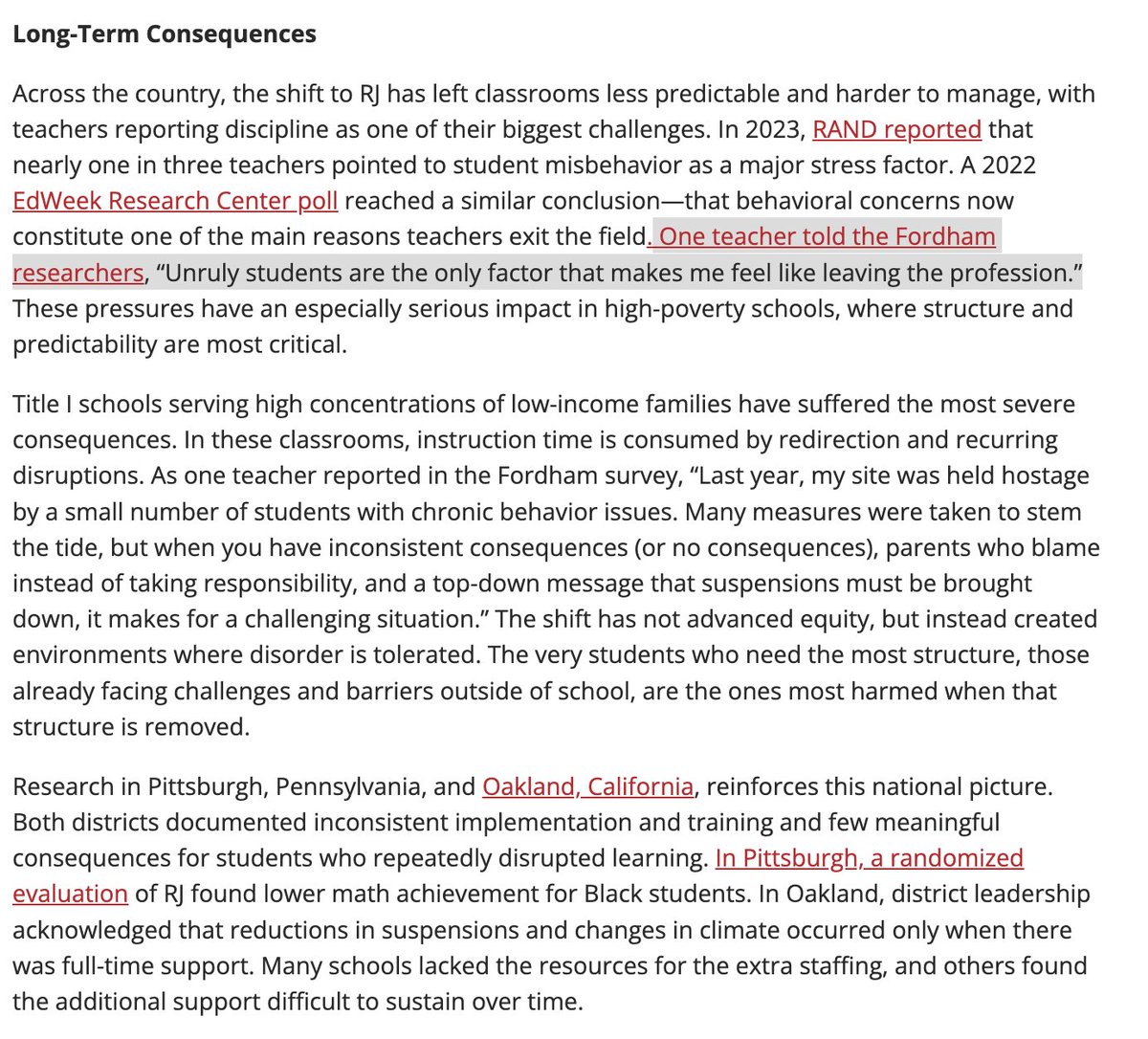
Kids with chronic behavior problems need evidence-based solutions to help them learn to regulate their behavior. And restorative justice, certainly as it is practiced in schools, is not it. And teachers and other students pay the price. @EducationNext educationnext.org/restorative-ju…
Abigail Marsh tweet media
English
0
0
2
136
Abigail Marsh retweetledi
Benjamin Ryan
Benjamin Ryan@benryanwriter·
News study finds that for all their hype, psychedelics don't beat antidepressants "These results argue against highly optimistic narratives surrounding [psychedelic-assisted therapy] and highlight the importance of blinding integrity."
Benjamin Ryan tweet media
Benjamin Ryan@benryanwriter

Are psychedelics better than antidepressants? New study says no eurekalert.org/news-releases/… jamanetwork.com/journals/jamap… With an innovative approach, scientists try to get around the problem of participant expectation in tests of psychedelics. Psychedelic-assisted therapy may be no more effective than traditional antidepressants when patients know what drugs they are actually taking, according to a first-of-its kind analysis that compared how well each type of drug worked for major depression. Psychedelic-assisted therapy has resisted placebo-controlled testing methods — the gold standard in clinical trial design. Due to their powerful subjective effects, nearly everyone in the trial knows whether they received a psychedelic or the placebo even if they are not told. But in trials of antidepressants, participants may not figure out whether they have received the drug or a placebo, which makes it hard to compare them with psychedelics. To get around this problem, researchers from UC San Francisco, UCLA, and Imperial College, London tried a different approach. They compared the results from psychedelic therapy trials to the results from so-called open-label trials of traditional antidepressants, in which the participants all knew they were getting an antidepressant. That way, both treatments benefitted equally from the positive effect of patients knowing that they were being given a drug instead of a placebo. The findings both surprised and disappointed them: there was virtually no difference. “Unblinding is the defining methodological problem of psychedelic trials. What I wanted to show is that even if you compare psychedelics to open-label antidepressants, psychedelics are still much better,” said Balázs Szigeti, PhD, a clinical data scientist at UCSF’s Translational Psychedelic Research Program, who led the study. “Unfortunately, what we got is the opposite result — that they are the same, which is very surprising given the enthusiasm around psychedelics and mental health.” Szigeti is the co-first author of the paper with Zachary J. Williams, MD, PhD, of UCLA; Hannah Barnett, MSc, of Imperial College, London is also an author. The study appeared March 18 in JAMA Psychiatry.
English
18
27
129
25.3K
Abigail Marsh retweetledi
Jay Van Bavel, PhD
Jay Van Bavel, PhD@jayvanbavel·
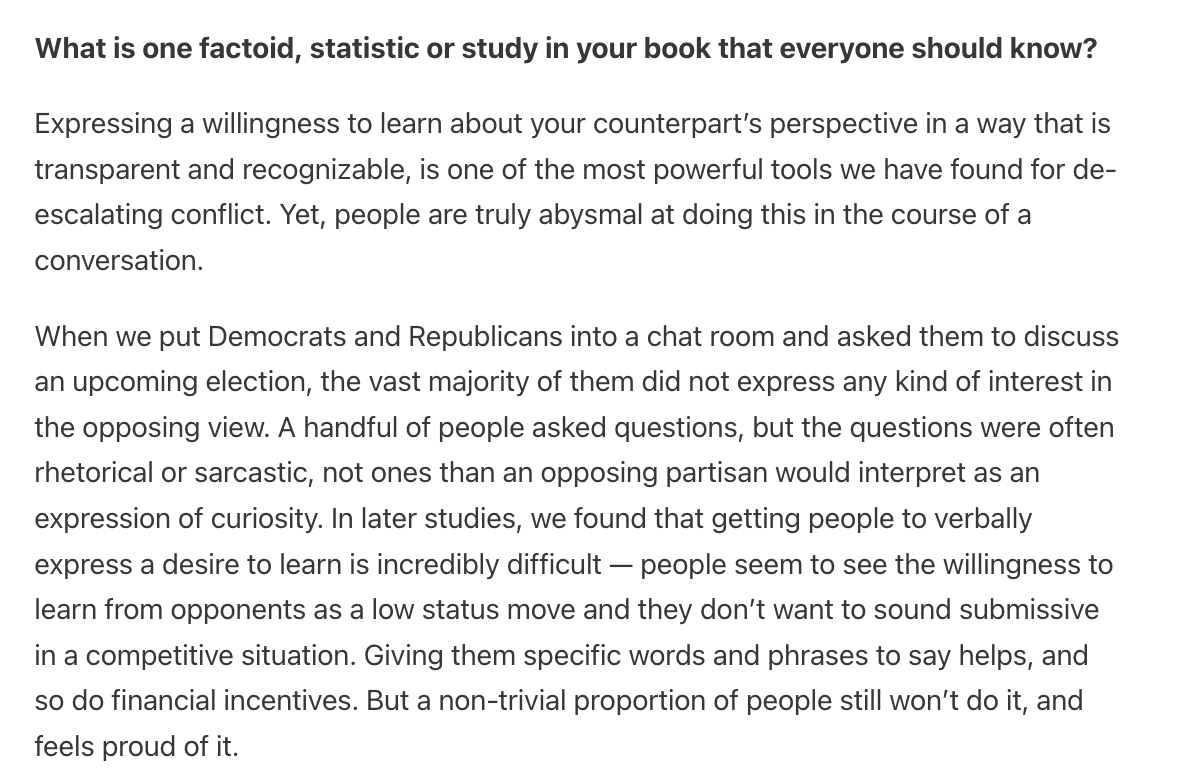
Disagreement is unavoidable—in organizations, politics, and everyday life. But most people approach it the wrong way. We assume that better arguments, stronger data, and clearer logic will always change minds. Yet in practice, people too often become more entrenched. Because disagreement isn’t just about what we think, it’s about what we signal to others. "Expressing a willingness to learn about your counterpart’s perspective in a way that is transparent and recognizable, is one of the most powerful tools we have found for de-escalating conflict. Yet, people are truly abysmal at doing this in the course of a conversation." according to author of "How to Disagree Better" @JuliaMinson Small shifts—like acknowledging the other person’s perspective or emphasizing shared values—can significantly change how a conversation unfolds. Better disagreement isn’t about winning. It’s about creating the conditions where people are willing to engage. Julie explains this (and more) in our latest Substack interview, including practical strategies grounded in her research on the topic: powerofusnewsletter.com/p/how-to-disag…
Jay Van Bavel, PhD tweet media
English
1
15
61
3.2K
Abigail Marsh retweetledi
Weizhe Hong
Weizhe Hong@TheHongLab·
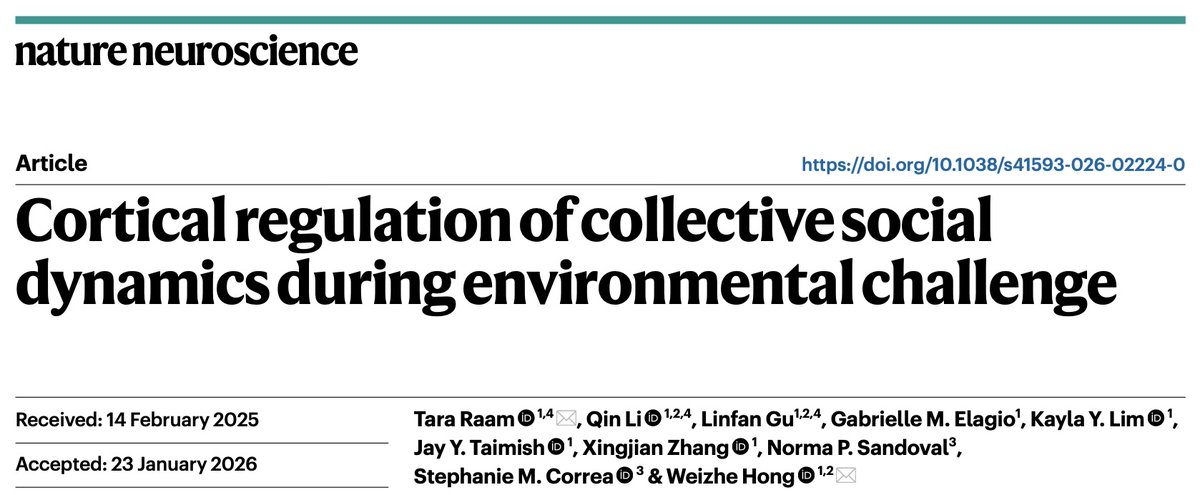
We often think of survival as an individual act. But when facing hardship together, social groups may function more like a unified system than a collection of separate individuals Excited to share our latest work @NatureNeuro on collective social dynamics rdcu.be/e8LrV
Weizhe Hong tweet media
English
2
26
125
5.6K
Abigail Marsh
Abigail Marsh@aa_marsh·
What an inspired well-being hack... turn a solitary chore into something like a prosocial activity!
Wolf of X@WolfofX

English
0
0
1
222
Abigail Marsh retweetledi
The Wall Street Journal
New research shows even infrequent cannabis use during adolescence is linked to increased risk of mental-health disorders and poor academic performance. on.wsj.com/4uFc9Nx
English
26
31
82
30.8K
Abigail Marsh retweetledi
Dr. Lemma
Dr. Lemma@DoctorLemma·
19 years ago, a high school basketball coach put his team manager into a game for the final four minutes. The kid had never played a single minute of competitive basketball in his life. He scored 20 points. Jason McElwain was diagnosed with severe autism at age two. He didn’t speak until he was five. He couldn’t chew solid food until he was six. He wore a nappy for most of his early childhood. As a baby, he was rigid, wouldn’t make eye contact, and hid in corners away from other children. He tried out for his school basketball team every year and got cut every time. Too small. Too slight. Barely 5’6 and about 54 kilograms. But he loved the game so much that his mum called the school and asked if there was any way he could be involved. The coach created a team manager role for him. For three years, McElwain showed up to every practice and every game. He wore a shirt and tie on match days. He ran drills, handed out water, kept stats, and cheered every basket like he’d scored it himself. On 15 February 2006, the last home game of his final school year, the coach let him suit up in a proper jersey and sit on the bench. With four minutes left and a comfortable lead, the coach sent him in. His first shot missed. His second missed. Then something shifted. He hit a three-pointer. Then another. Then another. His teammates stopped shooting entirely and just kept passing him the ball. He hit six three-pointers and a two-pointer. 20 points in four minutes. The highest scorer in the game. When the final buzzer went, the entire crowd rushed the court and lifted him onto their shoulders. His mum tapped the coach on the shoulder, in tears. “This is the nicest gift you could have ever given my son.” McElwain won the ESPY Award for Best Moment in Sports that year, beating out some of the biggest names in professional sport. He’s 36 now. He works at a local supermarket, coaches basketball, has run 17 marathons including five Boston Marathons, and travels the country speaking about never giving up. When asked about that night, his coach still gets emotional. “For him to come in and seize the moment like he did was certainly more than I ever expected. I was an emotional wreck.”
English
866
10.7K
69.8K
10M
Abigail Marsh retweetledi
Carl Hendrick
Carl Hendrick@C_Hendrick·
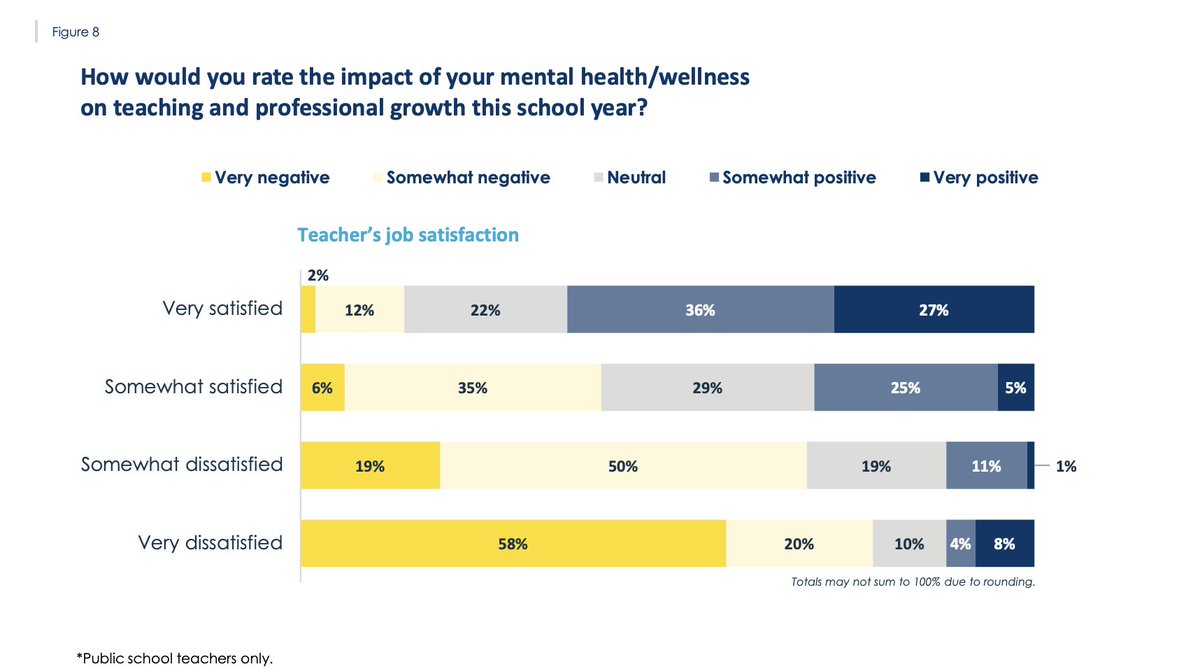
If the job of teaching is dependent on people sacrificing their own mental health and wellbeing to do the job then this is simply not sustainable. Also the figure that 58% of very dissatisfied teachers say their mental health is "harming their teaching" is very concerning also. Bad behaviour, pay, tech, PD are all factors. fs24.formsite.com/edweek/images/…
Carl Hendrick tweet media
English
28
84
276
23.6K
Abigail Marsh retweetledi
Jay Van Bavel, PhD
Jay Van Bavel, PhD@jayvanbavel·
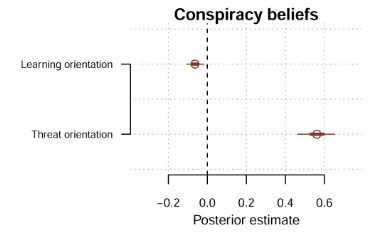
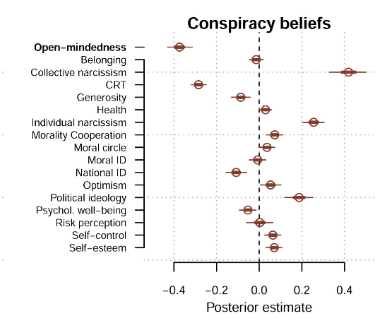
Close-minded people who are easily threatened by contradictory information might be the most likely to cling to false beliefs. In a large global study (N = 49,968, 68 countries) we found that the open-mindedness aspect of intellectual humility was the strongest predictor for rejecting conspiracy beliefs out of 17 potential individual difference measures. Specifically, people who were not easily threatened (disagreeing with items like "Only wimps admit that they've made mistakes") were the least likely to hold conspiracy beliefs about the pandemic. The lesson: Keeping an open-mind might be one of the best paths to the truth--especially if you are willing to own up to your errors. osf.io/preprints/psya… Led by @philipparnamets @moral_psych @Robert_M_Ross
Jay Van Bavel, PhD tweet mediaJay Van Bavel, PhD tweet media
English
11
58
195
13.1K
Abigail Marsh retweetledi
Steve Magness
Steve Magness@stevemagness·
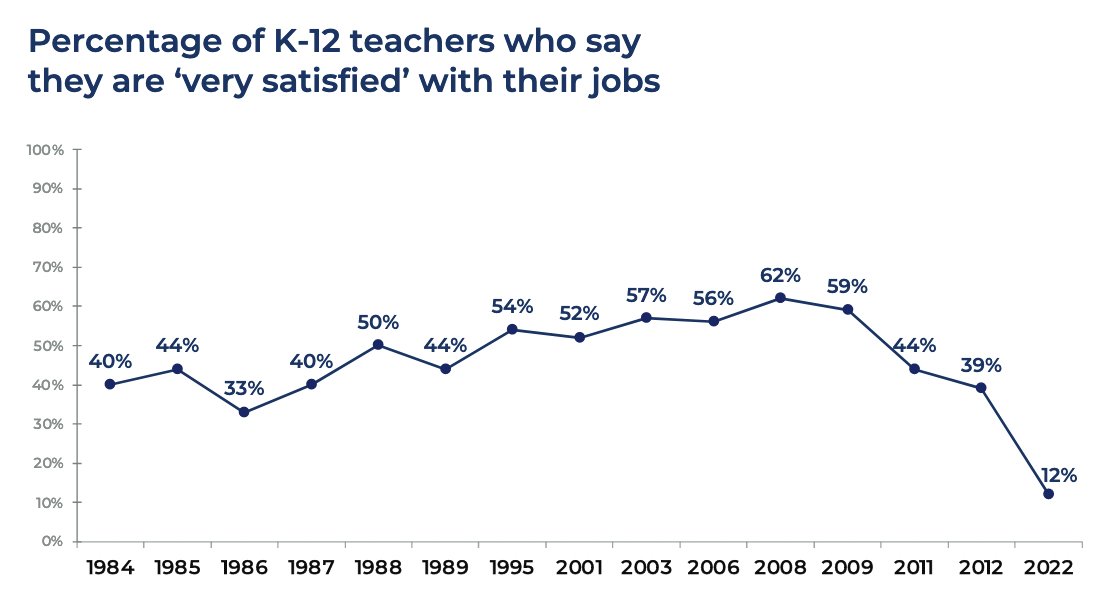
In 2008, 62% of teachers said they were very satisfied with their job. In 2022, that dropped to 12%. We've got a serious problem brewing in education...
Steve Magness tweet media
English
777
1.8K
11K
2.1M
Abigail Marsh retweetledi
James Lucas
James Lucas@JamesLucasIT·
This is the best thing you’ll read today “If we are all going to be destroyed by an atomic bomb, let that bomb when it comes find us doing sensible and human things—praying, working, teaching, reading, listening to music, bathing the children, playing tennis, chatting to our friends over a pint and a game of darts—not huddled together like frightened sheep and thinking about bombs. They may break our bodies (a microbe can do that) but they need not dominate our minds.” Written by C. S. Lewis in 1948
English
11
100
618
29.8K
Abigail Marsh retweetledi
Steven Pinker
Steven Pinker@sapinker·
I agree with this assessment: Trivers explained "the many roots of our suffering" in his analysis of the inherent conflicts of interest in even our most intimate relationships: parent and offspring, sibling and sibling, husband and wife, partner and partner, and the inner and outer domains of the self. All these ideas from a burst of papers (in one case, from a few sentences in a foreword) in the mid-1970s. The implications for the social sciences, and the humanities, are profound.
Steve Stewart-Williams@SteveStuWill

RIP Robert Trivers - the Einstein of evolutionary biology and one the greatest thinkers of our age. Among other things, Trivers came up with parental investment theory, reciprocal altruism theory, and parent-offspring conflict theory.
English
1
88
430
77.1K
Abigail Marsh retweetledi
Steven Pinker
Steven Pinker@sapinker·
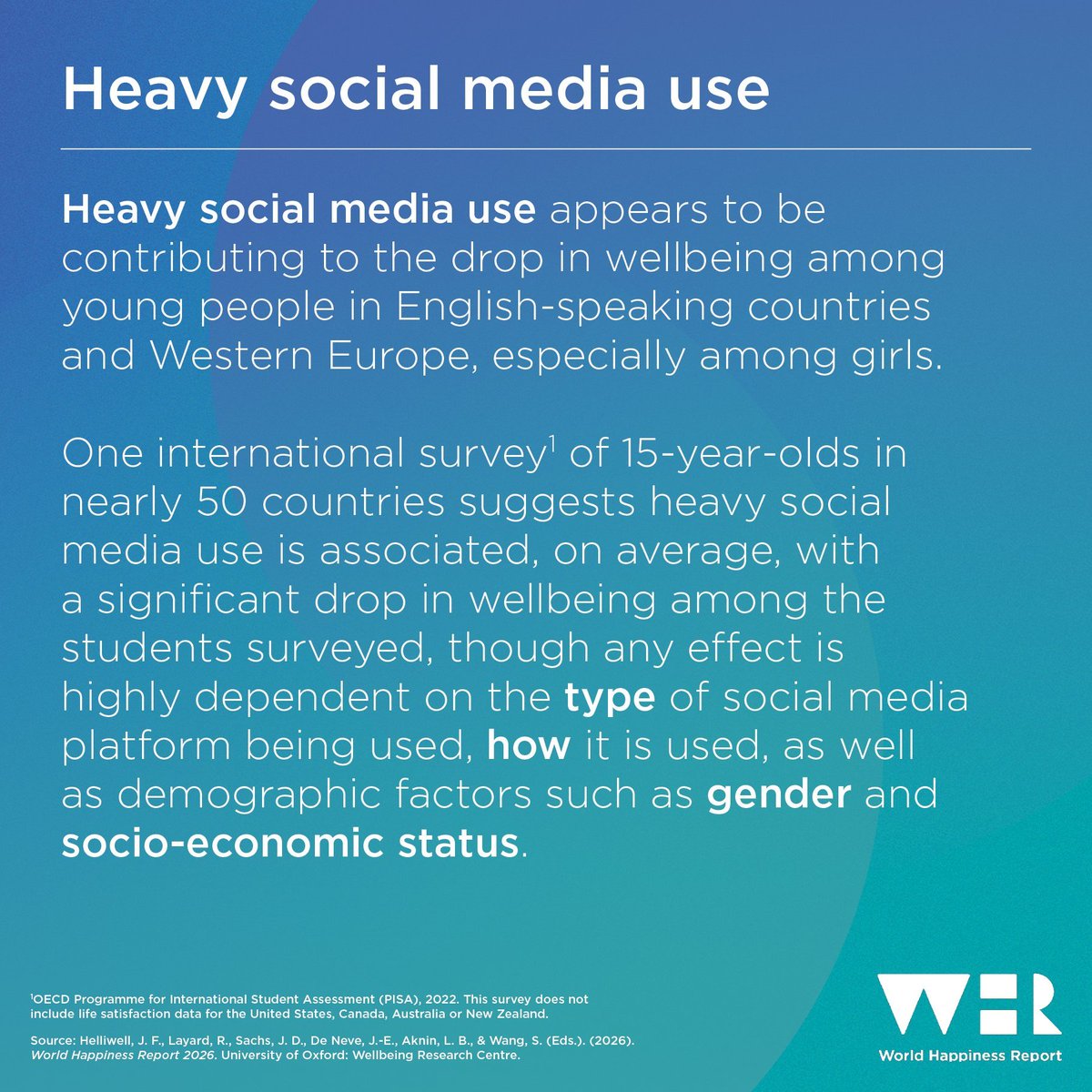
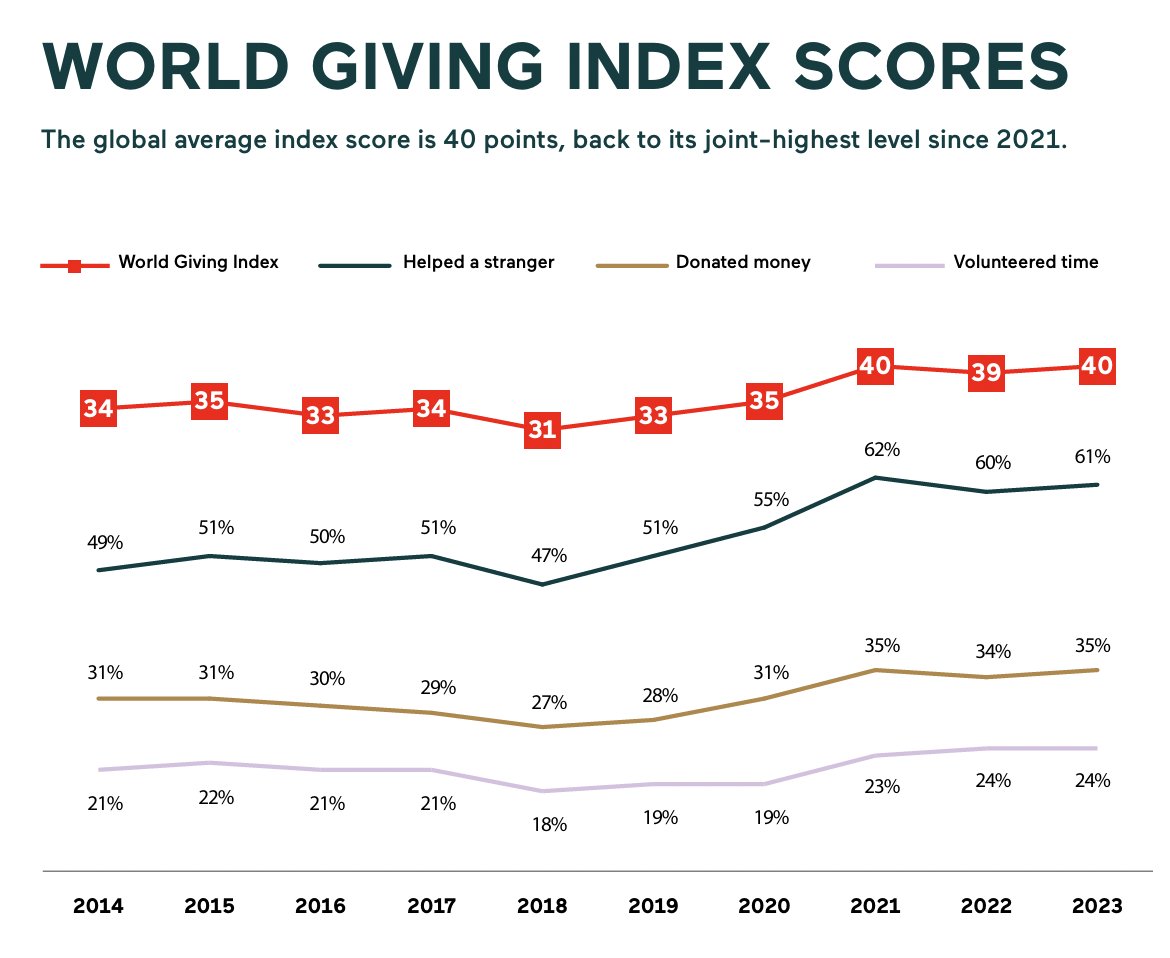
The World Giving Index tracks prosocial behavior such as helping a stranger, donating money, and volunteering time. In what seems like a world of woe, it's important to realize that these are increasing over time, contrary to most people's impressions. cafonline.org/insights/resea…
Steven Pinker tweet media
English
0
44
126
12.9K