

Academic Ronin
1.7K posts

Academic Ronin
@academic_ronin
Wandering Scholar
Canada Katılım Ocak 2017
1.3K Takip Edilen178 Takipçiler


@naval What if you think that someone like Warren Buffet is rat poison for calling Bitcoin "rat poison squared"?
English

Academic Ronin retweetledi

This is similar to the point I have been raising and for which I received endless insults, trolling, dunking, and personal attacks.
The unfortunate reality is that there has not been as much progress in oncology over the past 50 years as the public was promised. With some exceptions, cancer patients largely undergo the same surgeries, radiation treatments, and chemotherapies used decades ago, now accompanied by expensive molecular tests, and other bells and whistles.
Immune therapies were presented as the defining breakthrough of modern oncology in the last two decades, yet they work in only a very small fraction of patients, perhaps less than 3%. At the same time, these drugs sustained the market cap and revenue growth of several of the world’s largest pharmaceutical companies such as Merck.
The new pancreatic cancer drugs that target KRAS which are being heralded as the current cancer revolution, after decades of work and billions of dollars across academia and industry, extend life by six months. Yet, pointing that out as a minor effect provokes vicious attacks because the field is financially and institutionally committed to maintaining the narrative of constant revolutionary progress.
Even after studying cancer genetics personally for two decades, I would still choose a colonoscopy over the available genetic screening approaches because I know it is more rigorous.
The field has stagnated in many ways while consuming enormous amounts of public funding and private capital. Criticizing this is extraordinarily difficult because cancer patients become the easiest human shields imaginable for protecting academic institutions, funding structures, and industrial pipelines from any form of scrutiny.
One uncomfortable possibility also remains largely unspoken: genetics and the immune system may not occupy the central role in cancer biology that current funding priorities and biotech R&D pipelines assume, despite enormous portions of modern oncology now being organized around those frameworks.
There is also a deeper conceptual problem. If the theory behind so-called precision oncology is truly correct and cancer really is thousands of distinct diseases each requiring highly individualized treatment, then the current drug development, clinical trial, insurance, and regulatory system can never realistically scale to manage that level of complexity. At some point the theory itself must be reconciled with the practical constraints of how disease can actually be managed at a population scale.
Wafik S. El-Deiry, MD, PhD, FACP@weldeiry
I enjoyed re-reading this post from 2015 as a nice reminder of where precision oncology was as a field in 2015 including some of the issues of the time. linkedin.com/pulse/we-ready… Still an issue in 2026 as in 2015: "The problem in the era of precision medicine with the vast molecular heterogeneity of cancer (no two tumors are alike) is the problem of rare tumors and orphan diseases. The lack of universal genomic testing platforms and widespread data sharing in real time of clinical outcomes associated with genomic signatures for specific individual tumors adds to the challenge of this catch-22." One area with much progress since 2015 is liquid biopsy that is much more main stream in 2026 (although I don't think less expensive): "Liquid biopsy has a future in the approach to deliver precision medicine over time to a patient blog.aacr.org/exciting-preci…." A significant problem that remains in 2026 that was there in 2015 is the ability to predict exceptional responders in a sea of heterogeneity: "Not predicting drug value accurately for a given patient's tumor and its genome may deprive patients of exceptional responses if the value is deemed low and the drug ends up not covered by insurance based on a population and statistics argument. Median OS or PFS while providing important information that helps in discussion, they are not relevant to the exceptional responders or the outliers as those are not predicted." "But we are not so good at predicting who will get great benefit versus little or no benefit for much of what is between the extremes [of therapy response rates]." There has been little to no progress by 2026 vs 2015 in predicting accurately who will respond to targeted therapy based on co-mutations with some rare exceptions (the pace has been slow due to not enough emphasis or appreciation of impact on the value of care): "If we only treat patients who are accurately predicted to benefit then we maximize value, including by lowering overall costs. Perhaps in the future genomics may help predict accurately which specific patients will benefit and for how long, for their specific tumor signatures, at the time of drug approval but how do we get there with the hundreds of already approved drugs?" Are we ready to assess the value of treatment options in oncology? linkedin.com/pulse/we-ready…
English
@Edesilon @predict_addict It's only a 6 month witholding period. His work would not be funded by any private entity in Canada. The government gives out a lot of money for quantum projects in which 95% are bullsh*t.
English

@predict_addict Some universities allow you to not publish dissertations for X years if there’s sensitive information in them. I don’t think that’s the case but it’s a better argument than it not being available online.
English

“Grinding a PhD” what was his PhD about?
PhD thesis does not seem to be available. Because … it doesn’t exist.
Reality is he never completed his PhD.
Beff (e/acc)@beffjezos
Feeling robbed of my path to citizenship right now after grinding a PhD and contributing to foundational AI + computing technologies for the United States for the past ~ 10 years. Feels like robbing top and technologists like me of the opportunity to achieve the American Dream.
English
@predict_addict Beff is a scammer just like the Indians that come to North America. The fact that he is part of e/acc tells me so.
English
Academic Ronin retweetledi

Virtually every problem facing the country today can be tied back to Dominic Barton and Mark Wiseman's Century Initiative.
English


@BradMBradford @kinsellawarren Did you talk about the 1000s of churches that have been burned down by arsonists right in your own backyard of Canada?
English

As members of Toronto’s Muslim community gather today for Friday prayers, I recognize for many it’ll be with a heavy heart after the deplorable attack in San Diego earlier this week.
To everyone who is grieving and mourning, I want to extend my sincerest thoughts and solidarity to you and your loved ones.
Violence against any place of worship is evil and must always be unequivocally condemned.
If elected Mayor, I pledge to work with TPS to always ensure that all of our citizens, of all faiths, are protected from such horrors.
English
This is Dean Mary Wells @UWaterloo @UWaterloo to a tee along with the chai walla, Vivek Goel.
John Carter@martianwyrdlord
I saw this happen in real time over the last several years. DEI clogged the pipeline with retards selected on the basis of ugliness. Deeply unpleasant to work with, uninteresting to talk to, and of course incompetent. They're working their way through academia like a bolus of indigestible poison. So far the damage is covered up by residual boomer competence and the cognitive beauty filter provided by LLMs. Only way to fix it is to fire everyone hired over the last ten years, and then fire everyone who hired them. Which is the same as firing everyone. Which is the same as dissolving academia.
English
@valdombre Typical KW leftist policies. We are not even close getting the best and brightest to Canada.
English

- Comes to Canada from Iraq in 2010
- Gets hooked on meth and becomes homeless
- Accumulates a 7-page criminal record
- Urinates on ice rink while people are skating and shoves someone
- Won't be deported to Iraq because it's dangerous
- At least immigration raises GDP though

English
@UWaterloo @UWaterlooPres Juat look at Waterloo that created a EDI department just to justify tgeir salaries and demand more overhead and grants from government without improved real outcomes.
Jason Locasale@LocasaleLab
University administrators love these exorbitant costs because they use them to justify their own salaries and bureaucratic expansion by pointing to the massive budgets and crises they claim to manage.
English
Academic Ronin retweetledi
The West has diluted STEM education so severely that top Chinese students are increasingly uninterested in pursuing bachelor’s degrees at Western universities—and frontier Chinese labs have begun rejecting Chinese applicants who earned those Western bachelor’s degrees.
English
@FrankGrimes_Jr First time he ever told the truth. The fact that some organizer hired this clown suggests that the organizers are clowns too.
English

Speaking at the 'Women's Deliver' Conference Justin Trudeau decides to tell a story of one of his male students whose essay he published in the school newspaper detailing how boys are held to a higher standard than girls
Ryan Gerritsen🇨🇦🇳🇱@ryangerritsen
Trudeau spoke at the 2026 Women Deliver Conference. You can bet this will be the last time this guy will ever be asked to speak at this event ever again. This is absolutely painful. Katie Telford is visibly uncomfortable sitting there having to listen to this guy try and put sentences together. I’m stunned at how bad this is.
English
@girdley They should allow LinkedIn for under 16 and ban LinkedIn for those over 18.
English

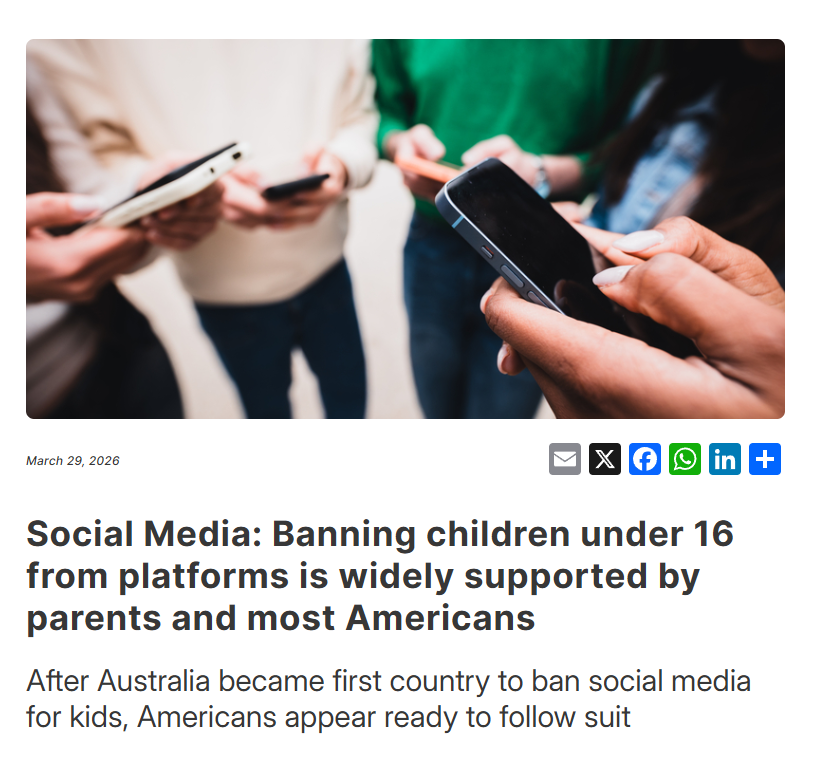
I'm going to get killed for this but I think this is a good idea.
After digging into the data about depression, sleep deprivation and external locus of control in kids who are active on socials early, I'm sold.
Social media as late as possible in life.
English
Academic Ronin retweetledi

The problem is that I actually understand how the system works because I do this odd thing called “reading.” Every day I have to get up and live within a nihilistic construct that I unfortunately understand. I can’t un-understand what I now understand. So I broadcast my pirate signal here in the hope of waking up a few others.
There are a couple of excellent books that would help you understand this that were on the reading list I gave you:
Jacques Ellul: The Political Illusion
Jacques Ellul: The Technological Society.
Marshall McLuhan: Understanding Media
But you will never read them the way that you pretended to read and understand Edmund Burke. You cite his name like a totem as you happily live, an unreflective and credentialed member of the profession managerial class.
I have written extensively about this, but you probably haven’t even bothered to scroll through the things I have written, me being a lowly internet troll.
You are a fish who doesn’t even know he is wet.
You have lived all your life working within a system and yet you have never take the time or make the effort to understand how it actually works at a foundational, root programming level.
“You have to understand, most of these people are not ready to be unplugged. And many of them are so inured, so hopelessly dependent on the system, that they will fight to protect it.”
You really are what you seem to be. And I am perfectly comfortable writing notes from underground.
Erin O'Toole@erinotoole
@_kruptos Do you ever wake up in a good mood? You are on the right side of the grass buddy…
English
@AutismCapital But..but...but Karp and Lonsdale say they are protecting us and are for workers rights?! Everything we've seen so far suggests otherwise. Exploding pagers, low cost ai-drones, speeding camera feeds, supply chain failures, forever wars, big tech layoffs suggest otherwise.
English

Take the example further. "But if we're all on a CBDC then people will be auto-docked credits or restricted access from services." Will they? Some people will. Will everyone? Have humans suddenly become immune from weaponized outrage? From claiming racism or discrimination? And if someone has no social credit, won't they just steal? Is punishment for theft being enforced now? Unless there's a societal shift, the burden of the surveillance state just falls more onto you and your children. aka, people with skin in the game in society, the producers, get punished more.
English
You think that in the AI surveillance state your life becomes safer. The reality is STILL that the enforcement will be subjective. The people who commit crime will still do it. YOU will just be fined/pay more because you care and have something to lose.
English
Academic Ronin retweetledi

The Corporal Works of Mercy:
1. Feed the hungry
2. Give drink to the thirsty
3. Clothe the naked
4. Visit the sick
5. Shelter the homeless
6. Visit the imprisoned
7. Bury the dead
I believe we will remain human in the 21st century to the extent that we do this work.
In an age when "justice" is used to justify violence, mercy is the anti-mimetic act that will win triumph in the end; and I can think of no more important kind, in a digital age of abstractions, than the kind of mercy that is bodily, incarnate, and compassionate.
English
@jrodgers @GGDavidJohnston Dude David Johnston shut down a UWaterloo student's ecommerce used bookstore because more students were buying from there than campus bookstores. I would not use him as an example of a builder creating thriving ecosystems.
English

When the Waterloo ecosystem was functioning at its best, people pulled together to raise a big barn. We had @GGDavidJohnston setting the tone. Stuff got done.
Then things changed. Attention shifted. Doors got locked. Moats were dug. As a result, less companies were started here (and in Canada).
Lets figure out what is next... as a community.
buildfromhere.substack.com/p/waterloo-is-…
English


#BREAKING: Northern Ireland court convicts 78 year old retired pastor Clive Johnston over publicly reading the Bible verse John 3:16, sparking free speech debate.
English
@chrisbrunet @SMU Now do Dean Mary Wells @WaterlooENG who hired her PhD student as a faculty member rigging scholarship decisions on his way to a PhD. Did not have number of publocations and research impact as other candidates and avoided any committee review process.
English

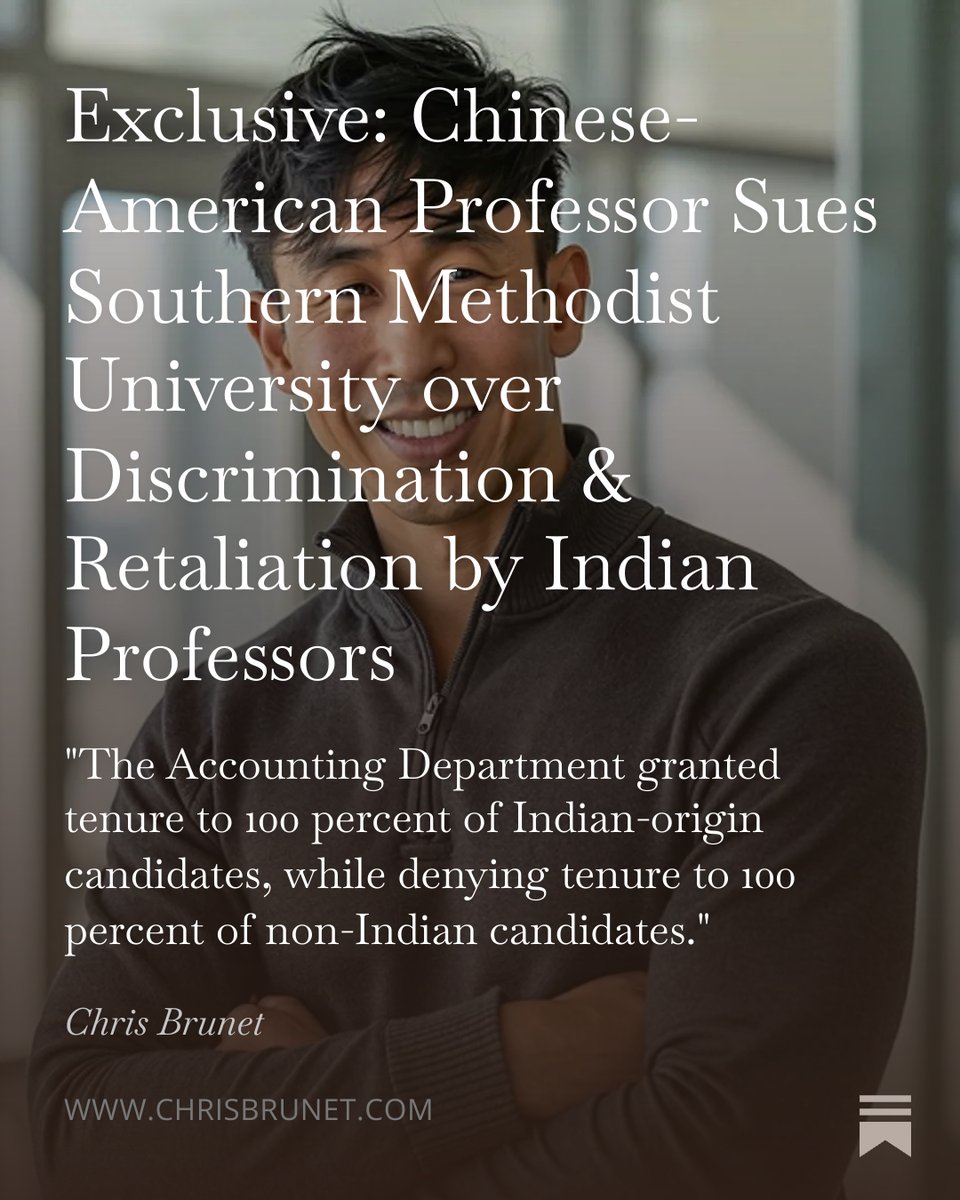
Scoop: Chinese Professor Sues Southern Methodist University (@smu) over Discrimination by Indian Professors
"The Accounting Department granted tenure to 100 percent of Indian-origin candidates, while denying tenure to 100 percent of non-Indian candidates."
link in comment 👇
English