

A.js1997
498 posts

Any UK folks staying up for splashdown this evening? 👀 #ArtemisII
English
@VampireWZ507 Thanks, I hadn't realised it had changed owners. I wonder who will look after it since Weald Aviation/Historic Aero Engineering are no longer around.
English
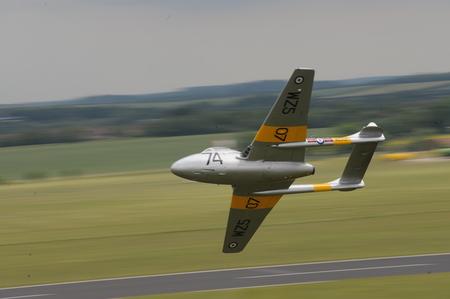
@adamsetch97 Keeping a vintage aircraft flying is difficult, keeping a classic vintage jet flying is a completely different level of difficulty… It was sold and the purchaser wanted it at north Weald.
English
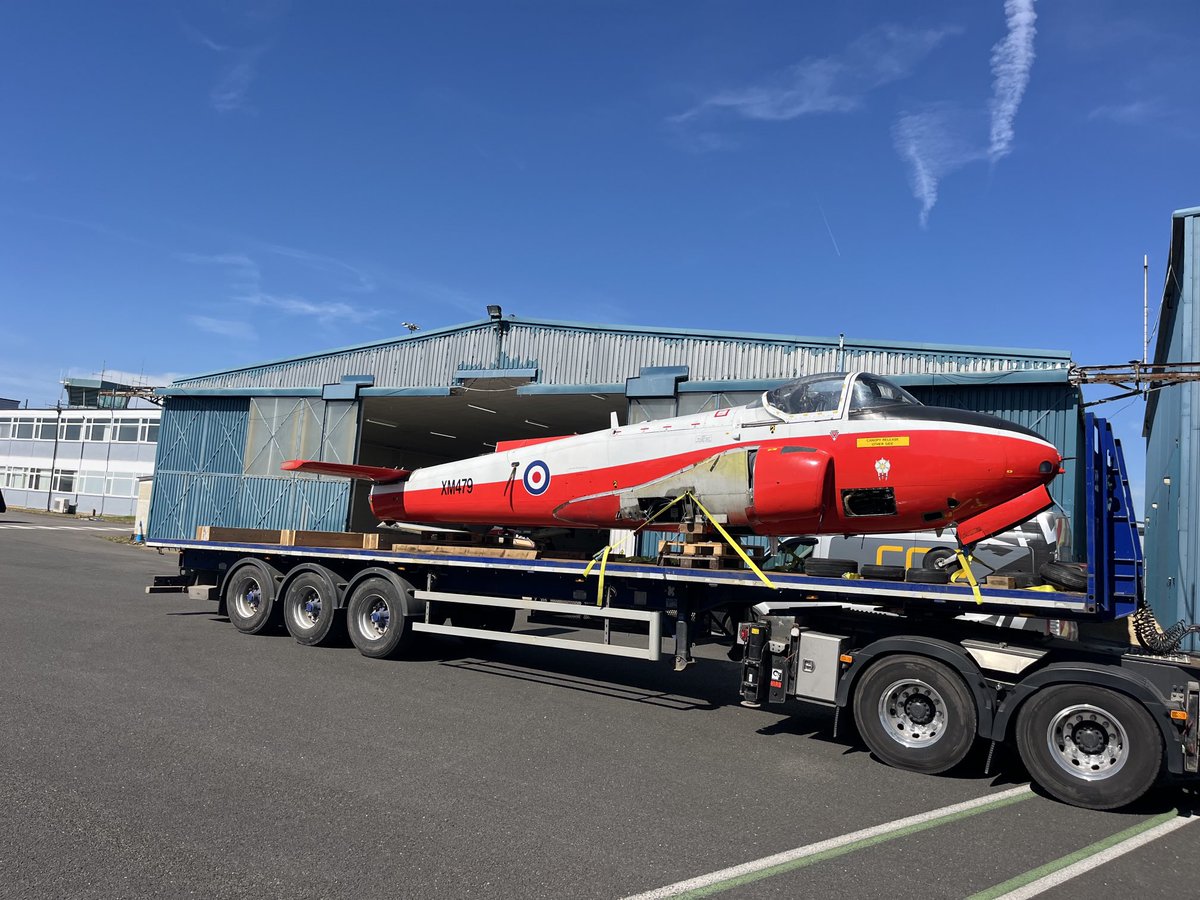
dismantled at Oxford, loaded onto a truck yesterday, poor ez will hopefully make it to North Weald today
English
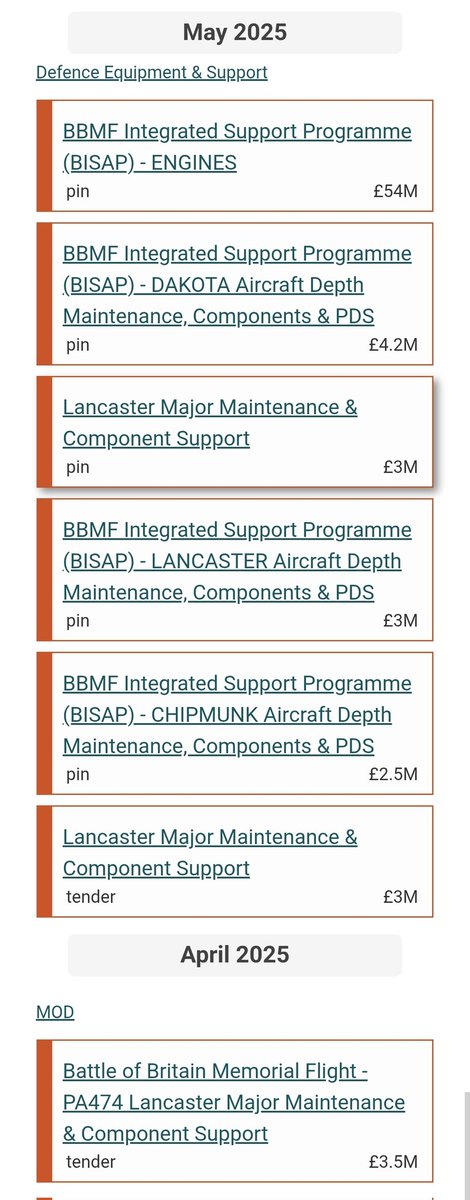
@penandpaper1989 I actually hate the amount of public money that's spent on BBMF. Civilian warbirds are run on a shoestring compared to the amount that the MoD spend.

English

And yet iconic early jets are left to rot because this country doesn't deem them significant enough to provide national funding for. Shame on you MoD.
National Spitfire Project@spirit_spitfire
A new £32m MOD contract will help secure the future of iconic aircraft like the Spitfire and Hurricane—supporting the Battle of Britain Memorial Flight and preserving vital skills.Protecting these aircraft means protecting our history. des.mod.uk/new-contract-s…
English
@penandpaper1989 There is a small aircraft museum at the airport itself. From what I remember, it's very close to the ITPS hangar
English
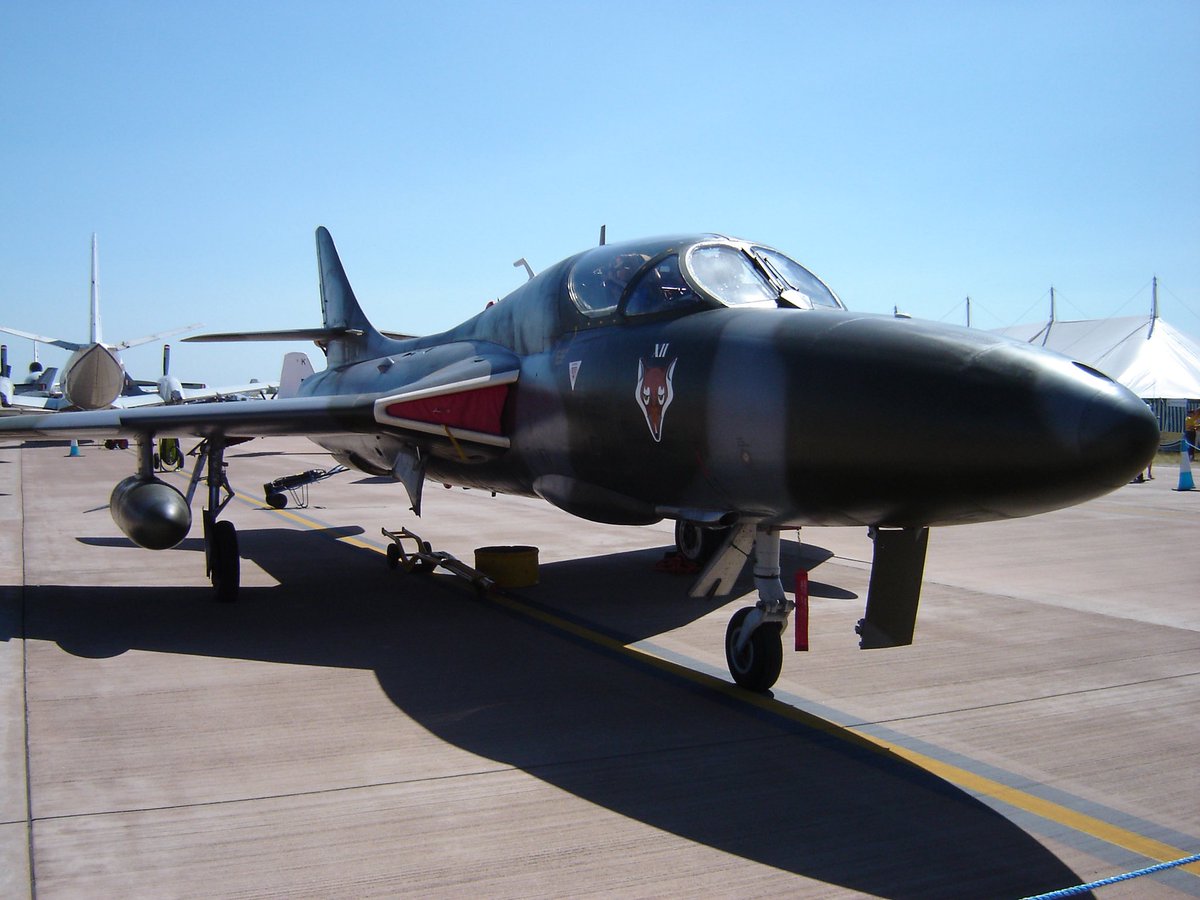
Planning a trip to London, Ontario - ITPS aside, anything else close-ish I should see or do while I'm there? When I've finished jumping up and down shrieking "it's a real life Hunter?" #avgeek

English
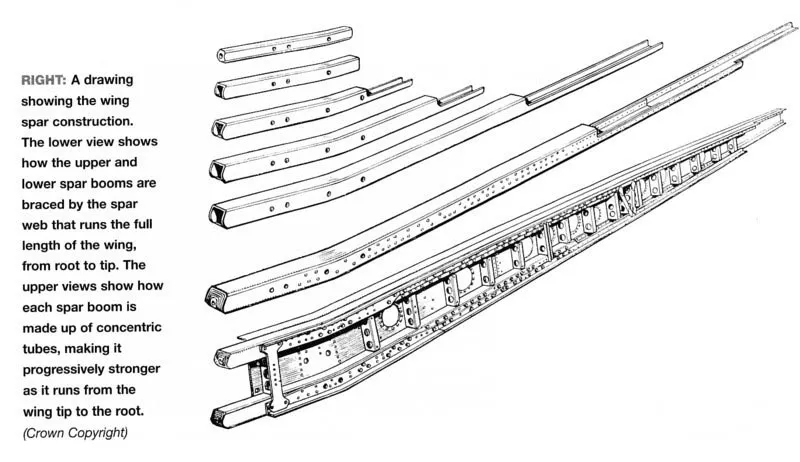
@CalumDouglas1 The original spar booms were constructed from DTD 273 (modern accepted substitute is L63). Nowadays, Spitfire spar booms are constructed from heat treated L105.
English

Its a series of extremely prescisely fitted tubing, which acts a variable thickness beam, providing progressive stiffness change across the span.
Its a very clever, light and effective design requiring some pretty accurate manufacturing.
Dale 🇨🇦 🆎@DBSLarsson
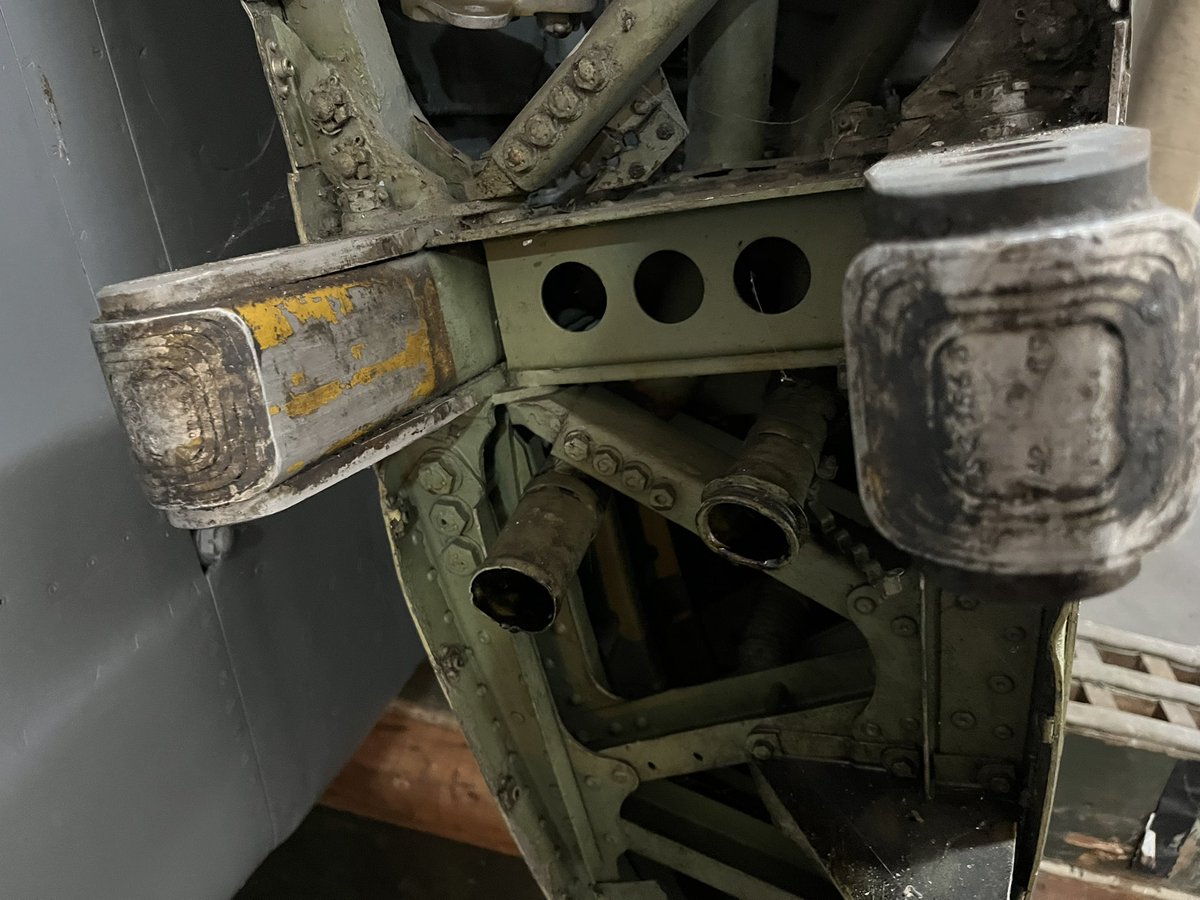
@CalumDouglas1 @almurray Is that just a bunch of square tubing around a bar? 😂 A manufacturing constraint workaround or was that done to provide better properties than just a solid bar?
English

@samwiseaviation If Embraer re-launced the E145. It would look like that!
English

Can't lie, it doesn't ooze the French flair that Dassault's previous offerings normally have. Wouldn't stand out on a ramp I don't think...
Preston Holland 🛩️@preston_holland
We got the first peek at the Falcon 10X today. After years of renderings, it finally exists in real life!
English


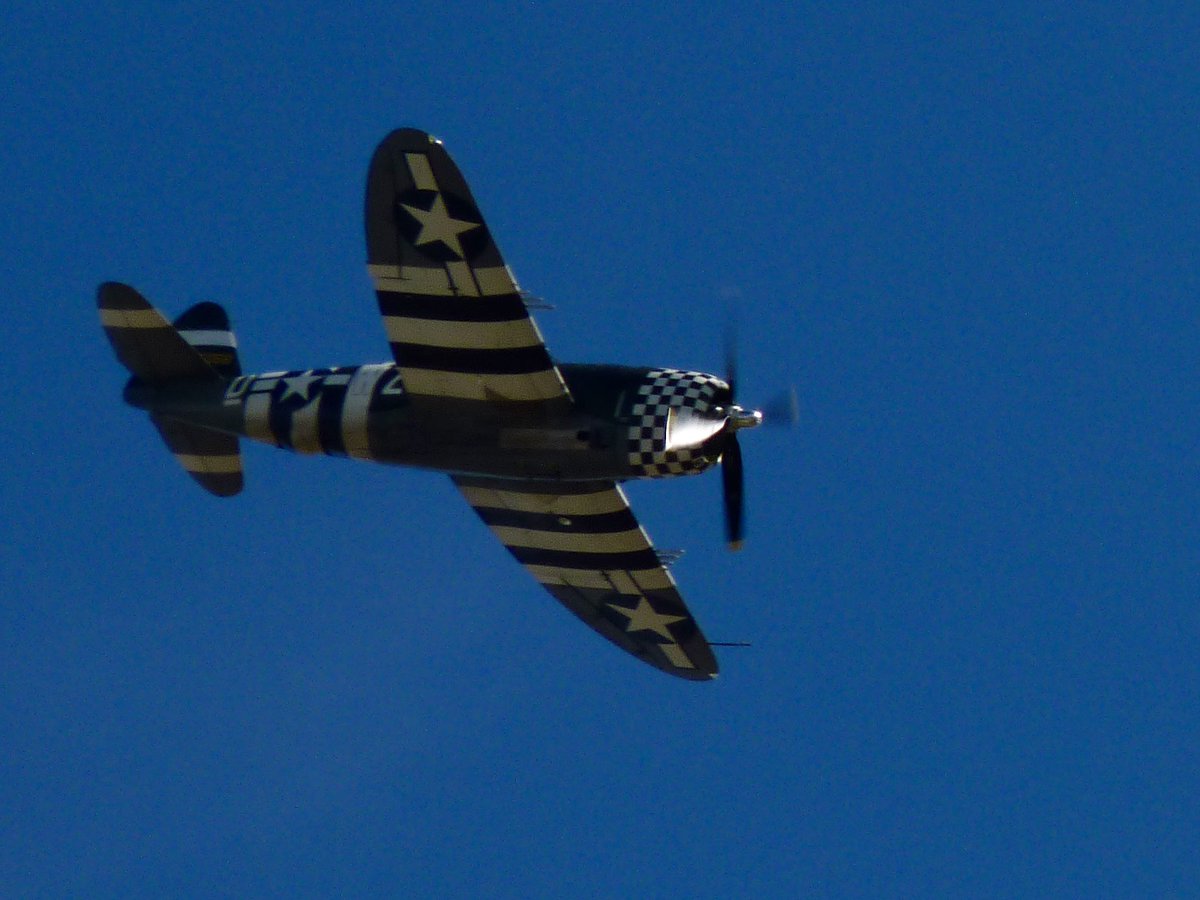
@CalumDouglas1 Would it be fair to say that the Spitfire's success was due to Hawker & Napier's failure? Or is that being too harsh? 😂
English
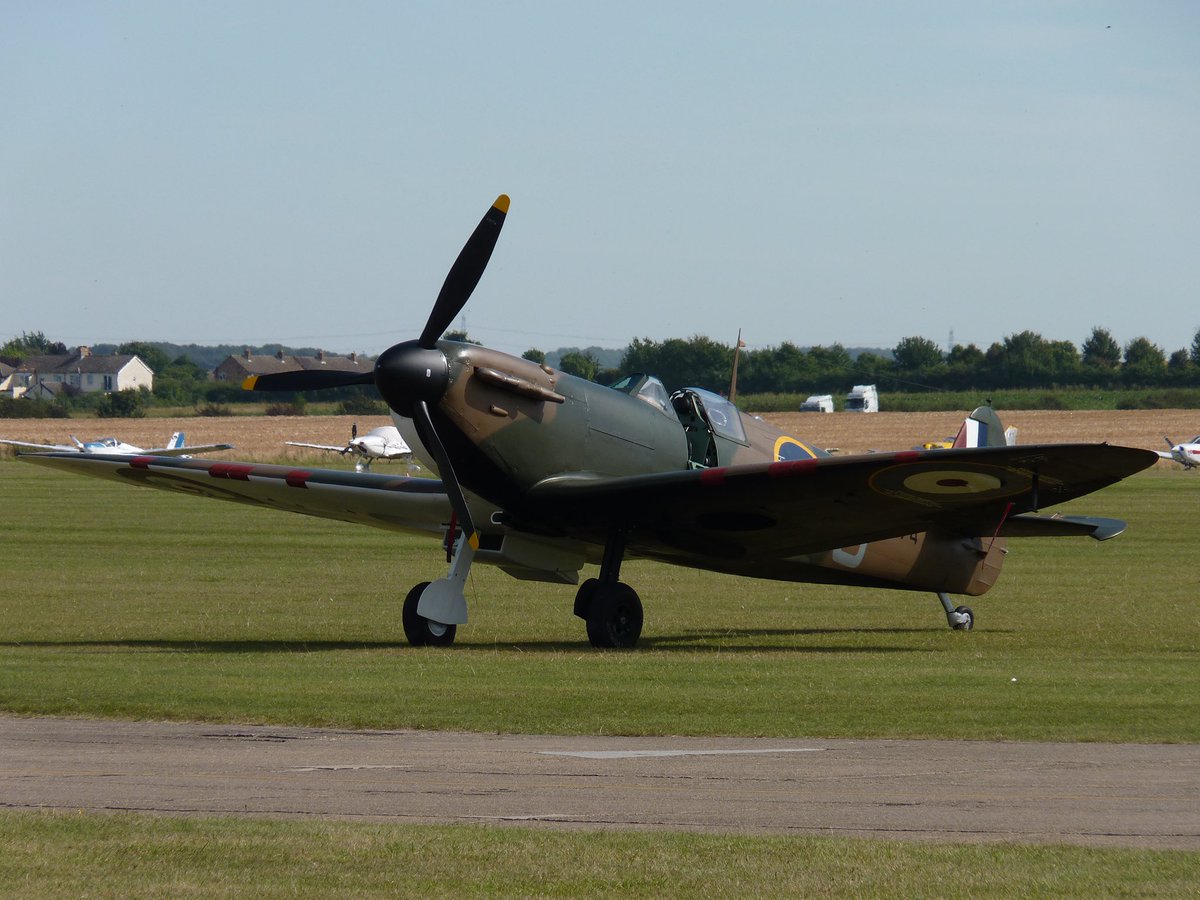
Today might be the 90th Anniversary of the first flight of the Spitfire (not all sources agree exactly).
Setting aside nitpicking over dates, was it actually any good ?
Rather than go for all the usual approaches to attempting to quantify the performance, I thought looking at a lesser appreciated aspect of its design and development would be good. Which helps illustrate its greatest attribute, which was it, and its engines` wholly unexpected development potential.
Its probably the most globally famous fighter aircraft of all time, which colours its reputation somewhat, but when it was made, it was just another plane in many respects, and no the test pilots reports were not awash with delerious amazement when they flew it.
In fact, by about 1937-ish both the Spitfire and Hurricane were both expected to be OBSOLETE by about the first year of WW2, it was never even intended to exist as a primary interceptor fighter much beyond about 1941.
The Hawker Typhoon (earlier known as the Tornado), was NOT supposed to be a heavy ground assault fighter/bomber at all, (which it became known for in service eventually), but a TOTAL replacement for the Hurricane AND Spitfire by about 1941 as a high speed interceptor.
The Tornado/Typhoon (actually code names for the Vulture or Sabre engine versions) were supposed to be the next generation of fighters, powered by engines with nearly twice the power of the little Merlin in the late 30s, over 2000hp.
There was just one... small.. problem when time came for the Spitfire to be retired, neither engine for its replacement worked properly, and, Camm had got his design wrong, the very thick wing caused severe performance deficit at high altitude and speed over that hoped for, and the Tornado/Typhoon was in NO state to take over as the premiere interceptor fighter.
To say it was a disaster was an under-statement, in 1941, we were left with the Hurricane, which was too heavy, and too slow, with poor high altitude performance to deal with the new Luftwaffe fighters, and the Spitfire too was in trouble, the prototype and tooling for the much improved Mk 3, with a much better engine, new wings, better radiators and retractable tail wheel had been ruined in a bombing raid on the Supermarine works.
However, the excellent wings of the Spitfire locked in vast development potential, as the super thin wings had outstanding high speed characteristics, and maintained controllability to any altitude the engine would take it to.
Something had to be done, the Me 109F was excellent at high altitudes, and the Fw190 (a true next-gen aircraft, fully automated, with brutal armament and yet nimble as a dancer - utterly lethal at low and medium altitude) was not far behind it.
Rolls-Royce, having been unable to deliver the next-generation powerplant, the Vulture, of over 2000hp, were asked to somehow coax more power from the little Merlin, which could struggle its was to 1300 hp for a few minuites at emergency boost of +12lbs.
Rolls, quickly designed a much better supercharger entry, and stuffed the biggest supercharger they had onto the back of the Merlin. This was the Merlin-45, and with the ultimate single-stage supercharger, turned the obsolescent Spitfire Mk 1 into the Mk V, a total emergency stop-gap aircraft cobbled together out of what was available at the last minuite.
The Mk V, ended up being THE most prolifically produced Spitfire of WW2, and enabled RAF pilots to meet the very good Bf 109 F on roughly even terms. Getting us through 1941, when the Spitfire was supposed to be phased out.
Rolls meanwhile had developed a huge supercharger for the Merlin, and installed a water cooled chargecooler for it, which is what is to be found on current Formula One engines. This kept the highly boosted air cool, and increased power and kept dangerous engine detonation at bay.
When the Fw190 was encountered, it was clear that the Spitfire V, had been totally outclassed. But what to do ?
Rolls, and Supermarine, quickly managed to stuff the much longer 2-stage supercharged Merlin into the Spitfire V, which was itself a cut-and-shut Mk 1 spitfire.
The result utterly transformed the fighter into something so good it was like another totally new aircraft all together. It was not just that the new Merlin could fly even higher, it had more power available at nearly all altitudes, this surplus, dramatically increased its "climb power", and the Mk 9 spitfire could climb at a stupefying rate from altitudes which previously it would have been rather Asthmatic with its old engine, and the surplus power made it extremely responsive and flyable up to even 43,000 feet.
Once again, the RAF was safe for another couple of years, and the Spitfire soldiered on through 1942 and 1943, years after the retirement date envisaged for it.
When yet more pressing needs for improvements appeared, Rolls and Supermarine managed somehow to install the huge Griffon engine into the Spitfire, so large that the whole fuselage and wings needed to be heavily re-worked and enlarged. This is where the original Mitchell Spitfire began to dissapear, the new Spitfire was the Mk 14, and it was an utter brute, a violent thug, brimming with menace even when static.
The Mk 14 was without any question the most lethal short range interceptor and point defence fighter of WW2, unbelievable climb-rate, 450mph top speed, outstanding high altitude pace, four cannon and still a fantastic dogfighter. The German ace Adolf Galland remarked of the Mk 14, that the only good thing about it was that there were so few of them.
So was the Spitfire the greatest aircraft ever made? Hardly, it was never even meant to fight through WW2, rather it was like an aging prize fighter, refusing to die and consantly coming back for more, and somehow holding its own with all the young fighters coming up the ranks. Its a story of endurance and persistence, most of which can be credited to its wonderul wings, extremely thin, and with very low induced drag thanks to the elliptical profile. This really enabled it to reinvent itself, over and over again. For which, we owe the Canadian aerodynamicist, Beverly Shenstone thanks.
Really, the best way to think of the Spitfire is not that it was ready for retirement in 1941, but that when it was desiged in 1936, it was just dramatically "under-engined".
Rolls-Royce deserve half the credit too, for managing to keep the little Merlin competive when nobody expected it to be.
Dont think of the Spitfire as a perfect fighter, its a story about development, surprises and stubbornly refusing to die, over and over again.
Below, the Mk 8 "tavern thug", which became in production form, the feared Mk 14.

English
A.js1997 retweetledi

After months of exposure I'm proud to unveil "Secrets of the Hunter": a 320-megapixel photo of the most iconic constellation in the sky, Orion.
This deep exposure shows how much is hidden between the stars we can see with our naked eye. More details and fine art print below 👇

English
@samwiseaviation Or any of the "gen's" for that matter. It's a marketing term used by Lockheed Martin when they introduced the F-22
English
Narrator: there is no actual definition anywhere for "6th gen" (or, for that matter, "5th gen").
Zhao DaShuai 东北进修🇨🇳 Commentary@zhao_dashuai
GCAP Excalibur testbed is now flying. Parts of the "6th gen" fighter program of UK, Italy and Japan is installed on a Boeing 757. Why "6th gen" in quotation marks? In reality, GCAP in its current form is a 5.5+ gen fighter. Not a true 6th gen design, which requires the aircraft not to have any vertical control surfaces. A tailless design is a must, if the aircraft wants to have broadband and all-aspect stealth. This might be enough for EU countries, but definitely not enough for Japan, whose militancy is pitting them against China, and we have several true 6th gen fighters in final phases of test flights.
English
A.js1997 retweetledi
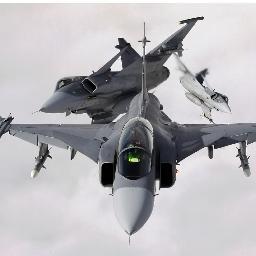
3 x GBU-49 GPS/Laser guided bomb on #Gripen E test aircraft 39-8.
Centreline station 5 + 5L and 5R.
Video: Saab AB facebook.com/watch/?v=88326…
English
@GarethJennings3 So if the flight testing has already been done. What is the need for this "development and testing and certification" contract?
English

Great news, but if you need an indication of how long it takes to get anything done on the the Eurofighter, flight testing of the AMK package was completed back in 2015!
Eurofighter Typhoon@eurofighter
Eurofighter and NETMA (the NATO Eurofighter and Tornado Management Agency) have signed the contract to enable the development, testing, and certification of the Aerodynamic Modification Kit (AMK) for the Eurofighter Typhoon jet. Jorge Tamarit-Degenhardt, Chief Executive Officer of Eurofighter, said: “Signing the AMK contract marks a major milestone for the Eurofighter programme, further enhacing the jet’s long-term capability." Read the full article over on our website. 🔗 eurofighter.com/news/eurofight…
English

Saturdays are for carrying out repairs to the die cast model of Just Jane that got knocked about a bit in the move. I don’t even want to think about how my Airfix builds have fared 😬

English

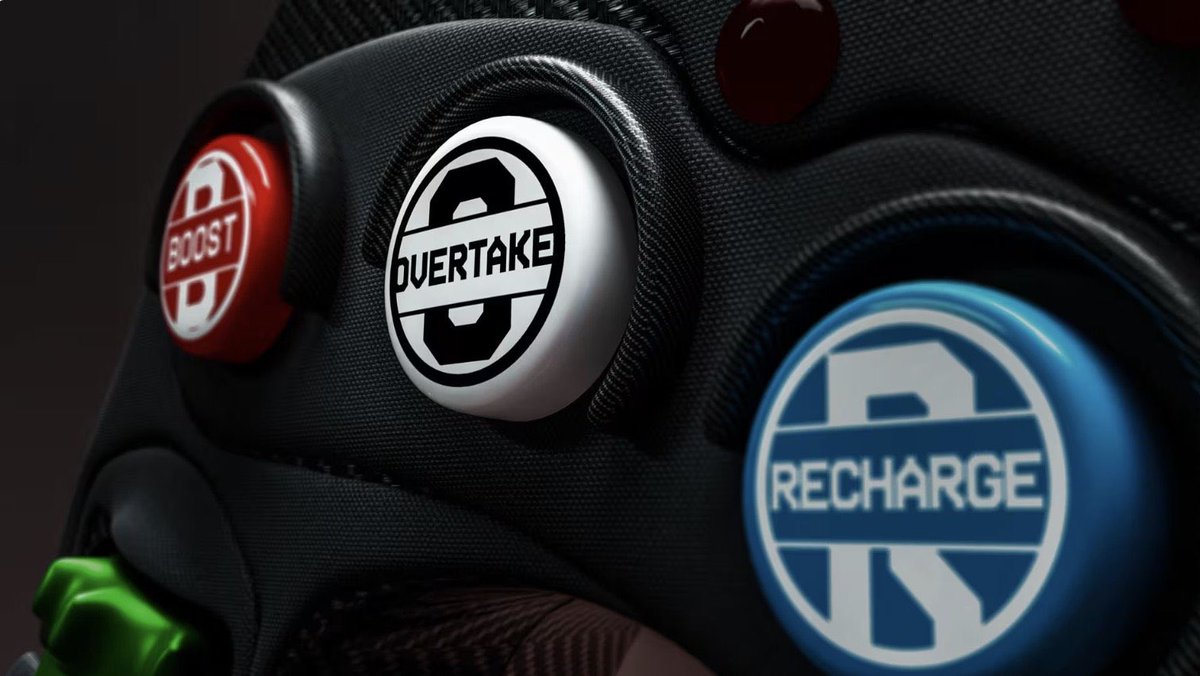
Recharge, Overtake and Boost for 2026
Goodbye MOM
Hello to ROB
English


Well you `orrible lot, thanks to your interest I have now indeed got to 20,000 followers, its only taken 8 years 🤣
However I reckon this is pretty decent for ramblings about the esoterics of WW2 aviation engineering and scientific organization.
As promised I will upload a pile of otherwise inaccessible archive files to my website to keep my end of the bargain. Probably over this weekend.
If you have thematic requests for the topic of those files (within the constraints of military aviation in Europe from 1930 to 1945) do let me know in the comments and I`ll see what I can do. I have over 5,000 individual archive files, some of which are 2 pages each, and some 2000 pages, so I might have what you`re interested in.

English
