Adrian Corduneanu

1.2K posts

Adrian Corduneanu

Adrian Corduneanu

@adrian1977

Katılım Şubat 2009
153 Takip Edilen39 Takipçiler
Brian Johnson
Brian Johnson@_brian_johnson·
@markgurman Apple finally realized they don't need to win the model war — they just need to own the distribution layer. Smartest play they've made in AI so far.
English
2
0
29
2.6K
Mark Gurman
Mark Gurman@markgurman·
BREAKING: Apple is planning to open up Siri to run any AI service via their App Store apps as part of iOS 27, dropping ChatGPT as the exclusive outside partner in Apple Intelligence and Siri. bloomberg.com/news/articles/…
English
395
643
7.1K
4.1M
Zhuokai Zhao
Zhuokai Zhao@zhuokaiz·
AMI Labs just raised $1.03B. World Labs raised $1B a few weeks earlier. Both are betting on world models. But almost nobody means the same thing by that term. Here are, in my view, five categories of world models. --- 1. Joint Embedding Predictive Architecture (JEPA) Representatives: AMI Labs (@ylecun), V-JEPA 2 The central bet here is that pixel reconstruction alone is an inefficient objective for learning the abstractions needed for physical understanding. LeCun has been saying this for years — predicting every pixel of the future is intractable in any stochastic environment. JEPA sidesteps this by predicting in a learned latent space instead. Concretely, JEPA trains an encoder that maps video patches to representations, then a predictor that forecasts masked regions in that representation space — not in pixel space. This is a crucial design choice. A generative model that reconstructs pixels is forced to commit to low-level details (exact texture, lighting, leaf position) that are inherently unpredictable. By operating on abstract embeddings, JEPA can capture "the ball will fall off the table" without having to hallucinate every frame of it falling. V-JEPA 2 is the clearest large-scale proof point so far. It's a 1.2B-parameter model pre-trained on 1M+ hours of video via self-supervised masked prediction — no labels, no text. The second training stage is where it gets interesting: just 62 hours of robot data from the DROID dataset is enough to produce an action-conditioned world model that supports zero-shot planning. The robot generates candidate action sequences, rolls them forward through the world model, and picks the one whose predicted outcome best matches a goal image. This works on objects and environments never seen during training. The data efficiency is the real technical headline. 62 hours is almost nothing. It suggests that self-supervised pre-training on diverse video can bootstrap enough physical prior knowledge that very little domain-specific data is needed downstream. That's a strong argument for the JEPA design — if your representations are good enough, you don't need to brute-force every task from scratch. AMI Labs is LeCun's effort to push this beyond research. They're targeting healthcare and robotics first, which makes sense given JEPA's strength in physical reasoning with limited data. But this is a long-horizon bet — their CEO has openly said commercial products could be years away. --- 2. Spatial Intelligence (3D World Models) Representative: World Labs (@drfeifei) Where JEPA asks "what will happen next," Fei-Fei Li's approach asks "what does the world look like in 3D, and how can I build it?" The thesis is that true understanding requires explicit spatial structure — geometry, depth, persistence, and the ability to re-observe a scene from novel viewpoints — not just temporal prediction. This is a different bet from JEPA: rather than learning abstract dynamics, you learn a structured 3D representation of the environment that you can manipulate directly. Their product Marble generates persistent 3D environments from images, text, video, or 3D layouts. "Persistent" is the key word — unlike a video generation model that produces a linear sequence of frames, Marble's outputs are actual 3D scenes with spatial coherence. You can orbit the camera, edit objects, export meshes. This puts it closer to a 3D creation tool than to a predictive model, which is deliberate. For context, this builds on a lineage of neural 3D representation work (NeRFs, 3D Gaussian Splatting) but pushes toward generation rather than reconstruction. Instead of capturing a real scene from multi-view photos, Marble synthesizes plausible new scenes from sparse inputs. The challenge is maintaining physical plausibility — consistent geometry, reasonable lighting, sensible occlusion — across a generated world that never existed. --- 3. Learned Simulation (Generative Video + Latent-Space RL) Representatives: Google DeepMind (Genie 3, Dreamer V3/V4), Runway GWM-1 This category groups two lineages that are rapidly converging: generative video models that learn to simulate interactive worlds, and RL agents that learn world models to train policies in imagination. The video generation lineage. DeepMind's Genie 3 is the purest version — text prompt in, navigable environment out, 24 fps at 720p, with consistency for a few minutes. Rather than relying on an explicit hand-built simulator, it learns interactive dynamics from data. The key architectural property is autoregressive generation conditioned on user actions: each frame is generated based on all previous frames plus the current input (move left, look up, etc.). This means the model must maintain an implicit spatial memory — turn away from a tree and turn back, and it needs to still be there. DeepMind reports consistency up to about a minute, which is impressive but still far from what you'd need for sustained agent training. Runway's GWM-1 takes a similar foundation — autoregressive frame prediction built on Gen-4.5 — but splits into three products: Worlds, Robotics, and Avatars. The split into Worlds / Avatars / Robotics suggests the practical generality problem is still being decomposed by action space and use case. The RL lineage. The Dreamer series has the longer intellectual history. The core idea is clean: learn a latent dynamics model from observations, then roll out imagined trajectories in latent space and optimize a policy via backpropagation through the model's predictions. The agent never needs to interact with the real environment during policy learning. Dreamer V3 was the first AI to get diamonds in Minecraft without human data. Dreamer 4 did the same purely offline — no environment interaction at all. Architecturally, Dreamer 4 moves from Dreamer’s earlier recurrent-style lineage to a more scalable transformer-based world-model recipe, and introduced "shortcut forcing" — a training objective that lets the model jump from noisy to clean predictions in just 4 steps instead of the 64 typical in diffusion models. This is what makes real-time inference on a single H100 possible. These two sub-lineages used to feel distinct: video generation produces visual environments, while RL world models produce trained policies. But Dreamer 4 blurred the line — humans can now play inside its world model interactively, and Genie 3 is being used to train DeepMind's SIMA agents. The convergence point is that both need the same thing: a model that can accurately simulate how actions affect environments over extended horizons. The open question for this whole category is one LeCun keeps raising: does learning to generate pixels that look physically correct actually mean the model understands physics? Or is it pattern-matching appearance? Dreamer 4's ability to get diamonds in Minecraft from pure imagination is a strong empirical counterpoint, but it's also a game with discrete, learnable mechanics — the real world is messier. --- 4. Physical AI Infrastructure (Simulation Platform) Representative: NVIDIA Cosmos NVIDIA's play is don't build the world model, build the platform everyone else uses to build theirs. Cosmos launched at CES January 2025 and covers the full stack — data curation pipeline (process 20M hours of video in 14 days on Blackwell, vs. 3+ years on CPU), a visual tokenizer with 8x better compression than prior SOTA, model training via NeMo, and deployment through NIM microservices. The pre-trained world foundation models are trained on 9,000 trillion tokens from 20M hours of real-world video spanning driving, industrial, robotics, and human activity data. They come in two architecture families: diffusion-based (operating on continuous latent tokens) and autoregressive transformer-based (next-token prediction on discretized tokens). Both can be fine-tuned for specific domains. Three model families sit on top of this. Predict generates future video states from text, image, or video inputs — essentially video forecasting that can be post-trained for specific robot or driving scenarios. Transfer handles sim-to-real domain adaptation, which is one of the persistent headaches in physical AI — your model works great in simulation but breaks in the real world due to visual and dynamics gaps. Reason (added at GTC 2025) brings chain-of-thought reasoning over physical scenes — spatiotemporal awareness, causal understanding of interactions, video Q&A. --- 5. Active Inference Representative: VERSES AI (Karl Friston) This is the outlier on the list — not from the deep learning tradition at all, but from computational neuroscience. Karl Friston's Free Energy Principle says intelligent systems continuously generate predictions about their environment and act to minimize surprise (technically: variational free energy, an upper bound on surprise). Where standard RL is usually framed around reward maximization, active inference frames behavior as minimizing variational / expected free energy, which blends goal-directed preferences with epistemic value. This leads to natural exploration behavior: the agent is drawn to situations where it's uncertain, because resolving uncertainty reduces free energy. VERSES built AXIOM (Active eXpanding Inference with Object-centric Models) on this foundation. The architecture is fundamentally different from neural network world models. Instead of learning a monolithic function approximator, AXIOM maintains a structured generative model where each entity in the environment is a discrete object with typed attributes and relations. Inference is Bayesian — beliefs are probability distributions that get updated via message passing, not gradient descent. This makes it interpretable (you can inspect what the agent believes about each object), compositional (add a new object type without retraining), and extremely data-efficient. In their robotics work, they've shown a hierarchical multi-agent setup where each joint of a robot arm is its own active inference agent. The joint-level agents handle local motor control while higher-level agents handle task planning, all coordinating through shared beliefs in a hierarchy. The whole system adapts in real time to unfamiliar environments without retraining — you move the target object and the agent re-plans immediately, because it's doing online inference, not executing a fixed policy. They shipped a commercial product (Genius) in April 2025, and the AXIOM benchmarks against RL baselines are competitive on standard control tasks while using orders of magnitude less data. --- imo, these five categories aren't really competing — they're solving different sub-problems. JEPA compresses physical understanding. Spatial intelligence reconstructs 3D structure. Learned simulation trains agents through generated experience. NVIDIA provides the picks and shovels. Active inference offers a fundamentally different computational theory of intelligence. My guess is the lines between them blur fast.
English
59
235
1.5K
315.1K
Adrian Corduneanu
Adrian Corduneanu@adrian1977·
@DannyMagazu OpenClaw has a much superior user interface. Hardcore engineers will find Claude Code more useful because they can configure it. It's like comparing Google Docs with vim.
English
0
0
0
32
Dan Magazu
Dan Magazu@DannyMagazu·
Here's what I've learned over the past couple of weeks with people who are really in touch with AI. They all think OpenClaw sucks. They all have advised on focusing on mastering Claude Co-Work and Claude Code. Even if they are doing something productive with Openclaw, the other tools on the market will pass it in a matter of months. They all say that anyone telling you to use OpenClaw is just peddling garbage. What do you all think?
English
127
2
142
29.2K
Adrian Corduneanu
Adrian Corduneanu@adrian1977·
@andrewchen @MisterMarket0 The value of spreadsheets is in the mindshare, and that is really hard to change. Standardization on a tool that everybody knows how to use is irreplaceable
English
0
0
0
90
andrew chen
andrew chen@andrewchen·
What you're talking about is the "IDE" user experience of spreadsheets -- being able to inspect the logic, checking out values/cells/etc, debugging, etc. I both agree that you'll need to do that BUT also that this is all possible, and frankly, better, in software as well In software you also get unit/integration tests, version control, coding harnesses, AI everything, and much more. You could even ask the LLM to describe the code in a grid if you want to try to be quasi-backwards compatible
English
4
0
18
11K
andrew chen
andrew chen@andrewchen·
prediction re the end of spreadsheets AI code gen means that anything that is currently modeled as a spreadsheet is better modeled in code. You get all the advantages of software - libraries, open source, AI, all the complexity and expressiveness. think about what spreadsheets actually are: they're business logic that's trapped in a grid. Pricing models, financial forecasts, inventory trackers, marketing attribution - these are all fundamentally *programs* that we've been writing in the worst possible IDE. No version control, no testing, no modularity. Just a fragile web of cell references that breaks when someone inserts a row. The only reason spreadsheets won is that the barrier to writing real software was too high. A finance analyst could learn =VLOOKUP in an afternoon but couldn't learn Python in a month. AI code gen flips that equation completely. Now the same analyst describes what they want in plain English, and gets a real application - with a database, a UI, error handling, the works. The marginal effort to go from "spreadsheet" to "software" just collapsed to near zero. this is a massive unlock. There are ~1 billion spreadsheet users worldwide. Most of them are building janky software without realizing it. When even 10% of those use cases migrate to actual code, you get an explosion of new micro-applications that look nothing like traditional software. Internal tools that used to live in a shared Google Sheet now become real products. The "shadow IT" spreadsheet that runs half the company's operations finally gets proper infrastructure. The interesting second-order effect: the spreadsheet was the great equalizer that let non-technical people build things. AI code gen is the *next* great equalizer, but the ceiling is 100x higher. We're about to see what happens when a billion knowledge workers can build real software.
English
441
290
3.1K
1.3M
Jaideep Parashar
Jaideep Parashar@jaideeparashar·
@bindureddy Bindu, I partially agree. Most AI output is mediocre if you treat the model like a magic button. In my experience, the real difference appears when someone learns how to guide the system properly. AI is powerful, but it still rewards skilled users.
English
3
0
5
502
Bindu Reddy
Bindu Reddy@bindureddy·
99% of all AI generation - code, content, media - are ALL SLOP AND LARGELY USELESS - code is buggy - content is artificial - it doesn't really do anything well You need to be an expert user with a lot of patience to actually get it to do things well
English
198
37
549
27.7K
Adrian Corduneanu retweetledi
Gracia
Gracia@straceX·
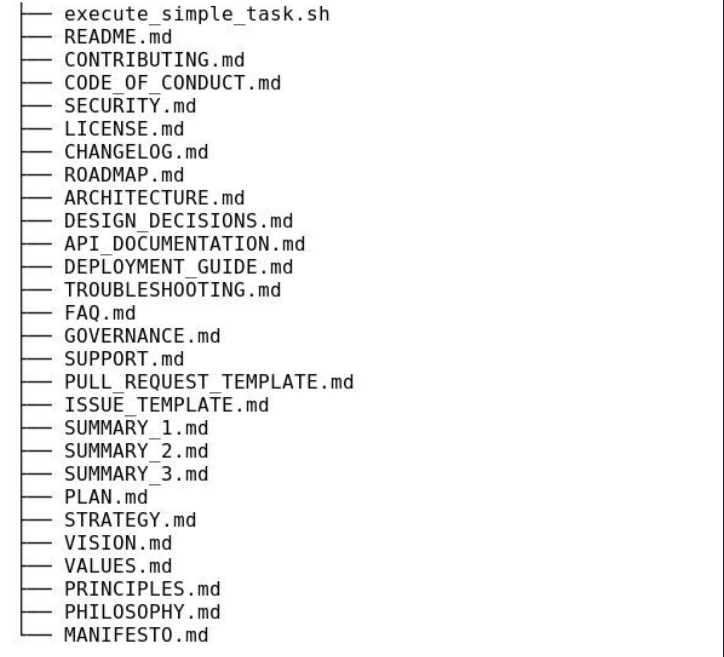
95% of Github repos in 2026 be like:😂
Gracia tweet media
English
161
233
5K
209.5K
Aanya
Aanya@xoaanya·
If everyone has Al What becomes the real competitive advantage for engineers?
English
683
11
533
115K
Adrian Corduneanu
Adrian Corduneanu@adrian1977·
@Cernovich Only promoted products or services. The law does not require disclosure of paid "ideas". It's the wild west when it comes to influencing thought.
English
0
0
0
12
Adrian Corduneanu
Adrian Corduneanu@adrian1977·
@giemie4u2cee @nikitabier There is no requirement for "hot takes" / ideas to be disclosed as Paid Partnership. Only products and services. Most ideas peddled on X are probably paid, and you will never know
English
0
0
1
21
Gie mie
Gie mie@giemie4u2cee·
Nothing kills trust faster than realizing half the 'hot takes' in your feed are just someone else's paycheck in disguise. Transparency isn't censorship—it's respect. If your opinion suddenly costs money to express, own it. Your followers deserve to know when the vibe check comes with a sponsor tag. This small label might do more for real conversations on here than any algorithm tweak ever could.
English
1
1
2
532
Nikita Bier
Nikita Bier@nikitabier·
Today we're announcing Paid Partnership labels on posts. X's core value is providing on authentic pulse on humanity. While we want to encourage people to build their businesses on X, undisclosed promotions hurt the integrity of the product and lead people to distrust the content they read on X. This new feature will allow you to comply with regulations, but more importantly: it enables you to be transparent with your followers.

English
2.2K
1.1K
11.5K
3.4M
Adrian Corduneanu
Adrian Corduneanu@adrian1977·
@nikitabier "Paid partnership" should also cover promoting ideas for money, not just products.
English
0
0
0
6
Adrian Corduneanu
Adrian Corduneanu@adrian1977·
@aakashgupta There is however a new channel to distribute directly to agents (via MCP, skills, software without interface that works well for agents), which does create some real opportunities for startups in 2026
English
0
0
0
31
Aakash Gupta
Aakash Gupta@aakashgupta·
When building costs drop 90% but distribution costs stay flat, you get a gold rush where everyone digs and nobody sells. That’s what this chart actually shows. New websites up 40%. iOS apps up 50%. GitHub pushes up 35%. Everyone read “barrier to building disappeared” and heard opportunity. The correct read is that 557,000 new apps hit the App Store last year, a 24% spike, flooding a discovery channel that was already dead on arrival. 90% of senior mobile professionals surveyed said organic App Store discovery was effectively over before this wave even hit. Half of all App Store searches are just people typing in brands they already know. The supply side hockey-sticked. The demand side didn’t move. This is why tech layoffs doubled to 264,000 in 2025 while code output simultaneously exploded. Companies don’t need more builders. They need people who can get the thing in front of someone who’ll pay for it. Distribution, positioning, audience, brand. The functions that never got the AI productivity boost. Nicholas nails the conclusion that taste and knowing what to build are what matter now. But taste is only half of it. You also need the channel. The unsexy reality is that a mediocre app with 100,000 newsletter subscribers will outperform a beautiful app with zero distribution every single time. The apps winning in 2026 aren’t the best-built ones. They’re the ones attached to someone who already has an audience. Building software used to be the moat. Now building software is the commodity. Distribution is the new moat, and unlike code, it doesn’t get cheaper with AI.
Nicholas Charriere@nichochar

I think we are witnessing the biggest explosion in software creation in history. New website creation is up 40% year on year. New iOS apps are up nearly 50%. GitHub code pushes in the US jumped 35% and in the UK around 30%. All of these metrics were flat for years before late 2024. The entire graph looks like a hockey stick. You no longer need a six month runway and a dev team to ship something real. We see this in our metrics as well! People who never wrote a line of code are building and launching apps. The barrier to building software just disappeared. What matters now is knowing what to build and the taste to build it right.

English
97
215
2.1K
344.5K
Adrian Corduneanu
Adrian Corduneanu@adrian1977·
@nikitabier Implement crypto signed proof of humanity. If a video of a politician becomes viral, we need to know that the politician signed it
English
0
0
0
5
Nikita Bier
Nikita Bier@nikitabier·
People come X to get a pulse on humanity. Because of that, the platform must make every effort to resist anything that misrepresents or adulterates that pulse. There is nothing more unsettling than expecting you’re reading the words of a human -- only to find it was a machine, or an account operating at the direction of an undisclosed commercial or governmental entity. In the AI era, our product, policies, and approach will need to evolve meaningfully. Some things may not work, but we intend to employ every available tool and strategy to secure the global town square.
English
2.2K
641
11.1K
906K
Adrian Corduneanu
Adrian Corduneanu@adrian1977·
@pvncher @zeroXmusashi If you can regenerate the whole repo from scratch in a few hours and pass all testing, writing perfect code no longer matters. We are not going to review code for much longer
English
0
0
0
93
eric provencher
eric provencher@pvncher·
@zeroXmusashi 4% of is very far from 90%+ Yes some engineers don’t write any code by hand anymore. I’m in that camp, but I do review the output carefully. That’s still not the case for most engineering teams in the world right now.
Dylan Patel@dylan522p

4% of GitHub public commits are being authored by Claude Code right now. At the current trajectory, we believe that Claude Code will be 20%+ of all daily commits by the end of 2026. While you blinked, AI consumed all of software development. Read more 👇 newsletter.semianalysis.com/p/claude-code-…

English
8
0
24
7.9K
eric provencher
eric provencher@pvncher·
It’s so hard to contrast Boris’ take with Dario’s claim that: “software engineering is fully automated by 2027. You might have the 0.01% engineer left over, but that's it, the job is finished.” Why does Dario keep making such insane claims?
Boris Cherny@bcherny

@big_duca Someone has to prompt the Claudes, talk to customers, coordinate with other teams, decide what to build next. Engineering is changing and great engineers are more important than ever.


English
85
9
468
201.5K
Adrian Corduneanu
Adrian Corduneanu@adrian1977·
@aryanlabde The real breakthrough are the latest generations of models (Opus 4.6, Codex 5.3). With OpenClaw a lot of people experienced how good they are at getting things done. If you have a well-integrated Claude Code setup it is just as useful and you are not missing anything
English
0
0
0
39
Aryan
Aryan@aryanlabde·
Is OpenClaw actually useful? I’m genuinely curious, should i set it up?
English
151
4
99
10.2K
Riccardo Spagni
Riccardo Spagni@fluffypony·
@Nick_Davidov I have rm alias’d to the trash tool (install via Homebrew) to prevent *me* from accidentally deleting stuff in the terminal, but it has the added bonus of preventing these sort of issues.
English
11
9
247
36.8K
Nick Davidov
Nick Davidov@Nick_Davidov·
Asked Claude Cowork organize my wife’s desktop, it stated doing it, asked for a permission to delete temp office files, I granted it, and then it goes “ooops”. Turns out it tried renaming and accidentally deleted a folder with all of the photos my wife made on her camera for the last 15 years. All photos of kids, their illustrations, friends’ weddings, travel, everything. It’s not in trash, it was done via terminal It’s not in iCloud, it already synced the new file structure. She didn’t have Time Machine. Disc recovery tools can’t see anything. I called Apple and they pointed me to a feature in iCloud allowing to retrieve files that were saved before but are no longer on iCloud Drive (they keep them for 30 days). I’m now watching it load tens of thousands of files. I nearly had a heart attack. Once again - don’t let Claude Cowork into your actual file system. Don’t let it touch anything that is hard to repair. Claude Code is not ready to go mainstream.
English
657
469
7.5K
1.9M
Adrian Corduneanu
Adrian Corduneanu@adrian1977·
@vasuman @smcho91 A lot of the spam today is AI generated anyway. Highly unlikely people stood behind a keyboard to write so much content in a fews days. Was content seeded, and did people babysat their agents on what to write? For sure
English
1
0
0
41
vas
vas@vasuman·
Are there any verifiable metrics around how much of this is real 'agent making a post on its own' vs 'agent prompted to make a post' vs 'human literally curling the endpoint'? Because from my observations its close to 0%, 25%, 75%. The original Moltbook is literally X. There's more bots responding to bots here than on Moltbook.
English
2
0
11
1.1K
vas
vas@vasuman·
Did Moltbook get VC funding or something lol there are still high profile individuals running astroturf campaigns pretending it's the most revolutionary piece of technology invented since GPT I really hate to come across as a hater - I get it, it's cool and all But this unfounded hype makes me feel like theres some serious $$$ involved
English
44
3
88
23.3K
Adrian Corduneanu
Adrian Corduneanu@adrian1977·
@Rob66733000 @SPFCCMT @DilemmaTrades @saylordocs Wash sales rules don't apply to crypto. I still would not try to purposely generate a tax loss. But sometimes it automatically works in your favor. For instance, when liquid stake ETH, you have to sell ETH, and buy a liquid staking token equivalent to ETH.
English
0
0
0
23
Rob C
Rob C@Rob66733000·
@SPFCCMT @DilemmaTrades @saylordocs Wash sale applies to the same or a "substantially identical" security. You could try, but may get caught later. Wouldn't advise if your trying to generate a tax loss.
English
2
0
3
117
Documenting Saylor
Documenting Saylor@saylordocs·
If you buy Bitcoin at $126,000 and it goes to $88,000 you can sell it and buy it back 6 seconds later you still have the same one Bitcoin But you can realize a capital loss of $38,000 for tax purpose
English
501
205
8.2K
2.2M
Adrian Corduneanu
Adrian Corduneanu@adrian1977·
@bindureddy Runaway exponential growth is rare. The faster the growth, the more likely that an externality will break the cycle and bring back linear growth
English
0
0
1
36
Bindu Reddy
Bindu Reddy@bindureddy·
Road to Utopia 2026 - 2028 - AI automates white white-collar 2027 - 2030 - Robots automate blue-collar work 2028 - 2032 - AI starts making scientific breakthroughs 2032 - AI cracks the problems of infinite energy The beginning of the age of abundance!
English
186
82
840
36.2K
Gracia
Gracia@straceX·
People keep saying AI saves time, but what are we saving it for? the struggle of learning a tool or fixing a bug is literally where the skill comes from. If you automate the process, you aren't a developer anymore you’re just a manager for a robot that doesn't even know what it's building.
English
58
20
273
13.7K