adrianmcli

5.5K posts

adrianmcli banner
adrianmcli

adrianmcli

@adrianmcli

APAC Policy Lead @ethereum EN/中/日/한

earth Katılım Mart 2009
1.1K Takip Edilen3K Takipçiler
Sabitlenmiş Tweet
adrianmcli
adrianmcli@adrianmcli·
Today, I’m transitioning to a part-time role with the EF, focused on APAC Policy. This means I now have bandwidth for advisory/consulting work. I first ran AlethZero back in 2014, started working in Ethereum full-time at Truffle/ConsenSys about 9 years ago, and somehow I am now 3+ years into my time at the Ethereum Foundation. My background sits across Ethereum engineering, DeFi, ZK education, Asia ecosystem work, and law. I also work across English, Chinese, Japanese, and some Korean. If you think I can be helpful, please reach out. Still here, still working on Ethereum, ever since AlethZero in 2014.
English
3
3
89
49.9K
adrianmcli
adrianmcli@adrianmcli·
@fede_intern @drjasper_eth I mean, wouldn't you feel disrespected if someone's first sentence towards you is to call you lazy? Especially if you aren't close friends/family.
English
0
0
1
16
Fede’s intern 🥊
Fede’s intern 🥊@fede_intern·
New craziness: I got blocked by one of my childhood heroes, @paulg, because I wrote a respectful comment disagreeing with him about the Paraguay France match. I love reading his blog posts. Sad to see.
Fede’s intern 🥊 tweet media
English
213
9
834
453.1K
adrianmcli retweetledi
Youbin Kang - Nonce Classic
Youbin Kang - Nonce Classic@youbin_kang·
Great resource from @ethereumfndn for governments, policymakers, financial institutions, and enterprises looking to better understand Ethereum. This isn’t just another technical guide. It’s a practical introduction to why Ethereum matters as public digital infrastructure. We’ll be sharing this with policymakers, financial institutions, media, and industry leaders in Korea through the Ethereum Korea Consortium.
Ethereum Foundation@ethereumfndn

1/ Today, the Global Policy Strategy (GPS) team is publishing Ethereum Basics for Governments and Institutions, a non-technical primer to equip the leaders making policy and deployment decisions with an understanding of how Ethereum works, how it's governed, and how it compares with perceived alternatives.

English
1
3
12
998
adrianmcli retweetledi
Ethereum Institutional
Ethereum Institutional@ethereuminsti·
1/ Announcing Ethereum Institutional An independent non-profit dedicated to accelerating the institutional adoption of Ethereum, its L2s, applications and overall ecosystem.
Ethereum Institutional tweet media
English
279
674
3.3K
899.8K
adrianmcli retweetledi
CANMNT
CANMNT@CANMNT_Official·
Welcome back, Captain 🫡 #CANMNT
English
60
994
19.3K
727.1K
adrianmcli
adrianmcli@adrianmcli·
@Tsiberia All of these places have higher growth than Japan. 🤔
English
0
0
0
160
adrianmcli
adrianmcli@adrianmcli·
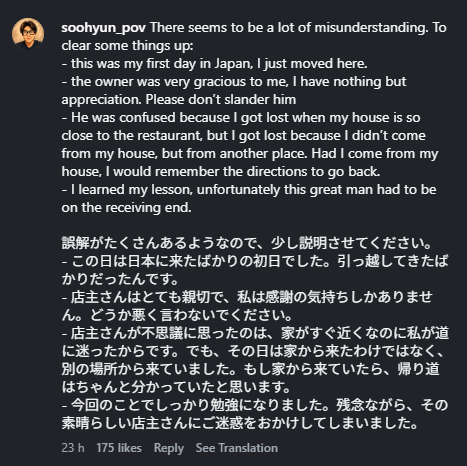
@AshhhVR @4489x How the fuck are you an adult but don’t know how to come and go from a place a few hundred metres away?
English
0
0
1
222
Ashhh 🛸💜
Ashhh 🛸💜@AshhhVR·
@4489x 投稿者の文脈 Context from the OP 話を信じるかどうかは別として、これをみんなに伝えたかっただけです Whether you believe him or not, I just wanted to share this.
Ashhh 🛸💜 tweet media
日本語
1
0
31
12.6K
天
@NightOliver666·
こいつ大丈夫かよ 店から家が見えてるのになんで迷うんだよ 店がやばいって言ってる奴らが結構居たけど店がやばいって言ってる方がやばいだろ 店主の対応は間違ってない、怒るのも当然
日本語
125
110
4.2K
636.5K
Tristan
Tristan@Tourkeydevo·
@LTYokota I don't get it why not bring in Europeans and Americans? I'd rather have a group of People that share standards or at least close enough to learn quickly and adapt while not bringing in a "religion of peace."
English
4
0
4
288
adrianmcli
adrianmcli@adrianmcli·
@NHKWORLD_News The question is, why wait till 50 years? Admit the fact that you should’ve used an inflation adjusted rate on a regular basis but you neglected to.
English
0
0
1
577
NHK WORLD News
NHK WORLD News@NHKWORLD_News·
The Japanese government has decided to raise visa fees for foreign nationals fivefold starting on July 1. The government approved the revision at a Cabinet meeting on Friday. The country's visa issuance fees had been unchanged for nearly 50 years. www3.nhk.or.jp/nhkworld/en/ne…
NHK WORLD News tweet media
English
7
32
113
31.3K
adrianmcli
adrianmcli@adrianmcli·
@banteg @wslyvh Sounds like something written by someone who never did open source. Ignore the bot, not worth giving them the attention.
English
0
0
0
115
banteg
banteg@banteg·
absolutely fucking not
ethresearchbot@ethresearchbot

New post on EthResear.ch! Validator Redirected Revenue By: - clesaege 🔗 ethresear.ch/t/25248 Highlights: - Ethereum faces a persistent coordination failure: many ecosystem improvements are public goods, so voluntary funding tends to underprovide them, creating deadweight loss and harming long-term competitiveness. - Validators are structurally aligned with ecosystem growth (more usage → more demand for blockspace → more ETH burn/value), but they still get stuck in a prisoner’s-dilemma equilibrium where they hesitate to contribute unless others also commit. - The proposal adds a protocol-level mechanism where validators signal a redirect rate: if a majority (e.g., 51%) supports a non-zero rate, that rate becomes mandatory for all validators, solving intra-validator free-riding; the rate is capped (suggested max 10%, min 0%). - Validators also signal preferred funding recipients and allocations; execution clients aggregate these into a “splitter” contract using a king-of-the-hill / Condorcet-winner style process with simple protocol choices (KEEP vs CHANGE), aiming to minimize governance overhead (“set and forget”). - Key open risks include validator cartelization (majority could redirect funds to themselves), principal–agent problems (staking operators controlling votes vs delegators’ preferences), and the possibility that willingness to redirect rewards is interpreted as evidence issuance could be reduced. ELI5: Ethereum needs shared things (like security tools and maintenance) that help everyone, but it’s hard to get people to voluntarily pay because each person hopes others will cover the cost (the “free-rider” problem). This article suggests a built-in way for Ethereum validators (the people who earn staking rewards) to collectively agree to donate a small, capped slice of their rewards to fund important ecosystem work. Validators would also collectively choose where the money goes using a simple voting/competition process, so funding can happen without lots of meetings or bureaucracy—while still acknowledging risks like validators teaming up (cartels) or staking companies voting in their own interest instead of users’.


English
21
32
406
63.7K
adrianmcli
adrianmcli@adrianmcli·
@ApexSeeker_ No one anywhere would say “everything is fine”. 人間だから there’s always room for improvement, so what’s your point?
日本語
0
0
1
56
ApexSeeker
ApexSeeker@ApexSeeker_·
🇯🇵 I am Japanese. Question for politicians all over the world. If you had to live exactly like the average citizen for one year… no special privileges, no special treatment, no special salary… would you still say everything is fine?
English
16
1
31
1K
Dave Mac
Dave Mac@realzerocarb·
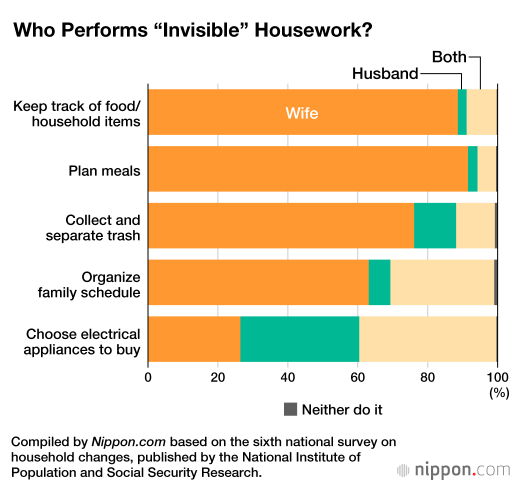
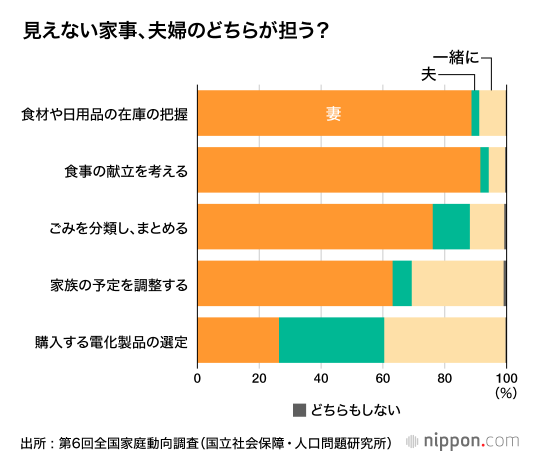
I bet the housework gap issue in Japan is mostly the fault of the wives. Japanese men likely try to help out at home but are told "You're not doing it right", "You missed a spot", "That's not the right way to do it" and give up. If helping causes disharmony (the opposite of what you're aiming for) I would imagine most men would give up.
English
8
0
10
1.2K
Jeffrey J. Hall 🇯🇵🇺🇸
Some Japanese netizens not happy about BBC reporting on a viral social media post that reacted negatively to male Japanese World Cup fans picking up trash in stadiums by pointing out they don't do much cleaning at home in Japan. The housework gap is a real issue in Japan.
Jeffrey J. Hall 🇯🇵🇺🇸 tweet mediaJeffrey J. Hall 🇯🇵🇺🇸 tweet media
BBC News Japan@bbcnewsjapan

BBCニュース - 【2026年サッカー男子W杯】 日本人サポーターがスタジアムを清掃、家でもやろうと女性から注文 bbc.com/japanese/artic…

English
48
131
804
77.7K
adrianmcli
adrianmcli@adrianmcli·
@shinobu_books Why is this graphic made only for ppl in their 20s? Seems extremely misleading as young Japanese ppl are almost non-existent in the inaka. But young foreigners go there to work on farms, factories, and convenience stores.
English
1
0
2
184
eric ゑリッ久
eric ゑリッ久@shinobu_books·
Animated map of the nationwide increase in the percentage of foreigners in their 20s from 2013 ~ 2024. Red indicates areas showing that 10% or more of the people in their 20s are foreign nationals
English
27
36
305
17.8K
adrianmcli
adrianmcli@adrianmcli·
@nihon_monitor なんで20代だけ選んだの?それ、かなりバイアスかかってない?
日本語
3
1
1
17.7K
ニホンモニター
ニホンモニター@nihon_monitor·
全国の市区町村別「20代外国人比率」の推移を、2013年から2024年まで地図上にアニメーション化しました。 比率が10%を超える市区町村を赤色で示しています。年を追うごとに、赤の範囲がどのように広がっていくかにご注目ください。 ※出典:住民基本台帳
日本語
148
3.2K
5.3K
714.9K
Oliver Jia (オリバー・ジア)
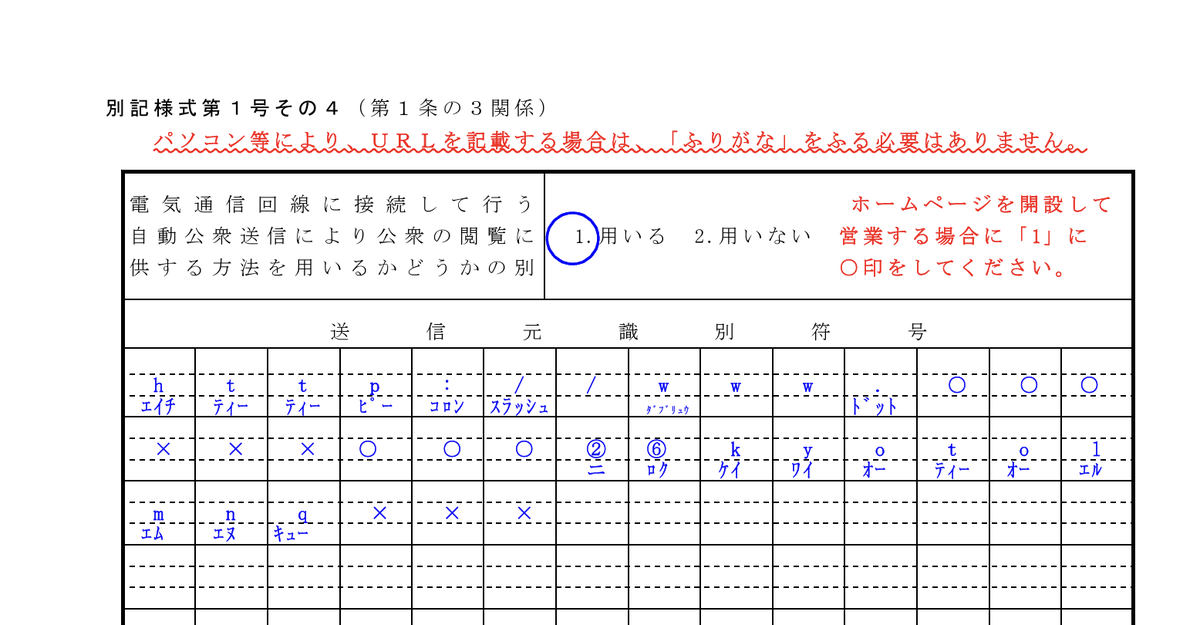
Applying for a permit to sell used goods and I'm truly in the depths of Japanese bureaucracy. For your website section, you have to give katakana notation for every single character. My initial application was rejected because I didn't include "https://www." Yes, I'm serious.
Oliver Jia (オリバー・ジア) tweet media
English
36
47
1.1K
40.3K
adrianmcli
adrianmcli@adrianmcli·
@OliverJia1014 And some people wonder why the Japanese economy hasn’t grown in 30 years.
English
0
0
0
123
adrianmcli retweetledi
Wes Bos
Wes Bos@wesbos·
the four horsemen of the apocalypse
Wes Bos tweet mediaWes Bos tweet mediaWes Bos tweet mediaWes Bos tweet media
English
308
1.3K
21.6K
3M
adrianmcli retweetledi
Justin Drake
Justin Drake@drakefjustin·
Today a crazy quantum story just got wilder. On March 31, the Google Quantum AI team published a landmark result on Shor's algorithm for elliptic curve cryptography. Technically, the paper was a bombshell: a dramatic 10x improvement over the state-of-the-art. As a stunt and wakeup call to the blockchain space, those optimisations were illustrated on secp256k1, the elliptic curve underlying Bitcoin and Ethereum signatures. But perhaps the most striking part of the paper was sociological, not technical. Instead of following standard academic process, the optimisations were kept secret, hidden behind a zero-knowledge (ZK) proof. Google's accompanying blog post mentions they "engaged with the U.S. government". The ZK proof demonstrates the existence of algorithmic improvements without leaking details. Academic censorship with ZK, a historic first! As a co-author of the Google paper I witnessed some of the context surrounding this censorship. To be honest, multiple aspects of that context don't sit well with me. As much as I believe the general public ought to know more, I am limited in my ability to whistleblow. Though let me be clear about one thing: the Google team's professionalism has been absolutely exemplary, and they deserve nothing but praise. Censorship has a way of backfiring. The Streisand effect, where an attempt to bury something only draws more attention to it, is exactly what's unfolding today. First, Google's key optimisation has been rediscovered by the French. And in a thrilling turn of events, a collaborative Shor-at-home challenge just launched. The initiative, available at ecdsa[.]fail, breached a new Shor world record in a matter of hours. Let's start with the rediscovery. Just two months after Google's paper, French quantum expert André Schrottenloher cracks the main secret optimisation. His paper, titled "Optimized Point Addition Circuits for Elliptic Curve Discrete Logarithms", landed on the arXiv today. Big congrats to André, who beat several other nerdsnipped experts to it. In a blog post also published today, Craig Gidney, the world expert on Shor optimisations, revealed that he'd been sitting on this very optimisation for a whole year under censorship pressure. Interestingly, André missed a handful of minor optimisations, both from Google's original publication and from improvements found since. It's plausible there's still plenty of juice left to squeeze out of Shor, and this is exactly what the ecdsa[.]fail challenge is about. The verifier program developed for the ZK proof does double duty, automatically filtering for valid submissions. Dozens of compounding small and micro improvements are rolling in. As of the time of writing there's an 8.4% improvement to Google's circuit, as measured by the product of logical qubit count and Toffoli gate count. Nice! The nerdsnipping ran deeper than anyone expected. Over the last few weeks it became clear it extended well beyond André and other quantum experts. Behind the scenes, a small army of amateurs quietly got to work. Inspired by Karpathy-style autoresearch, they turned AI on Shor. Ironically, the verifier program for the ZK proof makes an ideal reward function for AIs. The barrier to entry for this modern style of research is refreshingly low, with several non-experts, even a teenager, finding nice optimisations. Get in touch if you'd like to join a Telegram group with fellow autoresearchers :) Part 2: neutral atoms and qday The story doesn't end with Google. On the same day Google went public, a stealthy startup called Oratomic published its own Shor paper in a coordinated release. It made a splash, ultimately becoming the most upvoted paper on scirate[.]com, a website ranking arXiv papers. Oratomic's claim was wild. By building on Google's logical optimisations and applying custom physical optimisations for neutral atoms, they claimed just 10K physical qubits were sufficient to run Shor's algorithm on secp256k1. That number is mind-bogglingly low. Knowing essentially nothing about neutral atoms when Oratomic's paper landed, I was intrigued and decided to learn more about the tech. I fell straight down the rabbit hole and spent a couple hundred hours on the topic. I got a little obsessed and watched every YouTube video I could find and spoke to a bunch of experts. My conclusion? The tech is real, very real. Even Google recently decided to start a neutral atom lab, a notable pivot from their sole focus on superconducting qubits. If you care about qday, i.e. the day a quantum computer will break the first piece of cryptography in production, neutral atoms demand your attention. I shared some of my learnings on Shor and neutral atoms in a 30min talk at the ZKProof cryptography conference. You can find it on YouTube by searching "zkproof neutral atom". Here's an interesting observation about this duo of breakthrough papers: neither Google nor Oratomic say a word about what their results mean for qday. No timelines. Zero. Nada. That is especially baffling given that the whole point of whitehat quantum cryptanalysis is to inform qday estimations and help the general public make good decisions. So let me attempt to partially fill the silence, similarly to what Scott Aaronson did in his April 29 post. Given everything I know, including scary non-public information, I now put the odds of qday by 2032 at 50%. 10% by 2030. Anecdotally, the US government has its own date: 2035. Originating at the NSA and later adopted by NIST, it's when branches of the US government will be disallowed from using quantum-vulnerable cryptography. In plain language: with hindsight, that date is a joke and should be discounted entirely. I don't see how NIST avoids being forced to pull it forward by years. Part 3: post-quantum cryptography There are good reasons to sound the alarm today, but please do not panic. Rushing carelessly towards immature post-quantum cryptography is a recipe for disaster. IMO a good target date for migration is 2029, roughly 3.5 years out. 2029 happens to be the date selected by Google, Cloudflare, and the Ethereum Foundation. These days most of my time goes to safely migrating Ethereum towards post-quantum cryptography as part of the broader lean Ethereum effort. There's a lot to do. We need to rip out and replace BLS signatures at the consensus layer, KZG commitments at the data layer, and ECDSA signatures at the execution layer. The plan to get there is compelling, and is based on hash-based cryptography. Within the Ethereum Foundation we've developed a Swiss army knife called leanVM (github[.]com/leanEthereum/leanVM) powered by the magic of hash-based SNARKs. Thanks to truly exceptional work by Emile, Thomas, and others, its performance is derisked. Regarding security, leanVM is a jewel, a minimal zkVM crafted for end-to-end formal verification and maximum security. Want to help? There are two $1M initiatives. First, the Proximity Prize (proximityprize[.]org). Solve a long-standing mathematical conjecture in coding theory, improve hash-based SNARKs, and go home a millionaire. Second, the Poseidon Initiative (poseidon-initiative[.]info), offers $1M for breaking Poseidon, the SNARK-friendly hash function.
English
421
1.1K
6.3K
3.7M
Dennison
Dennison@DennisonBertram·
I need help finding the perfect agent orchestration platform. I have agents running my codebase, company, design, operations, but none of the tools like Codex make it really convenient to manage in one spot. Suggest me some tools I should check out.
English
31
0
36
11.2K