

Alex | RWA.xyz
415 posts
Alex | RWA.xyz
@aeksco
building @rwa_xyz + @codotype | relentlessly curious and creative
Brooklyn, NY Katılım Aralık 2014
2.3K Takip Edilen671 Takipçiler



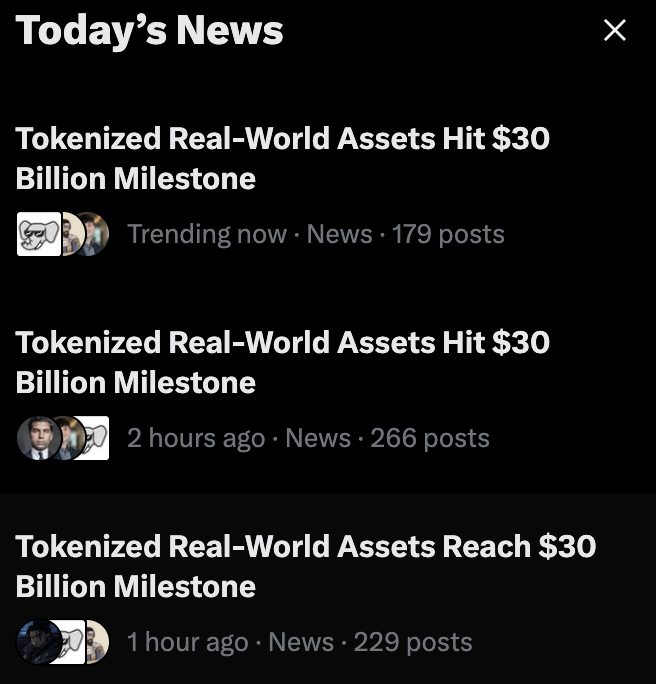
The tokenized asset market crossed $30 billion last month and has stayed there. Roughly the size of an elite university endowment.
As recently as mid-2024, it was below $3 billion. 10x in under two years.
What changed: the GENIUS Act, mature institutional onchain infrastructure, and a wave of financial institutions moving from pilots to production — all at roughly the same time.

English
10x’d in under two years… only going to accelerate from here 🚀
a16z crypto@a16zcrypto
The tokenized asset market crossed $30 billion last month and has stayed there. Roughly the size of an elite university endowment. As recently as mid-2024, it was below $3 billion. 10x in under two years. What changed: the GENIUS Act, mature institutional onchain infrastructure, and a wave of financial institutions moving from pilots to production — all at roughly the same time.
English


Tokenized assets have never been more popular.
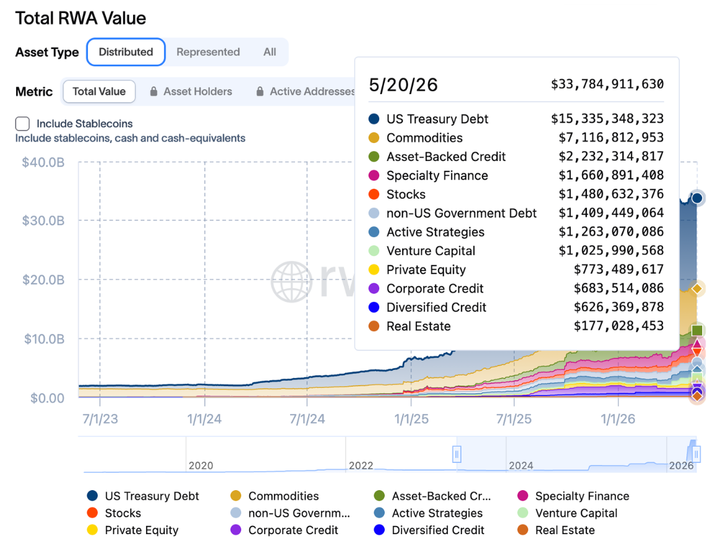
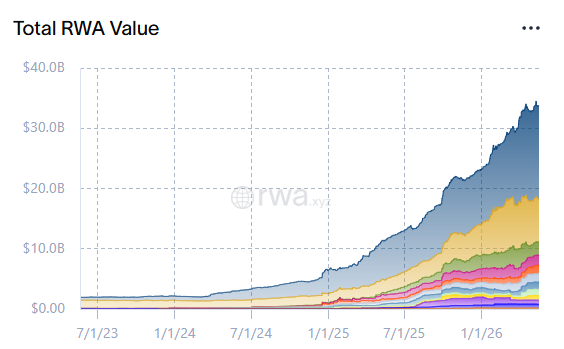
The distributed asset value of real-world tokenized assets is now up to a record $33.8 billion.
This represents a +1,600% increase over the last 2 years and adoption is only accelerating.
Growth in these assets gained momentum after onchain platforms like Jupiter began listing tokenized assets through partnerships with Securitize, xStocks, and Ondo finance, prompting +34% week-over-week volume growth.
Meanwhile, Bloomberg reported this week that the SEC is leaning toward allowing the trading of tokenized assets in a "surprise move."
This would mark one of the US' biggest shifts into crypto infrastructure yet.
Tokenization is taking over.
English



Everyone talks about RWAs as a future narrative.
However, when you examine the data closely, tokenized T-Bills are already one of the largest real-world use cases onchain today.
~$15.5B+ in tokenized Treasuries.
~82 live products.
~3.4% average yield.
BlackRock, Franklin Templeton, Janus, WisdomTree, and Circle are all entering aggressively.
I think this is crypto slowly rebuilding the base layer of capital markets with faster settlement, programmable collateral, and global access.
Because if you zoom out for a second… what are Treasuries traditionally used for?
→ collateral
→ reserves
→ cash management
→ benchmark “risk-free” yield
→ idle capital parking
Now all of that is becoming composable 24/7 onchain.
That changes a LOT.
From my experience, the really important shifts in crypto usually happen when an asset stops being “just an investment” and starts becoming infrastructure.
That’s what’s happening with tokenized T-Bills.
You’re already seeing:
→ DAOs rotating reserves into them
→ lending markets accepting them as collateral
→ yield strategies building around them
→ protocols using them instead of idle stablecoin balances
And honestly, one protocol I keep coming back to in this sector is @Theo_Network
Been reading about them and writing about them for ages now because the overall architecture just makes sense to me.
Instead of stopping at simple tokenization, they’re trying to build a full-stack institutional capital markets layer onchain.
Their thBILL product is basically tokenized short-duration US Treasuries:
→ AAA-rated underlying exposure
→ ~3.3–3.5% yield range
→ fully composable across DeFi
→ live across Ethereum, Arbitrum, Solana and others
But the interesting part to me isn’t even the yield.
Most protocols spent years optimizing for TVL screenshots and emissions.
Theo feels much more aligned with where the market is structurally heading now:
→ productive collateral
→ capital efficiency
→ institutional-grade assets
→ real yield
→ composability across chains
And I think that broader shift matters way more than people realize.
Crypto spent years building trading infrastructure.
Now it’s increasingly building capital markets infrastructure.


English

The problem with RWA is it’s not newbie-friendly
- T-bills
- Active Strategies
- HELOCs
- Diversified Credit
- Specialty Finance
99% of people don’t have a clue what this is
That’s exactly why it’s a big opportunity for content creators
stanxbt@standotsui
$32B all-time high for RWA + $5B in under 2 months The pie keeps getting bigger Your job is figuring out how to get your slice
English


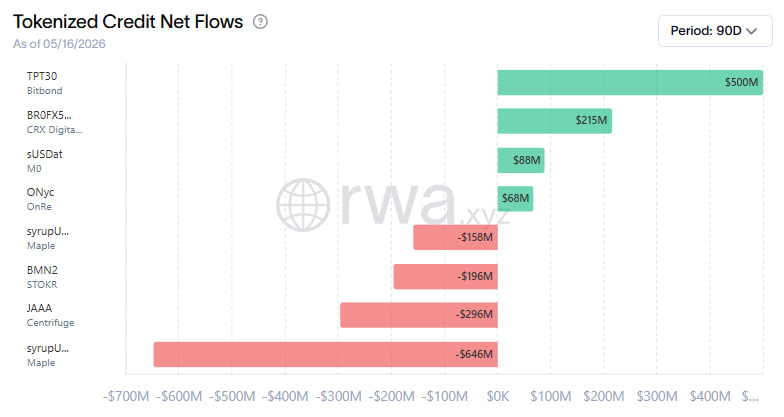
Private credit is usually shown as one clean RWA category. In practice, it is a mix of very different credit risks 📊
A 72-hour settlement liquidity facility is not the same thing as a 3-year corporate loan.
Invoice financing, receivables, SME working capital, trade finance, consumer credit. All of them sit under the same label, but they behave differently under stress.
This is why structure matters so much in tokenized credit.
Duration, repayment source, seniority, first-loss capital, and who controls the cash flow usually tell you more than the asset name.
English

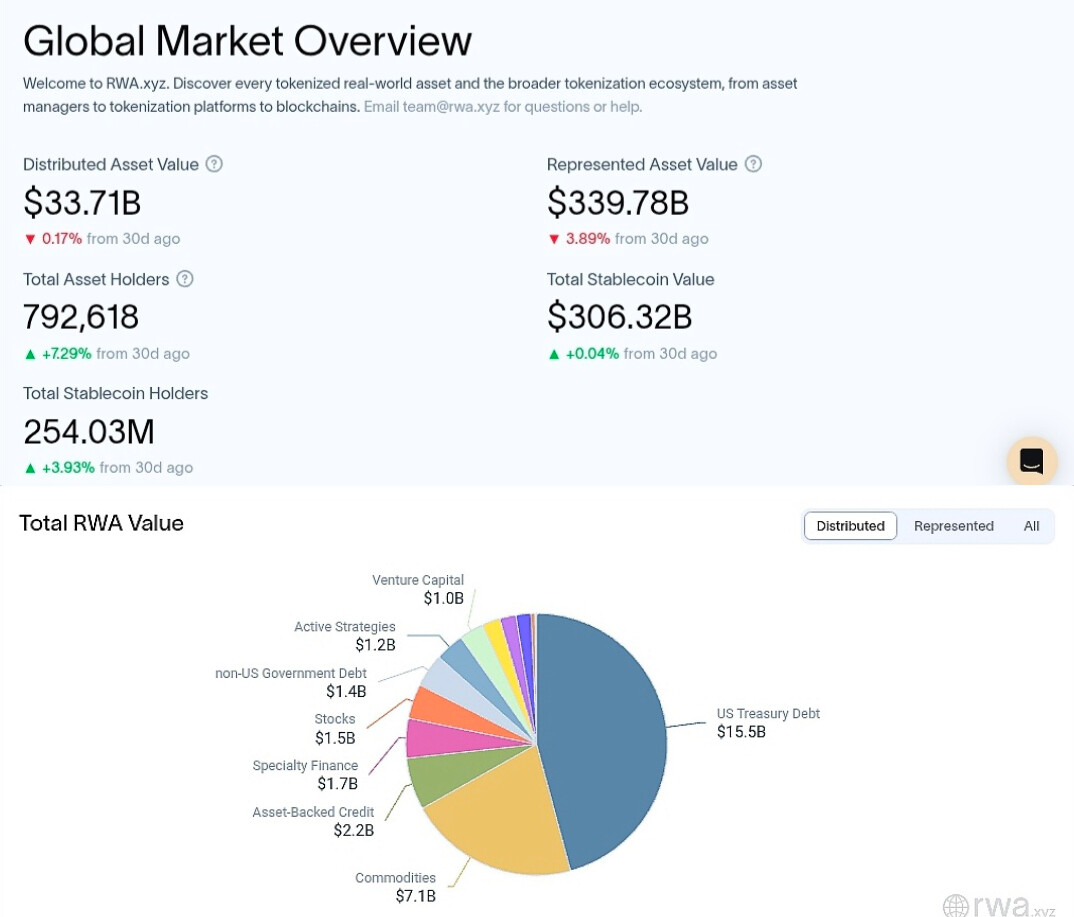
Over the weekend, the total value of Onchain RWAs scaled past $33.7 billion.
To put that into perspective, the sector has grown over 5x since early 2025.
For better understanding, for those in the back, tokenization is the process of converting ownership rights of a physical or traditional financial asset into a digital token on a blockchain.
Right now, three major pillars dominate the RWA ecosystem:
>> Leading the charge is tokenized U.S. Treasuries worth over $15.5B.
Institutional giants like @BlackRock BUIDL fund allow investors to earn low risk yield directly Onchain.
>> Hard Commodities:
Tokenized gold such as $PAXG and $XAUT accounts for over $5.5 billion of the market.
This gives everyday investors fractional access to institutional grade gold bars without the hassle of physical storage.
>> Private credit, and Equities:
Capital markets are shifting onto public ledgers to trade corporate debt and pre-IPO startup shares, cutting out layers of costly middlemen.
Tokenization comes with advantages like the following:
>> 24/7 Liquidity.
>> Fractional Shares.
>> T+0 Settlement.
>> Trade assets like real estate anytime without barriers.
>> Buy $10 worth of an expensive asset without barriers.
>> Instantaneous trade clearing without delays.
Here are lists of the top 10 assets that are topping right now:
>> $FIGR_HELOC Token by @Figure.
>> $PAXG by @Paxos.
>> $USYC by @circle.
>> $BUILD by @Securitize.
>> $XAUT by @tether Holdings.
>> $JMWH is @justokenglobal.
>> $USDY by @OndoFinance.
>> $syrupUSDC by @maplefinance.
>> $iBENJI by @FTI_US.
>> $JTRSY by @centrifuge.
According to a recent report by Binance Research, despite the massive multi billion dollar growth, Onchain tokenization has only penetrated 0.01% of its total addressable global market.
With major institutions like Standard Chartered projecting a multi trillion dollar future, we are watching the birth of a more transparent, efficient, and open financial system.
Tokenization will win >>
Data>> rwa.xyz
English

➥ POV: who owns stablecoins owns the financial workflows

English
Tokenized stocks are less a who has the best product race and more a market structure race.
Architecture matters, but without liquidity, and distribution, even the cleanest design won’t scale.
@OndoFinance is winning distribution.
@xStocksFi is winning flow, and distribution as well.
Anchored is positioning for institutional, as well as Asia expansion.
It's probably safe to say that whoever turns tokenized equities from tradable assets into usable financial primitives across DeFi will win.
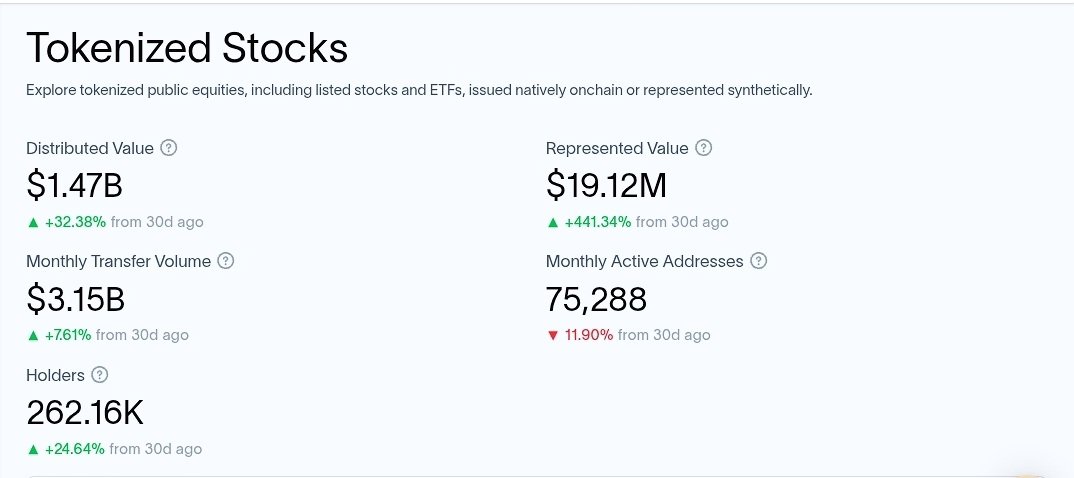
The tokenized stock market according to rwa.xyz currently has $1.47B in distributed assets value, and a good number of holders as well
Also, there are more tokenized stocks platforms that'll still dominate as we go, so this is just the beginning.
Btw, lovely analysis.
Stacy Muur@stacy_muur
English

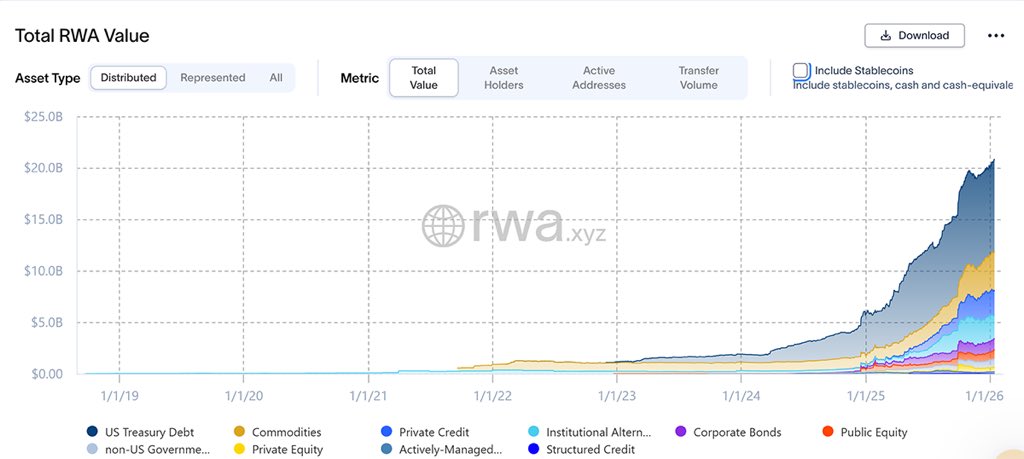
Tokenized RWA just crossed $20B onchain.
At the start of 2025, the market was sitting near $5.4B.
That’s almost a 4x move in just 16 months, while most of crypto still barely talks about it.
While people were focused on BTC volatility and memecoin rotations, institutions were building somewhere else.
BlackRock. JPMorgan. Franklin Templeton.
Not experimenting anymore. Already live.
Tokenized US Treasuries alone passed $10B earlier this year.
And the bigger shift still hasn’t fully started yet.
The DTCC, which processes over $2 quadrillion annually, is preparing its tokenization rollout for 2026.
Ondo is already involved in the working group alongside Goldman Sachs, Morgan Stanley, Nasdaq and the NYSE.
That’s no longer just a crypto narrative.
Wall Street is moving onto the chain itself.
English

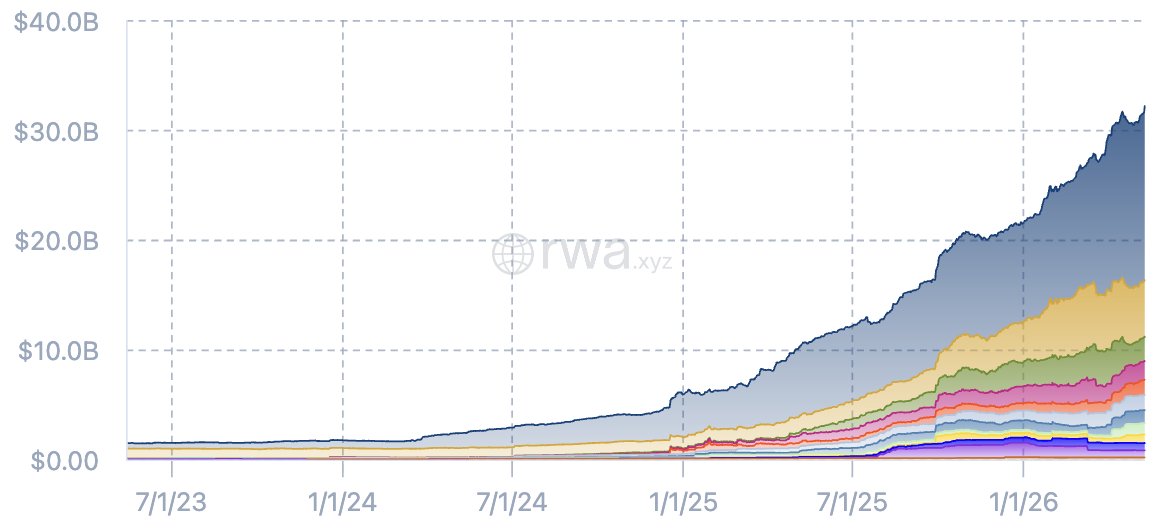
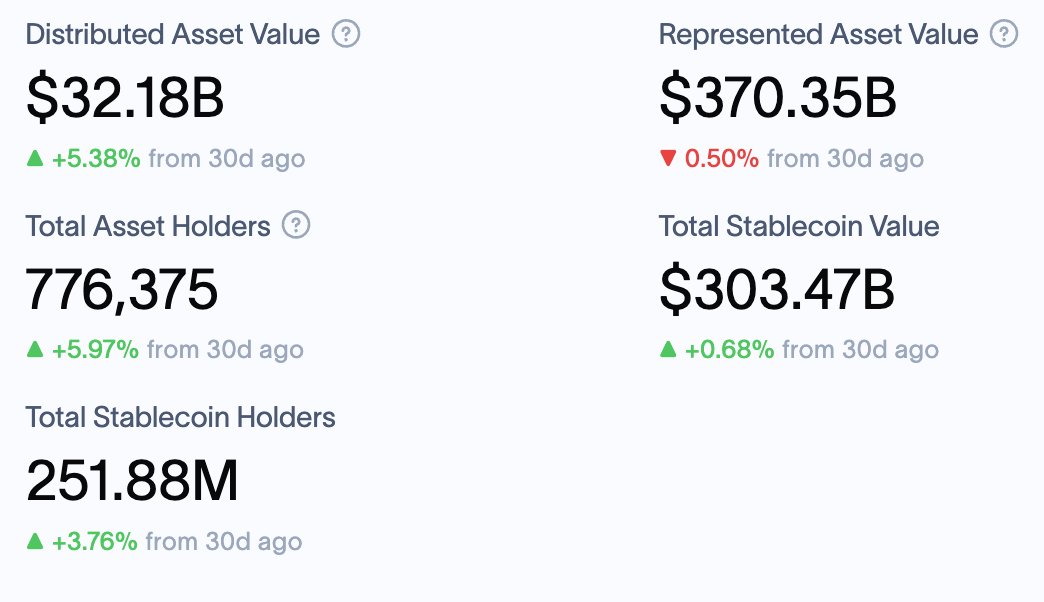
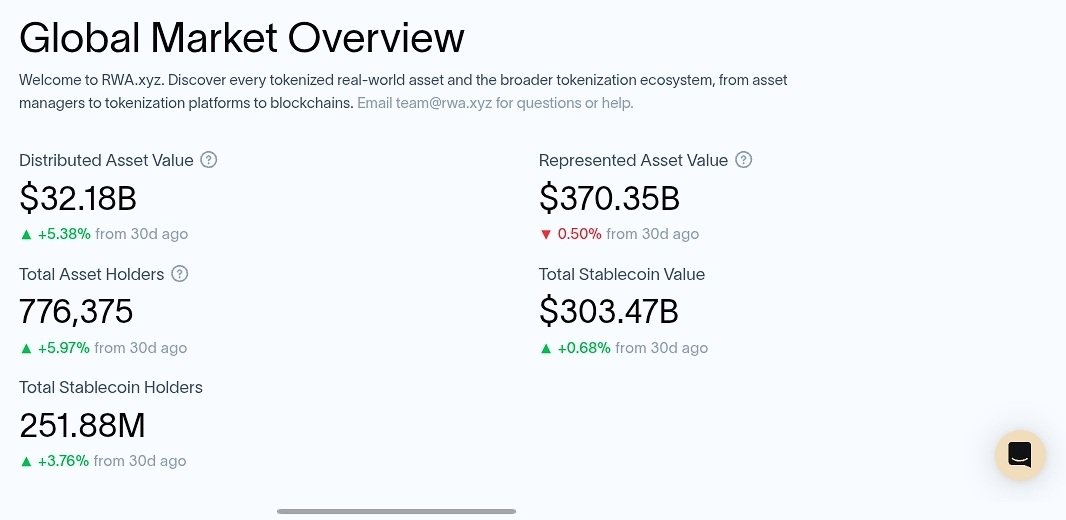
Over $32B RWAs Onchain >>
Gracee@0xGraciee
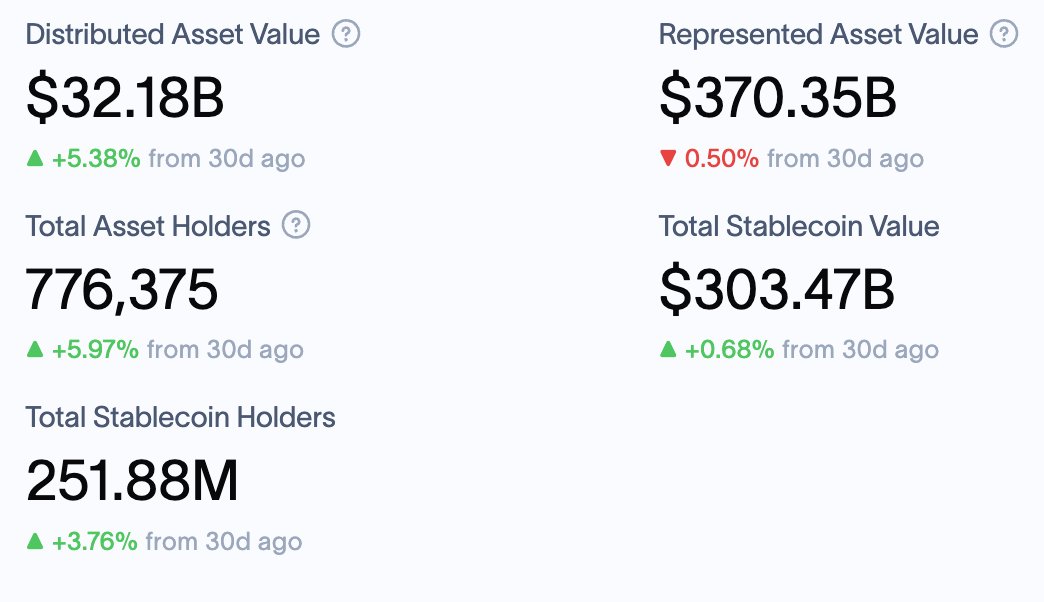
>> Distributed tokenized RWAs value is at $31.12B, up 3.52% in 30 days. Much larger assets are represented Onchain; represented asset value is at $391.95B, up 2.02%. >> Adoption is increasing too. Total RWA holders reached 748,954, up 3.45%. >> Stablecoins remain the dominant liquidity layer; total stablecoin value is $300.26B, with 247.66M holders. Data>>>rwa.xyz
English
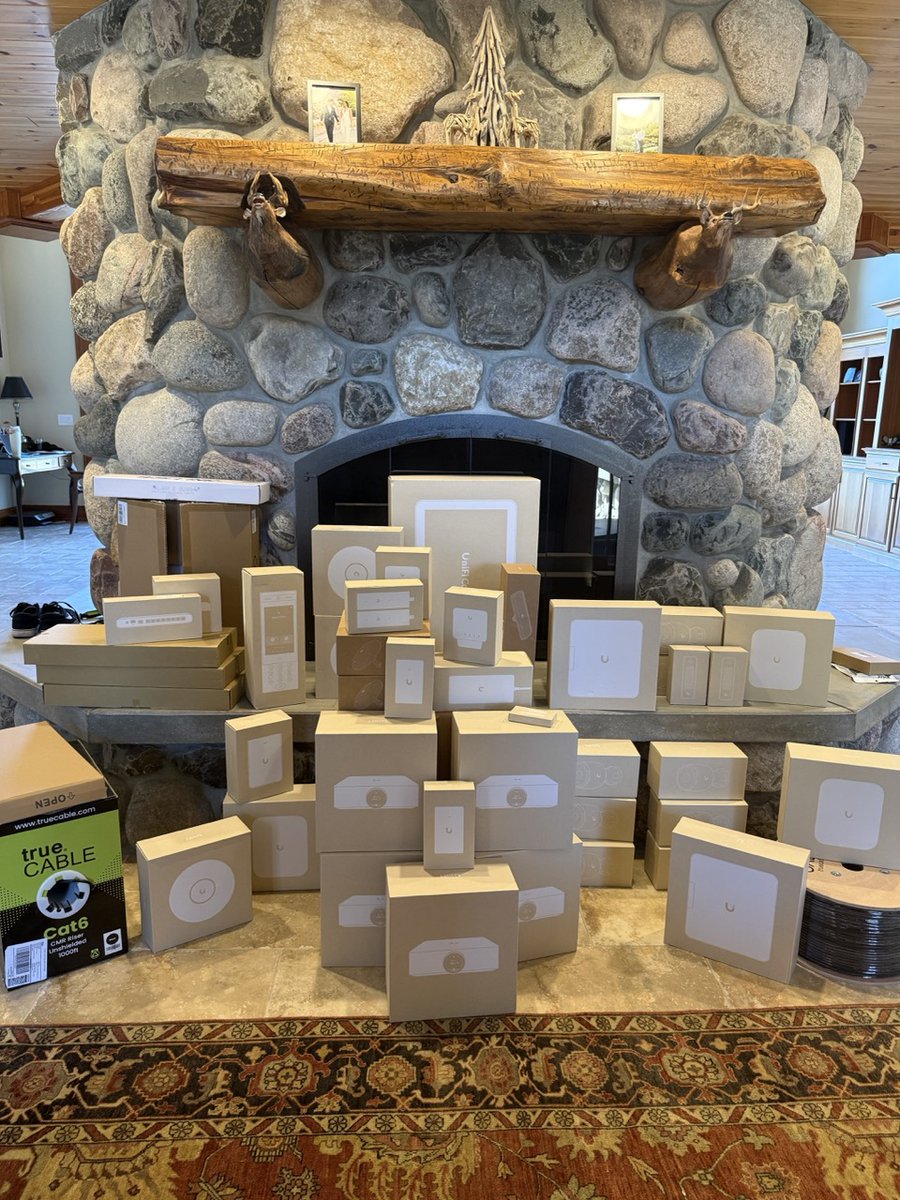
@rchase incredible. doing a ubiquiti build sometime in the next few weeks, very excited to jump into the ecosystem
English

@davenotik @UziCryptoo it's even lower when you claim the mortgage interest deduction, effective cost is closer to $3k/month
English


$625k home
20% down-payment
$500k mortgage
With a 7% interest rate and a 30-year term, you are paying $697,544.64 in interest.
The $625,000 house cost you $1,447,544.64.
This is equal to a $4,021 monthly rental payment, plus you pay for maintenance and repairs.
Houses cost so much because people can borrow money that’s created with the press of a button to buy them.
If everyone had to pay in cash for their home, prices would drop significantly.
Most people think mortgages are designed to help them.
But NO.
Mortgages are designed to earn profits for banks.
English

@BillAckman This extra tax will do more harm to NYC. We were on the fence about keeping our house there, now this pushed us over the fence to sell it, which will also reduce time spent in NYC and yes, missed sales tax
English

Non-residents who spend millions of dollars on NYC apartments help drive NYC’s economy. Most of the profit in condominium development is in the penthouses. The Ken Griffins of the world make NYC high end development viable, driving high-paying construction, brokerage, legal, marketing, and other jobs in NYC. We should be applauding Ken for spending $238 million in NYC, not attacking him for doing so.
Importantly, non-resident owners of NYC apartments who leave their apartments vacant for much of the year are not a burden to NYC schools, services, or other resources while they drive growth in retail sales, restaurants, theater, and other important drivers of our economy. They also often support NYC non-profits with donations.
Ken’s company is a major employer in NYC of very high paying jobs which drive a considerable amount of our tax base. We wouldn’t want him to move even more employees to Miami.
These non-resident owners also already pay a lot of taxes including mansion taxes, real estate taxes, sales taxes and more.
While @NYCMayor Mamdani likes the tag line ‘Tax the rich.’ Unfortunately, his policies will harm the constituencies he is supposedly trying to help.
I can’t imagine the NYC construction unions are excited about his plan.
Mayor Zohran Kwame Mamdani@NYCMayor
Happy Tax Day, New York. We’re taxing the rich.
English