
Alvin Wang Graylin

5.8K posts

Alvin Wang Graylin banner
Alvin Wang Graylin

Alvin Wang Graylin

@AGraylin

Author “Our Next Reality”📖| Digital Fellow, Stanford HAI🌲| Sr Fellow, ASPI/CCA📜 | Chair, Virtual World Society🌎 | ex-HTC/Intel/IBM | 4X Founder | Speaker🎙️

Seattle, WA Katılım Nisan 2008
2.7K Takip Edilen9.6K Takipçiler
Alvin Wang Graylin
Alvin Wang Graylin@AGraylin·
Dwarkesh and Jensen are thinking at different levels. @dwarkesh_sp seems to think a short temporal lead is a “win”…when long-term platform lock-in (which #Jensen proposes) is where the real value lies. When there’s no clear finish line and when models are commoditizing, having a few months lead brings little tangible benefit. Btw the main reason @deepseek_ai V4 is late is because they’ve been told by the Chinese gov to optimize for all the local chips (exactly what Jensen warned about). China is playing the long game… The delay is more of a choice to prioritize tech sovereignty over speed to market. And since Deepseek is now a global brand so they wanted to do it right. P.S. China AI is NOT just Deepseek. The fact that @Kimi_Moonshot , @MiniMax_AI, @Zai_org, and @Xiaomi all released on time is a clear signal that the export controls isn’t the limiter that the western media is being fed. But it absolutely is the motivation for the Chinese ecosystem to pursue tech stack independence. P.S.S. Given what’s already transpired, changing export controls now is unlikely to change the long term direction to pursue tech sovereignty, but it will slow down the transition significantly to fully local stack as it’ll suck the oxygen out of the demand and sw tuning for Chinese domestic chips.💡
English
1
0
3
371
Trinity School
Trinity School@TrinitySchoolNY·
Upper School Community Time - Today's Lowell Gray ’78 Upper School Community Time speaker was Alvin W. Graylin @AGraylin, digital fellow at the Stanford Digital Economy Lab.
Trinity School tweet media
English
2
0
1
407
Alvin Wang Graylin
Alvin Wang Graylin@AGraylin·
Was a blast to speak and interact with some of the brightest kids in New York today for the @TrinitySchoolNY their STEM seminar series. Also enjoyed chatting with the educators and administrators of the school to better understand the challenges they are facing in integrating #AI into their #learning process. 🎓 @johnkwerner Abigail Bedrick, Melissa Kantor, Frederic Skrzypek
Alvin Wang Graylin tweet mediaAlvin Wang Graylin tweet mediaAlvin Wang Graylin tweet media
Trinity School@TrinitySchoolNY

Upper School Community Time - Today's Lowell Gray ’78 Upper School Community Time speaker was Alvin W. Graylin @AGraylin, digital fellow at the Stanford Digital Economy Lab.

English
2
0
2
314
Alvin Wang Graylin
Alvin Wang Graylin@AGraylin·
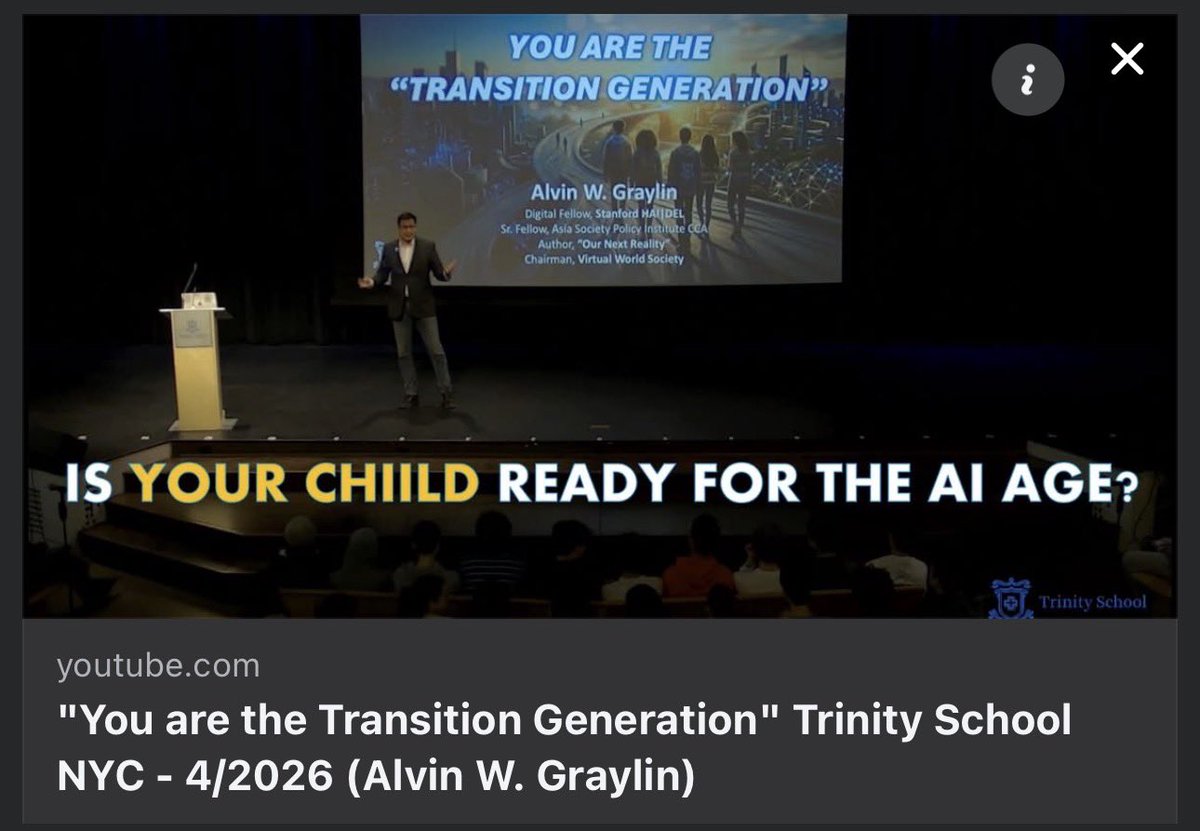
“You are the Transition Generation”- Full recording of my recent 30min lecture to 500 #students at the @TrinitySchoolNY. It's a discussion on how the youth of today can thrive in an #AI induced post-scarcity post-labor world of tomorrow. Why the #transition process will be hard, what they need to do now to prepare for it and how to influence the #future they will inherit?🚨 The talk contains actionable advice for what young people should be thinking and doing about their #careers and lives in this important time. 🎓 Please share with your children and friends with kids.💡 Link to full video in comments. #education #labor #jobs #AGI
Alvin Wang Graylin tweet media
English
1
0
3
510
Luiza Jarovsky, PhD
Luiza Jarovsky, PhD@LuizaJarovsky·
🚨 BREAKING: Stanford's 423-page AI Index Report 2026 is out! [Bookmark it below]. These are its key takeaways: 1. AI capability is not plateauing. It is accelerating and reaching more people than ever. 2. The U.S.-China AI model performance gap has effectively closed. 3. The U.S. hosts the most AI data centers, with the majority of its chips fabricated by one Taiwanese foundry. 4. AI models can win a gold medal at the International Mathematical Olympiad but cannot reliably tell time, an example of what researchers call the jagged frontier of AI. 5. Robots still fail at most household tasks, even as they excel in controlled environments. 6. Responsible AI is not keeping pace with AI capability, with safety benchmarks lagging and incidents rising sharply. 7. The U.S. leads in AI investment, but its ability to attract global talent is declining. 8. AI adoption is spreading at historic speed, and consumers are deriving substantial value from tools they often access for free. 9. Productivity gains from AI are appearing in many of the same fields where entry-level employment is starting to decline. 10. AI’s environmental footprint is expanding alongside its capabilities. 11. AI models for science can outperform human scientists, though bigger models do not always perform better. 12. AI is transforming clinical care, but rigorous evidence remains limited. 13. Formal education is lagging behind AI, but people are learning AI skills at every stage of life. 14. AI sovereignty is becoming a defining feature of national policy, but capabilities remain uneven, even as open-source development helps to redistribute who participates. 15. AI experts and the public have very different perspectives on the technology’s future, and global trust in institutions to manage AI is fragmented. - 👉 Download the full document below. 👉 To learn more about AI's legal and ethical challenges, join my newsletter's 93,500+ subscribers (link below).
Luiza Jarovsky, PhD tweet media
English
29
230
580
47.1K
Alvin Wang Graylin retweetledi
Stanford HAI
Stanford HAI@StanfordHAI·
Introducing the #AIIndex2026: Our most comprehensive, independently sourced data analysis of AI’s trajectory, with a clear-eyed assessment of the critical gaps that remain. As AI advances rapidly, can the systems built around it keep up? Explore the data: hai.stanford.edu/ai-index/2026-…
English
29
232
558
105.4K
Alvin Wang Graylin retweetledi
RoboHub🤖
RoboHub🤖@XRoboHub·
Sub-1 hour? Chasing the human half-marathon record? That’s suddenly the conversation around Beijing’s humanoid robot race this Sunday. 🏃‍♂️🤖 A year ago, this event was mostly about finishing. Now the bar is speed, stability, and full-course autonomy. More than 100 teams and 300+ humanoid robots are expected on the line, and nearly 40% of them are entering the autonomous navigation group instead of relying on remote control. The course is not getting easier either. Same 21.0975 km, but with more urban slopes, rolling sections, and park terrain built to expose weak points in control, perception, and endurance. That is what makes this race worth watching. If some of these machines really get close to one hour, the story is no longer “robots can run.” It becomes “humanoids are starting to hold speed, balance, and navigation together over real distance.” And that matters far beyond a race course. This is one of the clearest public tests yet for where humanoid robotics actually stands in hardware, motion control, power systems, and autonomous mobility. Sunday’s headline will be the time. The bigger takeaway will be how much of that pace is still there at kilometer 15, 18, and 21. I want to see who is actually fast, who is truly autonomous, and who can finish without falling apart. That is where the real signal will be.
RoboHub🤖@XRoboHub

Tiangong Ultra, a humanoid robot, won the world’s first half marathon for robots with a time of 2 hours and 40 minutes.

English
21
130
590
201.6K
Alvin Wang Graylin
Alvin Wang Graylin@AGraylin·
@TrinitySchoolNY Had a blast engaging with the students and faculty at the school. 👍👩🏼‍🎓👨‍🎓🧑🏽‍🎓
English
0
0
0
29
Alvin Wang Graylin
Alvin Wang Graylin@AGraylin·
Please have a read of this important OpEd on @thecipherbrief about US #AI Strategy with former Senate Intelligence and Select committee member, Jon Rosenwasser . thecipherbrief.com/americas-ai-st… “America’s AI Strategy Is Fighting the Last War” The real AI competition isn’t who trains the best model. It’s who #diffuses it fastest across their economy. And by that measure, we’re losing. Consider the facts: Despite stringent export controls, China’s frontier-model gap has shrunk from over a year to 2-3 months, while their deployment advantage has only grown. Export controls are a leaky dam on a rising river. America is chasing superintelligence while China is building the infrastructure that 150 countries will depend on for decades. Winning benchmarks means nothing if you lose the global platform war. And here’s the part no one in DC wants to talk about: We don’t need a #Manhattan Project for AI. We need a GI Bill for AI. The bigger threat isn’t that China builds AGI first. It’s that 60% of the U.S. workforce faces #displacement with no safety net in place. We’re misdiagnosing the problem and prescribing the wrong medicine. It’s time to stop treating AI as a binary arms race and start treating it as what it actually is: a #diffusion and #deployment contest with massive domestic implications. #AI #USChinaTech #AIPolicy #FutureOfWork​​​​​​​​​​​​​​​​ @AsiaPolicy
English
1
0
3
155
Alvin Wang Graylin retweetledi
Peter Yang
Peter Yang@petergyang·
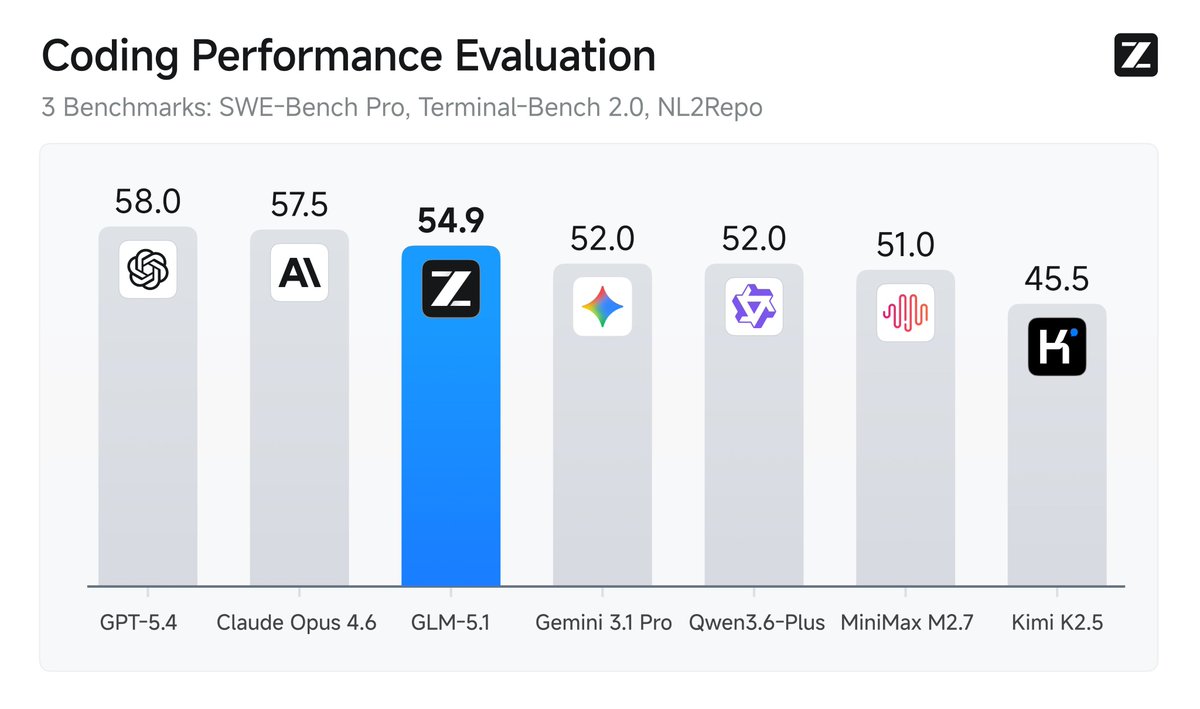
Silicon Valley is quietly running on Chinese open source AI models. Here are the receipts: → Cursor confirmed last month that Composer 2 is built on Moonshot's Kimi K2.5 → Cognition's SWE-1.6 model is likely post-trained on Zhipu's GLM → Shopify saved $5M a year by switching to Alibaba’s Qwen model. Airbnb CEO Brian Chesky has also said: "We rely a lot on Qwen. It's very good, fast, and cheap." And now Zhipu dropped GLM-5.1, an open source model that performs almost as well as Opus on coding benchmarks. 📌 More on the Anthropic + OpenClaw drama and what I'm learning about AI on the ground in China in my new post: creatoreconomy.so/p/the-all-you-…
Peter Yang tweet media
Peter Yang@petergyang

As much as I love using Claude Max and ChatGPT Pro, I don't think these all-you-can-use AI subscriptions will last forever. Here's my new deep dive that covers: → Why Anthropic cut off OpenClaw access → How to run local models on your Mac → What I'm seeing on the ground in China 📌 Read now: creatoreconomy.so/p/the-all-you-…

English
116
285
2.1K
426.9K
Alvin Wang Graylin
Alvin Wang Graylin@AGraylin·
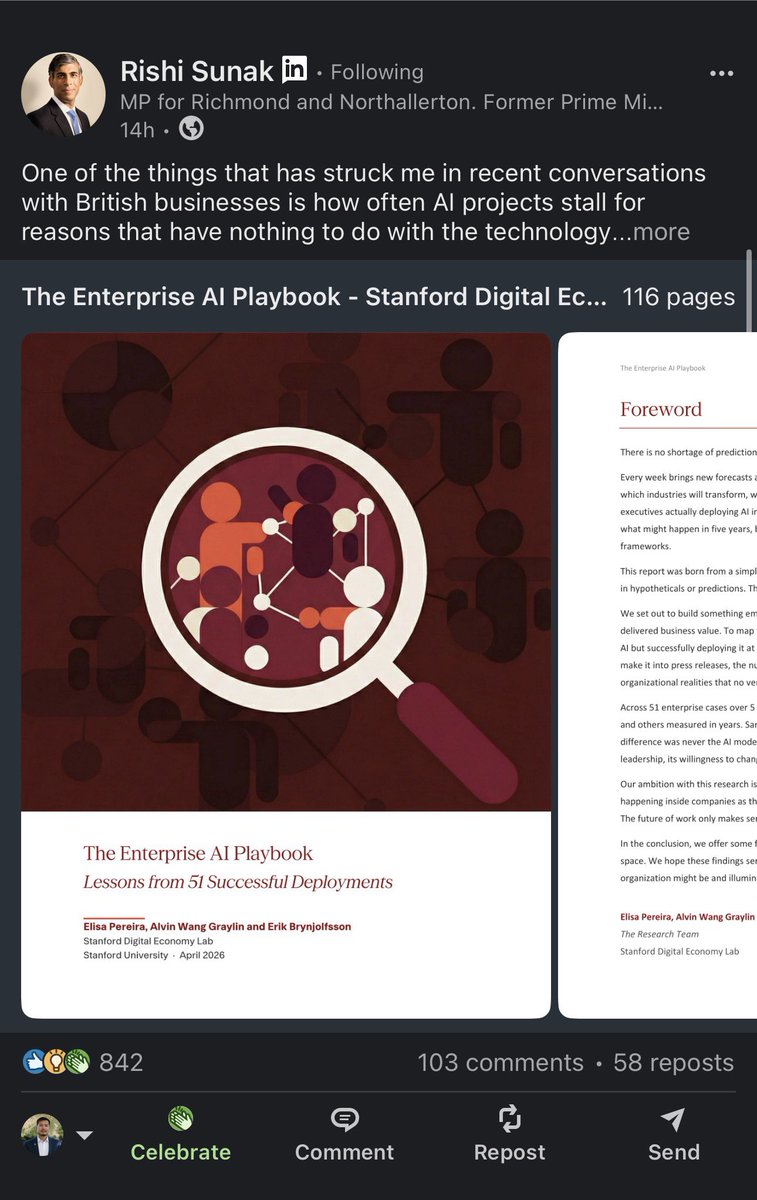
A new episode of the #BigBangTechReport just dropped. In this episode we discuss what’s really happening inside #AI #deployments in enterprise today—what works, what doesn’t and how you can get ahead of the game. We go deep into findings from the recent @Stanford report “The #Enterprise AI Playbook” which I co-authored. Link to full episode and report in the comments. @DigEconLab @erikbryn @elisacmpereira1 @AsiaPolicy @VRWorldSociety
English
1
0
2
141