Aji Adoga The First of Taraba

6K posts

Aji Adoga The First of Taraba banner
Aji Adoga The First of Taraba

Aji Adoga The First of Taraba

@ajiadoga

Katılım Nisan 2024
325 Takip Edilen270 Takipçiler
Sabitlenmiş Tweet
Aji Adoga The First of Taraba
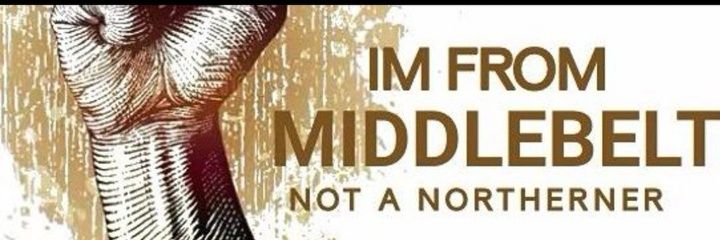
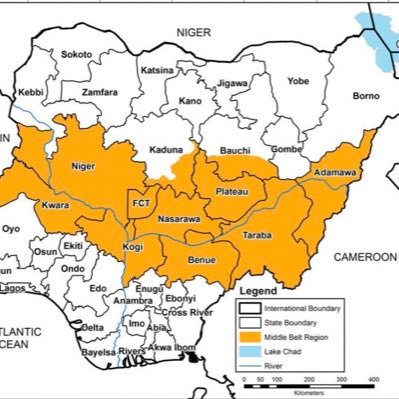
Taraba is Middle Belt and not North Taraba is Middle Belt and not North Taraba is Middle Belt and not North Taraba is Middle Belt and not North Taraba is Middle Belt and not North Taraba is Middle Belt and not North Taraba is Middle Belt and not North
English
10
84
268
8.5K
Aji Adoga The First of Taraba retweetledi
Patrick Anum
Patrick Anum@patrickanum·
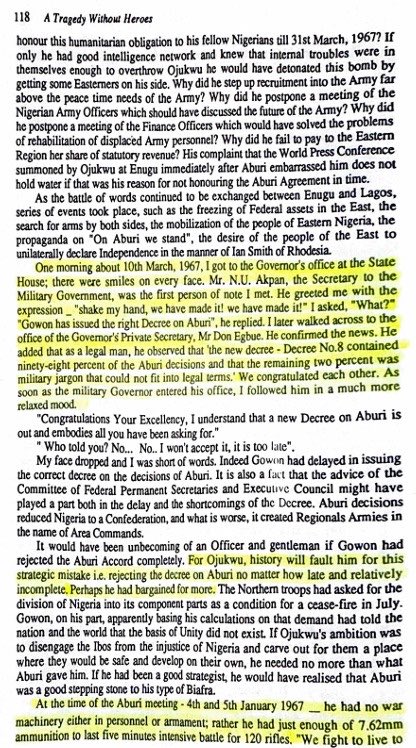
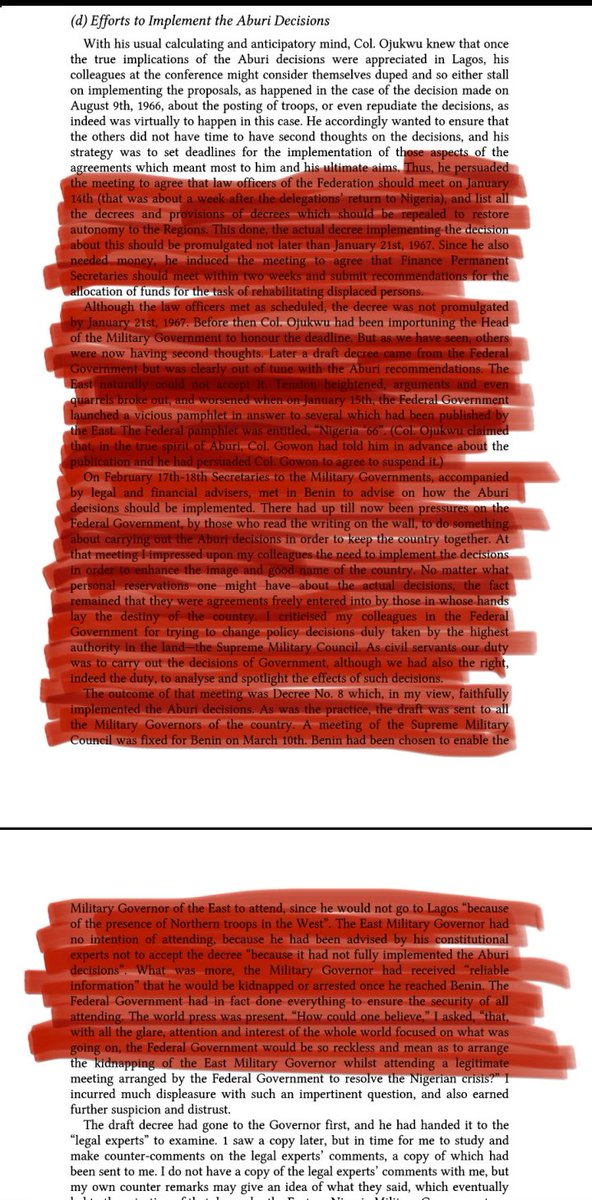
According to NU Akpan (Secretary to the Government of the Eastern Region) it was Ojukwu who first broke the Aburi agreement contrary to present propaganda posted online. (An Eastern Account) In Page 55, he says “that one of the understandings of the Aburi meetings was that the first statement on the meeting and its decisions should come from Lagos” It says that even a communique had been drafted and issued in Ghana However, Ojukwu was advised to make a statement contrary to the agreement in Ghana. Ojukwu called a press conference and spoke about the meeting and its implications for the federation This was the first move that annoyed Lagos and other participants at Aburi according to NU Akpan. NU Akpan says, the harm had been done, the confidence at Aburi had been undermined and was replaced by awakening suspicions. The cat was out of the bag(Herein attached) John the St Jr who wrote the Brothers War on Page 99, corroborates what NU Akpan pointed out. He speaks about how Ojukwu is unable to resist the urge to spell out his “confederal” victory the moment he got home and thus opening the old wound. In Page 317 of the Nigerian Military, a Sociological Analysis of Authority and Revolt by Luckham Robin published in 1973, it also corroborates the other accounts by John the St Jr and NU Akpan. It states how he (Ojukwu) issued a press statement right after Aburi, in which he stated that the military leaders had gone a long way towards Confederalism. Next, doubling down on the Press Statement against the agreement, according to NU Akpan, Ojukwu released several pamphlets on the Aburi agreements further breaking the agreement in Ghana. He says; By January 15, the Federal Government was launching their response to Ojukwus pamphlets titled “Nigeria 66” Ojukwu then proceeded to pleaded with Gowon not to publish the response according to Akpan. He also stated that despite Ojukwu breaking what was agreed, he, Gowon had prior informed Ojukwu about his yet to be released response, before releasing his; although Ojukwu had issued no prior notice before breaking the agreement by issuing a statement and publishing several pamphlets (Page 56) NU Akpan account. More on Ojukwus advisors who advised him to issue a statement in contradiction to the agreement According to the Attorney General of the Eastern Government (Nabo Graham Douglas) in his short book Ojukwus Rebellion and World Opinion, in Page 4, he says “At the very inception of the crisis there came into prominence a caucus of trusted advisers who were readily available to the Military Governor for consultation; some of its members were the Military Governor's own clansmen, some of whom were admittedly close relatives of his. It is probably on account of this aspect of the matter that the rebel regime came in due course to be referred to as "Ojukwu and his Newi clique' by many commentators” In Gowons first Autobiography titled Biography of a Soldiers Statesman by Isawa Elaigwu, published in 1986, in page 118, Gowon says that Ojukwu brought advisers against the agreement against advisers of any sort. It says in page 118, But Ojukwu did not keep his side of the bargain on the Aburi arrangements. The Military leaders were reported to have agreed among themselves that all civilian advisers (including the Federal Secretaries) were to be kept out of the Aburi meeting. But Ojukwu contrary to the Gentlemen’s agreement took with him about 9 Permanent Secretaries. According to, the book, War of Nigerian Unity, 1977-1970, by Sir Rex Niven, published in 1970, Ojukwus government had already begun campaign against the military government by February 1967, a month after the Aburi agreement by publicity and all non-Igbos expelled which violated one of the Aburi terms.
Patrick Anum tweet mediaPatrick Anum tweet mediaPatrick Anum tweet mediaPatrick Anum tweet media
Patrick Anum@patrickanum

For the longest time, I had always thought the Aburi Accord was just as simplistic as these people write it In their view, there was an Aburi Accord, it was agreed and next stage was immediate implemention, but Gowon refused. I had no idea that Aburi was not a decree. It was an agreement that Law officers had to sit afterwards and codify into a law (also Secretaries to the Government of each of the 4 regions had to be involved too in this process) This was the account by the Secretary to the Government of Biafra - NU Akpan (on the Biafran side) And after Aburi, the East sent NU Akpan to represent the East. They wouldn’t have if it was not one of the agreements in Aburi. He (NU Akpan) and the other Secretaries were determined to produce a document that would be acceptable to all parties That is where the draft for Decree 8 came from. It came from the meetings with all Secretaries from the regions (ironically including the Secretary to the Government of Biafra) who represented the Eastern Government. When it was finalized, NU Akpan was jumping up and down according to the book “Tragedy without Hero’s” by Hilary Njoku who was head of the Biafran Army at the time. He says, we made it, Gowon has issued the right decision on Aburi. He gave 98%. Hilary Njoku even mentions going to congratulate Ojukwu. Ojukwu had spoken to his advisers who urged him to reject it NU Akpan said he didn’t see the notes that the Eastern intellectuals around Ojukwu had written on Decree 8 but he provided his counter notes which are in his book He said it had fulfilled 95% of the Aburi agreement which he and other secretaries were able to agree on. This is why I don’t listen to Twitter gossip history. I buy books by myself and take my time to read them. Sources: Hilary Njoku - Head of the Biafran Army, (Book title) Tragedy without Hero’s page 118 NU Akpan, - Secretary to Government of Biafra (Struggle for secession) page 55

English
19
58
122
5.1K
Aji Adoga The First of Taraba retweetledi
Patrick Anum
Patrick Anum@patrickanum·
For the longest time, I had always thought the Aburi Accord was just as simplistic as these people write it In their view, there was an Aburi Accord, it was agreed and next stage was immediate implemention, but Gowon refused. I had no idea that Aburi was not a decree. It was an agreement that Law officers had to sit afterwards and codify into a law (also Secretaries to the Government of each of the 4 regions had to be involved too in this process) This was the account by the Secretary to the Government of Biafra - NU Akpan (on the Biafran side) And after Aburi, the East sent NU Akpan to represent the East. They wouldn’t have if it was not one of the agreements in Aburi. He (NU Akpan) and the other Secretaries were determined to produce a document that would be acceptable to all parties That is where the draft for Decree 8 came from. It came from the meetings with all Secretaries from the regions (ironically including the Secretary to the Government of Biafra) who represented the Eastern Government. When it was finalized, NU Akpan was jumping up and down according to the book “Tragedy without Hero’s” by Hilary Njoku who was head of the Biafran Army at the time. He says, we made it, Gowon has issued the right decision on Aburi. He gave 98%. Hilary Njoku even mentions going to congratulate Ojukwu. Ojukwu had spoken to his advisers who urged him to reject it NU Akpan said he didn’t see the notes that the Eastern intellectuals around Ojukwu had written on Decree 8 but he provided his counter notes which are in his book He said it had fulfilled 95% of the Aburi agreement which he and other secretaries were able to agree on. This is why I don’t listen to Twitter gossip history. I buy books by myself and take my time to read them. Sources: Hilary Njoku - Head of the Biafran Army, (Book title) Tragedy without Hero’s page 118 NU Akpan, - Secretary to Government of Biafra (Struggle for secession) page 55
Patrick Anum tweet mediaPatrick Anum tweet media
Lóládé Bayonlè 🇳🇬@loladebayonle

@olisaemeka_G The question is why did Gowon rejected the Aburi Accord?

English
36
89
187
21K
Aji Adoga The First of Taraba retweetledi
Plateau Militia Asian girl🌟
Come and mention Gowon again on my post, and I will insult you and your generation, you bunch of retards!
English
9
20
86
2.6K
Aji Adoga The First of Taraba retweetledi
Patrick Anum
Patrick Anum@patrickanum·
The type of hatred that a section of these folks have for the Middle Belt has been brewing and if I might add, growing for quite a while. I used to go to many of their rooms and just sit quietly and listen. You would not imagine what they say about Middle Belt people. I only wish I had recorded some of the rooms. You would hear statements like “they will continue to unalive all of them” This particular writers statement comes from such categories” Whenever there is a killing in Southern Kaduna, Benue, Plateau, Taraba, Nasarawa, Kogi etc, you just need to go under the comment section on Sahara Reporters and other news platforms to see the vitriol being spewed. I used to ignore it for a while with the hope that it would die down. But the first rule about hatred in Nigeria is that, if it is not addressed, it grows. I can understand if someone hates Gowon. I will not be mad at that, but this is no longer about Gowon, this is about dehumanization and inhumane things being said about Middle Belt people based on past events of which they know nothing about. Ironically, the Middle Belt is filled with Igbo people who have migrated there to conduct business. Most of the time, those piling on these insults don’t even know this. Whenever we speak about these issues, we are blackmailed with words like “didn’t we in the past help you speak about the unalivings by Fulani in your area?” That is not the issue, and that does not excuse a section of your group constantly make dehumanizing remarks regarding our unalivings The ordinary people in the Middle Belt through the government of J.D Gomwalk kept the properties of Igbo people and returned them after the civil war. In particular, the people in the Benue division flooded food items to the people of the East Central State after the civil war This is what their children get in return, taunting at every turn while living in our territories en mass. Most Middle Belters won’t call out this insanity but I have a reputation for calling out everything. Maybe a section of you who seem to be unable to resist insulting us should inform your brothers to return back and stop living among us if we are such terrible people I am tired of having to see this madness
Vivian Ifeoma@VivianIfeomaOj

Peace wan finish your people for plateau state and middle belt.

English
103
88
274
30.9K
Aji Adoga The First of Taraba
See this Kanuri minority hating on other Muslims and people in Adamawa who have refused to be slaves like himself of the Fulani E no go better for u
English
0
1
6
64
Aji Adoga The First of Taraba retweetledi
Kada NGBALE
Kada NGBALE@kdngbale·
Reading this and realising this man deliberately spelt HE Boni Haruna's and HE Rt. Hon. Fintiri's names with lower caps tells you the depth of hatred folks like him have for those they don't see as their kind. People know what they are doing, especially when consumed by hate.
Hamma@HAHayatu

@LukmanIMsambo I agree wallahi, but Adamawa politics is so regionalized and ethnicised and there is a gang up against Fulanin Yola. Adamawa north have the highest population that's why they produced boni, Bindow and fintiri, while Nyako is from the south.

English
2
2
3
100
Aji Adoga The First of Taraba retweetledi
Patrick Anum
Patrick Anum@patrickanum·
Gej wasn’t just hated because he was from a minority ethnic group, let’s be honest, people hated him for other legitimate issues Difference was, since he came from a small ethnic group, he didn’t have lots of kinsmen to defend him like Buhari and Tinubu do Classic majority/minority politics in Nigeria
Uche@WIZEINTHEBEAT

GEJ was just hated because he was from a minority tribe .. Anything he did, Buhari did worse and Tinubu is doing worse too…

English
10
26
87
7.6K
Aji Adoga The First of Taraba retweetledi
Kada NGBALE
Kada NGBALE@kdngbale·
On some Sundays we get to see the faces of those who wait behind after we've gone to Church to steal from us and neighbours. Today was one such & I am thankful to neighbours who rallied around to assist with investigation before we handed the thief over to security operatives.
Kada NGBALE tweet media
English
2
1
3
48
Aji Adoga The First of Taraba retweetledi
Patrick Anum
Patrick Anum@patrickanum·
The President of Miyetti Allah Kautal Hore, Alhaji Abdullahi Bello Bodejo is contesting for a Senatorial seat in Taraba despite leading the group the claimed responsibility at different times for killings in the Middle Belt Taraba people must reject this candidacy
Patrick Anum tweet mediaPatrick Anum tweet media
English
35
339
403
10.2K
Aji Adoga The First of Taraba retweetledi
Samantha Walsh
Samantha Walsh@sammwalsh·
Foreign Military Bases in Nigeria Let's have them as follows: Core North region: Turkish Base Middle Belt region: Israeli Base Southern region: American Base
Samantha Walsh tweet media
English
24
33
108
4.7K
Aji Adoga The First of Taraba
1. Bethany Christian Academy BCA 2. Bethel Christian Academy 3. Cannan High School 4. Command Secondary School 5. Federal Government College Jos 6. Redeemed Christian College 7. Baptist High School 8. Hill Crest
GOLKITDA 🦅⚖️@_Kamor

OG secondary schools in Plateau State. 1. Boys’ Secondary School Gindiri 2. Government Science School Kuru. 3. Baptist High School. 4. Hill Crest. 5. Kent Academy. 6. Girls High School, Gindiri. You are welcome 🤝🏽

English
0
0
2
92
Aji Adoga The First of Taraba retweetledi
Plateau Militia Asian girl🌟
True Care Hospital is one of the best hospitals in Jos. I remember when someone recommended we take my cousin there after visiting about three different hospitals in Abuja, where they kept diagnosing her with ulcers and dosing her with antibiotics that kept making her more ill. It was at True Care Hospital that she was finally diagnosed with severe gastritis and treated after undergoing a very thorough medical examination to understand what was actually causing her symptoms. Thank God for your healing. Wishing you a quick recovery. ❤️‍🩹
Elejo@Elejocomedian1

Tru Care Hospital jos, thank you all for saving my life. I had surgery a week ago, and from the moment I arrived, the receptionist, nurses, and doctors were incredibly kind and supportive. The most amazing part was that my surgery cost more than half a million, yet because of the

English
8
34
109
5.9K
Aji Adoga The First of Taraba retweetledi
JAY JAY PA₦YA
JAY JAY PA₦YA@ComputerrWizard·
If u do solar installations in Jos, let me know in the CS. If you give me a good deal, I’ll tell my client to make u their official solar plug. HMU. No DM pls
English
23
9
67
3.6K
Aji Adoga The First of Taraba retweetledi
Patrick Anum
Patrick Anum@patrickanum·
First, the idea that 70% of Hausa have Fulani blood is simply not true or backed by credible demographic or genetic research. You’d need rigorous population genetics data to support something that specific, and none exists Second, the term Hausa-Fulani was not created because the two groups became biologically merged as you claim, it is largely a political and sociological label that emerged during the colonial and post-colonial era to solidify political interests and benefit certain elite who were in power at the time (particularly Fulani elite) When you speak of Hausa as an ethnicity and deviate to mention the language and how many speakers they have, it shows how dishonest you are in the conversation Having lots of Hausa speakers only shows Hausa cultural and economic influence, not the argument of genetic blending that you are trying to make English as a language has spread to various parts of the world,doesn’t mean that everyone that speaks it is genetically English. We are communicating in English, doesn’t make us ethnically English. And lastly, since we are having this conversation, it means that their actions aren’t futile. The demand by the Hausa to solely identify as such doesn’t mean hate It just means that they want to identify as they have always been for centuries “as Hausa” peoples
English
1
17
59
1.1K
Aji Adoga The First of Taraba retweetledi
Patrick Anum
Patrick Anum@patrickanum·
First, the idea that 70% of Hausa have Fulani blood is simply not true or backed by credible demographic or genetic research. You’d need rigorous population genetics data to support something that specific, and none exists Second, the term Hausa-Fulani was not created because the two groups became biologically merged as you claim, it is largely a political and sociological label that emerged during the colonial and post-colonial era to solidify political interests and benefit certain elite who were in power at the time (particularly Fulani elite) When you speak of Hausa as an ethnicity and deviate to mention the language and how many speakers they have, it shows how dishonest you are in the conversation Having lots of Hausa speakers only shows Hausa cultural and economic influence, not the argument of genetic blending that you are trying to make English as a language has spread to various parts of the world,doesn’t mean that everyone that speaks it is genetically English. We are communicating in English, doesn’t make us ethnically English. And lastly, since we are having this conversation, it means that their actions aren’t futile. The demand by the Hausa to solely identify as such doesn’t mean hate It just means that they want to identify as they have always been for centuries “as Hausa” peoples
Hamma@HAHayatu

70% of those that call themselves Hausa have Fulani blood in them in states like Kano, Kaduna and Katsina mainly due to extensive intermarriages. This is the reason the term Hausa-Fulani was created. In state like Borno, Adamawa, Gombe Bauchi, Taraba etc you get pure Fulani . Hausa is now a Lingua Franca 90% of it's speakers are not genetically Hausa. Hausa have atleast 150M speakers in the world but less than 15M are ethnic Hausa So those thinking that they can use propaganda to separate Hausa and Fulani especially in north west are embarking on a futile work.

English
1
35
100
4.5K
Aji Adoga The First of Taraba retweetledi
Millz
Millz@Millz_umar·
They insult us, calling us Maguzawa and arna, and accuse us of collecting money simply because we speak for the Hausa people. However, when others form separate groups like Miyetti Allah, MACBAN, or the Fulbe Christian Association, no one complains. So, why is it a problem when Hausa people organize or claim to be Hausa Zallah? Double standard, We won’t be silenced.
Millz tweet media
English
26
77
277
9.6K
Aji Adoga The First of Taraba retweetledi
àlàó, eégún ńlá
àlàó, eégún ńlá@olufisibi·
this nigga basically said *I and other Nupe enjoy being slaves to the Fulani. it's not half-bad and everyone else should try it too" lmaooo
Gimba Kakanda@gimbakakanda

The Hausa-Fulani Debate This trending debate about the two ethnic groups dancing on the edge of an unmistakable rupture has, to me, always been a debate about political convenience disguised as ethnic certainty. They are two distinct groups, marked by different linguistic and cultural idiosyncrasies. Whatever the Fulani share with the Hausa, they also share, in one form or another, with other groups, just as the Hausa share traits with peoples beyond the Fulani. The difference is that these other groups rarely lose their consciousness of self. The traditional institutions across many northern communities are headed by monarchs of Fulani ancestry, and this is true even among the Nupe emirates in Nigeria. The Etsu Nupe in Bida and the Emir of Lapai, for instance, have distinctly Fulani ancestry, yet neither hyphenates his ethnic identity. They identify simply as Nupe, and that is the end of the matter. There is nothing in the cultural expression of a Hausa mixed with Fulani that is not, in similar ways, expressed among the Nupe mixed with Fulani. Culture is fluid. Identity is fluid too. We should be honest enough to admit this. Hausa is, of course, culturally magnetic, and that is why it has succeeded in becoming the Bermuda Triangle of many languages in northern Nigeria. Many of us grew up struggling to balance Hausa and our native language, trying not to lose one in the dominance of the other. But that cultural force is not enough reason to reduce Hausa to a mere language, as some tend to theorise, or to deny that it belongs to a distinct people. That would be like arguing that the universality of English means there are no distinct English people. A language can travel widely, absorb others, and still remain the language of a people whose distinct identity does not vanish with its spread. If these Nupe royal families, many of whom are patrilineally Fulani but maternally Nupe, could identify simply as Nupe and nothing more, then I believe every group can do the same—to choose a part that aligns with their reality. To me, that offers a practical template for integration among us. What it exposes, instead, is the poverty of a social arrangement in denial of lived identity, where accommodation rests solely on the father’s origin. That may satisfy the logic of patriarchy, but it does not satisfy the logic of justice, social reality, or national cohesion. We live, however, in a patrilineal society that compels the child to inherit the father’s identity, and this logic extends even into our notions of indigeneship and citizenship. Unless we are prepared to uphold that rigidity consistently, or else allow all of us to bear the identities of both parents, we are simply living a lie. My objection to the Hausa-Fulani categorisation is not that it is inherently flawed, for it reflects a social reality many of us already recognise. It is that the arrangement is self-serving, privileging one set of interethnic identities while denying the same legitimacy to others. Our society would be far more honest with itself if it embraced our maternal identities and values just as seriously as it does the paternal. That would not only weaken this patriarchal inheritance of identity, but also deepen integration. I made this argument years ago in a column where I advanced the case for bilateral descent. Every child is the product of two parents, two lineages, two inheritances. In many cases, indeed in most, the child is first shaped by the mother’s language, habits, and culture before any wider socialisation takes hold. It makes no sense, therefore, that a child of a Yoruba father and a Hausa mother, born and bred in Hausa society, formed by its language and customs, should be told to return to a father’s village he has never known whenever questions of belonging or political participation arise. That contradiction is one of the quiet engines of our national polarisation. 1/2

English
1
7
24
1.3K