akash
20.1K posts

akash
@akashtattva
creative technologist. interests: history of economics, design, science-fiction, philosophy, films.
Katılım Nisan 2012
2.5K Takip Edilen540 Takipçiler

the sangh's bengal project was always teleological. don't "convert the voter" but "outlast the embarrassment". the bengali mind that found rss uncouth is the same mind that finds winning irresistible.
shakhas where there were no shakhas, cadre where there was no cadre.. the administrative spine was always there, it was just inert. psychology is the last thing to move and then it moves completely.
English


modi is lucky sydney sweeney doesn't have political ambitions.
🀄@Santhoxsh
Modi is lucky Dhoni doesn't have political ambitions
English
akash retweetledi

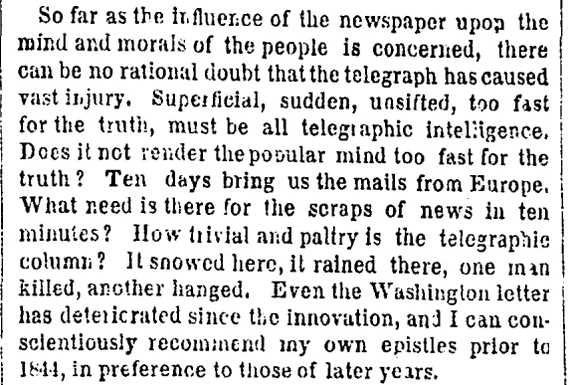
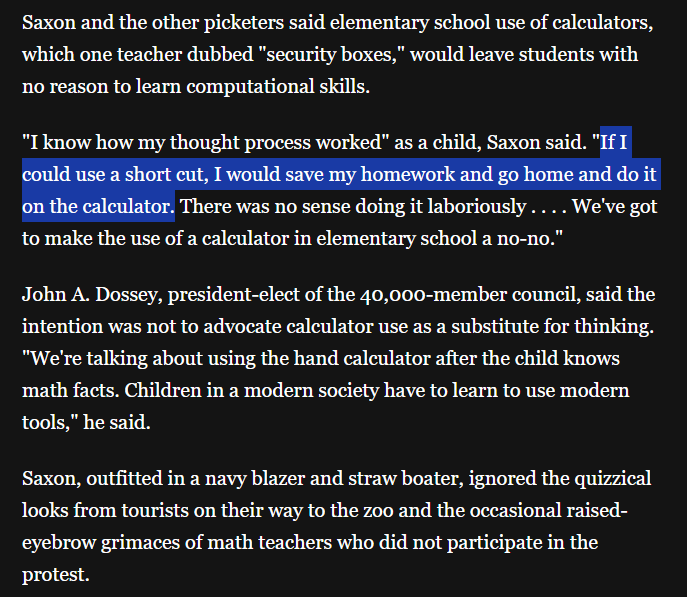
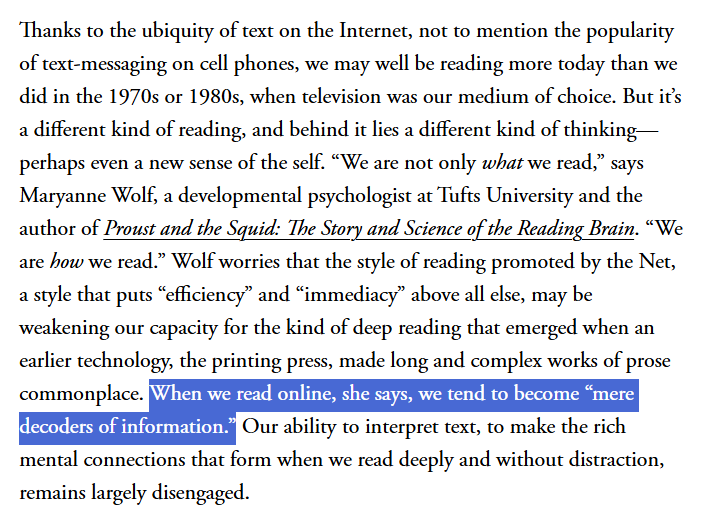
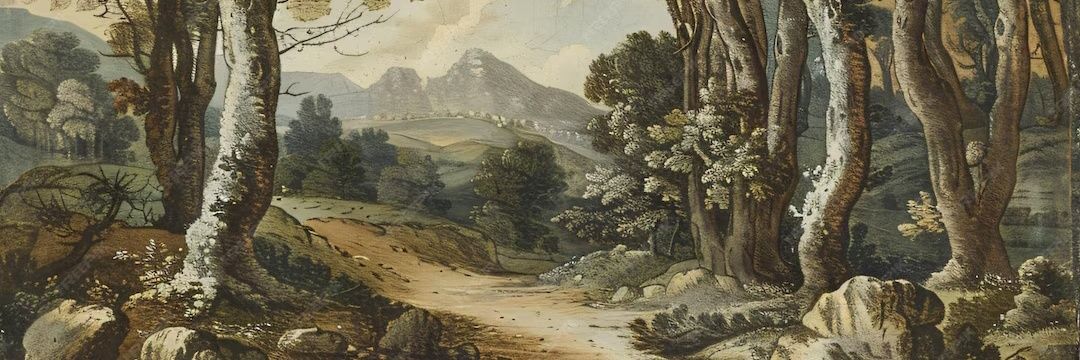
Techno-anxiety is a remarkably consistent and repetitive pattern:
1482 book by Johannes Trithemius: "In Praise of Scribes: De Laude Scriptorum": williamwolff.org/wp-content/upl…
1858 New York Times editorial on the epistemic risks of the telegraph: nytimes.com/1858/10/25/arc…
1986 WaPo article on the use of calculators in school: washingtonpost.com/archive/local/…
2008 Atlantic piece on whether 'Google is making us stupid': theatlantic.com/magazine/archi…


English

yup. indian billionaire fortunes came from industries where proximity to government mattered more than technical risk taking.
Swaraj@swarajk_
indian promoters won't invest in anything unless the GOI underwrites the risk
English

@akashtattva Mava barfi, halwa, besan chakki, gulab jamun, etc
Indonesia

[For every designer who is scared right now 🩶]
If the AI stress is catching up to you or you're feeling left behind, take out 5 mins and read this.
Nobody really knows how to survive this 'wave'. Even the people building these AI products don't know the future. And if someone's handing you a clear cut path, they're probably selling something.
I'm writing this based on the people I know. Some of them are building these tools, some are switching roles. Many just reached out because they didn't know who else to ask.
Over the last ten years, I have watched parts of this industry shift. Photoshop to Illustrator to Sketch to Figma. Each time the tool changed, the designer role also evolved. With AI, this is a much bigger move, but that sense of fear feels exactly the same.
Here's what I'm actually seeing:
Design roles are contracting.
It is real. The junior and intern-level work is the most exposed right now, because AI can do a lot of what a new designer would spend their first year learning.
Senior designers with strong networks and reputations are largely okay, but not untouchable. Many managers honestly, are more worried than they're letting on. A lot of them haven't touched tools in years.
There's also something happening with hiring where managers aren't bringing on juniors right now. Some of it is tight budgets, but a lot of it is that they don't know how to grow someone in this environment anymore. There's no clear ladder to point to.
–
The roles that remain look different.
Companies are now deliberately building out senior and principal IC tracks so the best craft people don't have to choose between growing and managing. A senior designer who goes extremely deep, who has strong taste, ships things and shapes product decisions, is very valuable today.
The new shape for a design manager is someone who should also build. They should use tools to prototype fast, validate ideas quickly, show rather than tell. A manager who can demo something in a meeting rather than describe it is a completely different asset.
UX writing, content design, marketing are merging into product thinking in a way they weren't before. Designers who can write, actually write well are powerful.
–
Experiment on your own before it's pushed on you.
The design process is changing. The double diamond, the wireframe, the detailed case studies are starting to feel dated. What's replacing it has a lot more building and shipping than documenting and presenting.
Don't upskill frantically. Just because a new tool dropped doesn't mean you have to master it. At this rate you'll just burn out chasing things. Pick one process you already do and figure out where AI actually helps within it. Pressure test an idea, poke holes in your reasoning, generate great visuals, explore a direction you'd have killed too early. Get really good at one or two things vs half baked many.
Don't get attached to tools. The designers who struggled most through every tool shift were the ones whose identity was too tied to what they already knew. Being the best Framer person in the room was never the point. It was always the work itself.
–
Learn some code. Even a little.
I say this as someone who never wrote code before. Think of it like a 30-day experiment, not a career change. I can share more on how I approached this because I know how intimidating that sentence sounds.
Build live things. No one wants static mocks sitting in Figma. See if you can do interactive project demos, solve your own problems by building small tools, push things out, let people use them. A live product in your portfolio right now is worth more than ten polished case studies with no shipping story behind them.
–
People want a point of view. Generic work is losing.
Execution is cheap now. A lot of work is starting to look the same and the ones standing out have something to say. Bring that to your work.
Freelancing overall has a lot more money in it right now. But if you're producing generic, template-level work, you're probably in danger. Niche and specific is where the premium is going, and that gap is only going to widen.
A lot of people who joined design during the covid wave, drawn by the stability or the salary or the sense that the process was settled, will probably leave. That's okay, maybe even good. Design has always been a craft that changes. The ones who stay will be the ones who actually want to build things.
–
Be someone people want to work with.
Being easy to work with is underrated and always will be. Being collaborative, fun to work with, easy to communicate with async – all this builds up over years in ways no tool can replicate. I've seen technically average designers outlast brilliant ones because of exactly this.
Being a good hire isn't just your portfolio. People imagine what it would be like to talk to you, brainstorm with you, disagree with you, and sit in a room with you for two hours every week. Work on that too.
Who you surround yourself with matters too. If you don't have people to look up to at your work, find small tight communities that do the kind of work you like and actually share it. I prefer these over large noisy ones. Some big Discord ones are mostly anxiety and self-promotion.
–
If you're early career, this is for you specifically.
I've had many recent grads and those just finishing a bootcamp struggling to find work. I want to say this clearly that is not a reflection of your ability. The timing is just brutal right now and that's not on you.
If you're just starting out, look for lean startups or agencies. They still desperately need designers who can think and move fast. Get in the room first and figure out long term plans from there.
Hiring pipelines are filled due to mass applications. Post your work online, share WIP experiments, DM the founder whose app you redesigned just for fun. Nobody is coming to find you. You have to shamelessly show up.
–
More people are building now because friction has never been lower. A lot of them are discovering mid-build that design is what separates good from forgettable. That's not nothing.
There's also a new kind of client emerging. Solo builders, indie founders, one-person companies shipping at scale. They don't need a design team but one designer who can build alongside them. That role is growing and it's genuinely interesting work.
Yes there's anxiety. But there's also more to build and more personality to showcase. That's where I'd put my energy.
English

Which are the most humane (empathetic, compassionate) Arab / Middle Eastern novels?
Thought behind the question: I read a bunch of these novels last year -- my selection algorithm was to sample widely among the award-winning works from the region (Egypt, Sudan, Iran, Palestine, Jordan, among others) -- and, overall, I was very struck by the darkness and violence. (Abundant rape, murder, violence, and so forth.)
In trying to figure out why the outlooks are so consistently bleak, I don’t think it’s only a matter of colonialism. For example, The Blind Owl is often ranked as the best novel to come out of Iran, which was never colonized as such, but nonetheless describes an obsessive madman who kills and dismembers his partner. In Season of Migration to the North, the colonizer -- Britain -- is described as being quite benevolent at least at the object level (granting a scholarship to the protagonist; treating him unreasonably justly during his murder trial). Men in the Sun is similarly grim while taking place in a post-colonial Arab world. Even books that are sometimes described as heartwarming (such as Mahfouz’s Cairo Trilogy) centrally feature rape and female oppression (that Amina is not permitted to leave the home is a core plot issue).
One guess is that it is a function of award selection algorithms: gritty despair is seen as high-status and structurally celebrated.
Another theory would be the period: there are lots of humane novels in the Western canon (Dickens, Tolstoy, Eliot…), but those are more likely to be from the nineteenth century, whereas the Arab / Middle Eastern novelistic canon didn’t emerge until the twentieth. I’m not sure this explains it, however. In Search of Lost Time, Great Gatsby, Ulysses, Midnight's Children are all critically-acclaimed 20th century novels, close to the top of almost any list, that one would not describe as macabre.
It’s possible that I just read the wrong books and got unlucky. So: which authors from the region can best be compared to Faulkner, Eliot, Fitzgerald, or Rushdie? (And if they haven't won major awards, does that indicate that the awards have a negative bias?)
English
akash retweetledi


@cachedeposits @4HLsartorialist looks like a nice lawn to do yoga without the yoga mat
English

@4HLsartorialist yeah, the lawn is pretty useless - was thinking of extending the paver patio throughout so that side is more usable
English
akash retweetledi