
Alec Zopf

2.4K posts

Alec Zopf banner
Alec Zopf

Alec Zopf

@aleczopf

✨ Creative Technologist ✨ Co-founder, former Chief AI & Automation Officer @wellthapp. Building something new

Los Angeles, CA Katılım Nisan 2009
3.2K Takip Edilen1K Takipçiler
Sabitlenmiş Tweet
Alec Zopf
Alec Zopf@aleczopf·
Well before super-intelligent AI reshapes society, super-efficient companies will. They'll use human-level AI to create the same value with 10x less human capital, rapidly capturing the total addressable market. Income inequality will skyrocket. #UBI is a must for social health
English

2
0
9
369
Alec Zopf
Alec Zopf@aleczopf·
@recmo Turns out manifestation is real...
English
0
0
0
28
Alec Zopf retweetledi
Martin Varsavsky
Martin Varsavsky@martinvars·
The honest secret of running AI agents inside a real company is this: the model is not the bottleneck anymore. The bottleneck is what happens when the agent is wrong. I run agents across several of my companies. They sort emails, manage dashboards, block bots on X, draft replies, summarize calls. The first version is always magical. The tenth version is where you learn the real lessons. The model is rarely the problem. The problem is that nothing in the stack tells you, in production, that the agent quietly drifted. It does not crash. It does not error. It just becomes slowly worse at the job, and three weeks later you realize half of its outputs are subtly wrong. What you actually need is unglamorous: evals you trust, logs you can search, the ability to roll a single agent back to last week, and a human review queue for anything that touches money, legal text or a customer. Most teams skip all four because they are not as fun as a new model. The companies that win with agents will not be the ones with the smartest model. They will be the ones whose engineers treat agents like junior employees with bad memory and worse judgment, and build the supervision around them accordingly. Intelligence is cheap now. Accountability is what will be priced.
English
78
88
681
58.5K
andrew pignanelli
andrew pignanelli@ndrewpignanelli·
Announcing Cofounder 2: Run an entire company with agents. It's the infrastructure for the one person billion dollar company - orchestrating agents across engineering, sales, marketing, ops, and design. (and yes that's my real grandma in the video)
English
542
405
7.7K
4.6M
Alec Zopf
Alec Zopf@aleczopf·
@kcimc Recommendation: X bot. That way we could turn on notifications for X bot posts.
English
1
0
22
1.8K
Kyle McDonald
Kyle McDonald@kcimc·
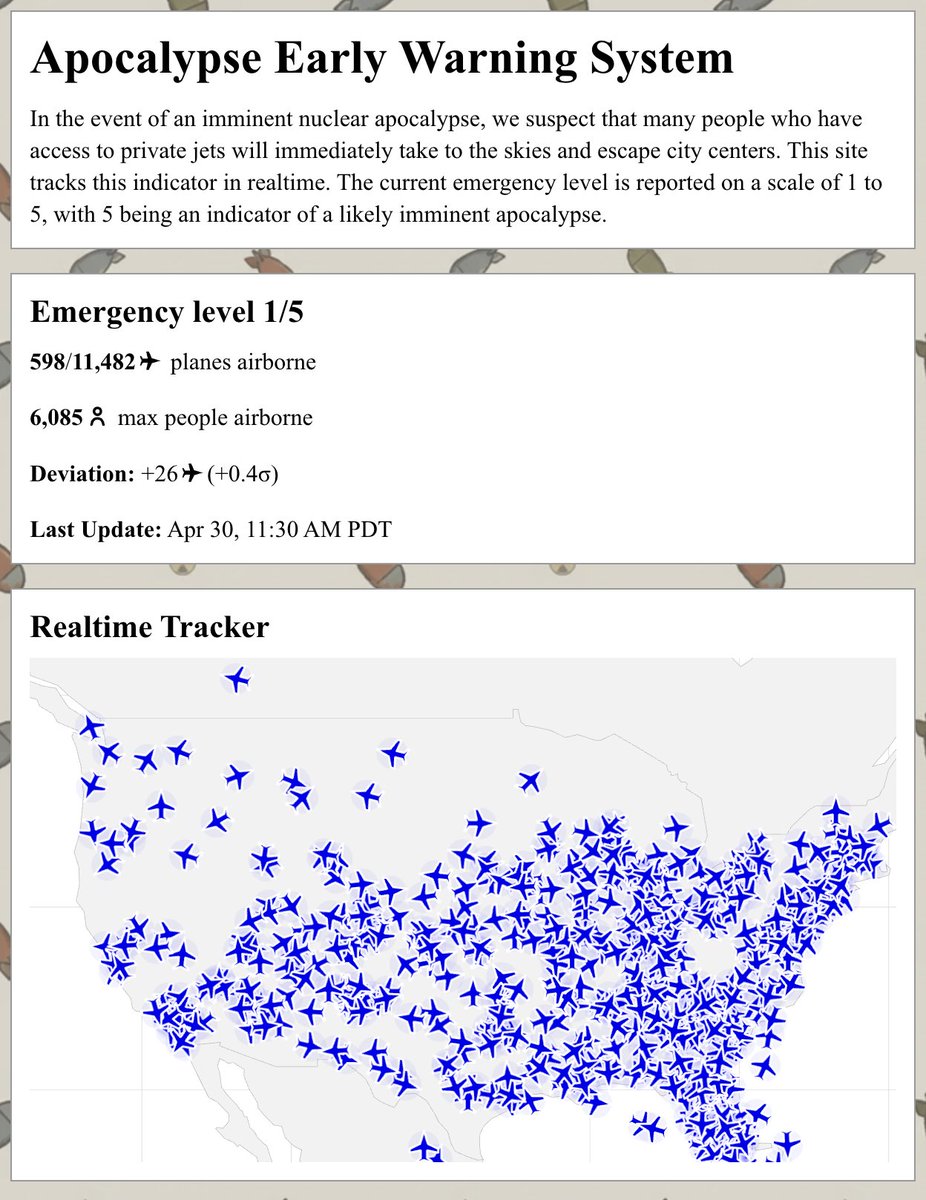
you can sign up for telegram notifications here t.me/apocalypse_ews i am searching for a kind patron who would support adding email/sms (which is a bit more expensive). my dms are open.
English
9
21
437
101.6K
Henry Shi
Henry Shi@henrythe9ths·
Something strange is happening in tech. CTOs of billion dollar companies are quitting to take IC roles at Anthropic. Workday CTO -> MTS (Mar 2026) You[.]com CTO -> MTS (Mar 2026) Instagram CTO -> MTS (Jan 2026) Box CTO -> MTS (Dec 2025) Super[.]com CTO -> MTS (July 2025) Adept AI CTO -> MTS (Jan 2025) The mission is that real.
English
250
369
5.3K
2.6M
Alec Zopf
Alec Zopf@aleczopf·
@illscience Realtime consumer credit transaction auction is fascinating
English
0
0
0
22
Anish Acharya
Anish Acharya@illscience·
profitable apathy if you thought saas-pocalypse was bad wait until computer use comes for consumer financial services and vampire squids the whole thing there are many, many profit pools that depend on apathy/laziness and a poorly informed customer - the industry that brought you the efficient market depends on an inefficient consumer to eat first the models will systematically exploit every customer subsidy (transfer bonuses / teaser rates), move deposits to maximize yield, open and close accounts on a whim - this industry has operated with asymmetric bureaucratic warfare through paperwork and sheer friction and the models will cut through this like a hot knife through butter and the model will neatly route around late fees, interest charges, overdrafts, expiration of teaser rates, and any mispriced debt that can be refinanced in the market - literally just moving people out of expensive debt and into cheap debt (that they are already approved for!) would save many american families thousands per year meanwhile vps and managers at these companies will hold on to their shrinking revenue lines the same way that executives at carriers protected SMS revenue as it collapsed to zero - they have zero chance of sticking the landing on new technology - and the smart ones will likely go for extending regulatory capture into the agentic economy so much of the consumer financial services ecosystem is marketing via subsidies on one end and profit maximization via customer apathy on the other, and it will collapse under its own weight as the agents pick it apart ironically the industry response to plaid was a misguided attempt to protect this very "profitable apathy" by disallowing APIs and in the end it will be agents that kill them clicking around their own UI, not the fintech aggregators they so greatly feared the end state of this is likely a headless auction where every time you swipe your credit card, some lender bids on taking the risk and capturing the profit from that transaction - it will be a much more efficient system that will work much better for consumers, and many pockets of financial services are going to see contraction as a result aa + 5.5
Anish Acharya tweet media
English
46
60
797
1.1M
Alec Zopf
Alec Zopf@aleczopf·
@GaryMarcus I live in LA and just watched a guy skateboarding down the street air drumming with sticks in both hands. Feels pretty similar
English
0
0
0
183
Zain Shah
Zain Shah@zan2434·
Imagine every pixel on your screen, streamed live directly from a model. No HTML, no layout engine, no code. Just exactly what you want to see. @eddiejiao_obj, @drewocarr and I built a prototype to see how this could actually work, and set out to make it real. We're calling it Flipbook. (1/5)
English
1.1K
3.7K
28.5K
5.9M
@jason
@jason@Jason·
We started an AI founder twitter group... reply with "I'm in" if you're a founder and want to be added
English
10.8K
134
4.6K
904.1K
Alec Zopf retweetledi
Aaron Levie
Aaron Levie@levie·
The more enterprises I talk to about AI agent transformation, the more it’s clear that there is going to be a new type of role in most enterprises going forward. The job is to be the agent deployer and manager in teams. Here’s the rough JD: This person will need to figure out what are the highest leverage set of workflows on a team are (either existing or new ones) where agents can actually drive significantly more value for the team and company. In general, it’s going to be in areas where if you threw compute (in the form of agents) at a task you could either execute it 100X faster or do it 100X more times than before. Examples would be processing orders of magnitude more leads to hand them off to reps with extra customer signal, automating a contracting review and intake process, streamlining a client onboarding process to reduce as many straps as possible, setting up knowledge bases than the whole company taps into, and so on. This person’s job is to figure out what the future state workflow needs to look like to drive this new form of automation, and how to connect up the various existing or new systems in such a way that this can be fulfilled. The gnarly part of the work is mapping structured and unstructured data flows, figuring out the ideal workflow, getting the agent the context it needs to do the work properly, figuring out where the human interfaces with the agent and at what steps, manages evals and reviews after any major model or data change, and runs and manages the agents on an ongoing basis tracking KPIs, and so on. The person must be good at mapping the process and understanding where the value could be unlocked and be relatively technical, and has full autonomy to connect up business systems and drive automation. This means they’re comfortable with skills, MCP, CLIs, and so on, and the company believes it’s safe for them to do so. But also great operationally and at business. It may be an existing person repositioned, or a totally net new person in the company. There will likely need to be one or more of these people on every team, so it’s not a centralized role per se. It may rile up into IT or an AI team, or live in the function and just have checkpoints with a central function. This would also be a fantastic job for next gen hires who are leaning into AI, and are technical, to be able to go into. And for anyone concerned about engineers in the future, this will be an obvious area for these skills as well.
English
278
400
3.8K
1M
Alec Zopf
Alec Zopf@aleczopf·
@eglyman How do you keep MCP usage safe? Is there some kind of RBAC MCP limiting/monitoring proxy? DLP for sensitive data?
English
0
0
1
3K
Eric Glyman
Eric Glyman@eglyman·
99% of Ramp uses ai daily. but we noticed most people were stuck — not because the models weren't good enough, but because the setup was too painful and unintuitive for most. terminal configs, mcp servers, everyone figuring it out alone. so we built Glass. every employee gets a fully configured ai workspace on day one — integrations connected via sso, a marketplace of 350+ reusable skills built by colleagues, persistent memory, scheduled automations. when one person on a team figures out a better workflow, everyone on that team gets it and gets more productive. the companies that make every employee effective with ai will compound advantages their competitors can't match. most are waiting for vendors to solve this. we decided to own it.
Seb Goddijn@sebgoddijn

x.com/i/article/2042…

English
130
169
3.6K
1.4M
Alec Zopf
Alec Zopf@aleczopf·
@ArthurMacwaters I like capitalism a lot. How do you determine what % of the improvement was baseline from the Industrial Revolution vs additional from a specific economic system?
English
0
0
0
2.6K
Arthur MacWaters
Arthur MacWaters@ArthurMacwaters·
population has grown ~9x in 200yrs, while poverty trends to 0 people act as though capitalism is a zero sum game, but it’s actually the only system that creates positive sum outcomes the average person today is far richer than most kings in days past
Arthur MacWaters tweet media
Elon Musk@elonmusk

Yes

English
436
2K
8.9K
6.2M
Nichole Wischoff
Nichole Wischoff@NWischoff·
Mom and stepdad have worked physical jobs for nearly nothing their entire lives. Stepdad took in 7 kids when he met my mom and never accepted child support from my dad. Did whatever he could for us to have a chance at a real life. Took them to dinner Friday night and let them know I would be retiring them very comfortably for the rest of their lives. One of the best moments of my life.
English
142
71
3.5K
141K
Alec Zopf retweetledi
Jack Moses
Jack Moses@jackmoses777·
Play is the frequency you’re looking for. Doesn’t matter if you’re building a community, vibecoding an app, creating a product, making music, or starting a movement. People will want to join when they feel like they’re playing and having fun. This is why gamification works so well. Create from the frequency of play and it will attract those who want to be in a playful energy with you. Plus, it’ll be way more fun to sustain your work and facilitate your mission when you’re coming from this energy. You fundamentally cannot burn out when you’re playing.
English
19
124
1.1K
32.6K
Alec Zopf
Alec Zopf@aleczopf·
@WillManidis Agreed - it's a list of broad suggestions without implementable detail or commitment. But can OpenAI's leadership commit? They owe fiduciary duty to the shareholders, not to society. It is ultimately up to society and government to require commitment; a cheat sheet helps!
English
0
0
0
1.7K
Alec Zopf retweetledi
shirish
shirish@shiri_shh·
generalists are about to win big If you understand a little of tech, business, and people, and can connect everything fast. you're sitting on a goldmine right now.
English
477
1.3K
14.5K
743.7K
Alec Zopf retweetledi
Aaron Levie
Aaron Levie@levie·
The ultimate rate limiter on productivity gains from agents will be on critical stuff like security, compliance, governance, the ability to review the work of the agent, ensure that it’s compatible with regulations, and so on. We’ve been living in a little bit of la-la land around how much software enterprises are going to ultimately want to vibe code themselves. The last 48 hours represents a good example of why you won’t take on every risk of every piece of technology in your enterprise. There’s no free lunch with AI productivity. Companies will have the build up the systems, processes, and controls for ensuring that agents can’t run around and do anything they want on any data at any time.
sarah guo@saranormous

x.com/i/article/2039…

English
69
54
382
110.7K
Alec Zopf retweetledi
Garry Tan
Garry Tan@garrytan·
The unit of software production has changed from team-years to founder-days. Act accordingly.
English
230
252
3K
152.2K
Alec Zopf retweetledi
Garry Tan
Garry Tan@garrytan·
We just went from horse-and-carriage to car. The old manuals still have truth in them, but the whole map of effort, speed, and leverage changed overnight. Building used to mean holding an entire system in your head. A fragile memory palace. A house of cards in biological primate RAM. If you stop, the palace collapses. Dinner, a meeting, a context switch. You come back and it’s glass dust on the floor. That’s why builders can look “antisocial.” It’s not vibes. It’s survival. You’re trying to get the palace out of your head and into code before it evaporates. Then the weird miracle: I type a few paragraphs that barely make sense on reread, and the machine builds the palace anyway. It mirrors the structure. It fills the gaps. It hands it back. The feeling is not “wow productivity.” The feeling is: I am seen. Like the part of you that has been translating yourself for 20 years finally gets understood on first contact. This is why the new skill is not “code faster.” It’s taste, direction, and leadership. Managing a swarm of agents. Running tight loops. Knowing what to ask for. And it brings back something old-school: apprenticeship. We forgot how to teach. Now teaching matters again, because the tools are insane but the mind behind them still has to be trained.
English
98
124
1.1K
95K
Alec Zopf
Alec Zopf@aleczopf·
We're also still living in a world where we talk about building separate "apps" that use HTML etc to render content and have backends that must be built. We do this because LLMs aren't yet fast enough to just output interface display tokens in realtime in response to new data and user actions. If nanobanana could just generate a new image in 5ms, you could have a 200fps fluid interface -- like a useful dream. Eventually, the backend may just be an LLM, and it might just be spitting out interface render tokens in realtime as you interact with it.
English
0
0
0
1.4K
Andrej Karpathy
Andrej Karpathy@karpathy·
I think this group of reactions are still fundamentally rooted in a scarcity mindset of software. 2 years ago AI was botching autocomplete, today it is almost one shotting browsers and C compilers. Where is it in 2 more? 10? 20? Software so insanely cheap and abundant that discrete “apps” make no sense in today’s sense. It’s just code paths that assemble for a hyper specific purpose, just to get deleted after a single execution. You don’t need to know anything or exercise any creative direction over this happening on your behalf. If today’s software is castles of bricks of code, this is more like boiling soup of code. I don’t know that it fully plays out this way and it will be mixed and incremental and etc but in principle it could get really weird.
English
45
32
597
37.4K
Andrej Karpathy
Andrej Karpathy@karpathy·
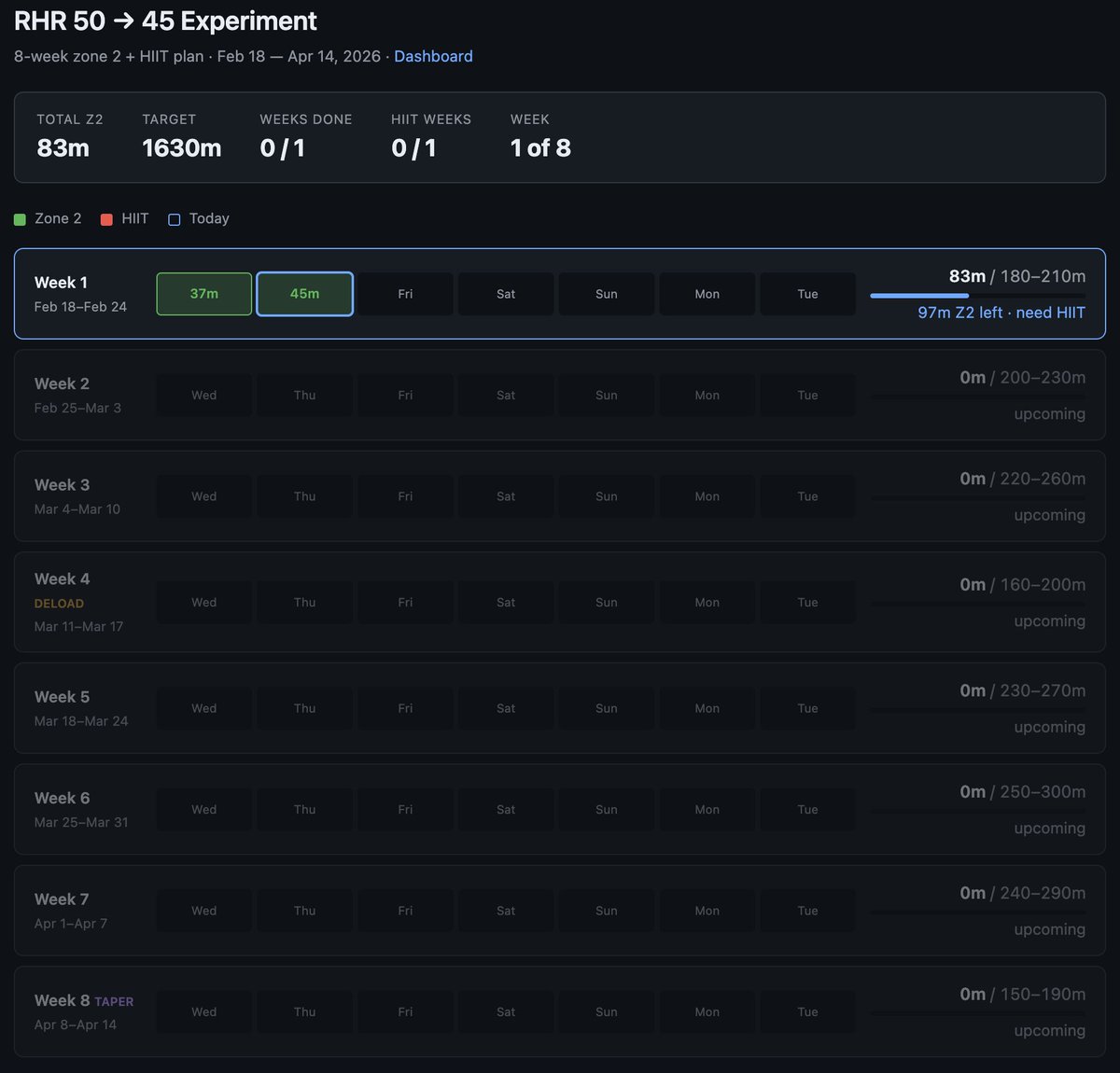
Very interested in what the coming era of highly bespoke software might look like. Example from this morning - I've become a bit loosy goosy with my cardio recently so I decided to do a more srs, regimented experiment to try to lower my Resting Heart Rate from 50 -> 45, over experiment duration of 8 weeks. The primary way to do this is to aspire to a certain sum total minute goals in Zone 2 cardio and 1 HIIT/week. 1 hour later I vibe coded this super custom dashboard for this very specific experiment that shows me how I'm tracking. Claude had to reverse engineer the Woodway treadmill cloud API to pull raw data, process, filter, debug it and create a web UI frontend to track the experiment. It wasn't a fully smooth experience and I had to notice and ask to fix bugs e.g. it screwed up metric vs. imperial system units and it screwed up on the calendar matching up days to dates etc. But I still feel like the overall direction is clear: 1) There will never be (and shouldn't be) a specific app on the app store for this kind of thing. I shouldn't have to look for, download and use some kind of a "Cardio experiment tracker", when this thing is ~300 lines of code that an LLM agent will give you in seconds. The idea of an "app store" of a long tail of discrete set of apps you choose from feels somehow wrong and outdated when LLM agents can improvise the app on the spot and just for you. 2) Second, the industry has to reconfigure into a set of services of sensors and actuators with agent native ergonomics. My Woodway treadmill is a sensor - it turns physical state into digital knowledge. It shouldn't maintain some human-readable frontend and my LLM agent shouldn't have to reverse engineer it, it should be an API/CLI easily usable by my agent. I'm a little bit disappointed (and my timelines are correspondingly slower) with how slowly this progression is happening in the industry overall. 99% of products/services still don't have an AI-native CLI yet. 99% of products/services maintain .html/.css docs like I won't immediately look for how to copy paste the whole thing to my agent to get something done. They give you a list of instructions on a webpage to open this or that url and click here or there to do a thing. In 2026. What am I a computer? You do it. Or have my agent do it. So anyway today I am impressed that this random thing took 1 hour (it would have been ~10 hours 2 years ago). But what excites me more is thinking through how this really should have been 1 minute tops. What has to be in place so that it would be 1 minute? So that I could simply say "Hi can you help me track my cardio over the next 8 weeks", and after a very brief Q&A the app would be up. The AI would already have a lot personal context, it would gather the extra needed data, it would reference and search related skill libraries, and maintain all my little apps/automations. TLDR the "app store" of a set of discrete apps that you choose from is an increasingly outdated concept all by itself. The future are services of AI-native sensors & actuators orchestrated via LLM glue into highly custom, ephemeral apps. It's just not here yet.
Andrej Karpathy tweet media
English
910
1K
12K
2M